
Note: This article contains affiliate links. If you click on these links and make a purchase, we may earn a small commission at no extra cost to you. This helps support our research and content. Read our full affiliate disclosure here.
Finding a capable washing machine on a strict budget matters when space, utility costs, and reliability are nonnegotiable. A low-cost machine can handle everyday loads if you match capacity and cycle options to your household habits. This guide shortlists seven washing machines under $200 that perform the core job: clean clothes without wasting water or electricity. We evaluated these picks against practical buyer concerns like wash effectiveness, energy and water use, and durability. The selections are focused on affordability while still offering sensible features for small homes, apartments, and second-use laundry. Read on for the factors we considered and the specific strengths to weigh when choosing the right low-cost washer.
Top Picks at a Glance
| Best Overall The best all-around choice for most situations | Giantex 20lb Twin Tub Washer |  |
| Best Quality Built to a higher standard if you want something more solid | Auertech Portable Twin Tub Washer |  |
| Best Value The sweet spot between price and what you get | SUPER DEAL Compact Twin Tub Washer |  |
| Best Budget The cheapest option that still gets the job done reliably | Erivess Twin Tub Washing Machine ES101B |  |
| Top Rated A top-rated pick with lots of positive feedback | OLIXIS Portable Washing Machine 1.06 Cu Ft |  |
| Most Popular A crowd favorite that many people choose with confidence | Giantex Twin Tub Washing Machine |  |
| Best Seller A high-volume bestseller chosen again and again | Auertech Portable Washing Machine |  |
Giantex 20lb Twin Tub Washer

| Capacity | 20 pounds (12 lb wash / 8 lb spin) |
|---|---|
| Washing Power | 260W |
| Spinning Power | 140W |
| Operation Mode | Semi Automatic |
| Cycle Options | Gentle, Normal, Drain |
This Giantex twin-tub washer pairs a 12 lb washing tub with an 8 lb spinner to let you wash and spin-dry loads separately, which speeds laundry for small households, RVs, or dorms. Its 260W wash motor and 140W spin motor provide solid cleaning and extraction for everyday garments, while the simple push-button controls and 0–15 minute wash/0–5 minute spin timers make it straightforward to use. The unit includes a built-in, removable lint filter and long inlet and drain hoses for flexible placement and gravity drainage without a dedicated hookup. As a semi-automatic appliance you manage water fill and transfer between tubs, which saves water and power but requires more hands-on time than a full automatic machine. The plastic drum and ABS body keep the weight down for portability, but they are less durable-feeling than metal drums and the 2-month warranty is minimal. For buyers looking for an affordable, space-saving washer that reliably handles small to medium loads, this is a practical option; if you want fully automatic convenience or heavy-duty longevity, consider a different class of machine.
Best for: Buyers who want an affordable, compact washer that speeds small- to medium-size laundry runs and prioritize portability and hands-on control over full automation.
Less Ideal for: Households that need fully automatic, push-button load-and-forget operation or very frequent large-capacity washing should look at larger automatic machines instead.
- Dual-tub design lets you wash and spin simultaneously to save time
- Separate timers and wash modes (gentle, normal, drain) provide control over cycle length
- Long inlet and drain hoses allow flexible placement and gravity drainage
- Removable lint filter for easier maintenance
- Semi-automatic operation requires manual water fill and intervention between tubs
- Plastic drum and ABS construction may feel less durable than metal alternatives
- Short 2-month warranty offers limited manufacturer coverage
Verdict: A budget-friendly, portable twin-tub washer that delivers practical, hands-on laundry performance for small spaces and moderate loads.
Auertech Portable Twin Tub Washer

| Capacity | 28 pounds (18 lb wash, 10 lb spin) |
|---|---|
| Operation Mode | Semi Automatic |
| Max Rotational Speed | 1300 rpm |
| Installation Type | Portable |
| Controls Type | Knob |
This twin-tub portable washer separates washing and spinning so you can wash and spin-dry loads concurrently, which saves time in small-space living. It connects to a faucet via the inlet hose and drains through the included drain hose or built-in pump, and cycle time is set with simple mechanical knobs for wash and spin. The unit advertises an 18 lb wash capacity and 10 lb spin capacity driven by a 1300 rpm motor, so it handles medium-small loads like sheets, towels, and daily wear efficiently while using less water than a full-size machine. Key practical benefits are the transparent lid for monitoring, an adjustable inlet and drain pump for flexible setup, and motor overheat protection for safety. Expect manual intervention between wash and spin cycles, some vibration if loads are unbalanced, and the need to avoid overloading to prevent automatic overheating shutdown. The plastic body keeps weight down for portability but may feel less durable than heavier appliances.
Best for: Buyers who prioritize getting fast, capable cleaning in small living spaces and value portability and strong spin performance over fully automatic convenience.
Less Ideal for: People who need fully automatic, hands-off laundry for large households or who prefer heavier, long-lived metal-cabinet machines.
- Separate wash and spin tubs let you wash and spin at the same time to speed throughput
- 1300 rpm motor provides strong spin performance for faster drying
- Includes inlet and drain hoses plus a drain pump for flexible setup in sinks or tubs
- Transparent lid and simple knob controls make operation and monitoring straightforward
- Semi-automatic design requires manual switching between wash and spin cycles and some user oversight
- Plastic exterior may feel less robust than a full-size metal cabinet
- Spinner can vibrate or stop if a load is unbalanced and requires rebalancing
Verdict: Choose this twin-tub portable washer if you want a compact, performance-focused machine that delivers strong spin drying and fast turnaround for small-space laundry under $200.
SUPER DEAL Compact Twin Tub Washer
| Capacity | 13 liters |
|---|---|
| Operation Mode | Semi Automatic |
| Max Rotational Speed | 1300 rpm |
| Voltage | 115 volts |
| Number of Standard Cycles | 2 |
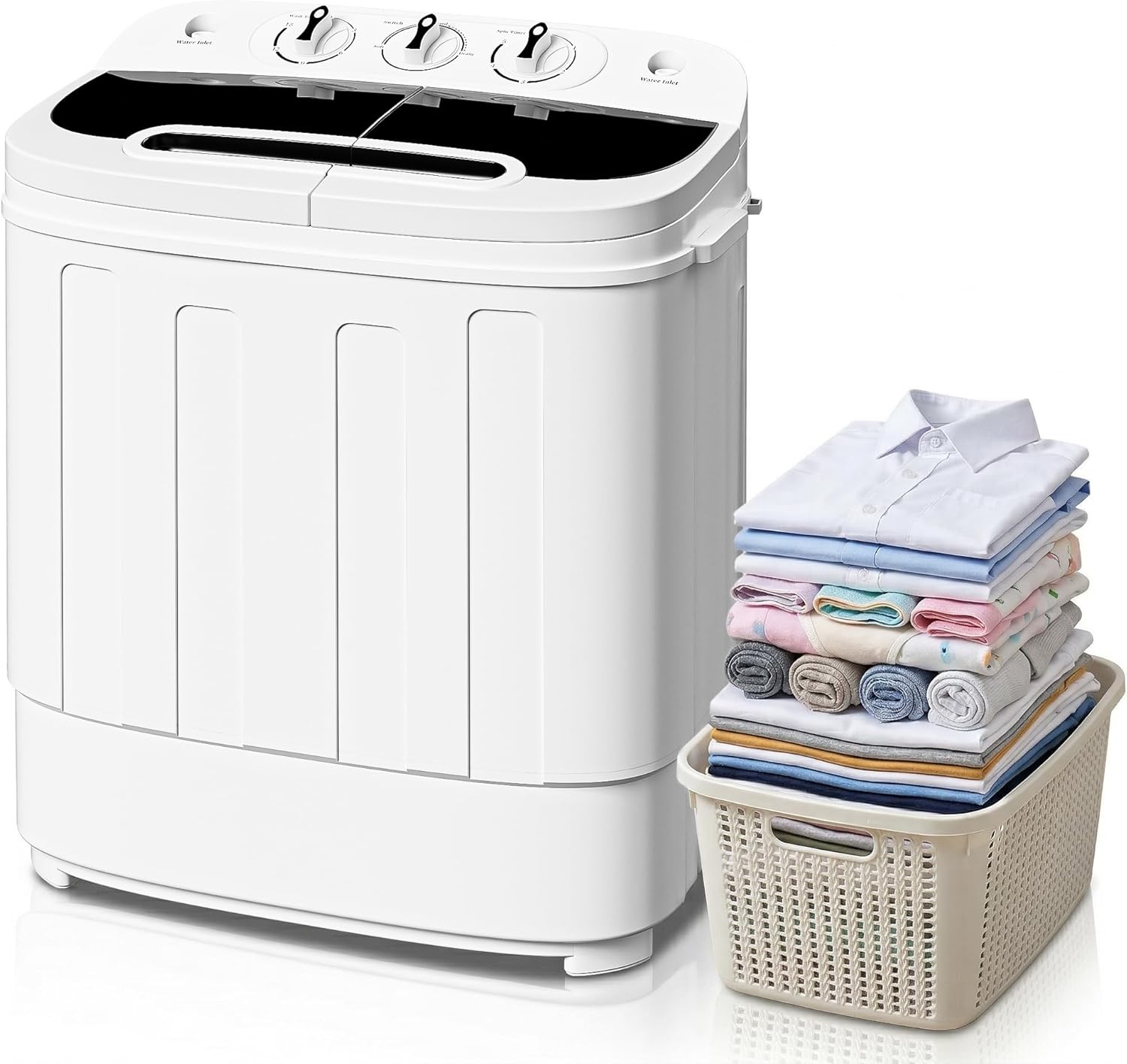
This compact twin-tub washer combines a small-capacity washing drum and a separate spinner so you can wash and spin-dry loads in parallel or sequentially. It is typically used in apartments, dorms, RVs, or for camping where space and hookups are limited; the washer side handles about 8 lb and the spinner about 5 lb per cycle and timers let you set wash (up to 15 minutes) and spin (up to 5 minutes). Notable features include a 1300 RPM motor for effective spin extraction, a lint filter to trap debris, a gravity drain hose for simple water removal, and a translucent tub window to monitor cycles. The plastic body keeps the unit lightweight and rust-resistant and the twin-tub layout speeds up small loads without needing a full-size machine. Important limitations are the small capacity and semi-automatic operation, which require manual water filling and moving clothes between tubs, and the plastic drum and lightweight build will not match the longevity or noise isolation of full-size, all-metal machines. For buyers prioritizing portability and low cost this delivers practical, energy-efficient laundry for light loads.
Best for: Buyers who need an affordable, portable laundry solution for small spaces and prioritize efficiency and low running cost over full-size convenience.
Less Ideal for: Households that do large or frequent laundry loads or who need a fully automatic, hands-off washer should consider larger, fully automatic machines instead.
- Twin-tub design lets you wash and spin separately or simultaneously to speed small loads
- 1300 RPM spin motor provides strong extraction for faster drying
- Lightweight plastic construction makes it easy to move and store
- Built-in lint filter and drain hose simplify maintenance and water removal
- Requires manual water filling and moving clothes between tubs due to semi-automatic operation
- Small wash and spin capacities limit it to light loads and frequent cycles
Verdict: A budget-friendly, portable twin-tub washer that saves space and time for light, frequent laundry loads under $200.
Erivess Twin Tub Washing Machine ES101B

| Capacity | 19 pounds |
|---|---|
| Cycle Options | Spin, Normal, Soft |
| Voltage | 120 volts |
| Wattage | 350 watts |
| Operation Mode | Semi Automatic |
The Erivess Twin Tub ES101B is a budget-minded, semi-automatic washer that handles small loads using a separate wash tub and high-speed spin dryer. You load laundry into the 12 lb wash drum, select one of three wash cycles with the knob, then move items to the 7 lb spinner to remove excess water before air drying on the included rack and hangers. At 350 watts total and a 1500 rpm spinner, it delivers noticeably faster spin-dry results than hand-wringing and saves laundromat trips. The stainless-steel drum and side filter net make it easy to clean, and the compact top-load design fits in tight spaces. Expect some manual involvement: you transfer loads between tubs, monitor short timed cycles, and secure the spinner cover to avoid wobble during high-speed spins. Noise and vibration are typical for twin-tub machines and it lacks fully automatic convenience features such as auto-fill or digital timers, but its low power draw and included drying accessories make it a practical choice for apartments, dorms, or RV use where budget and space are primary concerns.
Best for: Buyers prioritizing the lowest-cost way to do small, frequent laundry in limited spaces who are comfortable with manual operation and simple controls.
Less Ideal for: People who need fully automatic, hands-off laundry, large-capacity loads, or very quiet, vibration-free operation should look at larger built-in or full-featured machines.
- Separate wash and spin tubs let you start a new wash while spinning the previous load
- Includes drying rack and 10 hangers so you can air-dry without buying extras
- Stainless-steel drum and side filter net simplify cleaning and reduce odor buildup
- Compact top-load design fits small apartments, dorms, and tight laundry areas
- Lower power draw (350 W) compared with full-size machines reduces energy use for light loads
- Semi-automatic operation requires manual transfer between wash and spin tubs
- Can be noisy and prone to vibration during high-speed spins
- Lacks automatic fill, digital controls, and advanced wash programs
Verdict: A compact, no-frills twin-tub washer that delivers basic, low-cost laundry and strong spin drying for small households on a tight budget.
OLIXIS Portable Washing Machine 1.06 Cu Ft

| Capacity | 1.06 cubic feet |
|---|---|
| Number of Standard Cycles | 10 |
| Operation Mode | Fully Automatic |
| Controls Type | Touch |
| Additional Features | Child Lock, Delay Start |
The OLIXIS portable washing machine is a compact, fully automatic top-load washer intended for apartments, dorms, and other small-space laundry needs. It handles loads from about 2.5 to 7.7 pounds across 10 cycles and three water levels, so it can tackle delicates, everyday clothing, and small towels or blankets. The stainless steel drum and adjustable feet help reduce wear and vibration, while an automatic imbalance detection and quiet operation make it suitable for shared living spaces. Controls are touch-based and include a delay-start timer from 2 to 24 hours for flexible scheduling. Drainage uses the included 20.9-inch hose for gravity drain only, so it must sit lower than the outlet and cannot pump water upward. For buyers focused on long-term dependability, the metal and stainless construction plus straightforward, no-frills design favors durability, but the unit is limited to small loads and requires proper placement for drainage.
Best for: Buyers who prioritize a dependable, simple washer for tight spaces and steady, low-maintenance performance rather than high capacity or advanced smart features.
Less Ideal for: Households that need to wash large loads, full-size bedding, or require a unit with a built-in drain pump or advanced connectivity.
- Stainless steel drum offers corrosion resistance and gentler fabric handling
- Automatic imbalance detection and adjustable feet reduce vibration and noise
- Ten preset cycles and three water levels cover a range of small-load needs
- Delay-start timer (2–24 hours) lets you schedule washes around your day
- Gravity-only drainage requires the drain hose to be placed lower than the outlet
- 1.06 cu ft capacity limits use to small loads and cannot replace a full-size washer
Verdict: A compact, reliable full‑automatic washer that gives durable, low-vibration performance for small-space living and routine small loads.
Giantex Twin Tub Washing Machine
| Capacity | 20 pounds |
|---|---|
| Rated Washing Capacity | 12 lbs |
| Rated Spinner Dryer Capacity | 8 lbs |
| Spinner RPM | 1350 rpm |
| Voltage | 120 volts |
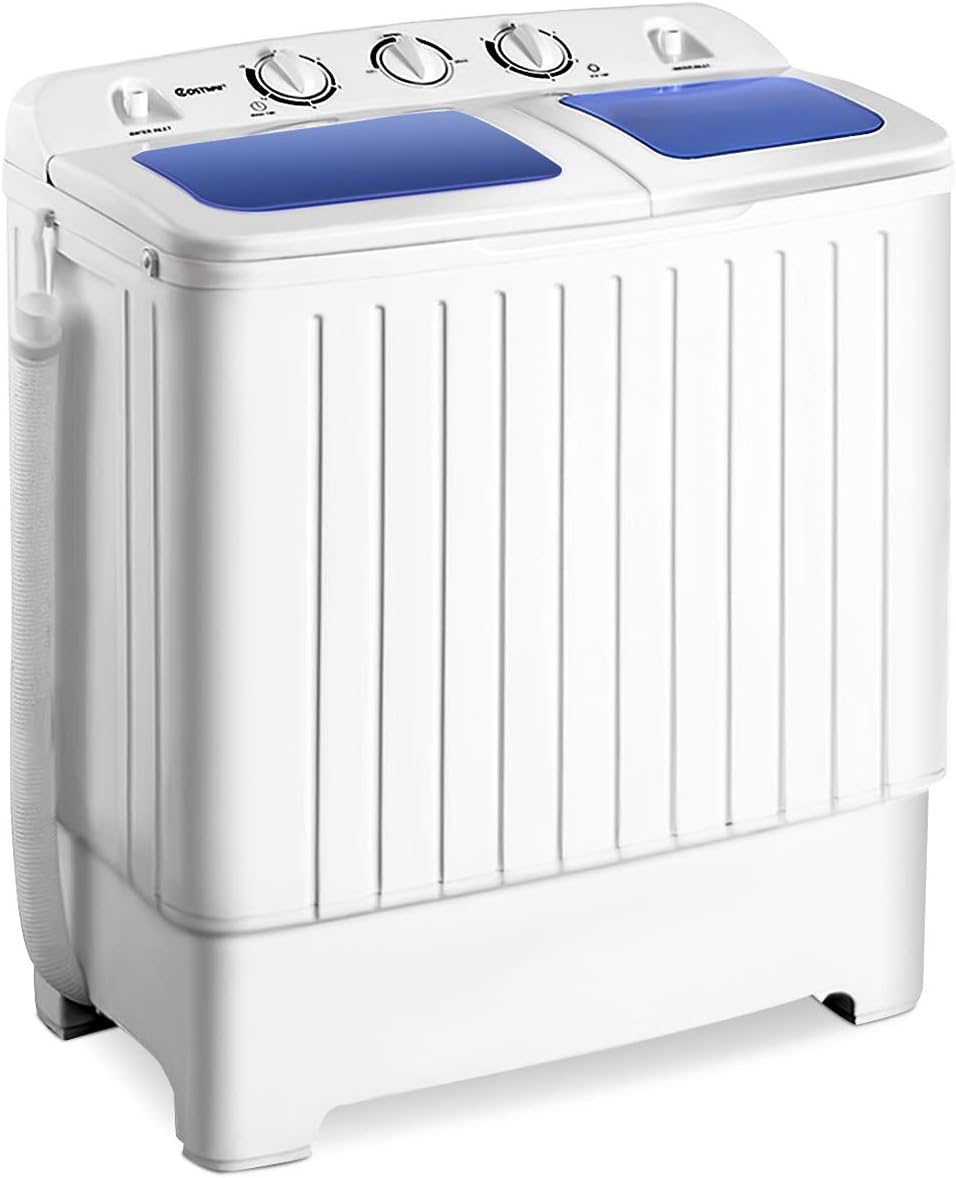
The Giantex Twin Tub is a compact, semi-automatic washer and spinner combo aimed at small households, dorms, RVs, and apartments. It separates washing and spinning into two tubs so you can run a wash cycle (up to 12 lb rated capacity) while using the 8 lb spinner to remove excess water. Controls are simple knobs with a 15-minute wash timer and a 5-minute spin timer, and the spinner runs up to 1350 RPM for effective moisture removal. The unit is lightweight and freestanding, accepts standard 120V power, and includes practical touches like dual water inlets, a removable lint filter, and a drain hose that hangs for gravity draining. Because it is semi-automatic you need to move clothes between tubs and handle filling/draining, and the spinner leaves clothes around 10 to 20 percent damp so a short air-dry is still required. Build materials are mostly ABS and polypropylene with a stainless drum. For buyers who need a low-cost, portable laundry solution and don't mind a bit of manual work, this model delivers usable performance in tight spaces.
Best for: Buyers who need an inexpensive, space-saving laundry solution for apartments, dorms, RVs, or occasional use and who prioritize portability over fully automatic convenience.
Less Ideal for: Households that want fully automatic, hands-off laundry or need to handle large weekly loads should choose a full-size or fully automatic washer instead.
- Portable twin-tub design lets you wash and spin separately for small loads
- Simple knob controls and timers make operation straightforward
- Removable lint filter and dual water inlets increase convenience and flexibility
- Relatively fast spinner speed (1350 RPM) reduces drying time compared with hand-spun laundry
- Semi-automatic operation requires manual transfer of clothes and managing fill/drain
- Spinner does not fully dry clothes, so air-drying is still needed
Verdict: A compact, low-cost portable washer that delivers practical wash-and-spin performance for small loads when you want a space-saving laundry option under $200.
Auertech Portable Washing Machine

| Capacity | 20 pounds |
|---|---|
| Access Location | Top Load |
| Operation Mode | Manual |
| Max Rotational Speed | 1300 rpm |
| Voltage | 110 volts |
This twin-tub portable washer combines a 12 lb wash tub and 8 lb spin tub so you can wash and spin separate loads at the same time, which is handy for dorms, RVs, and small apartments. It uses a manual knob control panel with separate timers for wash and spin and a transparent lid so you can monitor cycles; two water inlets and an included inlet hose make filling convenient. The unit is freestanding, runs on 110V, and includes a drain pump for flexible wastewater placement. Practical benefits are low water use, short cycle durations (wash up to 15 minutes, spin up to 5 minutes) and a stainless steel drum that resists rust. Expect basic, reliable cleaning rather than advanced electronic features since the machine is mechanically controlled and semi-automatic, and capacity is limited to light loads rather than full-family laundry days. Noise and vibration are typical for compact motor-driven units, and you will need to move loads between tubs manually.
Best for: Buyers who prioritize a dependable, no-frills washer for tight spaces and want a straightforward machine that minimizes complexity and maintenance.
Less Ideal for: People who need large-capacity machines, fully automatic cycles, or quiet, low-vibration operation for frequent family-sized laundry loads should look elsewhere.
- Twin-tub design lets you wash and spin simultaneously to save time
- Includes drain pump and inlet hose for flexible water management
- Stainless steel drum reduces rust and prolongs service life
- Short cycle times and simple knob controls are easy to operate
- Semi-automatic operation requires manual transfer between wash and spin tubs
- Limited capacity suitable for small loads only
Verdict: A straightforward, compact twin-tub washer that delivers reliable cleaning for small loads and tight spaces without extra complexity.
Choosing the Right Washing Machine: Key Factors to Consider
Wash Performance
How well the washing machine removes dirt, stains, and odors matters most for everyday satisfaction. Look at advertised cycle types, agitation methods, and user feedback about stubborn stains. Machines that offer multiple cycle intensities or soak options will do better across fabric types and soil loads.
Higher spin speeds help extract water for shorter drying times, but aggressive agitation can cause wear on delicate items. When buying under $200, expect simpler mechanical systems; choose units with proven wash patterns and straightforward cycle choices rather than complex digital features that add failure points.
Water and Energy Use
Running costs can eclipse purchase price over time, especially if the washer is used frequently. Check stated water consumption per cycle and approximate energy draw. Machines that use less water or offer eco cycles will reduce utility bills and hot-water usage.
In tight budgets, a model with modest energy needs but effective cleaning is preferable to one that saves little on the bill but underperforms. For renters or apartment dwellers, lower water use also reduces the chance of exceeding municipal usage limits or triggering higher communal billing.
Capacity and Size
Capacity influences how many loads you run and whether bulky items like bedding can be cleaned. Under $200 machines tend to be compact or single-load units, so measure available space and estimate the load sizes you normally wash. A slightly larger drum reduces cycle count but may increase water use.
Also consider drum shape and agitation style because these affect how evenly clothes tumble. For small households, a compact washer that handles daily laundry efficiently is better than a larger unit that sits mostly unused.
Installation and Plumbing Requirements
Ease of installation matters when you cannot or do not want professional help. Some affordable washers are countertop or portable units that connect to a kitchen faucet and need only a nearby drain. Others require direct hose connections to a utility hookup and a power outlet with grounded protection.
Confirm inlet and drain hose lengths, voltage and plug type, and any adapter needs before buying. Poor fitment or inadequate hoses often leads to leaks or the need for additional purchases, eroding the initial cost savings.
Durability and Serviceability
Even on a tight budget, you want a machine that lasts several years with basic care. Inspect construction materials, warranty terms, and whether common wear parts like belts and pumps are accessible. Simpler mechanical designs often mean fewer failure modes and easier DIY fixes.
Consider how easy it is to find replacement parts or user guides. A washer with common fasteners and clear maintenance instructions will be less costly to keep running than a sealed or proprietary unit.
Noise and Vibration
Noise affects usability in small living spaces or apartments. Machines with poor balance or weak damping transmit strong vibrations and can disturb neighbors. Look for descriptions of vibration control, low RPM options, and user reports about operational noise.
If laundry will run during evenings or overnight, choose a model known for quiet cycles or that offers a low-speed spin. Placement on a stable, level surface and use of anti-vibration pads can mitigate many issues, but starting with a reasonably quiet unit reduces setup work.
Types of Low-Cost Washing Machines
Budget washers generally fall into three practical categories: compact portable washers that hook to a faucet, single-tub agitator units for small spaces, and semi-automatic twin-tub configurations that separate washing and spinning. Each style balances convenience, capacity, and installation needs differently.
Portable faucet-connected machines are easiest to set up and move, but they usually have smaller drums. Semi-automatic twin tubs require manual transfer between wash and spin tubs, saving cost and water but adding effort. Choose the style that matches how often you do laundry and how much time you can spend on cycle management.
- Portable countertop or freestanding units: simple hookup, best for light loads
- Single-tub compact washers: push-button cycles, good for steady daily use
- Twin-tub semi-automatic: efficient water use, requires manual transfer
Practical Tips for Installing in Small Spaces
Measure the area including clearance for hoses and lid or door swing. Leave a few inches around the appliance for ventilation and to access connections. If the space is on a raised platform or a closet, check that plumbing and electrical access meet the unit's requirements.
When installing on uneven floors, use a spirit level and adjustable feet to reduce vibration. Keep inlet hoses free from kinks and secure the drain to a proper standpipe or bucket designed for continuous discharge. For temporary setups, quick-connect adapters and compact drip trays simplify removal and reduce mess risk.
- Leave clearance for lid/door operation and ventilation
- Use a level to minimize vibration and noise
- Secure hoses to prevent leaks and accidental disconnection
Maintenance Routines That Extend Lifespan
Regular maintenance keeps a budget washer running smoothly. After each cycle, wipe seals and leave the lid open to let the drum dry and prevent mildew. Clean lint filters and removable detergent compartments on a monthly schedule to maintain water flow and prevent odors.
Periodically inspect hoses for cracks or soft spots and replace them at the first sign of wear. If the machine has user-serviceable belts or accessible pumps, follow the manual's service intervals and keep basic tools on hand for simple repairs.
- Wipe seals and leave drum open to dry after use
- Clean filters and detergent trays monthly
- Check hoses and fittings for wear and replace proactively
Maximizing Cleaning on a Budget
To get the best cleaning from a basic machine, sort laundry by soil level and use the appropriate cycle and water temperature. Pre-treat stains before loading and avoid overloading the drum, which prevents effective agitation and rinsing. For heavily soiled work clothes, a short pre-soak or extended wash time improves results.
Use the right amount of detergent for load size and water hardness. Excess detergent can trap soils and leave residues, while too little reduces cleaning power. When energy or water use is a priority, favor fuller loads and eco cycles that optimize rinse and agitation patterns.
- Pre-treat stains and avoid overloading
- Match detergent amount to load and water hardness
- Use soak or longer cycles for heavily soiled items
How We Chose the Best Washing Machine
We focused on machines that deliver reliable cleaning while keeping initial cost under $200. The editorial filters emphasized measurable, buyer-relevant specs and user-facing features: wash performance across soil levels, energy and water efficiency, capacity and load flexibility, build quality and expected lifespan, and ease of installation and maintenance. We prioritized models with straightforward controls, common replacement parts, and clear user documentation to reduce ownership headaches. Excluded from consideration were units whose tested performance was significantly below category norms, specialty commercial washers, and compact units without published electrical or water consumption data. We also excluded models lacking basic safety features or meaningful user support information. The criteria used align with practical homeowner needs: a washer must clean effectively, fit the space, keep operating costs low, and be serviceable over several years.
Our full evaluation process is outlined in our review methodology.
FAQ
Can a washing machine under $200 handle large loads like blankets?
Most budget machines have smaller drums and are not ideal for large bulky items. They can handle light bedding or single blankets if washed alone, but bulky loads may not agitate properly or rinse fully, increasing wear and longer drying times.
Are portable washers reliable for daily use?
Portable washers are reliable for light to moderate daily use if you follow maintenance guidelines. Expect more frequent checks on hoses and seals compared with full-size machines, and plan for slightly higher wear if running heavy or frequent loads.
Will a low-cost washer increase my utility bills significantly?
It depends on usage patterns. Low-cost washers vary in water and energy efficiency. Choosing models with lower water use and running fuller loads reduces the impact on utility bills. Short, cold-water cycles also help contain costs.
What do I need to install a portable washing machine?
Most portable machines require a standard grounded outlet and a faucet or drain connection. Some use a faucet adapter for inlet water and a flexible drain hose that feeds into a sink. Verify hose lengths and plug type before purchase to avoid surprises.
How often should I perform maintenance on a budget washer?
Basic upkeep like wiping seals and leaving the lid open should be done after each use. Clean filters and detergent compartments monthly and inspect hoses every few months. Proactive care greatly reduces the chance of leaks and malfunctions.
Final Verdict
When shopping for a washing machine under $200, prioritize machines that balance effective cleaning with low operating costs and straightforward installation. Focus on wash performance, water and energy use, and whether the capacity fits your typical loads. Expect tradeoffs: budget washers often compromise on automation and premium materials in exchange for affordability. Choose the model that best matches your space and laundry habits, and plan for simple maintenance to extend service life. With sensible expectations and regular care, an inexpensive washer can be a practical, cost-effective solution for many households.