
Note: This article contains affiliate links. If you click on these links and make a purchase, we may earn a small commission at no extra cost to you. This helps support our research and content. Read our full affiliate disclosure here.
If you live in a small apartment, travel frequently, or need laundry capability in a space without plumbing, choosing the right washing machine without hookups matters. These non-plumbed washers let you clean clothes where a traditional hooked-up unit is impractical, from tiny kitchens to RVs and laundry closets. You want a model that balances capacity, water and energy use, and simple hookup or drain arrangements so laundry is effective without creating extra chores. This guide highlights seven shortlisted washing machines without hookups that meet common buyer needs. We evaluated units for water efficiency, portability and setup simplicity, build and wash performance, and user convenience. Read on to find the right no-plumb washer for how you live and wash.
Top Picks at a Glance
| Best Overall The best all-around choice for most situations | COMFEE' 2.4 Cu.ft Portable Washer |  |
| Best Quality Built to a higher standard if you want something more solid | BLACK+DECKER Portable Washer BPWM20W |  |
| Best Value The sweet spot between price and what you get | SUPER DEAL Compact Twin Tub Washer |  |
| Best Budget The cheapest option that still gets the job done reliably | JUJOJB Portable Washing Machine ZM-017G |  |
| Top Rated A top-rated pick with lots of positive feedback | Panda Portable Washing Machine PAN638MH1 |  |
| Most Popular A crowd favorite that many people choose with confidence | Giantex Twin Tub Portable Washer |  |
| Best Seller A high-volume bestseller chosen again and again | Auertech Portable Twin Tub Washer |  |
COMFEE' 2.4 Cu.ft Portable Washer

| Capacity | 2.4 cubic feet |
|---|---|
| Operation Mode | Fully Automatic |
| Number of Programs | 8 |
| Max Rotational Speed | 780 rpm |
| Noise | 62 db |
This COMFEE' portable washer is a compact, fully automatic top-loader built for small-space laundry without a fixed hookup. It offers a 2.4 cubic foot stainless steel drum and eight wash programs controlled by push buttons and an LED display, plus a child lock and soft-close glass lid for convenience. Turbo Wash and Water Magic Flow technologies are positioned to boost water circulation for better cleaning and reduced tangling, and the Hygiene+ mode increases rinse cycles for more thorough decontamination. At 780 rpm spin speed it helps remove more water from clothes than many small units, and the unit sits on wheels for easier repositioning. Practical limits are its portable form factor: it is sized for apartments, dorms, or RV-style setups rather than large family loads, and the noise rating (62 dB) is noticeable in very quiet rooms. Setup is simple as a freestanding machine, but you should plan where to drain the machine since it is not a built-in hookup washer. For buyers wanting a space-saving, feature-rich portable washer, this model balances cleaning performance and convenience.
Best for: Buyers who need a capable, space-saving washer for apartments, dorms, RVs, or occasional in-room laundry and who prioritize easy setup and solid cleaning performance over large capacity.
Less Ideal for: Households that do many large or bulky loads or require a built-in hookup washer should look at full-size models instead.
- Generous 2.4 cu ft stainless steel drum suitable for small household loads
- Eight programs and LED display with push-button controls for straightforward operation
- Hygiene+ mode and Turbo Wash circulation to boost rinsing and cleaning performance
- 780 rpm spin speed helps reduce drying time and wheels make the unit easy to move
- Not intended for large family-sized loads due to compact form factor
- 62 dB noise level may be noticeable in quiet living spaces
Verdict: A feature-packed, freestanding portable washer that delivers good cleaning and rinsing performance for small-space living without a permanent hookup.
BLACK+DECKER Portable Washer BPWM20W

| Capacity | 2 cubic feet |
|---|---|
| Max Rotational Speed | 760 rpm |
| Number of Programs | 6 |
| Noise | 72 db |
| Voltage | 120 volts |
The BLACK+DECKER BPWM20W is a freestanding portable washer designed for rooms without permanent hookups. It uses an impeller-style stainless steel drum to gently wash delicates, baby clothes, and regular loads up to about 15.4 pounds, and offers six cycles including Normal, Heavy, Delicate, Quick, Bulky, and Spin Only. Controls are simple push-button with an LED display, and features like auto unbalance detection, auto shutoff, child lock, and a 24-hour delay start give practical safety and scheduling options. Installation is straightforward: the package includes a drain hose and quick-connect sink adapter so you can hook it to most faucets temporarily, and built-in rollers and side handles make moving it easier. Noise is listed around 72 dB, so it will be audible during operation. If you need a compact washer that delivers flexible cleaning without a permanent water hookup, this model covers core performance needs, though its weight and footprint are substantial for a portable unit and it lacks integrated drying capability.
Best for: Buyers who need a performance-focused portable washer that cleans a variety of fabrics well and can run from a sink connection or other temporary water source.
Less Ideal for: People who need combined wash-and-dry capability or who require a very quiet, lightweight unit for frequent apartment moves.
- Impeller stainless steel tub suitable for delicates and baby items
- Six cycle options including Quick and Spin Only for different soil levels
- Includes drain hose and quick-connect sink adapter for hookup-free use
- Auto unbalance detection and auto shutoff improve safety and cycle performance
- No built-in dryer function so separate drying is required
- Relatively loud operation at around 72 dB compared with quieter home washers
Verdict: Choose this portable BLACK+DECKER washer if you want a capable, impeller-based machine that delivers full wash cycles without a permanent hookup.
SUPER DEAL Compact Twin Tub Washer
| Capacity | 13 liters |
|---|---|
| Operation Mode | Semi Automatic |
| Max Rotational Speed | 1300 rpm |
| Voltage | 115 volts |
| Number of Standard Cycles | 2 |
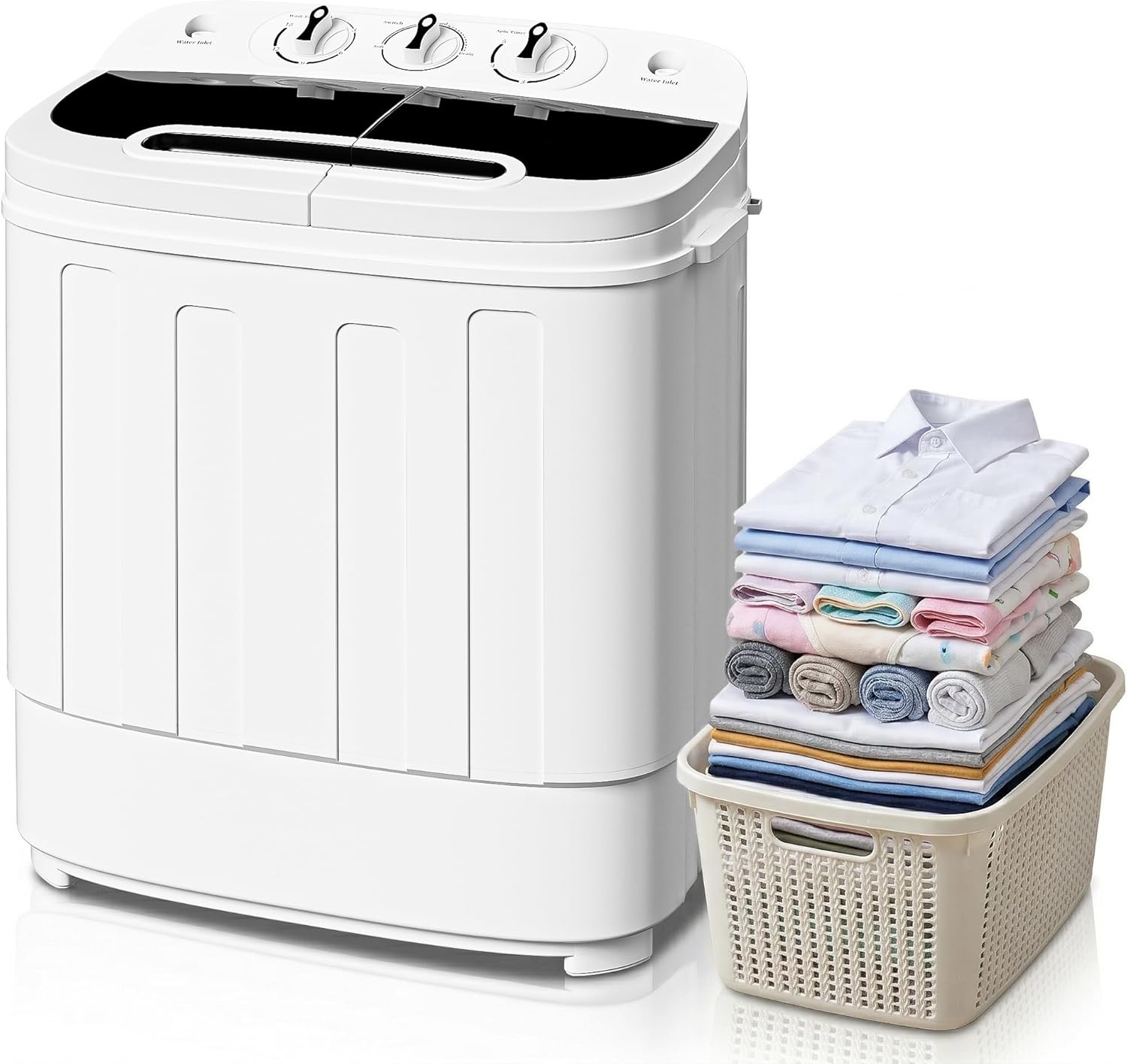
This compact twin-tub washer is built for small spaces and short laundry sessions, letting you wash and spin in parallel to speed up a load. It uses a top-load wash tub and a separate spin dryer so you can wash up to about 8 pounds and spin-dry lighter loads up to about 5 pounds, with simple knob controls, buttons and an LED display. The 1300 rpm spin and a high-efficiency pump create strong water circulation for better soil removal, and the included lint filter and drain hose make maintenance and water disposal straightforward when you do not have a permanent hookup. The plastic drum and body keep weight and corrosion risk low but mean it is not as durable as metal tubs, and cycle timers are manual and short which limits heavy or large loads. For apartment dwellers, campers, or students who need an inexpensive, portable solution for frequent small loads, this machine handles everyday garments effectively but expects manual filling, draining and modest load sizes.
Best for: Buyers seeking an affordable, space-saving laundry solution who prioritize quick, small loads and portability over fully automatic convenience.
Less Ideal for: People who need large-capacity washing, heavy-duty or frequent family-sized loads, or those who require fully automatic plug-and-play hookup-free machines.
- Twin-tub design allows washing and spinning at the same time to save time
- 1300 rpm spin speed improves water extraction for faster drying
- Compact, lightweight plastic body is easy to move and resists rust
- Includes lint filter and drain hose for cleaner laundry and easy draining
- Simple knob and button controls with LED display make operation straightforward
- Small capacity suitable only for light or small loads
- Plastic drum and construction are less durable than metal alternatives
- Requires manual filling and draining, not a fully automatic hookup-free replacement
Verdict: A portable, budget-friendly twin-tub washer that saves time by washing and spinning simultaneously for light, frequent loads in spaces without hookups.
JUJOJB Portable Washing Machine ZM-017G

| Capacity | 16 liters |
|---|---|
| Operation Mode | Semi Automatic |
| Cycle Options | Baby Wear, Quick Wash, Sanitary, Speed Wash, Spin, Normal |
| Voltage | 110 volts |
| Noise | 55 db |
This JUJOJB portable washer is a very small, semi-automatic countertop machine built for quick washes of underwear, socks, baby clothes, and other lightweight items. It offers three timed wash modes (3, 5, 10 minutes) and a separate spin basket for removing excess water after washing, and it runs on standard 110V power. The unit folds flat for storage and includes leveling legs and simple push-button controls, making it easy to use in dorms, apartments, RVs, or hotel rooms where hookups are not available. Practical benefits include low water and energy use per cycle and a lightweight, storable design that keeps delicate items separate from larger laundry. Important limitations are the very small capacity—the spin basket only handles a few items at a time—and the machine is not fully automatic, so you must add and drain water manually; it also uses mostly plastic construction which may feel less durable than full-size machines. For buyers who need compact, occasional washing without plumbing hookups, this model is a functional, low-cost option.
Best for: Buyers on a tight budget who need an inexpensive, space-saving washer to handle small loads and delicates in places without plumbing hookups.
Less Ideal for: Anyone needing full loads, heavy fabrics, or fully automatic, hands-off laundry; not suitable as a primary washer for families or frequent heavy use.
- Very compact and foldable for easy storage in small spaces
- Low water and energy consumption suitable for short, frequent cycles
- Simple push-button controls and three timed wash modes for quick use
- Includes a spin basket to remove excess water after washing
- Small capacity and spin basket limit load size and require multiple spin cycles
- Semi-automatic operation requires manual filling and draining of water
- Mostly plastic construction may feel less robust than standard washers
Verdict: A budget-friendly, foldable countertop washer that delivers quick, low-water washes for small loads where plumbing hookups are unavailable.
Panda Portable Washing Machine PAN638MH1

| Capacity | 1.38 cubic feet |
|---|---|
| Operation Mode | Fully Automatic |
| Number of Standard Cycles | 8 |
| Access Location | Top Load |
| Voltage | 110 volts |
This Panda portable washer is a compact, fully automatic top‑load machine designed for apartments, RVs, dorms, or as a secondary household washer. It offers 1.38 cu ft capacity and eight standard cycles including bulky, delicates, heavy duty, normal, and spin, plus three water‑level settings to match load size. Controls are push‑button with practical features like delay start and a child lock, and the stainless steel drum should hold up to frequent use. Installation is freestanding and the unit includes a drain hose and faucet adapter so it works where permanent hookups are not available, while two inlet hoses allow permanent cold and hot connections if desired. The machine is relatively compact and reasonably quiet for small‑space laundry, but its 1.38 cu ft size limits load size to light to medium loads and it will not replace a full‑size washer for large households. Expect typical portable washer wash times and less robust agitation than full residential machines, so very heavy or bulky bedding may need a larger unit or laundromat. For buyers who need a reliable, space‑saving washer that can run without a dedicated hookup, this Panda model covers the basics well.
Best for: Buyers who need a dependable, space‑saving washer that can run in apartments, RVs, or other places without permanent hookups and who prioritize consistent performance over large capacity.
Less Ideal for: Large families or households that wash heavy bedding and large loads frequently should choose a full‑size machine or laundromat instead.
- Includes drain hose and faucet adapter so it can be used without a dedicated hookup
- Stainless steel drum resists rust and is more durable than plastic tubs
- Eight cycle options and three water levels give flexible wash choices
- Push‑button controls with delay start and child lock add convenience and safety
- 1.38 cu ft capacity limits load size compared with full‑size washers
- Not intended for heavy bedding or very large items due to smaller tub and gentler agitation
Verdict: A compact, reliable fully automatic portable washer that works without a permanent hookup and handles everyday laundry for small households.
Giantex Twin Tub Portable Washer
| Capacity | 20 pounds (12 lb wash, 8 lb spin) |
|---|---|
| Operation Mode | Semi Automatic |
| Wash Power | 300W |
| Spin Power | 110W |
| Spinner RPM | 1350 rpm |
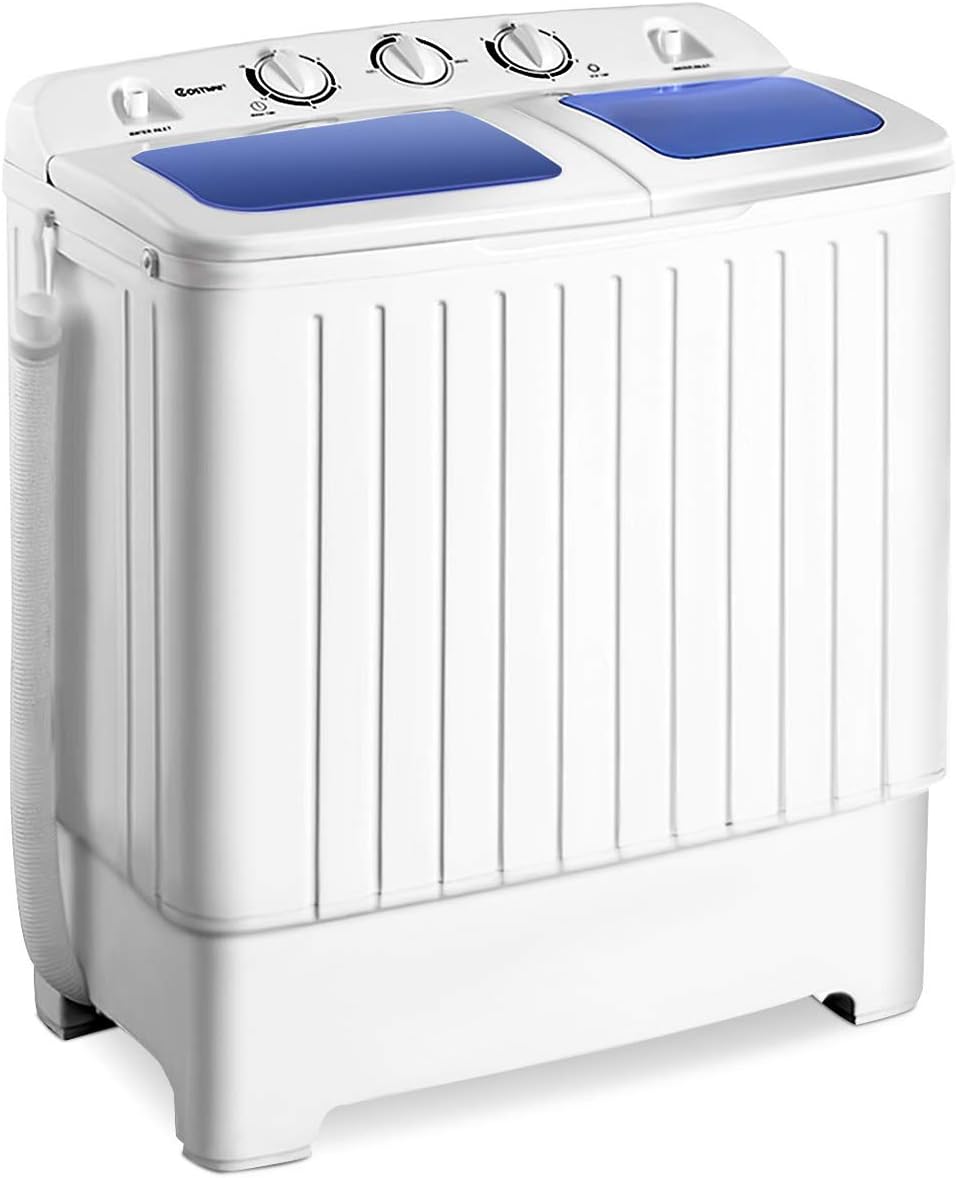
The Giantex Twin Tub Portable Washer is a compact semi-automatic washer that separates washing and spinning into two tubs, letting you run wash and spin cycles independently. It is intended for small households, dorms, RVs or apartments where a full hookup is not available. Controls are simple knobs with a 15-minute wash timer and a 5-minute spin timer, and the unit uses a 300W wash motor plus a 110W spinner rated to 1350 RPM for reasonably fast spin-drying. Practical features include two water inlet holes for flexible faucet placement, a removable lint filter, and a top lid that improves safety during high-speed spinning. The spinner will typically remove 80 to 90 percent of water, so items still need air drying. Expect to manage water manually since draining relies on gravity and a hangable drain hose. Its compact footprint and 12 lb wash / 8 lb spin capacity make it easy to move and useful for frequent small loads, but it is not suited to large bedding or heavy laundry and requires user involvement for filling, draining, and timing cycles.
Best for: Buyers who need a compact, no-hookup laundry solution for small, frequent loads and who value simple controls and portability over full automation.
Less Ideal for: Households that need to wash large items like bedding, or users who want a fully automatic machine with built-in pumping and hands-off cycles.
- Separate wash and spin tubs let you wash and spin different loads concurrently or back-to-back
- Two inlet holes for flexible faucet placement make setup easier in nonstandard sinks
- Removable lint filter and top lid improve maintenance and safety during spin cycles
- Compact, lightweight design is easy to move for apartment, RV, or dorm use
- Relies on gravity drain and manual water handling rather than a built-in pump
- Spin drying only removes most moisture so items typically require additional air drying
- 12 lb wash capacity limits the unit to small loads and frequent cycles
Verdict: A practical, portable twin-tub washer for small households and off-hookup situations that need simple, lightweight laundry capability.
Auertech Portable Twin Tub Washer

| Capacity | 28 pounds (18 lb washer, 10 lb spinner) |
|---|---|
| Operation Mode | Semi Automatic |
| Max Rotational Speed | 1300 rpm |
| Voltage | 120 volts_of_alternating_current |
| Included Components | Drain Hose, Inlet Hose, Manual |
This twin-tub portable washer pairs an 18 lb wash tub with a 10 lb spinner so you can wash and spin separate loads at once, which is handy where plumbing hookups are limited. It runs semi-automatically: you fill from a faucet, set the knob timers for wash and spin, and move water or switch functions manually. Notable features include a 1300 rpm motor for relatively fast spinning, a built-in drain pump and adjustable inlet hose for flexible draining, and a transparent lid so you can monitor cycles. The simple dial controls and lint filter make everyday use straightforward, and the PP body with a stainless steel drum resists rust. Important limitations are the need to manually move between wash and spin cycles and to refill/empty water, plus following load and run-time guidance to avoid the motor's overheat protection. The unit is compact for apartments, dorms, and RVs, but it requires hands-on attention compared with fully automatic washers.
Best for: Buyers who want a reliable, low-complexity laundry solution for small living spaces and prefer a hands-on machine that avoids permanent plumbing hookups.
Less Ideal for: People who need fully automatic, set-and-forget laundry or need high-capacity loads without manual intervention should look elsewhere.
- Separate wash and spin tubs let you wash and dry different loads simultaneously
- Built-in drain pump and adjustable inlet hose enable flexible draining without a permanent hookup
- 1300 rpm motor provides strong spin performance to remove more water from clothes
- Transparent lid and simple knob controls make operation easy to monitor and adjust
- Stainless steel drum resists rust for longer life
- Semi-automatic design requires manual filling, switching cycles, and draining
- Overheat protection can stop the motor if overloaded or run too long, requiring cooldown
Verdict: Auertech's twin-tub portable washer is a practical, low-touch option for renters and RV users who need a compact laundry solution without permanent hookups.
Choosing the Right Washing Machine Without Hookups: Key Factors to Consider
Water Use and Drain Method
How the machine uses and disposes of water determines where you can place it and how convenient it will be to operate. Machines without hookups vary between manual-fill and pump-drain designs. Manual-fill units require you to add water for each load and often need you to empty a bucket or gravity-drain into a sink. Pump-drain models include a small pump and a hose you can direct into a sink, standpipe, or nearby drain. Consider the frequency of loads and whether you can reliably empty or route wastewater before choosing.
Higher water efficiency reduces the number of fills and the volume you must manage, which is especially important if you collect water or have limited sink access. Also assess whether the drain hose length and pump strength match your setup so you do not need additional accessories or frequent repositioning.
Machine Capacity and Load Size
Capacity affects how often you need to run the washer and what kinds of laundry you can handle. Compact no-plumb washers range from single-person load sizes up to small family capacities. Oversizing a compact machine can reduce wash quality and increase water use, while too-small a unit raises the number of cycles needed to keep up with laundry. Think about your typical load mix, such as bedding, towels, or delicates, and choose a capacity that balances convenience and efficiency.
Also consider drum geometry and agitation method because capacity alone does not guarantee gentle or thorough cleaning. Some compact drums are shallower, which can cause tangling or uneven washes of larger items. If you wash bulkier items occasionally, check whether the machine can physically accommodate them without compromising spin or rinse effectiveness.
Power and Electrical Requirements
Even without a plumbing hookup, washing machines need reliable power and sometimes have specific electrical expectations. Many portable washers run on standard household voltage, but the draw during spin cycles can be significant for compact motors. Confirm that the circuit you plan to use can handle the machine without overloading other appliances. For mobile or off-grid setups, consider models with lower power draw or those compatible with inverters and generators.
Look at whether the machine has simple, robust controls or electronic panels that may require more stable power. If you expect to move the unit frequently, prioritize machines with tolerant electronics and clearly labeled power requirements to avoid surprises when relocating.
Noise, Vibration, and Stabilization
Noise and vibration are more noticeable in small living spaces, and poor stabilization can damage the machine or its surroundings. Portable washers may have higher vibration levels during spin cycles because of smaller, lighter components. Check for design features that minimize movement, such as adjustable feet, balanced drums, or dampening mounts. A machine that locks the drum or offers lower spin speeds can help reduce noise and protect floors and nearby furniture.
If you plan to run loads at night or in shared housing, prioritize quieter models. Consider the installation surface too; tile or concrete floors typically absorb vibration better than thin wooden subfloors. Small accessories like anti-vibration pads or a dedicated stand can improve stability but add to the total setup footprint.
Cycle Variety and Fabric Care
The available cycles determine how well the machine handles different fabrics and soil levels. Even compact, hookup-free washers should offer a range of cycles such as delicate, heavy, quick wash, and spin-only. Good cycle programming reduces the need for hand washing and helps protect garments from unnecessary wear. For mixed wardrobes, a machine that lets you fine-tune wash time, water level, and agitation intensity provides better long-term fabric care.
Also consider whether the washer supports adjustable water temperature or uses cold-only wash with detergent formulated for cold water. Some portable units rely on ambient-temperature water, which may not remove certain stains as effectively. If you routinely wash items requiring warm water, ensure your chosen solution can meet that need or accept the tradeoff in stain removal.
Maintenance and Serviceability
Ease of maintenance affects total ownership effort for a machine without hookups. Look for units with accessible lint traps, removable filters, and straightforward drum access for cleaning. Because portable washers can be moved and stored between uses, seals, hoses, and pumps are more exposed to wear or kinking. Readability of the user manual and clarity of routine maintenance steps are important to prevent common issues like mold, clogs, or pump failure.
Also consider the availability of replacement parts and standard hose sizes. Machines that use common fittings and simple, user-replaceable components make upkeep less costly and faster when problems occur. Regular maintenance routines such as drum cleaning and leaving the lid partly open to air-dry should be feasible in your living space to limit odors and mildew.
Types of No-Plumb Washing Machines
No-plumb washing machines generally fall into a few practical types that match different lifestyles. Manual-fill models require you to add water by hand for each wash and are the simplest mechanically. They are lightweight and often very portable, but they require more user involvement for filling and draining.
Pump-drain portable washers have onboard pumps and a drain hose you route into a sink or nearby drain. These offer a better hands-off experience and are suitable for more frequent use. There are also compact twin-tub designs that separate washing and spinning into two chambers, which can speed turnaround for multiple small loads.
- Manual-fill: maximum portability, requires hand-filling and manual drain handling.
- Pump-drain: best for regular use without plumbing, needs an accessible sink or drain location.
- Twin-tub: separate wash and spin, can reduce cycle time for multiple loads.
Setting Up a No-Hookup Washer Safely
Plan the location with both power and a suitable drain point in mind. If your unit uses a pump drain, ensure the hose can reach a sink or drain that is not prone to backflow. Avoid placing the washer where wastewater could damage finishes or pool on the floor.
Check electrical outlet capacity and keep cords and hoses routed to avoid trips. Use a level surface and adjust feet for stability. If vibration is an issue, anti-vibration pads or a thick rubber mat can reduce movement. Follow the manufacturer instructions for clearances to allow proper airflow and access for maintenance.
- Test the pump and drain setup with a small load before relying on it for larger loads.
- Keep cleaning supplies and spare hoses handy in case of leaks or clogs.
- Locate the washer near a sink or floor drain when possible to simplify wastewater handling.
Common Workarounds for No-Drain Locations
When a clean drain point is not available, people use temporary workarounds that keep wastewater contained and sanitary. A common method is using a large utility sink or bucket to collect rinse water and then carrying it to a drain. Another approach is routing a drain hose into a washing basin that is emptied periodically.
If you choose a workaround, be mindful of local regulations and sensible hygiene practices. Avoid dumping wastewater where it can damage landscaping or seep into living areas. Use sturdy containers and avoid overfilling to prevent spills. For more permanent setups, consider installing a simple raised drain pan that directs water to an approved outlet.
- Use a dedicated utility bucket with handles for easy transport of rinse water.
- Label any temporary drain containers to prevent accidental mixing with potable water.
- Avoid makeshift siphons that rely on poor seals; use a pump-equipped unit if possible.
Laundry Tips for Small-Capacity Machines
Make the most of a compact washer by sorting loads carefully and avoiding overloading. Overfilling reduces water circulation and can lead to poor cleaning and excess wear. Use shorter cycles for lightly soiled items and reserve longer or higher-agitation cycles for heavier soils.
Choose concentrated detergents formulated for small loads and cold-water performance. Compress bulky items such as towels and bedding into separate, occasional loads rather than mixing them with daily clothing to avoid imbalance during spin cycles.
- Pre-treat stains promptly to reduce the need for repeat cycles.
- Run a maintenance wash regularly to keep the drum and hoses clean.
- Air-dry garments when possible to reduce spin time and energy demand.
When to Consider Professional Installation
While most no-hookup washers are designed for simple setup, there are situations where professional help makes sense. If you plan to add a semi-permanent drain or alter electrical circuits to support a higher-draw unit, a qualified technician ensures compliance with local codes and safe wiring. Professionals can also install a dedicated drain pan or standpipe that makes day-to-day use cleaner and safer.
Also consult a technician if your intended location has limited structural support or will require custom brackets or anchors. For mobile installations such as in converted vehicles, an expert can advise on securing the machine for travel and protecting water lines from freeze or puncture.
- Hire professional help for any electrical upgrades or permanent plumbing additions.
- Get guidance on securing units in mobile or uneven environments.
- Ask a technician about recommended venting and clearances if you store the unit in a closet.
How We Chose the Best Washing Machine Without Hookups
We focused on features and performance attributes that matter most when choosing a washing machine without hookups. Key evaluation criteria included water use and drainage options because units in this category must work without standard plumbing. Portability and physical footprint were measured to ensure suitability for small spaces and easy storage. Wash performance considered drum action and cycle variety so machines can clean a range of fabrics effectively. Installation simplicity and included accessories were assessed to reflect how easily a buyer can get running without professional help. Finally, durability and user maintenance needs were considered to estimate how each unit performs over time under frequent use. We excluded traditional top-load and front-load machines that require permanent plumbing or electrical installations. We also filtered out products that rely on proprietary hookups or require significant modification to existing spaces. The shortlist favors units with clear drain options, reasonable capacities for their class, straightforward setup instructions, and serviceable parts and controls. These filters produced a practical set of no-plumb washing machines suited for renters, small-space households, and mobile living situations.
Our full evaluation process is outlined in our review methodology.
FAQ
Can a washing machine without hookups clean heavily soiled clothes?
Often yes, but results depend on cycle options and water agitation. Many hookup-free washers offer heavy or soak cycles that handle grime if you use the right detergent and avoid overloading. For very soiled items, pretreating stains and using multiple short cycles can improve cleanliness.
How do I dispose of rinse water if there is no nearby sink?
Common methods include collecting rinse water in a sturdy bucket or utility sink and carrying it to an approved drain. Pump-drain models can also move water to a higher drain point if the hose reaches. Always avoid dumping wastewater where it can cause damage or hygiene issues.
Are portable washing machines energy efficient?
It depends. Some compact machines are designed for low water and energy use, especially those optimized for cold-water detergents and shorter cycles. However, running many small loads can offset efficiency gains, so capacity matching to your household needs is important.
Will a no-plumb washer damage my floors or walls?
Not if installed and used properly. Ensure the unit is level and stable, use anti-vibration pads if needed, and route drains so water cannot pool on surfaces. Place a waterproof mat or pan beneath the machine in risk-prone areas to catch accidental leaks.
Can I use regular laundry detergent in these machines?
Usually you can, but concentrated or low-sudsing detergents formulated for cold water are often a better fit for compact, no-plumb washers. Excessive suds can reduce rinse effectiveness and strain pumps on models that rely on limited water volumes.
Final Verdict
When choosing a washing machine without hookups, prioritize water management and the drain method that fits your living situation. Balance capacity with how often you are willing to run loads, and consider portability, noise, and maintenance needs alongside wash program versatility. Adopt simple setup and upkeep habits such as level installation, routine drum cleaning, and appropriate detergent choice. Select a machine that matches the practical constraints of your space and laundry habits. That way you get reliable cleaning without the complexity of permanent plumbing, and you maintain control over water use, noise, and storage.