
Note: This article contains affiliate links. If you click on these links and make a purchase, we may earn a small commission at no extra cost to you. This helps support our research and content. Read our full affiliate disclosure here.
If you have tile floors, a wet/dry vacuum cleaner can make routine cleaning and unexpected spills much easier to manage. The right machine lifts grit from grout lines, picks up debris without scattering it, and handles small wet messes without swapping tools. In this guide we narrowed the field to seven top options that suit tile surfaces specifically, considering suction performance, floor-friendly attachments, and cleanup convenience. Below are our shortlisted picks and the evaluation criteria we used. Read on to match a model to your tile type, home size, and cleaning habits.
Top Picks at a Glance
| Best Overall The best all-around choice for most situations | roborock F25 GT Gen 2 |  |
| Best Quality Built to a higher standard if you want something more solid | Tineco Floor ONE Stretch S6 |  |
| Best Value The sweet spot between price and what you get | Bissell CrossWave OmniForce 3882 | 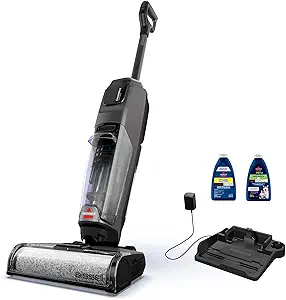 |
| Best Budget The cheapest option that still gets the job done reliably | Shark VACMOP VM252 |  |
| Top Rated A top-rated pick with lots of positive feedback | Amazon Basics 4-Gallon Wet/Dry Vacuum |  |
| Most Popular A crowd favorite that many people choose with confidence | Hoover FloorMate Deluxe FH40160PC |  |
| Best Seller A high-volume bestseller chosen again and again | Tineco iFLOOR 5 Breeze |  |
roborock F25 GT Gen 2

| Power Source | Battery Powered |
|---|---|
| Battery Average Life | 38 minutes |
| Suction | 20000Pa |
| Included Components | Charging Dock, Extra Floor Cleaning Solution, Maintenance Brush, User Manual, Wet Dry Vacuum Cleaner |
The roborock F25 GT Gen 2 combines a vacuum and powered mop into a cordless, all-in-one floor cleaner aimed at hard surfaces like tile, vinyl, and hardwood. It delivers strong suction (listed at 20000Pa) and a 450 RPM spinning mop to lift pet hair, spilled debris, and sticky grime without switching tools, while dual edge scrapers and a curved comb aim to prevent clogs and reduce streaking. The unit is relatively lightweight and offers a low-profile, 180° lie-flat design plus 70° swivel steering to reach under furniture and along baseboards. A notable convenience is the self-cleaning and hot-air drying cycle that heats to 194°F to melt residue and help keep the roller brush odor-free. Runtime in eco mode is about 38 minutes, which is adequate for most day-to-day cleaning in apartments or medium rooms but may require a recharge for very large spaces. Expect routine maintenance of the water tanks and brushes, and know that battery life and mop capacity limit very long sessions or heavy-duty commercial use.
Best for: Buyers looking for a versatile, space-saving floor cleaner that combines vacuuming and powered mopping for regular maintenance of tile and other hard floors in apartments or average-sized homes.
Less Ideal for: Those who need continuous heavy-duty cleaning for very large homes or commercial spaces where long runtime and larger liquid capacity are required.
- Combined vacuum and powered mop cleans and scrubs hard floors without tool changes
- Strong suction and spinning mop head lift dirt, pet hair, and sticky messes
- Self-cleaning with high-temperature drying reduces brush odor and residue buildup
- Low-profile, lightweight design and wide swivel improve reach under furniture and along edges
- Battery runtime (38 minutes) can be limiting for larger homes or extended deep-clean sessions
- Wet/dry capacity and need to refill/empty tanks means more frequent stops during long jobs
Verdict: A convenient cordless vacuum-mop combo that delivers strong suction and a self-cleaning system ideal for routine tile and hard-floor maintenance in average-sized homes.
Tineco Floor ONE Stretch S6

| Battery Life | 40 minutes |
|---|---|
| Clean Water Capacity | 0.8 liters |
| Dirty Water Capacity | 0.72L |
| Filter Type | HEPA Filter |
| Noise Level | 78 db |
The Tineco Floor ONE Stretch S6 is a cordless wet-dry vacuum designed for hard floors and tile that combines vacuuming, scrubbing, and water recovery in one pass. Its lay-flat HyperStretch neck compresses to reach under low furniture while dual-sided edge cleaning and a 9.93-inch cleaning path help capture dirt along baseboards and in corners. The machine separates dirty water from the motor and uses a 158°F FlashDry self-clean cycle to flush and heat-dry the brush and internal path after use, which reduces odor and speeds turnaround between jobs. On the floor the S6 runs in three modes — auto, max, and suction-only — so you can prioritize cleaning power or runtime; the iLoop sensors adjust water and battery use to extend the advertised 40-minute runtime. Practical limitations include a single power-level listing for the base specification and a moderate noise level at 78 dB, and the 0.8 L clean tank means very large spaces may need refills. For tile floors the S6's combination of wet scrubbing, water recovery, edge cleaning, and self-cleaning makes day-to-day maintenance faster than separate mop and vacuum steps.
Best for: Buyers who prioritize fast, performance-oriented wet cleaning for tile and hard floors and want a single cordless machine that scrubs, vacuums, and self-dries to speed regular maintenance.
Less Ideal for: Those who need a whisper-quiet cleaner, have very large open areas where tank capacity and runtime are critical, or prefer a separate heavy-duty carpet cleaner for deep rug cleaning.
- Lay-flat HyperStretch design reaches under low furniture and tight spaces.
- Dual-sided edge cleaning and a nearly 10-inch path pick up along baseboards efficiently.
- FlashDry heated self-clean cycle flushes and dries the brush and internal path to reduce odor and maintenance.
- Up to 40 minutes runtime with lithium-ion pouch battery and adaptive iLoop management.
- Clean water tank is 0.8 L so very large rooms require refills mid-job.
- Reported noise level around 78 dB is louder than quieter stick vacs.
Verdict: For tile floors where speed and thorough wet cleaning matter, the Stretch S6 delivers cordless scrubbing, edge pickup, and a fast heated self-clean so you spend less time maintaining floors.
Bissell CrossWave OmniForce 3882

| Capacity | 260 ml |
|---|---|
| Runtime | 30 minutes |
| Power Source | Battery Powered |
| Voltage | 26 volts |
| Form Factor | Stick |
The CrossWave OmniForce is a cordless wet/dry stick that vacuums and mops in a single pass or converts to a dedicated vacuum mode for stronger suction. Designed for hard floors, it uses two-tank technology to keep clean and dirty water separate, a tangle-free brush roll to reduce hair wrap, and a self-cleaning cycle to rinse the brush after use. You get up to 30 minutes of run time on battery power, enough for most medium rooms, and BISSELL includes trial cleaning formulas including a hard-floor sanitizer that claims to kill 99.9% of bacteria on sealed floors. Practical features like push-button controls, a compact stick form factor, and included charging dock make storage and daily use straightforward. Expect real-world limits on continuous runtime depending on mode and that cordless power means lower sustained suction than full-size corded models for very heavy soiling. For tile and sealed hard floors it delivers convenient, combined vacuuming and mopping with easy maintenance, but very large homes or heavily soiled jobs may need multiple charges or a corded unit.
Best for: Buyers who prioritize efficient, low-fuss cleaning of tile and sealed hard floors and want a single cordless tool that vacuums and mops in daily or weekly touch-ups.
Less Ideal for: Homes that require long continuous run times or very heavy-duty deep cleaning where corded commercial-strength suction is needed.
- Cordless vacuum and mop combo handles wet and dry messes in one pass
- Two-tank design keeps clean water separate from dirty water for consistent washes
- Tangle-free brush roll and self-cleaning cycle reduce hands-on maintenance
- Includes hard-floor sanitizer and pet multi-surface trial formulas
- Compact stick form and charging dock simplify storage and quick cleanups
- Up to 30 minutes runtime may be limiting for very large areas or extended sessions
- Battery-powered suction is lower than many corded heavy-duty vacuums
Verdict: Choose this cordless CrossWave if you want a practical all-in-one vac-and-mop that simplifies regular tile and sealed hard-floor cleaning with easy maintenance.
Shark VACMOP VM252

| Capacity | 0.1 quarts |
|---|---|
| Cleaning Path Width | 9.81 inches |
| Battery Description | Lithium-Ion |
| Battery Charge Time | 210 minutes |
| Runtime | 12 minutes |
The Shark VACMOP VM252 combines a compact cordless vacuum and spray mop into a single grab-and-go cleaner for sealed hard floors. It uses an all-in-one disposable pad that traps dry debris and pet hair in a built-in dirt chamber, then dispenses cleaning solution for stuck-on messes so you can mop and vacuum in one pass. The unit is lightweight with LED headlights for visibility and comes with a charger, a 12 oz cleaning solution, and four disposable pads to start. Typical use is quick spot cleaning and room-to-room maintenance on hardwood, tile, vinyl, laminate, and stone where you want a fast, no-fuss clean without dragging out a bucket. The practical benefits are convenience, no-touch pad disposal, and a tidy single-step workflow; limitations are the short battery runtime relative to full-size vacuums and ongoing cost of consumable disposable pads and solution. For regular deep cleaning or large homes you will still need a full vacuum or mop, but for quick wet/dry touch-ups this is efficient and easy to store.
Best for: Buyers who want an inexpensive, fast solution for everyday wet and dry touch-ups on sealed hard floors and prioritize convenience over deep-cleaning power.
Less Ideal for: Homes that require long runtime or frequent full-house deep cleans where a full-size vacuum and mop would be more efficient.
- Combines vacuuming and spray-mopping in one pass for faster spot cleaning
- Disposable pads lock away dry debris and allow no-touch disposal
- Cordless, lightweight design is easy to maneuver and store
- LED headlights improve visibility in corners and under furniture
- Short runtime on battery for extended cleaning sessions
- Requires ongoing purchase of disposable pads and cleaning solution
Verdict: A compact, easy-to-use wet/dry starter cleaner ideal for quick spot-cleaning of sealed hard floors when convenience and low upfront cost matter.
Amazon Basics 4-Gallon Wet/Dry Vacuum

| Capacity | 4 gallons |
|---|---|
| Wattage | 960 watts |
| Voltage | 120 volts |
| Hose Length | 72 inches |
| Filter Type | Cloth; foam wet filter |
This Amazon Basics 4-gallon wet/dry vacuum is a straightforward, no-frills cleaner built for everyday messes on hard surfaces like tile. It uses a 3 HP motor (listed as 960 watts) to pull debris and small amounts of water into a stainless steel tank, and it ships with a reusable cloth filter plus a foam wet filter for switching between dry and wet use. The 6-foot hose, multiple nozzles, and extension wands handle corners, grout lines, and baseboards, and on-board tool storage keeps attachments handy during a job. Its four wheels and relatively light body make it easy to move across tile without snagging. Expect simple touch controls and a single power level, so there is no fine suction adjustment for delicate tasks. The 4-gallon capacity is convenient for routine tile cleaning but means more frequent emptying during larger projects. For tile floors it shines at picking up grit, loose dirt, and small spills but is better suited to spot cleaning than whole-house heavy-duty work.
Best for: Buyers who prioritize a dependable, simple wet/dry vacuum for regular tile spot cleaning and garage use will appreciate this model's straightforward performance and durable tank.
Less Ideal for: Those needing variable suction settings, large-capacity tanks, or a unit aimed at continuous whole-house or heavy commercial cleanup should consider larger or feature-rich alternatives.
- Stainless steel 4-gallon tank resists corrosion and holds wet or dry debris
- Included cloth and foam filters allow quick switching between wet and dry modes
- Compact, lightweight canister with four wheels for easy maneuvering on tile
- On-board storage for hose and nozzles keeps tools organized during tasks
- Single fixed power level limits control over suction strength
- 4-gallon capacity requires frequent emptying on larger jobs
Verdict: A reliable, compact wet/dry vac that delivers straightforward suction and durable construction for routine tile spot cleaning.
Hoover FloorMate Deluxe FH40160PC

| Power Source | Corded Electric |
|---|---|
| Wattage | 420 watts |
| Voltage | 120 volts |
| Noise Level | 80 db |
| Capacity | 1 quarts |
The Hoover FloorMate Deluxe is a corded hard-floor cleaner designed to wash and dry sealed floors like tile, hardwood, laminate, and vinyl. It uses rotating SpinScrub brushes to loosen stuck-on dirt while suction pulls dirty water into a separate tank so you are not pushing grime around. There are two modes: wash mode runs the brushes while vacuuming up solution and mess, and dry mode stops the brushes to speed water pickup and reduce dry time. The unit is relatively lightweight for a floor scrubber, has fingertip push-button controls, removable tanks for easy filling and emptying, and ships with a trial cleaning solution. Practical benefits include visible cleaning results without hands-and-knees scrubbing and a dual-tank system that preserves clean water. Limitations are typical for corded scrubbers: it requires an outlet and some storage space, the 1 quart capacity means more frequent refills for large areas, and noise can be noticeable during use. For tile floors it excels at loosening grout-line dirt and lifting residue when used with an appropriate cleaning solution.
Best for: Buyers who want a reliable machine that visibly removes soil from tile and other sealed hard floors and who prioritize proven cleaning performance backed by many user reviews.
Less Ideal for: Homes that need a lightweight spot cleaner for quick touch-ups or fully cordless operation should consider other options.
- SpinScrub rotating brushes provide aggressive cleaning without scrubbing on hands and knees
- Dual-tank system keeps clean and dirty water separate for more effective cleaning
- Wash and dry modes let you choose between scrubbing with suction or quick pickup for faster drying
- Relatively lightweight and has removable tanks for easy filling, emptying, and storage
- Corded design limits mobility compared with cordless alternatives
- Small 1 quart tank capacity means more frequent refills and empties in large rooms
- Noise level around 80 dB can be loud for extended use
Verdict: Choose the FloorMate Deluxe when you want a proven scrub-and-suction cleaner that lifts grout and stuck-on messes from tile using SpinScrub brushes and a dual-tank system.
Tineco iFLOOR 5 Breeze

| Capacity | 0.8 liters |
|---|---|
| Battery Life | 35 minutes |
| Power Source | Battery Powered |
| Wattage | 190 watts |
| Control Method | Touch |
The Tineco iFLOOR 5 Breeze is a cordless upright that vacuums and washes sealed hard floors in a single pass, making it practical for tile, laminate, sealed wood, and marble. It uses a dual-tank system to keep clean and dirty water separate and an integrated flat scraper to dislodge stuck debris before suctioning and mopping. Two cleaning modes let you choose Eco for everyday spills or Max for tougher stains, and the brush roller is centrifugally dried during the one-touch self-clean cycle to reduce maintenance. Runtime is rated up to 35 minutes on battery power, which is enough for multi-room jobs in typical homes but may require recharging for very large areas. The unit is lightweight and cordless for easy maneuvering and includes replacement brush rollers, a dry filter, cleaning solution, and a charging base. Expect real benefits on tile floors: quick pickup of wet messes, edge cleaning along baseboards, and nearly dry, streak-free results, while very heavy soiling or large properties may push the battery runtime and tank capacity limits.
Best for: Buyers who want a low-fuss, all-in-one floor washer for tile and other sealed hard floors and prefer a product that minimizes hands-on maintenance.
Less Ideal for: Households that need continuous heavy-duty cleaning over very large areas or professionals who require extended runtime and larger tanks.
- Vacuum and mop in a single pass for fast cleanup of wet and dry messes
- Hands-free one-touch self-cleaning that washes and centrifugally dries the roller and tubing
- Dual-tank design keeps clean and dirty water separate for hygienic cleaning
- Enhanced edge cleaning reaches close to baseboards and narrow corners
- Cordless, lightweight design with up to 35 minutes runtime for room-to-room use
- 35-minute runtime may be insufficient for very large homes without recharging
- Clean and dirty tank capacities are modest, requiring emptying on longer jobs
Verdict: A convenient cordless wet/dry floor washer that delivers one-pass, nearly dry cleaning and easy maintenance for tile and other sealed hard floors.
Choosing the Right Wet/Dry Vacuum Cleaner for Tile Floors: Key Factors to Consider
Suction Power and Airflow
Suction strength determines how effectively a wet/dry vacuum pulls dirt out of grout lines and picks up small abrasive particles without needing repeated passes. Strong airflow helps lift both dry debris and thin liquid films off tile, but power alone is not enough; the design of the nozzle and brush head controls how that suction transfers to the floor.
Consider the typical soil you deal with. If your tile has deep grout or you frequently move sand and pet hair, prioritize higher rated airflow and suction. For light daily dust, a mid-range unit with good attachments will often be faster and gentler on surfaces.
Wet Pickup Capacity and Drainage
Wet pickup capacity matters for how many spills you can handle before emptying the tank. Larger tanks reduce interruption, but they also add weight when full and can be harder to pour. Ease of drainage is equally important; look for systems with quick-drain spouts or removable tanks that let you dispose of water without splashing.
Also check how the unit separates solids from liquids. Simple, open tanks are fine for everyday spills, but if you expect a lot of dirty water, a model with sediment traps or easy-to-clean strainers will make maintenance less unpleasant and prolong filter life.
Floor-Friendly Attachments
Tile requires accessories that protect the finish while cleaning edges and grout. Soft squeegee heads, wide low-profile floor nozzles, and narrow crevice tools let you reach baseboards and grout lines without scratching. Some designs include adjustable heads that switch between wet and dry modes, preventing damage when switching tasks.
Attachments also influence versatility. If you want to clean grout, dry debris, and small wet spills with one unit, ensure the kit includes multiple nozzles that are easy to swap and store. Tools that lock securely and are easy to rinse will speed routine cleaning.
Maneuverability and Hose Reach
How easily you can move the vacuum around a room affects cleaning time and fatigue. Lightweight units with rolling bases or compact designs help when working across kitchens and bathrooms. Hose length and wand articulation determine how far you can reach without moving the base, which is useful for stairs and tight corners.
Consider the layout of your home. For multi-room cleaning without unplugging constantly, prioritize longer cords and hoses and a base that swivels or rolls smoothly over thresholds and grout transitions.
Filter System and Maintenance
Filter type and accessibility influence both cleaning performance and long-term upkeep. Reusable foam or washable filters reduce running costs, while cartridge or HEPA options capture fine dust but may require more frequent care. For wet use, confirm that filters are rated for moisture exposure or can be removed and dried safely.
Maintenance extends beyond filters. Check how easy it is to empty debris, rinse attachments, and access seals. Units designed with simple tool-free disassembly will save time and reduce odors from trapped damp material.
Tank Size Versus Weight
Tank size impacts how many spills you can manage before emptying, but a larger tank increases the unit's weight when full and can make storage harder. For occasional kitchen and bathroom spills, a compact tank may be preferable. For garage or heavy-duty use, a larger tank reduces interruptions.
Balance tank capacity against how often you are willing to lift and empty the vacuum. If mobility and frequent emptying are acceptable, choose a smaller tank for lighter handling and storage convenience.
Preparing Tile Floors Before Vacuuming
Start by sweeping or dry vacuuming loose grit and large debris to prevent premature wear of nozzles and to reduce the load on wet pickup. Remove rugs or mats that could trap water near the vacuuming area.
If grout lines have visible residue, pre-treat with a mild cleaner and allow it to sit briefly before using wet pickup. This loosens embedded dirt so the vacuum can remove it more effectively without excessive scrubbing.
- Sweep or dry-vacuum first to collect large particles
- Use a mild cleaner on stained grout before wet extraction
- Test a hidden tile area before applying any new cleaning solution
Using the Wet Function Safely
When switching to wet mode, confirm the filter and internal seals are configured for liquid pickup. Some filters must be removed or replaced with a separate wet-use insert to avoid damage.
Work in small sections and avoid overfilling the tank. Pause periodically to empty and inspect the collected water for sediment that could clog outlets or valves.
- Check filter placement before wet pickup
- Empty tanks promptly to prevent odors
- Rinse the tank and attachments after each wet cleaning session
Dealing with Grout Lines and Narrow Gaps
Grout lines trap fine dust and require focused suction and a narrow tool head. Use a crevice tool or a small brush attachment to agitate and extract soil from between tiles. Keep the tool moving along the line rather than holding it in one spot to avoid grinding grit into the grout.
For stubborn residue, consider a soft-bristled brush to loosen particles before vacuuming. Avoid metal brushes or overly stiff tools that can damage grout or tile edges.
- Use narrow, soft-bristled tools for grout
- Avoid aggressive brushing that can abrade grout
- Move tools steadily to prevent embedding grit
Storing and Caring for Accessories
Store hoses and attachments so they retain their shape and are easy to access. Coil hoses without tight kinks and clasp accessories to prevent losing small pieces. Clean attachments after each wet use to prevent mildew buildup.
Inspect seals and gaskets periodically and replace or clean them when you notice reduced suction or leaks. Proper storage extends the life of both the vacuum and its accessories.
- Rinse and air-dry wet-use tools before storage
- Keep a small caddy or tote for frequently used attachments
- Check seals and replace worn gaskets promptly
Common Mistakes to Avoid
Do not assume every filter is safe for liquid pickup. Using the wrong filter while vacuuming water can ruin the filter and the motor. Always verify filter instructions before wet use.
Avoid dragging a full tank across steps or uneven surfaces; empty first. Also, do not use harsh chemicals that can damage internal hoses or seals unless the manufacturer states they are compatible.
- Verify filter wet-use compatibility
- Empty heavy tanks before lifting or transporting
- Avoid incompatible cleaning chemicals
How We Chose the Best Wet/Dry Vacuum Cleaner for Tile Floors
We focused on features and performance that matter most for tile floors. First, we prioritized suction strength and airflow because tile and grout need enough pulling force to remove sand and pet hair without excessive passes. Second, we evaluated brush and nozzle design that is gentle on tile yet effective in grout lines, including the availability of squeegees or narrow crevice tools. Third, we weighed wet pickup capacity and tank drainage simplicity, which determine how easily you handle spills and damp messes. Fourth, maneuverability and hose reach were considered so units can access kitchens, bathrooms, and stair edges without straining. Finally, we assessed maintenance factors such as filter type, debris access, and parts that contact water for hygienic cleaning. We excluded units designed solely for carpeted floors or industrial debris that lack floor-friendly accessories. Units were filtered out if they had poor user-serviceable parts, complicated drainage, or nozzle designs likely to scratch tile. The final selections reflect a balance of suction, floor protection, wet handling, and practical upkeep.
Our full evaluation process is outlined in our review methodology.
FAQ
Can I use a wet/dry vacuum on sealed and unsealed tile?
You can use a wet/dry vacuum on both sealed and unsealed tile, but take care with unsealed grout and porous tiles. For unsealed surfaces, avoid excessive water and test a small area to ensure the tile and grout do not absorb moisture that could lead to staining or weakening.
How often should I clean or replace filters after wet use?
Filters used for wet pickup should be rinsed and air-dried after each session. Replace or deep-clean reusable filters per the manufacturer's guidance. If a filter becomes damaged or permanently clogged, replace it to maintain suction and prevent motor strain.
Will a wet/dry vacuum damage tile finishes?
A properly used wet/dry vacuum should not damage tile finishes. Use soft nozzles and avoid stiff brushes or metal attachments. Keep the tool moving and avoid pressing hard into grout lines to prevent abrasion.
Is a larger tank always better for tile cleaning?
Not necessarily. Larger tanks reduce how often you empty but increase weight when filled, making the unit harder to move. For routine kitchen and bathroom spills, a moderate tank balances capacity with ease of handling.
How do I prevent odors after wet cleaning?
Empty and rinse the tank and attachments immediately after wet cleaning. Remove and clean filters that contact water, and allow all components to dry thoroughly before storage. Regular rinsing of strainers and seals prevents trapped organic material from producing odors.
Final Verdict
For tile floors, prioritize suction and floor-friendly tools over raw tank size. Strong airflow combined with soft, narrow attachments makes grout and edges easier to clean while protecting tile finishes. Balance tank capacity against how often you are willing to empty and how much weight you can handle. Choose a unit that matches your typical cleanup tasks: larger tanks for frequent heavy spills, compact and maneuverable models for daily light cleaning. With the right focus on suction, attachments, and maintenance, you can keep tile floors clean with fewer passes and less wear on grout and tile.