
Note: This article contains affiliate links. If you click on these links and make a purchase, we may earn a small commission at no extra cost to you. This helps support our research and content. Read our full affiliate disclosure here.
Picking the right 2-Door refrigerator affects daily routine more than most appliances. You want dependable cooling, useful shelf layouts, and reasonable energy use so food stays fresh and your utility bills stay predictable. This guide presents the top shortlisted 2-Door refrigerators for typical kitchen setups and evaluates each for capacity, organization, and efficiency. The selections here are chosen to suit a range of kitchens and usage patterns. Below you will find compact and full-size options, plus clear notes on the performance dimensions that matter when comparing 2-Door refrigerators.
Top Picks at a Glance
| Best Value The sweet spot between price and what you get | EUHOMY 3.2 Cu Ft Mini Fridge |  |
| Best Budget The cheapest option that still gets the job done reliably | Frigidaire Retro EFR786 |  |
| Top Rated A top-rated pick with lots of positive feedback | EUHOMY 3.2 Cu Ft Mini Fridge |  |
| Most Popular A crowd favorite that many people choose with confidence | Midea 3.1 cu ft Mini Fridge WHD-113FB1 |  |
| Best Seller A high-volume bestseller chosen again and again | Frigidaire Retro Refrigerator EFR751 |  |
EUHOMY 3.2 Cu Ft Mini Fridge

| Capacity | 3.2 cubic feet |
|---|---|
| Freezer Capacity | 0.96 cubic feet |
| Cooling Method | Compressor |
| Defrost System Type | Manual |
| Door Orientation | Reversible |
The EUHOMY 3.2 cu ft mini fridge pairs a small top freezer with a separate refrigerated compartment to give you fridge and freezer storage in one compact unit. It uses a compressor cooling system and a three-level thermostat so you can tune temperatures for drinks, produce, or frozen items, while the adjustable glass shelves and a crisper drawer help organize different food sizes. The interior LED light and reversible door add convenience for tight layouts, and the unit is designed for freestanding placement with adjustable feet to level it. Noise is kept low for bedroom or dorm use, and the manual defrost freezer and electronic lock are straightforward features for everyday use. Expect modest annual energy use compared with full-size refrigerators, but realize the small freezer space limits bulk frozen storage and the manual defrost means occasional maintenance. For someone needing compact dual-zone cooling with practical storage options, this model is a sensible, space-saving choice.
Best for: Buyers who prioritize efficient use of limited space and want a practical two-zone refrigerator for a dorm, bedroom, office, or small apartment where flexible placement and simple organization matter.
Less Ideal for: Not a good choice for households that need large freezer capacity or those who prefer a frost-free freezer with no manual defrost upkeep.
- Separate fridge and top freezer provide both refrigerated and frozen storage in one compact unit
- Adjustable glass shelves and crisper drawer make organizing different foods easy
- Reversible door and adjustable feet allow flexible placement in tight rooms
- Compressor cooling with three temperature settings offers reliable, relatively quiet performance
- Freezer volume is small and not suited for large frozen loads
- Defrosting the freezer is manual and requires periodic maintenance
Verdict: A compact two-door mini fridge that delivers practical, space-saving fridge and freezer storage for small rooms and everyday use.
Frigidaire Retro EFR786

| Capacity | 7.5 cubic feet |
|---|---|
| Freezer Capacity | 1.5 cubic feet |
| Defrost System Type | Manual |
| Power Source | Corded Electric |
| Installation Type | Freestanding |
The Frigidaire Retro EFR786 is a compact, freezer-on-top refrigerator built for small spaces that need straightforward, no-frills cooling. It provides 7.5 cubic feet of total capacity with a 1.5 cu ft freezer and adjustable glass shelves, so you can organize beverages, produce in the crisper, and larger items by moving shelving around. Mechanical controls and a manual defrost freezer keep operation simple and reduce service complexity, while the reversible door and rear castors make placement flexible in tight rooms. Notable style details include chrome trim and pull-handle doors that give it a vintage look without sacrificing practical storage. Expect basic compressor cooling and modest energy use for the size. Trade-offs are the manual defrost freezer and a smaller overall footprint compared with full-size fridges, so it works best where compactness and cost matter more than advanced features like frost-free operation or precise digital controls.
Best for: Buyers prioritizing an affordable, space-saving refrigerator with simple, reliable cooling and a retro look for apartments, dorms, or secondary kitchens.
Less Ideal for: Households that need a large-capacity, frost-free freezer or advanced temperature controls should consider larger or feature-rich models instead.
- Compact 7.5 cu ft capacity fits apartments, dorms, and small kitchens
- Adjustable glass shelves and removable freezer shelf allow flexible storage layouts
- Reversible door and rear castors make installation and placement easier
- Retro styling with chrome trim adds visual appeal for a budget-friendly unit
- Freezer uses manual defrost, which requires occasional maintenance
- Basic mechanical controls lack precise temperature programming
Verdict: A budget-friendly, stylish compact refrigerator that delivers straightforward cooling and flexible storage for small spaces.
EUHOMY 3.2 Cu Ft Mini Fridge
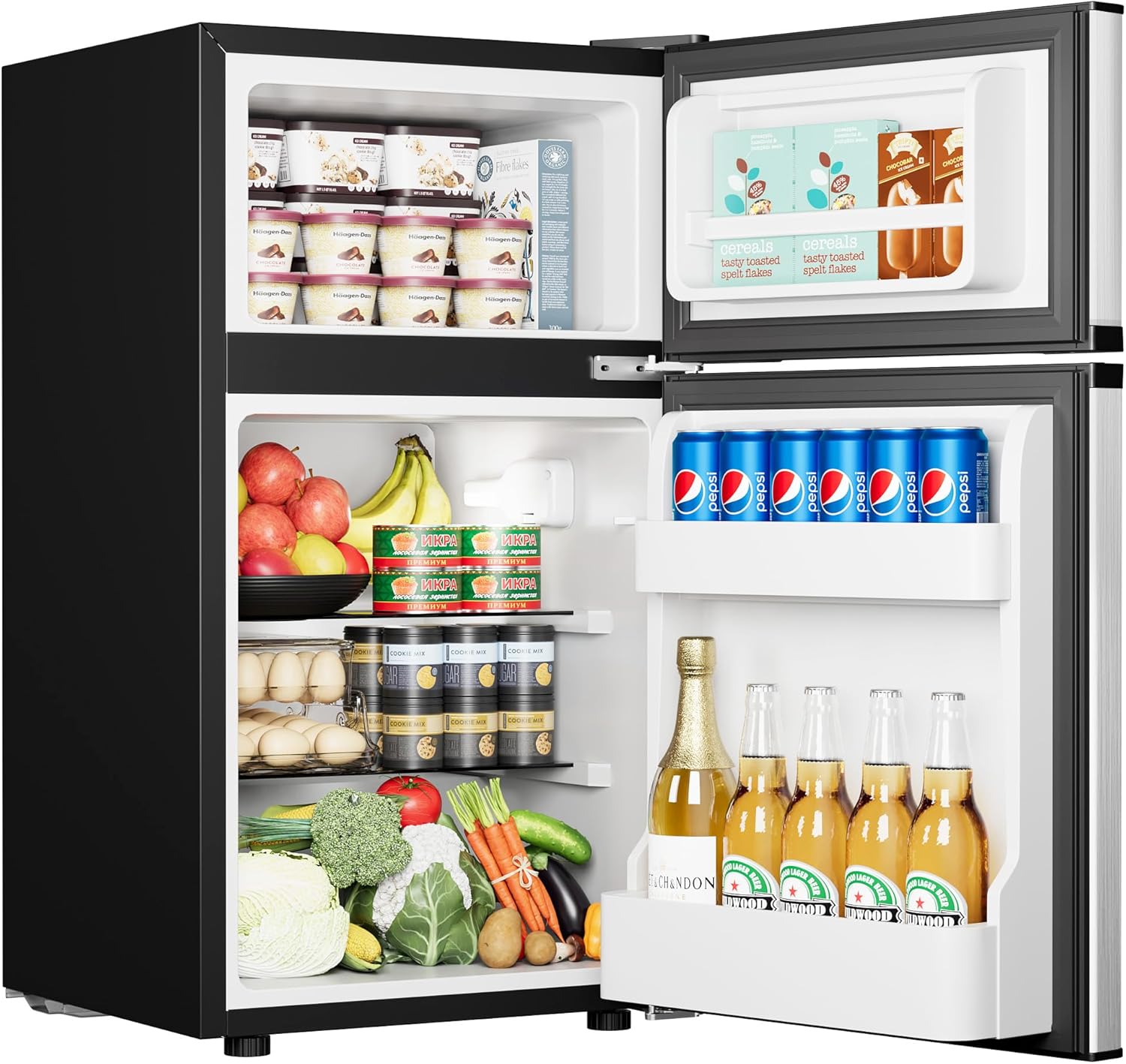
| Capacity | 3.2 cubic feet |
|---|---|
| Freezer Capacity | 0.96 cubic feet |
| Cooling Method | Compressor |
| Defrost System Type | Automatic |
| Voltage | 115 volts |
The EUHOMY 3.2 cu ft mini fridge pairs a 0.96 cu ft top freezer with a 2.24 cu ft fresh-food compartment to give simple fridge-and-freezer functionality in a compact footprint. It uses a compressor (rotary scroll) with inverter technology for steady cooling and three temperature settings so you can tune performance for drinks, produce, or frozen items. The unit includes adjustable glass shelves, a crisper drawer, LED interior lighting, a reversible door and electronic lock, which help organize food and fit varied room layouts. Practical benefits include a quiet operation suitable for bedrooms or dorms, and an energy-aware design with UL certification and stated daily consumption under 1 kWh. Expect some limits typical of this class: storage volume is modest, the freezer is small so it is best for occasional frozen storage rather than bulk freezing, and annual energy consumption listed is relatively high compared with ultra-efficient compact models. Installation is freestanding and the small footprint makes it straightforward to place in tight spots.
Best for: Buyers who prioritize a dependable, no-frills fridge-and-freezer combo for a dorm, bedroom, or small apartment and want straightforward controls and solid cooling performance.
Less Ideal for: Not a good choice for households that need large frozen storage or for users seeking the absolute lowest energy draw in the compact category.
- Two-door layout with separate top freezer and fresh-food compartment for flexible storage
- Compressor cooling with inverter tech for consistent temperatures and relatively quiet operation
- Adjustable glass shelves and crisper drawer let you organize items efficiently
- Reversible door and adjustable feet increase placement options in small rooms
- Built-in LED light and electronic lock add convenience and security
- Freezer capacity (0.96 cu ft) is small and not suited for bulk freezing
- Annual energy consumption figure is higher than some more efficient compact fridges
Verdict: A reliable two-door mini fridge that delivers dependable compressor cooling and practical storage for small spaces.
Midea 3.1 cu ft Mini Fridge WHD-113FB1

| Capacity | 3.1 cubic feet |
|---|---|
| Annual Energy Consumption | 270 kilowatt hours per year |
| Refrigerator Net Capacity | 2.18 cubic feet |
| Defrost System Type | Manual Defrost |
| Cooling Method | Compressor |
The Midea WHD-113FB1 is a compact two-door refrigerator with a top freezer intended for dorms, offices, or small kitchens. It uses an R600A compressor and Energy Star certification to keep annual energy use low while operating at about 45 dB, and the mechanical thermostat lets you set fridge and freezer temperatures across usable ranges. Inside there are removable glass shelves, a crisper drawer, a 2L bottle rack and an LED light for easy access, plus a reversible door for flexible placement. Installation is freestanding and the unit includes an inverter to help efficient cooling. Practical limits are its small overall capacity—best for drinks, snacks, and light meal storage—and manual defrosting of the freezer, which means occasional maintenance. For buyers prioritizing efficient everyday chilling in tight footprints, this model offers a good balance of features and low running cost, but it is not intended as a primary full-size household refrigerator.
Best for: Buyers who want an energy-efficient, space-saving two-door refrigerator for a dorm, office, garage, or small apartment and who value low running costs and straightforward features.
Less Ideal for: Those who need a high-capacity or full-size family refrigerator, heavy freezer storage, or a frost-free maintenance-free model should look elsewhere.
- Energy Star certified with low annual energy consumption
- Top freezer plus fridge layout maximizes usable organization in a small footprint
- Removable glass shelves and crisper drawer provide flexible internal storage
- Reversible door and compact freestanding design for tight spaces
- LED interior light and electronic lock add convenience and security
- Freezer uses manual defrost so ice build-up requires periodic thawing
- Limited total capacity not suited for large households
Verdict: Choose this compact two-door fridge when you want an Energy Star certified, space-saving top-freezer unit that keeps operating costs low while fitting tight layouts.
Frigidaire Retro Refrigerator EFR751
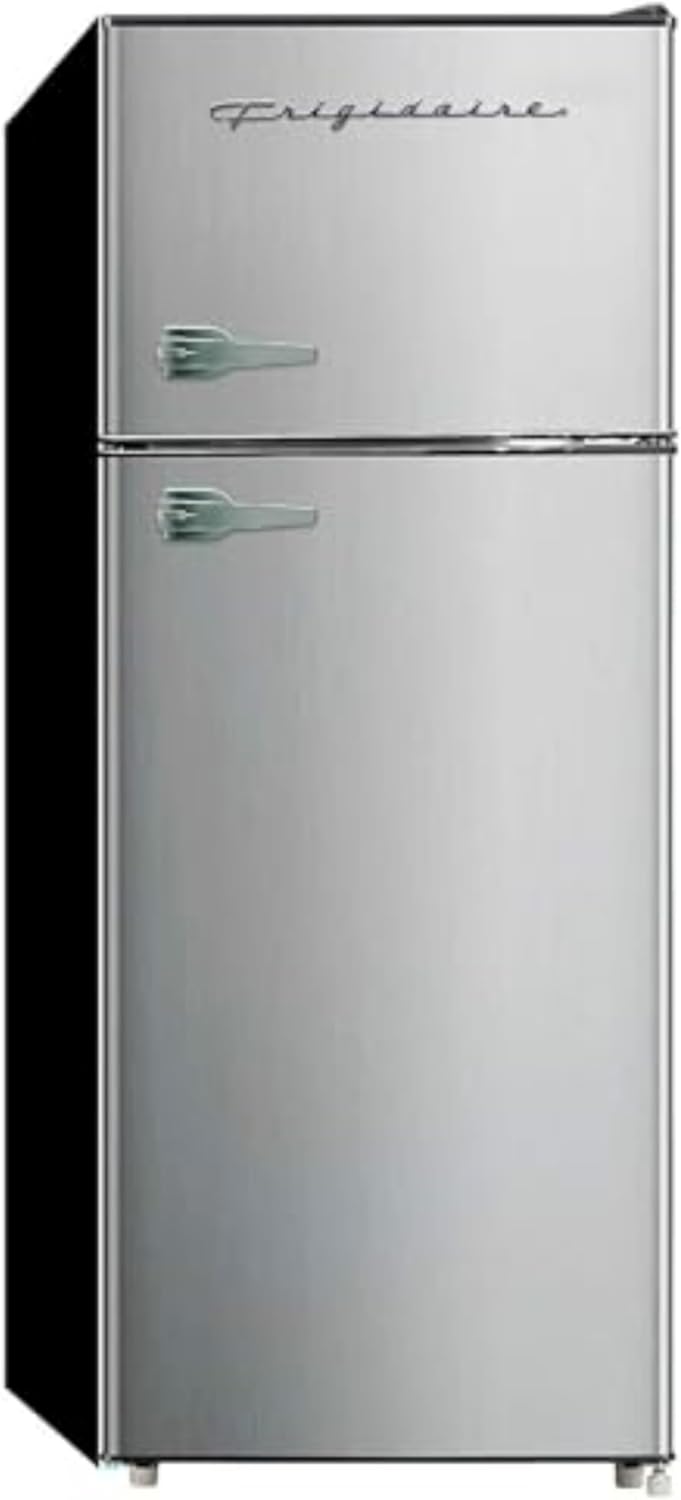
| Capacity | 7.5 cubic feet |
|---|---|
| Freezer Capacity | 2 cubic feet |
| Defrost System Type | Manual |
| Cooling Method | Compressor |
| Voltage | 120 volts |
The Frigidaire EFR751 is a compact two-door refrigerator with a separate top freezer that fits small kitchens, dorms, and offices. It offers 7.5 cubic feet of total capacity with three adjustable glass shelves, a covered crisper, and clear door shelves for organized storage, while the freezer includes an adjustable/removable wire shelf. The unit uses a compressor cooling method and simple mechanical controls, and its reversible door and back-mounted castors make placement and installation flexible. Practical design touches such as a full-width door bin for tall bottles, interior lighting, and quiet operation make daily use straightforward. Expect manual defrosting in the freezer rather than an automatic system, and annual energy consumption is relatively high compared with some modern efficient models. For buyers who prioritize straightforward features, reliable compressor cooling, and a compact footprint with retro styling, this refrigerator delivers sensible performance, though it is not the most energy-efficient option available.
Best for: Buyers seeking a dependable, no-frills two-door fridge for apartments, dorms, or secondary kitchens who value straightforward controls and flexible placement.
Less Ideal for: Shoppers focused on maximum energy savings or who want fully automatic frost-free operation should consider other models.
- Separate top freezer and refrigerator sections for clear organization
- Adjustable glass shelves and removable freezer shelf allow flexible storage layouts
- Reversible door and rear castors simplify placement in tight spaces
- Mechanical controls and compressor cooling provide familiar, reliable operation
- Manual defrost system requires periodic maintenance
- Higher annual energy consumption compared with newer energy-efficient models
Verdict: A practical, retro-styled two-door fridge that offers reliable compressor cooling and flexible storage for smaller homes and apartments.
Choosing the Right 2-Door Refrigerator: Key Factors to Consider
Capacity and Usable Volume
Total capacity on paper does not always equal usable space. Look for measurements of fresh-food and freezer volumes, plus the shape of shelves and door bins. Tall narrow compartments may hold less bulky items despite similar cubic feet.
Usable volume affects how often you grocery shop and how you organize meals. If you frequently store large platters or tall bottles, prioritize adjustable shelves and removable bins that let you change the interior layout without losing cold air pathways.
Shelf Layout and Organization
Shelf material, adjustability, and the presence of dedicated bins for produce, deli, and dairy influence daily convenience. Spill-resistant glass shelves help contain messes and make cleaning faster. Door bin depth and height determine whether you can store gallon containers or tall condiment bottles safely.
Good organization reduces door openings and improves cooling stability by making items easier to find. Consider models with a variety of shelf positions and clear drawers to keep frequently used items accessible and minimize temperature fluctuations during use.
Energy Use and Efficiency Ratings
Energy consumption directly affects operating cost over the life of the refrigerator. Look for official efficiency ratings and estimated annual energy use. Compare these figures relative to the unit's capacity to find an efficient match for your needs.
Higher-efficiency models often have better insulation, more precise controls, or variable-speed compressors. Those features can reduce energy use but may add complexity, so weigh the tradeoff between long-term savings and potential repair considerations.
Temperature Control and Defrost System
Reliable temperature control ensures food safety and reduces spoilage. Check whether a unit offers separate temperature controls for the fresh-food and freezer sections and how fine-grained those settings are. Automatic defrost systems reduce manual maintenance but can slightly increase complexity.
Stable controls and consistent airflow between compartments matter when storing delicate items. A good defrost strategy and accessible evaporator components make regular maintenance easier and keep cooling performance steady over time.
Noise Level and Daily Operation
Compressor and fan noise vary significantly between models. Consider where the refrigerator will live in your home; a unit in an open-concept kitchen needs to run quietly to avoid interference with conversations and media.
Noise performance also indicates how hard the compressor runs to maintain temperature. Excessive or uneven noise patterns can signal inefficient operation or early mechanical stress, so prefer designs with quiet operation and stable cycling behavior.
Serviceability and Expected Longevity
Access to serviceable components, clear service panels, and common replacement parts improve long-term ownership. Look for units with straightforward access to filters, door seals, and condenser coils, and choose finishes that tolerate cleaning and wear.
A refrigerator that is easier to service typically has lower lifetime maintenance costs. Consider local service options and whether commonly replaced parts are modular and replaceable without specialized tools.
Sizing the Right 2-Door Refrigerator for Your Kitchen
Measure both the installation footprint and the door swing clearance before choosing a 2-Door refrigerator. Consider the space for ventilation behind the unit and the path used to move food in and out daily. A refrigerator that fits the opening but blocks walkways will reduce usability.
Think about interior height as well as total volume. Some models achieve capacity with deep shelves that make items at the back hard to access. If you store many tall items, prioritize interior height and adjustable shelving over small incremental gains in cubic footage.
- Measure width, depth, and height including clearance for hoses and vents
- Plan for door swing and adjacent cabinetry
- Check interior shelf adjustability for tall items
Placement and Ventilation Best Practices
Proper placement affects efficiency and appliance life. Allow recommended clearance around the sides and rear for airflow. Avoid installing the refrigerator in direct sunlight or next to heat-producing appliances, as that forces the compressor to work harder.
Level the unit so doors seal properly. An unlevel refrigerator can cause doors to close incorrectly, leading to warm spots and higher energy use. Regularly clean accessible condenser coils to maintain efficient heat rejection.
- Keep unit away from ovens and direct sunlight
- Maintain manufacturer-recommended clearance for airflow
- Clean condenser coils every 6 to 12 months
Maintaining Food Safety and Freshness
Use a simple thermometer to verify refrigerator and freezer temperatures. The fresh-food compartment should stay near recommended safe temperatures, and the freezer should hold a stable subfreezing environment. Monitor door seals for gaps that let warm air in.
Organize foods so air can circulate around items. Avoid overpacking which restricts airflow and forces the compressor to run more often. Store raw proteins on the lowest shelf to prevent cross-contamination and use clear bins to keep produce visible and tended.
- Check temperatures regularly with a thermometer
- Do not overpack shelves; allow airflow
- Store items by temperature sensitivity and use clear bins for visibility
Common Installation Considerations
Confirm floor strength and leveling in the installation area. A heavy, fully loaded refrigerator needs a stable, level surface. Soft flooring or uneven tiles can complicate door alignment.
Verify electrical requirements and grounding. Most household circuits handle a single refrigerator, but older wiring or shared circuits with heavy loads can cause nuisance tripping. Use the specified wall outlet and avoid extension cords.
- Ensure a level, stable floor for installation
- Confirm dedicated circuit and proper grounding
- Plan for future service access when locating the unit
When a 2-Door Refrigerator Is the Right Choice
A 2-Door refrigerator is a practical fit when you want separate access to the fresh-food and freezer compartments without the footprint of multi-door or drawer-style designs. They are often simpler mechanically and have straightforward interior layouts that most households can use effectively.
They tend to be a good middle ground for households that need moderate capacity and reliable, uncomplicated performance. Choose this form factor when you want predictable storage without more complex features that require extra maintenance.
- Best for households needing separate refrigerator and freezer access
- Offers straightforward organization and maintenance
- Good balance of capacity and simplicity
How We Chose the Best 2-Door Refrigerator
We evaluated candidates based on features and specifications that directly affect real-world refrigerator ownership. Primary filters included usable fresh-food and freezer capacity, measured shelving and bin flexibility, and overall energy consumption. We also assessed temperature control accuracy and stability, since consistent cooling is essential for food safety and reducing waste. Durability and ease of maintenance were considered by looking at materials, evaporator and condenser designs, and access for routine cleaning. Noise level and daily operation characteristics were included to ensure a unit performs well in open-plan living spaces. Exclusions: units that do not offer distinct refrigerator and freezer compartments with door access, specialty merchandisers, and models that lack commonly available replacement parts were excluded. We focused on models with clear spec sheets and verifiable efficiency ratings. The result is a shortlist that balances usable interior layout, predictable energy use, temperature control, and serviceability.
Our full evaluation process is outlined in our review methodology.
FAQ
What temperature should I set my 2-Door refrigerator to?
Aim for about 37 to 40 degrees Fahrenheit in the fresh-food compartment and 0 degrees Fahrenheit in the freezer. These ranges balance food safety and energy use while minimizing freeze damage to fresh items.
How often should I defrost a 2-Door refrigerator?
If the unit has automatic defrost, routine manual defrosting is not needed. For manual-defrost units, defrost when frost buildup exceeds about a quarter inch. Regular defrosting keeps airflow and efficiency from degrading.
Can I install a 2-Door refrigerator in a tight kitchen alcove?
Yes, but confirm the required ventilation clearances and allow space for door swing. Some alcoves need extra rear clearance for vents or a small gap above the unit to prevent heat buildup and reduce compressor workload.
What causes a refrigerator to run constantly?
Continuous running can result from high ambient temperatures, blocked ventilation, faulty door seals, or frequent door openings. It can also indicate a failing thermostat or compressor. Address simple issues first, such as sealing and airflow, before pursuing service.
How do I clean the condenser coils and how often?
Unplug the unit and use a brush or vacuum to remove dust and debris from exposed coils every 6 to 12 months. Clean coils improve heat rejection and reduce compressor workload, improving efficiency and longevity.
Final Verdict
Choosing a 2-Door refrigerator is about balancing usable interior layout, consistent temperature control, and efficient operation for your kitchen. Prioritize models with flexible shelving and reliable temperature management if you store varied food types, and check energy use relative to capacity to keep operating costs in check. Accept tradeoffs between advanced features and long-term serviceability. For most households, a well-sized, energy-efficient 2-Door refrigerator with easy maintenance and quiet operation delivers the best combination of convenience and reliability.