
Note: This article contains affiliate links. If you click on these links and make a purchase, we may earn a small commission at no extra cost to you. This helps support our research and content. Read our full affiliate disclosure here.
If you prefer simple, low-maintenance refrigeration, a bottom-freezer refrigerator without ice maker can be a smart choice. These units remove the complexity of built-in ice production, free up interior space, and often reduce nuisance maintenance. For many kitchens the tradeoff is worth it: you keep full-width bins, flexible shelf layouts, and a quieter appliance. This guide shortlists the top options in this category and explains the practical differences that matter, including interior capacity, energy use, temperature control, and reliability. Read on for the factors we prioritized and the features that will affect daily use and long-term ownership.
Top Picks at a Glance
| Best Overall The best all-around choice for most situations | Conserv RF 331-120 Bottom-Freezer Refrigerator |  |
| Best Value The sweet spot between price and what you get | Upstreman BM71 7.1 Cu Ft Refrigerator |  |
| Best Budget The cheapest option that still gets the job done reliably | BANGSON 7.1 Cu Ft Bottom-Freezer Refrigerator | 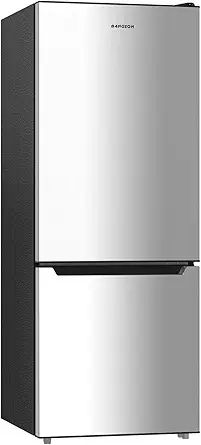 |
| Top Rated A top-rated pick with lots of positive feedback | Sharp SJB1255GS 11.5 cu ft Refrigerator |  |
| Most Popular A crowd favorite that many people choose with confidence | Whirlpool WRB329DMBW Bottom-Freezer Refrigerator |  |
| Best Seller A high-volume bestseller chosen again and again | Hamilton Beach HBFR9004 9.2 cu ft Fridge |  |
Conserv RF 331-120 Bottom-Freezer Refrigerator

| Total Capacity | 11.7 cubic feet |
|---|---|
| Refrigerator Net Capacity | 8.1 cubic feet |
| Freezer Capacity | 3.6 cubic feet |
| Annual Energy Consumption | 399 kwh |
| Voltage | 115 volts |
The Conserv RF 331-120 is a compact bottom-freezer fridge designed for practical everyday use where space or non-kitchen placement matters. It pairs an 8.1 cu ft fresh-food compartment with a 3.6 cu ft freezer below and uses a no-frost multi cooling system and inverter compressor to maintain steady temperatures without manual defrosting. Adjustable tempered glass shelves, a humidity-controlled crisper, LED lighting, and a small wine rack make organizing produce and bottles straightforward, while the V-Move handle and reversible door help it fit into tight layouts. Notable for its garage-ready spec, the unit is engineered to operate in ambient temperatures from 38 to 110°F, and its claimed annual consumption of 399 kWh positions it as energy conscious for a compact fridge. Trade-offs are its modest total capacity and narrower width compared with full-size models, so it works best where space is limited rather than for large households or heavy frozen storage needs.
Best for: Buyers who want a space-conscious, energy-efficient bottom-freezer that can sit in a garage or small kitchen and deliver hassle-free cooling without manual defrosting.
Less Ideal for: Families that need large refrigerated or frozen storage or buyers who prioritize a built-in look and maximum internal capacity should consider larger models instead.
- No-frost multi cooling system and inverter compressor for steady temperatures and quieter operation
- Garage-ready rating allowing reliable use in unconditioned spaces from 38 to 110°F
- Adjustable tempered glass shelves, humidity crisper, and a small wine rack for flexible organization
- LED lighting and reversible door for visibility and installation flexibility
- Energy-efficient design with an annual consumption of 399 kWh
- Total capacity is compact and may be limiting for larger households
- Freezer space is small compared with standard top-freezer or larger bottom-freezer models
Verdict: Choose the Conserv RF 331-120 if you need a compact, energy-efficient bottom-freezer that operates reliably in garages or small spaces without requiring manual defrosting.
Upstreman BM71 7.1 Cu Ft Refrigerator

| Capacity | 7.1 cubic feet |
|---|---|
| Freezer Capacity | 1.65 cubic feet |
| Defrost System Type | Manual |
| Cooling Method | Compressor |
| Refrigerant | R-600A |
The Upstreman BM71 is a space-saving bottom-freezer refrigerator aimed at apartments and dorms that need usable storage without an ice maker. The fresh-food compartment provides most of the usable volume at eye level while the 1.65 cu ft bottom freezer keeps heavier frozen items within easy reach. Controls let you set temperatures across a 32°F to 53.6°F fridge range and a -5.8°F to 17.6°F freezer range, and adjustable shelves plus a built-in light make everyday loading and organization straightforward. It uses a compressor cooling system with R-600A refrigerant, operates quietly at around 39 dB, and is rated for low energy consumption, making it economical to run. Practical touches include a reversible door, adjustable feet for leveling, and simple manual defrosting which keeps electronics minimal but does require occasional maintenance. If you want a compact, efficient bottom-freezer unit without extra features like an ice maker or dispenser, this model covers the basics reliably, though shoppers who prefer auto-defrost or larger freezer capacity will want a different class of refrigerator.
Best for: Buyers who prioritize efficient, compact refrigeration and straightforward reliability for apartments, dorms, or small kitchens and who value usable fridge space and low operating noise.
Less Ideal for: Those who need large freezer volume, automatic defrost, or integrated ice-making and dispensing features should look at larger or higher-end models.
- Bottom-freezer layout places heavy frozen items at waist height for easier access
- Adjustable shelving and built-in light simplify organization and visibility
- Quiet operation around 39 dB suitable for open-plan spaces and light sleepers
- Energy-efficient compressor design with R-600A refrigerant lowers running cost
- Reversible door and adjustable feet allow flexible placement in small kitchens
- Manual defrost requires periodic maintenance and ice removal
- Freezer capacity is modest at 1.65 cu ft for users with larger frozen food needs
- No ice maker or dispenser for users who want ready ice on demand
Verdict: A compact, energy-efficient bottom-freezer fridge that delivers quiet, practical storage without an ice maker for space-conscious households.
BANGSON 7.1 Cu Ft Bottom-Freezer Refrigerator

| Capacity | 7.1 cubic feet |
|---|---|
| Freezer Capacity | 1.6 cubic feet |
| Refrigerator Net Capacity | 5.45 cubic feet |
| Defrost System Type | Manual Defrost |
| Cooling Method | Compressor |
This BANGSON 7.1 cu ft refrigerator is a space-saving bottom-freezer unit aimed at small kitchens, apartments, or offices. It combines a 5.45 cu ft fresh food compartment with a 1.6 cu ft manual-defrost freezer and offers five temperature settings for flexible storage from chilled drinks to frozen treats. Inside you get adjustable glass shelves, a crisper drawer, door racks for bottles, and two freezer drawers that keep frozen items organized. The compressor-based cooling and rotary scroll compressor type help deliver steady temperatures while the unit is said to operate quietly around 39 dB. Practical features include reversible doors, leveling legs for uneven floors, an interior night light, an ice tray and a defrost tool. Expect manual defrosting roughly every few months and follow the recommendation to let the fridge stand upright for several hours after delivery before use. This model focuses on simple, efficient cooling rather than advanced features like automatic ice makers or smart controls, making it a straightforward choice where footprint, low noise, and energy efficiency matter.
Best for: Buyers seeking an affordable, no-frills bottom-freezer refrigerator for small spaces who prioritize quiet, energy-conscious cooling and simple adjustable storage.
Less Ideal for: Those who need large-capacity refrigeration, automatic ice production, or smart/connected controls should consider other models.
- Compact footprint suited to apartments and small kitchens
- Bottom-freezer layout with two freezer drawers for organized frozen storage
- Adjustable glass shelves and crisper drawer for flexible refrigerator organization
- Quiet operation around 39 dB for use in living spaces or offices
- Reversible doors and leveling legs improve placement options
- Freezer uses manual defrost which requires periodic maintenance
- No automatic ice maker or smart connectivity features
Verdict: A compact, budget-friendly bottom-freezer refrigerator that delivers quiet, energy-efficient cooling and practical adjustable storage without frills.
Sharp SJB1255GS 11.5 cu ft Refrigerator

| Capacity | 11.5 cubic feet |
|---|---|
| Freezer Capacity | 4.2 cubic feet |
| Configuration | Freezer-on-Bottom |
| Defrost System Type | Frost Free |
| Refrigerant | R-600A |
The Sharp SJB1255GS is a slim counter-depth bottom-freezer refrigerator built for tight kitchens and secondary spaces. It offers 11.5 cubic feet of total capacity with a 4.2 cu ft bottom freezer arranged with three drawers and two interior refrigerator shelves for straightforward organization. Notable controls include an easy-to-read LED display and electronic temperature control, plus Multi Air Flow vents that help equalize temperatures and a Freeze Boost feature for quickly lowering freezer temperature. The dual-purpose Fresh Converter Drawer switches between Chiller and Crisper modes to preserve deli items or produce, and a removable wine rack adds simple specialty storage. Energy-saving modes such as Eco Mode and Vacation Mode provide flexibility for occasional-use locations. Practical limitations are its compact internal shelf count and mostly plastic shelving, which reduce customization compared with larger models, and its single-door refrigerator layout can feel tight if you store large platters. For buyers prioritizing dependable, efficient cooling in a compact footprint, the SJB1255GS is a sensible, low-friction choice.
Best for: Buyers who want a reliable, energy-efficient bottom-freezer fridge for a small kitchen, second home, or compact primary kitchen where consistent cooling and low maintenance matter most.
Less Ideal for: Households that cook large meals, host frequently, or need wide shelving and maximum internal capacity should consider larger models instead.
- Counter-depth 24-inch footprint fits narrow or built-in-style kitchens
- ENERGY STAR–rated design with Eco and Vacation modes for lower run-time
- Fresh Converter Drawer that toggles between chiller and crisper functions
- Bottom-freezer with three drawers and a removable wine rack for organized frozen storage
- LED display and electronic temperature controls for easy adjustments
- Limited shelving (two shelves) and primarily plastic shelves reduce internal flexibility
- Smaller overall capacity compared with full-size refrigerators may require more frequent restocking
Verdict: A dependable, ENERGY STAR counter-depth bottom-freezer that delivers efficient, low-maintenance cooling for small kitchens and secondary living spaces.
Whirlpool WRB329DMBW Bottom-Freezer Refrigerator

| Capacity | 18.67 cubic feet |
|---|---|
| Freezer Capacity | 5.7 cubic feet |
| Defrost System Type | Automatic |
| Voltage | 120 volts |
| Form Factor | Freezer Bottom |
This Whirlpool WRB329DMBW is a straightforward bottom-freezer fridge built for everyday home use. It places the freezer in a lower pull-out drawer for easier access to frozen items and offers about 18.7 cubic feet of total storage split between a 13 cu ft fresh-food section and a 5.7 cu ft freezer. The Accu-Chill temperature management system uses internal sensors to cycle the compressor only when needed, which helps stabilize temperatures and reduce energy use, while bright LED lights make it simple to see contents. Adjustable door bins and multiple glass shelves let you organize tall bottles and large platters, and the automatic defrost system removes the hassle of manual defrosting. The unit is freestanding and ADA-spec, so it fits common kitchen layouts and meets basic accessibility standards. Limitations include its manual locking electronic lock feature and the lack of an ice maker or advanced connectivity options, so buyers wanting smart features or built-in ice/filtered water will need a different model.
Best for: Buyers who prioritize a simple, energy-conscious bottom-freezer layout and reliable temperature control over smart extras or integrated ice and water features.
Less Ideal for: Homes that require a refrigerator with an ice maker, filtered water dispenser, or app-based controls should consider other models.
- Bottom freezer drawer for easier access to frozen items
- Accu-Chill temperature management to reduce unnecessary compressor run time
- Energy-efficient LED lighting for clear interior visibility
- Adjustable door bins and glass shelves for flexible organization
- No built-in ice maker or water dispenser
- Minimal connectivity or smart features
Verdict: Choose this Whirlpool if you want a no-frills, energy-conscious bottom-freezer refrigerator with reliable temperature management and flexible storage.
Hamilton Beach HBFR9004 9.2 cu ft Fridge

| Capacity | 9.2 cubic feet |
|---|---|
| Freezer Capacity | 2.8 cubic feet |
| Refrigerator Net Capacity | 6.4 cubic feet |
| Defrost System Type | Manual |
| Cooling Method | Compressor |
This Hamilton Beach HBFR9004 pairs a 6.4 cu ft fresh food compartment with a 2.8 cu ft bottom freezer in a narrow, space-saving cabinet intended for dorms, offices, or modest kitchens. It uses a compressor cooling system with glass shelves and a reversible door, and the freezer is divided into three sections for organized storage. The manual defrost design keeps the appliance mechanically simple and may reduce repair complexity, while removable shelves and a door rack make routine cleaning and small-item storage straightforward. Expect basic, no-frills performance: there is no inverter or automatic frost management, and energy use is relatively high at the listed annual consumption. The unit includes a keyed lock and a base drawer for extra organization, but it is not a high-efficiency or feature-rich model, so buyers should plan for standard temperature control and occasional manual maintenance. For someone seeking a compact bottom-freezer refrigerator without an ice maker, this model delivers practical storage in a slim footprint.
Best for: Buyers who want a simple, compact bottom-freezer refrigerator for a small space and prioritize straightforward operation and easy maintenance over advanced features.
Less Ideal for: Those who need high energy efficiency, automatic frost management, or advanced temperature features for heavy kitchen use should consider larger or higher-end models instead.
- Compact, narrow footprint fits small kitchens and dorm rooms
- Bottom-mount freezer layout keeps frozen items accessible without bending into the fridge
- Removable glass shelves and door rack simplify cleaning and flexible storage
- Three-section freezer baskets help organize frozen goods
- Key lock and base drawer add security and extra organization
- Manual defrost requires occasional user maintenance
- No inverter or energy-saving features and relatively high annual consumption
- Basic feature set with no ice maker or advanced temperature controls
Verdict: A practical, space-saving bottom-freezer refrigerator that delivers simple, reliable storage without an ice maker for buyers who prefer low-complexity appliances.
Choosing the Right Bottom-Freezer Refrigerator Without Ice Maker: Key Factors to Consider
Usable Interior Capacity
Nominal cubic feet can be misleading. What matters is the usable space once shelving, drawers, and fixed compartments are in place. A bottom-freezer design without an ice maker often yields more uninterrupted shelf width and deeper door bins, which helps when storing wide platters, tall bottles, and large containers.
Think about the shapes and sizes of the items you store regularly. If you host frequently or keep bulk groceries on hand, prioritize models with adjustable shelving and deep crisper drawers. Also consider how freezer organization affects usable capacity: baskets and sliding drawers increase access without sacrificing volume.
Freezer Layout and Accessibility
Bottom-freezer refrigerators place the frozen compartment at waist level for easier access to frequently used items. Without an ice maker, the freezer can use that saved space for full-width drawers, pull-out baskets, or multiple tiers, which improves visibility and reduces digging.
Evaluate whether the freezer has smooth glide drawers and clear separation between compartments to prevent items from settling into hard-to-reach corners. Consider how you access frozen goods in daily routines; drawer-style freezers are generally faster to scan than fixed-shelf designs.
Energy Consumption and Efficiency
Energy use varies across compressors, insulation, and control systems. Choosing a more efficient unit lowers long-term operating costs and reduces heat output into the kitchen. Models without ice makers can be inherently more efficient because there is no water-fill cycle or ice-harvesting motor drawing extra power.
Look at the appliance's energy ratings and long-term estimates for electricity use. Also consider features that improve efficiency in practice, such as tight door seals, improved insulation in the cabinet and doors, and adaptive defrost systems that only run when necessary.
Temperature Control and Cooling Performance
Consistent temperature across shelves and drawers preserves food longer and prevents uneven spoilage. Thermostat precision, air-flow design, and evaporator placement all influence temperature stability. Units without an ice maker may have simpler cold-air routing, which can reduce hotspots if engineered well.
Assess whether the unit offers multiple cooling zones, dedicated crispers with humidity control, and independent freezer temperature settings. Rapid-cooling or quick-chill functions are useful if you regularly add warm groceries and want to minimize temperature disruption.
Noise Level and Mechanical Simplicity
If your kitchen is open to living areas or you are sensitive to background noise, compressor and fan noise matter. Removing the ice maker eliminates the rattles and motor cycles associated with ice harvest, often reducing intermittent sounds. Still, compressor type, fan speed, and build sound insulation are the primary noise drivers.
Check manufacturer noise ratings when available and consider installer placement to minimize transmitted vibration. Simpler mechanical systems are often easier and less expensive to maintain over time.
Durability and Serviceability
Reliability comes from quality components, solid door seals, and straightforward service points. A unit without an ice maker has fewer plumbing connections and fewer potential failure paths, which is a plus for long-term ownership. However, compressor quality, gasket durability, and control board accessibility still determine repair frequency and cost.
Consider how easy it will be to replace common wear items like door gaskets, light assemblies, and internal shelves. Models with accessible service panels and widely used compressor platforms are generally easier to repair.
Why Choose a Refrigerator Without an Ice Maker
Opting out of a built-in ice maker simplifies the appliance and often increases usable interior space. Without the ice-production hardware you avoid water supply connections, potential leaks, and the periodic maintenance associated with ice dispensers.
For households that use bagged or portable ice, or that rarely need a high ice output, the tradeoff is practical. The saved space typically becomes more flexible shelving or deeper freezer drawers, which benefits meal prep and bulk storage.
- No water line required, reducing installation complexity
- Less mechanical cycling and fewer potential failure points
- More freezer storage or better drawer organization instead of ice bins
Installation and Kitchen Fit
Bottom-freezer units have different ventilation and clearance needs than top-freezer or bottom-mount alternatives. Confirm cabinet clearances, door swing direction, and ventilation pathways before purchase. Some models require a small gap at the top or back for airflow.
When replacing an existing refrigerator, measure the doorway, niche, and floor level. Also plan for how you will route and secure any water supply if you later decide to add a portable ice maker. Though these refrigerators do not need a water line, keeping the option available may influence installation choices.
- Check exterior height, width, and depth against your installation space
- Account for door swing and any adjacent cabinetry
- Confirm ventilation recommendations in the installation area
Organizing the Fresh-Food Section
A bottom-freezer layout means the fresh-food compartment is higher and easier to access. Focus on models that provide adjustable shelving, split shelves, and a mix of door bin sizes to adapt to grocery types. Clear drawers and well-lit interiors make everyday tasks faster.
Plan your layout by grouping similar items together: dairy and condiments in stable-temperature zones, produce in humidity-controlled crispers, and frequently used items at eye level. Simpler, well-designed interiors reduce food waste and make meal prep smoother.
- Prefer adjustable shelves and flip-up sections for tall items
- Look for full-width deli or prep drawers for flexible staging
- Door bins should secure tall bottles without impeding shelf adjustments
Maintenance Tips for Longevity
Routine tasks keep a refrigerator running well for years. Clean door gaskets with mild detergent to maintain a tight seal, and vacuum condenser coils if they are exposed to avoid excess strain on the compressor. Defrost manually only if the model does not use automatic defrost.
Without an ice maker you eliminate water-line maintenance, but you should still inspect drain channels and evaporator pans for blockages. Replace interior bulbs with long-life LED alternatives to reduce heat and energy usage.
- Wipe door seals and check for gaps at least twice a year
- Vacuum condenser coils annually if accessible
- Keep vents unobstructed and avoid overfilling compartments
Planning for Long-Term Use and Moving
If you expect to move or plan kitchen remodels, consider dimensions and how easy it will be to transport the unit. Bottom-freezer refrigerators can be heavy and awkward to maneuver because of the lower drawer mechanisms. Secure drawers and removable shelves during transit to prevent damage.
Think about the longevity of components and how easily replacement parts can be obtained. Choosing a design with common-sized shelves and standard connectors makes maintenance simpler over the appliance lifetime.
- Record exact exterior dimensions for future fit checks
- Secure interior components before moving
- Retain manuals and part numbers for routine replacement items
How We Chose the Best Bottom-Freezer Refrigerator Without Ice Maker
We focused on attributes that matter to buyers who specifically want bottom-freezer refrigerators without ice makers. Our process prioritized usable fresh-food capacity and freezer layout, since removing the ice maker should increase flexible storage. Energy consumption and temperature stability were weighed heavily because efficiency and consistent cooling affect food preservation and operating cost. Noise level and build quality were included to reflect real-world kitchen use, and we also considered interior organization features like adjustable shelving and full-width drawers that improve day-to-day convenience. We excluded any units that include a built-in ice maker option, modular add-on dispensers, or ambiguous factory configurations that might include frozen-water components. Models with unreliable temperature controls or poor insulation performance were not considered. The shortlist balances sensible capacity ranges, strong temperature control specs, efficient compressors, and practical interior organization so you can pick a unit that fits your kitchen layout and household habits.
Our full evaluation process is outlined in our review methodology.
FAQ
Will removing the ice maker increase usable freezer space?
Often yes. Without an ice maker the space it would occupy can be used for drawers or wider storage. How much space increases depends on the unit layout and whether the manufacturer repurposes that volume into accessible compartments.
Can I add a countertop or portable ice maker later?
Yes. Many buyers pair a refrigerator without an ice maker with a portable or countertop ice maker. Those separate units are independent and do not require plumbing into the refrigerator, offering flexible ice capacity without altering the fridge.
Does a refrigerator without an ice maker use less energy?
Typically these models use slightly less energy because they eliminate the ice-making cycle and associated motors. Total energy use still depends on compressor efficiency, insulation quality, and how frequently the door is opened.
Are there any installation advantages to skipping an ice maker?
Yes. You avoid routing a water supply line and the potential for connection leaks. Installation is generally simpler and faster, and there are fewer plumbing considerations to accommodate during placement.
How do I maintain temperature stability without an ice maker?
Maintain good airflow by avoiding overpacking, regularly clean condenser coils, and keep door seals tight. Choose models with multi-zone controls or strong airflow design to minimize temperature swings when the door is opened.
Final Verdict
If you prioritize simplicity, more flexible freezer capacity, and fewer maintenance tasks, a bottom-freezer refrigerator without an ice maker is a pragmatic choice. Focus your selection on usable fresh-food volume, freezer layout, and energy performance since those traits have the biggest impact on daily convenience and operating cost. Balance noise and serviceability preferences against interior flexibility to match your kitchen habits. Ultimately, prioritize the combination of storage layout and temperature control that fits how you cook and store food. That approach will help you pick a dependable, low-maintenance unit that meets your needs for years to come.