
Note: This article contains affiliate links. If you click on these links and make a purchase, we may earn a small commission at no extra cost to you. This helps support our research and content. Read our full affiliate disclosure here.
Choosing the right 4K wireless security camera system matters because image detail and a steady connection are essential for spotting events, identifying people, and preserving clear evidence. You want systems that combine true 4K resolution with dependable wireless range, solid night vision, and simple setup so you can protect a home, property, or small business without constant maintenance. This guide covers the top shortlisted systems in the category, focusing on real-world performance factors like video quality, network reliability, storage options, and ease of use. Read on for the criteria we used and practical considerations to help you pick the best system for your situation.
Top Picks at a Glance
| Best Overall The best all-around choice for most situations | Swann MaxRanger4K Solar 2‑Camera Kit |  |
| Best Quality Built to a higher standard if you want something more solid | Arlo Ultra 3 (4-Cam) 4K |  |
| Best Budget The cheapest option that still gets the job done reliably | Safemo SS113 4-Camera Kit |  |
| Top Rated A top-rated pick with lots of positive feedback | Fociey 4K Solar Security Kit |  |
| Most Popular A crowd favorite that many people choose with confidence | eufy SoloCam E42 4-Cam Kit | 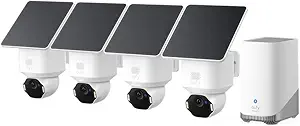 |
Swann MaxRanger4K Solar 2‑Camera Kit

| Video Capture Resolution | 4k |
|---|---|
| Night Vision | Night Color |
| Memory Storage Capacity | 64 GB |
| Connectivity Protocol | Wi‑Fi HaLow |
| Power Source | Solar Powered |
The Swann MaxRanger4K Solar kit bundles two 4K wireless outdoor cameras and a base station to deliver long-range property coverage without constant wiring. Cameras use 900MHz Wi‑Fi HaLow for extended open-air range and include integrated solar panels with rechargeable batteries for sustained off-grid operation, making placement flexible. Image quality is strong thanks to 4K capture plus Night2Day color night vision and built-in spotlights, and the system adds PIR-based True Detect+ AI for people and vehicle alerts, plus two-way audio and active deterrence (sirens and spotlights). Recordings store locally on the included base station with a 64GB microSD (expandable) so you avoid mandatory subscription fees, though cloud backup is optional. Practical limits include dependence on solar exposure for continuous power in some placements and the need for a compatible 900MHz Wi‑Fi HaLow environment to realize the maximum range; advanced features require familiarity with the Swann app. For homeowners who want high-resolution, long-range, wire-free outdoor monitoring the kit provides a capable, self-contained solution.
Best for: Buyers who want high-resolution, long-range outdoor coverage in a largely wire-free package and prefer local recording over mandatory cloud subscriptions.
Less Ideal for: Users who cannot provide reliable solar exposure at camera sites or who need a system that works only on standard 2.4/5GHz Wi‑Fi without HaLow support.
- True 4K video capture for detailed images day and night with color night vision and spotlights
- Very long wireless range using 900MHz Wi‑Fi HaLow for broader outdoor coverage
- Integrated solar panels plus rechargeable batteries enable largely wire-free placement
- Local base station with 64GB storage included avoids required subscription fees
- Smart PIR detection distinguishes people and vehicles and supports active deterrence and two-way audio
- Performance depends on adequate sun exposure for solar charging in some mounting locations
- Max range and connectivity require Wi‑Fi HaLow support which may not match all home networks
Verdict: A high-resolution, long-range solar wireless system that delivers 4K color night vision and local recording for homeowners who want powerful, self-contained outdoor monitoring without subscription fees.
Arlo Ultra 3 (4-Cam) 4K

| Video Capture Resolution | 2160 |
|---|---|
| Viewing Angle | 180 degrees |
| Power Source | Battery Powered |
| Waterproof Rating | IP65 |
| Night Vision Range | 25 feet |
The Arlo Ultra 3 (4-Cam) kit delivers high-resolution outdoor surveillance with 4K HDR capture and an ultra-wide 180 degree field of view, making it easy to identify faces and license plates across large areas. Intended as a wireless system, each camera pairs with the included SmartHub over 2.4 or 5 GHz Wi-Fi for reliable connectivity and simple installation without running power or data lines. Notable features include color night vision driven by an integrated spotlight, premium wind and noise-canceling two-way audio, a built-in siren, Auto Zoom and Tracking to follow moving objects, and a rechargeable removable battery with improved runtime. The package also comes with a one-month trial of Arlo Secure for extended cloud history, AI detections, and emergency response. Important trade-offs are that some advanced capabilities require a paid subscription after the trial and the system depends on the hub for full functionality, so on-premises storage options are limited unless you add a microSD card to the hub. For buyers who prioritize image clarity and wide coverage, the Ultra 3 gives performance-focused monitoring with practical features for real-world outdoor use.
Best for: Buyers who want top-tier image quality and wide-angle outdoor coverage for performance-focused monitoring and are willing to rely on a hub-based wireless system.
Less Ideal for: People who need a fully local, subscription-free solution or who prefer hardwired PoE cameras for continuous power and network reliability.
- True 4K HDR video with a 180° field of view for wide, detailed coverage
- Color night vision plus integrated spotlight improves identification in low light
- Removable rechargeable battery and SmartHub enable wireless placement and easy setup
- Auto Zoom and Tracking with digital zoom helps follow and capture moving subjects
- Advanced features like 60-day cloud history and AI detections require a paid subscription after the trial
- Full feature set depends on the SmartHub, so standalone cloud-free operation is limited
Verdict: Choose the Arlo Ultra 3 kit if you want a high-performance 4K wireless outdoor camera system that prioritizes image clarity and ultra-wide coverage for demanding surveillance needs.
Safemo SS113 4-Camera Kit

| Video Capture Resolution | 4k |
|---|---|
| Power Source | Solar Powered & Battery |
| Number of Channels | 4 |
| Connectivity Protocol | Wi-Fi |
| Water Resistance Level | Waterproof |
The Safemo SS113 kit bundles four 4K bullet cameras, a hub, and four 5W solar panels to deliver high-resolution, subscription-free home surveillance. Cameras record only on motion to save power and storage, and footage is stored locally on the included 32GB memory (expandable), which keeps data private and avoids monthly fees. In daylight and with active spotlighting the 4K sensor and f/1.6 lens capture clear detail and the 8x zoom helps when you need to inspect faces or plates; color night vision extends usable visibility up to about 40 feet. AI-driven alerts distinguish people, vehicles, pets, and packages and you can set custom zones to reduce false notifications. Installation is straightforward for typical outdoor mounting and the solar panels help reduce battery recharge frequency, though actual runtime depends on motion activity and sunlight. The system requires a wired network connection to the hub and records on motion rather than continuous 24/7 video, which may not suit all monitoring styles.
Best for: Buyers who want high-resolution, private surveillance without ongoing subscription costs and prefer cameras that conserve power with motion-based recording and solar assist.
Less Ideal for: Users who need continuous 24/7 cloud recording, fully wireless hub placement, or a system guaranteed to run independently without reliable sunlight.
- True 4K resolution with 8x zoom and wide 140° field of view for detailed footage
- Local storage (32GB built-in, expandable to 4TB) with no subscription required
- AI motion detection that classifies people, vehicles, pets, and packages to reduce false alerts
- Solar panels included to extend battery life and reduce recharges
- IP65 weatherproof design suitable for outdoor installation
- Hub requires a wired network connection so placement depends on Ethernet access
- Cameras record on motion only rather than continuous 24/7 recording
Verdict: If you want detailed, subscription-free 4K coverage with solar-assisted battery cameras and local storage, this four-camera Safemo kit is a strong budget-conscious choice.
Fociey 4K Solar Security Kit

| Video Capture Resolution | 4k |
|---|---|
| Effective Video Resolution | 8 MP |
| Night Vision Range | 33 feet |
| Flash Memory Installed Size | 32 GB |
| Power Source | Solar Powered |
The Fociey 4K Solar Security Kit is a wireless outdoor camera system built around a local storage base and solar-powered pan/tilt cameras designed for continuous monitoring without subscription fees. Each camera captures 8MP/4K video, pans a full 360 degrees with automatic motion tracking and cross-camera handoff, and connects to the included local storage base that has 32GB built-in and supports up to 128GB microSD. The system prioritizes stable connectivity by using the base as an Ethernet bridge to dual-band routers, and the app provides live view, customizable detection zones, AI motion filtering to reduce false alerts, and two-way talk. Practical benefits include no monthly recording costs, reduced blind spots thanks to pan/tilt coverage, and solar charging that keeps units running through normal weather with a few cloudy days tolerated. Important limitations are dependence on the base for network stability and local storage (so base damage or loss could affect recordings) and the need for occasional charging after extended poor-weather stretches; advanced users may also want larger onboard storage or cloud backup for long-term archival.
Best for: Buyers who want a reliable, self-contained 4K outdoor system that minimizes ongoing costs and keeps footage locally controlled while providing broad coverage and automated tracking.
Less Ideal for: Users who need guaranteed offsite/cloud archival by default or who expect continuous power through long stretches of bad weather without any manual recharging.
- True 4K/8MP video for detailed live view and zoomed-in checks
- 360° pan and automatic cross-camera tracking to eliminate blind spots
- Local storage base with built-in 32GB and optional expansion to 128GB so no mandatory subscription fees
- Solar-powered cameras reduce wiring and need little hands-on charging in normal sun conditions
- Works with 2.4GHz and 5GHz routers via the base for more stable connectivity
- Local-only recording means offsite cloud backup is optional and not included by default
- Solar charging can run low after extended weeks of poor weather requiring manual USB charging
Verdict: Choose this kit if you want high-resolution, subscription-free outdoor surveillance with 360° automated tracking and local storage for dependable day-to-day security.
eufy SoloCam E42 4-Cam Kit

| Power Source | Battery Powered |
|---|---|
| Battery Power | 55.98 watt-hours |
| Video Capture Resolution | 4k |
| Connectivity Protocol | Wi-Fi |
The eufy SoloCam E42 4-Cam Kit is an outdoor security system built around 4K cameras with SolarPlus 2.0 and a HomeBase 3 hub for local storage and continuous recording. Each camera offers 4K capture, AI-powered motion detection and auto-tracking for people and vehicles, 360 degree pan and tilt coverage, and a strobe light plus siren for instant deterrence. The kit is typically mounted on exterior walls and pairs to the HomeBase for expandable storage and network resilience; two hours of direct sun per day is claimed to keep the cameras charged for uninterrupted operation. Practical benefits include high-resolution footage that can read license plates at close range, reduced false alerts from on-device AI, and the ability to record locally without a subscription. Expect straightforward smartphone control and compatibility with popular smart assistants. Important limitations are reliance on adequate sunlight for truly maintenance-free solar operation and the need to follow eufy setup steps for HomeBase firmware and app versions to enable some features like 24/7 recording in wired mode.
Best for: Buyers who prioritize high-resolution, self-contained surveillance with strong local storage and active deterrence will appreciate this kit for monitoring yards, driveways, and entryways.
Less Ideal for: Users who cannot provide reliable direct sunlight for solar charging or who need a simpler plug-and-play camera without a hub should consider other options.
- True 4K video for detailed footage and plate recognition at short range
- SolarPlus 2.0 reduces need for frequent recharging or wiring
- On-device AI tracking and smart detection cut down false alarms
- HomeBase 3 provides local storage with expandable capacity and 24/7 recording support
- Built-in strobe light and siren for active deterrence
- Solar performance depends on consistent direct sunlight and placement
- Some advanced features require HomeBase firmware and app updates to function fully
Verdict: Choose the eufy SoloCam E42 kit if you want 4K, solar-assisted outdoor cameras with local HomeBase storage and built-in deterrence for subscription-free surveillance.
Choosing the Right 4K Wireless Security Camera Systems: Key Factors to Consider
Video Resolution and Field of View
True 4K resolution provides much finer detail than lower-resolution cameras, which helps identify faces, license plates, and small scene details. Pay attention not just to the pixel count but to effective resolution at typical viewing distances and in compressed streams.
Field of view determines how much area each camera covers. Wider lenses reduce the number of cameras needed but can introduce distortion at edges. Balance resolution and lens angle so each camera covers the intended zone with enough pixels on target subjects for identification.
Wireless Connectivity and Range
A strong wireless link is essential for consistent live view and timely alerts. Consider the supported Wi-Fi bands, antenna design, and how the system handles packet loss and interference. Systems that support both 2.4 GHz and 5 GHz can give you flexibility between range and bandwidth.
Assess whether the system uses mesh, a dedicated base station, or direct Wi-Fi connections. For larger properties, look for features like signal repeaters, external antennas, or the option to use wired backhaul for some cameras to improve overall network reliability.
Low-Light and Night Vision Capabilities
Nighttime performance determines whether a system remains useful after dark. Look beyond basic 'IR' claims to how well the camera preserves contrast and color in low light, and whether it uses adaptive IR, low-light sensors, or built-in illumination.
Consider detection range in zero-light conditions and whether the system supports color night vision with onboard LED lighting. Effective night performance reduces false alarms and increases the chances of capturing usable identification footage.
Storage, Retention, and Bandwidth Use
Storage strategy affects how much historical footage you can retain and how much network bandwidth the system consumes. Options typically include cloud subscriptions, local NVR/DVR recording, or microSD cards in each camera. Local recording avoids ongoing fees but requires reliable on-site storage and backup strategies.
Also evaluate how the system compresses video, whether it supports motion-based retention to save space, and how easy it is to export clips. Bandwidth-saving features such as adjustable frame rates, bitrate control, and smart recording can keep remote viewing responsive while preserving footage.
Installation Flexibility and Weather Resistance
Consider mounting options, surface compatibility, and whether the cameras include adjustable mounts or articulating brackets. A camera that can be aimed precisely reduces blind spots and minimizes the need for extra units.
Weather resistance ratings and operating-temperature ranges determine whether the system can withstand local climates. Look for IP ratings and corrosion-resistant housings if you expect heavy rain, dust, or coastal conditions. Ease of wiring and the availability of power options, such as PoE or battery operation, also affect placement flexibility.
Software, Alerts, and Ongoing Support
A usable app and timely firmware updates are critical for long-term reliability and security. Check whether the system provides granular alert settings, customizable zones, people/vehicle detection, and a clear event timeline.
Evaluate the clarity of mobile and web interfaces, the frequency of firmware updates, and the vendor's approach to privacy and data retention. Good vendor support and straightforward update processes help keep the system secure and functional over time.
Understanding 4K Benefits for Home Security
Higher pixel counts give much more useful detail when zooming into events, which can be crucial for identification. For typical home and property surveillance, the practical advantage of 4K shows when covering wide areas where a cropped region still needs enough definition to read signage or identify a face.
Keep in mind that 4K increases storage and network demands, so you should match camera resolution to the size of the area and your recording strategy.
- Better digital zoom for distant events
- Improved forensic value of recordings
- Higher bandwidth and storage requirements
Placement Tips for Optimal Coverage
Place cameras to cover entry points and approach paths rather than open lawns. Mounting height between 8 and 12 feet typically balances field of view with identification angles.
Avoid aiming cameras directly at bright light sources to prevent glare and silhouette effects. Use overlapping coverage to eliminate blind spots and to provide multiple angles on important areas.
- Focus on doors, driveways, and common approach paths
- Use overlapping coverage for key zones
- Maintain clear lines of sight and minimize glare
Network Planning and Router Considerations
A dedicated wireless network or separate SSID for cameras reduces interference with other household traffic. If the system supports both Wi-Fi bands, use 5 GHz for shorter-range high-bandwidth links and 2.4 GHz when you need longer reach.
Consider upgrading your router, adding wireless extenders, or using a wired PoE switch for some cameras to ensure stable connections. Monitor real-world throughput and packet loss rather than relying solely on advertised range figures.
- Use separate SSID or VLAN for camera traffic
- Prefer wired connections for high-traffic or critical cameras
- Test live-stream stability during different times of day
Managing Storage and Retention Without Extra Fees
If avoiding subscription costs is important, prioritize systems that offer reliable local recording and easy export of evidence. Ensure the local storage solution has redundancy or a simple backup routine to protect against drive failures.
Use motion-triggered recording and adjustable retention policies to reduce required capacity. Configure sensible clip lengths and pre/post-trigger recording intervals so you do not miss relevant context while conserving space.
- Prefer local NVR options if you want no recurring fees
- Use motion-based retention to conserve storage
- Regularly archive important clips to external media
Power Options and Wiring Tradeoffs
Battery-powered cameras offer easy installation but require ongoing battery management and may miss events if battery runs low. Wired or PoE cameras provide continuous power and typically more stable networking but need professional wiring or careful planning.
Hybrid setups can combine the convenience of wireless placement with a few wired cameras on critical points to ensure continuous recording where it matters most.
- Battery for flexible placement, wired for reliability
- PoE simplifies power and network with a single cable
- Plan for maintenance cycles if using batteries
Privacy, Legal, and Neighborhood Considerations
Be mindful of local laws and community rules about recording public spaces or neighbors. Aim cameras to monitor your property and common approaches rather than capturing adjacent private spaces.
Protect recorded data with strong passwords, two-factor authentication, and encrypted storage. Make sure you understand whether footage is stored on third-party servers and what retention policies apply.
- Confirm local recording laws before installation
- Use strong authentication and encryption
- Communicate with neighbors if cameras capture shared spaces
How We Chose the Best 4K Wireless Security Camera Systems
We selected systems that consistently deliver 4K-resolution video and reliable wireless operation in typical home and small-business settings. Key evaluation criteria included video fidelity and low-light performance, wireless connectivity and range, storage and data management options, installation flexibility and mounting choices, and ongoing software support and app usability. We prioritized systems with configurable motion detection and alerting because accurate event detection reduces false alarms and saves storage. We excluded single-camera consumer models that advertise higher resolution but lack essential network stability or local/remote recording options. We also omitted units that require frequent manual maintenance or have unclear firmware update policies. Final choices reflect a balance of objective specifications and practical usability that matter most to buyers looking for long-term, dependable monitoring.
Our full evaluation process is outlined in our review methodology.
FAQ
Do 4K cameras require a special router or network?
Not necessarily, but 4K streams use more bandwidth. A modern dual-band router and good upstream bandwidth help. For multiple cameras, consider wired connections or a dedicated network to avoid congestion.
Will 4K make night video clearer?
Higher resolution helps with detail, but night clarity also depends on sensor sensitivity, lens quality, and illumination. Good low-light sensors and adaptive IR or color night vision matter more than resolution alone.
Can I use local recording instead of cloud subscriptions?
Yes. Local NVRs or microSD cards allow you to retain footage without ongoing fees. Ensure you plan for backup and redundancy because local storage can fail or be stolen.
How many cameras do I need to cover a typical property?
It depends on property layout and camera field of view. Focus on covering entrances, driveways, and vulnerable approaches. Wider FOV cameras reduce count but may need higher resolution to keep identification detail.
Are battery-powered 4K cameras practical?
Battery models offer flexible placement but have limited uptime and may use aggressive power-saving that reduces recording frequency. They are practical for occasional use or supplemental coverage rather than primary monitoring.
Final Verdict
When choosing a 4K wireless security camera system, prioritize the combination of true 4K imaging, dependable wireless connectivity, and a storage strategy that matches your tolerance for ongoing fees and maintenance. Balance wider coverage with sufficient pixels on target areas, and favor systems with strong low-light performance if nighttime events are a concern. Ultimately, decide whether you prefer the convenience of mostly wireless installation or the reliability of wired/PoE cameras for critical points. Use the factors above to weigh tradeoffs and choose a system that delivers clear evidence and consistent operation for your property.