
Note: This article contains affiliate links. If you click on these links and make a purchase, we may earn a small commission at no extra cost to you. This helps support our research and content. Read our full affiliate disclosure here.
A damp basement can damage belongings, feed mold growth, and make living spaces uncomfortable. Picking the right 70-pint dehumidifier for basements matters because these units are sized to handle larger, wetter below-grade spaces where extraction rate, airflow, and drainage options determine real-world performance. This guide shortlists six top-performing 70-pint dehumidifiers and explains the practical tradeoffs you should expect. We evaluate each pick on extraction capacity, energy use, durability, and user convenience so you can match a unit to your basement size, layout, and ventilation. Read on to find the model that fits your space and maintenance preferences.
Top Picks at a Glance
| Best Quality Built to a higher standard if you want something more solid | Yaufey 70-Pint Dehumidifier AYD |  |
| Best Value The sweet spot between price and what you get | AIRPLUS 70-Pint Dehumidifier |  |
| Best Budget The cheapest option that still gets the job done reliably | Stopsad 70-Pint Dehumidifier |  |
| Top Rated A top-rated pick with lots of positive feedback | Aprilaire E070 70-Pint Dehumidifier |  |
| Most Popular A crowd favorite that many people choose with confidence | AIRPLUS 70-Pint Dehumidifier |  |
| Best Seller A high-volume bestseller chosen again and again | Waykar 70-Pint Dehumidifier AFW1.5DPM |  |
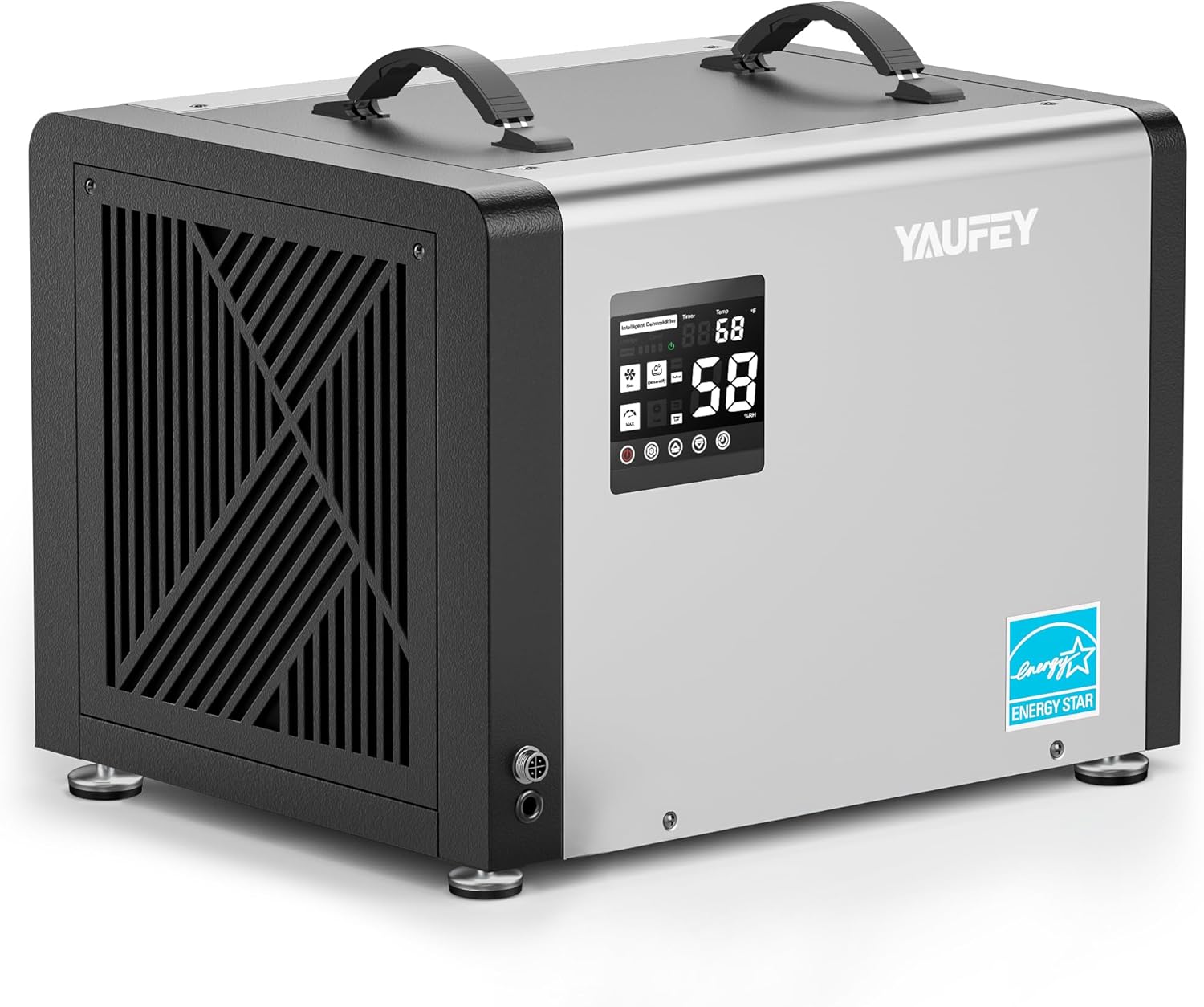
Yaufey 70-Pint Dehumidifier AYD
| Capacity | 70 pints |
|---|---|
| Air Flow Capacity | 159 cfm |
| Wattage | 265 watts |
| Operation Mode | Continuous |
| Dehumidification Capacity | 8.75 gallons_per_day |
This Yaufey 70-pint unit is a heavy-duty, Energy Star certified dehumidifier built for basements, crawl spaces and light commercial use where continuous moisture removal is needed. It delivers up to 70 pints per day (8.75 gallons) at high humidity and pushes air at roughly 159 CFM, while a gravity drain hose supports unattended 24/7 operation so you do not need to empty a tank. The metal housing and auto-defrost let it run in colder, unfinished spaces without plastic cracking or frequent downtime, and the digital controls provide adjustable humidity setpoints from 10% to 90% RH for precise control in moisture-sensitive areas. At 265 watts it is relatively efficient for its capacity, and the included washable filter and 6.56 ft drain hose make setup straightforward. The unit is single-speed and weighs about 42 pounds, so it is not as quiet or as lightweight as small home models and requires a drain or proper placement for continuous use, but for buyers focused on robust, reliable basement performance it delivers the necessary capacity and durability.
Best for: Buyers who prioritize strong, reliable moisture removal for large or problem basements and want a rugged, serviceable unit built for continuous unattended operation.
Less Ideal for: Those who need a lightweight, ultra-quiet bedroom unit or a dehumidifier for small rooms without an available floor drain should consider smaller home models instead.
- High capacity 70-pint removal suitable for large basements and crawl spaces
- Energy Star certified and uses R32 refrigerant for better efficiency
- Gravity drain port with included 6.56 ft hose supports continuous 24/7 operation
- Durable all-metal housing and auto-defrost for cold or harsh environments
- Single fan speed limits fine control over airflow and noise level
- At about 42 pounds it is fairly heavy to move without help
Verdict: A rugged, energy-efficient 70-pint dehumidifier built for continuous, heavy-duty basement use and unattended drainage.
AIRPLUS 70-Pint Dehumidifier

| Dehumidification Capacity | 70 pints_per_day |
|---|---|
| Floor Area | 4500 |
| Wattage | 305 watts |
| Number of Speeds | 3 |
| Tank Volume | 0.7 gallons |
The AIRPLUS 70-pint dehumidifier is designed to remove large volumes of moisture for basements and other damp spaces. It offers three fan speeds, selectable modes including dehumidify, dry-clothes, and fan-only, plus an intelligent humidistat so you can set a target and let the unit maintain it. Continuous drainage via the included drain hose makes long runs and unattended operation easy, while auto shutoff protects the unit when the internal tank is full. At 305 watts it provides strong extraction—listed capacity is 70 pints under test conditions—and the controls and two-way timer are straightforward to operate. Practical features like the drain hose, multiple speeds, and drying mode make it useful for drying laundry or combating basement humidity, but expect the unit to be noticeable when running at higher fan speeds and ensure your space matches the manufacturer's coverage guidance. The plastic cabinet keeps weight down and the unit includes standard safety features, making it a capable option if you need reliable, high-capacity dehumidification for a basement.
Best for: Buyers who prioritize efficient, high-capacity moisture removal and want a straightforward, easy-to-run unit for basement or large-room humidity control.
Less Ideal for: People who need ultra-quiet operation in living rooms or bedrooms or those seeking decorative or premium-finish appliances should look elsewhere.
- High extraction capacity rated at 70 pints per day for large damp spaces
- Continuous drain option with included hose for unattended operation
- Multiple modes including dry-clothes and fan-only increase versatility
- Simple controls with intelligent humidistat and timer for set-and-forget use
- Moderate power draw at 305 watts for its capacity
- Can be audible at higher fan speeds which may be noticeable in finished spaces
- Tank capacity is relatively small so continuous drain is recommended for heavy use
Verdict: Choose this unit if you need a practical, high-capacity 70-pint dehumidifier with continuous drain and simple controls for basement moisture control.
Stopsad 70-Pint Dehumidifier

| Capacity | 70 pints |
|---|---|
| Tank Volume | 1.7 gallons |
| Dehumidification Capacity | 70 pints_per_day |
| Wattage | 300 watts |
| Operation Mode | Automatic |
This Stopsad 70-pint dehumidifier is built to tackle large, damp spaces such as basements and whole-home areas by removing up to 70 pints of moisture per day. It is typically used on automatic mode with adjustable humidity setpoints between 30 and 80 percent and offers two fan speeds for active drying or quieter operation. Practical features include top and front dual LED displays for easy monitoring, a visible 1.7 gallon tank with automatic shutoff, an included drain hose for continuous drainage, a child lock, and caster wheels and a handle for portability. The unit also adds a dry-clothes mode and a washable filter that provides basic air cleaning. At 300 watts it is reasonably energy efficient for its capacity, but the 2-speed fan and basic controls mean it lacks finer-grain airflow or smart connectivity found on higher-end models. For basement use it gives solid dehumidification and convenient continuous drain operation, though buyers who want app control or very quiet multi-speed performance should look elsewhere.
Best for: Buyers who prioritize strong moisture removal for basements on a budget and value straightforward controls, visible tank monitoring, and the option for continuous drainage.
Less Ideal for: Users who require app-based control, many fan-speed settings, or the quietest available operation for noise-sensitive spaces should consider higher-end models.
- High dehumidification capacity suitable for large basements (70 pints/day).
- Dual LED displays and intuitive controls make monitoring and setting humidity straightforward.
- Includes both visible 1.7 gallon tank with auto shutoff and a drain hose for continuous unattended drainage.
- Portable design with built-in handle and 360 degree caster wheels for easy repositioning.
- Washable filter and a Dry Clothes mode add practical versatility for laundry and basic air cleaning.
- Only two fan speeds limit fine control between performance and quiet operation.
- No smart connectivity or remote app control for off-site monitoring.
- Listed noise and long-term reliability data are not provided, so performance in very large or extremely damp basements may vary.
Verdict: If you need a budget-minded 70-pint unit that reliably removes moisture from large basements and offers continuous drain capability, this Stopsad model is a practical choice.
Aprilaire E070 70-Pint Dehumidifier

| Capacity | 70 pints |
|---|---|
| Dehumidification Capacity | 70 pints_per_day |
| Floor Area | 2800 square_feet |
| Air Flow Capacity | 200 cfm |
| Wattage | 696 watts |
The Aprilaire E070 70-pint dehumidifier is a high-capacity, reliability-focused unit meant for basements, crawl spaces, and whole homes up to about 2,800 square feet. It runs automatically based on a relative-humidity set point and can remove up to 70 pints per day while moving air at roughly 200 CFM, and the bundle includes a drain hose, filters, risers, and duct collars to simplify installation. The unit offers practical safeguards like automatic defrost, overheat protection, washable filters, and continuous drain capability so you do not need to empty a tank. At 696 watts it is comparatively efficient for its output and the digital display and adjustable humidity control make day-to-day operation straightforward. Trade-offs are its size and weight compared with small portable units and the need for a proper drain or duct hookup for continuous operation. For buyers who want a dependable, installable dehumidifier for a basement or whole house, the E070 presents a durable, serviceable option backed by a five-year warranty.
Best for: Homeowners or property managers who prioritize a reliable, installable dehumidifier to control basement or whole-house humidity with minimal daily maintenance.
Less Ideal for: People needing a small, portable plug-and-play unit for a single room or occasional use should look at compact portable dehumidifiers instead.
- High dehumidification capacity of 70 pints per day suitable for large basements and whole homes
- Bundle includes drain hose, risers, filters, and duct collars for easier installation
- Automatic on/off based on %RH set point with adjustable humidity control and digital display
- Safety features such as automatic defrost, overheat protection, and washable filter extend service life
- Requires a floor drain or continuous drain hookup for hands-off operation
- Large and heavy compared with portable consumer dehumidifiers, making placement and installation more involved
Verdict: Choose the Aprilaire E070 if you need a dependable, high-capacity dehumidifier with bundled installation accessories for a basement or whole-house application.
AIRPLUS 70-Pint Dehumidifier

| Capacity | 70 pints_per_day |
|---|---|
| Floor Area | 4500 square_feet |
| Wattage | 300 watts |
| Tank Volume | 0.7 gallons |
| Number of Speeds | 4 |
The AIRPLUS 70-Pint Dehumidifier is built to remove large amounts of moisture from basements and other big rooms, with a rated capacity of up to 70 pints per day and coverage for areas up to 4,500 sq ft. It can run in continuous mode or one of four user-selectable modes including a dry and a sleep setting, and features a digital display, 24-hour timer, and simple button controls for set-and-forget operation. You can empty the 0.7 gallon tank or use the included 3.9 ft drain hose for continuous draining, and the unit offers automatic shutoff when the tank is full plus auto-restart and defrost to handle cooler basement conditions. Practical touches include a washable removable filter, child lock and overheat protection, and a negative ion function for basic air refresh. Expect some warm exhaust air during operation and a moderately loud fan at higher speeds, and the 300 watt compressor means noticeable energy use when running frequently in very damp environments. For buyers seeking heavy-duty moisture removal with both tank and hose drain options, this is a straightforward, feature-rich choice for basement use.
Best for: Buyers who prioritize proven moisture removal and clear user controls for large basement spaces and who want the option of continuous hose drainage to avoid frequent tank emptying.
Less Ideal for: Users looking for the quietest possible unit, very low ongoing energy consumption, or those who need a larger onboard water tank for unattended operation without a drain hose.
- High dehumidification rate up to 70 pints per day suitable for large basements
- Includes both 0.7 gallon tank and 3.9 ft drain hose for flexible draining options
- Digital controls, 24-hour timer, and four operating modes for easy customization
- Safety and maintenance features including auto shutoff, auto defrost, washable filter, and child lock
- 0.7 gallon tank is small compared with the daily removal rate, making hose drainage preferable for heavy use
- Operates at 300 watts so it can raise energy use if run continuously in very humid spaces
- Can produce warm exhaust air and noticeable fan noise on higher settings
Verdict: A practical, high-capacity basement dehumidifier with both tank and continuous-drain options and clear digital controls, ideal for heavy moisture removal in large spaces.
Waykar 70-Pint Dehumidifier AFW1.5DPM

| Capacity | 70 pints |
|---|---|
| Floor Area | 5000 square_feet |
| Air Flow Capacity | 158.82 cfm |
| Wattage | 265 watts |
| Voltage | 110 volts |
This Waykar 70-pint unit is built for heavy-duty basement and crawl-space use where continuous moisture control is needed. It extracts up to 70 pints per day (rated at 95°F, 90% RH) and circulates air at about 158 CFM, and it offers two drainage options: a gravity hose plus a pump hose that can lift condensate vertically up to 16.4 feet. The touchscreen controls and adjustable humidity setpoint give straightforward operation and the washable filter and service reminders make maintenance predictable. The metal cabinet and reinforced condenser design aim for long service life in harsh or high-impact environments, and ENERGY STAR certification helps limit operating costs during round-the-clock use. Expect a single-speed compressor and a moderately loud running profile typical of commercial dehumidifiers, and the optional remote control must be purchased separately. For homeowners who want reliable, energy-efficient dehumidification in basements or crawl spaces, this model balances performance and durability, but light-duty users may find it larger and more powerful than necessary.
Best for: Buyers who prioritize reliable, factory-quality performance and low operating cost for whole-basement or crawl-space humidity control and want a durable unit that can run continuously.
Less Ideal for: If you need a compact, quiet unit for a single small room or occasional use, this commercial-style dehumidifier is more capability and bulk than necessary.
- High rated extraction capacity suitable for up to 5,000 sq ft spaces
- Built-in pump with 16.4 ft vertical drain capability for flexible installation
- ENERGY STAR certified for lower continuous operating cost
- Durable metal cabinet and improved condenser design for long-term commercial use
- Touchscreen controls, washable filter, and service reminders simplify upkeep
- Single-speed operation limits fine-grained control of runtime and noise levels
- Larger, heavier commercial form factor may be overkill for small rooms
Verdict: Choose this Waykar 70-pint dehumidifier if you need a durable, energy-efficient unit built to run continuously in basements or crawl spaces up to 5,000 sq ft.
Choosing the Right 70-Pint Dehumidifier for Basements: Key Factors to Consider
Extraction Capacity Versus Basement Size
Matching extraction capacity to basement square footage and moisture load is essential. A 70-pint rating describes idealized daily removal under specific lab conditions; real-world performance depends on room temperature, humidity, and airflow. For a moderately damp, finished basement you will sometimes need the full rated capacity during wet seasons, while cooler, unfinished basements may see reduced extraction.
Over-sizing slightly gives headroom during peak humidity and reduces runtime percentage, which can extend compressor life. Under-sizing leads to long runtimes and persistent dampness despite continuous operation.
Energy Efficiency and Long-Term Operating Cost
Because basement dehumidifiers often run many hours each day, energy consumption quickly becomes a major ownership cost. Look at power draw at realistic operating conditions, not just maximum wattage. Features like variable-speed fans, auto-humidistats, and efficient compressors reduce runtime and net energy use.
Also consider whether the unit has night or low-power modes and how precisely the humidistat controls target RH. Better control keeps the compressor cycling less frequently and lowers electricity use over a season.
Drainage Options and Installation Practicality
Basement installations benefit from drainage flexibility. Built-in pump-assisted models allow continuous automatic removal of condensate to a sink or high drain, which is ideal when gravity drainage is not practical. Gravity-drain setups are simple when you can route a hose to a floor drain or sump pit below the unit.
Also check tank capacity for intermittent use and whether the float shutdown is reliable. Easy-to-access outlets and standard garden-hose fittings make setup, winterizing, and maintenance simpler for homeowners.
Durability in Damp Conditions
Basements expose equipment to cooler temperatures and higher humidity, so corrosion resistance and protective coatings on coils and chassis improve long-term reliability. A robust cabinet resists dings and vibration, and service-friendly access to the filter and front panel reduces downtime for cleaning.
Look for models with defrost control or temperature-sensing features if the basement gets cold, since frost on coils can reduce efficiency and cause cycling issues in low-temperature operation.
Noise, Fan Speed, and Placement Impact
Dehumidifiers in finished basements may sit near living spaces, media areas, or bedrooms, making noise a real concern. Variable fan speeds let you balance extraction with decibel levels. Consider the unit's documented noise levels and where it will sit relative to occupied rooms.
Vibration isolation feet and thoughtful airflow design reduce resonant noise that can travel through concrete and ducting. If sound matters, plan placement away from frequently used areas and factor ducting or quiet mode performance into the decision.
Maintenance, Filter Access, and Usability
Regular filter cleaning and occasional coil access are routine tasks. Units with tool-free access panels, washable filters, and clear indicator lights reduce maintenance friction and increase the likelihood you will perform recommended upkeep.
User-friendly controls, programmable humidistats, and clear diagnostics make it easier to set run schedules and spot faults. Consider whether Wi-Fi or remote monitoring features are genuinely helpful for your setup or add complexity you do not need.
Sizing Your Basement and Estimating Runtime
To estimate how a 70-pint dehumidifier will perform, start with basement volume and the expected moisture load. Finished basements with carpeting, stored textiles, or frequent water intrusion have higher latent loads than cool, unfinished concrete basements. A 70-pint unit is typically appropriate for medium to large basements or spaces with recurring dampness.
Place the unit in the area where humidity is highest, ideally with unobstructed airflow on the intake and discharge sides. Expect the dehumidifier to run more during warm, humid months; in cooler seasons it may cycle less. If your basement contains several separate rooms, plan for airflow between rooms or consider multiple units rather than relying on one centralized dehumidifier.
- Measure cubic footage and note typical sources of moisture (groundwater, seepage, condensation, occupants).
- Account for connected spaces and how doors or HVAC systems distribute airflow.
Installation Tips for Continuous Operation
Decide on drainage method before purchase. If gravity drainage is impossible because the floor is below the nearest drain, choose a model with a condensate pump or plan for a condensate pump accessory. Ensure the drain hose is routed with consistent downward pitch and is secured against kinks.
Provide at least several inches clearance around the intake and exhaust and place the unit on a level, durable surface. Install a coarse floor mat or anti-vibration pads if the dehumidifier will sit on concrete. If winter temperatures dip below the unit's recommended operating range, plan for seasonal storage or supplemental heating to prevent coil freeze.
- Confirm electrical requirements and use a dedicated circuit if the unit draws near the circuit limit.
- Label and secure drainage lines to prevent accidental disconnection.
Managing Humidity Targets and Avoiding Over-Drying
Set the humidistat to a practical target rather than the lowest possible value. For basements, 45 to 55 percent relative humidity is often a sensible range that prevents mold while avoiding over-drying stored wood or finishes. Extremely low RH can dry out wooden furniture and trim unnecessarily.
Use the dehumidifier in concert with ventilation strategies. Occasional fresh-air exchange reduces pollutant buildup but can introduce moisture depending on outdoor conditions. Monitor conditions over several days to find a setting that balances comfort, preservation, and operating hours.
- Use a separate hygrometer to verify readings, especially if the dehumidifier will run unattended.
- Adjust setpoints seasonally to reduce runtime during dry months.
Noise Mitigation and Placement Strategies
If the basement is used for media, work, or living space, position the dehumidifier where discharge air does not blow directly at seating areas. Sound reflects off hard surfaces, so placing the unit near absorbent materials or behind partial barriers can reduce perceived noise.
Consider runtime scheduling to run higher-extraction modes when occupants are away and quieter modes overnight. For multi-level homes, install the unit away from stairwells to limit noise transmission to upper floors.
- Use anti-vibration pads to cut structure-borne noise.
- Check fan-speed profiles and choose a unit with a low-noise or quiet mode if noise is a priority.
Seasonal Care and Winterizing Tips
In colder climates or unheated basements, understand the unit's minimum operating temperature. Some residential 70-pint models are not designed for freezing or near-freezing operation and may require manual draining and storage in winter. Defrost controls help but are not a guaranteed substitute for proper winter care.
When shutting down for the season, clean filters, run a brief cycle to clear internal moisture, and remove or secure drain hoses to prevent pests. Store the unit in a dry place if freezing temperatures are expected to avoid coil and cabinet damage.
- Empty and dry the condensate tank before storage.
- Inspect seals and hoses for wear during seasonal maintenance.
How We Chose the Best 70-Pint Dehumidifier for Basements
We focused on attributes that determine how well a 70-pint dehumidifier performs in basement environments. First, we prioritized sustained extraction and airflow, since basements often have higher latent loads and limited ventilation. Units that can maintain rated extraction over extended runtimes scored higher. Energy efficiency and operating cost were next. Dehumidifiers running continuously in basements can account for a meaningful share of utility bills, so we weighted energy use and seasonal energy efficiency. Drainage versatility mattered as well; we favored models offering gravity drain, pump-assisted drain, or simple hose hookups for long unattended operation. Durability and serviceability were also considered. Basements are harsh environments, so robust cabinets, corrosion-resistant coils, and accessible filters and components were important filters. User controls and smart features that simplify setup and monitoring received credit when they genuinely reduced maintenance or improved convenience. We excluded small-capacity, portable-only models and units not rated for continuous basement operation. We did not include specialty commercial dehumidifiers outside typical residential 70-pint designs. Our selection reflects balance among extraction, efficiency, drainage flexibility, build quality, and user convenience.
Our full evaluation process is outlined in our review methodology.
FAQ
How large of a basement is a 70-pint dehumidifier best for?
A 70-pint dehumidifier typically covers medium to large basements with moderate to heavy moisture loads. Exact coverage depends on ceiling height, insulation, and how often the basement is damp. If the space is open and frequently wet, a 70-pint unit offers useful headroom.
Can a 70-pint dehumidifier run continuously without damage?
Many residential 70-pint units are designed for extended runtimes, but continuous operation increases wear. Look for features like efficient compressors, robust thermal protection, and solid drainage options to support long unattended runs. Regular maintenance extends service life.
Should I pick a pump-assisted model for my basement?
Choose a pump-assisted model when gravity drainage is impractical, such as when the nearest floor drain is above the unit. Pumps simplify unattended operation but add complexity and occasional maintenance, so weigh convenience against serviceability.
Will a dehumidifier prevent basement mold entirely?
A dehumidifier reduces humidity levels, which limits mold growth risk but does not eliminate mold if there is active water intrusion or poor ventilation. Fix leaks, improve drainage, and maintain target humidity to minimize mold potential.
How often do I need to clean the filter and coils?
Clean or inspect washable filters every one to three months depending on dust levels. Coils and condensate paths should be checked seasonally for buildup. More frequent cleaning is needed in dusty or high-pollen environments.
Final Verdict
When choosing a 70-pint dehumidifier for basements, prioritize extraction capacity and drainage flexibility first, then balance energy efficiency and noise for your living situation. Durability and maintenance friendliness will affect long-term cost and reliability, especially in damp or cool spaces. Decide where the unit will live and how it will drain before you buy. If you need continuous unattended operation, lean toward models with pump-assisted drainage and robust controls. For quieter or finished basements, emphasize sound ratings and variable fan speeds. With the right tradeoffs, a 70-pint dehumidifier provides effective humidity control and protects your basement environment for years.