
Note: This article contains affiliate links. If you click on these links and make a purchase, we may earn a small commission at no extra cost to you. This helps support our research and content. Read our full affiliate disclosure here.
If you live near the ocean, an ordinary air conditioner can fail sooner than expected because of salty, humid air and strong crosswinds. Choosing an air conditioner for coastal areas means focusing on corrosion resistance, simplified maintenance, and components built to withstand constant salt exposure. This guide presents seven shortlisted units selected for coastal use and explains the practical tradeoffs to consider, from protective coatings to serviceability and long-term energy costs. Read on to understand the evaluation criteria that matter when buying cooling equipment for beachfront or near-shore homes, and find the features that best match your climate and maintenance plans.
Top Picks at a Glance
| Best Overall The best all-around choice for most situations | Midea U-Shaped 12,000 BTU Window AC |  |
| Best Quality Built to a higher standard if you want something more solid | Mitsubishi 18,000 BTU Mini-Split |  |
| Best Value The sweet spot between price and what you get | Whynter ARC-14S 14,000 BTU Portable AC |  |
| Best Budget The cheapest option that still gets the job done reliably | Towallmark 6000-BTU Window Air Conditioner |  |
| Top Rated A top-rated pick with lots of positive feedback | Friedrich Chill Premier CCF14B10B |  |
| Most Popular A crowd favorite that many people choose with confidence | BLACK+DECKER Smart Portable Air Conditioner BPACT12WT |  |
| Best Seller A high-volume bestseller chosen again and again | Frigidaire 12,000 BTU Window AC |  |
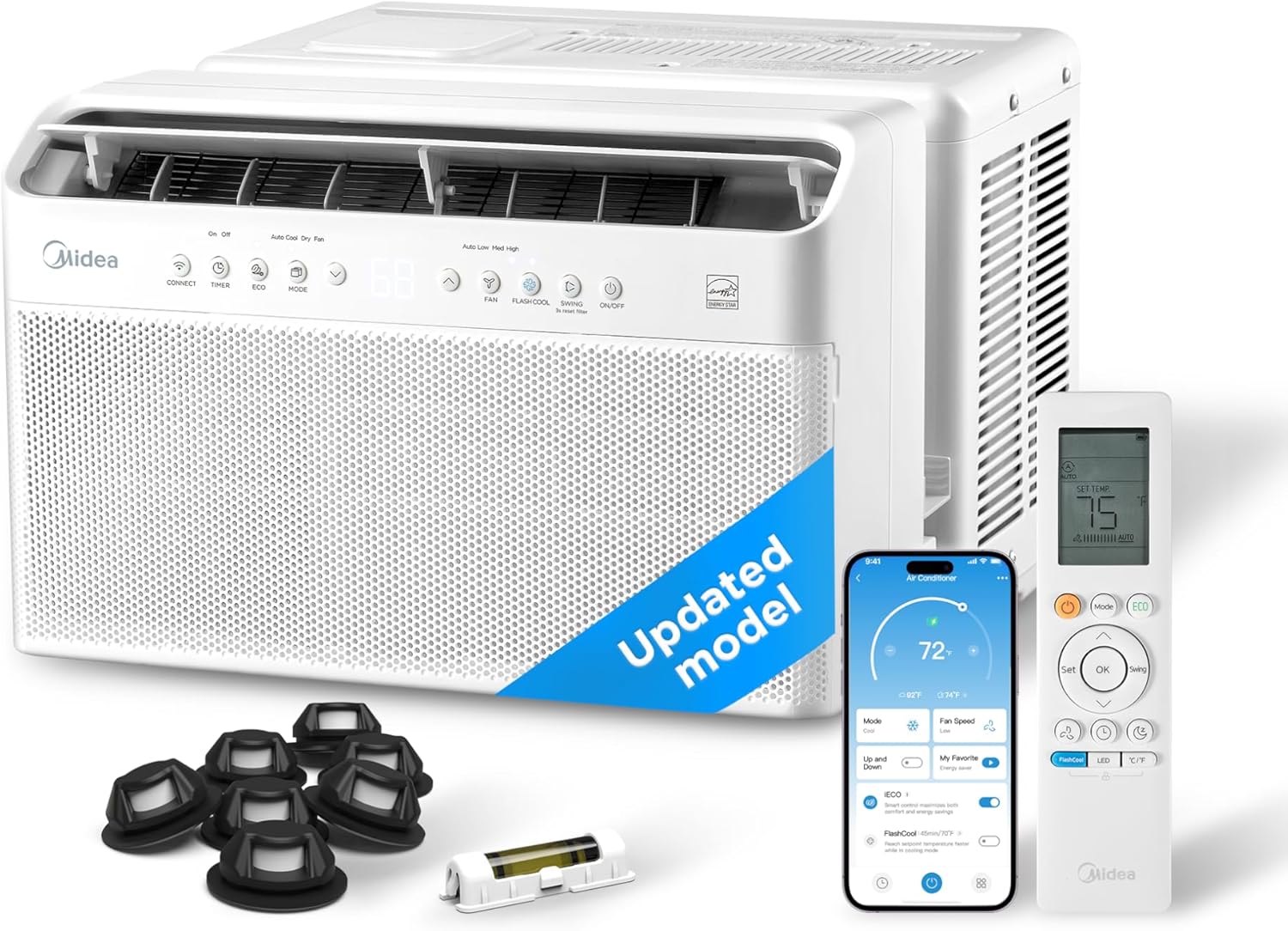
Midea U-Shaped 12,000 BTU Window AC
| Cooling Power | 12000 BTU |
|---|---|
| Floor Area | 550 square_feet |
| Wattage | 1140 watts |
| Refrigerant | R-32 |
| Control Method | App, Remote, Touch, Voice |
The Midea U-Shaped 12,000 BTU window air conditioner uses a U-shaped profile and inverter compressor to provide quiet, energy-efficient cooling for spaces up to about 550 sq ft. It installs into single- or double-hung windows and includes a support bracket and remote for straightforward setup and day-to-day control. The unit's inverter technology lowers power draw and promises more than 35% energy savings compared with conventional units while maintaining low operating noise around 32 dB, making it suitable for bedrooms and living rooms. Smart features include app control and voice compatibility with Alexa and Google Assistant, plus touch and remote control options, which let you adjust temperature and scheduling from anywhere. The U-shape design allows the window to be opened for fresh air and preserves more of the view. Practical limitations are its weight and bulk relative to smaller models, and it requires a compatible window opening and routine checks of the updated drain plugs to ensure proper drainage in humid coastal environments.
Best for: Buyers who want a quiet, energy-conscious window AC with smart controls and the ability to keep a window partly open for fresh air while cooling medium to large rooms.
Less Ideal for: People who need a lightweight, highly portable or very small-capacity unit for tiny rooms or who cannot accommodate the required window opening dimensions.
- U-shaped profile lets the window stay partially open for ventilation and preserves the view
- Inverter compressor for lower energy use and quieter operation (around 32 dB)
- Wi‑Fi and voice control plus remote and touch interfaces for flexible control
- Designed to cool up to roughly 550 sq ft with included mounting hardware
- Relatively heavy and large compared with compact room units which may complicate installation
- Requires monthly checks of drain plugs and basic maintenance to avoid drainage issues
Verdict: Choose the Midea U if you want a quiet, energy-saving 12,000 BTU window AC with smart controls and a U-shape that preserves window ventilation and view.
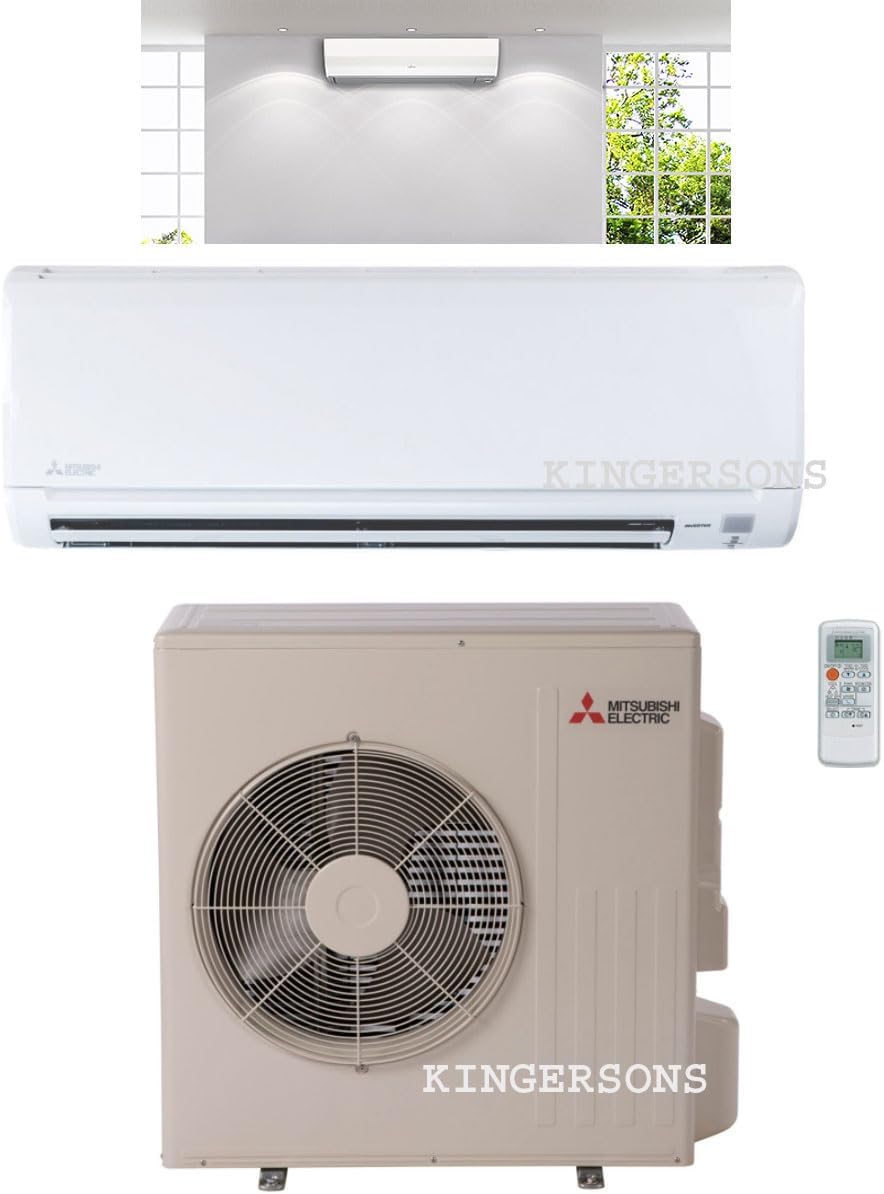
Mitsubishi 18,000 BTU Mini-Split
| Cooling Power | 18000 british thermal units |
|---|---|
| SEER | 18 |
| Capacity | 1.5 tons |
| Voltage | 220 volts |
| Wattage | 2170 watts |
This Mitsubishi 18,000 BTU mini-split is a single-zone inverter-driven wall-mounted system designed to cool or heat spaces up to about 750 sq ft. It uses a PAM inverter compressor to modulate capacity for steady temperature control, offers multiple fan speeds and modes including dehumidify and Econo Cool, and includes a handheld remote and 12-hour timer for everyday control. The outdoor unit has an anti-corrosion coating to resist salt and industrial contaminants, which helps durability in coastal installations. Practical benefits include strong heating capacity (listed at 20,000 BTU), relatively low reported noise, and energy-efficient operation thanks to the SEER 18 rating. Important limitations are that it requires professional HVAC installation and the warranty covers parts only unless professional installation proof is provided, which can add to total cost; the unit also runs on 220V and requires a 20 A breaker. Performance buyers will appreciate the precise inverter cycling and humidity control, while installers should note the compatibility requirement for a new outdoor unit and the manufacturer labor warranty condition.
Best for: Buyers who prioritize steady, high-performance temperature control and durability in corrosive coastal environments and are willing to arrange professional installation and proper electrical setup.
Less Ideal for: Those needing a plug-and-play or portable cooling option or buyers unwilling to hire an HVAC professional for installation and electrical work.
- Inverter-driven compressor for precise temperature control and better part-load efficiency
- Anti-corrosion coating on outdoor unit suitable for salty or industrial coastal air
- SEER 18 efficiency reduces runtime and energy use compared with lower-SEER units
- Includes dehumidify and multiple fan speeds for improved comfort control
- Requires professional licensed installation and proof for full warranty coverage
- Operates on 220V with a 20 A breaker requirement which may need electrical changes
Verdict: A performance-focused, coastal-ready 18,000 BTU mini-split that delivers precise inverter-driven cooling and corrosion resistance for long-term reliability.
Whynter ARC-14S 14,000 BTU Portable AC

| Cooling Power | 14000 BTU |
|---|---|
| Wattage | 1300 watts |
| Noise | 51 db |
| Floor Area | 500 square_feet |
| Capacity | 71 pints |
The Whynter ARC-14S is a heavy-duty dual-hose portable air conditioner designed for large rooms up to about 500 square feet. Its 14,000 BTU cooling (SACC lower) and dual-hose design deliver stronger, more consistent cooling than single-hose units, while the built-in dehumidifier and patented auto-drain help manage moisture without frequent emptying. It offers three modes—cool, dehumidify, and fan—with full thermostat control and a remote for convenient operation. The unit includes an activated carbon filter and washable pre-filter to improve indoor air quality. Practical benefits include a high dehumidifying capacity and relatively quiet low-speed operation at around 51 dB, plus a solid accessory kit for window installation and storage. Expect a large, heavy unit that needs a proper window vent and a dedicated circuit given its 1300 W draw, and its energy efficiency is moderate rather than top-tier. Setup and mobility are straightforward for a freestanding unit of this size, but it is bulkier than compact portable ACs and consumes notable power under sustained use.
Best for: Buyers who prioritize a dependable, high-capacity portable AC for cooling and moisture control in large rooms and want a unit built for continuous, low-maintenance operation.
Less Ideal for: People who need a lightweight, highly energy-efficient, or purely budget portable AC for small rooms or occasional spot cooling should consider smaller or inverter-based alternatives.
- Dual-hose design for more consistent cooling in large rooms
- Built-in dehumidifier with auto-drain reduces maintenance
- High cooling capacity suitable for ~500 sq ft spaces
- Includes activated carbon and washable pre-filter for better air quality
- Remote and panel controls with three fan speeds for easy operation
- Relatively high power consumption compared with smaller units
- Large and heavy, requires adequate space and a proper window vent
- Not ENERGY STAR rated, so long-term operating costs may be higher
Verdict: A robust, reliability-focused portable AC that pairs strong dual-hose cooling with a high-capacity dehumidifier, making it a sensible choice for cooling and moisture control in large rooms.
Towallmark 6000-BTU Window Air Conditioner

| Cooling Power | 6000 BTU |
|---|---|
| Floor Area | 250 square_feet |
| Voltage | 115 volts |
| Noise | 50 db |
| Installation Type | Window |
The Towallmark 6000-BTU window air conditioner is a compact cooling unit intended for single rooms up to roughly 250 square feet. It uses a rotary compressor and offers basic modes including cooling, fan, auto, ECO, sleep, and a 24-hour timer, all accessed via an LED display or the included remote. Practical features include washable filter panels, adjustable side panels for straightforward window mounting, and a 4.9-foot power cord that simplifies placement near standard windows. Noise is rated around 50 dB, so it runs quietly enough for bedrooms or living rooms. The unit is not inverter-based, so it cycles on and off rather than modulating speed, which is common at this price point and can affect long-run efficiency. It lists WiFi among additional features but otherwise keeps controls simple. For coastal use, buyers should plan routine maintenance to limit salt air exposure because this model does not advertise corrosion-resistant coatings. Installation is manageable for one person, and the remote plus multiple modes make daily use convenient, but expectations should be aligned with a budget-focused, entry-level window AC rather than a premium, weather-hardened coastal unit.
Best for: Buyers seeking a low-cost, straightforward window AC to cool a single room and who prioritize simple setup and basic features over premium, weather-hardened protection.
Less Ideal for: Homes in harsh coastal environments that need factory-treated, corrosion-resistant units or larger open-plan spaces that require higher cooling capacity.
- Compact 6,000 BTU capacity suitable for rooms up to ~250 sq ft
- Remote control and LED display for easy temperature and mode adjustments
- Multiple modes including ECO, Sleep, Auto, and 24-hour timer for flexible operation
- Washable filter and adjustable window panels simplify upkeep and installation
- Relatively quiet operation at about 50 dB
- Non-inverter rotary compressor means less precise temperature control and potentially higher long-term energy use
- No explicit corrosion-resistant or coastal-specific coatings listed
Verdict: A budget-friendly 6,000 BTU window AC that delivers simple, quiet cooling for single rooms while requiring extra care for coastal exposure.
Friedrich Chill Premier CCF14B10B

| Cooling Power | 14000 BTU |
|---|---|
| Voltage | 115 volts |
| Refrigerant | R 410A |
| SEER | 18 |
| Control Method | App, Remote |
The Friedrich Chill Premier CCF14B10B is a 14,000 BTU window air conditioner designed for straightforward window installation and steady cooling of medium to large rooms. It uses inverter technology and a rotary scroll compressor to maintain efficient, responsive cooling while running quietly under the QuietMaster system. Built-in Wi‑Fi plus remote control let you change temperature and modes from a phone or the included remote, and an 18 SEER rating indicates strong seasonal efficiency for continuous use. The unit is cooling-only on 115 volts and uses R‑410A refrigerant, so it focuses strictly on lowering indoor temperatures rather than heating or dehumidifying. Practical benefits include reduced runtime and energy draw thanks to the inverter design, app-based scheduling, and a compact window form factor for simpler installation. Limitations are that it is not a heat pump and will not provide heating, and it requires a compatible window opening and proper coastal corrosion protection steps since the listing does not specify marine-grade coatings.
Best for: Buyers who prioritize reliable, energy-efficient cooling and want a window unit that runs quietly and can be scheduled or adjusted remotely for daily use.
Less Ideal for: People who need year-round heating from the same unit or require certified coastal corrosion protection out of the box should consider other solutions.
- High 14,000 BTU cooling capacity for medium to large rooms
- Inverter compressor for efficient, steady temperature control
- Built-in Wi‑Fi and remote control for convenient scheduling and monitoring
- QuietMaster technology for lower operating noise
- Strong seasonal efficiency with an 18 SEER rating
- Cooling-only design with no heating function
- No explicit mention of coastal or corrosion-resistant finishes
Verdict: Choose this Friedrich window AC when you want reliable, energy-efficient, quiet cooling with smart remote control for coastal-area homes when you will handle any extra corrosion protection separately.
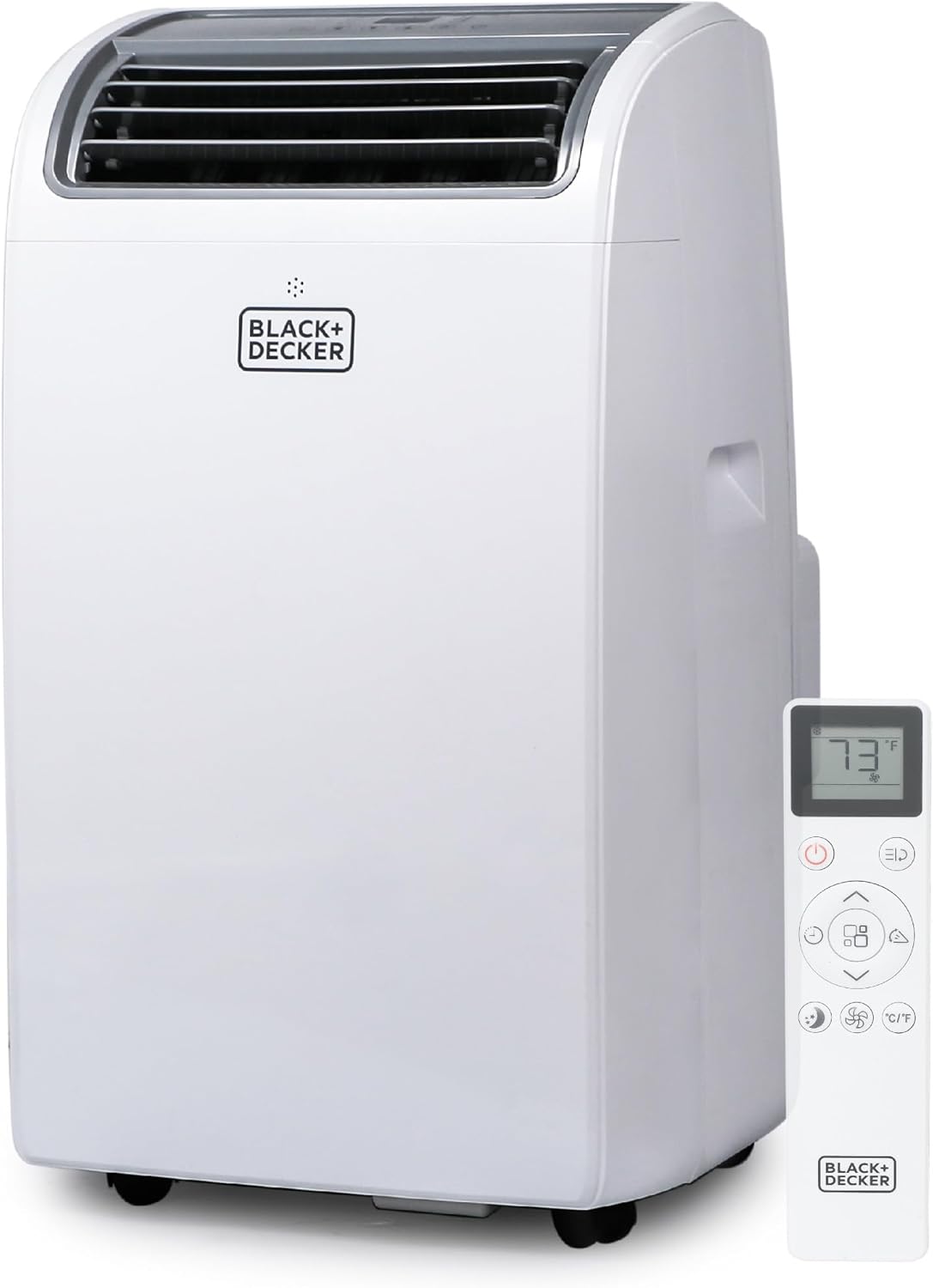
BLACK+DECKER Smart Portable Air Conditioner BPACT12WT
| Cooling Power | 12000 BTU |
|---|---|
| SACC Cooling | 8,350 BTU |
| Power Source | Corded Electric |
| Refrigerant | R410a |
| Control Method | Remote / Wi‑Fi |
The BLACK+DECKER Smart Portable Air Conditioner BPACT12WT is a 3‑in‑1 portable unit that delivers cooling, dehumidifying, and fan modes for single rooms. It uses 12,000 BTU (8,350 BTU SACC) rated cooling and vents with the included window kit, so setup is straightforward for double‑hung or sliding windows and can be moved on casters between rooms. It connects to the BLACK+DECKER app for Wi‑Fi control and works with voice assistants, and the remote includes a follow‑me thermostat for more precise spot comfort. Practical perks include washable filters, multiple fan speeds, an adjustable louver, and a 24‑hour timer plus Sleep Mode for nighttime use. Expect moderate noise levels in use and typical portable AC efficiency that will draw household power on hot days. The unit is heavier than some portables and requires venting and occasional water management in dehumidify mode, so it is best where permanent installation is not possible and you need flexible cooling with smart controls.
Best for: Buyers who want flexible room cooling without permanent installation and value smart controls and easy setup for seasonal use in living spaces.
Less Ideal for: People seeking the quietest, most energy‑efficient solution for whole‑house or year‑round coastal conditioning should consider ductless or professionally installed systems instead.
- Wi‑Fi and voice control via app for remote operation and scheduling
- Included window kit and exhaust hose for straightforward installation
- Three functions in one unit: cooling, dehumidifying, and fan
- Follow‑me remote thermostat and 24‑hour timer for convenient temperature management
- Portable units are bulkier and heavier than window or mini‑split alternatives
- Cooling efficiency and noise are typical for portable ACs and may be noticeable during heavy use
Verdict: A smart, movable 3‑in‑1 portable AC that delivers room‑scale cooling and app control when you need seasonal, nonpermanent comfort at home.
Frigidaire 12,000 BTU Window AC

| Cooling Power | 12000 british thermal units |
|---|---|
| Floor Area | 550 square_feet |
| Wattage | 1100 watts |
| Refrigerant | R-32 |
| Control Method | Remote |
This Frigidaire 12,000 BTU window air conditioner delivers strong cooling for larger rooms and common coastal-area needs like dehumidifying and steady airflow. It offers three fan speeds, 6-way directional airflow, Dry/Eco/Sleep modes, and a 24-hour timer so you can tailor comfort and conserve energy. Maintenance is straightforward with a washable pre-filter and a Clean Filter alert, and the unit is operated by remote control for convenience. The compressor is a rotary/scroll design using R-32 refrigerant and the unit runs on standard 115V corded power. Practical considerations for coastal use include the included window kit for easier installation and a noise level around mid-50s dBA that keeps operation relatively quiet. Energy efficiency is modest, with a SEER/efficiency figure listed at 10.9 and annual energy consumption noted, so expect typical running costs for a 12,000 BTU window model. The unit is window-mounted only and does not use an inverter, which means steady performance but less variable-speed efficiency compared with inverter models.
Best for: Buyers who prioritize a straightforward, reliable window AC that cools larger rooms, offers easy maintenance, and includes familiar controls and modes for predictable performance in coastal homes.
Less Ideal for: Do not choose this unit if you need the highest possible seasonal efficiency or adaptive variable-speed operation for minimal energy use; also avoid if through-wall or portable formats are required.
- High cooling capacity suitable for rooms up to about 550 sq. ft.
- Multiple operating modes including Dry, Eco, and Sleep for humidity control and energy savings.
- Washable pre-filter with filter-clean reminder simplifies maintenance.
- Remote control and 24-hour timer make daily use convenient and adjustable.
- Relatively quiet operation around mid-50 dBA for a window unit
- Not an inverter model so it lacks variable-speed efficiency for tighter energy control.
- Seasonal efficiency rating is modest compared with high-efficiency or ENERGY STAR inverter units.
Verdict: A solid, no-surprises 12,000 BTU window air conditioner that reliably cools larger rooms while keeping maintenance and operation simple.
Choosing the Right Air Conditioner for Coastal Areas: Key Factors to Consider
Corrosion Resistance and Coatings
Coastal air carries salt particles that accelerate metal corrosion. Look for outdoor units with factory-applied protective coatings on the coil and cabinet, and stainless or coated fasteners and mounting hardware. Protective finishes slow rust formation on the cabinet and fins, which preserves heat-exchange efficiency and reduces the need for early replacement.
Even with coatings, regular rinsing and periodic inspection will extend service life. Understand what parts are sacrificial and which are protected so you can prioritize maintenance tasks that prevent small corrosion issues from becoming major failures.
Outdoor Coil Design and Materials
The outdoor coil is the part most exposed to salt spray, windblown debris, and humidity. Choose coils made with corrosion-resistant materials or with hydrophilic and anti-corrosion surface treatments that shed salt and reduce pitting. Coil fin density and spacing matter too: denser fins increase efficiency but are more fragile and harder to clean after salt buildup.
Consider coil accessibility as well. Coils that are easier to access and rinse reduce labor time during seasonal maintenance and make it simpler to restore performance after a storm or heavy salt exposure.
Electrical Component Sealing and Controls
Salt-laden humidity can cause electrical contacts, relays, and control boards to corrode or short. Evaluate whether the unit has sealed or protected electrical compartments, conformal-coated circuit boards, and weather-rated control boxes. Look for protective gaskets and raised mounts that keep critical electronics away from direct splash and pooling water.
Reliable control components reduce failure risk and the need for frequent repairs in coastal environments. When electronics are exposed, factor in the cost and availability of replacements and the feasibility of protective retrofits.
Serviceability and Local Support
Even the most rugged unit needs maintenance. Prioritize air conditioners with service-friendly designs: easy-to-remove panels, modular replacement parts, and accessible filters and coils. Technicians should be able to reach common failure points without extensive disassembly, which lowers labor time and repair costs over the unit's life.
Also check the availability of local service providers familiar with coastal corrosion issues. Units that are common regionally often have better parts availability and local expertise, which shortens downtime after storms or salt-related failures.
Efficiency and Seasonal Performance
High efficiency reduces runtime and overall wear, which is valuable where frequent cooling is necessary. Compare SEER and EER ratings that reflect both seasonal and peak cooling performance. Keep in mind that efficiency ratings are tested under standard conditions; actual performance near the coast may vary due to higher humidity and salt deposits on coils.
Choose systems with a balance of efficiency and durable components. In some cases, slightly lower peak efficiency with superior corrosion protection results in lower total cost of ownership over the unit's service life.
Installation Location and Mounting
Placement affects exposure. Mount outdoor units where they are sheltered from direct salt spray and prevailing winds when possible, such as behind a windbreak or raised above the highest anticipated splash line. Consider vibration isolation and secure mounting hardware that resists loosening under wind and salt corrosion.
Proper installation reduces salt deposition and mechanical stress. Factor in footprint, required clearances for airflow, and ease of future maintenance when choosing the mounting location and supports.
Why Coastal Environments Cause Premature AC Failure
Salt crystals suspended in humid air are hygroscopic and attract moisture, which accelerates electrochemical corrosion on exposed metals. Outdoor condenser fins, coil tubes, and fasteners corrode faster near the shore, degrading heat transfer and leading to leaks or electrical faults.
Strong coastal winds can also carry sand and debris that abrade protective coatings and clog fins, further reducing efficiency. Understanding these mechanisms helps explain why standard inland-rated equipment often underperforms or fails early in marine climates.
- Chemical corrosion from salt accelerates metal degradation
- Humidity and salt promote electrical contact corrosion
- Windblown sand and debris damage fins and coatings
Practical Maintenance Routine for Coastal Units
A proactive maintenance schedule reduces long-term corrosion and keeps cooling performance high. Rinse outdoor coils with fresh water every 1 to 3 months depending on exposure, and more often after storms. Avoid high-pressure washing that can bend fins; use a gentle spray and a fin comb when needed.
Inspect and tighten external fasteners annually, and check electrical enclosures for moisture entry. Replace filter media regularly to reduce indoor humidity load on the system, which lessens outdoor runtime. Keep vegetation trimmed back to maintain unobstructed airflow around the condenser.
- Rinse coils with fresh water regularly
- Inspect fasteners and protective coatings annually
- Service electrical enclosures and filters on schedule
Installation Tips to Minimize Salt Exposure
Site the outdoor unit where it receives some shelter from prevailing winds and direct salt spray. A windbreak, fence, or natural barrier can reduce the direct impact of airborne salt while still allowing adequate airflow for heat exchange.
Mount the unit on raised, corrosion-resistant pads or brackets to limit exposure to splash and pooled water. Ensure there is enough clearance for service access and for airflow; cramped installations hamper cooling and complicate maintenance.
- Use barriers to block direct salt spray while preserving airflow
- Raise the unit and use corrosion-resistant mounts
- Maintain clearances for airflow and technician access
Retrofits and Protective Add-Ons
If you have an existing unit, several retrofit options can improve durability. Coil protection treatments, stainless fastener replacement, and applied cabinet coatings can slow corrosion. Weatherproof enclosures for electrical components and conformal coating of circuit boards are other common upgrades.
When planning retrofits, weigh the cost of protective work against the remaining life of the unit. Some treatments are best done during scheduled service intervals so technicians can inspect for underlying damage and address it before coatings are applied.
- Coil treatments and cabinet coatings extend service life
- Upgrade fasteners and brackets to stainless or coated materials
- Conformal coating can protect vulnerable control electronics
Dealing with Warranty and Service in Marine Climates
Warranty terms vary on coastal coverage. Look for warranty language that addresses corrosion or salt-related failures, and understand any conditions that void coverage such as inadequate installation or lack of routine maintenance. Document installation location and maintenance to support warranty claims if needed.
Establish a relationship with a local contractor experienced in coastal HVAC service. They can perform periodic inspections, recommend appropriate protective upgrades, and respond quickly after storms or salt exposure events.
- Check warranty corrosion coverage and required maintenance
- Document installation and service history
- Use local technicians familiar with marine climate issues
How We Chose the Best Air Conditioner for Coastal Areas
We focused on features that directly affect longevity and dependable cooling in salty, humid coastal environments. Key evaluation criteria included corrosion resistance of outdoor components, efficiency ratings and seasonal performance, moisture and salt-tolerant electrical and control systems, and ease of access for maintenance and repairs. We also considered warranty terms that explicitly cover coastal-related corrosion where provided, and the availability of factory-applied protective coatings or contractor-applied protective options. Units were excluded if they lacked clear manufacturer guidance for high-humidity or high-salt locations, had inaccessible outdoor coils that complicate rinsing, or relied on materials known to corrode quickly in marine air. Our final shortlist contains models that balance durable hardware, measurable efficiency, and practical serviceability for homeowners who face constant salt exposure and higher humidity than inland climates.
Our full evaluation process is outlined in our review methodology.
FAQ
How often should I rinse my outdoor unit in a coastal area?
Often depends on exposure, but rinsing every 1 to 3 months is common for near-shore homes. Rinse more frequently after storms or high winds. Use a gentle freshwater spray to remove salt build-up without damaging fins.
Are special warranties necessary for coastal installations?
Warranties that explicitly cover corrosion or salt-related failure are valuable. Check the terms carefully and follow any required maintenance to keep coverage valid. If coverage is limited, consider protective upgrades to extend service life.
Can I protect an existing air conditioner instead of replacing it?
Yes. Retrofits like coil treatments, cabinet coatings, stainless fasteners, and electrical enclosure upgrades can improve durability. Balance retrofit costs against the unit's age and remaining expected life before investing.
Does higher efficiency equipment perform worse in coastal humidity?
Not necessarily. Higher-efficiency systems reduce runtime, which can lower wear, but salt buildup on coils can reduce efficiency in any unit. Prioritize corrosion-resistant materials and maintain coils to preserve rated performance near the coast.
Where should I place the outdoor unit to reduce salt damage?
Site it where prevailing winds and direct salt spray are reduced, such as behind a barrier or raised above splash zones. Ensure airflow is not restricted and that technicians can access the unit for maintenance.
Final Verdict
For coastal installations prioritize corrosion protection, serviceability, and realistic installation placement over marginal efficiency gains. Durable outdoor coils, sealed electrical components, and accessible designs lower long-term repair risk in salty, humid air. Pair a corrosion-minded equipment choice with a disciplined maintenance routine and appropriate mounting to get reliable cooling and the best service life from your unit.