
Note: This article contains affiliate links. If you click on these links and make a purchase, we may earn a small commission at no extra cost to you. This helps support our research and content. Read our full affiliate disclosure here.
Picking the right air conditioner for a condo changes how comfortable you feel at home and how much energy you use. In compact living spaces, size, noise, and installation type matter more than raw power. You want a unit that cools evenly without rattling window frames or overwhelming shared electrical circuits. This guide covers our seven shortlisted air conditioners for condos, selected to suit a range of floor plans and installation constraints. We evaluate each option for cooling capacity, noise levels, and ease of installation to help you pick an efficient, low-profile solution. Read on to find the style and performance that fit your space and building rules.
Top Picks at a Glance
| Best Overall The best all-around choice for most situations | EnerGlow Portable Air Conditioner PAC020-14K |  |
| Best Quality Built to a higher standard if you want something more solid | Whynter ARC-14S 14,000 BTU Portable AC |  |
| Best Value The sweet spot between price and what you get | SereneLife Portable Air Conditioner SLPAC8 |  |
| Best Budget The cheapest option that still gets the job done reliably | GarveeHome 6000 BTU Window AC |  |
| Top Rated A top-rated pick with lots of positive feedback | BLACK+DECKER Portable Air Conditioner 9,000 BTU |  |
| Most Popular A crowd favorite that many people choose with confidence | Frigidaire 5,000 BTU Window Air Conditioner |  |
| Best Seller A high-volume bestseller chosen again and again | LG Through-the-Wall Air Conditioner LT1016CER |  |
EnerGlow Portable Air Conditioner PAC020-14K

| Cooling Power | 14000 BTU |
|---|---|
| Noise | 42 db |
| Capacity | 1.2 tons |
| Control Method | Remote, Touch |
| Seasonal Energy Efficiency Ratio (SEER) | 7.8 |
The EnerGlow PAC020-14K is a 14,000 BTU portable air conditioner designed to cool medium to large rooms and condos without permanent installation. It delivers multiple operating modes—cooling, fan, dry and sleep—with a turbo mode for faster temperature drops and an auto-swing function to spread cooled air. Control is via the touch panel or included remote, and a 24-hour timer and smart mode let the unit switch between cooling and fan automatically around a 73°F threshold. The unit also includes a removable washable filter, child lock and caster wheels plus a packaged window kit for quick setup in most double-hung or sliding windows. Practical benefits include strong airflow, simple portability between rooms, and dehumidification that removes substantial moisture. Trade-offs are its weight and footprint for tighter condo layouts, and a SEER/CEER around 7.8 that is typical for portable units rather than high-efficiency split systems. Noise is reported near 42 dB in sleep mode but will be higher at max fan speed.
Best for: Buyers who want a powerful, portable cooling solution for a condo that can be installed without permanent work and moved between rooms as needed.
Less Ideal for: Condo dwellers seeking the quietest or most energy-efficient permanent cooling solution should consider wall-mounted or mini-split alternatives instead.
- High cooling output suitable for larger condo rooms up to approximately 750 sq ft coverage listed by the maker
- Multiple modes including dry and sleep add year-round usefulness
- Included window installation kit and caster wheels make setup and room-to-room moves straightforward
- Remote and touch controls plus 24-hour timer and smart mode simplify daily operation
- Relatively heavy and occupies floor space that can be awkward in small condos
- Efficiency rating (CEER/SEER) is modest compared with ducted or mini-split systems
Verdict: Choose the EnerGlow PAC020-14K if you need a high-capacity, portable AC that installs quickly in condo windows and doubles as a dehumidifier for flexible, room-to-room cooling.
Whynter ARC-14S 14,000 BTU Portable AC

| Cooling Power | 14000 BTU |
|---|---|
| Wattage | 1300 watts |
| Noise | 51 db |
| Floor Area | 500 square_feet |
| Capacity | 71 pints |
The Whynter ARC-14S is a heavy-duty dual-hose portable air conditioner designed for large rooms up to about 500 square feet. Its 14,000 BTU cooling (SACC lower) and dual-hose design deliver stronger, more consistent cooling than single-hose units, while the built-in dehumidifier and patented auto-drain help manage moisture without frequent emptying. It offers three modes—cool, dehumidify, and fan—with full thermostat control and a remote for convenient operation. The unit includes an activated carbon filter and washable pre-filter to improve indoor air quality. Practical benefits include a high dehumidifying capacity and relatively quiet low-speed operation at around 51 dB, plus a solid accessory kit for window installation and storage. Expect a large, heavy unit that needs a proper window vent and a dedicated circuit given its 1300 W draw, and its energy efficiency is moderate rather than top-tier. Setup and mobility are straightforward for a freestanding unit of this size, but it is bulkier than compact portable ACs and consumes notable power under sustained use.
Best for: Buyers who prioritize a dependable, high-capacity portable AC for cooling and moisture control in large rooms and want a unit built for continuous, low-maintenance operation.
Less Ideal for: People who need a lightweight, highly energy-efficient, or purely budget portable AC for small rooms or occasional spot cooling should consider smaller or inverter-based alternatives.
- Dual-hose design for more consistent cooling in large rooms
- Built-in dehumidifier with auto-drain reduces maintenance
- High cooling capacity suitable for ~500 sq ft spaces
- Includes activated carbon and washable pre-filter for better air quality
- Remote and panel controls with three fan speeds for easy operation
- Relatively high power consumption compared with smaller units
- Large and heavy, requires adequate space and a proper window vent
- Not ENERGY STAR rated, so long-term operating costs may be higher
Verdict: A robust, reliability-focused portable AC that pairs strong dual-hose cooling with a high-capacity dehumidifier, making it a sensible choice for cooling and moisture control in large rooms.
SereneLife Portable Air Conditioner SLPAC8

| Cooling Power | 8000 british thermal units |
|---|---|
| Wattage | 1000 watts |
| Refrigerant | R410a |
| Noise | 55 db |
| Floor Area | 350 square_feet |
The SereneLife SLPAC8 is a compact portable air conditioner that combines cooling, dehumidifying, and fan modes in a single freestanding unit with wheels and a window exhaust kit. It is designed for plug-in use in living rooms, bedrooms, or condos and offers 8,000 BTU cooling driven by a 1,000 watt motor and an R410a refrigerant system. Controls are handled with a digital touch panel and included remote for setting temperature, timer, and fan speed across three speeds. The built-in dehumidifier removes moisture while cooling, and the product ships with the exhaust hose and mounting hardware for quick installation in a standard window opening. Practical benefits include portability for moving between rooms, a modest noise level around 55 dB, and an airflow and dehumidification rate appropriate for spaces up to about 215 to 350 sq ft depending on layout. Limitations are its non-inverter compressor type and average SEER, which means it is less energy efficient than inverter models and may draw more power during sustained operation; it also requires a window for exhaust and has a one-year warranty.
Best for: Buyers who prioritize a versatile, moveable cooling solution for single rooms or compact condos and want the convenience of plug-in setup and dehumidifier capability without installing permanent ductwork.
Less Ideal for: Those seeking the most energy-efficient, low-power continuous cooling for large or open-plan condos or buyers who need an ultra-quiet, inverter-style system should consider other options.
- Three-in-one functionality: cooling, dehumidifying, and fan modes in a single portable unit.
- Includes window exhaust kit and rolling casters for straightforward room-to-room setup and relocation.
- Remote control and digital touch panel make temperature, timer, and fan adjustments convenient.
- Reasonable cooling coverage for small condos and rooms up to ~215–350 sq ft with a modest operating noise around 55 dB.
- Uses a non-inverter rotary vane compressor and a 2-star efficiency rating, so it is less energy efficient than inverter-based units.
- Not suitable for spaces larger than the stated coverage; cooling performance can drop in badly insulated rooms or open-plan condos.
Verdict: A practical, easy-to-install portable AC that delivers cooling plus dehumidification for single rooms and small condos where mobility and convenience matter most.
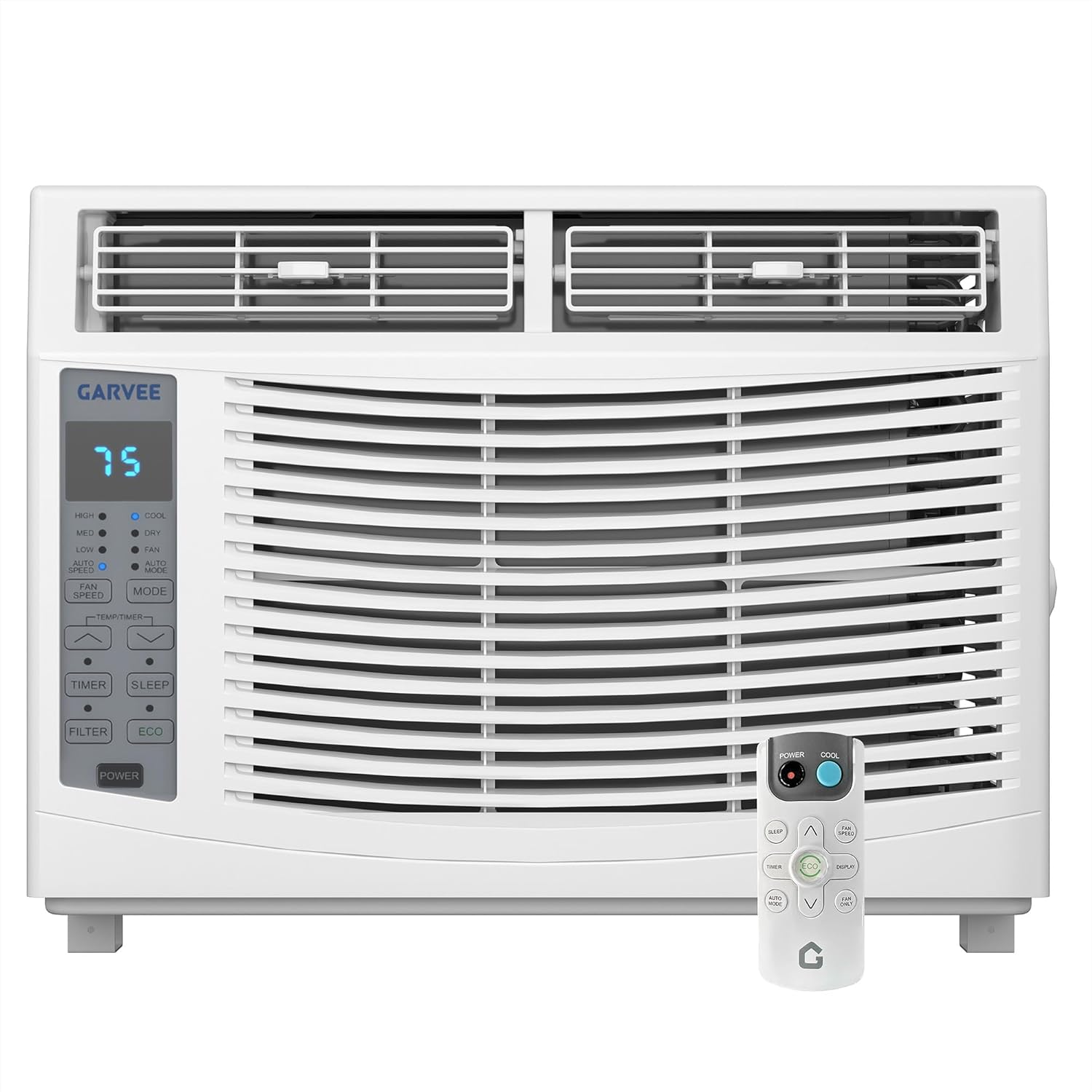
GarveeHome 6000 BTU Window AC
| Cooling Power | 6000 BTU |
|---|---|
| Floor Area | 250 square_feet |
| Wattage | 850 |
| Control Method | Remote |
| Installation Type | Window |
This GarveeHome 6000 BTU window air conditioner provides straightforward cooling for medium rooms such as bedrooms, small living spaces, or condo rooms up to roughly 250 square feet. It offers three cooling/fan speeds, an Auto‑Cool mode that adjusts fan speed based on room temperature, and a digital LED display with a remote for convenient adjustments from across the room. The unit is corded electric, uses a rotary scroll compressor, and includes side panels and mounting hardware for typical double‑hung window installation plus an auto‑restart after power loss. Practical benefits include relatively low reported noise for this size and modest power draw around 850 watts, which helps keep operating costs down. Expect simple mechanical controls rather than smart home connectivity and a limited 30‑day manufacturer warranty, so plan for basic DIY installation and routine filter cleaning. It is a no‑frills option that focuses on efficient cooling and ease of use rather than advanced features or long warranty coverage.
Best for: Buyers who need an affordable, easy‑to‑install window AC to cool a condo room or medium apartment space and prioritize straightforward operation over smart features.
Less Ideal for: Those seeking smart home integration, long factory warranty support, or the highest energy efficiency from an inverter compressor should look at higher‑end alternatives.
- Rated 6000 BTU suitable for medium rooms up to about 250 sq. ft.
- Includes remote control and LED digital display for easy settings changes.
- Auto‑restart restores settings after power outages.
- Multiple fan and cooling speeds plus Auto‑Cool for simpler temperature control.
- Includes mounting hardware for standard double‑hung window installation.
- No Wi‑Fi or smart home integration for remote scheduling or app control.
- Manufacturer warranty coverage is short at 30 days.
- Not inverter technology, so less efficient at variable loads compared with inverter units.
Verdict: A budget‑friendly window AC that reliably cools a condo‑sized room and keeps operation simple with remote control and Auto‑Cool.
BLACK+DECKER Portable Air Conditioner 9,000 BTU

| Cooling Power | 9000 BTU (5,300 BTU SACC) |
|---|---|
| Power Source | Corded Electric |
| Wattage | 935 watts |
| Refrigerant | R-32 |
| Filter Type | Washable filter |
This BLACK+DECKER portable air conditioner is a straightforward, user-friendly unit designed to cool rooms up to about 400 sq. ft. It combines air conditioning, dehumidifying, and fan modes in a single compact package with casters and side handles for easy room-to-room mobility. The unit ships with a complete window installation kit and a full-function remote with a Follow Me thermostat feature for more accurate temperature sensing. Practical touches include a washable filter, self-evaporating operation that reduces draining, and a 24-hour timer plus sleep mode for overnight use. On the downside, cooling is rated at 9,000 BTU ASHRAE (about 5,300 SACC), so it performs best in small to medium spaces rather than large open-plan areas, and noise levels approach typical portable AC volumes. Energy efficiency numbers are provided and the unit uses R-32 refrigerant. For condo owners needing a removable, easy-to-install cooling solution with basic reliability and useful controls, this model covers the essentials without a steep learning curve.
Best for: Condo residents who want a dependable, easy-to-install portable cooling solution for single rooms and prioritize straightforward operation and seasonal storage.
Less Ideal for: People seeking whole-condo cooling or very quiet operation during sensitive nighttime use should consider more powerful or quieter alternatives.
- 3-in-1 functionality: cooling, dehumidifying, and fan modes in one portable unit
- Includes full window installation kit and remote with Follow Me thermostat
- Washable filter and self-evaporating operation reduce maintenance
- Casters and side handles make it easy to move and store seasonally
- Effective SACC cooling is modest (about 5,300 BTU), so not ideal for very large or open spaces
- Noise level is typical for portable ACs and may be noticeable in very quiet rooms
Verdict: A reliable, easy-to-install portable AC that provides practical room-by-room cooling and dehumidification for condo spaces.
Frigidaire 5,000 BTU Window Air Conditioner

| Cooling Power | 5000 BTU |
|---|---|
| Floor Area | 150 square_feet |
| Noise | 52 db |
| Wattage | 450 |
| Refrigerant | R-32 |
The Frigidaire FFRA051WAE is a compact window air conditioner intended for small rooms and condos where space and quiet operation matter. It delivers 5,000 BTU of cooling power and is easy to install in most standard windows thanks to adjustable side panels and a long three-prong power cord. Controls are simple touch buttons with two fan speeds and effortless temperature control for steady comfort, while a washable filter helps trap dust and reduces maintenance costs. At 52 dBA it stays reasonably quiet for bedrooms and living rooms, and the Auto Restart restores settings after power outages. Energy performance is modest with an 11 SEER-equivalent efficiency and 450W draw, so running costs are reasonable for a unit this size. Limitations include its 150 sq. ft. coverage, which makes it unsuitable for larger open-plan condo areas, and it lacks inverter technology so it cycles rather than modulates for the highest efficiency. For a buyer prioritizing straightforward cooling, low noise, and ease of upkeep, this unit is a practical choice.
Best for: Buyers who need a reliable, easy-to-install window AC for a single bedroom or small condo room and who prioritize quiet operation and low maintenance.
Less Ideal for: People seeking whole-condo cooling, highest energy savings, or variable-speed inverter performance should consider other solutions.
- Compact 5,000 BTU output suitable for small rooms and condos
- Adjustable side panels and long power cord simplify window installation
- Washable filter reduces replacement costs and is easy to clean
- Relatively quiet operation at 52 dBA for bedroom use
- Auto Restart preserves settings after power interruptions
- Cools only up to about 150 sq. ft., not appropriate for larger spaces
- No inverter technology, so it cycles on and off rather than modulating
- Moderate energy efficiency compared with modern inverter models
Verdict: A straightforward, quiet window AC that reliably cools a single small room or condo bedroom with minimal maintenance.
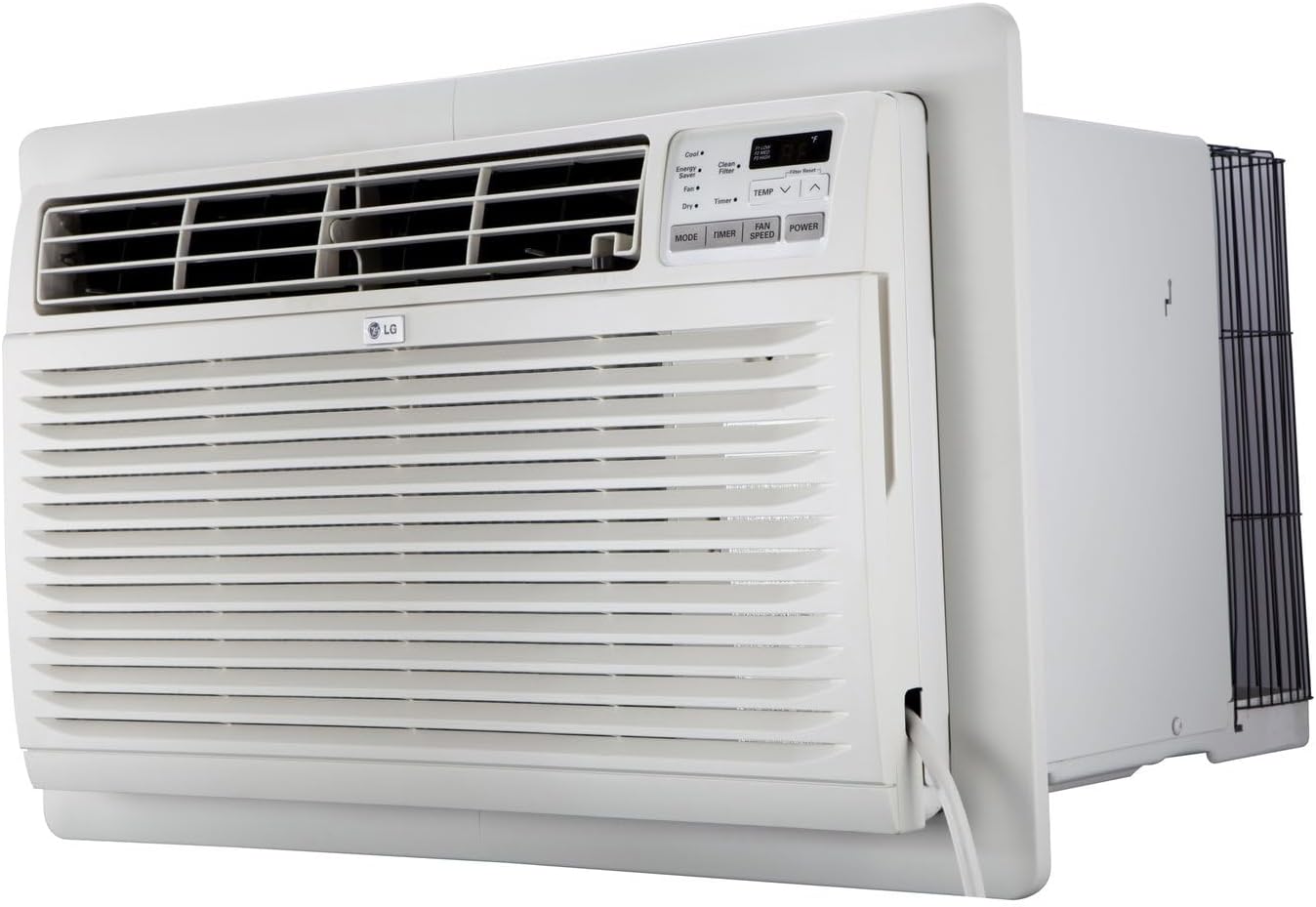
LG Through-the-Wall Air Conditioner LT1016CER
| Cooling Power | 9800 BTU |
|---|---|
| Power Source | 115 volts, corded electric |
| Wattage | 920 watts |
| Floor Area | 440 square_feet |
| Filter Type | Washable |
This LG through-the-wall air conditioner is built to cool small to medium living spaces up to roughly 440 square feet and installs into a wall sleeve rather than a window. It offers three cooling and fan speeds, four-way air deflection for directing airflow, and a remote for convenient control from across the room. Practical features include a washable reusable filter with a check-filter reminder, a 24-hour on/off timer, energy saver and dry modes for reduced compressor run time, and auto-restart after power outages. The unit uses R-32 refrigerant and reports an EER of 10.7, so it is reasonably efficient for a non-inverter wall unit. Expect typical through-the-wall noise around 56 dB and straightforward maintenance but no inverter-based variable-speed compressor, so it cycles rather than modulates output. Installation requires a compatible wall sleeve (not included), and the unit is heavier and more permanent than portable or window models, which is an important consideration for condo installations.
Best for: Buyers who prioritize a reliable, steady cooling solution for a condo living room or bedroom and who prefer a proven, easy-to-operate wall-mounted unit with simple maintenance.
Less Ideal for: Renters or anyone who needs a temporary, movable solution or those looking for the quietest, variable-speed inverter systems should consider other options.
- Sized to cool rooms up to about 440 sq ft for whole-room comfort
- Remote control and 24-hour timer for easy operation from across the room
- Washable reusable filter with reminder reduces ongoing filter costs
- Energy saver and dry modes help cut compressor run time and manage humidity
- Uses R-32 refrigerant and reports a 10.7 EER for reasonable energy performance
- No inverter compressor so unit cycles at fixed speeds rather than modulating for quieter, more efficient operation
- Wall sleeve for installation is not included so additional purchase and professional installation may be needed
Verdict: A durable, easy-to-use through-the-wall air conditioner that reliably cools condo rooms up to about 440 sq ft with convenient controls and straightforward maintenance.
Choosing the Right Air Conditioner for Condos: Key Factors to Consider
Proper Cooling Capacity
Selecting the right cooling capacity is critical because an undersized unit will run constantly and fail to reach comfortable temperatures while an oversized unit will cycle frequently, creating uneven humidity control and wasted energy.
For condos, calculate needed BTUs based on room square footage, ceiling height, sun exposure, and occupancy. Open-plan living areas and combined kitchen/living rooms often require higher capacities than a single bedroom. Matching capacity to the actual zone you want to cool leads to better comfort and lower operating costs.
Noise and Sound Management
Noise is a top concern in multi-unit housing where walls and floors offer limited isolation. Look for manufacturer sound ratings in decibels and compare measured low-speed and high-speed numbers to understand typical in-room noise.
Consider features that reduce perceived noise such as multiple fan speeds, sleep modes, and compressor isolation. Installation location matters too. Placing the unit away from bedroom walls or using vibration-dampening mounts can significantly improve perceived quietness for you and your neighbors.
Installation Type and Building Rules
Condos often restrict exterior changes, so installation flexibility matters. Window and portable units avoid permanent wall penetrations, while through-wall units need approval and careful planning. Some buildings allow mini-split systems with small exterior compressors but may require specific placement or screening.
Before buying, confirm condo association rules and any required permits. Also check whether your unit needs a dedicated electrical circuit or if it can run on existing outlets. Choosing the correct installation type prevents surprises during installation and ensures compliance with building guidelines.
Energy Efficiency and Operating Cost
Energy efficiency affects monthly bills and the heat a unit adds to your condo when running. Look for efficiency ratings and seasonal performance indicators that represent real-world operation rather than peak values only.
Higher efficiency often pays off over time in lower operating costs, especially if you run the unit for many hours daily. For units with multiple modes, features like programmable timers or smart thermostats help reduce runtime and better control energy use.
Size, Footprint, and Aesthetics
In condos, the physical footprint of a unit impacts living space and sight lines. Slim-profile units and compact outdoor condensers reduce intrusion on balconies or exterior walls. Consider how the unit's grille and controls will fit with existing decor and the available opening if a window or wall sleeve is required.
Aesthetics matter for resale and for meeting association guidelines. Choose a style and finish that blends with your interior and minimizes visible exterior hardware where regulations limit modifications.
Maintenance Requirements
Condo owners often manage maintenance themselves or rely on limited building services. Choose units with accessible filters and straightforward cleaning procedures to minimize professional service needs. Units with modular panels and tool-free filter access make routine upkeep faster and cheaper.
Also consider expected service intervals, availability of common replacement parts, and whether the unit requires refrigerant handling by a licensed technician for repairs. Lower day-to-day maintenance saves time and avoids coordination with building management for access.
Window Vs Through-Wall Vs Portable: Which Works in a Condo
Each installation type has pros and cons when used in condos. Window units are typically easiest to install and remove but require a suitable window and may block light. Through-wall units offer a cleaner look and better sealing but usually need an exterior sleeve and association approval. Portable units provide flexibility and no fixed alterations but are generally louder and less efficient.
When choosing between types, weigh how permanent you want the solution to be, what your building rules allow, and how much interior space you can spare. Portable units can be a good short-term solution, while a through-wall or mini-split is more appropriate for long-term comfort if the association permits.
- Window: Quick install, good performance, may block light.
- Through-Wall: Neater appearance, better sealing, requires installation work.
- Portable: No structural changes, flexible placement, usually less efficient.
Sizing for Different Condo Spaces
Room size, layout, and heat sources determine ideal unit capacity. For small bedrooms choose lower-BTU units; for open living/kitchen areas select higher capacities or consider zoning with separate units. Account for sun-facing windows and kitchen heat when sizing.
If you have vaulted ceilings or open floor plans, plan for airflow and consider supplemental fans to move cooled air. Oversized units may reach set temperatures quickly but will not dehumidify effectively, leaving the space feeling clammy.
- Measure floor area and note ceiling height.
- Factor in window exposure and appliance heat gains.
- Prefer slightly higher capacity for open-plan living rooms.
Managing Noise in Close Quarters
Noise performance matters both for daytime focus and nighttime sleep. Look beyond peak decibel numbers and consider how the unit performs on low and medium fan settings. Some units advertise quiet sleeping modes that lower fan speed and compressor activity for overnight use.
Installation can reduce transmitted noise. Use vibration isolation brackets for through-wall sleeves, ensure window units are tightly sealed to prevent rattles, and place portable units on soft surfaces where feasible to damp vibrations.
- Compare low-speed and high-speed dB ratings.
- Use isolation mounts and proper sealing to reduce vibration noise.
- Prefer units with multiple fan speeds and sleep modes.
Electrical Needs and Circuit Considerations
Many condo units run on standard household circuits that can handle typical window or portable air conditioners. However, higher-capacity units may require a dedicated circuit or a higher amperage outlet. Check the unit's rated amperage and consult your building's electrical panel before purchase.
If installation requires a dedicated circuit, factor in the time and approvals needed for electrical work. Avoid units that exceed your building's available capacity unless you plan to upgrade the electrical service with the condo association's authorization.
- Confirm outlet amperage and breaker ratings.
- Identify whether a dedicated circuit is required.
- Coordinate electrical changes with building management.
Smart Controls, Timers, and User Convenience
Modern units may include programmable timers, remote controls, and Wi-Fi-based smart features that let you schedule cooling or adjust settings remotely. These features can improve comfort while reducing runtime and energy use.
Think about how you will use such features. For regular daytime scheduling, a programmable timer can reduce energy use. For occasional remote adjustments, app-based control can be helpful, but also consider the security and connectivity implications in a multi-unit building.
- Timers reduce unnecessary runtime.
- Remote and app controls offer convenience but require reliable Wi-Fi.
- User-friendly interfaces matter for daily adjustments.
How We Chose the Best Air Conditioner for Condos
We focused on criteria that matter for condo living where space, building rules, and neighbor comfort constrain choices. Key filters included size-appropriate cooling capacity so units can match room square footage without oversizing. Noise ratings and measured decibel levels were essential because many condo layouts place living and sleeping areas near the unit. Installation flexibility was another priority, covering window, through-wall, and portable setups that suit condos with different restrictions. Energy efficiency and certified performance were evaluated to reduce running costs and avoid electrical upgrades in older buildings. We also considered maintenance access and filter replacement ease, since complex service needs can be impractical in tight utility closets or shared spaces. Durability and build quality were included to limit repairs and service calls where condo access may be limited. Excluded from the shortlist were heavy-duty commercial systems and equipment designed for whole-building HVAC replacements. We did not include units that require major structural modifications or dedicated high-voltage circuits beyond typical condo electrical capacity. The result is a selection filtered toward practical, condo-friendly cooling solutions that balance capacity, noise, installation, and ongoing upkeep.
Our full evaluation process is outlined in our review methodology.
FAQ
Can I install a through-wall unit in a condo?
Often you can, but condo associations commonly require approval and may have rules about exterior changes. Check governing documents and get written permission before modifying an exterior wall.
Are portable air conditioners effective for condos?
Portable units can cool a single room and require no permanent alterations, making them suitable for rentals or short-term solutions. They are typically less efficient and louder than fixed units, so they work best for smaller spaces or temporary needs.
How loud is too loud for a condo air conditioner?
Aim for lower decibel ratings on low and medium fan speeds for living and sleeping areas. Units under about 50 dB on low setting are usually acceptable for many condo layouts, but perceived noise depends on placement and building acoustics.
Do I need a dedicated circuit for a high-capacity unit?
It depends on the unit's amperage. Many mid-range units run on standard circuits, while higher-capacity units may require a dedicated circuit. Always check electrical requirements before purchase and consult an electrician if unsure.
How often should I clean or replace filters?
Filters should be inspected monthly during heavy use and cleaned or replaced every 1 to 3 months depending on dust levels, occupancy, and pet presence. Regular maintenance preserves airflow and efficiency and reduces allergens.
Final Verdict
For condo living, prioritize units that match the room size, operate quietly, and fit within your building rules and electrical capacity. Balance cooling capacity against noise and efficiency to avoid oversizing or frequent cycling. Consider installation type, maintenance ease, and features like timers or sleep modes to improve comfort without major modifications. Focus on the practical tradeoffs: quieter, slightly less powerful units may be better for bedrooms, while higher-capacity units suit open living areas. With attention to capacity, sound, and installation constraints, you can choose an air conditioner that keeps your condo comfortable and compliant with building requirements.