
Note: This article contains affiliate links. If you click on these links and make a purchase, we may earn a small commission at no extra cost to you. This helps support our research and content. Read our full affiliate disclosure here.
Picking the right air conditioner for an RV matters more than you might think. It affects interior comfort, generator or battery load, and how long you can run cooling while parked or boondocking. The wrong unit can leave you short on power or dealing with uneven cooling in the coach. This guide presents the top shortlisted air conditioners for RVs, selected for reliable cooling, sensible power use, and easy installation. Below you will find how we evaluated each option and practical guidance to match a unit to your rig and typical travel habits.
Top Picks at a Glance
| Best Overall The best all-around choice for most situations | RecPro RV Air Conditioner 13.5K |  |
| Best Quality Built to a higher standard if you want something more solid | Furrion Chill Cube 18K |  |
| Best Value The sweet spot between price and what you get | countrymod 12V 10000 BTU RV Air Conditioner |  |
| Top Rated A top-rated pick with lots of positive feedback | Midea EasyCool 5,000 BTU Window AC |  |
| Most Popular A crowd favorite that many people choose with confidence | Frigidaire 5,000 BTU Window AC |  |
| Best Seller A high-volume bestseller chosen again and again | BLACK+DECKER Portable Air Conditioner BPACT14WT |  |
RecPro RV Air Conditioner 13.5K

| Cooling Power | 13500 BTU |
|---|---|
| Refrigerant | R-410A |
| Voltage | 115 volts |
| Wattage | 1300 watts |
| SEER | 10.38 |
The RecPro 13.5K is a rooftop RV air conditioner built for straightforward cooling in recreational vehicles. It delivers 13,500 BTU of cooling using R-410A refrigerant and a reciprocating compressor, and it is supplied for 115V corded electric hookup with a listed input around 1300 watts. Typical use is rooftop installation into the standard packaged opening with the included exterior shroud and interior plenum, then control via the wireless remote or the LED touch display. Notable features include quiet operation reported near 59.7 dB, a compact aerodynamic housing intended to reduce drag, and compatibility with both ducted and non-ducted RV interiors. The unit emphasizes low amp draw for running multiple RV systems on shore, generator, or limited power setups. Key limitations are that it is cooling-only (no primary heating), it does not use an inverter so fan and compressor behavior is fixed, and it will not function above very high ambient temperatures; also it is not compatible with third-party wall thermostats. Installation and service require attention to the specified roof opening and electrical load requirements.
Best for: Buyers who want a reliable, efficient rooftop AC that cools a typical RV without requiring high electrical capacity and who prioritize quiet, plug-and-play operation.
Less Ideal for: Owners who need integrated heating, variable-speed inverter performance, or seamless integration with an existing wall thermostat should look elsewhere.
- 13,500 BTU cooling capacity suitable for typical RV cabins
- Low amp draw to ease use with shore power, generators, or solar-constrained systems
- Includes wireless remote and LED display for easy on-unit control
- Quiet operation around 59.7 dB for less cabin noise
- Designed for both ducted and non-ducted RV installations
- Cooling-only unit so it cannot serve as a primary heater
- Non-inverter reciprocating compressor limits variable-speed efficiency and soft-start benefits
- Not compatible with other brand wall thermostats
Verdict: A quiet, low-amp 13,500 BTU rooftop AC that is a solid choice for RV owners who need dependable cooling on limited power sources.
Furrion Chill Cube 18K

| Cooling Power | 18000 british thermal units |
|---|---|
| Seasonal Energy Efficiency Ratio (SEER) | 14 |
| Power Source | Powered by electric power |
| Wattage | 5275.28 watts |
| Noise | 50 db |
The Furrion Chill Cube 18K is a rooftop RV air conditioner built around a variable-speed compressor and inverter drive to deliver over one ton of cooling with improved energy efficiency and quieter running than single-speed units. It is typically installed as a bolt-on rooftop head unit (ADB sold separately) and is intended for campers and motorhomes that need strong, continuous cooling performance in hot conditions. Notable features include continuous variable-speed operation for better temperature control and dehumidification, a turbo cool mode for faster cooldown, and generator/inverter readiness for off-grid use. The unit claims a high EER and SEER 14 rating which helps extend battery or generator runtime while providing robust cooling up to and beyond 105°F ambient. Practical benefits include reduced start-up amp draw compared with single-speed compressors, lighter-than-average weight for easier handling, and quieter operation around the 50 dB range. Limitations are that it requires a matching outdoor ADB assembly for ducted airflow options and a new outdoor unit compatibility note, so full-system swaps may need additional purchases and installation planning.
Best for: Buyers who prioritize cooling performance and efficient, quiet operation for camping or off-grid RV use and want a rooftop unit that maintains steady temperatures in very hot conditions.
Less Ideal for: Owners seeking a plug-and-play packaged rooftop kit with all installation hardware included or those wanting a unit that works without planning for ADB or outdoor unit compatibility.
- Variable-speed compressor improves temperature control and continuous dehumidification
- High cooling capacity (18,000 BTU) suitable for hot climates and larger RVs
- Designed for lower noise operation, around 50 dB
- Generator/inverter ready for off-grid or limited-power scenarios
- Bolt-on installation design and lighter weight for easier handling
- Air distribution box is sold separately, so additional components may be required for full installation
- Requires a new outdoor unit compatibility note which could complicate full-system replacements
Verdict: Choose the Furrion Chill Cube 18K when you want a powerful, energy-efficient rooftop RV AC that stays quiet and delivers steady cooling performance in extreme heat.
countrymod 12V 10000 BTU RV Air Conditioner

| Cooling Power | 10000 BTU |
|---|---|
| Voltage | 12 volts |
| Wattage | 900 watts |
| Noise | 45 db |
| SEER | 38 |
This rooftop RV air conditioner delivers roughly 10,000 BTU of cooling from a 12V inverter-driven system built to fit a standard 14" x 14" roof vent. It uses a variable-frequency inverter and a horizontal compressor to modulate cooling output, reduce vibration, and run more quietly than many traditional rooftop units, with reported noise around 45 to 55 dB. The unit is battery-powered and marketed for energy efficiency, claiming about 0.3 kWh per hour and extended run time on suitable battery setups. Controls include a remote and touch panel plus app control for convenient adjustments. Installation is straightforward for non-ducted RVs and comes with an installation kit and manual, but it will not work with RVs that require ducted systems. Practical benefits are lower power draw for boondocking, quieter operation, and a compact rooftop form factor; limitations include the need for a robust 12V electrical system capable of supporting up to 40–60 A and that it is a non-ducted unit, so distribution depends on the RV interior layout.
Best for: Buyers who prioritize efficient, lower-power cooling for boondocking or limited-grid RV use and who want a compact rooftop unit that is easy to install on standard roof vents.
Less Ideal for: Those with RVs that use ducted HVAC or owners without a sufficiently robust 12V battery/inverter system should consider other solutions.
- 12V inverter design for lower power draw compared with standard AC units
- Variable-frequency compressor reduces vibration and adapts cooling output to demand
- Fits standard 14" x 14" RV roof vent for relatively simple rooftop installation
- Remote, touch, and app controls for flexible operation
- Requires a substantial 12V electrical supply (40–60 A) which may need battery/inverter upgrades
- Non-ducted design can produce uneven air distribution in larger or awkwardly laid-out RV interiors
Verdict: Choose this rooftop 12V 10,000 BTU unit if you need energy-efficient, low-noise cooling for non-ducted RVs and plan to run off a capable 12V system.
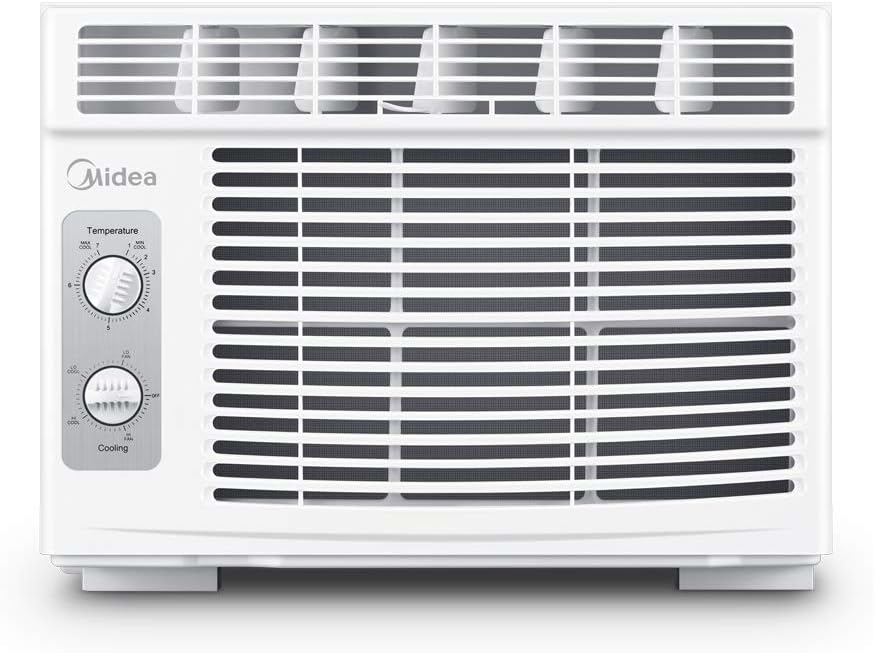
Midea EasyCool 5,000 BTU Window AC
| Cooling Power | 5000 BTU |
|---|---|
| Floor Area | 150 square_feet |
| Refrigerant | R-32 |
| Control Method | Push Button |
| Wattage | 450 watts |
The Midea EasyCool 5,000 BTU window air conditioner is a straightforward cooling unit for small spaces that uses mechanical push-button controls and a reusable washable filter for low-maintenance operation. It delivers cooling for rooms up to about 150 square feet and offers three power levels, multiple temperature settings, and fan-only modes to tailor airflow. The unit runs on 110 volts and lists a CEER/SEER-like efficiency rating of 11, so it balances modest energy use with consistent cooling. Installation uses the included window bracket and fits typical narrow windows; the compressor is a rotary type and the refrigerant is R-32. Noise is listed around the mid-50 dB range, so it is noticeable but not unusually loud for a window unit. Practical benefits include simple, repairable mechanical controls, an easy-access washable filter, and a compact footprint that suits tight window openings. Limitations are the small 5,000 BTU capacity and non-inverter compressor, which means it is best for short-term or small-area cooling rather than sustained heavy-duty use in very hot climates or large RV interiors.
Best for: Buyers who prioritize a simple, dependable cooling solution for small enclosed spaces and want low-maintenance controls and filter access.
Less Ideal for: Those needing high-capacity cooling, variable-speed inverter efficiency, or quiet operation for larger RVs or very hot climates should consider a higher-capacity or inverter-style option.
- Small, compact footprint fits narrow windows and tight spaces
- Mechanical push-button controls are simple and easy to repair or adjust
- Washable, reusable filter reduces disposable filter costs and is easy to maintain
- Suitable cooling for rooms up to 150 sq. ft., adequate for small cabins or compact interiors
- 5,000 BTU capacity limits use to small spaces and mild heat loads
- Non-inverter rotary compressor can run less efficiently under heavy demand
Verdict: A compact, no-frills 5,000 BTU window unit that gives reliable, low-maintenance cooling for small RVs or tiny rooms.
Frigidaire 5,000 BTU Window AC

| Cooling Power | 5000 BTU |
|---|---|
| Power Source | Corded Electric 115V |
| Wattage | 450 W |
| Noise | 52 db |
| Filter Type | Washable |
The Frigidaire 5,000 BTU window air conditioner delivers straightforward cooling for small spaces. It cools up to roughly 150 square feet using 450 watts at 115V, offers two fan speeds, touch/button controls, and a washable dust filter for simple upkeep. Adjustable side panels and a long three-prong power cord make it easy to fit and power from many window locations, and the unit runs relatively quietly at about 52 dBA. Efficiency is modest with an SEER-equivalent listing of 11, so it is best for occasional or supplemental cooling rather than continuous heavy use. The compressor is a rotary/scroll type and the unit uses R-32 refrigerant. Practical extras like auto-restart after power loss and basic air circulation mode help in typical overnight or daytime use. For someone looking for a compact, no-frills window AC to keep a single small room comfortable, this unit is an efficient, easy-to-install option, but it lacks advanced features like inverter technology or smart controls and may be less energy-efficient under continuous load.
Best for: Buyers who prioritize a compact, proven window-mounted cooling solution with easy maintenance and simple controls for occasional or supplemental cooling in small spaces.
Less Ideal for: People seeking highly efficient inverter units, smart connectivity, or a purpose-built RV rooftop air conditioner should look at models designed specifically for those use cases.
- Compact 5,000 BTU capacity suitable for small rooms up to 150 sq. ft.
- Washable dust filter simplifies maintenance and helps keep airflow clear
- Adjustable side panels and long power cord make installation easier
- Relatively quiet operation at around 52 dBA for bedroom use
- Auto-restart restores previous settings after power interruptions
- No inverter technology, so efficiency and quietness under variable load are limited
- Moderate SEER/efficiency rating (11) compared with modern high-efficiency units
- Designed for window installation and may require adaptation for RV rooftop or nonstandard openings
Verdict: A compact, easy-to-install window air conditioner that provides reliable cooling for small spaces when you want a simple, low-maintenance option.
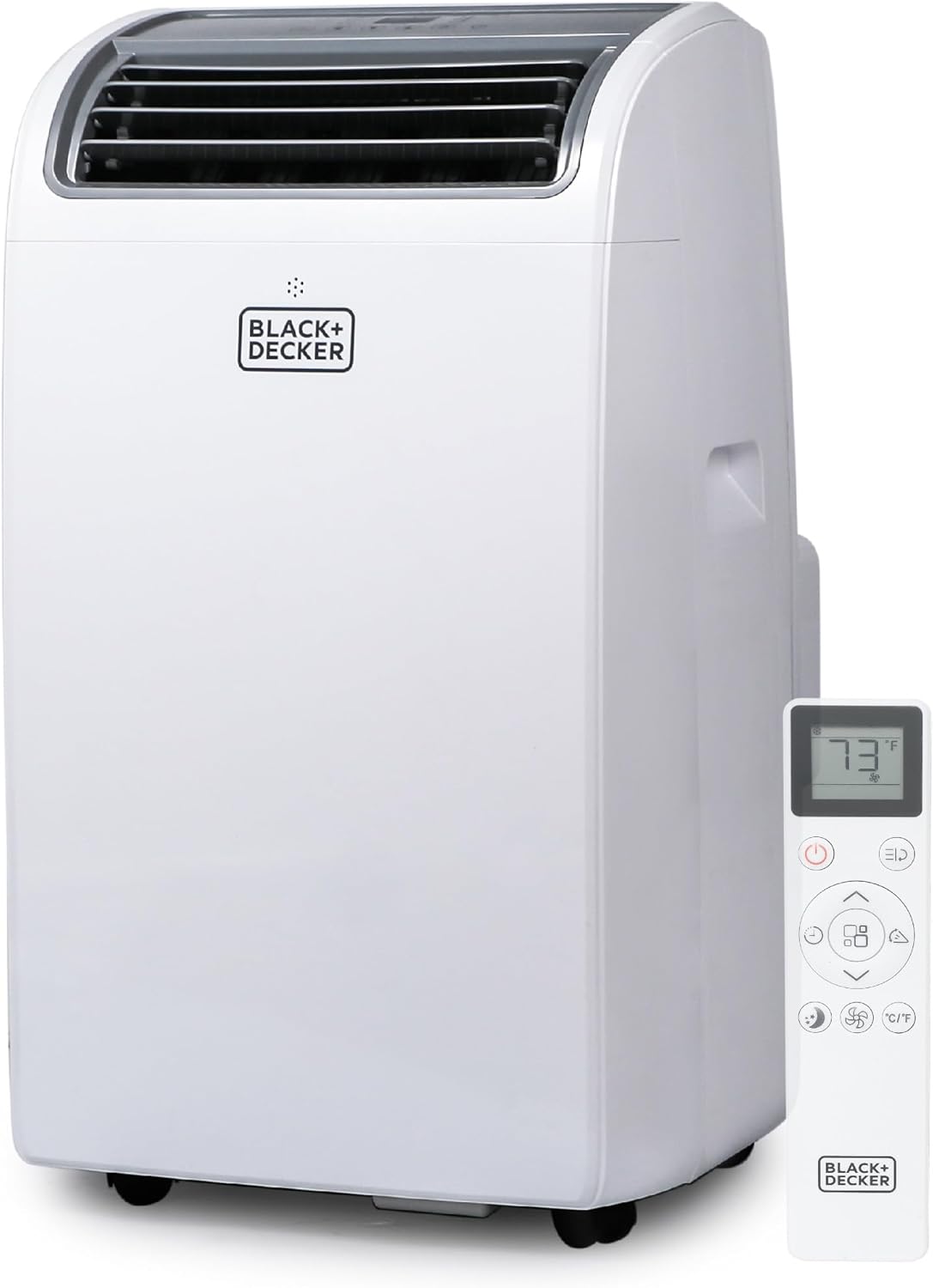
BLACK+DECKER Portable Air Conditioner BPACT14WT
| Cooling Power | 14000 BTU ASHRAE (10,200 BTU SACC) |
|---|---|
| Refrigerant | R-32 |
| Wattage | 1365 watts |
| Control Method | Remote; Wi‑Fi app; voice assistant compatibility |
| Floor Area | 700 square_feet |
This BLACK+DECKER portable air conditioner is a mobile 3‑in‑1 unit that cools, functions as a dehumidifier, and acts as a fan for rooms up to about 700 sq ft. It uses 14,000 BTU ASHRAE (10,200 BTU SACC) capacity and ships with a window vent kit, exhaust hose and full‑function remote with a Follow Me thermostat feature for spot temperature control. Smart features include Wi‑Fi app control and compatibility with voice assistants, while the top LED panel and three power levels keep operation straightforward. Practical benefits include caster wheels and side handles for moving between rooms, a 24‑hour timer and a sleep mode for quieter overnight use, and a washable filter for simpler upkeep. Important limits are its heavy weight and relatively high noise level compared with quieter split systems, and the unit's cooling rating reflects DOE SACC values that are lower than the ASHRAE number buyers often see. Expect standard portable‑AC efficiency rather than the performance of a built‑in system and plan for venting and occasional water drainage in dehumidify mode.
Best for: Buyers who want a powerful, feature‑rich portable AC that can cool a large room and appreciate smart controls and an included installation kit for quick setup.
Less Ideal for: People who prioritize whisper‑quiet operation, the highest possible energy efficiency, or a permanently installed cooling solution should consider other options.
- High cooling capacity intended for rooms up to about 700 sq ft
- Includes complete window vent kit and exhaust hose for straightforward installation
- Wi‑Fi and voice assistant control plus a Follow Me remote for convenient temperature management
- Rolls on casters with integrated handles for reasonably easy room-to-room mobility
- Washable filter and dehumidify mode simplify maintenance and add seasonal usefulness
- Heavier and louder than split or window units, which may affect placement and night use
- Efficiency ratings are typical for portable units and lower than permanent HVAC options
Verdict: A strong, smart‑enabled portable AC that reliably cools large rooms and arrives ready to vent and use with a full installation kit.
Choosing the Right Air Conditioner for RVs: Key Factors to Consider
Cooling Capacity and Sizing
Choosing the correct cooling capacity is the single most important decision when selecting an RV air conditioner. Capacity is typically expressed in BTUs and should match your coach size, insulation level, typical occupancy, and how hot you expect ambient temperatures to be. Undersized units will struggle and cycle continuously, increasing wear and making interiors uncomfortable. Oversized units can short-cycle, wasting power and failing to remove humidity effectively.
When sizing, consider peak daytime heat plus internal heat sources such as appliances and electronics. If you camp in very hot climates or carry heavy window loads of sunlight, err toward higher capacity but account for electrical limits. A properly sized unit delivers stable temperatures, better moisture control, and more efficient runtime.
Electrical Load and Startup Draw
RV electrical systems are constrained by shore power, inverters, or generators, so the unit's running watts and especially its startup (inrush) current matter. A high startup draw can trip breakers or overload a small generator even when the running wattage seems acceptable. Inverters and soft-start devices can help, but the simplest solution is picking a unit whose electrical profile matches your available power.
Also consider whether you will run the air conditioner off shore power, a generator, or inverter power. For boondocking, prioritize models with lower continuous draw and smoother startup. Check labeled voltage and phase requirements and confirm your RV's breaker and wiring can safely support the unit.
Roof Footprint and Installation Requirements
Most RV air conditioners mount to a standard roof curb, but curbs and roof structure vary between coaches. Confirm the unit's footprint matches your existing curb size to avoid major roof modification. Installation complexity affects both initial cost and future replacement ease. Simpler drop-in installations reduce labor time and potential for roof leaks.
Also evaluate ducting or adapter needs if your coach uses a custom air distribution system. Consider access for servicing filters, coils, and fans. If you plan to DIY install, look for units with clear instructions and compatible mounting hardware.
Noise and Vibration
Noise matters more in an RV than in a house because living spaces are compact and sleeping areas are nearby. Fan and compressor design determine how intrusive the unit will be while running. Look for models with lower decibel ratings and thoughtful vibration isolation to prevent rattle and transmitted noise to the interior surfaces.
Quieter systems improve overnight comfort and reduce stress on occupants. Pay attention to both outdoor roof noise and indoor sound levels at typical sleeping positions. Also consider fan speed controls and whether the unit provides a low-power quiet mode for nighttime use.
Durability, Corrosion Resistance, and Serviceability
RV air conditioners endure road vibration, varying weather, and salt exposure in coastal travel. Materials and protective coatings on coils, fasteners, and housings influence long-term reliability. Units with robust housings and corrosion-resistant finishes last longer and require fewer repairs.
Serviceability is equally important. Easily accessible filters, coils, and electrical panels reduce downtime and maintenance costs. Consider availability of common replacement parts and the simplicity of routine tasks like cleaning condensers and replacing filters.
Dehumidification and Climate Control Features
Beyond cooling capacity, the unit's ability to remove humidity affects interior comfort, condensation on windows, and the feel of the air. Some systems include dedicated dehumidify modes or variable-speed fans and compressors that maintain comfortable humidity without excessive cooling.
Advanced controls such as thermostat accuracy, programmable timers, and multi-speed blower options let you tune performance to match occupancy and external temperatures. These features can extend runtime efficiency and improve comfort during marginal temperature conditions.
Matching Unit Size to RV Layout
Room layout and interior airflow determine how effectively a single rooftop unit can cool an RV. Long coach interiors or slideouts create zones that may need better airflow planning or directional vents. Measure the square footage of the living area you need cooled and factor in high-heat areas like kitchens.
If your rig has multiple living zones, focus on units with strong airflow distribution or supplement with interior fans to move conditioned air. Placement of vents and return paths affects cold spots, so plan for unobstructed flow and avoid blocking registers with furniture or curtains.
- Measure primary living area square footage, not total van length
- Note heat-producing appliances and direct sunlight zones
- Consider supplemental circulation fans for slideout zones
Power Options: Shore, Generator, and Inverter Use
Think about where you will run the air conditioner most often. Shore power typically allows full-capacity operation, while generators vary by rated output and stability. Running from an inverter depends on inverter continuous watt rating and whether a soft-start device is used.
Plan for the highest-demand scenario you expect. If you frequently boondock on battery and inverter power, choose a unit with lower running watts or ensure your electrical system includes a suitably sized inverter and battery bank.
- Confirm breaker and wiring capacity before installing a higher-BTU unit
- Consider adding soft-start technology to reduce generator/inverter stress
- Account for other simultaneous loads like microwaves and inverters
Installation Tips and Roof Prep
Inspect the roof curb and surrounding structure before swapping a unit. Clean and reseal the curb to prevent leaks, and make sure the roof surface is flat and corrosion-free. If you are replacing an existing unit, check that the new model is compatible with the curb size to avoid cutting the roof.
When installing, use proper torque on fasteners and a high-quality but flexible sealant rated for roof exposure. Verify electrical connectors are water-tight and that condensate drains are positioned to prevent pooling. If you are unsure, have a professional check roof integrity and flashing after installation.
- Reseal roof curb and use compatible gasket materials
- Check electrical feed and disconnect accessibility
- Verify condensate drain paths to avoid roof saturation
Maintenance Practices to Extend Unit Life
Routine maintenance keeps an RV air conditioner running efficiently. Regularly clean or replace filters, clear debris from condensers, and inspect drain lines. Seasonal checks before summer trips help prevent failures on the road.
Listen for new noises that can indicate loose mounts or failing bearings. Keep a small maintenance kit with spare filters, basic sealant, and replacement fuses or breakers so you can address common issues quickly while traveling.
- Clean condenser fins gently with a soft brush or low-pressure water
- Replace or clean filters every season or more often in dusty conditions
- Inspect electrical connections and mounting hardware annually
Climate-Specific Considerations
Travel habits and climate affect which features matter most. In humid regions, prioritize strong dehumidification and steady airflow. In very hot but dry regions, raw BTU output and airflow may be more critical. For coastal travel, choose units with enhanced corrosion protection.
If you camp at high elevations, keep in mind that cooling performance can decrease due to thinner air and different evaporator behavior. Verify manufacturer guidance for high-altitude operation or plan for slightly larger capacity where appropriate.
- Prefer corrosion-resistant components for coastal routes
- Emphasize dehumidification for humid climates
- Check high-altitude performance if you camp at elevation
How We Chose the Best Air Conditioner for RVs
We evaluated RV air conditioners using criteria that matter for practical, everyday use in recreational vehicles. Cooling capacity and distribution were prioritized to ensure units can reach and maintain comfortable interior temperatures across different coach sizes and load conditions. Power consumption and startup draw were examined to reflect real-world generator and battery limits, especially for boondocking and small onboard electrical systems. Installation fit and serviceability were included so units can be mounted or replaced without extensive roof modification, and common maintenance items are accessible. Noise level and fan design were assessed because quiet operation matters when camping in mixed-use parks or during overnight runs. Durability and corrosion resistance were also considered, given the exposure to road vibration and weather. We excluded units intended only for fixed-home applications or with incompatible roof footprints. We also did not consider specialty units that require major electrical upgrades. The shortlisted products therefore reflect a balance of cooling effectiveness, electrical practicality, and ease of use for typical RV owners.
Our full evaluation process is outlined in our review methodology.
FAQ
How do I know what BTU rating my RV needs?
BTU needs depend on living area square footage, insulation, and expected ambient temperatures. Measure the primary living space and consult manufacturer or sizing charts for RVs, then adjust upward for high-sun exposure or heavy internal heat sources.
Can I run an RV air conditioner on my inverter?
Sometimes. Running on an inverter depends on the inverter's continuous watt rating and the air conditioner's startup draw. Many owners use soft-start devices or oversized inverters and battery banks to make inverter operation feasible for short periods.
How often should I service an RV air conditioner?
At minimum, perform basic maintenance each season: clean or replace filters, clear condenser debris, and check drain lines. A more thorough inspection of coils, fans, and electrical connections is advisable annually or before long trips.
Will a higher-BTU unit cool faster?
A higher-BTU unit can lower temperatures faster but may also short-cycle if oversized for the space. Short cycling reduces humidity control and can increase wear, so match capacity to the space rather than picking based solely on speed.
Are rooftop units difficult to replace?
Replacement difficulty varies with curb compatibility and roof condition. Many units are designed for drop-in replacement into standard curbs, but some installations require roof modifications or upgraded structural support. Check curb size and roof integrity first.
Final Verdict
Choose an RV air conditioner by balancing cooling capacity with your electrical constraints and installation realities. Prioritize a unit sized for your living area, check startup and running power against your shore, generator, or inverter capabilities, and favor durable, serviceable designs for long-term reliability. Ultimately, match features such as dehumidification, noise level, and corrosion resistance to your typical travel climate and habits. Doing so will keep your coach comfortable while minimizing electrical headaches and maintenance time.