
Note: This article contains affiliate links. If you click on these links and make a purchase, we may earn a small commission at no extra cost to you. This helps support our research and content. Read our full affiliate disclosure here.
If dust builds up in your home faster than you can wipe it away, an effective air purifier can make a noticeable difference in daily comfort and allergy symptoms. Choosing the right unit matters because not all purifiers handle heavy dust loads, large rooms, or continual airborne particles the same way. This guide shortlists the top options for a dusty house and explains how we judged filtration, airflow, and upkeep. Below you will find seven carefully chosen air purifiers that suit different room sizes and maintenance preferences, plus the decision factors you should weigh before buying.
Top Picks at a Glance
| Best Overall The best all-around choice for most situations | WINIX 5510 Air Purifier |  |
| Best Quality Built to a higher standard if you want something more solid | Coway Airmega 400 Air Purifier |  |
| Best Value The sweet spot between price and what you get | MOOKA KJ190H Air Purifier |  |
| Best Budget The cheapest option that still gets the job done reliably | MEGAWISE True HEPA Air Purifier EPI810 |  |
| Top Rated A top-rated pick with lots of positive feedback | Levoit Core 300-P |  |
| Most Popular A crowd favorite that many people choose with confidence | Levoit Vital 200S-P Air Purifier |  |
| Best Seller A high-volume bestseller chosen again and again | VOOPNU H13 HEPA Air Purifier DH-JH12 |  |
WINIX 5510 Air Purifier

| AHAM Verified coverage | 1,882 sq ft per hour |
|---|---|
| Filtration stages | 4-Stage |
| Noise (low) | 23.5 dB |
| Smart features | WiFi / Alexa / Google Home |
| HEPA capture size | 0.01 microns |
The WINIX 5510 is a multi-stage air purifier built for large rooms and persistent indoor pollutants like dust, pet dander, and smoke. It combines a washable pre-filter, True HEPA stage that captures down to 0.01 microns, and an advanced carbon deodorization filter to reduce odors and VOCs, while Winix's PlasmaWave technology adds an extra layer of airborne pollutant reduction. Smart sensors and an LED air quality indicator let the unit run in Auto Mode, automatically adjusting fan speeds as conditions change, and a light-activated Sleep Mode keeps operation very quiet at night. App, Wi-Fi, and voice assistant compatibility let you monitor and control the purifier remotely. The main benefits are strong dust and allergen capture for large open spaces and convenient automated operation, but like most high-CADR tower purifiers it is a floor-standing unit that requires periodic filter replacements and regular pre-filter washing to keep peak performance.
Best for: Buyers who want reliable, automated dust and allergen removal in larger living spaces and value smart controls and quiet night operation.
Less Ideal for: Those needing an ultra-compact or travel-friendly purifier for tiny rooms or single-room bedside use should look at smaller models instead.
- True HEPA filtration rated to capture particles as small as 0.01 microns for strong dust and allergen removal
- Advanced carbon filter for reducing household odors and some VOCs
- Smart sensors with Auto Mode and LED air quality indicator for hands-off adjustments
- Wi‑Fi and Winix Smart App compatibility plus voice assistant support for remote control
- Washable fine mesh pre-filter that extends main filter life and is easy to maintain
- Requires periodic replacement filters to maintain HEPA and carbon performance
- Larger footprint intended for big rooms may be overkill in small bedrooms
Verdict: A powerful, smart-equipped purifier that reliably clears dust and allergens from large rooms while running quietly and adapting automatically to indoor air quality.
Coway Airmega 400 Air Purifier
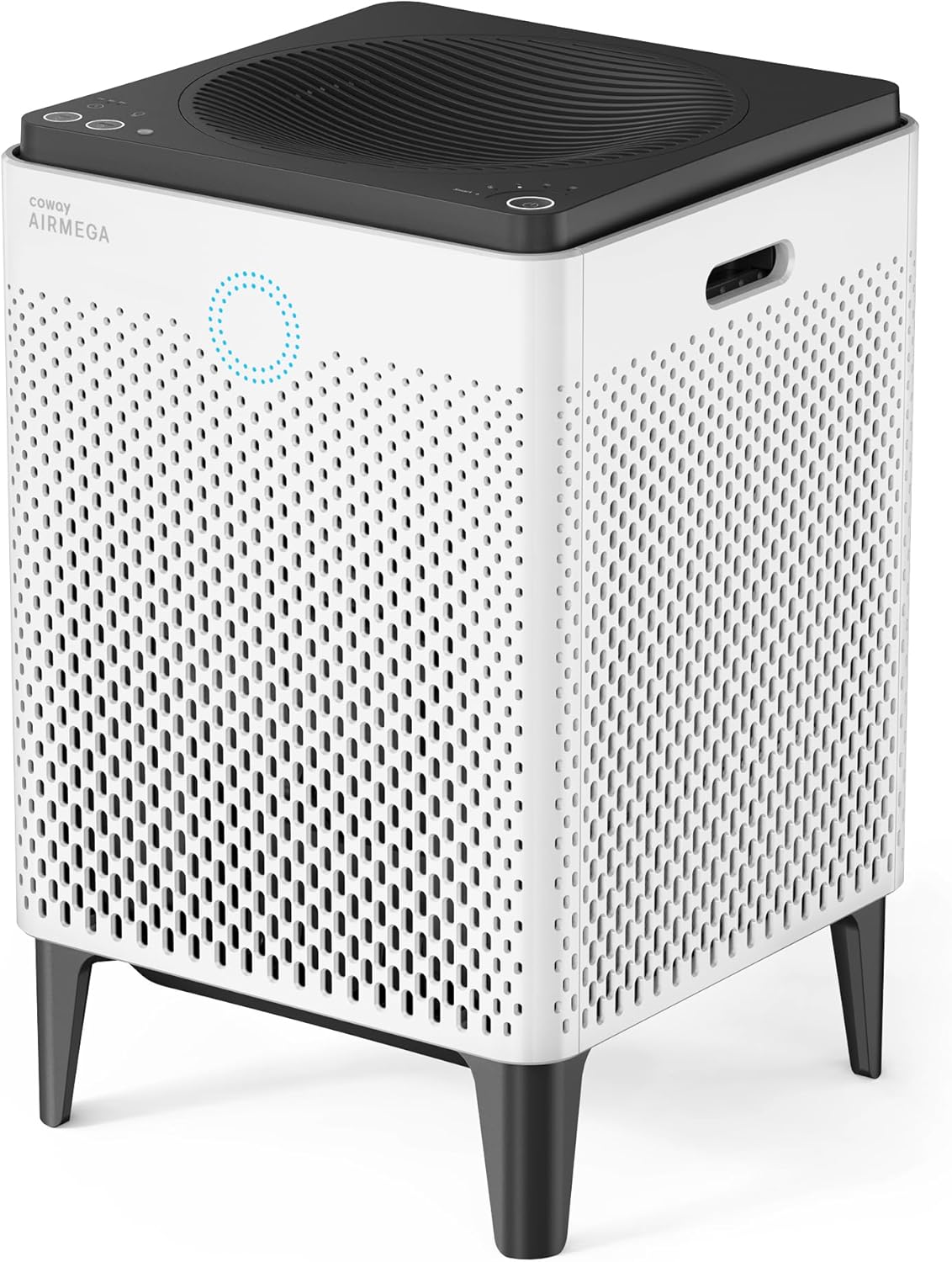
| Floor Area | 3120 square_feet |
|---|---|
| Filter Type | HEPA Filter, Active Carbon Filter, Pre-Filter |
| Particle Retention Size | 0.3 micron |
| Wattage | 66 watts |
| Special Features | Air Quality Monitor, Eco Mode, Filter Life Indicator, Smart Mode, Timer |
The Coway Airmega 400 is a large-room HEPA air purifier built to clean up to 3,120 sq ft in an hour using a three-stage HyperCaptive filtration system (pre-filter, activated carbon, HEPA). It automatically monitors air quality and adjusts fan speed in Smart Mode, and offers Eco and Sleep modes that silence the unit or shut the fan off when air remains clean to save energy. The unit targets particles down to 0.3 micron and is certified to capture 99.97% of such particles, while the activated carbon and specialty filter media reduce odors and several VOCs in lab tests. Practical benefits for a dusty house include high CADR performance for smoke, dust, and pollen, a washable pre-filter to catch larger debris, and filter-life indicators that make maintenance straightforward. Trade-offs are its physical bulk and weight for a permanent spot in a living area and modest power draw at higher fan speeds, and replacement filters will be a recurring cost for heavy-use households.
Best for: Buyers who prioritize measurable filtration performance in large, dust-prone homes and want an automated unit that runs efficiently with minimal daily intervention.
Less Ideal for: Those needing a lightweight, budget portable purifier for a single small bedroom or buyers who want the lowest possible purchase cost and minimal ongoing filter expenses.
- Designed for very large rooms up to 3,120 sq ft and high CADR for dust and smoke
- Three-stage HyperCaptive filtration including HEPA and activated carbon for particles and odors
- Automatic Smart, Eco, and Sleep modes reduce noise and power use without manual adjustments
- Washable pre-filter reduces hair and large debris and extends main filter life
- Energy Star and safety certifications indicate tested performance and efficiency
- Large size and nearly 25 lb weight make it less portable between rooms
- Higher fan settings increase power consumption and noise compared with smaller units
Verdict: Choose the Airmega 400 when you need proven, high-capacity filtration and automatic air-quality control for a very dusty, large home.
MOOKA KJ190H Air Purifier

| Item model number | KJ190H |
|---|---|
| HEPA Filter | H13 HEPA |
| Pre Filter | Washable |
| Filter Lifespan | 6-12 months |
The MOOKA KJ190H is a room air purifier built to pull large volumes of air through a three-stage system that includes a washable pre-filter, activated carbon and an H13 True HEPA element, making it suited for homes with dust, pet hair and common odors. It senses PM2.5 in real time and adjusts fan speed automatically, or you can choose one of four manual speeds and set a 2/4/6/8 hour timer. Dual wide side intakes and a higher front inlet help capture pet dander and hair before it reaches the HEPA, while the washable pre-filter reduces replacement frequency and lowers upkeep cost. Sleep Mode drops noise to around 20 dB for bedroom use and a display-off option prevents light disturbance at night. The unit includes an aroma tray and a child lock for household safety, and filter-life reminders help you know when cleaning or replacement is needed. Expect routine filter replacements every 6 to 12 months and plan for periodic pre-filter washing; the purifier is not a substitute for deep cleaning but will noticeably reduce airborne dust and allergens in active living spaces.
Best for: Buyers who want an efficient, low-maintenance purifier to cut airborne dust and pet dander across open living areas while minimizing running noise and filter costs.
Less Ideal for: People seeking a device to eliminate heavy surface dust or who need a purifier tailored to a specific single small room with ultra-compact footprint.
- H13 True HEPA plus activated carbon and washable pre-filter for multi-stage particle and odor removal
- Built-in PM2.5 sensor with auto mode that adjusts fan speed based on real-time air quality
- Large dual-side and front air intakes improve capture of pet hair and airborne dust
- Very quiet Sleep Mode (about 20 dB) and display-off for undisturbed night use
- Replacement HEPA filter still required on a 6–12 month schedule despite washable pre-filter
- Covers large spaces but not a replacement for surface cleaning and deep dust removal
Verdict: If you want a quiet, sensor-driven purifier that captures dust and pet hair across large open spaces while cutting ongoing filter costs with a washable pre-filter, the MOOKA KJ190H is a practical choice.
MEGAWISE True HEPA Air Purifier EPI810

| Filtration | True HEPA (99.97% to 0.3 μm) |
|---|---|
| Room coverage | Up to 215 sq ft |
| Fan speeds | 6 speeds |
| Noise level | <25 dB (sleep mode) |
This MEGAWISE model is a compact room air purifier built around a True HEPA filter that captures 99.97% of particles down to 0.3 microns, which makes it useful for reducing dust, pet dander, and wildfire smoke in bedrooms or home offices. It uses dual-channel 360° airflow and six fan speeds, plus a negative ion option, so you can balance filtration speed against noise; the sleep mode runs under 25 dB for near-silent overnight use. The unit is lightweight and portable, so it fits on desks or nightstands, and the washable filter means you can rinse and reuse it instead of replacing disposable cartridges frequently. Practical limits: its coverage is targeted to about 215 square feet, so it is not intended for whole-house use, and the negative ion feature may not suit buyers who prefer only mechanical filtration. Overall the purifier offers straightforward dust reduction and flexible fan control at a modest size and operating noise level.
Best for: Budget-minded buyers who need reliable dust and particle control in a single room and want low operating noise and washable filters to cut ongoing costs.
Less Ideal for: Those seeking whole-house air cleaning or professional-grade filtration for very large open areas should consider larger, higher-capacity units.
- True HEPA filtration captures 99.97% of particles down to 0.3 μm
- 360° dual-channel airflow refreshes rooms up to 215 sq ft
- Six fan speeds plus a near-silent sleep mode under 25 dB
- Washable filter reduces ongoing filter replacement costs
- Lightweight, compact design is easy to move and place on small surfaces
- Coverage limited to medium-sized rooms rather than whole-home filtration
- Includes a negative ion option that some buyers avoid due to personal preference
Verdict: A compact, budget-friendly HEPA purifier that effectively reduces dust in single rooms while keeping operating noise and filter costs low.
Levoit Core 300-P

| Filter Type | 3 in 1 Filtration |
|---|---|
| Floor Area | 1073 square_feet |
| Noise Level | 24 db |
| Particle Retention Size | 0.3 micron |
| Wattage | 56 watts |
The Levoit Core 300-P is a small, user-friendly air purifier built around a three-stage HEPA-grade filtration system that targets dust, pollen, pet dander, smoke, and VOCs. It is typically placed in bedrooms, living rooms, or home offices where its 143 CFM CADR and 56W motor can circulate and clean air in medium rooms; AHAM verification and independent lab tests back its 99.97% capture efficiency for 0.1–0.3 μm particles. Controls are touch-based, and a near-silent Sleep Mode drops noise to about 24 dB while allowing the filter to remain HEPA-grade. Practical touches include a display-off option, timer, and a check-filter indicator, and Levoit recommends using their genuine replacement filters every 6–8 months for consistent performance. The unit is portable and ETL/ CARB certified for safe home use. Limitations: it does not include Auto Mode on this model so fan speeds must be set manually, and optimal coverage depends on using original Levoit filters rather than third-party replacements.
Best for: Buyers who prioritize consistent, proven filtration in dusty homes and want a compact, quiet unit they can rely on for daily air cleaning without complicated setup.
Less Ideal for: Homes needing fully automatic, sensor-driven cleaning or very large open-plan spaces that require higher continuous CADR and coverage than this unit provides.
- HEPA-grade three-stage filter captures 99.97% of 0.1–0.3 μm particles based on independent testing
- AHAM-verified CADR (143 CFM smoke; 153 CFM dust; 167 CFM pollen) for reliable room air exchange rates
- Very quiet Sleep Mode (~24 dB) suitable for bedrooms
- Compact and portable footprint with touch controls, timer, and display-off option
- No Auto Mode on this model so fan speeds must be adjusted manually
- Best performance requires Levoit original replacement filters rather than third-party options
Verdict: Choose the Core 300-P if you want a compact, AHAM-verified HEPA purifier that quietly and reliably removes fine dust and allergens in everyday rooms.
Levoit Vital 200S-P Air Purifier

| Floor Area | 1875 square_feet |
|---|---|
| Filter Type | 3-Stage Filter |
| Noise Level | 27 db |
| Particle Retention Size | 0.1 micrometer |
| Wattage | 51 |
The Levoit Vital 200S-P is a Wi‑Fi–enabled air purifier built to tackle allergens, pet dander, smoke, and general household dust in large open rooms. It uses a three-stage filter package (pre-filter, activated carbon, and HEPA-class media) and an elevated CADR so it can move air quickly through spaces up to about 1875 square feet. Practical comforts include an air quality monitor, app control for remote adjustments, a quiet sleep mode rated near 27 dB, and a U-shaped air inlet that helps capture pet hair and odors without clogging the intake. Energy draw is modest at 51 watts and the unit is CARB certified and AHAM verified for performance categories like smoke, dust, and pollen. Consider that replacement filters are required periodically and options like toxin or smoke-specific filters are sold separately for specialized needs. For dust-heavy homes the Vital 200S-P brings strong throughput and smart controls, but ongoing filter costs and the unit footprint are part of the ownership equation.
Best for: Buyers who prioritize proven cleaning performance and want smart controls and monitoring to manage dust and pet allergens across large living spaces with confidence.
Less Ideal for: If you need a compact purifier for a single small bedroom or want a zero-maintenance disposable-filter product, this large-room smart purifier is not the best fit.
- High CADR and AHAM verification for effective dust and smoke removal
- Three-stage filtration with washable pre-filter plus activated carbon and HEPA-class filter
- App control and onboard air quality monitor for easy remote management
- Very quiet sleep mode around 27 dB suitable for bedrooms
- Replacement filters add recurring cost and some specialized filters are sold separately
- Large coverage claims mean the unit is relatively sizable and may not be ideal for small rooms
Verdict: Choose the Vital 200S-P when you need AHAM-verified, high-throughput filtration and smart monitoring to keep dust and pet allergens under control in large rooms.
VOOPNU H13 HEPA Air Purifier DH-JH12

| Coverage | Up to 1,076 ft² |
|---|---|
| Filtration | H13 True HEPA triple-layer |
| Noise level | 22 dB (low) |
The VOOPNU DH-JH12 is a compact tabletop air purifier built around an H13 True HEPA triple-layer filter and 360 degree intake that the brand says captures 99.97% of airborne particles. It is intended for everyday use in homes with dust, pet hair, pollen, smoke, and household odors and runs across three fan speeds plus a timer mode. In practical use the unit is easy to place because of its small footprint and the simplified control panel makes setup and adjustments straightforward. VOOPNU reports it cleans 250 ft² every 15 minutes, giving coverage up to roughly 1,076 ft² per hour, and the unit claims very quiet operation down to 22 dB for bedrooms. There is also a small essential oil tray for light scenting and the product carries multiple safety and emissions certifications. Expect to replace filters on a regular schedule and to run the purifier continuously for best results in a dusty house, since smaller compact units may need longer runtime to fully clear large, heavily contaminated rooms.
Best for: Buyers who prefer low-risk, easy-to-use home air solutions and want a compact, quietly running purifier that steadily reduces dust and common allergens with minimal setup.
Less Ideal for: Homes that need very rapid clearing of large, heavily polluted spaces or whole-house coverage should consider larger, higher-CADR units instead.
- H13 True HEPA triple-layer filter captures up to 99.97% of airborne particles
- 360° intake design for even air circulation
- Compact footprint fits on desks or in corners for flexible placement
- Very quiet operation down to 22 dB suitable for bedrooms
- Small physical size means it relies on continuous runtime to clean larger or very dusty rooms effectively
- Replacement filters required on a regular 3-6 month cycle depending on use
Verdict: A compact, quietly operating H13 HEPA purifier that is a dependable, low-fuss choice for steadily reducing dust and common allergens in single rooms.
Choosing the Right Air Purifier for Dusty House: Key Factors to Consider
Filtration Type and Particle Capture
The core job of an air purifier in a dusty house is to trap airborne particles. True HEPA filters capture 99.97 percent of particles down to 0.3 microns, which includes much of the fine dust that makes surfaces look dusty and can aggravate allergies. Multi-stage systems that include a prefilter help by catching larger debris and extending the life of the main HEPA element.
When evaluating filtration, look for clear specifications rather than vague marketing. Understand whether the unit lists a true HEPA rating or a HEPA-type claim, and plan maintenance accordingly because dusty environments will require more frequent filter changes.
CADR and Appropriate Room Size
Clean Air Delivery Rate, or CADR, quantifies how quickly a purifier removes particles in a room. Higher CADR values mean faster removal, which translates to less settled dust over time. Pick a unit whose CADR and manufacturer-recommended room size match or exceed the space where you spend the most time.
Oversizing the purifier is often better for dusty homes because frequent air changes reduce deposited dust. Conversely, an undersized unit will struggle and need to run at high speed continuously, increasing noise and wear.
Prefilters and Maintenance Frequency
A washable or replaceable prefilter is valuable in dusty homes because it captures hair and larger particles before they reach the main filter. This reduces replacement costs for the primary HEPA element and maintains performance. Expect to inspect and clean the prefilter every few weeks when dust accumulation is heavy.
Consider how easy the filter panels are to access and whether replacement filters are widely available. Units with simple, tool-free access and clear replacement indicators save time and reduce the risk of reduced performance from neglected filters.
Airflow Pattern and Placement Flexibility
How a purifier moves air affects how well it reduces dust on surfaces. Units that intake from the sides and exhaust upward or across a room create circulation that sweeps particles into the filter. Small, directional purifiers can leave dead zones where dust persists.
Plan placement to take advantage of natural airflow and room layout. A centrally located unit with 360-degree intake or upward-discharge design usually provides more uniform coverage than a model that only draws from one side.
Noise Levels During Continuous Use
Because purifiers in dusty homes often run for long periods, operational noise is an important factor. Higher fan speeds increase cleaning power but also produce more sound, which can affect sleep and concentration. Look at decibel ratings at different speed settings and consider models with a quiet sleep mode for overnight use.
Balance the need for rapid air cleaning against acceptable noise. Some models offer a low, continuous background noise but still deliver adequate filtration when sized correctly for the room.
Operating Cost and Filter Availability
Frequent filter replacement drives the long-term cost of owning an air purifier in a dusty environment. Check estimated filter life under heavy use and the cost of replacement filters. A lower upfront price can be offset by high ongoing filter expenses.
Also verify that replacement filters are easy to source and that the manufacturer provides estimated run-time guidelines. Some units support generic or third-party filters, which can reduce costs, while others require proprietary cartridges.
How Much Cleaning Power Do You Really Need
Assessing the right cleaning power starts with room size and dust load. Measure or estimate the square footage of the space where the purifier will spend most of its time and compare that to the unit's recommended coverage and CADR.
If the home has continuous dust sources, such as woodworking, pets, or heavy foot traffic from outdoors, plan for a higher CADR or a unit rated for a larger room. This reduces the need to run the fan at maximum speed all the time, which helps control noise and wear.
- Target at least 4 to 5 air changes per hour for rooms with heavy dust.
- For open-plan living areas, choose units rated for the full open area rather than just a single zone.
- Consider portable units in problem rooms like bedrooms or workshops for focused cleaning.
Placement Tips to Reduce Settled Dust
Placement affects how quickly airborne dust gets captured. Avoid tucking purifiers into corners or behind large furniture because that limits intake and creates dead zones. Instead, place the unit where it can draw air freely, with several feet of clearance around it.
For long rooms, locate the purifier closer to the source of dust if possible. Running multiple smaller units often beats a single large unit for distributed coverage in multi-room layouts.
- Keep at least 12 inches of clearance on intake sides.
- Elevate smaller units to table height to capture dust that circulates above floor level.
- Place units away from windows or doors that are frequently opened to avoid overworking the purifier.
Maintaining Performance in Dusty Conditions
Routine maintenance keeps a purifier working at peak efficiency. Check prefilters weekly in heavy dust conditions and clean or replace them according to the manufacturer's guidance. Inspect the HEPA element monthly for visible clogging and plan replacements more frequently than the nominal interval if dust is heavy.
Also clean the unit housing and intake grilles to prevent dust build-up that reduces airflow. Simple preventative actions extend filter life and preserve CADR performance over time.
- Set calendar reminders for prefilter checks.
- Keep replacement filters on hand if your home is particularly dusty.
- Run the purifier at higher speeds during peak dust activities, then return to a lower setting.
When Quiet Operation Matters
If you need continuous overnight filtration without disturbing sleep, prioritize models with verified low-night noise levels. Some units intentionally limit fan speed and rely on high-efficiency filters to maintain air quality quietly.
Consider using an app or smart scheduling to ramp up cleaning power during the day, then switch to a quiet mode at night. This preserves sleep quality while still addressing dust accumulation.
- Look for models with sleep or low-noise modes.
- Check decibel ratings and user feedback on nighttime use.
- Balance lower-speed quiet operation with the need for sufficient air changes overnight.
Smart Features That Help With Dusty Homes
Automatic sensors and smart scheduling can reduce manual intervention. Particle sensors that detect rising dust levels let a purifier increase fan speed only when needed, which conserves filter life and reduces noise during clean periods.
Remote controls and app integration make it easier to change modes and receive filter replacement alerts. For busy households, these features keep the purifier working effectively without constant manual checks.
- Auto mode can extend filter life by running only when dust is present.
- Filter life indicators help avoid guesswork about replacements.
- Scheduling allows higher cleaning during active daytime hours.
How We Chose the Best Air Purifier for Dusty House
We prioritized measurable performance factors that matter when dealing with persistent household dust. First, filtration efficiency: units with true HEPA or equivalent multi-stage filters earned higher marks because they capture fine dust and many airborne particles. Second, clean air delivery rate and room coverage: higher CADR and appropriate sizing ensure a purifier can turn over the air frequently enough to meaningfully reduce settled dust. Third, airflow design and distribution: units that move air effectively across a room reduce dead zones where dust settles. We also considered ease of maintenance, including filter replacement accessibility and operating costs, since heavy dust requires more frequent upkeep. Noise levels were factored in because many owners run purifiers continuously. Finally, build quality and user controls mattered for real-world usability. We excluded units that rely solely on ionization without effective particulate capture and devices lacking verified filtration ratings.
Our full evaluation process is outlined in our review methodology.
FAQ
How often should I change filters in a dusty house?
Filter change frequency depends on dust load and filter type, but expect to replace primary HEPA filters more frequently than the nominal interval listed by manufacturers. Check prefilters weekly and the HEPA element monthly for heavy dust and plan replacements accordingly.
Will an air purifier stop dust from settling on furniture?
An air purifier reduces airborne dust and slows the rate of settling, but it will not eliminate all dust. Combined strategies like regular cleaning, doormats, and source control are necessary to minimize surface dust.
Are ionizers or electrostatic purifiers good for dusty homes?
Ionizers can reduce some airborne particles but often do not capture dust in a filter where it can be removed. For dusty homes, mechanical filtration such as true HEPA is generally more reliable for particulate removal.
Can I run my air purifier 24/7 for continuous dust control?
Running a properly sized purifier continuously is common in dusty homes and can be effective, but it increases filter wear. Use auto modes or rotate fan speeds to balance air cleaning with filter longevity and noise considerations.
What maintenance keeps a purifier performing well in high-dust conditions?
Regularly cleaning prefilters and intake grilles, timely replacement of HEPA elements, and keeping the unit free of external dust all help maintain airflow and CADR. Scheduling checks and keeping spare filters on hand simplifies upkeep.
Final Verdict
When dealing with a dusty house, prioritize units with proven particulate filtration, sufficient CADR for the rooms you use most, and accessible prefilters to reduce maintenance costs. Expect to trade off some noise and higher filter consumption for faster dust removal. Choose a model sized for your space, plan for more frequent filter changes, and use placement and smart scheduling to get the best dust-reduction results with minimum disruption.