
Note: This article contains affiliate links. If you click on these links and make a purchase, we may earn a small commission at no extra cost to you. This helps support our research and content. Read our full affiliate disclosure here.
Dealing with persistent litter-box smells is one of the most common reasons pet owners look for an air purifier. The right air purifier for cat litter odor does more than mask scents; it reduces ammonia and organic odor compounds, captures dander and dust, and keeps shared rooms comfortable. This guide highlights the shortlisted options that balance filtration, room coverage, and quiet operation so you can pick the best fit for your home. Below we review seven top-rated air purifiers suited to tackling litter-box odor and related pet particulates. We evaluated units on tangible performance factors and practical features to help you match a model to your room size and usage patterns.
Top Picks at a Glance
| Best Overall The best all-around choice for most situations | Winix 5510 Air Purifier |  |
| Best Quality Built to a higher standard if you want something more solid | Coway Mighty AP-1512HH |  |
| Best Value The sweet spot between price and what you get | MOOKA B-D02L Air Purifier |  |
| Best Budget The cheapest option that still gets the job done reliably | Honeyuan H13 HEPA Air Purifier |  |
| Top Rated A top-rated pick with lots of positive feedback | DREO Air Purifier 338S |  |
| Most Popular A crowd favorite that many people choose with confidence | Levoit Core Mini-P |  |
| Best Seller A high-volume bestseller chosen again and again | VOOPNU H13 HEPA Air Purifier DH-JH12 |  |
Winix 5510 Air Purifier

| AHAM Verified coverage | 1,882 sq ft in 1 hour |
|---|---|
| Filtration stages | 4-Stage (pre-filter, True HEPA, carbon, PlasmaWave) |
| Noise (lowest) | 23.5 dB |
| Smart features | WiFi, Alexa, Google Home, Winix Smart App |
The Winix 5510 is a four-stage air purifier built to handle large rooms and persistent indoor odors like those from cat litter. It combines a washable pre-filter, True HEPA filter that captures particles down to 0.01 microns, and an advanced carbon deodorization stage to reduce VOCs and common household smells. Built-in air quality sensors and an LED AQI indicator let the unit run in Auto Mode, increasing fan speed when pollution rises and switching to a quiet Sleep Mode in the dark for low-noise overnight operation. Wi-Fi and Winix Smart App support plus voice control add remote monitoring and convenience. Practical benefits include strong coverage (AHAM-verified cleaning rate), a filter replacement indicator, and washable pre-filter media to extend main filter life. Limitations are typical for high-CADR purifiers: replacement filters are an ongoing cost and the unit needs adequate placement and run time to fully remove entrenched odors in cluttered or poorly ventilated rooms.
Best for: Buyers who want a balanced, easy-to-use purifier that combines strong particle capture with targeted odor reduction and smart controls for everyday home use.
Less Ideal for: People seeking a zero-maintenance solution or an instant fix for extremely concentrated odors in unventilated spaces should consider additional ventilation or specialized odor-treatment options.
- True HEPA filtration captures very small particles including pet dander and smoke
- Dedicated advanced carbon filter reduces VOCs and common household odors
- Smart sensors with Auto Mode and AQI indicator adjust performance automatically
- Wi‑Fi and Winix Smart App let you monitor and control the purifier remotely
- Washable pre-filter helps trap large particles and extend HEPA filter life
- Replacement HEPA and carbon filters must be replaced periodically, adding operating cost
- Large-room performance requires continuous runtime and correct placement to fully eliminate strong or embedded odors
Verdict: Choose the Winix 5510 when you want strong HEPA particle removal plus activated-carbon odor control and smart app monitoring for maintaining fresher air in homes with cats.
Coway Mighty AP-1512HH

| Coverage | Up to 1,748 sq. ft. in 60 minutes |
|---|---|
| Filtration | Pre-filter, deodorization filter, Bipolar ionizer, True HEPA |
| HEPA efficiency | 99.97% of 0.3μm particles |
| Modes | Auto and Eco modes with air quality indicator |
| Filter lifespan | Up to 1 year |
The Coway Mighty AP-1512HH is a room air purifier that uses a four-stage system—washable pre-filter, deodorization filter, Bipolar ionizer, and a True HEPA filter—to remove particles, odors, and common household pollutants. It is typically placed in living rooms, bedrooms, or near odor sources where continuous monitoring and automatic fan adjustments matter. The unit reports real-time air quality with a colored LED and auto mode that ramps fan speed as needed, and filter indicators track when to clean or replace filters. Practical benefits include strong HEPA capture of 0.3 micron particles, a deodorization stage that helps reduce smells like litter box ammonia, and a washable pre-filter that lowers replacement frequency. The purifier is reasonably portable and quiet on lower settings, making it suitable for overnight use. Important limitations are that peak coverage claims (up to about 1,748 sq ft in an hour) assume ideal conditions and results vary with room layout and odor source intensity, and replacement filters are required periodically to maintain deodorizing performance.
Best for: Buyers focused on strong, measurable performance and automated air quality control who want a purifier that actively reduces airborne particles and household odors with minimal fiddling.
Less Ideal for: Those needing a budget or ultra-compact travel purifier for tiny spaces, or users who prefer devices with integrated smart-home app controls and remote monitoring.
- True HEPA filter that captures 99.97% of 0.3 micron particles
- Dedicated deodorization filter to reduce odors and VOCs
- Auto mode with real-time air quality sensor for hands-off operation
- Washable pre-filter reduces maintenance costs and extends HEPA life
- Performance depends on room layout and may be lower than stated coverage under real-world conditions
- Requires periodic replacement of HEPA and deodorization filters to sustain odor control
Verdict: Choose the Coway Mighty if you want a proven HEPA purifier with a dedicated deodorization stage and automatic air-quality control to tackle cat litter odors in medium to large rooms.
MOOKA B-D02L Air Purifier
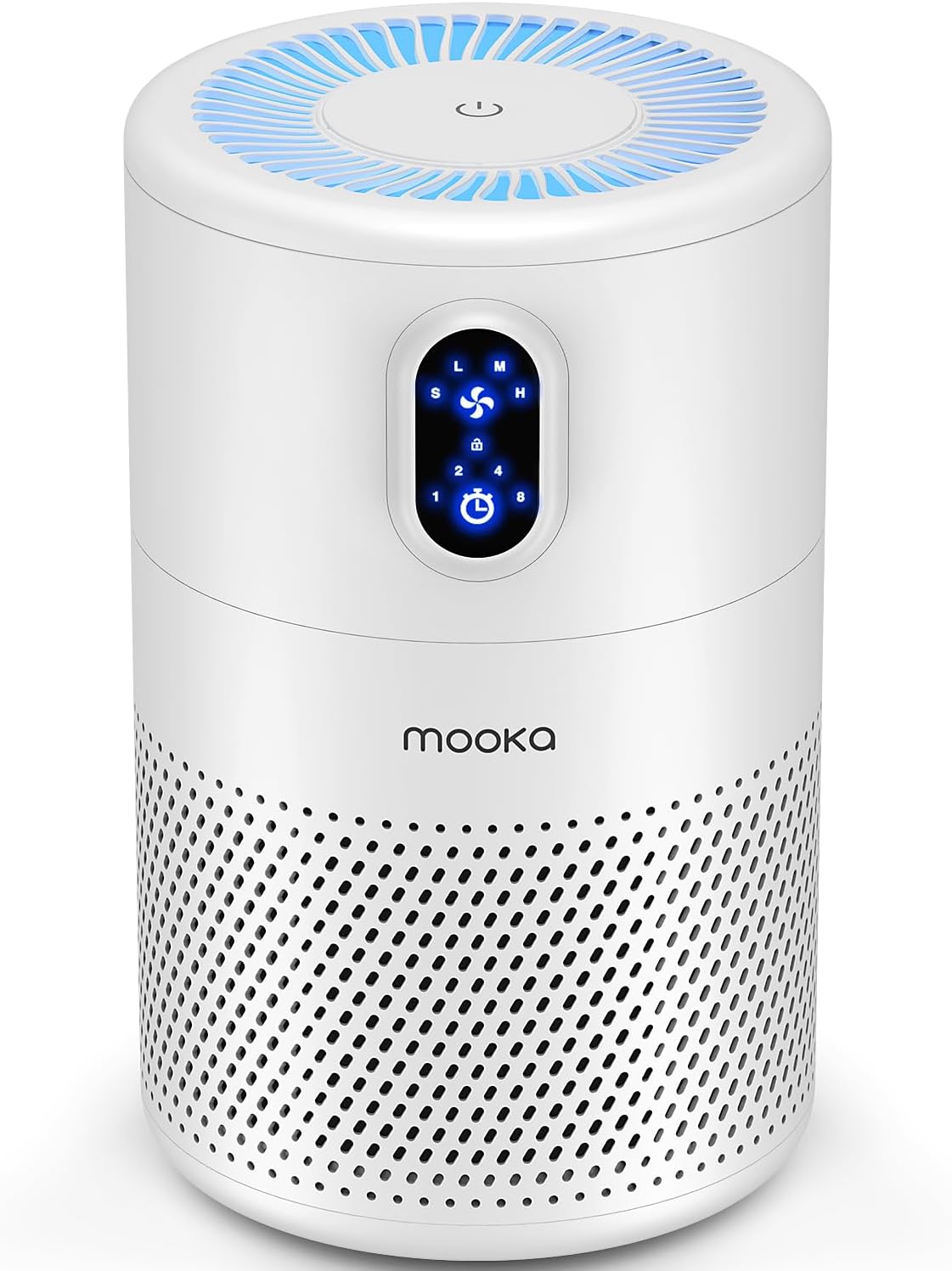
| Effective Area | 1076 sq ft |
|---|---|
| Filter Type | H13 True HEPA + Activated Carbon |
| Noise Level | 20 dB (low) |
| Timer Settings | 1/2/4/8 hours |
The MOOKA B-D02L is a room air purifier that uses a three-stage system—pre-filter, H13 true HEPA, and activated carbon—to capture pet hair, dust, pollen, smoke and odors down to 0.3 microns. It is sized and rated to treat up to 1076 ft² with slower whole-room turnover or higher air-change rates in smaller spaces, and offers four fan speeds plus a sleep mode so you can balance filtration and noise. Controls include four timer settings and a child lock, and the unit reports a very quiet low setting around 20 dB for overnight use. The activated carbon layer and H13 HEPA together make it effective at cutting litter box smells and airborne dander, while the washable pre-filter helps with visible fur. Filters should be replaced roughly every 3–6 months depending on use. Trade-offs are typical for this class: large-area coverage claims mean actual clearance time depends on room size and placement, and replacement filters are an ongoing cost.
Best for: Buyers who prioritize practical, low-noise odor reduction and steady particle removal in homes with cats and moderate airborne debris, and who value simple controls and reliable filtration.
Less Ideal for: People needing near-instant clearing in very large open-plan spaces or those who want a smart/Wi-Fi connected purifier with app control.
- H13 true HEPA filter captures particles down to 0.3 microns including pet dander and dust.
- Activated carbon stage helps reduce litter box and household odors.
- Quiet low-noise operation (~20 dB) suitable for bedrooms and nights.
- Multiple fan speeds, 4 timers, and child lock give flexible, safe control.
- Large maximum coverage figure affects how quickly it cleans larger rooms — full-room turnover will be slower in very big spaces.
- Requires periodic filter replacements every 3–6 months which add to operating cost.
Verdict: A quiet, no-frills HEPA-plus-carbon purifier that is a practical choice for reducing cat litter odor and airborne pet particles in typical home rooms.
Honeyuan H13 HEPA Air Purifier

| Filter type | H13 True HEPA, 3-stage filtration |
|---|---|
| Coverage (claimed) | Up to 1095 sqft (refresh ~30 minutes) |
| Airflow | 90-120 m³/h |
| Fan speeds | 3 speeds |
| Timer | 1–9 hours |
The Honeyuan H13 HEPA air purifier is a compact, budget-friendly unit built around a 3-stage filtration system with an H13 True HEPA filter and 360 degree air intake. It is intended for bedroom or living spaces and claims to refresh air in about 30 minutes for areas up to roughly 1095 sq ft by moving 90–120 m3/h. Controls sit on an LCD touch panel and include three fan speeds, a sleep mode, a 1–9 hour timer and a filter replacement reminder, making daily use straightforward. Practical benefits include a low-noise low-speed setting (advertised down to 24 dB) for nighttime use, portability thanks to its small footprint, and certifications for UL, CE, FCC and CARB compliance. Limitations to consider are that CADR specifics are not detailed beyond the m3/h figure, replacement filters are model-specific, and this unit is a single-room purifier so performance will drop if used in multiple open areas at once. For its price point it delivers sensible features for routine odor and particle reduction but buyers wanting verified multi-room CADR numbers or advanced sensors will need a higher-tier model.
Best for: Buyers who want an affordable, easy-to-use bedroom or living-room purifier that cuts pet and litter odors without complex features or a large upfront cost.
Less Ideal for: People who need verified CADR performance, multi-room coverage, or a purifier with automatic air-quality sensing and advanced controls.
- H13 True HEPA 3-stage filtration for particle and odor capture.
- 360 degree intake and claimed 90–120 m3/h airflow for faster room turnover.
- Multiple fan speeds, sleep mode and 1–9 hour timer for flexible daily use.
- Low noise operation suitable for bedroom use and a compact, portable design.
- UL, CE, FCC and CARB certifications for electrical and emissions safety.
- Manufacturer provides room coverage and m3/h but no standardized CADR numbers for smoke, dust, or pollen.
- Replacement filter requires the specific model part which adds ongoing cost.
- No built-in air quality sensor or automatic auto mode to adjust fan speed.
Verdict: A budget-friendly H13 HEPA purifier that offers quiet, portable odor and particle reduction for bedrooms and single rooms.
DREO Air Purifier 338S

| CADR | 115 CFM |
|---|---|
| Coverage (1 ACH) | up to 856 sq. ft. |
| Air changes (178 sq. ft.) | 4.8 ACH |
| Filter type | 3-in-1 HEPA + activated carbon |
The DREO Air Purifier 338S is a small-footprint smart purifier designed to scrub particles and reduce household odors in bedrooms and medium rooms. It uses a 3-in-1 filter pack (pre-filter, true HEPA, activated carbon) and a turbo intake with 360° spiral airflow to move air efficiently; AHAM verification and a CADR of 115 CFM mean it cycles air quickly in typical rooms. A built-in PM2.5 sensor and four-color AQI display provide immediate feedback on indoor air, while app and voice control enable remote operation, scheduling, and filter-life reminders. Modes include Auto, Turbo, Sleep, and Normal with four fan speeds, so it can run quietly at night or ramp up for fast odor reduction. The unit is ENERGY STAR rated for modest power use. Size and weight make it easy to place in litter-room-adjacent spaces, and the activated carbon layer helps capture smells from cat litter and pet areas. Limitations are typical for this class: it is best for single rooms rather than whole-home coverage and replacement filters are a recurring maintenance cost.
Best for: Buyers who prioritize dependable, measurable air cleaning and want automatic monitoring and remote control to keep pet odors under control in a dedicated room.
Less Ideal for: Households looking for whole-home or multi-room coverage should consider larger-capacity systems or additional units instead.
- AHAM-verified CADR (115 CFM) for reliable, tested cleaning performance.
- 3-in-1 filter with activated carbon to address particles and common odors.
- Real-time PM2.5 sensor and AQI display for instant air quality feedback.
- App and voice control with scheduling and filter-life reminders for convenient, consistent operation.
- Designed for single rooms so it may not be sufficient for large open-plan spaces.
- Ongoing cost for replacement filters over time.
Verdict: A reliable, AHAM-verified compact purifier with HEPA plus activated carbon and smart controls that consistently reduces particles and litter odors in single rooms.
Levoit Core Mini-P
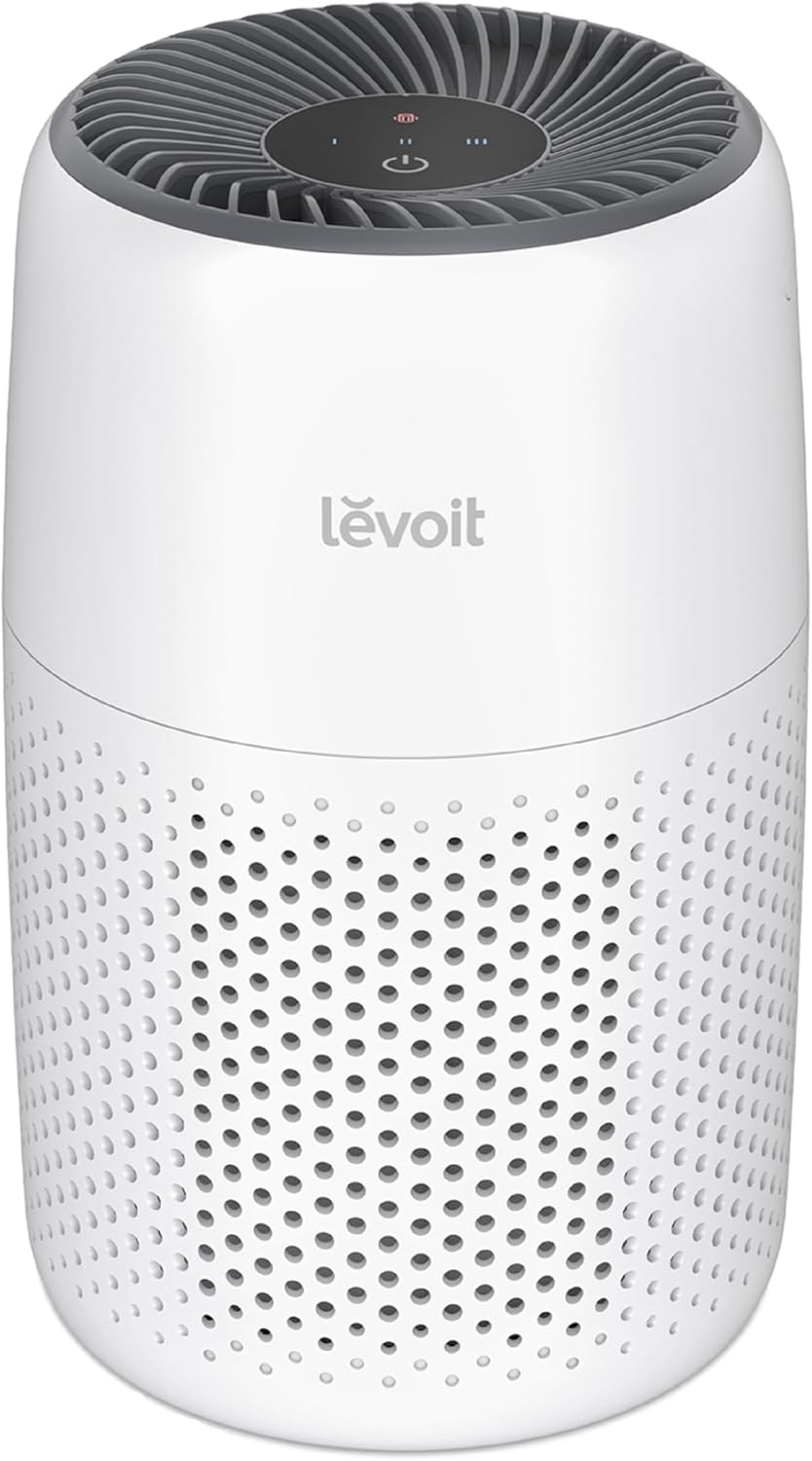
| Noise level | 27-45 dB |
|---|---|
| Rated power | 7W |
| Particle retention size | 0.3 micron |
The Levoit Core Mini-P is a small, plug-in air purifier intended for desks, bedrooms, and other close-range spots where odors and pet dander are a problem. It uses a pre-filter plus a main high-efficiency filter to capture lint, hair, smoke and particles down to 0.3 microns, and its airflow and filter design help reduce common smells from pets or litter boxes. The unit runs quietly (27 to 45 dB) with a sleep mode and an auto-off display to minimize disturbance overnight, and a built-in fragrance sponge lets you add a couple drops of essential oil for light scenting. At 7W rated power the Core Mini-P is energy efficient and small enough to tuck on a shelf or nightstand. Limitations are inherent to its size: it is built for localized use and will not quickly clear larger rooms, and the aromatherapy tray must be used sparingly to avoid damaging parts. Filter replacements are required for continued performance and the purifier's small fan limits heavy smoke or very strong odors removal speed.
Best for: Buyers who want a quiet, space-saving purifier to reduce litter box smells and pet dander in a bedroom, office, or other small-area setting and who value third-party performance verification and lots of user feedback.
Less Ideal for: Households seeking whole-room or whole-apartment purification, heavy-smoke removal, or rapid odor clearing in large open spaces should look at larger-capacity units instead.
- Compact footprint fits on desks or nightstands.
- Captures particles down to 0.3 micron with pre-filter and main filter.
- Very quiet operation with a sleep mode suitable for bedrooms.
- Low power draw (7W) for continuous use.
- Optional fragrance sponge for mild aromatherapy.
- Too small to effectively purify large rooms or open living areas.
- Aromatherapy tray can be damaged if overfilled and requires caution.
Verdict: A compact, whisper-quiet purifier that is ideal for reducing cat litter odors and pet dander in small rooms or near the litter area.
VOOPNU H13 HEPA Air Purifier DH-JH12

| Coverage | Up to 1,076 ft² |
|---|---|
| Filtration | H13 True HEPA + activated carbon |
| Noise level | As low as 22 dB |
| Speeds | 3 fan speeds |
The VOOPNU DH-JH12 is a small, user-friendly air purifier that uses H13 True HEPA filtration and a 360° intake to capture particles and reduce odors in home spaces. It is intended for easy, everyday use: set power with a simple control panel, choose one of three fan speeds, and run continuously for best results. The unit is laboratory-rated to clean roughly 250 ft² every 15 minutes, which the manufacturer uses to project coverage up to 1,076 ft², and it operates as quietly as 22 dB on low—helpful in bedrooms or living rooms. A built-in essential oil tray adds scent while the washable pre-filter and activated carbon stage target pet hair and odors. Certifications including ETL, CARB, FCC, and DOE back its safety and electrical compliance. Limitations to note are the compact housing, which may restrict long runtime filter capacity and means replacement filters will be needed on the recommended cycle, and that continuous operation is advised to manage persistent litter box smells effectively rather than short intermittent runs.
Best for: Buyers who prioritize reliable, certified filtration and low-noise operation for living areas with cats and want an easy-to-use unit that runs continuously to control pet odors.
Less Ideal for: People wanting an industrial‑scale purifier for very large open plans or those who prefer intermittent, short‑burst operation rather than a unit meant to run continuously.
- H13 True HEPA plus activated carbon filtration captures 99.97% of fine particles and helps reduce odors
- 360° surround intake promotes all‑around room circulation for more even cleaning
- Compact footprint makes placement easy on desks or corners
- Very quiet operation down to 22 dB suitable for bedrooms
- Simple controls and an essential oil tray for optional scenting
- Manufacturer recommends continuous operation for optimal results, so it may run often to control strong odors
- Smaller body implies more frequent filter replacements compared with larger, higher-capacity units
Verdict: A quiet, certified H13 HEPA purifier with carbon filtration that is well suited for pet households needing continuous, low‑noise odor and particle control.
Choosing the Right Air Purifier for Cat Litter Odor: Key Factors to Consider
Filtration Stages and HEPA Performance
A multi-stage filtration system matters because litter-box odor and pet allergens require different capture mechanisms. True HEPA filters trap fine cat dander and dust particles down to 0.3 microns, which reduces airborne allergens that contribute to smell and irritation. HEPA alone does not remove gaseous odors, so look for a model that pairs HEPA with an activated carbon stage.
Check manufacturer specifications for HEPA efficiency and whether the HEPA is genuine or a HEPA-type filter. Higher capture efficiency means more dander and dust removed per pass, which helps lower the overall odor load in a room.
Activated Carbon and Odor Adsorption
Activated carbon is the primary material that adsorbs ammonia and volatile organic compounds produced by litter boxes. The quantity and quality of carbon, plus whether it is impregnated or structured for higher surface area, affect how long and how effectively the purifier reduces litter odors.
A larger carbon bed or replaceable carbon pucks typically provide longer-lasting odor control. Consider how the filter is designed: thin disposable carbon layers wear out quickly, while thicker or granular carbon media maintain adsorption performance longer between replacements.
Room Size and Airflow (CADR)
Match the purifier's stated room coverage or CADR rating to the space where the litter box is located. A unit sized for a small bedroom will not be effective in a larger living area or an open-plan home. Higher airflow rates increase the number of air changes per hour, which is key to diluting and removing odors and particulates.
Also consider placement: purifiers work best when airflow is unobstructed and the unit is located between the litter box and the rest of the room to intercept contaminants early.
Noise Levels and Fan Speed Options
Because litter boxes are often located near living areas or bedrooms, low operational noise is important for continuous use. Look for models with measured decibel levels at different fan speeds and an effective low-speed cleaning mode. Variable speed settings, sleep modes, or auto modes that ramp up when sensors detect contaminants let you balance quiet operation with peak odor removal when needed.
A quieter fan encourages leaving the purifier running continuously, which is usually more effective than intermittent use for controlling odors.
Maintenance, Filter Replacement, and Cost
Frequent filter changes can become expensive, especially if you own multiple cats or use the purifier heavily. Consider both the expected filter life and the cost/ease of replacement. Some filters combine HEPA and carbon into a single cartridge while others separate them; combined cartridges can be more convenient but may increase replacement cost.
Also check for washable prefilters that trap hair and larger debris to extend primary filter life. Clear indications of filter status lights or runtime estimates help you avoid forgetting replacements and maintain peak odor control.
Placement Flexibility and Design
The physical footprint and design determine where you can position the purifier. Slim, vertical units are easier to tuck beside furniture, while tabletop models are intended for smaller areas. Also think about airflow direction: top-discharge designs circulate air differently than front-intake models, which affects how well they draw odor away from a litter box.
Consider portability if you want to move the purifier between rooms. Weight, handles, and stability matter when relocating the unit frequently.
How Different Odor Sources Work
Litter-box odor comes from a mix of ammonia, organic compounds, and fine particulates like dander and dust. Ammonia is a gaseous byproduct of urine breakdown and requires adsorption or chemical neutralization, while particulates are captured by mechanical filters. Understanding the dual nature of odor helps explain why effective purifiers pair mechanical filtration with activated carbon or other adsorbents.
Sensors that read volatile organic compounds or particulate levels can be useful, but they often respond to different triggers. A purifier that tracks both particles and gases will react more appropriately to changes near a litter box.
- Gaseous odors need adsorption, not just particle capture
- Particulates contribute to musty smells and are removed by HEPA
- Sensor types affect how the purifier responds to the litter box
Placement Tips for Best Odor Control
Position the purifier between the litter box and main living areas to intercept odors before they spread. Keep the intake free from obstructions and avoid placing the purifier in a corner where airflow can be restricted. If your litter box is in a bathroom or small laundry area, choose a unit sized for that room and run it continuously when the box is in use.
Elevate smaller units slightly off the floor if hair and coarse litter track is an issue to reduce clogging of the prefilter. In open-plan homes, consider using multiple smaller units or one higher-capacity unit so airflow reaches the litter zone effectively.
- Place intake toward the litter box, exhaust toward the room
- Avoid blocked air intakes and crowded corners
- Use continuous low-speed operation for steady odor suppression
Noise Management for Continuous Use
Running a purifier continuously is usually the best strategy for keeping litter odors under control, but noise can become a limiting factor. Look for models with low-decibel sleep modes and well-documented noise figures across speeds. Fan blade and motor design influence the perceived sound quality; some units produce a steady white-noise hum that is less intrusive than gusting or rattling sounds.
Auto modes that raise fan speed briefly when odor spikes occur help keep average noise down while still delivering bursts of high airflow when needed. If you plan to keep the purifier in a bedroom, verify nighttime noise levels before committing.
- Choose models with quiet low-speed operation for continuous use
- Auto boost modes reduce average noise while handling spikes
- Check real-world decibel measurements where available
Maintaining Peak Performance
Regular upkeep preserves filtration effectiveness. Clean prefilters monthly or as needed to prevent hair and litter dust from choking downstream filters. Replace HEPA and carbon cartridges per the manufacturer's recommended intervals or sooner if you notice odor return or declining airflow.
Track filter life using runtime months or filter indicator lights and keep replacement filters on hand if you rely on the device for daily odor control. Routine cleaning of the exterior, intake grills, and sensors also helps the unit detect and respond to changes reliably.
- Clean or vacuum prefilters regularly
- Replace main filters based on usage and indicator lights
- Keep replacement filters stocked for uninterrupted performance
When Air Purifiers Are Not Enough
Air purifiers significantly reduce airborne odor and dander but do not replace good litter-box practices. Regular scooping, full litter replacements, and proper ventilation remain primary measures to limit odor production. Deep cleaning the box and surrounding surfaces prevents buildup that can overwhelm even strong purifiers.
If odors persist despite a high-capacity purifier, evaluate litter type, box location, and cleaning frequency first. Addressing the source reduces the burden on filtration and improves overall indoor air quality.
- Maintain frequent scooping and periodic full litter changes
- Deep clean boxes and nearby surfaces to remove residue
- Use ventilation in conjunction with filtration for best results
How We Chose the Best Air Purifier for Cat Litter Odor
We focused on attributes that directly affect how well an air purifier handles litter-box odor and pet-related airborne contaminants. We prioritized measurable filtration performance such as true HEPA capture efficiency for fine dander, activated carbon capacity for adsorbing ammonia and organic odors, and recommended room coverage based on CADR or manufacturer-stated square footage. Noise levels and fan-speed control were included because continuous operation near living spaces or bedrooms requires quiet, adjustable settings. Maintenance factors such as filter life, availability, and ease of replacement were considered to reflect ongoing ownership cost and upkeep. We also weighed energy efficiency and runtime features like programmable timers or auto modes to ensure practical daily use. We excluded devices that rely solely on ozone generators or ionizers as primary odor control because ozone can be harmful and is not a safe primary solution. Units without verified filtration specifications or lacking any activated carbon stage were also omitted. The final shortlist reflects models that deliver both particulate removal and odor adsorption across common room sizes.
Our full evaluation process is outlined in our review methodology.
FAQ
How large a purifier do I need for a room with a litter box?
Choose a purifier with a CADR or recommended room size that matches the space where the litter box sits. Aim for higher airflow to increase air changes per hour because stronger air movement removes airborne odor and dander more quickly.
Will a purifier eliminate ammonia smell completely?
A purifier with substantial activated carbon can greatly reduce ammonia and other gaseous odors but may not eliminate them entirely if the source is strong or unsanitary. Combining filtration with improved cleaning and ventilation is the most reliable approach.
Can I run the purifier 24/7 near the litter box?
Yes, continuous operation is recommended for steady odor control, especially at low or medium fan speeds. Choose a model with low noise and good energy efficiency for long runtimes, and follow filter maintenance schedules to keep performance consistent.
Do I need a purifier with a sensor to fight litter-box smell?
Sensors can help by triggering temporary boosts when particles or gases rise, but they are not essential. A purifier with strong baseline filtration and a higher airflow will still perform well even without advanced sensing capability.
How often should I change filters if I have multiple cats?
Filter replacement frequency depends on usage and litter dust levels, but multi-cat homes typically need shorter intervals than single-cat households. Monitor airflow and odor levels and follow the manufacturer's guidelines, replacing filters sooner if performance drops.
Final Verdict
Prioritize units that combine true HEPA filtration with a substantial activated carbon stage and match the purifier's room coverage to where the litter box is located. Expect tradeoffs between noise, airflow, and filter replacement frequency: higher airflow improves odor removal but can increase noise and filter wear. For most homes, a well-sized purifier run continuously on a quiet setting, paired with regular litter maintenance and ventilation, delivers the most reliable reduction in litter-box odor and airborne pet allergens. Choose based on the room you need to protect and how much maintenance you are willing to perform. Focus on verified filtration specifications and practical features like filter indicators and adjustable fans to get consistent, long-term odor control.