
Note: This article contains affiliate links. If you click on these links and make a purchase, we may earn a small commission at no extra cost to you. This helps support our research and content. Read our full affiliate disclosure here.
If litter-box odor is a regular nuisance, the right air purifier can make indoor spaces noticeably fresher and more comfortable. You want a unit that traps ammonia and organic odor compounds, captures pet dander and hair, and runs quietly where you live. This guide shortlists seven top air purifiers specifically suited to handling cat litter smell and related pet pollutants. Below we cover the key performance and usability factors that matter for homes with cats, then walk through our top picks and practical setup tips. Use the evaluation criteria to match a unit to your room size and living habits.
Top Picks at a Glance
| Best Overall The best all-around choice for most situations | Winix 5510 Air Purifier |  |
| Best Quality Built to a higher standard if you want something more solid | Coway Mighty AP-1512HH |  |
| Best Value The sweet spot between price and what you get | MOOKA B-D02L Air Purifier |  |
| Best Budget The cheapest option that still gets the job done reliably | VOOPNU HEPA Air Purifier DH-JH12 |  |
| Top Rated A top-rated pick with lots of positive feedback | DREO Air Purifier 338 |  |
| Most Popular A crowd favorite that many people choose with confidence | Levoit Core 300-P Air Purifier |  |
| Best Seller A high-volume bestseller chosen again and again | Levoit Core Mini-P |  |
Winix 5510 Air Purifier

| Max room coverage (AHAM) | 1,882 sq ft in 1 hr |
|---|---|
| Filtration stages | 4-Stage |
| Noise (low) | 23.5 dB |
| App compatibility | Winix Smart App |
| HEPA particle capture | down to 0.01 microns |
The Winix 5510 is a four-stage air purifier intended for large rooms that combines a True HEPA filter, advanced carbon odor control, washable pre-filter, and Winix PlasmaWave technology. It runs in Auto Mode using built-in sensors and an LED air quality indicator to adjust fan speeds in real time, and a light-sensitive Sleep Mode drops noise and power use when the room is dark. The carbon filter and high CADR allow it to cut common household odors such as cooking smells, smoke, and pet-related smells, and the washable fine mesh pre-filter helps catch larger debris from litter tracking. App compatibility and voice control give remote monitoring and scheduling convenience. Important trade-offs are that replacement filters and occasional cleaning are required to maintain odor performance, and its size is aimed at larger spaces so it may be overkill for small rooms or single-room use.
Best for: Buyers who want a reliable, automatic purifier that tackles pet odors and airborne allergens in living rooms or multiroom open spaces while offering smart controls for hands-off operation.
Less Ideal for: People who only need a compact, portable purifier for a single small bedroom or who want a no-maintenance, filterless solution should consider smaller or different technologies.
- True HEPA filtration captures very small particles including pet dander and smoke
- Advanced carbon filter targets VOCs and common household odors
- Smart sensors with Auto Mode and LED air quality indicator adjust performance automatically
- Washable pre-filter reduces hair and large particles to extend filter life
- Winix Smart App and voice assistant support for remote control
- Requires periodic filter replacements and cleaning to maintain peak odor removal
- Designed for large rooms so it may be more powerful and larger than needed for small bedrooms
Verdict: Choose the Winix 5510 when you need a smart, high-capacity purifier that reduces cat litter smells and airborne allergens in large living spaces.
Coway Mighty AP-1512HH

| Coverage | Up to 1,748 sq. ft. (60 minutes) |
|---|---|
| Filtration stages | Washable pre-filter, deodorization filter, Bipolar Device, HEPA |
| HEPA effectiveness | 99.97% of 0.3μm particles |
| Air quality indicator | Real-time LED pollution sensor |
The Coway Mighty AP-1512HH is a stand-alone air purifier that combines a washable pre-filter, activated carbon deodorization layer, bipolar ionizer, and a True HEPA filter to capture particles and reduce odors. It is typically placed in living rooms, bedrooms, or near litter areas to cycle room air continuously; the unit's Auto mode uses a pollution sensor and air quality LED to adjust fan speed as conditions change, and an Eco mode reduces power when air is clean. The carbon deodorization stage and custom filter options are helpful for reducing pet and litter odors, while the washable pre-filter lowers maintenance costs. Filter replacement alerts and a timer make upkeep predictable, but the unit is not silent on higher fan speeds and requires occasional pre-filter cleaning and HEPA replacements to maintain peak performance. Coverage is advertised up to about 1,748 sq ft for a full air exchange in 60 minutes, which makes it suitable for open living areas where persistent litter smells need continuous management.
Best for: Buyers who prioritize strong particle removal and active odor reduction in medium to large living spaces and want a unit that adjusts automatically to changing air quality.
Less Ideal for: People seeking the absolute quietest purifier for undisturbed bedrooms or those who want a permanently maintenance-free plug-and-forget option should consider alternatives.
- True HEPA filtration captures 99.97% of 0.3 micron particles for effective allergen removal
- Activated carbon/deodorization filter and optional custom filters help reduce pet and litter odors
- Auto and Eco modes with real-time air quality sensing adjust fan speed automatically
- Washable pre-filter reduces disposable filter use and lowers running costs
- Higher fan speeds produce noticeable noise compared with ultra-quiet models
- Requires periodic HEPA and carbon filter replacements to sustain odor removal performance
Verdict: Choose the Coway Mighty AP-1512HH when you need automatic, HEPA-grade particle removal plus active carbon deodorization to tackle persistent cat litter odors in medium to large rooms.
MOOKA B-D02L Air Purifier
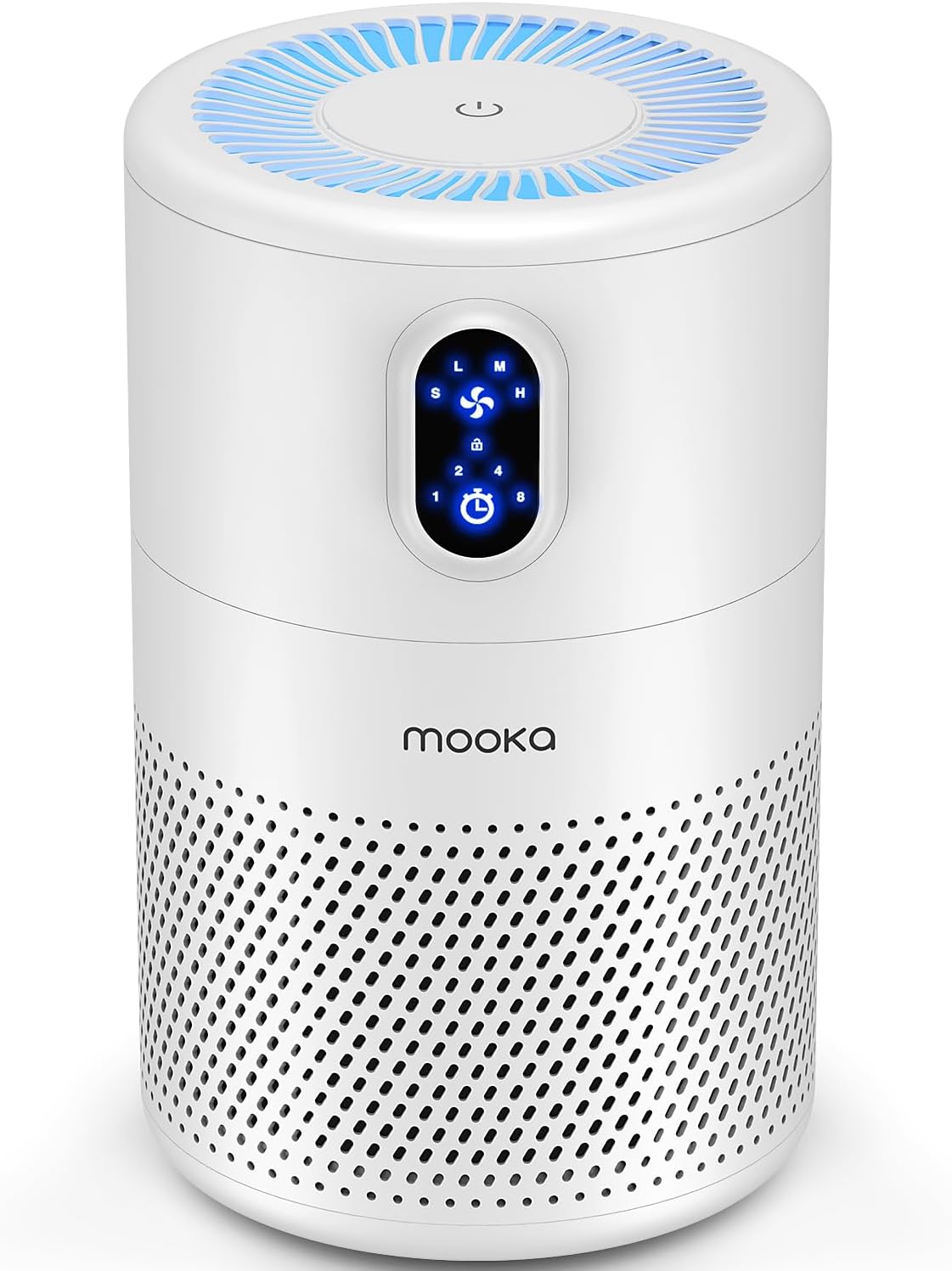
| Filter type | H13 True HEPA + activated carbon |
|---|---|
| Maximum coverage | 1076 sq ft |
| Air changes | 6 ACH in 215 sq ft |
| Fan modes | Sleep/Low/Med/High |
| Timer | 1/2/4/8 hours |
The MOOKA B-D02L is a straightforward room air purifier built around an H13 true HEPA filter plus an activated carbon stage to capture pet hair, dander, smoke and odors including litter smells. It is sized and rated to handle up to 1076 sq ft at a low exchange rate and delivers faster circulation in typical living areas (for example 6 air changes per hour in a ~215 sq ft room). Controls are simple: four fan speeds including a quiet sleep mode, a 1/2/4/8 hour timer, child lock and a soft night light that can be disabled. The unit uses a brushless motor for low-noise, energy-saving operation and the brand recommends replacing the washable filter every 3 to 6 months depending on use. Practical benefits include effective particle and odor reduction for pet owners and a very quiet footprint that is suitable for bedrooms and nurseries. Limits to expect are the conservative CADR-equivalent coverage for continuous heavy odors — filter replacement frequency and carbon cartridge capacity determine long-term odor performance.
Best for: Someone looking for a quiet, no-frills purifier that reduces cat litter dust and common pet odors in bedrooms, living rooms, or multiroom homes and prefers straightforward controls and low energy use.
Less Ideal for: Households needing immediate, high-capacity odor elimination in very large open-plan spaces or users who want advanced app controls and monitoring features.
- H13 true HEPA plus activated carbon captures particles and reduces pet and litter odors
- Covers very large areas up to 1076 sq ft with selectable fan speeds for different room sizes
- Ultra-quiet brushless motor and dedicated sleep mode suitable for bedrooms
- Simple controls with timer and child lock for safe, low-effort operation
- Long-term odor removal depends on carbon filter capacity and may require frequent filter replacement in heavy-use pet areas
- Manufacturer coverage figures represent slow exchanges at max area so performance for strong odors in large open spaces will be slower
Verdict: A practical, very quiet HEPA plus carbon purifier that balances effective particle and odor reduction with simple controls and low energy use for pet homes.
VOOPNU HEPA Air Purifier DH-JH12

| Coverage (lab) | Cleans 250 ft² every 15 minutes |
|---|---|
| Max area | Up to 1,076 ft² per hour |
| Filter type | H13 True HEPA triple-layer |
| Noise level | As low as 22 dB |
| Speeds | 3 fan speeds |
The VOOPNU DH-JH12 is a compact tower purifier that uses an H13 true HEPA three-layer filter and 360 degree intake to capture particles and reduce common indoor pollutants like pet hair, pollen, smoke, and odors. It is intended for everyday placement in bedrooms, living rooms, or near litter boxes where continuous use helps lower airborne dust and odor over time. Controls are simplified to a single-panel design with three fan speeds, a timer, and an essential oil tray if you want light scenting. Laboratory figures claim it cleans 250 ft² every 15 minutes and covers up to 1,076 ft² per hour, and the unit runs very quietly down to about 22 dB for night use. Practical benefits include a small footprint that fits on a desk or corner, certifications across safety and emissions standards, and optionally adding aroma without extra accessories. Limitations are typical for small purifiers: filter replacement is recommended every few months and high odor loads from litter may require close placement or multiple units for best results; the compact size also means lower raw airflow than larger floor models.
Best for: Buyers on a budget who need a compact, quiet purifier to reduce pet dander and litter-box odors in bedrooms or small living spaces and prefer a simple, low-effort device.
Less Ideal for: Homes that need whole-house purification or large open-plan spaces where a single compact purifier cannot deliver sufficient airflow for rapid odor removal.
- H13 true HEPA triple-layer filter captures fine particles and common allergens
- 360 degree intake improves room circulation compared with single-direction inlets
- Very quiet operation down to 22 dB suitable for bedroom or night use
- Compact footprint makes placement near litter boxes or on furniture easy
- Built-in essential oil tray and simple one-panel controls for easy everyday use
- Small unit requires regular filter changes and may be less effective in very large open areas
- Persistent strong odors may need closer placement or an additional unit for full removal
Verdict: A budget-friendly, compact HEPA purifier that quietly reduces pet dander and litter-box odors in small rooms, making it a practical choice for cost-conscious cat owners.
DREO Air Purifier 338

| CADR | 115 CFM |
|---|---|
| HEPA efficiency | 99.97% at 0.3 μm |
| Coverage (1 ACH) | 856 square_feet |
| Operating modes | Auto, Turbo, Sleep, Normal |
| Power use (annual) | ~125 kWh |
The DREO Air Purifier 338 is a home HEPA air cleaner designed to move air quickly while tracking real-time particle levels. It uses a 3-in-1 filter (pre-filter, true HEPA, activated carbon) and a 360° spiral intake driven by a BLDC motor to deliver an AHAM-verified CADR of 115 CFM, which the manufacturer says refreshes air every 12.4 minutes in small rooms and covers larger areas at lower air-change rates. A built-in PM2.5 sensor and a four-color AQI LED make it easy to see when odor or dust levels rise, and Auto Mode adjusts fan speed accordingly. Practical touches include a Sleep Mode that dims the display and very low noise operation down to about 18 dB, plus an aroma box for light scenting. For household odor control the activated carbon layer targets smells from litter and smoke, but sustained heavy odor may need larger-capacity or multiple units for best results. Filter replacement and the extra aroma feature add ongoing maintenance needs, and the unit is optimized for home and bedroom spaces rather than industrial use.
Best for: Buyers who prioritize reliable, validated performance and automatic air-quality response for everyday home use, especially in bedrooms or living rooms where quiet operation and clear AQI feedback matter.
Less Ideal for: Homes that need to neutralize very strong or widespread odors from large open spaces or multiroom areas should consider higher-capacity commercial units or multiple purifiers instead.
- AHAM-verified CADR (115 CFM) for validated air-cleaning performance
- 3-in-1 filter with HEPA and activated carbon to capture particles and reduce odors
- Real-time PM2.5 sensor with visible AQI indicator and Auto Mode for hands-off operation
- Very quiet operation with Sleep Mode and low noise down to about 18 dB
- 360° spiral intake and TurboPure design for faster air circulation than prior models
- Activated carbon layer can reduce odors but may require frequent filter changes for persistent litter smells
- Aroma box may not suit users who prefer no added scents
Verdict: Choose the DREO 338 if you want a quiet, AHAM-verified HEPA purifier that automatically responds to changing air quality and helps reduce litter odors in typical home rooms.
Levoit Core 300-P Air Purifier

| Filter Type | 3 in 1 Filtration |
|---|---|
| Floor Area | 1073 square_feet |
| Noise Level | 24 db |
| Wattage | 56 watts |
| Particle Retention Size | 0.3 micron |
The Levoit Core 300-P is a compact, portable air purifier built around a 3-stage HEPA-grade filtration system that captures 99.97% of particles down to 0.1–0.3 microns and targets dust, pollen, pet dander, smoke, and common odors. It uses a 56W motor with a CADR suited to refresh a typical living room multiple times per hour and includes a near-silent Sleep Mode that drops noise to about 24 dB for overnight use. Controls are touch-based and it offers a timer and a display-off option to limit disturbance while sleeping. Important practical benefits are its small footprint and low noise for bedrooms, and certification badges that confirm tested performance and safety. Limitations include manual fan-speed control rather than automatic air-quality sensing on this model and reliance on genuine Levoit replacement filters for rated CADR and best performance, which adds ongoing filter cost.
Best for: Buyers who prioritize proven, quiet particle removal for bedrooms or shared living areas and want a compact purifier with strong independent certifications and broad user endorsement.
Less Ideal for: People who need an air purifier with automatic air-quality sensing or smart home connectivity, or those seeking a unit sized specifically for very large open-plan spaces.
- HEPA-grade 3-stage filter captures 99.97% of fine particles including pet dander and smoke
- Certified performance and safety (AHAM Verified, CARB compliant, ETL Listed)
- Very quiet Sleep Mode around 24 dB suitable for bedroom use
- Compact, portable design that fits small rooms and desktops
- Touch controls with timer and display-off option for undisturbed nights
- No automatic air-quality sensor or Auto Mode on this model so speeds must be adjusted manually
- Requires genuine replacement filters to meet published CADR and filtration claims
Verdict: A compact, certified HEPA purifier that quietly and reliably reduces pet allergens and odors in bedrooms and small living spaces.
Levoit Core Mini-P
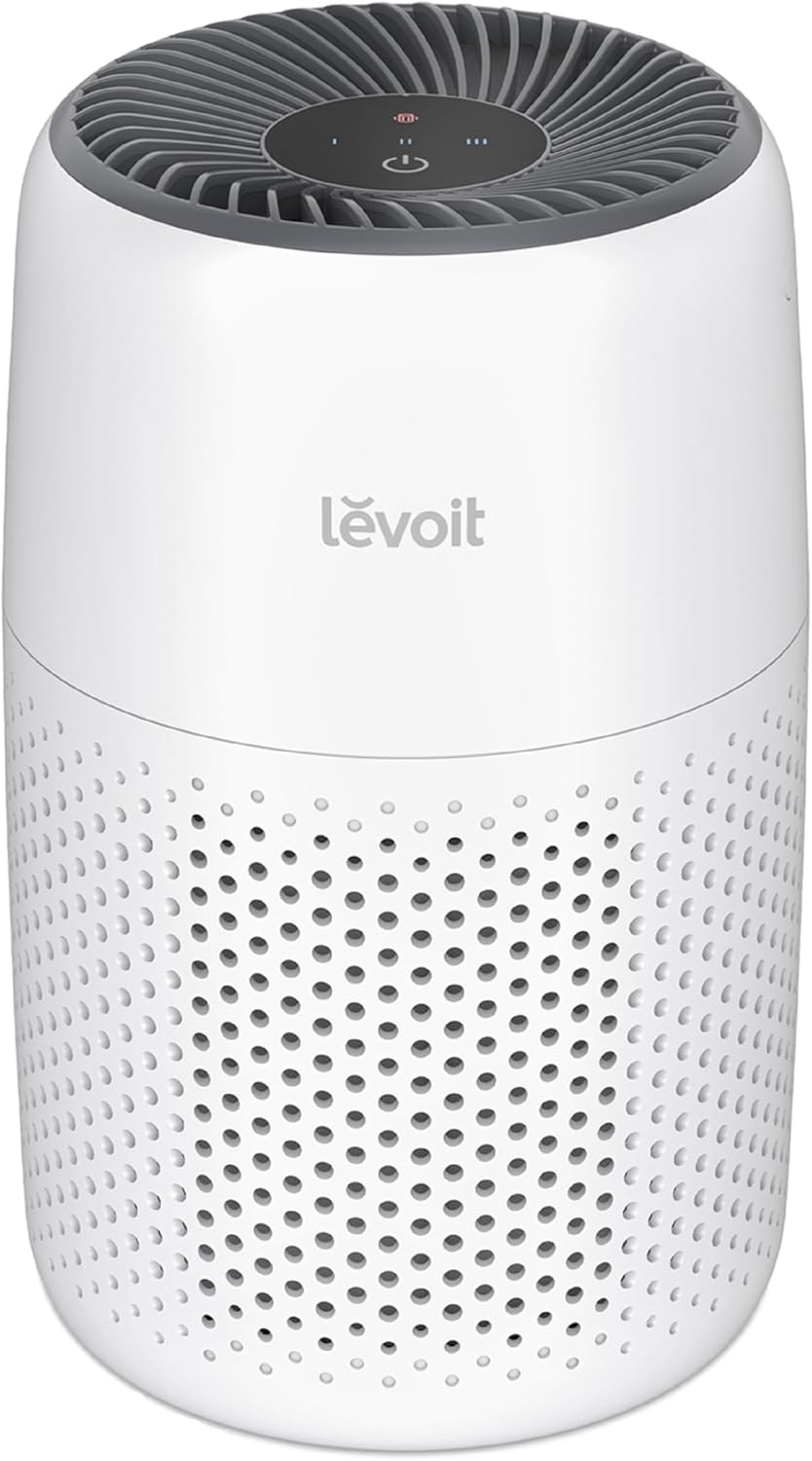
| Rated Power | 7W |
|---|---|
| Noise Level | 27-45dB |
| Adapter Input | 100-240V, 50/60 Hz |
| Dimension | 6.5 × 6.5 × 10.4 in/16.4 × 16.4× 26.4 cm |
The Levoit Core Mini-P is a small, plug-in air purifier intended for bedrooms, desks, or other tight spaces where pet odors and airborne particles are a concern. It uses a pre-filter plus a main high-efficiency filter to trap lint, hair, pet dander, fine particles, smoke, and typical household odors, and includes a fragrance sponge for light aromatherapy. The unit runs quietly with a noise range reported around 27 to 45 dB and has a sleep mode and auto-off display to minimize disturbances overnight. It is low-power (about 7W) and stores its power adapter inside the unit for a tidy footprint. Practical limits are its small size and coverage: this is built for localized use rather than whole-room cleaning, so it works best positioned close to a litter box or a pet area rather than trying to treat an entire living room. Filter replacement and proper positioning are required for best odor reduction, and only a few drops of essential oil should be used to avoid damaging plastic parts.
Best for: Buyers who want a simple, low-noise purifier to reduce cat litter smells and airborne pet particles in a bedroom or near the litter area without installing a larger system.
Less Ideal for: Homes that need whole-room or whole-house air cleaning for multiple rooms or large open areas should choose a higher-capacity unit instead.
- Compact desktop size fits on dressers or near litter boxes
- Captures pet dander, hair, smoke, and fine particles with pre-filter and main filter
- Very quiet operation with a low-power 7W adapter suitable for overnight use
- Sleep mode and auto-off display reduce light and distraction during sleep
- Small coverage area so ineffective as a sole purifier for large rooms
- Aromatherapy sponge requires careful dosing to avoid overflowing or damaging parts
Verdict: A quiet, low-power desktop purifier that is a practical pick for reducing cat litter odor and pet particles in small, localized spaces.
Choosing the Right Air Purifier for Cat Litter Smell: Key Factors to Consider
Filtration For Ammonia And Organic Odors
Litter-box smell is driven largely by ammonia and volatile organic compounds produced as waste breaks down. Look for purifiers that include an activated carbon stage or other targeted odor media designed to adsorb gases. The quantity, quality, and surface area of the carbon or specialty media directly affect how long the unit can reduce odors before the media is saturated.
A HEPA filter alone will remove dander and particulates but will not capture gaseous odor molecules. For homes where the litter box is used frequently, stronger or replaceable odor media and prefilter arrangements are important because they determine ongoing odor control performance and replacement cadence.
Particle Filtration For Dander And Dust
Cats shed dander and hair that carry allergens and can contribute to perceived odor. A true HEPA filter that captures 0.3 micron particles or smaller helps reduce airborne dander and fine dust, improving air quality and reducing the particles that interact with odors.
Effective particle filtration also protects downstream odor media from being clogged by large amounts of dust and hair. Consider units with an accessible prefilter that traps hair and larger debris to prolong HEPA and carbon life and reduce maintenance frequency.
Clean Air Delivery Rate And Room Size
CADR and stated room coverage numbers indicate how quickly an air purifier can cycle and clean the air in a given space. For litter-box odor, it is better to choose a purifier rated for the room where the box is located rather than an adjacent area. Higher CADR values mean faster dilution of odors and allergens.
If the litter box is in a small bathroom or laundry room, a compact, high-CADR unit is more effective than a low-power large-room unit. Conversely, open-plan living spaces require higher airflow to achieve the same odor reduction. Always match the purifier's coverage to the actual room dimensions and typical activity level.
Noise Levels And Nighttime Operation
You will likely want the purifier running continuously to keep litter odors in check. Noise output matters because a loud unit will be turned off or set to low speeds, reducing effectiveness. Check fan speed ranges and look for models with quiet or sleep modes that maintain decent airflow while minimizing sound.
Variable fan speeds and programmable schedules let you run higher airflow when the box is cleaned and lower, quieter settings overnight. Also consider the location of the litter box relative to bedrooms; if the purifier operates in or near sleeping areas, prioritize low decibel ratings at typical fan speeds.
Maintenance, Filter Life, And Replacement Cost
Filter longevity and how easy it is to replace filters directly affect the long-term convenience and cost of ownership. Units with simple filter-access panels and clear life indicators simplify upkeep for busy owners. Consider how often the carbon and HEPA filters must be replaced under heavy use, and whether prefilters are washable to lower recurring costs.
Also review how filter replacements are sized and whether multi-stage replacement kits are required. Longer-life filters reduce hassle but may cost more upfront; short-life filters increase frequency of maintenance. Balance convenience against operating cost when choosing a model.
Placement Flexibility And Portability
Where you can place the purifier affects performance. A model with a compact footprint and carrying handle is easier to move to the room with the litter box when needed. Units that require minimum clearance for intake or exhaust should be positioned to maintain unobstructed airflow.
If the litter box location changes seasonally or you expect to move the unit between rooms, pick a purifier that is easy to relocate and sized appropriately for multiple spaces. Placement also interacts with noise and aesthetic concerns, so choose a design that fits how you use the room.
Where To Put The Purifier Relative To The Litter Box
Position the purifier within the same room as the litter box whenever possible. Place it a few feet away from the box and avoid blocking the intake with furniture or walls. Close proximity helps the unit capture gases before they disperse widely and lowers the time required to reduce noticeable smells.
If the litter box is in a bathroom with limited floor space, set the purifier on a stable elevated surface to keep it clear of splashes and hair accumulation. Ensure there is at least a few inches of clearance on the intake and exhaust sides for proper airflow.
- Keep at least 6–12 inches of clearance around intake panels.
- Avoid placing directly behind tall objects that block exhaust flow.
- Elevate small units off the floor to reduce hair ingestion.
Daily Use Tips To Keep Odors Down
Running the purifier continuously on a low to medium setting often yields better overall odor control than intermittent high-speed bursts. Continuous airflow prevents odor buildup and reduces the chance of ammonia spikes between cleanings.
Combine purifier use with frequent litter maintenance. Scoop daily, replace litter as recommended, and clean the box periodically to reduce the source load on the purifier. Using a closed or partially enclosed litter box can concentrate odors near the purifier intake, which is beneficial if the unit is nearby.
- Run higher fan speeds immediately after scooping or cleaning.
- Keep the litter area well ventilated when possible.
- Wash hands and tools used for litter to avoid transferring odors.
Understanding Filter Indicators And When To Replace Media
Many purifiers include electronic filter life indicators that estimate remaining filter effectiveness based on run time or sensor readings. Treat these as useful guides, but also watch for rising odors or visible discoloration in carbon filters as practical signs that replacement is due.
If your unit does not have an electronic indicator, mark the date when you install fresh filters and follow the manufacturer's recommended intervals adjusted for heavy pet use. Replace carbon filters more frequently in homes with strong or persistent litter-box odors.
- Reset indicators after filter replacement to maintain accurate tracking.
- Inspect prefilters monthly and vacuum or wash if washable.
- Keep a spare set of replacement filters on hand for fast swaps.
When To Use Additional Odor Control Measures
An air purifier reduces airborne odors but will not remove odors embedded in fabrics or porous surfaces. For persistent smells, combine purifier use with regular cleaning of bedding, rugs, and curtains. Hard-surface cleaning of the surrounding area also reduces lingering odor sources.
Consider activated-charcoal or zeolite-based litter products and sealed litter boxes to reduce the chemical load the purifier must handle. These measures reduce peak odor events and extend carbon filter life, allowing the purifier to focus on airborne particulates and lower concentrations of gases.
- Steam clean rugs and upholstery periodically to remove trapped odors.
- Use washable mats under litter boxes and launder them frequently.
- Choose litter and box designs that minimize tracked litter and scatters.
Sensor Features And Smart Controls
Units with odor or particulate sensors can adjust fan speed automatically when pollutants rise. This is handy around a frequently used litter box because the purifier increases airflow only when needed, balancing noise and energy use. Keep in mind that some sensors react more to particles than to gases, so a unit might not always visibly ramp up for odor spikes unless it has a dedicated VOC sensor.
Smart scheduling and smartphone controls let you run the purifier at higher speeds during active periods and quieter modes overnight. If you prefer hands-off operation, prioritize models with reliable auto modes and clear documentation on what the sensors measure.
- Verify whether the auto mode responds to VOCs or only particulates.
- Use schedules to avoid high-noise operation during sleeping hours.
- Check that sensors are not obstructed by walls or dust build-up.
How We Chose the Best Air Purifier for Cat Litter Smell
We focused on features and specs that matter for removing litter-box odor and pet-related particles. Primary evaluation criteria included filtration effectiveness for both gases and particulates, measured by the presence of activated carbon or odor-specific media plus a true HEPA stage for dander and fine dust. Airflow and coverage were assessed to ensure the unit can exchange air frequently enough for typical room sizes where a litter box lives. Noise profile and fan speed control were weighted heavily because continuous operation near living and sleeping areas requires low sound at useful airflow settings. Ease of maintenance and filter-access design were considered so owners can replace media without fuss and keep performance consistent. Energy use and available run modes were checked for practical, long-term daily operation. We excluded units that rely solely on ionization without sufficient particle filtration or that lack any dedicated odor-adsorbing media, because those designs do not reliably address litter-box gases. The final selections emphasize measurable filtration stages, realistic coverage claims, and practical usability for cat owners.
Our full evaluation process is outlined in our review methodology.
FAQ
Will an air purifier completely eliminate litter-box smell?
Air purifiers reduce airborne odors but rarely eliminate smells completely because odors can be absorbed into fabrics and surfaces. Combining a purifier with regular scooping, box cleaning, and surface washing gives the best results.
How often should I run the purifier near a litter box?
Running the unit continuously on a low or medium setting is generally most effective, with short high-speed runs after cleaning. Continuous operation prevents buildup and helps maintain steady air quality.
Do I need a purifier with a VOC or odor sensor?
A VOC sensor helps the purifier react specifically to gaseous odors, which is useful for litter-box smell. If a unit only senses particulates, it may not always increase airflow for odor spikes, so consider sensors when odor control is a top priority.
Can I use the purifier in a bathroom or small room with the litter box?
Yes. Choose a purifier sized for the small room with sufficient CADR to exchange the air frequently. Small, high-efficiency units can be more effective than undersized large-room units in confined spaces.
How do I know when to replace the carbon filter?
Watch for return of noticeable odors or follow the manufacturer's recommended replacement interval adjusted for heavy pet use. Visible darkening or reduced odor control are signs the carbon media is nearing saturation.
Final Verdict
Prioritize a purifier that combines dedicated odor adsorption with true HEPA particle capture and a CADR appropriate to the room where the litter box sits. Expect tradeoffs between filter life, noise, and running cost: stronger odor media and higher airflow increase effectiveness but may require more frequent filter changes and generate more sound. Choose a model with straightforward maintenance, clear filter indicators, and fan control options so you can balance continuous odor control with quiet nighttime use. When matched to room size and placed near the source, a properly selected air purifier will significantly reduce litter-box smell and improve overall indoor comfort.