
Note: This article contains affiliate links. If you click on these links and make a purchase, we may earn a small commission at no extra cost to you. This helps support our research and content. Read our full affiliate disclosure here.
If you manage a kennel, barn, or multi-dog space, air quality affects animal health, staff comfort, and sanitation routines. Choosing the right air purifier for a dog kennel means balancing coverage, filtration strength, and durability so the unit can handle constant use and high particulate loads. This guide shortlists the top units suited for kennel environments and explains the features that matter, including clean air delivery, filtration stages, and maintenance demands. Use these picks and the evaluation notes to find an option that fits your kennel size and operation schedule.
Top Picks at a Glance
| Best Overall The best all-around choice for most situations | WINIX AT40 Air Purifier |  |
| Best Quality Built to a higher standard if you want something more solid | Airdog X5 Air Purifier |  |
| Best Value The sweet spot between price and what you get | MOOKA PR1 Air Purifier |  |
| Best Budget The cheapest option that still gets the job done reliably | YARIKI P280 Air Purifier |  |
| Top Rated A top-rated pick with lots of positive feedback | ECOSELF HAP603 Air Purifier |  |
| Most Popular A crowd favorite that many people choose with confidence | Levoit Core 300-P Air Purifier |  |
| Best Seller A high-volume bestseller chosen again and again | Levoit Core Mini-P |  |
WINIX AT40 Air Purifier

| Coverage (AHAM verif.) | Up to 1968 sq ft in 1 hour (410 sq ft test) |
|---|
The WINIX AT40 is a four-stage air purifier built for large spaces and continuous use. It combines a 360° all-in-one True HEPA + carbon filtration stack with Winix PlasmaWave technology and a smart sensor that displays live air quality and adjusts fan speed in Auto Mode. Typical use is continuous operation in living rooms, open-plan areas, or kennel spaces where pet dander, dust, and smoke are concerns; Sleep mode reduces noise for nighttime operation while Auto Mode balances performance and efficiency. The included Wi‑Fi and Winix Smart App let you monitor air quality, change modes, and check filter life remotely, and the unit ships with two full filter sets for extended run time before replacement. Important limitations are that the unit is sized for very large areas so it may be overbuilt for small rooms, and PlasmaWave is an add-on that does not replace mechanical filtration. Expect routine filter replacements over time like any HEPA system.
Best for: Buyers who want a durable, connected air purifier that can run continuously in large indoor spaces and actively manage pet dander and airborne particulates with minimal babysitting.
Less Ideal for: People seeking a compact, budget unit for a single small bedroom or buyers who need a quiet, ultra-compact purifier for close‑quarters use.
- Designed and AHAM-verified to move clean air through very large rooms quickly
- 360° all-in-one True HEPA plus carbon filter removes particles including pet dander and smoke
- Smart sensor with color-coded, real-time air quality display and Auto Mode for hands-off operation
- Wi‑Fi and app control for remote monitoring and filter-life tracking
- Ships with two full filter sets for up to two years of filtration without buying replacements
- Large coverage and airflow make it larger and more powerful than needed for small rooms
- PlasmaWave is supplementary and does not replace filter maintenance
Verdict: Choose the WINIX AT40 when you need a heavy-duty, app-controlled purifier that reliably clears pet dander and particulates from very large indoor spaces.
Airdog X5 Air Purifier

| Power Source | ac |
|---|---|
| Control Method | App, Remote, Touch |
| Filter Type | Washable Filter |
| Floor Area | 1614 square_feet |
| Noise Level | 22 db |
The Airdog X5 is built for heavy-duty air cleaning in large spaces, combining a patented washable TPA filter with high-voltage ion purification to remove very small particles down to around 0.0146 microns. It pulls air through a 360-degree intake and reports real-time air quality via a built-in sensor, then adjusts fan speed automatically in Auto Mode; four manual speeds plus Sleep Mode let you balance airflow and noise. The washable collecting plates and reusable catalyst mean you avoid recurring filter purchases, and the manufacturer claims a CADR suitable for roughly 1,614 ft² per hour. In practice the unit is relatively quiet at night (about 22 dB in Sleep Mode) and consumes modest power for continuous operation. Important trade-offs are the reliance on ionization technology, which can produce occasional zapping noises when large particles hit the plates, and the need for periodic cleaning cycles indicated on the display. The X5 suits spaces where durable, low-maintenance filtration and strong coverage matter more than the absolute simplicity of disposable HEPA cartridges.
Best for: Owners managing large indoor kennel spaces who prioritize continuous, high-coverage particle removal with low ongoing consumable costs and automated air-quality control.
Less Ideal for: People who need a purely passive HEPA-only system or who want zero maintenance beyond swapping disposable filters should consider other options.
- Washable, reusable TPA collecting plates eliminate regular filter replacement
- High claimed capture efficiency for ultrafine particles down to ~0.0146 microns
- Large coverage with 360° airflow design suitable for big rooms or open kennel areas
- Built-in air quality sensor and Auto Mode adjust fan speed to current conditions
- Very low noise in Sleep Mode (~22 dB) for overnight operation
- Requires regular cleaning of collecting plates and occasional full clean cycles
- Uses active ionization which can make occasional zapping noises and requires drying after cleaning
Verdict: Choose the Airdog X5 when you need a low-maintenance, high-coverage purifier for large kennel areas that removes ultrafine particles while minimizing filter replacement costs.
MOOKA PR1 Air Purifier

| Coverage claim | up to 2200 ft² |
|---|---|
| Filter type | True H13 HEPA + activated carbon + washable pre-filter |
| Noise level | as low as 26 dB (Sleep mode) |
| Fan speeds | 6 modes (Sleep/I/II/III/Auto/Pet) |
The MOOKA PR1 is a large-room air purifier built around a True H13 HEPA filter plus an activated carbon stage and a washable pre-filter, intended to trap smoke, pet dander, pollen, and odors. It is typically used in living rooms, bedrooms, or pet spaces where continuous monitoring and higher airflow are needed; the built-in PM2.5 sensor and AQI display let the unit run in Auto mode and adjust fan speed based on measured air quality. Notable features include a dedicated Pet Mode that boosts cleanup of hair and animal odors, six fan speeds including a very quiet 26 dB Sleep setting, timer and child lock, and an aroma pad for light scenting. The washable pre-filter lowers running costs between replacement filters, while filter change reminders simplify maintenance. Limitations are typical for consumer purifiers: H13 filtration requires periodic filter replacements for sustained performance and the unit's large coverage claims assume optimal placement and unobstructed airflow, so results vary with room layout and heavy soiling from kennels.
Best for: Buyers who want a practical, maintenance-friendly purifier that prioritizes removing pet dander and odors in larger indoor spaces and values sensor-driven automatic control.
Less Ideal for: Not the best choice for buyers needing medical-grade clinical filtration or those who require precise CADR figures for certified commercial kennel environments.
- True H13 HEPA filtration combined with activated carbon for particles and odors
- Dedicated Pet Mode tailored to reduce hair and pet smells faster
- PM2.5 sensor with real-time AQI display and Auto fan control
- Washable pre-filter reduces frequency of full filter changes
- Quiet Sleep mode as low as 26 dB for overnight use
- Requires periodic replacement of the HEPA/activated carbon filter to maintain efficiency
- Coverage and air-change rates depend on room layout and placement, so performance can vary
Verdict: Choose the MOOKA PR1 when you need a large-room, pet-focused purifier with sensor-driven auto control and a washable pre-filter to keep maintenance practical in busy dog spaces.
YARIKI P280 Air Purifier

| CADR | 280 m3/h |
|---|---|
| Filter type | H13 HEPA + activated carbon + washable prefilter |
| Noise level | 22 dB (low speed) |
| Coverage | Up to 1500 sq ft |
The YARIKI P280 is a budget-friendly air purifier built around an H13 HEPA plus activated carbon three-layer system and a washable prefilter, aimed at pet households and larger rooms. Its CADR of 280 m3/h and stated coverage up to 1500 sq ft mean it can move air quickly in open kennel or large room settings, and the manufacturer claims noticeable improvement within ten minutes. Practical touches include a brushless motor for quiet operation (about 22 dB at its lowest setting), a child lock to avoid accidental changes, and low power consumption that helps keep operating costs down. Filters target particles down to 0.3 microns, which helps with pet dander and smoke, while the washable prefilter captures hair to extend HEPA life. Important limitations are typical for value models: replacement HEPA filters will be needed every 3 to 6 months depending on use, and the noise level at higher fan speeds will be louder than the quoted 22 dB. The unit is ETL/CE/FCC/ROHS/CARB certified and the brand offers a one-year warranty and 30-day replacement support.
Best for: Buyers seeking an affordable, effective purifier for pet areas or a single large room who prioritize low operating noise and simple multi-stage filtration.
Less Ideal for: Facilities that need industrial-grade ventilation or continuous heavy-duty odor control across multiple rooms should consider higher-capacity commercial solutions instead.
- H13 HEPA plus activated carbon and washable prefilter for multi-stage particle and odor removal
- High CADR (280 m3/h) and claimed coverage up to 1500 sq ft for large spaces
- Very quiet low-speed operation (~22 dB) suitable for sleep or resting animals
- Washable prefilter helps capture pet hair and extend HEPA life
- Replacement HEPA filters required every 3–6 months based on use
- Performance in heavily soiled or very large multi-room kennel setups may require multiple units or higher-capacity models
Verdict: A cost-conscious choice for dog kennels looking for quiet, multi-stage HEPA filtration and strong single-room coverage.
ECOSELF HAP603 Air Purifier

| Coverage | Up to 2400 ft² |
|---|---|
| Filter type | H13 True HEPA |
| Noise level | 22 dB (Sleep Mode) |
| Air quality sensor | PM2.5 display with infrared sensor |
The ECOSELF HAP603 is a large-room air purifier built to run reliably in spaces up to 2400 ft² by using a 2X-power filtration system and an H13-grade True HEPA filter to capture fine particles, smoke, pet dander, and odors. It is typically used in living rooms, bedrooms, or kennel areas where continuous air cleaning and simple automatic control matter; the built-in PM2.5 display and infrared sensor let the unit adjust fan speed in Auto/Smart mode so it responds to changing air quality without constant input. Notable practical features include a very quiet 22 dB sleep mode for overnight operation, a timer and child lock for controlled use, and an aromatherapy slot for light scenting. Maintenance is straightforward with a filter indicator, though the brand emphasizes using official replacement filters for best performance. The purifier delivers strong coverage for large spaces, but buyers should plan for periodic filter replacements and note that some advanced connectivity or integration features common on premium models are not highlighted.
Best for: Practical buyers who prioritize continuous, reliable air cleaning in large indoor spaces and want an easy-to-use unit that automatically responds to changing air quality.
Less Ideal for: Shoppers who need built-in smart home ecosystem integration or want a compact purifier for very small rooms should look elsewhere.
- Rated to cover large areas up to 2400 ft² using a 2X-power filtration system
- H13 True HEPA filter captures 99.97% of fine particles including smoke and pet dander
- PM2.5 display and infrared sensor enable automatic fan-speed adjustments
- Very quiet 22 dB sleep mode suitable for overnight or low-noise environments
- Filter indicator and simple controls make maintenance and daily use easy
- Requires periodic replacement filters and the brand recommends official replacements
- No detailed smart home integration or advanced connectivity is specified
Verdict: Choose the ECOSELF HAP603 when you need a dependable, large-room purifier that runs quietly and automatically keeps air quality in check.
Levoit Core 300-P Air Purifier

| Filter Type | 3 in 1 Filtration |
|---|---|
| Floor Area | 1073 square_feet |
| Noise Level | 24 db |
| Wattage | 56 watts |
| Particle Retention Size | 0.3 micron |
The Levoit Core 300-P is a compact, three-stage HEPA air purifier that pulls room air through a prefilter, HEPA-grade filter, and activated carbon layer to capture dust, pollen, pet dander, smoke, and odors. It is typically used on a tabletop or floor in bedrooms, living rooms, or kennel spaces where pets are present and offers a 143 CFM CADR for fast cleaning in medium rooms. Notable features include AHAM verification, Whisper-quiet Sleep Mode at 24 dB, a touch control panel with timer settings, and CARB and ETL certifications for safe home operation. Practical benefits for a kennel environment are effective removal of pet hair and dander, odor reduction from the carbon layer, and quiet operation that will not disturb animals. Limitations to consider are that it does not include smart Auto Mode (manual fan speed changes are required) and its listed coverage is based on Levoit original filters, so performance can drop with off-brand replacements or when filters are overdue for replacement.
Best for: Buyers who prioritize proven, well-tested filtration and low-noise operation for pet areas and want reassurance from certifications and wide user adoption.
Less Ideal for: Those who need app control, automated air-quality adjustments, or whole-building ventilation should consider models with smart Auto Modes or higher capacity designed for larger commercial kennels.
- True HEPA-grade three-stage filtration captures 99.97% of 0.1–0.3 μm particles including pet dander and pollen
- AHAM-verified CADR and certifications (CARB, ETL) support reliable, tested cleaning performance
- Very quiet Sleep Mode (24 dB) suitable for noise-sensitive spaces
- Activated carbon layer helps reduce odors common in kennel areas
- Compact and portable design is easy to move between rooms or kennels
- No smart Auto Mode on this model so fan speeds must be adjusted manually
- Coverage and CADR figures apply when using Levoit original filters only
Verdict: A certified, quiet HEPA purifier that reliably reduces pet dander and odors in medium kennel rooms for buyers who value proven performance and social-proof confidence.
Levoit Core Mini-P
| Rated Power | 7W |
|---|---|
| Noise Level | 27-45 dB |
| Adapter Input | 100-240V, 50/60 Hz |
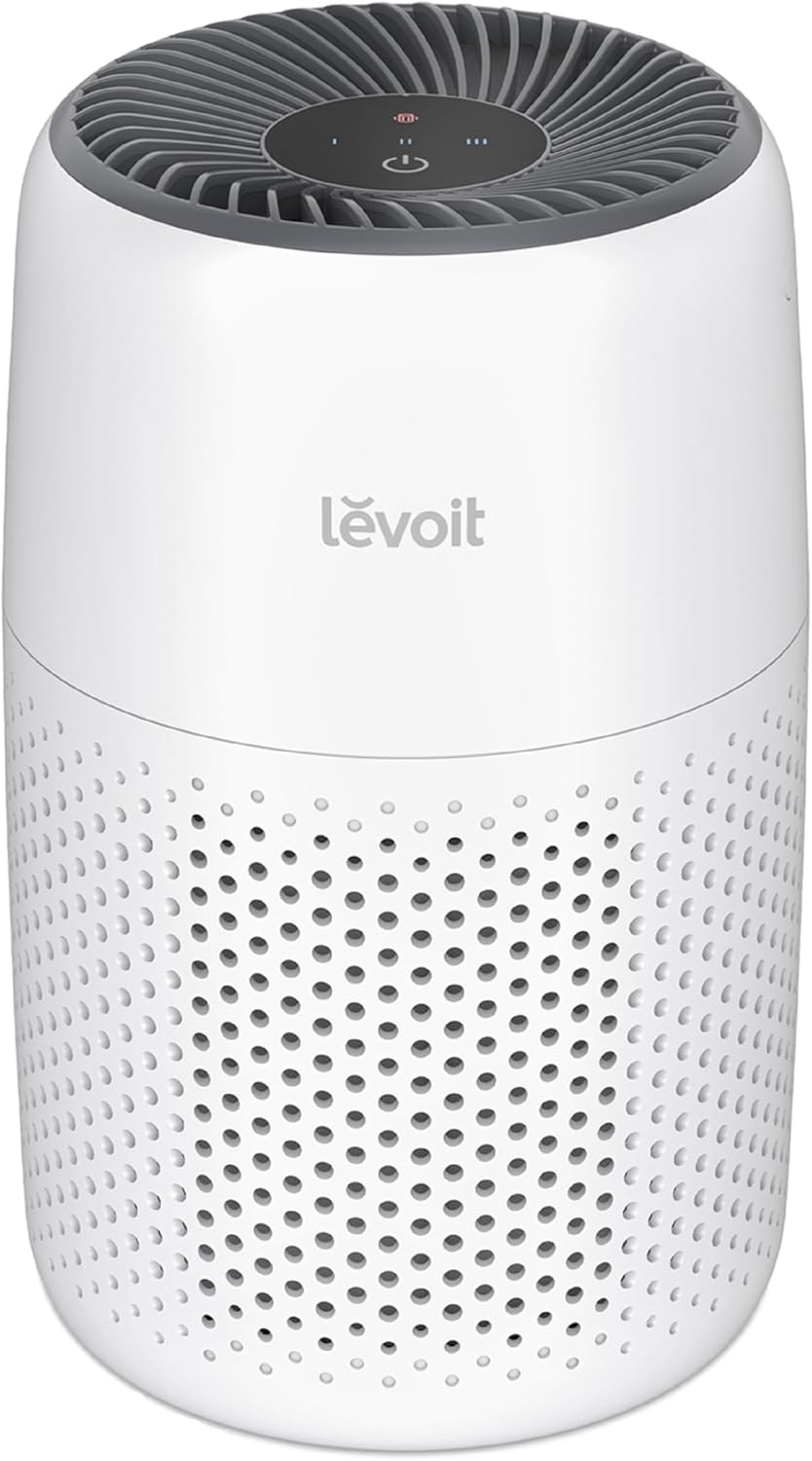
The Levoit Core Mini-P is a small desktop air purifier built for focused cleaning in bedrooms, offices, or other tight spaces like a kennel office. It uses a pre-filter plus a main high-efficiency filter to trap pet hair, lint, dust, smoke, and common airborne allergens while an integrated aromatherapy sponge lets you add a light scent. The unit runs quietly with noise reported between 27 and 45 dB and has a sleep mode and auto-off display that reduce disturbance overnight. With a low rated power draw around 7W and an internal adapter, it is energy efficient and easy to place on a shelf or desk. Limitations are expected: its compact footprint means it is sized for small areas and will not circulate air fast enough for large or densely populated kennel rooms, and the aromatherapy feature requires careful dosing to avoid overflowing. For buyers wanting a conservative, easy-to-use purifier for small spaces, it offers reliable pollutant capture and quiet operation, but larger kennels will need a higher-capacity unit.
Best for: A cautious buyer who wants a low-maintenance, quiet purifier for a small kennel office, bedroom, or individual run where removing pet dander and odors in a confined space is the priority.
Less Ideal for: Large kennel facilities, multiple connected runs, or anyone needing whole-room/high-CADR purification for many animals at once should choose a higher-capacity commercial or home unit instead.
- Compact design that fits on a desk or shelf for localized air cleaning
- Multi-stage filtration captures pet dander, hair, dust, and smoke
- Very quiet operation with sleep mode for overnight use
- Low power consumption (around 7W) for continuous running
- Coverage limited to small rooms and not suitable for large or high-occupancy kennel spaces
- Aromatherapy sponge requires careful use to avoid overflow and potential plastic damage
Verdict: A quiet, energy-efficient desktop purifier that reliably reduces pet dander and odors in small kennel spaces where low disturbance and simple operation matter most.
Choosing the Right Air Purifier for Dog Kennel: Key Factors to Consider
Airflow Coverage and CADR
Air changes per hour matter in kennel spaces that are often larger and have more airborne load than a typical room. Look for a purifier whose CADR and recommended room size match or exceed the kennel bay or the total square footage of the area you need to treat.
Underpowered units will struggle with persistent dander and odor, while oversized units can be noisy and waste energy. Calculate required air exchanges for your layout and ensure the unit can sustain those rates when running continuously.
Filtration Stages and Particle Capture
Effective removal of pet dander, hair fragments, and allergens requires a true HEPA filter or an equivalent certified capture level. Pre-filters that trap large hair and lint will extend the life of finer filters and reduce clogging.
Consider whether the purifier includes an additional washable pre-filter and how the HEPA stage is rated. Multi-stage systems reduce different particle sizes in sequence, which is important in kennels where a wide range of particle sizes are present.
Odor and Gas Removal
Kennel environments often produce strong odors from urine, cleaning chemicals, and general animal activity. Activated carbon or other adsorbent media target VOCs and ammonia that HEPA filters cannot capture.
Assess the quantity and type of carbon media and whether the unit has specialized stages for gases. Units marketed for odor control typically feature thicker or replaceable carbon modules; this impacts both upfront performance and ongoing filter costs.
Durability and Continuous Operation
Kennels require devices that can run for many hours or continuously without degradation. Durable motors, robust housing, and industrial-grade fans are preferable to lightweight consumer units.
Check for features that support long-term operation such as thermal cutoffs, easily serviceable parts, and warranties that cover heavy use. The build quality will influence how often the unit needs servicing and its lifespan in a busy animal-care environment.
Noise Level and Animal Comfort
Noise affects animals and staff. High fan speeds increase CADR but also raise noise. Look for units with measured decibel ratings at different fan settings and consider models that provide high airflow with lower noise through efficient fan design.
Placement also matters: ceiling-mounted or elevated units can be less disruptive. Evaluate how noise profiles change across speeds and pick a unit that balances performance with a sound level suitable for your animals.
Maintenance Frequency and Filter Costs
Operational cost is more than electricity. Regular filter changes are necessary in high-load environments. Consider how often pre-filters and HEPA/carbon filters need replacing and whether filters are proprietary or commonly available.
Easier-to-clean pre-filters and modular designs reduce downtime and labor. Also factor in how simple it is to swap filters without specialized tools or service visits; that affects ongoing maintenance scheduling in a kennel setting.
Sizing a Purifier for Different Kennel Layouts
Measure the volume of the space you want to treat, not just floor area. Kennel bays with high ceilings need more powerful airflow to achieve the same number of air changes per hour. Multiply square footage by ceiling height to estimate cubic footage and compare that to the purifier's recommended coverage.
For multiple adjoining bays, assess whether a single high-CADR unit can service the whole space or if distributed smaller units placed near the animal locations provide more effective localized filtration. Consider airflow patterns and where contaminants originate when positioning equipment.
- Calculate cubic footage: length × width × ceiling height.
- Aim for 4 to 8 air changes per hour depending on occupancy and odor levels.
- Place units to avoid dead zones where air circulation is poor.
Placement and Mounting Strategies
Placement influences effectiveness. Floor-standing units should be set away from walls to allow intake and exhaust clearance. Wall- or ceiling-mounted models can free floor space and keep electronics away from curious animals.
Avoid placing purifiers directly next to litter areas or high-traffic feeding zones where hair and debris will accelerate filter loading. Instead, position units centrally or near the primary source of odors while maintaining safe distances from animals and equipment.
- Leave 12 to 24 inches clearance around intake and exhaust.
- Use multiple smaller units for distributed coverage in subdivided kennels.
- Consider elevated mounting to reduce hair accumulation on intake grilles.
Managing Odors: Beyond Basic Filtration
HEPA filters capture particulates but do not remove gases. Activated carbon, zeolite, or catalytic media handle odors and ammonia. For kennels, look for systems with ample carbon volume or replaceable carbon packs you can refresh as needed.
Supplement mechanical filtration with proper ventilation and cleaning practices. Purifiers reduce airborne odor intensity but do not eliminate the need for routine sanitation, source control, and adequate fresh air exchange.
- Choose units where carbon modules are easy to replace.
- Track ammonia levels in high-occupancy spaces and increase ventilation if needed.
- Combine filtration with strong housekeeping to control odor sources.
Noise Management and Animal Behavior
Animals are sensitive to sound frequencies and steady noise. A unit that is quiet to human ears at a distance may still affect animal behavior if it emits certain tones. Look for purifiers with low dB ratings at typical operating speeds and, if possible, tested in animal environments.
If noise is a concern, prioritize units with efficient fans or multiple speed settings so you can run quieter overnight and increase speed during cleaning or high-occupancy periods.
- Check decibel ratings at low, medium, and high speeds.
- Test new units in a small area before full deployment.
- Use sound-dampening placement or barriers if one unit covers multiple animal areas.
Energy Use and Running Costs
Continuous operation increases electricity consumption. Compare wattage at typical operating speeds and look for energy-efficient motors or sleep modes for quieter, low-power daytime operation. Over months, small differences in power draw can add up, especially in facilities with several units.
Factor in filter replacement frequency and costs alongside energy use to estimate total operating cost. Units with washable pre-filters and long-life HEPA cartridges often reduce recurring expenses.
- Note wattage at the fan speeds you will use most often.
- Estimate monthly energy cost based on continuous run hours.
- Choose washable pre-filters where appropriate to lower consumable costs.
How We Chose the Best Air Purifier for Dog Kennel
We focused on practical performance characteristics that matter in kennel settings and excluded consumer models intended only for light bedroom or office use. Our selection prioritized devices designed to run continuously, sustain heavier particulate and odor loads, and offer filters rated for pet dander and volatile compounds. Key evaluation criteria included airflow coverage and CADR to ensure adequate air exchanges in typical kennel bay sizes, multi-stage filtration that includes true HEPA or equivalent for dander capture plus activated carbon for odor and ammonia control, and durability of hardware for continuous operation. We also weighed noise levels because kennels need tolerable ambient sound for animals, maintenance requirements such as filter replacement cadence and cost, and energy efficiency for long run times. We excluded units lacking verified filtration ratings or those with fragile designs unsuited to busy animal-care spaces. The final shortlist reflects balance across continuous-use reliability, filtration effectiveness, maintenance practicality, and sound management.
Our full evaluation process is outlined in our review methodology.
FAQ
How often should filters be changed in a kennel setting?
Filter change frequency depends on occupancy, hair and dust load, and the unit's pre-filter design. In busy kennels, pre-filters may need cleaning every few weeks and HEPA or carbon filters replaced every 6 to 12 months. Monitor pressure drop or manufacturer guidance and inspect filters regularly.
Can an air purifier remove ammonia smells from dog urine?
HEPA alone will not remove ammonia. Adsorbent media such as activated carbon or specialized gas-phase filters are needed to reduce ammonia and other VOCs. For persistent ammonia issues, also address ventilation and cleaning frequency.
Is it better to use one large unit or several smaller units?
It depends on layout. One high-CADR unit can work for open spaces, but multiple smaller units often provide more consistent localized filtration in segmented or multi-bay kennels. Distributed units reduce dead zones and can be quieter when operated at lower speeds.
Will running a purifier make my kennel noticeably colder or drier?
Most purifiers have minimal impact on temperature or humidity because they circulate air without active heating or cooling. Some units with high airflow can increase perceived draft. Manage HVAC settings separately if humidity or temperature control is a concern.
Are specialized pet filters necessary?
Pet-specific filters typically combine pre-filters, HEPA, and larger carbon loads designed for animal dander and odors. They can be helpful in high-occupancy kennels, but the critical factors are adequate CADR, robust pre-filtration for hair, and sufficient carbon for odor control.
Final Verdict
Choosing an air purifier for a dog kennel is about matching capacity and filtration to the unique challenges of animal spaces. Prioritize units that deliver enough air changes for your kennel volume, include true HEPA and carbon stages for dander and odors, and are built for continuous, low-maintenance operation. Balance performance with acceptable noise and ongoing filter costs. When you align coverage, durability, and ease of upkeep with your facility's layout and cleaning routines, you can improve air quality reliably and cost-effectively.