
Note: This article contains affiliate links. If you click on these links and make a purchase, we may earn a small commission at no extra cost to you. This helps support our research and content. Read our full affiliate disclosure here.
If you want cleaner indoor air without overspending, choosing the right air purifier on a budget matters. A cheaper unit can still meaningfully reduce dust, pet dander, and pollen if it uses a proper filter and is sized for your room. You also need to consider ongoing costs like filter replacements and electricity so the initial savings do not disappear over time. This guide shortlists six top budget air purifiers that strike practical balances between filtration, coverage, and operating cost. Below we explain why each option made the list and which performance and maintenance tradeoffs to expect. Read on to match one to your room size and allergy priorities.
Top Picks at a Glance
| Best Quality Built to a higher standard if you want something more solid | Levoit Core 300-P |  |
| Best Value The sweet spot between price and what you get | FULMINARE H13 HEPA Air Purifier |  |
| Best Budget The cheapest option that still gets the job done reliably | Generic MR2566 Air Purifier |  |
| Top Rated A top-rated pick with lots of positive feedback | ECOSELF HAP609 Air Purifier |  |
| Most Popular A crowd favorite that many people choose with confidence | Levoit Core Mini-P |  |
| Best Seller A high-volume bestseller chosen again and again | VOOPNU H13 HEPA Air Purifier DH-JH12 |  |
Levoit Core 300-P

| Power Source | Corded Electric |
|---|---|
| Filter Type | 3 in 1 Filtration |
| Floor Area | 1073 square_feet |
| Noise Level | 24 db |
| Wattage | 56 watts |
The Levoit Core 300-P is a small, performance-focused air purifier that uses a 3-stage original filter and a 56W motor to scrub common indoor pollutants. It is intended for bedrooms, living rooms, or offices and is AHAM verified to deliver measured CADR for smoke, dust, and pollen, making it capable of refreshing a medium room multiple times per hour or a very large open area at a lower rate. Controls are touch-based and include a near-silent Sleep Mode that reduces noise to about 24 dB and the option to turn the display lights off for undisturbed nighttime use. The unit is portable and energy efficient, and Levoit recommends using factory replacement filters for best results and a 6 to 8 month replacement interval. Limitations include manual fan-speed control only on this model (no Auto Mode) and coverage claims that assume Levoit original filters, so performance drops if you use third-party filters or skip timely filter changes.
Best for: Buyers who prioritize proven cleaning performance and quiet operation in bedrooms or medium living areas and who will maintain the unit with recommended replacement filters.
Less Ideal for: People who want a smart, automatic purifier that adjusts fan speed based on real-time air quality readings or those expecting fully automatic operation without manual control.
- AHAM-verified CADR ratings for smoke, dust, and pollen so you get measured cleaning performance
- True HEPA-grade 3-stage filter that captures 99.97% of 0.1–0.3 μm particles when using original filters
- Very quiet Sleep Mode (~24 dB) and dimmable display make it suitable for bedrooms
- Portable, energy-efficient 56W motor that is practical for daily use
- Does not include Auto Mode or smart connectivity on this model so fan speed must be adjusted manually
- Performance and CADR figures apply when using Levoit original filters, so off-brand replacements may reduce effectiveness
Verdict: Choose the Core 300-P if you want a budget-friendly purifier with AHAM-verified performance and whisper-quiet sleep operation.
FULMINARE H13 HEPA Air Purifier

| Filter type | H13 HEPA |
|---|---|
| Recommended room size | 215 sq ft / 20 m² |
| Noise level | Around 24 dB (low fan) |
| Power | Plug-in (no battery) |
The FULMINARE H13 is a small, budget-friendly air purifier designed for single rooms and bedrooms. It uses an H13 true HEPA filter and a 360-degree outlet with dual-channel airflow to circulate and filter air up to five times per hour in spaces around 215 sq ft, which makes it practical for sleeping areas, home offices, and living rooms. Controls include a near-silent sleep mode that drops noise to roughly 24 dB, a built-in night light, and five timer options for hands-off runtime. The unit is portable and plug-in powered so there is no battery to recharge, and filter replacements are available separately. Limitations are its room-size cap and simpler feature set compared with larger models: it lacks advanced sensors, app control, and higher CADR figures, so it is best as a straightforward, low-cost option for basic particulate and odor reduction rather than whole-home cleaning or heavy smoke removal.
Best for: Buyers who want a simple, effective bedroom or small-room purifier that runs quietly and offers basic timed operation without extra smart features.
Less Ideal for: People who need whole-house filtration, advanced auto-sensing, or app control should consider higher-capacity or feature-rich models instead.
- H13 true HEPA filter for high-efficiency particle capture
- 360° air outlet with dual-channel design for steady room circulation
- Very quiet sleep mode around 24 dB suitable for light sleepers
- Built-in night light and multiple timer settings for bedroom use
- Recommended coverage limited to about 215 sq ft, not for large open areas
- No smart features or air-quality sensors for automatic adjustment
- Requires periodic filter replacements sold separately
Verdict: A quiet, no-frills H13 HEPA purifier that delivers effective particulate cleaning for bedrooms and small rooms on a tight budget.
Generic MR2566 Air Purifier
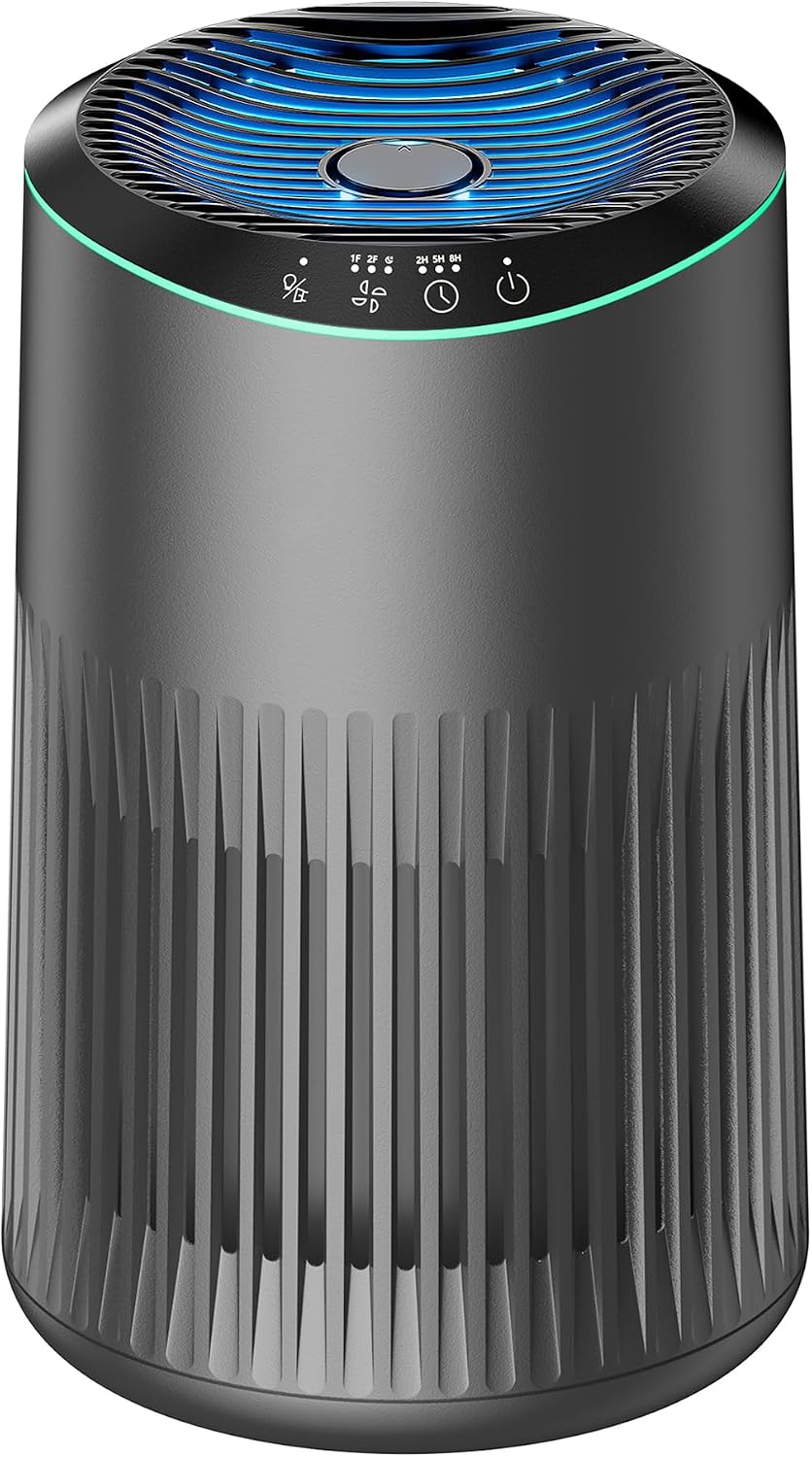
| Item model number | MR2566 |
|---|---|
| Product Dimensions | 6.38 x 6.92 x 10.98 inches |
| Date First Available | April 13, 2026 |
This compact air purifier is designed for small spaces like bedrooms, offices, and dorms where simple, quiet filtration is the priority. It pulls air in through a 360° intake and uses a high-efficiency filter to capture common indoor particles such as dust, smoke, pet dander, and hair while reducing everyday odors. The unit is very quiet in sleep mode (listed at about 22–23 dB) and the ambient light can be turned off to avoid disturbing sleep. A built-in fragrance sponge lets you add essential oils to lightly scent the room. Its small footprint and light weight make it easy to move between rooms and store when not in use. Limitations to note are its compact size and implied coverage: this is best for single rooms rather than large open areas, and the listing does not include detailed CADR or filter life estimates, so expect basic performance rather than whole-home purification. For buyers on a tight budget who need a portable, quiet purifier for a single room, it covers core needs without extras.
Best for: Buyers seeking an inexpensive, portable purifier for a single bedroom, dorm room, or small office who prioritize quiet operation and basic particle and odor removal.
Less Ideal for: Those needing fast, measurable purification for large rooms or whole-house coverage or who require detailed performance specs and documented filter replacement intervals.
- 360 degree air intake for more even room circulation
- Very quiet sleep mode with low ambient light for undisturbed bedrooms
- Compact, lightweight design that is easy to move and place in small spaces
- Built-in fragrance sponge for optional scenting of purified air
- No CADR or explicit room coverage listed, so effective range is unclear
- Filter life and replacement cost not specified in the product information
Verdict: A budget-friendly, ultra-quiet tabletop purifier that delivers basic particle and odor reduction for single rooms while staying compact and easy to move.
ECOSELF HAP609 Air Purifier

| Item model number | HAP609 |
|---|---|
| Date First Available | June 1, 2026 |
| ASIN | B0H3JTTPGR |
| Customer Reviews | 4.9 out of 5 stars (194) |
The ECOSELF HAP609 is a small, practical HEPA air purifier built to keep a single room or bedroom consistently clean with minimal fuss. It draws air from all directions using a 360° intake and displays real-time PM2.5 readings so you can see pollution levels at a glance, while an auto mode uses the onboard sensor to step fan speed up and down as air quality changes. Practical controls include a 1–24 hour timer and a dedicated Sleep Mode that turns off lights and drops noise to about 20 dB for undisturbed rest. The unit is straightforward to place on a nightstand or table and is aimed at daily, low-maintenance use rather than whole-house filtration. Expect solid performance against dust, pollen, smoke, and pet dander in small to medium rooms, but note its compact size and quieter fan mean it will circulate air more slowly than larger, higher-CADR machines. For buyers who want an easy-to-use, reliable bedroom purifier without complicated setup, the HAP609 delivers clear feedback and quiet operation.
Best for: Buyers who prioritize a simple, dependable bedroom or small-room purifier that runs quietly and manages air quality automatically with minimal upkeep.
Less Ideal for: People seeking fast purification for large open-plan areas or those who need detailed CADR figures and performance targets for large rooms.
- 360° air intake improves room coverage from a compact footprint
- Built-in PM2.5 sensor with color ring and numeric display for instant air-quality feedback
- Auto mode adjusts fan speed automatically based on sensor readings
- Very quiet Sleep Mode (around 20 dB) with lights off for undisturbed bedrooms
- Compact design limits circulation speed compared with larger, high-CADR purifiers
- Specifications do not list CADR or exact room-size rating for direct comparison
Verdict: A budget-friendly, low-noise bedroom purifier that reliably monitors and reacts to indoor PM2.5 levels for straightforward daily use.
Levoit Core Mini-P
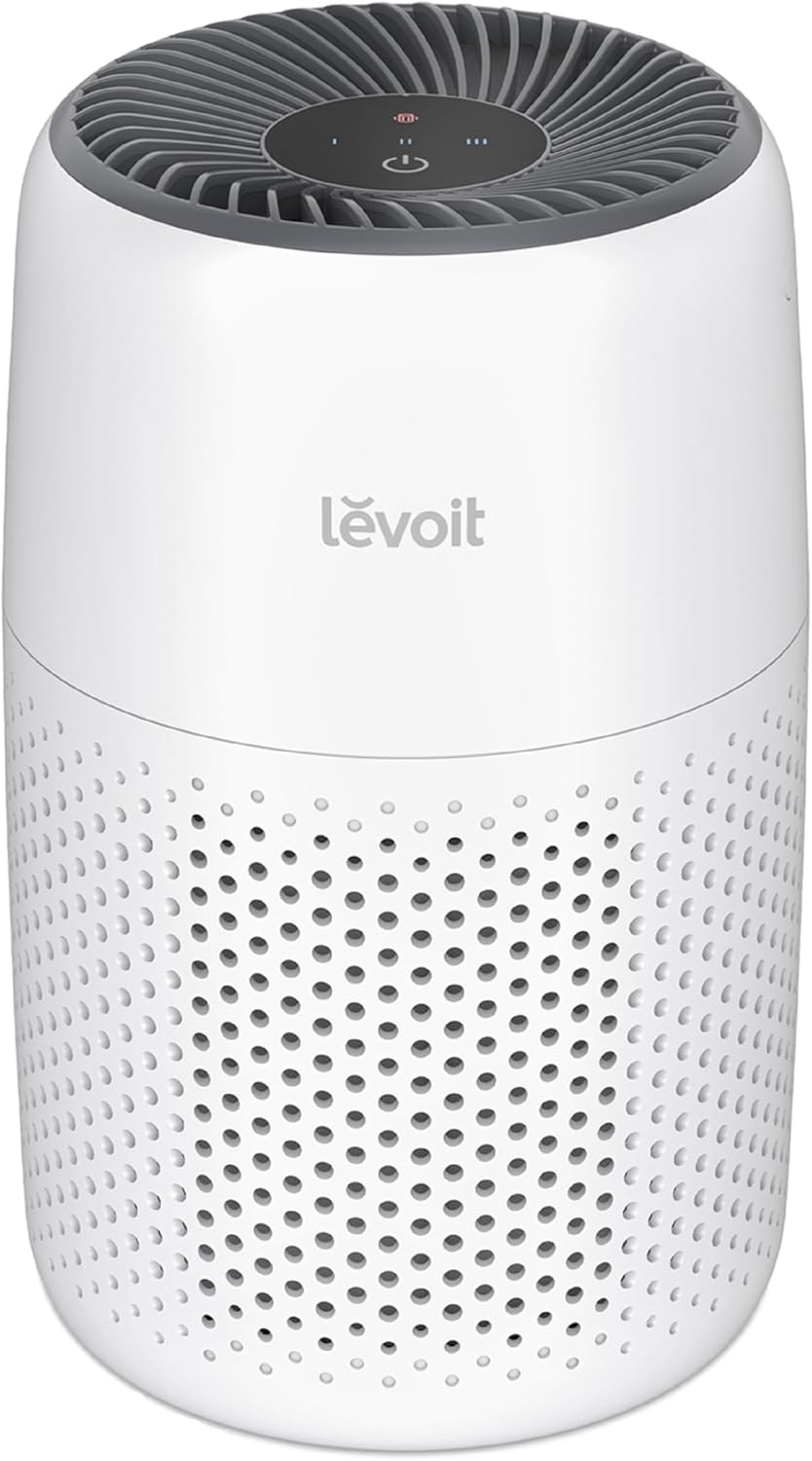
| Rated Power | 7W |
|---|---|
| Noise Level | 27-45dB |
| AHAM Verification | Yes |
| Model number | LAP-C161-WUS |
The Levoit Core Mini-P is a small, plug-in air purifier meant for personal spaces like desks, bedrooms, or kitchens. It uses a pre-filter plus a main high-efficiency filter to capture lint, pet hair, dander, smoke, and other fine particles, and an aromatherapy sponge lets you add a light scent. Controls include a sleep mode and an auto-off display to reduce disturbance overnight, and the unit runs at low power (rated about 7W) with a reported noise range around 27–45 dB, so it is quieter than many tabletop fans. Because it is AHAM-verified, performance claims are independently tested for basic cleaning and energy efficiency. The Core Mini-P is most useful for people who need localized air cleaning rather than whole-room coverage; filter replacements are a recurring cost and the small form factor limits output compared with larger models. If you want a compact, low-noise purifier that can sit on a nightstand or office desk and provide noticeable reduction of pet dander and odors, this model delivers without drawing much power.
Best for: Buyers who prioritize quiet, energy-efficient air cleaning for a small personal space and want a well-tested product with strong user reviews and certification to reduce risk.
Less Ideal for: People needing whole-room coverage, rapid particle removal in large rooms, or those who prefer an all-in-one HVAC-style purifier for an open-plan home should look at larger units instead.
- Compact desktop-friendly footprint fits on a nightstand or desk
- AHAM-verified cleaning performance for reliable baseline results
- Very low power draw (around 7W) for energy-efficient continuous use
- Sleep mode and auto-off display reduce disturbance during nighttime
- Aromatherapy sponge option to add a mild fragrance while purifying
- Small unit is limited to localized spaces and cannot replace a larger room purifier
- Requires periodic filter replacements which add ongoing cost
Verdict: Choose the Core Mini-P when you want a compact, AHAM-verified, low-noise purifier for a single room or desk that delivers reliable basic filtration on a budget.
VOOPNU H13 HEPA Air Purifier DH-JH12

| Coverage | Up to 1,076 ft² |
|---|---|
| Filtration | H13 True HEPA triple-layer |
| Noise level | 22 dB (lowest) |
| Fan speeds | 3 speeds |
The VOOPNU DH-JH12 is a small, user-friendly air purifier that uses an H13 True HEPA three-layer filter and 360 degree intake to capture fine particles, pet hair, pollen, smoke, and odors. It is intended for everyday home use on surfaces like desks, nightstands, or corners and is laboratory-rated to clean about 250 ft² every 15 minutes, covering up to 1,076 ft² per hour. Controls are simplified to one-tap operation, and you get three fan speeds, a timer, and a built-in essential oil tray for light scenting. The unit operates very quietly down to around 22 dB, so it is suitable for bedrooms and offices. Important practical considerations are filter replacement frequency and ongoing runtime: the product notes recommended replacement cycles of roughly 3 to 6 months for typical filters and suggests continuous or long-term operation for best results. Certifications from DOE, ETL, FCC, CARB, CE, and ROHS support its safety and emissions profile. The DH-JH12 delivers good filtration and quiet operation in a compact footprint, but expect regular filter purchases and steady run time to maintain air quality.
Best for: Buyers who want a simple, low-noise purifier with certified filtration for everyday home use and who prefer an easy, worry-minimizing appliance they can run continuously without complex setup.
Less Ideal for: Those needing a heavy-duty whole-house solution or who want an air purifier with advanced smart features like Wi-Fi control and multi-room integration should look elsewhere.
- H13 True HEPA triple-layer filtration captures 99.97% of airborne particles
- Compact design with 360° intake fits small spaces and corners
- Very quiet operation down to 22 dB suitable for sleep or work
- Simple one-tap control plus timer and three fan speeds for easy use
- Requires regular filter replacements (recommended 3–6 months depending on use)
- Small physical size may require running continuously in larger or highly polluted rooms to meet expectations
Verdict: A compact, certified H13 HEPA purifier that delivers quiet, effective daytime and overnight cleaning for budget-conscious buyers who value simplicity and low risk.
Choosing the Right Air Purifier on a Budget: Key Factors to Consider
Filtration Type and Efficiency
The filter media determines what particles the purifier actually removes. True HEPA filters capture at least 99.97 percent of particles down to 0.3 microns, which covers most pollen, dust, and many aerosolized allergens. Some budget models use HEPA-type or electrostatic filters with lower guaranteed efficiency; these can reduce larger particles but may miss the smallest irritants.
Understanding filter efficiency helps you match a unit to your needs. If allergies or asthma are primary concerns, prioritize true HEPA. For general odor reduction, look for an activated carbon prefilter in addition to particle filtration.
Clean Air Delivery and Room Size
Clean Air Delivery Rate or equivalent coverage estimates are the best way to judge whether a unit will handle your room. A higher CADR or specified square-foot coverage means the machine will cycle and clean air faster. Budget purifiers often quote coverage for a single air change per hour; if you want faster cleaning or have pets, opt for a higher-rated unit relative to your room size.
Buying too small a unit means it will run constantly without achieving meaningful improvement. Conversely, oversizing wastes purchase dollars and may increase noise and electricity use.
Energy Use and Running Costs
Operating cost is a key part of total ownership, especially for units you plan to run many hours a day. Look at wattage at common fan speeds or any stated energy-efficiency ratings. Lower-power motors and efficient fan designs reduce electricity draw, which matters most over months and years.
Also factor in how often you will run the purifier. A unit that is slightly less efficient but uses half the power on its low setting may cost less to operate overall than a higher-power model running more often to reach the same indoor air quality.
Filter Replacement Frequency and Price
The initial price is only part of the cost equation. Replacement filters are consumables and can represent a recurring expense that quickly eclipses the purchase price. Check the expected lifespan of filters in months or operating hours and whether the unit uses widely available filter sizes or proprietary cartridges.
Lower-cost filters may reduce short-term expenses but could cost more over time if they require frequent replacement. Consider total annual filter spend when comparing budget options.
Noise Output and Control Options
Noise affects where and how you use a purifier. Bedrooms and home offices benefit from quieter operation or multiple fan speeds so you can lower the sound level at night. Some budget models offer simple fan steps without fine-grained control, which can force a tradeoff between speed and comfort.
Check decibel ratings if provided and prefer units with a quiet or sleep mode for late-night use. A too-loud purifier will likely be turned off, negating its benefits.
Build Quality and Ease of Maintenance
A well-built unit will last longer and be easier to service. Look for simple access to the filter compartment, clear replacement indicators, and washable prefilters that catch large debris and extend main filter life. Sturdy housing and stable feet reduce vibration and rattling over time.
Ease of maintenance reduces the chance you will skip filter changes and preserves long-term performance. Avoid designs that require tools or a complicated disassembly for routine service.
How Much Coverage Do You Really Need
Estimate square footage of the primary room where the purifier will operate and compare that to the unit's stated coverage. For open-plan areas, add the adjacent spaces you expect the unit to affect. If the manufacturer lists ACH (air changes per hour) or CADR, prefer units that provide at least two to four air changes per hour for living areas.
Positioning matters. Place the purifier where airflow is least obstructed and avoid tight corners or behind furniture. A unit placed centrally or near pollutant sources such as pet beds will deliver more noticeable improvements.
- Smaller bedrooms often need lower CADR but quieter operation.
- Living rooms with pets need higher throughput for hair and dander.
- Kitchens may need carbon filtration for odors in addition to particulates.
Balancing Initial Cost Versus Lifetime Expense
A low purchase price can be appealing, but calculate expected filter replacement cycles and annual electricity use to estimate total cost of ownership. Multiply filter price by the number of expected replacements per year and add an annualized electricity estimate based on typical hours of operation.
Sometimes a slightly more expensive model with cheaper replacement filters or lower wattage will cost less over two to three years. Budget shoppers should run the math for a realistic ownership period.
- Check filter lifespans in months or hours.
- Estimate daily run hours to approximate annual power use.
Dealing with Specific Concerns: Allergies, Pets, and Smoke
Allergies require reliable particle capture. Prioritize true HEPA filtration and sufficient CADR for the room. For pet owners, look for prefilters and designs that are easy to vacuum to remove hair before it clogs the main filter.
Smoke and cooking odors need activated carbon or other sorbent media. Many budget units include a small carbon layer, but the capacity may be limited compared with higher-end models, meaning more frequent replacement if odors are frequent.
- HEPA for particles and allergies.
- Carbon media for odors and volatile compounds.
- Pre-filters help with hair and extend main filter life.
Placement, Maintenance, and Practical Tips
Place the purifier so its intake and exhaust are unobstructed and at least a few inches from walls. Regularly vacuum or wash any prefilter to maintain airflow, and set a reminder for main filter replacement based on the manufacturer interval and your environment.
Run the unit on higher speeds during heavy-use periods such as cooking or after cleaning, and return it to quiet mode for sleeping. If noise is a barrier, consider using the unit in a smaller area at night and moving it to larger spaces during the day.
- Keep free space around the unit for unobstructed airflow.
- Use washable prefilters to lower replacement frequency.
- Schedule filter changes to maintain performance.
Common Misleading Specs to Watch For
Some budget purifiers emphasize fan speed or fancy controls while providing little detail about filter efficiency or CADR. Beware of vague terms like '99 percent filtration' without a specified particle size or test standard.
Marketing claims about covering very large rooms at low fan speeds may assume unrealistic conditions. Prefer concrete metrics such as CADR, ACH at a stated room size, or specified particle-size capture rates.
- Ask for the particle size tied to any percentage filtration claim.
- Prefer units that publish CADR or ACH rather than generic coverage ranges.
How We Chose the Best Air Purifier on a Budget
We prioritized products that deliver measurable air-cleaning performance without premium pricing. The selection process focused on concrete, verifiable specifications and real-world running costs rather than trendy features. Primary evaluation criteria included CADR or equivalent clean-air delivery estimates, filter type and replaceability, energy consumption at typical fan speeds, and appropriate room coverage. We also weighed noise output at livable settings since quiet operation affects daily use in bedrooms and living rooms. Excluded from consideration were units with unclear filtration claims, unverified CADR figures, or nonreplaceable filters that increase long-term waste and cost. We favored models with standard HEPA or true high-efficiency filters and clear maintenance intervals. Other factors considered were simple user controls, availability of replacement filters, and the durability suggested by materials and warranty information. These filters mirror the scoring criteria used in each product scorecard so readers can compare like for like.
Our full evaluation process is outlined in our review methodology.
FAQ
Can a budget air purifier help with allergies?
Often yes. A budget unit with a true HEPA filter and adequate room coverage can reduce airborne allergens. Effectiveness depends on matching the purifier's filtration capability and CADR to your room size and running it regularly.
How often should I replace filters in a budget purifier?
It usually depends on usage and environment. Many filters need replacement every 6 to 12 months under normal use, but homes with pets or heavy pollution may require more frequent changes. Follow the manufacturer's interval as a baseline and check the filter visually.
Are quieter models less effective?
Not necessarily. Quieter operation is often achieved by reducing fan speed, which lowers throughput. You can run a unit on low overnight and switch to higher speeds when faster cleaning is needed. Evaluate CADR at different fan settings when possible.
Will a budget purifier remove odors and smoke?
It depends. Odors and smoke are best addressed by activated carbon or specialized sorbent media. Many budget purifiers include a small carbon layer, but capacity may be limited and require more frequent replacement for persistent odor or smoke sources.
Can I leave a budget air purifier running all day?
Yes. Many are designed for continuous operation, but factor in electricity use. Running on a low or eco setting reduces power draw. Regular maintenance and timely filter changes keep performance consistent over continuous use.
Final Verdict
When shopping for an air purifier on a budget, prioritize filtration effectiveness and appropriate room coverage first, then compare energy use and filter costs to estimate lifetime expense. Expect tradeoffs: the least expensive unit may have higher ongoing filter or power costs, while slightly higher upfront spend can yield lower running costs. Choose the unit that matches your typical room size and filtration needs, factor in replacement filter availability and noise preferences, and maintain it regularly. That approach will deliver the most reliable air-quality improvement without overspending.