
Note: This article contains affiliate links. If you click on these links and make a purchase, we may earn a small commission at no extra cost to you. This helps support our research and content. Read our full affiliate disclosure here.
If you want café-style espresso and brewed coffee from fresh beans without a complicated learning curve, a bean-to-cup coffee maker is one of the best investments for your kitchen. Choosing the right machine matters because extraction, grinder quality, and routine maintenance all directly affect drink consistency and the time you spend each morning. This guide shortlists seven top bean-to-cup coffee makers under $1,000 that balance brew quality, durability, and day-to-day convenience. We evaluated each pick across core criteria like grinding and extraction, interface and programmability, and ease of cleaning to help you find a machine that fits your routine. Read on for the features and tradeoffs to consider before buying.
Top Picks at a Glance
| Best Overall The best all-around choice for most situations | PHILIPS 5500 Series EP5544/94 | 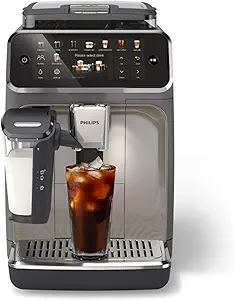 |
| Best Quality Built to a higher standard if you want something more solid | De'Longhi La Specialista Touch |  |
| Best Value The sweet spot between price and what you get | Philips 3200 Series EP3241/54 |  |
| Best Budget The cheapest option that still gets the job done reliably | Hausmojo CM1620 Espresso Machine |  |
| Top Rated A top-rated pick with lots of positive feedback | Tru Automatic Espresso Machine CM-1588 |  |
| Most Popular A crowd favorite that many people choose with confidence | Breville Barista Express BES870XL |  |
| Best Seller A high-volume bestseller chosen again and again | Ninja Luxe Café Premier ES601 |  |
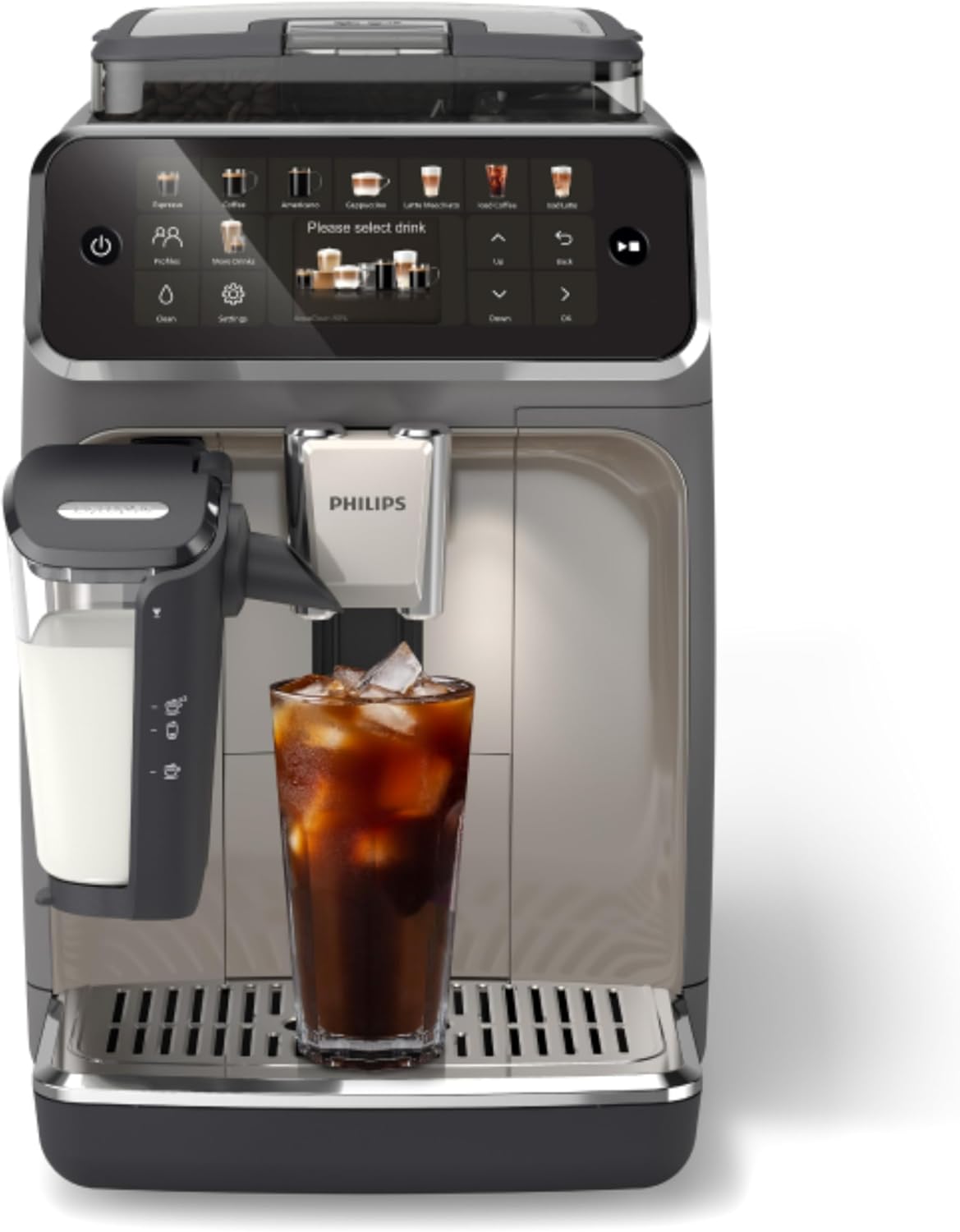
PHILIPS 5500 Series EP5544/94
| Operation Mode | Fully Automatic |
|---|---|
| Output Pressure | 15 bar |
| Coffee Input Type | Ground, Whole Bean |
| Capacity | 1.8 liters |
| Wattage | 1500 watts |
The Philips 5500 Series is a fully automatic bean-to-cup espresso machine that grinds, tamps and brews in a single sequence and delivers up to 20 preset drink options including hot and iced coffees. Typical use is one-touch preparation of espressos, cappuccinos and lattes using whole beans or ground coffee, with an intuitive color display to adjust strength, volume and milk froth and save user profiles. The LatteGo milk system automates steaming and frothing while being easy to clean with just three removable parts, and the built-in ceramic grinder plus 15-bar pump aim to extract consistent flavor. QuickStart gets the unit ready in about three seconds, and Philips reports quieter operation thanks to SilentBrew sound shielding. Trade-offs include a relatively large-capacity water tank and features aimed at convenience rather than manual barista control, so users who want full hands-on espresso technique will find fewer adjustment options. Maintenance like descaling and occasional filter replacement is required to preserve performance over time.
Best for: Buyers who want café-style espresso and milk drinks at home with minimal fuss and reliable daily performance, prioritizing convenience and consistent results over manual brewing techniques.
Less Ideal for: Coffee hobbyists who want hands-on pressure profiling or full manual control over tamping and extraction should look at semi-automatic machines instead.
- One-touch bean-to-cup workflow with 20 presets for hot and iced drinks
- LatteGo milk system produces consistent milk froth and is quick to clean
- Built-in ceramic grinder and 15-bar pump for stable extraction
- QuickStart and SilentBrew reduce wait time and operating noise
- Color display with customizable profiles for repeatable drinks
- Focused on automation so it offers limited manual extraction controls
- Requires routine descaling and filter changes to maintain peak performance
Verdict: If you want fast, consistent café-style drinks with easy cleanup and one-touch convenience, the Philips 5500 delivers a strong bean-to-cup experience.
De'Longhi La Specialista Touch

| Operation Mode | Semi-Automatic |
|---|---|
| Wattage | 1450 watts |
| Human Interface Input | Touchscreen |
| Output Pressure | 9 bar |
| Coffee Input Type | Whole Bean |
The La Specialista Touch is a performance-focused semi-automatic espresso machine that grinds, doses, brews, and froths in a single countertop unit while offering an interactive touchscreen to guide setup and extraction. It is typically used by home baristas who want café-style drinks without full manual guesswork: pick a preset or custom recipe, follow on-screen advice to set grind, dose, pre-infusion and temperature, then let the 15-setting conical burr grinder and 9-bar extraction produce single or double shots. Notable features include automatic milk frothing with five froth levels and four temperature settings, Cold Extraction Technology for quick cold brew, Active Temperature Control with PID, and a comprehensive barista kit with a precision tamper. Practical benefits are consistent, repeatable shots, fast heat-up from the thermoblock, and deep customization saved to bean profiles for different coffees. Limitations are its 9-bar output (typical for consumer machines) rather than commercial pressure systems and a fairly large footprint for smaller kitchens, so it still requires some learning to master manual adjustments despite the guided interface.
Best for: Home users who prioritize shot consistency and control and want an interactive, high-performance bean-to-cup experience without moving to a commercial machine.
Less Ideal for: Buyers seeking a compact, lightweight travel or single-cup pod solution or those who want a fully hands-off super-automatic machine with minimal manual adjustment.
- Integrated 15-setting conical burr grinder for precise, fresh dosing
- Interactive 3.5-inch touchscreen and Bean Adapt guidance to dial in grind, dose, and temperature
- Automatic steam wand with multiple froth levels and temperature settings for consistent microfoam
- Cold Extraction Technology enables fast cold brew-style drinks in minutes
- Includes a full barista kit with precision tamper and accessories for hands-on dialing
- Requires countertop space and is relatively heavy compared with compact machines
- 9-bar output is consumer-grade and not a substitute for commercial high-pressure systems
Verdict: Choose the La Specialista Touch if you want a high-control bean-to-cup machine that combines an adjustable burr grinder, guided touchscreen dialing, and automatic milk frothing for café-quality drinks at home.
Philips 3200 Series EP3241/54

| Operation Mode | Fully Automatic |
|---|---|
| Coffee Input Type | whole_beans |
| Wattage | 1500 watts |
| Filter Type | Reusable |
The Philips 3200 Series EP3241/54 is a user-friendly super-automatic espresso machine that grinds whole beans, brews five drink types, and produces milk-based drinks with the LatteGo two-part milk system. You pick coffee via an intuitive touch display and the built-in 100% ceramic grinder delivers consistent grind size for steady extraction, while the Aroma Extract system balances temperature and aroma for better results. The removable brew group and dishwasher-safe LatteGo parts make cleaning straightforward, and the AquaClean filter cuts down on descaling for up to 5,000 cups when replaced as prompted. It is practical for daily use thanks to straightforward controls and quick drink cycles, but it lacks the advanced customization and barista-level steam wand control of higher-end machines. Also the milk system, while fast and easy to clean, produces good but not latte-art quality microfoam. For buyers focused on convenience and reliable coffee from fresh beans, this delivers strong value under typical home budgets.
Best for: Buyers who prioritize straightforward daily convenience and consistent bean-to-cup coffee without needing advanced barista controls or complex maintenance routines.
Less Ideal for: People who want full manual control for steam-based milk texturing or deep program-level customization of extraction parameters.
- Integrated 100% ceramic grinder for consistent grinding and flavor extraction
- Intuitive touch display makes selecting drinks quick and simple
- LatteGo two-part milk system is easy to clean and dishwasher safe
- AquaClean filter reduces frequency of descaling up to 5,000 cups when replaced
- Milk froth quality is good but not on par with machines that have a manual steam wand
- Limited advanced drink customization compared with higher-end super-automatic models
Verdict: A practical, easy-to-use bean-to-cup machine that delivers consistent espresso and simple milk drinks with minimal upkeep, making it a smart choice for everyday home use under $1,000.
Hausmojo CM1620 Espresso Machine

| Output Pressure | 20 bar |
|---|---|
| Wattage | 1350 watts |
| Operation Mode | Semi-Automatic |
| Coffee Input Type | Ground, Whole Bean |
| Capacity | 3.9 pounds |
The Hausmojo CM1620 combines a 44-setting conical burr grinder and a 20-bar pump into a compact countertop machine designed for home café use. You can grind whole beans directly into the 51mm portafilter, pull single or double shots, and steam milk with the powerful wand for cappuccinos and lattes. The touchscreen IMD display shows grind time, extraction time, and temperature so you can tweak shots, and features like low-pressure pre-infusion and anti-static tech help produce a smoother crema and less mess. Practical extras include a removable 61oz water tank, a stainless steel cup warmer, detachable drip tray, and a full accessory kit with tamper, dosing funnel, and baskets. Expect a learning curve dialing in grind and shot volume and occasional grinder clogging if oily beans or overfilled hoppers are used, but the machine's cleaning access and removable grinder parts keep maintenance manageable. For the price it delivers strong extraction control and barista-style steaming without taking up too much counter space.
Best for: Buyers seeking a full-featured bean-to-cup machine under $1,000 who want hands-on control to produce café-style espresso, lattes, and cappuccinos at home while keeping countertop footprint modest.
Less Ideal for: People who want a fully automatic one-touch machine for push-button specialty drinks or those unwilling to spend time learning grind and shot adjustments.
- Built-in stainless steel conical burr grinder with 44 grind settings for precise control
- 20-bar pump with low-pressure pre-infusion for richer crema and balanced extraction
- Powerful steam wand capable of producing café-style microfoam
- Removable 61oz water tank and detachable drip tray for easier refills and cleaning
- Includes 51mm portafilter kit and accessories for a complete out-of-box setup
- Grinder can clump with oily beans or if the hopper is overfilled
- Semi-automatic operation requires time to learn dialing in grind and shot volumes
Verdict: If you want a compact bean-to-cup espresso machine under $1,000 that combines a precision burr grinder, 20-bar extraction, and a pro-capable steam wand, the CM1620 delivers strong café-style performance for home use.
Tru Automatic Espresso Machine CM-1588

| Operation Mode | Fully Automatic |
|---|---|
| Wattage | 1450 watts |
| Coffee Input Type | Coffee Beans |
| Capacity | 1.5 liters |
| Human Interface Input | Buttons, Dial, Touchscreen |
The Tru CM-1588 is a fully automatic bean-to-cup espresso maker designed to deliver café-style drinks quickly and with minimal fuss. It grinds beans on demand with an integrated burr grinder, uses a 19-bar pump and pulse extraction for concentrated shots, and offers 24 one-touch presets reachable from a 4.5-inch color touchscreen and scroll wheel. A removable milk tank and adjustable brew spout make switching between espressos and milk-based drinks straightforward, and a 1.5 L removable water tank plus programmed rinsing, deep-cleaning, and descaling cycles reduce daily maintenance. Practical benefits include fast drink times—claims of under 60 seconds—fresh grinding for each cup, and a configurable interface that stores customized strength, milk volume, and temperature. Trade-offs are that the unit is relatively heavy and uses plastic and steel construction rather than higher-end materials, and while it includes many automated cleaning routines, some parts still require manual cleaning and occasional descaling for long-term reliability.
Best for: Buyers who prioritize a dependable, low-touch bean-to-cup solution that consistently produces café-style espresso and milk drinks with programmable presets and built-in cleaning routines.
Less Ideal for: Those seeking a compact, ultra-premium metal-bodied machine or users who want fully manual control over every extraction parameter should look elsewhere.
- Integrated burr grinder for fresh grounds on demand
- 19-bar pump with pulse extraction for strong, concentrated shots
- Large touchscreen with 24 programmable presets for quick one-touch drinks
- Removable milk tank and adjustable spout simplify milk-based beverages and cleaning
- Built-in rinsing, deep-cleaning, and descaling cycles reduce routine maintenance
- Contains significant plastic components rather than premium metal finishes
- Machine weight and footprint may be bulky for small counters
- Some components still need regular manual cleaning despite automated cycles
Verdict: A reliable, feature-rich bean-to-cup machine that delivers fast, customizable café-style drinks with built-in maintenance routines.
Breville Barista Express BES870XL

| Wattage | 1600 watts |
|---|---|
| Voltage | 120 |
| Coffee Input Type | whole_beans |
| Filter Type | Reusable |
| Capacity | 1 cups |
The Breville Barista Express BES870XL combines a built-in conical burr grinder with a manual espresso machine to take you from whole beans to a shot in under a minute. Users grind directly into the 54mm portafilter and can adjust grind size and dose with 16 precision settings, while Breville's thermocoil and PID-style temperature control keep brew temperature steady for balanced extraction. The steam wand produces microfoam for textured milk suitable for lattes and cappuccinos, and the package includes a stainless steel portafilter, tamper, razor dose trimming tool and cleaning accessories so you can start practicing espresso techniques immediately. It is a hands-on machine that rewards learning—expect some setup, tamping, and routine cleaning to keep shots consistent. The unit is solidly built in stainless steel and powerful enough to heat quickly, but it is a single-cup machine intended for someone who wants control rather than a push-button, maintenance-free experience.
Best for: Buyers who want a hands-on bean-to-cup machine that delivers café-style espresso and are willing to learn tamping, dosing, and basic maintenance to get consistent results.
Less Ideal for: People who prefer a fully automatic, push-button machine or need high-volume brewing for multiple drinks at once should consider other options.
- Integrated conical burr grinder with 16 grind settings for fresh dosing
- Thermocoil heating and digital temperature control for consistent extraction
- Powerful steam wand capable of creating microfoam for latte art
- Includes essential barista tools (tamper, dose trimming tool, milk jug, cleaning accessories)
- Manual operation requires practice and regular cleaning to maintain shot quality
- Designed for single-cup extraction rather than high-volume use
Verdict: Choose the Barista Express if you want a durable, integrated grinder-to-shot machine that delivers café-quality espresso while keeping you in control of the process.
Ninja Luxe Café Premier ES601

| Operation Mode | Fully Automatic |
|---|---|
| Wattage | 1650 watts |
| Coffee Input Type | Ground, Whole Bean |
| Filter Type | Reusable |
The Ninja Luxe Café Premier ES601 combines a built-in conical burr grinder, weight-based dosing, assisted tamper, and hands-free dual froth system into a single, fully automatic countertop machine designed for everyday home use. It lets you make two espresso shot sizes, three drip styles, and two cold brew styles, and the Barista Assist guidance walks you through grinding, dosing, and milk preparation so beginners get repeatable results. The removable 70 oz water reservoir and onboard accessory storage keep routine use tidy, while the self-cleaning steam wand and dishwasher-safe parts reduce maintenance time. Practical features like 25 grind settings, programmable drink sizes, and reusable filter support flexibility for different beans and drink preferences. The machine is large and relatively heavy, so it needs a dedicated spot on the counter, and it may be more capability than needed for someone who only wants simple drip coffee. Expect some learning to dial in espresso preferences despite the guided prompts and occasional descaling and cleaning tasks like any grinder-equipped machine.
Best for: Buyers who want a single, guided machine that reliably produces café-style espresso, milk drinks, and cold brew at home without needing advanced barista skills.
Less Ideal for: People who only want a compact, no-fuss drip coffee maker or who need a lightweight travel-friendly brewer.
- Built-in conical burr grinder with 25 settings and weight-based dosing for consistent extraction
- Barista Assist guidance plus assisted tamper simplifies espresso setup for beginners
- Hands-free dual froth system and self-cleaning steam wand for reliable milk texture
- 3-in-1 functionality (espresso, drip, rapid cold brew) covers a wide range of drinks
- Removable 70 oz water reservoir and onboard accessory storage improve convenience
- Large, heavy footprint requires a dedicated countertop area
- More complex maintenance than a simple drip brewer due to grinder and steam components
Verdict: If you want an all-in-one, beginner-friendly bean-to-cup machine that makes espresso, drip, and cold brew with guided controls, the Ninja Luxe Café Premier ES601 delivers café-style variety and consistency at home.
Choosing the Right Bean-to-Cup Coffee Maker: Key Factors to Consider
Grinder Type and Adjustability
The grinder is the first link in the bean‑to‑cup chain and often determines the baseline flavor you will get. Burr grinders produce a far more uniform grind than blade grinders, which improves extraction consistency. Look for conical or flat burr designs and several grind settings so you can tune for espresso and longer brews.
Adjustability matters because beans vary in roast and density. Machines with stepless or many stepped settings let you dial in the grind without changing the dose. A high-quality grinder also resists heat buildup and clogging, which reduces flavor degradation and maintenance headaches.
Brewing Temperature and Extraction Control
Stable water temperature and consistent pressure profile are critical for extracting balanced flavor from espresso and short brewed drinks. Machines with reliable boilers or heat-exchange systems maintain shot temperature under repeated use, avoiding sour or bitter pulls.
Controls that let you adjust shot volume, pre-infusion time, or extraction temperature give you leverage to correct for different beans or roast levels. If you plan to prepare milk drinks, a machine that maintains extraction stability while powering steam will produce more consistent results.
Programmability and User Interface
How you interact with the machine affects daily convenience. Simple one-touch presets can save time, while deeper programmability allows you to fine-tune dose, shot length, and drink recipes. A clear display and logical menu structure reduce frustration and speed up routine tasks.
Some machines include smartphone apps or memory slots for multiple user profiles. Consider whether you want quick defaults for guests or precise controls for a dedicated coffee routine. Physical controls are often faster to operate than nested digital menus.
Milk Frothing and Steam Power
If you drink lattes, cappuccinos, or flat whites, milk performance matters nearly as much as shot quality. Built-in steam wands or automatic milk systems should deliver consistent microfoam and strong steam pressure to texture milk quickly.
Automatic milk systems add convenience but require cleaning workflows and can be harder to service. Traditional steam wands offer more control for skilled users and are usually easier to maintain because they are accessible and robust.
Maintenance and Ease of Cleaning
Regular maintenance keeps flavor consistent and extends the machine's life. Look for accessible brew groups, removable drip trays, and straightforward descaling and cleaning cycles. Machines that require tools or partial disassembly for basic cleaning will increase the time you spend on upkeep.
Replaceable parts like water filters and seals should be easy to source and swap. Consider how the milk system cleans itself and whether the machine provides alerts for required maintenance tasks to avoid neglect that harms performance.
Capacity and Kitchen Fit
Tank and bean hopper size influence how often you refill the machine. If you prepare multiple drinks per day, larger capacities reduce interruptions. Also consider the machine's footprint and clearances for cup height; tall travel mugs need extra headroom.
Noise and power draw are practical concerns for open kitchens or early‑morning routines. A compact machine with efficient component layout may be preferable if counter space or noise is a constraint.
How to Match a Machine to Your Daily Routine
Start by mapping your morning and daytime coffee habits. If you primarily pull one or two espressos and rarely steam milk, prioritize grinder quality and temperature stability. If you make multiple milk drinks daily, prioritize steam power and an easy‑to‑clean milk system.
Also consider who will use the machine. For households with multiple users, machines with programmable profiles or simple presets reduce friction. Solo users who enjoy tweaking shots might prefer a model with more manual controls even within an automatic bean‑to‑cup framework.
- Single-serve espresso focus: prioritize grinder consistency and shot programmability.
- Multiple drinks and entertaining: favor capacity and fast heating.
- Hands-on hobbyists: look for adjustable pre-infusion and extraction parameters.
Daily Maintenance: A Realistic Routine
Plan for small daily tasks that keep flavors fresh. Emptying the drip tray, wiping milk lines after every use, and rinsing removable parts takes a few minutes but prevents buildup. Machines with automatic rinses or quick-clean cycles reduce manual effort.
Weekly and monthly chores—like descaling, deep cleaning the brew group, and replacing water filters—should fit your schedule. Choose a machine whose maintenance cadence matches how much time you are willing to invest.
- Daily: purge/steam wand wipe, drip tray emptying, quick rinse of milk circuit.
- Weekly: clean brew group and bean hopper area.
- Monthly: descaling or cycle cleaning depending on water hardness.
Water Quality and Its Impact on Flavor
Water composition alters extraction and machine longevity. Hard water accelerates scale formation and can blunt flavor. Many machines accept inline water filters to soften and remove minerals, which improves both taste and maintenance intervals.
If your water is very hard, factor in the replacement cost and installation of filters. Even moderate filtration improves consistency across shots and reduces the frequency of descaling cycles.
- Test local water hardness and follow manufacturer guidance for descaling frequency.
- Consider in‑machine filters to protect boilers and improve taste.
- Use fresh filtered water for every brew for best flavor consistency.
Space, Noise, and Kitchen Practicalities
Bean‑to‑cup machines vary in footprint and acoustic profile. Some models have larger footprints to accommodate bigger boilers and milk reservoirs, while compact units trade capacity for a smaller counter presence. Measure your available space and account for ventilation and door clearance.
Noise during grinding and steaming is unavoidable, but levels differ. If you need quiet operation early in the morning, look for machines with insulated grinders or lower-RPM burrs, and plan location away from sleeping areas.
- Measure counter depth and allow space for bean hopper and water tank access.
- Locate the machine on a sturdy surface to reduce vibration noise.
- If noise is a concern, opt for lower RPM grinders and insulated construction.
When to Choose an Automatic Milk System Vs. Steam Wand
Automatic milk systems are ideal if you prefer speed and repeatability. They deliver consistent texture with minimal skill and often integrate automatic cleaning cycles. However, they add complexity and can be harder to troubleshoot if something goes wrong.
Steam wands are preferred by users who want hands‑on control and easier long‑term serviceability. A conventional wand requires technique but rewards you with tailored microfoam and simpler maintenance workflows.
- Choose automatic milk systems for fast, repeatable drinks.
- Choose steam wands for manual control and simpler servicing.
- Factor in cleaning time and access to replacement parts for either option.
How We Chose the Best Bean-to-Cup Coffee Maker
We focused on machines designed to grind, dose, tamp, and brew automatically from whole beans while staying under the stated budget cap. Editorial filters prioritized consistent extraction, grinder performance, and serviceability because those dimensions most affect drink quality and ownership experience. We also weighed interface clarity and programmability since many buyers want repeatable, one-touch drinks without manual recipe adjustments. Concrete evaluation criteria included grinder type and adjustment range, boiler and temperature stability, programmability and shot control, and ease of cleaning and daily maintenance. We excluded manual espresso machines, single-purpose bean grinders, and machines that require a separate external grinder. Machines lacking accessible cleaning paths or with limited grind settings were deprioritized. The final list balances real-world usability, longevity of core components, and measurable features that influence flavor and upkeep.
Our full evaluation process is outlined in our review methodology.
FAQ
How often should I descale a bean-to-cup machine?
Descale frequency depends on local water hardness and machine usage. For moderate use with unfiltered water, expect to descale every 2 to 3 months; with a water filter or soft water, you may only need to descale every 4 to 6 months.
Can a bean-to-cup machine make both espresso and drip-style coffee?
Many bean-to-cup machines offer adjustable brew volumes and strength settings that let you prepare shorter espresso-style shots and longer brewed drinks. The flavor profile will differ from a dedicated drip brewer, but a well-configured machine can cover both needs.
Is an automatic milk system harder to maintain than a steam wand?
Automatic milk systems require regular cleaning cycles and periodic disassembly of milk lines, which can be more time-consuming than wiping a steam wand after each use. Steam wands need technique but are typically easier to clean and repair.
What grind setting should I use for bean-to-cup espresso?
Start with a fine but not powdery setting and adjust based on shot time and taste. If the shot pulls too quickly and tastes weak, move finer; if it pulls very slowly and tastes bitter, move coarser. Make small adjustments and test over several shots.
Will a machine under $1,000 hold up for years of daily use?
Machines under the budget cap can be durable if you prioritize robust components like quality burrs, solid steam systems, and accessible service parts. Regular maintenance and proper water care are essential to ensure long-term reliability.
Final Verdict
Choosing the right bean-to-cup coffee maker under $1,000 means balancing grinder quality, extraction stability, and maintenance demands against your daily routine. If you value hands-off convenience, prioritize programmable machines with reliable automatic milk systems and easy-clean paths. If you prefer control and simpler servicing, favor machines with high-quality burrs and a conventional steam wand. Ultimately, focus on the few criteria that matter most to your workflow—grinder performance, temperature stability, and milk system type—and accept the tradeoffs in capacity or menu depth. That approach will help you pick a machine that delivers consistent, café-level results at home while fitting your lifestyle and upkeep willingness.