
Note: This article contains affiliate links. If you click on these links and make a purchase, we may earn a small commission at no extra cost to you. This helps support our research and content. Read our full affiliate disclosure here.
If you want café-style espresso drinks without a separate grinder or complicated setup, a bean-to-cup coffee maker with milk frother streamlines the whole process. These machines grind, dose, brew, and texture milk in one workflow so you get fresher cups and faster turnaround during morning routines or when entertaining. This guide shortlists the top picks for home use, focusing on consistent shot extraction, dependable frothing performance, and ease of cleaning and upkeep. Below you will find our top selections and the criteria we used to evaluate them, followed by practical buying guidance to help you pick the right unit for your kitchen and routine.
Top Picks at a Glance
| Best Overall The best all-around choice for most situations | Philips 5500 Series EP5544/94 | 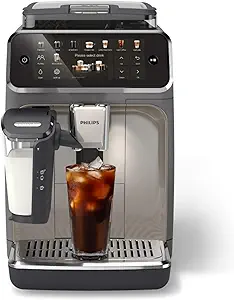 |
| Best Quality Built to a higher standard if you want something more solid | Bosch 800 Series VeroCafe |  |
| Top Rated A top-rated pick with lots of positive feedback | Philips 3200 Series EP3241/54 |  |
| Most Popular A crowd favorite that many people choose with confidence | AMZCHEF Espresso Machine CM1626 |  |
| Best Seller A high-volume bestseller chosen again and again | Ninja Luxe Café Premier ES601 |  |
Philips 5500 Series EP5544/94
| Operation Mode | Fully Automatic |
|---|---|
| Output Pressure | 15 bar |
| Coffee Input Type | Ground, Whole Bean |
| Capacity | 1.8 liters |
| Wattage | 1500 watts |
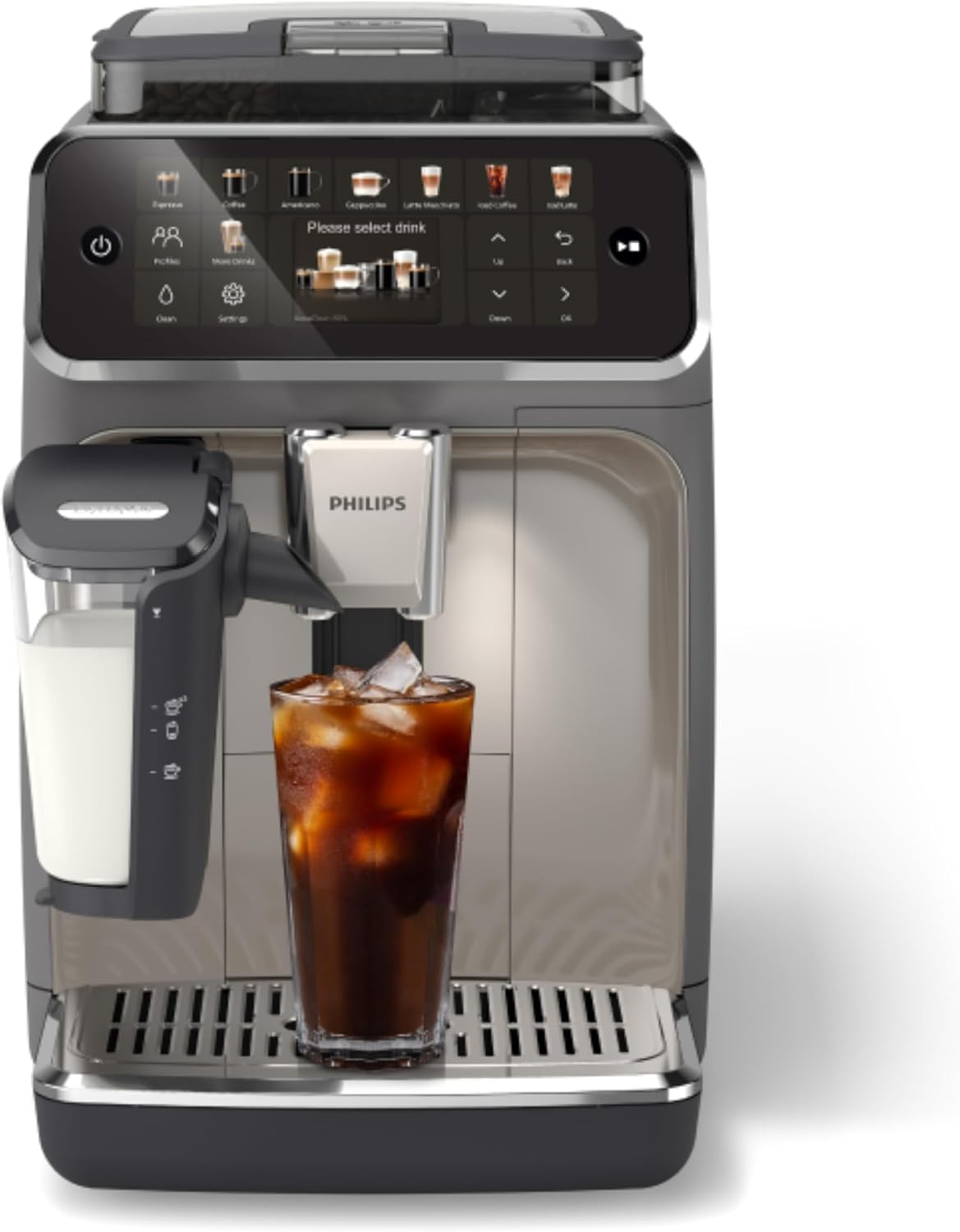
The Philips 5500 Series EP5544/94 is a fully automatic bean-to-cup espresso machine that grinds, tamps and brews at the push of a button to produce espressos, lattes, cappuccinos and iced coffee. It uses a built-in ceramic grinder and a 15-bar pump for consistent extraction, and the LatteGo milk system steams and froths milk automatically while remaining easy to rinse or put in the dishwasher. The color touchscreen and 20 presets let you customize strength, volume and milk level and save user profiles, while QuickStart brings the machine ready to brew in about three seconds. SilentBrew sound shielding keeps operation noticeably quieter than older models. Practical benefits include fast single-button drinks, low-maintenance milk cleaning and long intervals between descaling with the AquaClean filter. Limitations are the learning curve for dialing in exact brew parameters and the footprint and voltage requirement that may be more than casual users need for occasional coffee makers.
Best for: Buyers who want a reliable, everyday automatic espresso maker that delivers café-style milk drinks with minimal daily effort and easy cleaning.
Less Ideal for: If you only make occasional single espressos or need a compact low-voltage appliance for small kitchens, a simpler or smaller machine would be a better choice.
- One-touch bean-to-cup workflow with built-in ceramic grinder for fresh grounds
- LatteGo milk system produces consistent froth and is quick to clean or dishwasher-safe
- 20 presets and adjustable strength/volume let you personalize drinks and save profiles
- QuickStart and SilentBrew make the machine fast to use and quieter than previous models
- AquaClean filter reduces frequency of descaling up to the manufacturer-stated interval
- Requires some initial tweaking to dial in preferred grind and strength settings
- Larger footprint and 230V voltage specification may limit placement in some kitchens
Verdict: Choose this machine if you want a fast, quiet bean-to-cup espresso maker that simplifies cafe-style milk drinks with an easy-to-clean LatteGo system.
Bosch 800 Series VeroCafe

| Operation Mode | Fully Automatic |
|---|---|
| Wattage | 1600 watts |
| Human Interface Input | Touchscreen |
| Coffee Input Type | beans |
| Filter Type | Reusable |
The Bosch 800 Series VeroCafe is a high-end fully automatic bean-to-cup espresso and coffee machine built to deliver a wide variety of café-style drinks with minimal fuss. It grinds fresh beans, meters water and temperature with the Aroma Max System, and lets you customize strength, size, aroma and milk ratio from a bright 5-inch Active Select touchscreen or the Home Connect app. The integrated milk container and Milk Express Comfort simplify cappuccinos and lattes without a separate frother, and double-cup brewing plus a cup warmer make it convenient for entertaining. Guided maintenance features like Calc'n Clean and a reusable filter reduce upkeep time, but the machine is large and weighs significantly, so it needs a dedicated counter spot. It also requires some familiarity with automatic espresso machines to fully exploit the customization options. For a performance-oriented buyer who wants consistent, barista-style drinks and remote control, this machine delivers a rich feature set and reliable daily operation.
Best for: Serious home coffee drinkers who prioritize drink quality and customization and want a bean-to-cup machine that produces café-style milk drinks with remote control and saved profiles.
Less Ideal for: Casual users who prefer a compact, no-frills brewer or those who want the simplest possible, hands-off single-button machine.
- Integrated milk container for one-touch milk drinks without an external frother
- Active Select 5-inch touchscreen plus Home Connect app for remote control and saved profiles
- Aroma Max grinding and brewing system for consistent extraction across many beverage types
- Double-cup brewing and cup warmer make it convenient for serving multiple drinks
- Large and heavy footprint requires significant counter space
- Complex feature set has a learning curve to access full customization
Verdict: If you want a feature-rich bean-to-cup machine that consistently makes barista-style milk drinks and lets you save personalized profiles, the Bosch 800 Series is a strong performance choice.
Philips 3200 Series EP3241/54

| Operation Mode | Fully Automatic |
|---|---|
| Coffee Input Type | whole_beans |
| Wattage | 1500 watts |
| Filter Type | Reusable |
| Included Components | LatteGo storage lid |
The Philips 3200 Series EP3241/54 is a fully automatic espresso machine that grinds whole beans, brews espresso-based drinks, and produces milk froth with its LatteGo two-part milk system. It is designed for everyday home use: select a drink on the intuitive touch display, and the machine grinds, tamps, brews, and dispenses either coffee or milk-based beverages with minimal steps. The ceramic grinder offers consistent, durable grinding that helps preserve flavor over time, while the AquaClean filter reduces descaling frequency for extended maintenance intervals. The LatteGo unit has no tubes and is quick to rinse or dishwasher-safe, which keeps cleaning simple compared with multi-part milk assemblies. Trade-offs include a mostly plastic exterior and a relatively compact bean capacity, so heavy commercial use or very large households may need more volume. The machine focuses on convenience and reliability rather than advanced customization for pro baristas, making it suitable for those who want consistent daily café-style drinks with straightforward upkeep.
Best for: Buyers who prioritize a reliable, low-maintenance daily coffee routine and want one-touch preparation of espresso and milk drinks without complex cleaning routines.
Less Ideal for: People seeking pro-level customization, metal-heavy construction, or machines sized for heavy commercial use should consider higher-end or commercial models instead.
- Fully automatic workflow from whole beans to cup for espresso, americano, and milk drinks
- 100% ceramic grinder for consistent grinding and long-term durability
- LatteGo two-part milk system with no tubes for fast, hygienic cleaning
- AquaClean water filter that extends time between descaling cycles
- Intuitive touch display makes drink selection and personalization simple
- Plastic exterior rather than metal may feel less premium
- Bean capacity and water tank size may be limiting for very high daily volumes
Verdict: Choose the Philips 3200 Series EP3241/54 if you want a dependable, easy-to-clean bean-to-cup machine that delivers consistent espresso and milk drinks with minimal upkeep.
AMZCHEF Espresso Machine CM1626

| Operation Mode | Semi-Automatic |
|---|---|
| Wattage | 1500 watts |
| Coffee Input Type | whole bean |
| Capacity | 3.9 pounds |
The AMZCHEF CM1626 combines a 44-step built-in grinder, precise temperature control, and a steam wand into a compact semi-automatic espresso machine intended for home use. It grinds whole beans on demand and lets you adjust grind fineness across many settings while the temperature range (190°F–201°F) helps dial in extraction for different roast profiles. A one-touch cold brew mode and an HD touch display simplify operation, and the 60 oz removable water tank reduces refills for multiple servings. The stainless steel steam wand and 1350W heating system deliver strong steam for microfoam suitable for lattes and cappuccinos, and a descaling function and removable tank make routine maintenance easier. Trade-offs include the learning curve common to semi-automatic machines and the need to clean grinder and portafilter regularly to avoid clogs; users who want fully automatic push-button convenience or integrated milk systems may prefer a different class of machine. For home baristas who want control over grind and temperature without occupying a large counter footprint, this machine offers a lot of capability for the category.
Best for: Buyers who value control over grind and brew variables and want a single machine that handles beans, temperature tuning, and milk frothing for café-style drinks at home.
Less Ideal for: People who want a fully automatic, no-skill machine with integrated automatic milk systems or users who prefer minimal maintenance and fully hands-off brewing.
- Built-in grinder with 44 grind settings for precise dose and grind control
- Programmable temperature control (190°F–201°F) for better extraction
- Powerful steam wand and 1350W heating system for fast microfoam
- 60 oz removable water tank reduces frequent refills and is easy to reinstall
- Touchscreen one-touch modes including a cold brew option and descaling assist
- Semi-automatic operation requires manual tamping and some technique to consistently hit optimal shots
- Grinder and brew path need regular cleaning to prevent clogs and maintenance issues
Verdict: Choose this machine if you want a compact bean-to-cup unit that pairs a fine-grind adjustable grinder with precise temperature control and a steam wand for true home barista flexibility.
Ninja Luxe Café Premier ES601

| Operation Mode | Fully Automatic |
|---|---|
| Wattage | 1650 watts |
| Coffee Input Type | Ground, Whole Bean |
| Filter Type | Reusable |
The Ninja Luxe Café Premier ES601 is a guided, fully automatic coffee system that aims to simplify café-style drinks at home by combining grinding, dosing, tamping, brewing, and frothing into one machine. Use it for espresso shots, tamped double or quad servings, single-cup to multi-cup drip coffee, and a rapid cold-press style cold brew; the machine offers weight-based dosing, a 25-setting conical burr grinder, and two cold-brew options. Barista Assist walks users through steps and the assisted tamper plus self-cleaning steam wand reduce technique required for good results, while the dual froth system (magnetic whisk plus automatic steamer) makes hands-free microfoam for lattes and cappuccinos. The 70 oz removable water reservoir and included accessories cover routine setup and maintenance. Limitations include sizable footprint and weight for smaller counters and the complexity of 25 grind settings may be overkill for casual coffee drinkers, plus a higher wattage electrical draw. Beginners and busy households will appreciate the guided automation but serious pros who want full manual control may find some constraints.
Best for: Buyers who want a low-risk, guided bean-to-cup solution that delivers café-style espresso, milk drinks, and cold brew without needing barista training.
Less Ideal for: If you need a compact single-purpose machine or want full manual control over every extraction variable, this comprehensive all-in-one model is not the best fit.
- All-in-one setup combines bean grinding, weight-based dosing, tamping assistance, brewing, and hands-free frothing
- Barista Assist guides users through shots and drink selection, reducing user error
- Built-in conical burr grinder with 25 settings for precise grind control
- Self-cleaning steam wand and included cleaning tools simplify maintenance
- Multiple brew modes: espresso (double/quad), drip (single cup to 18 oz pitcher), and rapid cold brew
- Large and relatively heavy so it requires substantial counter space
- Many settings and features add complexity for users seeking a simple coffee maker
- High wattage may be a consideration on limited circuits
Verdict: A safe, all-in-one bean-to-cup machine that guides you through grinding, dosing, tamping, and frothing to produce consistent café-style drinks with minimal skill.
Choosing the Right Bean-to-Cup Coffee Maker with Milk Frother: Key Factors to Consider
Grind-to-Cup Consistency
Freshly ground beans are central to espresso quality. A bean-to-cup machine should have a grinder with multiple settings and consistent dosing so that grind size and dose remain stable across shots. Variations in grind or uneven dosing lead to sour or bitter extractions, so look for machines that allow you to fine-tune the grind and offer stable bean feed and dosing mechanisms.
For everyday use, consistency reduces trial-and-error and means you spend less time adjusting settings. If you often switch bean types, consider a grinder with stepless adjustment or a wider range of settings to accommodate different roast levels.
Milk Frother Performance
Milk texture determines how closely home drinks resemble café beverages. Integrated frothers vary from automatic milk systems to manual steam wands; each approach affects control and cleaning. Automatic frothers are convenient for repeatable microfoam but can be harder to clean, while manual steam wands offer more control for latte art but require more technique.
Assess frother power, ability to produce dense microfoam, and temperature control. Machines that let you adjust froth level or temperature help tailor drinks for different milk types, including alternatives like oat or almond milk, which behave differently under steam.
Cleaning and Maintenance
Regular cleaning is essential for flavor and machine longevity. Consider how easy it is to access the brew group, whether parts are removable and dishwasher-safe, and how the machine handles milk-system cleaning. Automated descaling and milk-cleaning cycles reduce routine effort, but you should still expect periodic manual cleaning of milk lines and the drip tray.
Check the clarity of maintenance indicators and the availability of replaceable filters. A machine that simplifies daily and monthly upkeep will deliver better long-term value through consistent performance and fewer service issues.
Programmability and Controls
How you interact with the machine affects convenience and customization. Look for clear controls that let you adjust shot volume, strength, and milk settings. Preset drink options are useful for quick preparation, but the ability to save user profiles or modify parameters per drink is valuable for households with different preferences.
Touchscreens and smartphone apps can add convenience, but simple, reliable physical controls often last longer and are easier to operate under steam or with milk-splattered hands.
Capacity and Throughput
Consider hopper size, water reservoir capacity, and how many drinks you typically prepare between refills. Larger hoppers and reservoirs reduce refill frequency when you brew multiple drinks for guests, while compact tanks make sense in smaller kitchens. Also check heat-up time and how quickly the machine can alternate between brewing and steaming without long waits.
For frequent entertaining, prioritize higher throughput and an easy way to monitor and refill consumables. For solo or couple use, smaller capacity can save counter space while still providing high-quality drinks.
Serviceability and Longevity
Durable components and easy serviceability limit downtime and repair costs. Machines with accessible service panels, user-replaceable parts, and clear maintenance guides are preferable. Consider warranty terms and the availability of customer support when evaluating long-term ownership.
Good long-term performance also depends on materials used in critical areas like the grinder burrs and pump. Metal burrs and robust pumps typically last longer than basic alternatives, reducing the chance of performance degradation over time.
Automatic Milk Systems Versus Steam Wands
Integrated milk systems simplify one-touch drinks by drawing milk from a container and texturing it automatically. They excel at repeatability and speed, making them ideal for users who want consistent cappuccinos and lattes without mastering steaming technique.
Manual steam wands put control in your hands and are favored by users who want to shape microfoam for latte art or adjust froth density on the fly. They require more practice but offer finer control and simpler cleaning in many cases.
When choosing, weigh convenience against control. If you value simplicity and predictable results, an automatic milk system is attractive. If you want full steaming control and easier servicing of the milk path, a manual steam wand may be the better fit.
- Automatic systems: faster, consistent, often closed-loop milk lines
- Steam wands: more control, manual technique needed, typically easier to purge and inspect
- Think about how often you make milk-based drinks and whether you prefer convenience or hands-on control
Water and Bean Storage Practicalities
Water quality and storage affect flavor and maintenance. Machines with integrated water filters reduce mineral buildup and improve taste, but filters need replacement on a schedule. Consider how easy it is to top up the water reservoir and whether the tank is removable for filling at the sink.
Bean hopper design matters for freshness and convenience. A resealable, opaque hopper slows oxidation and helps preserve flavor. Check whether the hopper is easy to access for refilling and whether it limits bean size or oiliness, which can affect grind performance.
- Removable water tanks simplify refills and cleaning
- Integrated water filters can extend intervals between descaling
- Larger hoppers reduce refill frequency but can slightly hasten bean freshness loss
Noise, Speed, and Morning Routines
Grinding and steaming produce noise. If you have early risers or shared spaces, consider a machine with a quieter grinder or programmable pre-schedule brewing. Heat-up time and the speed of the grinder-to-shot cycle determine how quickly you can get a drink in the morning.
Some machines include pre-infusion or bypass options to shorten wait time. Balance speed against the desired extraction quality; very fast cycles can be convenient but may need tuning to hit the right flavor profile.
- Look for quick heat-up times if you need coffee fast
- Quieter grinders use reduced RPM or sound-dampening housings
- Programmable schedules allow ready-made drinks when you wake up
Milk Alternatives and Temperature Control
Non-dairy milks behave differently when frothed. Oat and barista-specific alternatives can produce good microfoam, while lower-fat or thinner plant milks may be more challenging. Machines that allow temperature and froth-level adjustments make it easier to optimize performance for alternative milks.
If you often prepare cold or iced milk drinks, check whether the machine supports cold frothing or adjustable steam intensity. Some systems can introduce too much heat for delicate milk alternatives, so temperature control is a real advantage.
- Adjustable froth and temperature settings help with non-dairy milks
- Cold milk options are useful for iced lattes and cold foam
- Test milk settings with your preferred milk type before settling on a routine
Placement, Counter Footprint, and Ventilation
Bean-to-cup machines with integrated milk systems can be tall or deep. Measure counter clearance under cabinets and leave room behind the unit for reservoir access. Also plan for ventilation space around the machine, especially if it expels steam or requires airflow for the grinder motor.
Consider proximity to a water source and electrical outlet. A stable, level surface reduces vibration noise and helps ensure consistent grind and extraction.
- Measure cabinet clearance before buying
- Allow rear clearance for removable tanks and service access
- Place the machine near a sink for easier cleaning and refilling
How We Chose the Best Bean-to-Cup Coffee Maker with Milk Frother
We prioritized features and performance that most affect everyday satisfaction with a bean-to-cup coffee maker with integrated milk frother. Key evaluation criteria included grind-to-cup consistency, milk frother capability and texture control, ease of cleaning and maintenance, programmable drink options and controls, and build quality and reliability. We also considered water and bean hopper capacity for practical household throughput and heat-up time for typical morning use. To keep the list broadly useful, we excluded machines that require separate grinders or external steam wands and models that lack adjustable grind or dose settings. Units with poor user-serviceability or unusually complex cleaning demands were filtered out. The final selections represent machines that balance reliable espresso extraction with repeatable milk steaming, reasonable daily upkeep, and flexible drink programming suitable for most home users.
Our full evaluation process is outlined in our review methodology.
FAQ
How often do I need to descale a bean-to-cup machine with a milk frother?
Descaling frequency depends on water hardness and usage but often ranges from every 1 to 3 months. Machines with water filters or automatic descaling reminders can extend intervals, but regular cleaning of the milk system should be performed more frequently.
Can I use plant-based milk in these machines?
Yes, many bean-to-cup machines handle plant milks, but results vary by milk type. Barista-style oat or soy alternatives usually froth best; you may need to adjust temperature and froth settings for other milk alternatives.
Is a manual steam wand better than an automatic milk system?
It depends on your priorities. Steam wands offer more control and are preferred for latte art, while automatic systems provide consistent, one-touch frothing. The trade-off is convenience versus hands-on control and ease of servicing.
How long does it take to get a cup from beans to finished drink?
Most machines take 30 seconds to 2 minutes from grind to shot once heated, with additional time for frothing. Heat-up times and cycle speed vary, so units designed for faster throughput will get you to a finished drink more quickly.
What routine cleaning should I expect with an integrated milk frother?
Daily cleaning usually involves rinsing or running an automatic milk-cleaning cycle and emptying the drip tray. Weekly tasks can include cleaning removable milk parts and the brew group. Follow the manufacturer maintenance prompts to avoid buildup and off flavors.
Final Verdict
Choosing the right bean-to-cup coffee maker with milk frother means balancing convenience, control, and upkeep. Prioritize consistent grind and extraction if you value espresso quality, and choose the frothing system that matches your comfort with steaming and desired drink variety. Consider capacity, cleaning requirements, and whether programmability matters for daily routines. Ultimately, pick the machine that fits how you use milk-based drinks most often. If you want hands-off, repeatable results, favor an automatic milk system. If you prefer craft and control, prioritize a machine with a capable steam wand and adjustable settings.