
Note: This article contains affiliate links. If you click on these links and make a purchase, we may earn a small commission at no extra cost to you. This helps support our research and content. Read our full affiliate disclosure here.
If you want café-style drinks at home without a complex setup, a bean-to-cup coffee maker with automatic milk frother can save time and deliver consistent results. These machines grind whole beans, dose and tamp, brew espresso, and steam or froth milk automatically so you get lattes, cappuccinos, and flat whites with minimal skill. This guide highlights five shortlisted options that stood out for steady extraction, milk-texture control, ease of cleaning, and reliability. Below we explain the evaluation criteria and what matters when choosing one of these machines, then walk through user-focused notes to help you pick the right fit for your kitchen and routine.
Top Picks at a Glance
| Best Overall The best all-around choice for most situations | De'Longhi Magnifica Evo ECAM29084SB |  |
| Best Quality Built to a higher standard if you want something more solid | De'Longhi Rivelia EXAM44055G |  |
| Top Rated A top-rated pick with lots of positive feedback | Philips 3200 Series EP3241/54 |  |
| Most Popular A crowd favorite that many people choose with confidence | PHILIPS 3300 Series EP3341/50 |  |
| Best Seller A high-volume bestseller chosen again and again | Ninja Luxe Café Premier ES601 |  |
De'Longhi Magnifica Evo ECAM29084SB
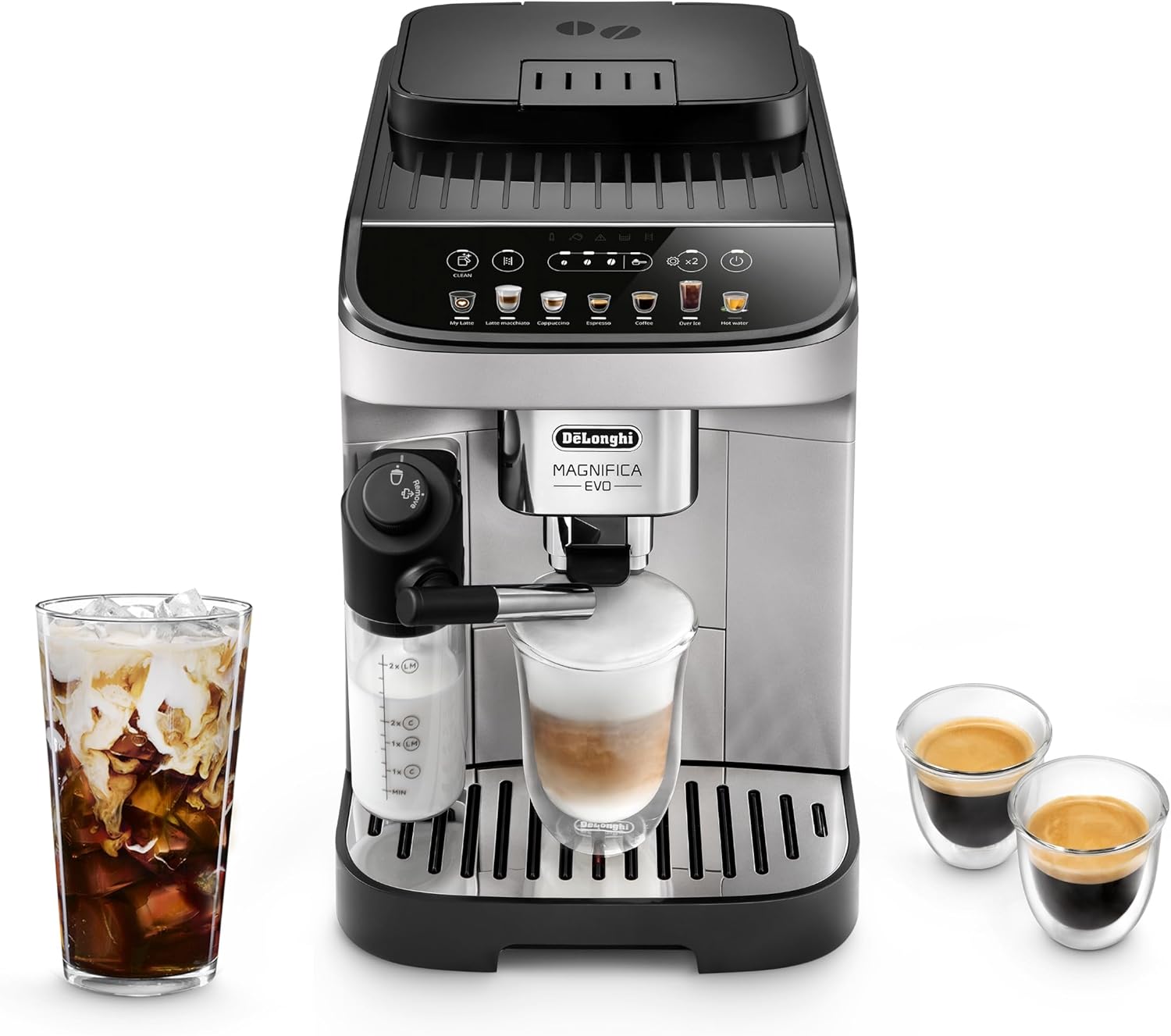
| Operation Mode | Fully Automatic |
|---|---|
| Output Pressure | 15 bar |
| Wattage | 1250 watts |
| Coffee Input Type | Whole Bean |
| Capacity | 60 fluid ounces |
The De'Longhi Magnifica Evo is a countertop super-automatic espresso machine that grinds, doses, brews, and textures milk with minimal user effort. It offers seven one-touch recipes including espresso, cappuccino, latte macchiato and an over-ice option, plus a My Latte setting to save custom drink profiles. The integrated conical burr grinder has multiple grind settings to suit different beans, and the LatteCrema System produces consistent, long-lasting milk foam and can be stored in the fridge when not in use. A color touch interface and user profiles make daily operation straightforward, while removable parts and an auto-clean function simplify upkeep. Practical limitations include its relatively large footprint for smaller counters and the need for periodic descaling and cleaning like any super-automatic unit. The machine is best suited to users who want cafe-style drinks at home without manual steaming or separate grinders, but it requires routine maintenance to keep flavor and frothing performance optimal.
Best for: Home buyers who want a true bean-to-cup experience and easy one-touch specialty drinks without learning manual steaming, and who value programmable profiles and consistent results.
Less Ideal for: Those who prefer compact single-serve machines, manual espresso workflow, or want a lower-maintenance drip-style brewer for high-volume coffee service.
- One-touch recipes including espresso, cappuccino, latte macchiato and iced coffee for quick specialty drinks
- Built-in conical burr grinder with multiple grind settings for fresh, consistent dosing
- LatteCrema automatic milk system that textures milk and milk alternatives for stable foam
- Color touchscreen and user profiles let multiple users save personalized drink settings
- Removable dishwasher-safe components and auto-clean features simplify maintenance
- Requires regular descaling and cleaning to maintain performance
- Large footprint may be unsuitable for very small countertops
- Milk tank limits continuous brewing for high-volume use without refilling
Verdict: Buy this if you want a true all-in-one bean-to-cup machine that grinds and auto-froths one-touch espresso beverages with programmable personalization.
De'Longhi Rivelia EXAM44055G

| Operation Mode | Fully Automatic |
|---|---|
| Wattage | 1450 watts |
| Coffee Input Type | Whole Bean |
| Capacity | 47 fluid ounces |
| Human Interface Input | Touchscreen |
The De'Longhi Rivelia is a high-end fully automatic espresso machine designed to deliver café-style drinks with minimal effort. It grinds whole beans on demand using a 13-setting conical burr grinder, then doses, brews, and froths milk with the one-touch LatteCrema Hot system to produce lattes, cappuccinos, americanos, and iced coffees from an 18-recipe menu. Two interchangeable 8.8 oz bean hoppers let you switch between bean types mid-day, while Bean Adapt technology guides you to the best grind, dose, and temperature and saves preferences for up to four user profiles on the 3.5-inch touchscreen. Practical touches include a removable water tank, auto-clean for the milk carafe, and a reusable filter. The machine is powerful and intuitive, making consistent specialty drinks quickly, but it is large and assumes regular maintenance like descaling and cleaning the milk system to keep performance optimal. It is best for buyers who prioritize drink quality and customization and are comfortable with a premium countertop appliance that requires routine upkeep.
Best for: Buyers who want café-quality, highly customizable bean-to-cup drinks at home and value automatic milk frothing and saved profiles over minimal maintenance.
Less Ideal for: Casual coffee drinkers who prefer a simpler machine with less upkeep or those with very limited counter space.
- Integrated 13-setting grinder for fresh, adjustable grinding on every brew
- Two removable bean hoppers for easy switching between bean types
- One-touch LatteCrema Hot automatic milk frother with auto-clean
- Saves up to four user profiles and guides Bean Adapt settings for consistent extraction
- Large menu of 18+ one-touch recipes for hot and cold drinks
- Requires regular cleaning and descaling to maintain milk and extraction performance
- Relatively large footprint that may not suit very small kitchens
Verdict: Choose the Rivelia if you want a powerful, one-touch bean-to-cup machine with dual hoppers and automatic milk frothing for consistent café-style drinks at home.
Philips 3200 Series EP3241/54

| Operation Mode | Fully Automatic |
|---|---|
| Coffee Input Type | whole_beans |
| Wattage | 1500 watts |
| Filter Type | Reusable |
The Philips 3200 Series EP3241/54 is a fully automatic espresso machine designed to make espresso, americano, cappuccino and latte macchiato from whole beans with minimal fuss. It grinds beans with a 100% ceramic grinder, brews using the Aroma Extract system to balance temperature and flavor, and dispenses milk through the two-piece LatteGo system that has no tubing and rinses clean quickly. Daily use is straightforward thanks to the intuitive touch display and one-touch drink selection, and the removable brew group plus reusable filter simplify maintenance. The AquaClean water filter option reduces the need for descaling up to 5,000 cups when changed as directed. Practical limitations are that the machine is a countertop appliance with a plastic exterior and requires periodic cleaning of the milk system and brew group to maintain performance, and advanced users seeking granular pressure profiling or commercial-grade steam will find its capabilities more consumer oriented than pro-level.
Best for: Buyers who prioritize dependable, low-maintenance daily coffee from fresh beans and want an easy automatic milk system for consistent cappuccinos and lattes.
Less Ideal for: Those who need a pro-level machine with manual steam wand control, precise pressure profiling, or metal-heavy construction should look elsewhere.
- Integrated 100% ceramic grinder for consistent, even grinding and long wear
- LatteGo two-part milk system that cleans quickly and has no internal tubing
- Intuitive touch display with one-touch selection for five coffee varieties
- AquaClean filter option that extends time between descaling up to 5,000 cups
- Removable brew group for easy rinsing and routine maintenance
- Plastic exterior instead of metal limits perceived durability for some buyers
- Not equipped with commercial-style steam wand or advanced manual pressure controls
Verdict: A reliable, easy-to-maintain bean-to-cup machine that delivers consistent coffee and fast, hygienic automatic milk frothing for everyday home use.
PHILIPS 3300 Series EP3341/50

| Operation Mode | Fully Automatic |
|---|---|
| Output Pressure | 15 bar |
| Coffee Input Type | whole bean |
| Capacity | 1.8 liters |
| Wattage | 1500 watts |
The Philips 3300 Series EP3341/50 is a bean-to-cup super-automatic espresso machine built to deliver café-style drinks at home with minimal fuss. It automatically grinds whole beans, tamps and brews under 15 bar pressure, and offers six one-touch presets for espresso, coffee, iced coffee, cappuccino, latte macchiato and hot water. The detachable LatteGo milk system produces smooth milk froth and is designed for very quick cleaning since it has only three parts and no internal tubing; the unit also supports AquaClean filtration to reduce the need for descaling. A color touchscreen makes customizing strength, volume and temperature straightforward, and SilentBrew technology reduces operating noise compared with prior models. Practical limits are typical for this class: the water tank and bean hopper are sized for household use rather than heavy commercial demand, and while maintenance is eased by the removable brew group and guided descaling, regular cleaning and filter changes are still required for peak performance. For buyers focused on reliable, repeatable milk-based drinks, this machine balances convenience and control effectively.
Best for: A buyer who values consistent, cafe-style milk drinks at home and wants a reliable, easy-to-clean automatic system backed by broad user feedback and practical features.
Less Ideal for: People who need a commercial-grade machine for constant, high-volume service or who prefer fully manual espresso control and barista-style workflow.
- One-touch brewing of six hot and iced beverages for quick, repeatable results
- LatteGo milk system produces smooth froth and is very easy to remove and clean
- Built-in ceramic grinder with customizable strength and volume for fresher coffee
- AquaClean filter reduces frequency of descaling and improves water quality
- Touchscreen interface and guided descaling make daily use and maintenance straightforward
- Reservoir and bean hopper capacity are sized for home use and need frequent refilling with heavy daily use
- Not intended for commercial throughput levels, so it may struggle in very high-volume households
Verdict: Choose the Philips 3300 Series if you want reliable, one-touch bean-to-cup drinks with an automatic milk system that is fast to clean.
Ninja Luxe Café Premier ES601

| Operation Mode | Fully Automatic |
|---|---|
| Wattage | 1650 watts |
| Coffee Input Type | Ground, Whole Bean |
| Filter Type | Reusable |
The Ninja Luxe Café Premier ES601 is a guided, bean-to-cup machine aimed at delivering café-style drinks at home with minimal guesswork. It grinds whole beans with a built-in conical burr grinder (25 settings) and uses weight-based automatic dosing and an assisted tamping system to produce consistent espresso shots, while also offering drip coffee and a rapid cold brew function. The dual froth system pairs an automated steamer with a spinning whisk for hands-free microfoam across preset froth programs, and the steam wand self-purges after each use to reduce maintenance. Barista Assist technology walks you through settings and brewing steps, which is helpful for beginners. Practical conveniences include a removable water reservoir and built-in accessory storage, plus several cleaning aids included in the box. Expect a relatively large footprint and a learning curve to fully exploit all grind and froth options, and while many parts are dishwasher-safe the unit requires periodic descaling like any machine with an internal boiler. For buyers who want reliable, repeatable milk drinks without manual steaming, the ES601 makes the process straightforward.
Best for: Home coffee lovers who prefer a low-guesswork, guided experience and want a single machine that grinds beans and produces milk-based drinks with automated frothing.
Less Ideal for: People who need a very compact travel-friendly brewer or those who enjoy manually steaming milk and tweaking every variable by hand.
- Integrated conical burr grinder with 25 grind settings for tailored extraction
- Weight-based automatic dosing and assisted tamper for consistent espresso shots
- Hands-free dual froth system with multiple preset froth programs
- Multi-function brew modes: espresso, drip coffee, and rapid cold brew in one unit
- Self-cleaning steam wand and included cleaning accessories simplify upkeep
- Large and somewhat heavy countertop appliance that may dominate small kitchens
- Has a learning curve to dial in grind, dose, and froth preferences
- Requires regular descaling and maintenance like most machines with internal boilers
Verdict: If you want a single, guided bean-to-cup machine that reliably grinds, doses, and produces café-quality milk drinks with minimal manual steaming, the Ninja Luxe Café Premier ES601 is a strong choice.
Choosing the Right Bean-to-Cup Coffee Maker with Automatic Milk Frother: Key Factors to Consider
Grinder and Dose Control
The integrated grinder determines the starting point for every drink. Burr quality, adjustability, and dosing accuracy affect shot extraction and stability from cup to cup. Machines with stepless grind adjustment and consistent dosing let you fine-tune strength and flavor without overcomplicating the workflow.
A grinder that overheats or produces uneven particle sizes will cause sour or bitter shots and force frequent re-tuning. For home setups, look for grinders designed for espresso and mid-size bean hoppers that match your consumption patterns.
Milk System Design
Automatic milk frothers come in several configurations: closed milk containers with internal frothers, steam-based automatic systems, or external milk carafes with integrated pumps. Each design affects froth texture, cleaning complexity, and how fresh the milk tastes in the cup.
Closed systems may be easier to keep clean but can limit texture control. Pumped milk carafes typically produce more consistent microfoam for lattes and cappuccinos but add tubing that needs regular rinsing. Consider how often you make milk drinks and whether you want manual control versus one-touch convenience.
User Interface and Programs
A clear control panel and sensible presets reduce friction for everyday use. Look for programmable drink profiles, adjustable cup sizes, temperature settings, and quick-access single-touch options for common beverages. Touchscreens can be convenient but may require more navigation than simple buttons.
A good interface also includes clear indicators for water level, bean hopper status, and when maintenance tasks are due. Machines that let you save user profiles are helpful in households with varied preferences.
Cleaning Workflow and Serviceability
Regular cleaning preserves flavor and prevents clogs in milk lines and brew circuits. Check how easily the milk circuit can be disassembled or rinsed, whether the brew group is removable for a rinse, and how accessible the water tank and drip tray are. A machine that simplifies descaling and includes automatic cleaning cycles will reduce long-term effort.
Consider availability of replacement parts for components that wear, such as seals and springs, and whether routine service tasks can be done at home without specialized tools.
Footprint and Water Capacity
Bean-to-cup machines vary widely in width and depth. Measure counter space and ensure the unit fits under overhead cabinets when the hopper and lid are open. Water tank capacity affects how often you refill; larger tanks are convenient if multiple drinks are made daily, but they increase the footprint.
Think about placement relative to a sink for easier refilling and cleaning. If counter space is limited, prioritize compact designs or models with front-access service points so you can tuck the machine into a tighter spot.
Customization and Drink Variety
Some machines focus on a few high-quality espresso-based drinks, while others offer a wide menu of specialty beverages and temperature or strength adjustments. If you enjoy experimenting with milk textures, adjustable steam or froth levels and programmable milk volumes will be valuable.
If you primarily drink black coffee, ensure the machine can brew longer, Americano-style drinks or has a bypass doser for pre-ground coffee. The balance between dedicated specialty features and everyday practicality should match your routine.
How Automatic Milk Frothers Work
Automatic milk frothers use one of two basic methods to texture milk: steam-based heating or mechanical aeration. Steam-based systems inject pressurized steam to heat and texturize milk quickly, producing classic microfoam when properly controlled. Mechanical systems use a whisking or pumping action to incorporate air at lower temperatures and often allow more precise control over froth density.
A machines control logic coordinates grinding, dosing, brewing, and milk delivery so the drink arrives at the right temperature and texture. Some designs preheat the milk pathway or introduce brief purge cycles to reduce milk residue buildup and improve hygiene. Knowing the underlying method helps set expectations for speed, maintenance, and the kinds of drinks each machine is best at.
- Steam frothing: fast, traditional, needs higher temperatures
- Mechanical frothing: gentler, can produce varied textures without scalding
- Milk carafes often allow automatic cleaning cycles
- Closed systems are simpler to use but may limit customization
Routine Maintenance Tips
Daily and weekly care keeps flavor optimal and prevents milk residue from building up. Rinse the milk circuit after every milk drink and wipe all removable surfaces. Empty and rinse drip trays and used coffee grounds containers daily when in frequent use.
Follow the manufacturer's descaling schedule based on water hardness and usage. Use designated cleaning tablets or solutions for the brew group and run any automatic milk-cleaning cycles regularly. Keep replacement seals and small parts on hand if you rely heavily on dairy drinks.
- Rinse milk lines after each use
- Remove and rinse brew group weekly
- Descale per use patterns and local water hardness
- Wipe the grinder hopper lid to limit oil buildup
Optimizing Coffee Beans and Settings
Freshness and roast profile matter more with integrated grinders because you cannot easily swap to a higher-end grinder. Use beans roasted for espresso with a medium to dark profile for balanced extraction. Store beans in an airtight container away from heat and light and avoid grinding more than a days worth when possible.
Start with manufacturer-recommended grind and strength settings, then adjust one variable at a time. If shots pull too quickly, fine-tune to a finer grind or increase dose; if they taste bitter, try a coarser grind or a slightly lower extraction temperature if available.
- Use freshly roasted beans for best crema
- Adjust grind in small increments
- Match strength settings to cup size
- Flush steam wand briefly before frothing to purge water
Placement and Kitchen Integration
Consider cabinet clearance for the bean hopper lid and service access to the water tank and drip tray. Place the machine near a sink or on a countertop where refilling and cleaning are convenient. If you expect frequent entertaining, position the unit where multiple users can reach controls easily.
Noise is another factor, especially in open-plan kitchens. Integrated grinders and steam systems can be louder than separate devices. If noise is a concern, check specifications for decibel levels or plan use during times when noise disruption is minimal.
- Measure counter depth and overhead clearance before buying
- Keep near a water source for quick refills
- Allow ventilation space around the unit
- Consider anti-vibration pads to reduce movement and noise
Energy Use and Start-Up Behavior
Bean-to-cup machines vary in their energy profiles. Some maintain boiler temperature continuously for instant drinks, while others use quick-heat systems to save energy at the cost of a warm-up time. If you make several drinks in a row, a machine that keeps a ready boiler will be more convenient.
Look for programmable power-saving modes or scheduled start-up if you want a warm machine first thing in the morning without running it continuously. Energy-saving features can affect how quickly the frother reaches optimal temperature and how long the machine takes to be ready for the first drink.
- Continuous boiler: instant readiness, higher standby energy
- Quick-heat systems: lower standby use, short warm-up delays
- Programmable on/off can balance convenience and energy savings
- Consider power draw if multiple appliances run on the same circuit
How We Chose the Best Bean-to-Cup Coffee Maker with Automatic Milk Frother
We evaluated bean-to-cup coffee makers with automatic milk frothers against a defined set of practical, measurable criteria relevant to daily home use. Key evaluation points included grind-to-cup consistency, which measures how reliably the integrated grinder and brewing system produce shot strength and crema. Froth quality and control assessed the frothers ability to deliver textured milk across drink styles, including temperature range and microfoam capability. Usability covered interface clarity, programmable drink presets, and how easy it is to get a good drink without fiddling. Cleaning and maintenance focused on access to the brew group, descaling procedures, and removable milk-circuit parts. Build and reliability considered component quality and expected longevity based on design features. We excluded manual espresso machines, standalone grinders, and machines that require separate steaming wands without automatic milk delivery. We prioritized machines that handle the full bean-to-cup sequence with integrated automatic milk systems and scored them against the criteria above to produce a balanced shortlist.
Our full evaluation process is outlined in our review methodology.
FAQ
How often should I clean the milk circuit?
Rinse the milk circuit after every milk-based drink and run a deeper cleaning cycle at least once daily with frequent use. Weekly disassembly and thorough cleaning is recommended if you make multiple milk drinks each day.
Can I use non-dairy milk in an automatic frother?
Often yes, but results vary. Barista-style oat and soy alternatives froth more consistently than some nut milks. Expect to tweak settings and clean the milk circuit thoroughly after use to avoid residue buildup.
Will an integrated grinder match a standalone espresso grinder?
Integrated grinders can be very good but typically trade some refinement for compact integration. They are designed to produce consistent results within the machines brewing system, but they may not match the absolute precision of a high-end dedicated grinder.
How do I prevent milk from tasting stale?
Use fresh milk and store it properly. Rinse the milk container and lines after each use and run any automatic milk-cleaning routines. Avoid leaving milk in the carafe for extended periods and replace milk daily.
Is descaling necessary if I use filtered water?
Yes. Filtered water reduces mineral buildup but does not eliminate the need for descaling. Follow the machines recommended descaling interval based on your water hardness and usage to maintain flow and heating efficiency.
Final Verdict
Choosing a bean-to-cup coffee maker with an automatic milk frother comes down to balancing convenience, drink quality, and upkeep. Prioritize brew consistency and froth control if you want café-style milk drinks, and favor easy-clean milk circuits and accessible service points if you plan heavy daily use. Decide whether you value one-touch convenience or manual control over texture, then match the machines footprint and water capacity to your kitchen. With the right priorities in mind you can pick a machine that reliably delivers the drinks you want while keeping maintenance manageable.