
Note: This article contains affiliate links. If you click on these links and make a purchase, we may earn a small commission at no extra cost to you. This helps support our research and content. Read our full affiliate disclosure here.
If you need a tool that turns dry rice into fine flour or a consistent base for batters, choosing the right blender matters. Grain grinding puts specific demands on blades, motor torque, and jar shape, so not every countertop blender will deliver the texture and durability you want. This guide covers six shortlisted blenders for grinding rice, selected for their ability to produce uniform grinds, resist wear from abrasive starches, and handle repeated short bursts without overheating. Below we explain the criteria we used and what to expect from each top pick to help you pick the best blender for your kitchen tasks.
Top Picks at a Glance
| Best Overall The best all-around choice for most situations | Ninja Professional Plus BN801 |  |
| Best Quality Built to a higher standard if you want something more solid | Vitamix 5200 Blender | 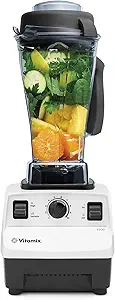 |
| Best Value The sweet spot between price and what you get | Biolomix Professional Blender A8800 |  |
| Best Budget The cheapest option that still gets the job done reliably | BLACK+DECKER Blender BL2010BP |  |
| Top Rated A top-rated pick with lots of positive feedback | Ninja Mega Kitchen System BL770 |  |
| Most Popular A crowd favorite that many people choose with confidence | BLACK+DECKER PowerCrush BL1230SG |  |
Ninja Professional Plus BN801

| Wattage | 1400 watts |
|---|---|
| Capacity | 64 fluid ounces |
| Number of Speeds | 3 |
| Controls Type | Programmable Digital |
The Ninja Professional Plus BN801 combines a powerful 1400 peak-watt motor with a selection of vessel and blade attachments to handle both blending and food processing tasks. In everyday use it crushes ice and blends smoothies in the 72-oz Total Crushing Pitcher, and the 8-cup Precision Processor Bowl handles chopping, purees and up to 2 lbs of dough; two 24-oz single-serve cups let you mix and go. Auto-iQ programmable presets simplify common cycles by stitching pulses, blends and pauses together so you do not need to time runs manually. Stainless steel blades and containers deliver aggressive cutting and steady performance, and the dough and chopping blades expand utility beyond just smoothies. Practical limitations are the physical size and weight of the system, which requires a sturdy counter and storage space, and the unit can be louder than compact personal blenders during heavy loads. For pureeing food for elderly diners, the BN801 provides reliable, consistent power and useful preset programs that produce smooth textures, though you may need to blend in smaller batches for the smoothest results.
Best for: Buyers who prioritize a dependable, high-power machine for making smooth purees and multi-step food prep will appreciate this system for daily use in a home kitchen.
Less Ideal for: If you need an ultra-compact, whisper-quiet personal blender for single portions or travel, choose a smaller dedicated unit instead.
- 1400 peak-watt motor delivers strong, consistent blending power
- Auto-iQ programmable presets simplify pureeing and remove guesswork
- Multiple attachments (72-oz pitcher, 8-cup processor, single-serve cups) increase versatility
- Stainless steel blades and containers provide durable cutting performance
- Processor bowl handles chopping and dough tasks in addition to purees
- Large and relatively heavy unit takes significant counter and storage space
- Can be noticeably loud under heavy loads
Verdict: Choose the Ninja Professional Plus BN801 when you want a high-power, preset-equipped system that reliably produces smooth purees and handles broader food prep tasks.
Vitamix 5200 Blender

| Wattage | 1380 watts |
|---|---|
| Number of Speeds | 10 |
| Capacity | 64 fluid ounces |
| Power Source | ac |
| Controls Type | Knob |
The Vitamix 5200 is a heavyweight countertop blender built for high-performance home use. Its two-horsepower (about 1380 W) motor and laser-cut stainless-steel blades handle fibrous greens, frozen fruit, ice, nuts and dense grains by generating high torque and a strong vortex in the 64-ounce Tritan container. You control texture with a 10-position variable speed knob plus a high-speed switch and a tamper to keep thick mixtures moving, and the blender can produce hot soups through blade friction heat as well as silky smoothies and nut butters. Practical benefits include full-container capacity for batch cooking, a straightforward manual control layout that is easy to dial in, and a quick self-clean cycle that saves cleanup time. Limitations are its large footprint and weight which make it less portable, and the lack of preset programs or digital controls for repeatable, one-touch grain grinding settings. For buyers who want raw power and consistent pulverizing ability, the 5200 delivers robust, long-lasting performance.
Best for: Buyers who prioritize raw power and consistent pulverizing for demanding tasks like grinding rice, making nut butters, and large-batch soups will appreciate this blender.
Less Ideal for: If you need a lightweight, compact unit for occasional single-serve milling or want digital presets for repeatable grain grinding, consider a smaller or program-driven alternative.
- High-power motor that pulverizes tough ingredients and hard grains
- Laser-cut stainless-steel blades for long-lasting, consistent cutting
- Large 64 oz container supports full-batch grinding and big preparations
- Variable speed knob plus high-speed switch gives precise manual control
- Self-cleaning function simplifies cleanup after grinding
- Bulky and heavy compared with compact blenders
- No digital presets or specific grain-grinding program
Verdict: Choose the Vitamix 5200 when you need high torque and a durable blender that consistently pulverizes hard ingredients and whole grains for batch grinding.
Biolomix Professional Blender A8800

| Wattage | 1500 watt-hours |
|---|---|
| Number of Speeds | 6 |
| Capacity | 2000 ml |
| Control Type | Manual with Timer |
| Blade Material | Stainless Steel |
The Biolomix A8800 is a high-power countertop blender built around a commercial-grade motor and a 2000 ml plastic pitcher for processing tough ingredients like ice, frozen fruit, and whole foods. It offers six speed settings plus a timer with preset stops (30s–120s) so you can blend for consistent intervals without babysitting the machine. The hardened six-blade stainless steel assembly and the peak 2200W (rated 1600W) motor are designed to pulverize ice and grind hard items, and the variable control lets you start gently then ramp up to high speed for finer texture. Practical touches include a tamper and a simple clean mode where you blend warm soapy water to flush the pitcher. Note the base uses overload protection and requires a cool-down and reset if the motor overheats, and the pitcher is plastic rather than glass which may retain odors over time. For rice grinding specifically, the strong motor and hardened blades can produce a coarse-to-fine grind when processed in small batches, but results depend on run time and portion size.
Best for: Buyers who prioritize raw power and repeatable results and want a blender that can handle heavy-duty kitchen jobs like crushing ice, making smoothies, and processing whole grains into coarse flour.
Less Ideal for: Those who need a dedicated, small-capacity grain mill for fine, consistent rice flour or users who prefer quieter, lower-power countertop appliances.
- Very high peak motor power for handling ice and hard ingredients
- Hardened six-blade stainless steel assembly for aggressive cutting and grinding
- Variable speed control plus a timer for repeatable blending intervals
- Large 2000 ml pitcher suitable for batch processing
- Includes tamper and straightforward cleaning method
- Motor can overheat and requires a cool-down and manual reset
- Plastic pitcher may absorb odors or show wear faster than glass
Verdict: If you need a powerful, commercial-style blender to crush ice and process small batches of rice into coarse or fine grinds, this Biolomix model delivers the motor strength and blade design to do it.
BLACK+DECKER Blender BL2010BP

| Wattage | 400 |
|---|---|
| Number of Speeds | 10 |
| Capacity | 48 fluid ounces |
| Blade Material | Stainless Steel |
The BLACK+DECKER BL2010BP is a straightforward 10-speed countertop blender intended for smoothies, soups, and general kitchen blending. Its 400–550 watt motor (listed as 400/550 in different spots) and multi-level stainless steel blade provide enough power to handle soft fruits, liquids, and ice-crushing at higher speeds, while the pulse setting helps break down chunkier ingredients. The 48-ounce plastic jar has a pour spout and a measuring-cap lid insert that doubles as a 1-ounce cup, and most removable parts are dishwasher-safe for easy cleanup. For grinding dry grains like rice into flour, the jar and blade can process small batches but the plastic pitcher and lower-watt motor mean results will be coarse unless worked in short pulses and sifted afterward. The unit is lightweight and compact, making it simple to store, and the manual control dial is intuitive. If you need a no-frills, budget blender for everyday tasks and occasional coarse grain grinding, this model works well, but it will not replace a dedicated high-speed grinder for fine rice flour or heavy continuous use.
Best for: Buyers on a tight budget who want a simple, reliable countertop blender for smoothies, soups, and occasional small-batch coarse grinding of grains.
Less Ideal for: Users who need a blender or mill specifically for producing fine rice flour, large-volume grain processing, or frequent heavy-duty grinding should choose a high-speed grinder or dedicated mill instead.
- 10 speeds plus pulse give flexible control for smoothies, soups, and ice-crushing.
- Multi-level stainless steel blade improves blending efficiency across the jar.
- 48-oz jar with pour spout and measuring lid insert is convenient for portioning and pouring.
- Dishwasher-safe removable parts simplify cleanup and maintenance.
- Lightweight, compact design is easy to store in small kitchens.
- Lower-power motor compared with high-speed grinders limits ability to produce very fine rice flour.
- Plastic pitcher may retain odors and is less durable than glass for heavy grinding.
- Not optimized for continuous heavy-duty use or large batches of dry grains.
Verdict: A budget-friendly, no-frills blender that handles everyday blending and occasional coarse rice grinding but will not produce fine rice flour like a dedicated high-speed grinder.
Ninja Mega Kitchen System BL770
| Wattage | 1500 watts |
|---|---|
| Number of Speeds | 5 |
| Capacity | 16 fluid ounces |
| Power Source | ac_dc |
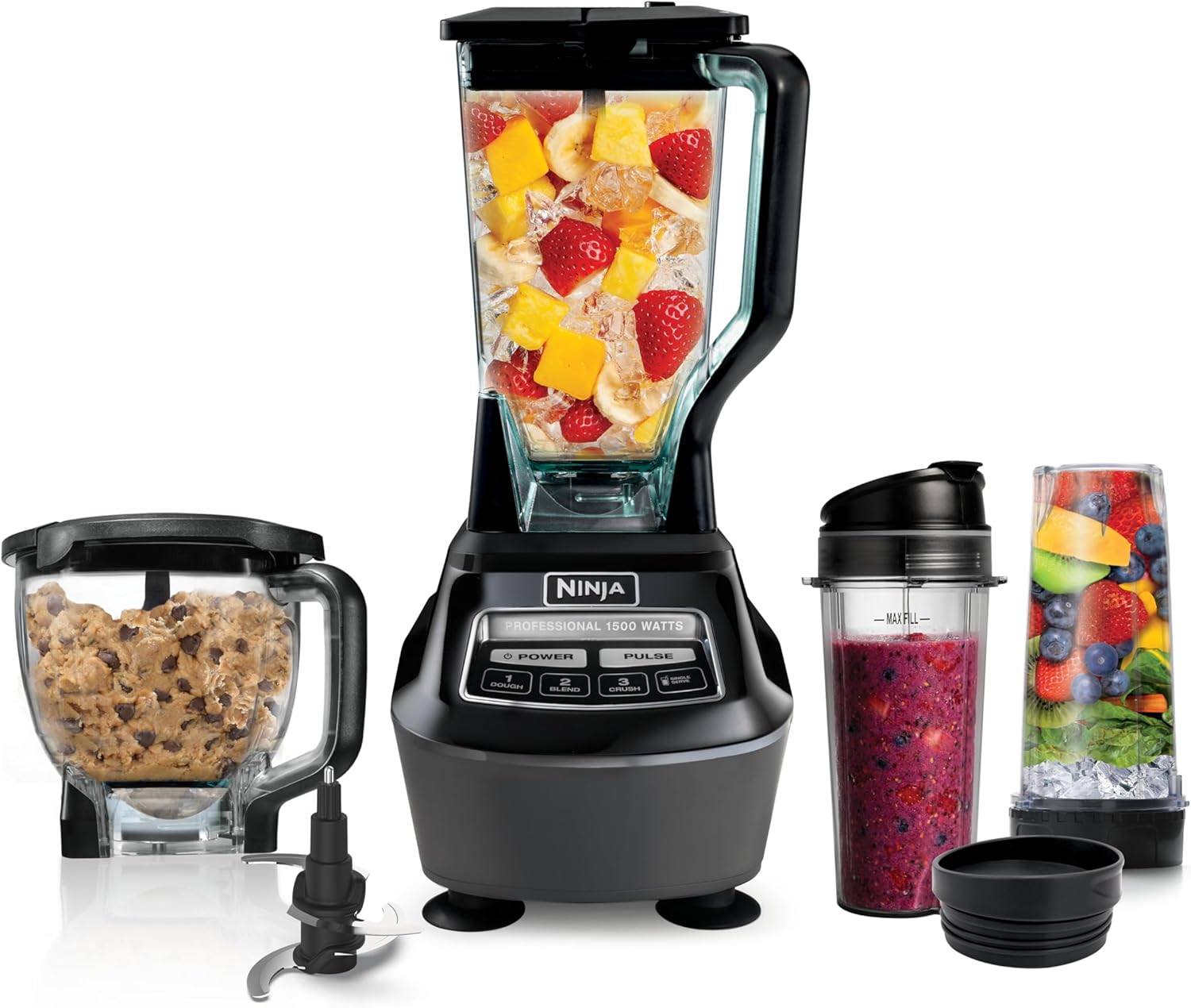
The Ninja Mega Kitchen System BL770 combines a powerful 1500W motor with multiple containers and blade sets to handle most home kitchen tasks. You get an XL 72-oz pitcher with Total Crushing Blades for smoothies and ice crushing, an 8-cup food processor bowl with chopping and dough blades for vegetables and quick dough mixing, plus two 16-oz Nutri Ninja to-go cups for single-serve drinks. Controls are manual with five speeds and four main function modes that make it simple to switch between blending, mixing, crushing, and single-serve work. Most removable parts are dishwasher safe, and the stainless steel blades are effective on frozen fruit and ice. The unit is versatile for batch smoothies, meal prep, and small baking projects, but the motor base is fairly large and the system takes some counter space and storage room. Also, the manual controls lack presets, so you need to watch run times for delicate tasks like purees. For buyers wanting a single machine that covers blending and food processing jobs, it delivers strong performance and a useful accessory set.
Best for: Buyers who want one versatile countertop appliance that handles large-batch smoothies, food prep, and occasional dough mixing without buying separate machines.
Less Ideal for: People with very limited counter or storage space or those who prefer compact single-function appliances with automatic preset programs.
- 1500-watt motor provides strong ice crushing and blending power
- Includes XL 72-oz pitcher plus 8-cup processor and two 16-oz to-go cups for multiple uses
- Multiple specialized blades (total crushing, pro extractor, chopping, dough) cover blending and processing tasks
- Most removable parts are dishwasher-safe for easier cleanup
- Large footprint that requires significant counter or cabinet space
- Manual controls with no preset programs require more user attention for consistent results
Verdict: A powerful, multi-function blender and food processor combo that covers large-batch blending, chopping, and dough mixing for buyers seeking one versatile countertop machine.
BLACK+DECKER PowerCrush BL1230SG

| Wattage | 700 watts |
|---|---|
| Number of Speeds | 4 |
| Capacity | 6 cups |
| Power Source | AC adapter |
The BLACK+DECKER PowerCrush BL1230SG is a straightforward countertop blender built around a 700W motor and a 6-cup glass jar with a molded pour spout. It uses a four-tip QuadPro stainless steel blade and four speed buttons including pulse modes, so it handles smoothies, purees, and ice crushing reliably; the manufacturer notes peak power is measured in short bursts while continuous use runs lower. The glass jar feels sturdy and dishwasher-safe removable parts simplify cleanup, and the hinged reclosable pour spout reduces drips when serving. For grinding dry grains like rice to flour, the combination of the QuadPro blade and pulse settings can produce a coarse to medium grind in small batches, but the jar shape and blade design are optimized for liquid blending rather than a high-speed dry mill, so achieving ultra-fine flour may require longer pulsing and sifting. Controls are manual push buttons so you get simple, repeatable operation but not variable speed dials. Overall it is a practical, easy-to-use blender that doubles for light rice grinding if you accept coarser results and smaller batch sizes.
Best for: Buyers who want an affordable, reliable countertop blender that can also handle occasional small-batch rice grinding for coarse to medium results and who prioritize straightforward controls and easy cleanup.
Less Ideal for: If you need consistently ultra-fine rice flour, high-volume milling, or a dedicated dry-grain mill, choose a purpose-built grain mill instead.
- 700W peak motor provides strong short-burst power for crushing ice and tough ingredients
- QuadPro four-tip stainless steel blade creates a good vortex for fast blending
- 6-cup glass jar with molded pour spout offers sturdy, no-mess pouring
- Dishwasher-safe removable parts make cleanup simple
- Not optimized as a dedicated grain mill so achieving very fine rice flour may require extended pulsing and sifting
- Control options limited to four preset speeds and pulse rather than continuously variable speed
Verdict: A practical countertop blender that reliably handles everyday blending and can double for occasional small-batch rice grinding when you only need coarse to medium results.
Choosing the Right Blender for Grinding Rice: Key Factors to Consider
Motor Torque and Rated Power
Higher torque and adequate rated power determine whether a blender can cut through dry rice efficiently. Dry grains present almost no moisture to cushion the blade, so a motor with weak torque will stall or require long runs, which increases wear.
Look at continuous and peak power ratings plus any notes on torque, not just advertised top speed. Motors that sustain torque at lower rpm values tend to break down grains more evenly, producing a finer flour with fewer large particles.
Blade Geometry and Material
Blade shape, thickness, and metallurgy matter for grinding abrasive dry grains. Thin, poorly supported blades can flex and dull quickly when subjected to hard particles, while thicker, heat-treated stainless steel blades keep an edge longer.
Consider the number of cutting surfaces and whether the blades are removable for sharpening or replacement. Blades designed for pulverizing or dry grinding often have steeper bevels and stronger central hubs to resist wobble under load.
Jar Shape, Size, and Material
A jar that promotes consistent flow helps grains move into the blade rather than clumping at the bottom. Narrow, tall jars encourage circulation, while wide, shallow jars can leave pockets of unmilled rice.
Material matters too. Glass and high-density plastic both work, but inspect seals and lid designs to avoid leaks during aggressive pulsing. Smaller capacity jars are usually better for dry grinding because a shallow fill depth helps the blade make contact with most grains.
Speed Control and Pulse Function
Variable speed control and a reliable pulse mode let you grind in short bursts, preventing overheating and giving you better control over particle size. High fixed-speed blenders may overprocess or generate too much heat for dry grains.
Good pulse switches have tactile feedback and return quickly to neutral so you can time bursts precisely. Multiple speed steps give finer control when you need to work down stubborn clumps without turning the rice into powder in one go.
Thermal Management and Duty Cycle
Grinding dry grains can generate heat in both the motor and the jar. Blenders with cooling vents, thermal cutoffs, or rated duty cycles will tolerate repeated short runs without damage. A unit that overheats will cut performance and shorten lifespan.
Check manufacturer guidance on recommended run times and required cool-down intervals. Units designed for tougher tasks typically state higher duty cycles or include features that help dissipate heat quickly.
Ease of Cleaning and Maintenance
Rice starch and fine flour can coat the jar, seals, and blade assembly. Blenders that let you remove blades and disassemble the jar base easily make cleanup faster and reduce mold and residue buildup.
Consider dishwasher-safe parts, smooth interior surfaces that rinse clean, and access to replacement parts like gaskets and blades. Regular maintenance extends the blender's effective life and preserves grinding performance.
How Particle Size Affects Recipes
Particle size of ground rice determines how an ingredient behaves in recipes. Coarser grinds suit porridge and some batters where texture is desirable, while ultrafine flour produces smoother cakes and delicate batters. Understanding the target grind helps you choose a blender and set expectations for how many short pulses or siftings are needed.
- Coarse grind: rougher texture, shorter processing time
- Medium grind: versatile for most batters and some breads
- Fine flour: requires more passes and finer control over pulse timing
Preparing Rice for Best Results
Start with dry, room-temperature rice that has been rinsed and thoroughly dried if recently washed. Even small amounts of residual moisture will cause clumping and uneven grinding. Measure out small batches to improve circulation and avoid overloading the jar. For the finest flour, pulse in 10 to 15 second bursts and allow brief cooling pauses between cycles.
- Use fully dried rice for uniform milling
- Process in small batches for consistent results
- Shake or tap the jar between pulses to move settled grains
Common Troubleshooting Tips
If the blender stalls or the jar fills with large pieces, reduce batch size and use shorter pulses. If results are gummy or pasty, there may be too much moisture present either in the rice or from condensation. Overheating signs include burning smells or reduced speed; stop, cool the unit, and let it rest according to the manufacturer's duty-cycle guidance.
If the blade seems to bounce or wobble, stop using the jar and inspect blade mounting hardware and seals. Worn gaskets or loose hubs reduce grinding efficiency and can let particles escape the grind chamber.
- Stalling: reduce batch size and use pulse mode
- Gummy texture: ensure rice is fully dry
- Overheating: observe duty cycle and let motor cool
Grinding Rice Vs Other Grains
Rice is harder and more brittle than some other common grains, so it often produces a finer powder more quickly but also wears blades faster. Corn and wheat contain different levels of oil and fiber that change how they mill and how sticky the resulting flour becomes.
If you plan to grind multiple grain types, expect to need more frequent blade maintenance and to adjust pulse lengths to account for different textures and moisture contents.
- Rice grinds faster but can be more abrasive
- Different grains require adjustments to pulse timing and batch size
How We Chose the Best Blender for Grinding Rice
We focused on features that directly affect how well a blender grinds dry rice into a fine, consistent particle size. Primary evaluation criteria included motor torque and sustained power so units can spin through dense, dry grains; blade geometry and material to ensure efficient cutting and long-term resistance to abrasion; and jar shape and capacity because flow dynamics affect whether rice circulates into the blade or simply bounces around. We also rated thermal management and duty cycle to reduce the risk of motor overheating during repeated short pulses, and ease of cleaning since rice starch can leave residues that build up over time. Excluded from consideration were blenders designed only for soft food processing or those lacking pulse control and sufficient speed variation. We prioritized models that provide clear user control over short bursts, durable metal components where applicable, and manufacturer-supported spare or replacement parts. Each shortlisted blender met minimum standards across these dimensions and showed consistent indications—spec sheets and documented features—that it should perform reliably for grinding rice at home.
Our full evaluation process is outlined in our review methodology.
FAQ
Can I grind rice in any blender?
Often you can, but results vary. Blenders with low torque, no pulse mode, or poor blade construction tend to struggle with dry rice. Choose units with robust motors and clear pulse control for consistent performance.
How much rice should I grind at once?
Usually small batches work best. Filling the jar only a quarter to a third full improves grain circulation and yields a more even grind. Larger batches can overload the blades and produce uneven particle sizes.
How do I prevent rice flour from turning gummy?
Make sure the rice is fully dry before grinding and use short pulse bursts rather than long continuous runs. Allow cooling pauses between cycles to avoid heat and condensation that promote gumminess.
How often will blades need replacement when grinding rice?
It depends on usage frequency and blade material. Stainless steel blades with thicker profiles last longer, but regular home use for flour production will still accelerate wear. Inspect blades periodically for dulling or wobble and replace when performance declines.
Is there a recommended jar material for grinding dry rice?
Both glass and high-density plastics can work. Glass resists scratching and staining, while high-density plastic is lighter and less likely to shatter. Prioritize jar shape and seal quality over material alone.
Final Verdict
For grinding rice, prioritize motor torque, blade durability, and a jar shape that encourages circulation. Expect tradeoffs between batch size and grind fineness: smaller batches and pulse control give the best results but require more hands-on processing. Also account for duty cycle and cleaning needs, because abrasive dry grains accelerate wear and leave residues. By focusing on the evaluation criteria above, you can confidently choose a blender that balances consistent grinding performance with long-term reliability.