
Note: This article contains affiliate links. If you click on these links and make a purchase, we may earn a small commission at no extra cost to you. This helps support our research and content. Read our full affiliate disclosure here.
Picking a blender for hard food matters when you routinely process dense or fibrous ingredients like raw root vegetables, whole nuts, or frozen fruit. The right machine saves time, reduces strain on components, and delivers a uniform texture rather than gritty or uneven results. This guide presents the top shortlisted blenders built to handle tough loads safely and consistently. We evaluated candidates on the motor and blade system, jar durability and sealing, speed control and usability, and how each design manages heat and prolonged blending. Read on to find an option that fits how you prepare hard foods and the kind of results you expect.
Top Picks at a Glance
| Best Overall The best all-around choice for most situations | Breville Fresh and Furious BBL620 |  |
| Best Quality Built to a higher standard if you want something more solid | Vitamix 5200 Blender | 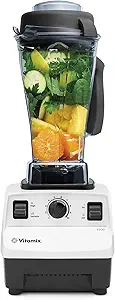 |
| Best Value The sweet spot between price and what you get | Oster Pro 1200 Blender |  |
| Best Budget The cheapest option that still gets the job done reliably | BLACK+DECKER PowerCrush BL1230SG |  |
| Top Rated A top-rated pick with lots of positive feedback | Ninja Professional Plus BN801 |  |
| Most Popular A crowd favorite that many people choose with confidence | Ninja Professional Blender BL610 |  |
Breville Fresh and Furious BBL620

| Wattage | 1100 watts |
|---|---|
| Capacity | 50 fluid ounces |
| Number of Speeds | 5 |
| Power Source | Corded Electric |
The Breville Fresh and Furious BBL620 is a versatile countertop blender aimed at smoothies, ice crushing, and light food-processing tasks. It pairs an 1100 watt high-torque motor with surgical-grade serrated blades and a 50 oz shatterproof Tritan jug, and offers five manual speeds plus pre-programmed one-touch cycles and an LCD display for timed blends. The Assist lid design and included measuring insert make filling and cleaning easier, and the unit advertises a quiet, efficient operation compared with many competitors. In practice it handles smoothies, frozen fruit and crushed-ice drinks reliably and can fold and aerate for creamier textures; the Auto Clean function speeds rinsing after use. Limitations include a relatively simple control set compared with blenders that offer more speed increments or stronger commercial-style motors, and its 50 oz round jug can be bulky on small counters. For everyday home cooks who want dependable ice-crushing and smoothie performance without stepping up to a professional machine, this model strikes a strong balance of power, convenience and build quality.
Best for: Home cooks who want a reliable, everyday blender for smoothies, frozen drinks and basic food prep and prefer simple presets plus solid ice-crushing performance.
Less Ideal for: Users who need commercial-level power, fine variable speed control for specialized recipes, or a very compact unit tailored to tiny kitchens.
- 1100 watt high-torque motor that handles ice and frozen fruit
- Surgical-grade serrated stainless steel blades for consistent chopping and crushing
- Five speed settings plus pre-programmed one-touch programs and an LCD timer
- 50 oz shatterproof BPA-free Tritan jug with a tight Assist lid and measuring insert
- Auto Clean function for easier post-use rinsing
- Control set is less granular than higher-end blenders with more speed options
- Jug profile is bulky and may take up significant counter or storage space
Verdict: A well-rounded home blender that delivers strong ice-crushing and smoothie performance with convenient presets and durable construction.
Vitamix 5200 Blender

| Wattage | 1380 watts |
|---|---|
| Number of Speeds | 10 |
| Capacity | 64 fluid ounces |
| Blade Material | Stainless Steel |
| Warranty | 7-Year Limited Warranty |
The Vitamix 5200 is built for heavy-duty blending tasks and excels at pulverizing tough ingredients like fibrous greens, ice, nuts, and frozen fruit thanks to its high-performance motor and laser-cut stainless-steel blades. It uses a 10-speed variable control plus a High-Speed switch so you can dial in textures from chunky salsas to silky smoothies and even make hot soup from friction heat. The full-size 64-ounce BPA-free container creates a strong vortex for consistent blends and the included tamper keeps dense mixtures moving without disassembly. Practical benefits include a self-cleaning mode that rinses and cleans the container in under a minute and a durable metal drive system backed by a seven-year limited warranty. Trade-offs are its large footprint and heavier weight compared with compact models, and the fully manual knob control lacks preprogrammed cycles if you prefer one-touch presets. For anyone focused on raw power and reliable results with hard or frozen ingredients, this is a straightforward, workhorse blender.
Best for: Buyers who prioritize raw blending power and consistent results for hard or frozen foods and who want a durable appliance for regular full-batch use.
Less Ideal for: People who need a compact, lightweight blender for single servings or those who prefer one-touch programmed cycles and touchscreen controls.
- Powerful 2-horsepower class motor that easily breaks down tough and frozen ingredients
- Laser-cut stainless-steel blades for consistent, long-lasting cutting performance
- Large 64 oz BPA-free Tritan container suitable for full-batch blending
- Variable speed knob plus High-Speed switch for precise texture control
- Self-cleaning function simplifies cleanup without disassembly
- Bulky and relatively heavy compared with compact or personal blenders
- Manual controls only with no automated programs or presets
- Higher power and capacity may be more than needed for single-serve use
Verdict: If your priority is maximum blending power for hard, frozen, or fibrous ingredients, the Vitamix 5200 delivers reliable, professional-grade results batch after batch.
Oster Pro 1200 Blender

| Wattage | 900 watts (ice crushing) / 1200 peak watts |
|---|---|
| Number of Speeds | 7 |
| Container Material | Glass |
| Capacity | 6 cups |
| Included Components | 24 oz smoothie cup |
The Oster Pro 1200 is a countertop blender built for routine heavy-duty blending like crushing ice, frozen fruit, and tougher ingredients. It uses a high-torque motor (marketed as 1200 peak watts, 900 watts ice-crushing) with a dual-direction Crush Pro 6 blade that spins forward and reverse to keep food moving into the blade for smoother, faster results. Controls include seven speeds, three one-touch preprogrammed settings for common recipes, and a pulse function for short bursts of control. The 6-cup Boroclass glass jar resists thermal shock and the unit comes with a 24 oz to-go cup that snaps onto the blade assembly for single-serve blends. Practical benefits include a wide 3.5-inch blade system that reduces need for frequent scraping and an all-metal drive meant to last. Trade-offs are the relatively bulky footprint and glass jar weight compared with compact or plastic personal blenders, and the motor noise typical of high-power machines.
Best for: Buyers who prioritize reliable heavy-duty blending—crushing ice, frozen fruit, and making dense smoothies—want a durable, no-nonsense machine that produces consistent results.
Less Ideal for: People needing a very compact, lightweight personal blender for occasional single servings or those who place the highest value on quiet operation should consider other formats.
- Strong motor and dual-direction blade for effective crushing of ice and frozen ingredients
- Wide 3.5-inch blade and 6-cup glass jar help ingredients flow to the blade for smoother results
- Seven speeds plus three smart preprogrammed settings simplify common recipes
- Includes 24 oz Blend-N-Go cup for single-serve convenience
- Durable all-metal drive design intended for long-term use
- Larger footprint and heavier glass jar make it less convenient for small kitchens or storage
- Higher noise level when operating at heavy loads
Verdict: Choose the Oster Pro 1200 when you need a sturdy, high-power blender that reliably crushes ice and handles hard ingredients for consistent, smoother blends.
BLACK+DECKER PowerCrush BL1230SG

| Wattage | 700 watts |
|---|---|
| Capacity | 6 cups |
| Number of Speeds | 4 |
| Power Source | AC adapter |
The BLACK+DECKER PowerCrush BL1230SG is a straightforward countertop blender aimed at household use where you need reliable crushing and blending without extras. Its 700W peak motor and QuadPro four-tip stainless steel blade create a vortex in the 6-cup glass jar that helps pull tougher ingredients to the blade, so it handles ice, frozen fruit, and dense mixtures reasonably well for its class. Four speed buttons including pulse give simple control for smoothies, purees, and crushing tasks, and the hinged pour spout on the glass jar makes serving mess-free. Removable parts are dishwasher-safe and the unit includes an easy-clean function that uses blade motion to loosen residue. Expect good day-to-day performance for hard-food tasks like crushing ice or making nut butters in small batches, but it is not a commercial machine and will slow with very large or continuous heavy loads. For buyers who want a durable glass container and no-frills controls, this model is a pragmatic choice.
Best for: Buyers looking for an affordable, no-frills blender that can handle household hard-food tasks like ice and frozen fruit in small batches and values a durable glass jar and simple controls.
Less Ideal for: Users who need a heavy-duty, commercial-grade blender for frequent large-batch nut butters or continuous processing should choose a higher-powered unit instead.
- 700W peak motor with stainless steel QuadPro blade for effective ice crushing
- 6-cup glass jar with molded pour spout for easier, no-mess serving
- Dishwasher-safe removable parts for straightforward cleanup
- Simple four-speed and pulse controls that are easy to use
- Peak power is brief and continuous output is lower, so performance drops under long heavy-duty use
- Not intended for high-volume or commercial blending tasks
Verdict: A budget-friendly countertop blender that reliably crushes ice and handles hard ingredients for everyday small-batch home use.
Ninja Professional Plus BN801

| Wattage | 1400 watts |
|---|---|
| Capacity | 64 fluid ounces |
| Number of Speeds | 3 |
| Controls Type | Programmable Digital |
The Ninja Professional Plus BN801 combines a powerful 1400 peak-watt motor with a selection of vessel and blade attachments to handle both blending and food processing tasks. In everyday use it crushes ice and blends smoothies in the 72-oz Total Crushing Pitcher, and the 8-cup Precision Processor Bowl handles chopping, purees and up to 2 lbs of dough; two 24-oz single-serve cups let you mix and go. Auto-iQ programmable presets simplify common cycles by stitching pulses, blends and pauses together so you do not need to time runs manually. Stainless steel blades and containers deliver aggressive cutting and steady performance, and the dough and chopping blades expand utility beyond just smoothies. Practical limitations are the physical size and weight of the system, which requires a sturdy counter and storage space, and the unit can be louder than compact personal blenders during heavy loads. For pureeing food for elderly diners, the BN801 provides reliable, consistent power and useful preset programs that produce smooth textures, though you may need to blend in smaller batches for the smoothest results.
Best for: Buyers who prioritize a dependable, high-power machine for making smooth purees and multi-step food prep will appreciate this system for daily use in a home kitchen.
Less Ideal for: If you need an ultra-compact, whisper-quiet personal blender for single portions or travel, choose a smaller dedicated unit instead.
- 1400 peak-watt motor delivers strong, consistent blending power
- Auto-iQ programmable presets simplify pureeing and remove guesswork
- Multiple attachments (72-oz pitcher, 8-cup processor, single-serve cups) increase versatility
- Stainless steel blades and containers provide durable cutting performance
- Processor bowl handles chopping and dough tasks in addition to purees
- Large and relatively heavy unit takes significant counter and storage space
- Can be noticeably loud under heavy loads
Verdict: Choose the Ninja Professional Plus BN801 when you want a high-power, preset-equipped system that reliably produces smooth purees and handles broader food prep tasks.
Ninja Professional Blender BL610
| Wattage | 1000 watts |
|---|---|
| Capacity | 1.8 liters |
| Number of Speeds | 4 |
| Power Source | Corded Electric |
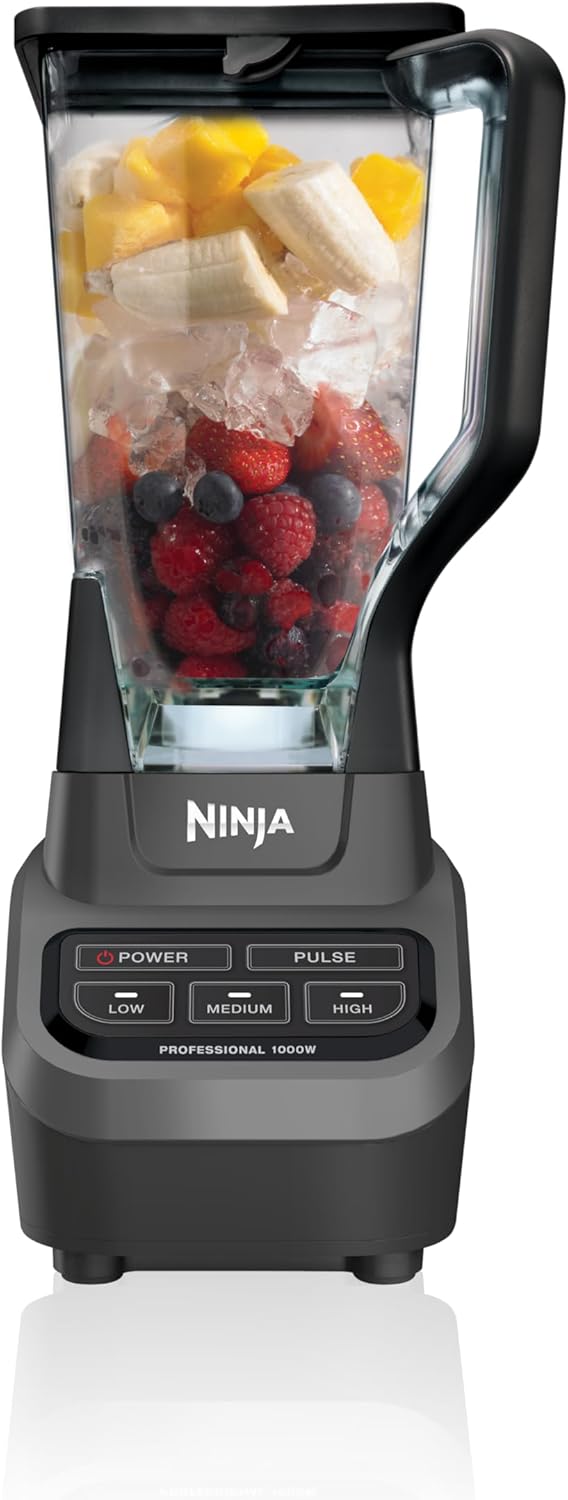
The Ninja Professional BL610 pairs a 1000 watt motor with Total Crushing stainless steel blades to handle smoothies, frozen drinks, sauces, and ice crushing reliably. You use it like a conventional push-button blender: load the XL 72 oz pitcher with ingredients, pick one of four speeds or a preset, and let the blades reduce whole fruits, frozen fruit, and ice to a smooth consistency. The large pitcher and clear max-fill mark make it easy to prepare family batches or party-sized servings, while dishwasher-safe, BPA-free plastic parts simplify cleanup. Manual controls keep operation straightforward but limit precision compared with variable-speed dials. The blender is lightweight for a full-size unit and includes a recipe guide for quick ideas, but it lacks specialized attachments for single-serve blending or milling. For everyday kitchen tasks that require power to crush ice and blend frozen fruit into smooth textures, the BL610 is a dependable, no-fuss choice that balances performance and easy cleanup.
Best for: Buyers who prioritize reliable power and proven performance for making smoothies and frozen drinks for families or gatherings and who value simple, easy-to-clean appliances.
Less Ideal for: People who need precise speed control, compact single-serve blending, or specialized attachments for grinding or food processing should look elsewhere.
- 1000W motor and Total Crushing blades efficiently crush ice and frozen fruit
- Large 72 oz pitcher lets you make family-size batches with a 64 oz max liquid fill line
- Dishwasher-safe, BPA-free pitcher and lid make cleanup simple
- Simple push-button controls are easy to use for everyday recipes
- Manual speed settings offer less fine control than variable-speed models
- No dedicated single-serve or additional accessory attachments included
Verdict: Choose the Ninja BL610 when you want a powerful, easy-to-use countertop blender that consistently crushes ice and makes large smoothie batches.
Choosing the Right Blender for Hard Food: Key Factors to Consider
Motor Power and Torque
A blender handling hard food needs a motor with sufficient continuous power and torque to keep blades turning under load. Higher wattage often correlates with stronger performance, but continuous torque and motor cooling determine whether the machine can process dense ingredients without stalling.
Consider how long you expect to run the blender at high load. Short bursts require less cooling ability than repeated heavy cycles. Look for motors with thermal protection or rated continuous power to avoid premature shutdowns.
Blade Design and Material
Blades are the primary wear item when processing hard food. Thick, forged stainless steel blades with reinforced edges resist chipping and maintain a keen edge longer than stamped, thinner designs. The blade profile also matters: angled or stepped blades improve circulation and reduce the chance of dead zones where chunks remain unprocessed.
Blades welded to a robust drive coupling reduce wobble and stress on the jar and motor. Inspect whether blades are user-serviceable or permanently sealed; serviceable assemblies can be refurbished without replacing the entire jar.
Jar Construction and Seal Integrity
The jar must withstand impact from hard ingredients, pressure from frozen blends, and repeated stress from blade motion. Thick, BPA-free plastic jars designed for impact resistance are common, but tempered glass jars offer better scratch resistance at the cost of increased weight. Some high-end jars use reinforced copolymers that balance durability and weight.
Lid fit and gasket quality are essential for safety and to prevent leaks under vacuum or pressure. Look for tight-fitting lids with secure locks or venting options for hot or pressurized blends to avoid sudden releases during blending.
Thermal Management and Duty Cycle
Processing hard, dense ingredients generates heat from motor strain and friction. Good airflow, heat sinks, and thermal cutoff circuits allow longer continuous use without damage. A machine with poor cooling may overheat, reducing lifespan or causing performance drops mid-blend.
If you plan to make multiple heavy batches (for meal prep or batch cooking), select a blender rated for extended duty cycles or one with recommended rest intervals to avoid thermal stress.
Controls, Speed Range, and Pulse Options
Precise control helps you start gently and ramp up power, which prevents the motor from bogging down when processing very hard items. Variable speed dials or multi-stage presets give flexibility for different textures, while a reliable pulse function lets you break up large pieces before committing to a full blend.
Intuitive controls reduce user error and improve consistency. Look for tactile switches or clear digital displays that indicate current speed or program state.
Serviceability and Long-Term Maintenance
Tough-use blenders benefit from designs that allow easy maintenance, such as accessible drive couplings, replaceable gaskets, and blade assemblies that can be serviced. Regularly replacing worn seals and blades extends overall life and keeps performance consistent.
Consider availability of manufacturer support and documented repair procedures. Machines designed with modular parts tend to be more economical to maintain and reduce the likelihood of full-unit replacement after a component failure.
What 'Hard Food' Means for Blenders
Hard food refers to solids that are dense, fibrous, or frozen and that resist being sheared quickly by standard blender blades. Examples include raw root vegetables, whole nuts, large frozen fruit chunks, and unsoaked legumes. These items place higher mechanical and thermal demands on the motor, blade assembly, and jar.
Understanding this distinction helps you avoid misusing a blender intended for softer tasks. Approaching heavy ingredients with incremental technique, such as pre-chopping or short pulses, can also protect components and improve results.
- Dense roots and tubers require torque more than brief peak power.
- Frozen ingredients add impact stress and can compress airflow around blades.
- Nuts and seeds increase abrasion on blade edges and bearing surfaces.
Preparing Hard Ingredients Safely
Prep steps reduce strain and extend the life of a blender. Cut large roots and vegetables into smaller chunks and thaw or chip large frozen pieces to ease the initial load. Soak particularly hard dried legumes before processing unless the recipe calls for dry milling.
Use the pulse function to break down large pieces before switching to a full-speed program. Add small amounts of liquid to improve circulation when working with thick, dry mixtures. Always follow the manufacturer's guidance on maximum fill levels and recommended rest intervals.
- Cut items into 1-inch pieces when possible.
- Start with pulses, then increase speed gradually.
- Add a splash of liquid to help create a vortex around the blades.
Jar Choices: Glass Versus High-Impact Plastic
Glass jars resist scratching and odor retention, which helps when processing abrasive ingredients, but they are heavier and can shatter if dropped. High-impact plastic jars are lighter and less likely to break on accidental drops, but they may pick up scratches that harbor bacteria and dull blades over time. Reinforced copolymer jars offer a middle ground with good impact resistance and lower weight.
Consider how often you move the blender and whether weight or scratch resistance matters more. For frequent heavy-duty use in a fixed location, a heavier, scratch-resistant jar may be preferable. For portability or fall risk situations, choose a durable plastic container.
- Glass: scratch-resistant, heavier, breakable.
- High-impact plastic: lightweight, durable, scratch-prone.
- Reinforced copolymer: balanced durability and weight.
Noise and Vibration Management
High-torque blending of hard food inherently produces more noise and vibration. Models with vibration-dampening bases, insulated motor housings, or rubber feet reduce transfer to countertops and improve perceived quality. Excessive vibration can loosen fasteners and wear bearings prematurely, so stability matters for long-term reliability.
If noise is a concern, look for units with documented damping features and consider placing a rubber mat under the blender to further isolate vibrations.
- Heavy loads amplify motor vibration; stable base reduces wear.
- Noise insulation lessens perceived loudness without changing power.
- Consistent vibration control protects internal components.
Routine Maintenance to Preserve Performance
Regular maintenance keeps a blender functioning well under heavy use. Clean the jar and blades promptly after each use to prevent abrasive residues from dulling edges. Inspect gaskets and seals periodically for cracking or deformation and replace them as needed.
If blades become dull or show nicks, replace or refurbish the assembly rather than pushing the motor to compensate. Proper care of cooling vents and avoiding prolonged heavy runs without rest also extends motor life.
- Clean promptly to prevent abrasive residue buildup.
- Check and replace seals and gaskets regularly.
- Allow resting periods for heavy batch processing to avoid overheating.
How We Chose the Best Blender for Hard Food
We focused on attributes that directly affect a blender's ability to handle hard food without frequent failures or poor texture. Key filters included motor power and thermal management, because sustained high torque is crucial for crushing dense ingredients without overheating. Blade design and material were assessed for edge retention and impact resistance, since blunt or thin blades fail quickly on hard loads. Jar construction and lid seals were evaluated for shock resistance and safe containment of pressurized blends. Control precision and program options were considered to allow gradual ramp-up and pulse capability for tough starts. Finally, durability indicators such as reinforced bearings and warranty terms were used as proxies for build quality. We excluded models that are expressly rated only for soft or refrigerated items, compact single-serve personal units that lack thermal and torque capacity, and any machine with documented recurring safety concerns. Our selection prioritizes machines that balance repeatable heavy-duty performance with manageable maintenance and predictable cooling under repeated hard-food cycles. The scoring emphasized measurable specs and user-facing durability rather than marketing claims.
Our full evaluation process is outlined in our review methodology.
FAQ
Can any blender handle hard food if I just run it longer?
Not always. Running a low-torque blender longer can overheat the motor and wear blades without achieving a consistent texture. Machines designed for hard food combine sustained torque, blade strength, and cooling to process dense ingredients safely.
Is a glass jar better for grinding nuts and seeds?
Glass jars resist scratching and odor retention, which helps when processing abrasive items like nuts. However, they are heavier and can break if dropped. Choose based on whether weight or scratch resistance is more important for your use.
How should I prepare frozen fruit or whole roots before blending?
Thaw large frozen pieces slightly or break them into smaller chunks. Cut roots into smaller pieces and use short pulses to break them up before running a high-speed cycle. Adding a little liquid helps create proper circulation.
How often should I replace blades or gaskets when processing hard food regularly?
Frequency depends on use intensity, but inspect blades and gaskets every few months with regular heavy use. Replace components when you see dulling, nicks, or seal deformation to maintain performance and safety.
Will pulsing extend the life of my blender when working with hard items?
Yes. Pulsing breaks down large pieces in short bursts, reducing continuous load on the motor and blades. It also helps prevent the motor from bogging down at startup and can improve overall blend consistency.
Final Verdict
When choosing a blender for hard food, prioritize sustained motor torque, robust blade construction, and a jar that withstands impact and pressure. Balance those hardware priorities against control quality and cooling capability to match how often and how intensively you will use the machine. Expect tradeoffs between weight, noise, and durability, and plan for routine maintenance like gasket and blade checks. By focusing on these technical factors, you can select a blender that reliably handles dense ingredients and gives consistent results over time.