
Note: This article contains affiliate links. If you click on these links and make a purchase, we may earn a small commission at no extra cost to you. This helps support our research and content. Read our full affiliate disclosure here.
Picking the right bottled water dispenser matters for everyday convenience, whether you rely on one for home, small office, or workshop use. The right dispenser delivers consistent flow, keeps water sanitary, and fits your space and usage pattern. This guide shortlists the top bottled water dispensers across common use cases and highlights the features that matter for long-term reliability and easy upkeep. Below you will find our picks and a clear explanation of the evaluation criteria we used to identify units that perform well in real-world home settings.
Top Picks at a Glance
| Best Overall The best all-around choice for most situations | Brio 130 Series Bottom Load Water Cooler |  |
| Best Quality Built to a higher standard if you want something more solid | Avalon Bottom-Loading Water Cooler A3 |  |
| Best Value The sweet spot between price and what you get | Cozy Blue Water Bottle Pump | 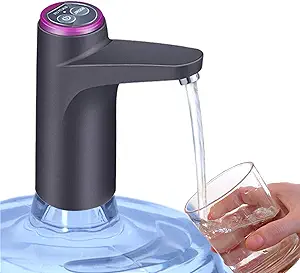 |
| Best Budget The cheapest option that still gets the job done reliably | swardroof Water Dispenser Pump |  |
| Top Rated A top-rated pick with lots of positive feedback | Avalon A4 Bottom Loading Water Cooler |  |
| Most Popular A crowd favorite that many people choose with confidence | Brio Bottom Load Water Cooler CLBL420V2 | 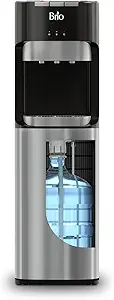 |
| Best Seller A high-volume bestseller chosen again and again | CozyCharm Water Jug Pump Z02 |  |
Brio 130 Series Bottom Load Water Cooler

| Wattage | 300 watts |
|---|---|
| Installation Type | Freestanding |
| Capacity | 5 gallons |
The Brio 130 Series is a bottom-load, freestanding water cooler designed for kitchens, offices, and shared spaces where easy bottle changes and tri-temperature dispensing matter. It holds standard 5-gallon bottles in a concealed cabinet so you avoid lifting and flipping heavy jugs, and a bright LED empty-bottle indicator warns when a refill is needed. The unit delivers hot, room and cold water with indicator lights showing readiness and a 1.5 L/min flow rate for quick fills, and a two-step child safety lock on the hot tap helps prevent accidental pours. Setup requires no plumbing and the polymer exterior and stainless reservoirs are aimed at durability for daily use. On the downside the plastic exterior and midrange wattage reflect a value-oriented build rather than a premium metal finish, and there is no built-in UV or ozone self-cleaning on this model. For buyers wanting convenient no-lift operation and straightforward tri-temp performance, the Brio 130 is a practical, easy-to-use option.
Best for: Buyers who want a simple, no-fuss bottled water dispenser that makes bottle changes easy and provides hot, room, and cold water for everyday home or small office use.
Less Ideal for: Anyone seeking a premium all-stainless unit with advanced self-cleaning sanitization or commercial-grade durability should consider higher-end models instead.
- Bottom-load design eliminates heavy lifting and simplifies bottle changes
- Tri-temperature dispensing (hot, room, cold) for versatile use
- Empty-bottle LED alert keeps you aware when refill is needed
- Two-step child safety lock on the hot tap for safer operation
- Polymer exterior and midrange build are less premium than stainless-steel full-body models
- No self-cleaning UV or ozone feature included
Verdict: Choose the Brio 130 if you want an affordable, easy-to-use bottom-load dispenser that delivers hot, room, and cold water without heavy lifting.
Avalon Bottom-Loading Water Cooler A3

| Wattage | 150 watts |
|---|---|
| Installation Type | Freestanding |
| Access Location | Bottom |
| Number of settings | 3 |
| Power Source | Corded Electric |
The Avalon A3 is a bottom-loading water cooler built around a stainless steel cabinet and a compressor that cools water to about 47°F while offering hot output near 185°F and ambient water on demand. It is used like a typical office or breakroom dispenser: install a 3–5 gallon bottle in the lower cabinet, use the push-button spouts for the selected temperature, and rely on the removable drip tray for spills. Notable features include a child safety lock on the hot tap, a nightlight for late-night use, an empty-bottle indicator, and an ozone-based self-clean cycle for periodic sanitizing. Practical benefits are strong: the bottom-loading design removes heavy lifting and the compressor-based cooling delivers consistently cold water without ice, while the hot faucet is hot enough for instant beverages. Trade-offs are the unit size and weight that require a stable floor spot and the relatively high upper hot temperature that needs caution despite the safety lock.
Best for: Buyers who prioritize reliable, performance-focused dispensing for an office or shared space and want consistent cold and steaming hot water without frequent bottle lifting.
Less Ideal for: People needing a compact, lightweight countertop unit or those who want lower-temperature hot water for immediate drinking without extra caution.
- Bottom-loading cabinet reduces lifting and spills and fits 3–5 gallon bottles.
- Compressor cooling provides consistently cold water around 47°F without added ice.
- Self-cleaning ozone feature helps sanitize internal surfaces and reduce bacterial buildup.
- Child safety lock and nightlight improve safety and usability for family or shared spaces.
- Relatively heavy and tall footprint requires dedicated floor space and may be hard to move.
- Hot water reaches high temperatures, requiring care even with the safety lock.
Verdict: Choose this Avalon bottom-loading cooler when you want a durable, performance-oriented dispenser that delivers reliably cold and very hot water with built-in sanitizing.
Cozy Blue Water Bottle Pump

| Wattage | 4 watts |
|---|---|
| Power Source | Battery Powered |
| Capacity | 12.7 liters |
| Material Type | ABS Plastic, Silicone |
This compact Cozy Blue pump turns heavy bottled jugs into an easy touch-and-dispense solution for home, office, or outdoor use. It installs onto standard screw-top bottles with a silicone hose and uses a built-in 1200mAh rechargeable battery to drive a 4-watt motor, delivering several jugs of water per charge; the one-touch button is paired with an automatic shutoff for measured pours. Construction uses food-grade silicone tubing and high-density ABS plastic so it stays lightweight and simple to clean, and the USB charging makes it convenient to top up between uses. Because it replaces lifting and flipping, it is especially useful where counter space is limited or for users who prefer a portable option for picnics or RVs. Expect modest pumping speed compared with countertop dispensers and plan to recharge after multiple jugs, but for its size it offers a dependable, low-effort way to access bottled water.
Best for: Buyers who want a compact, no-lift solution to dispense bottled water at home, in small offices, or on the go and who prioritize portability and ease of use over high flow rate.
Less Ideal for: Households that need fast, high-volume dispensing or a built-in hot/cold tap should consider full-size countertop or plumbed dispensers instead.
- USB rechargeable 1200mAh battery provides multiple 5-gallon jugs per charge
- Universal fit for standard 2–5 gallon screw-top bottles
- One-touch operation with automatic shutoff for measured pours
- Food-grade silicone tubing and BPA-free ABS construction
- Slower flow rate than larger countertop or plumbed dispensers
- Battery needs recharging after dispensing several bottles
Verdict: A portable, rechargeable pump that makes heavy bottled water easy to dispense without lifting, ideal for spaces where portability and simplicity matter most.
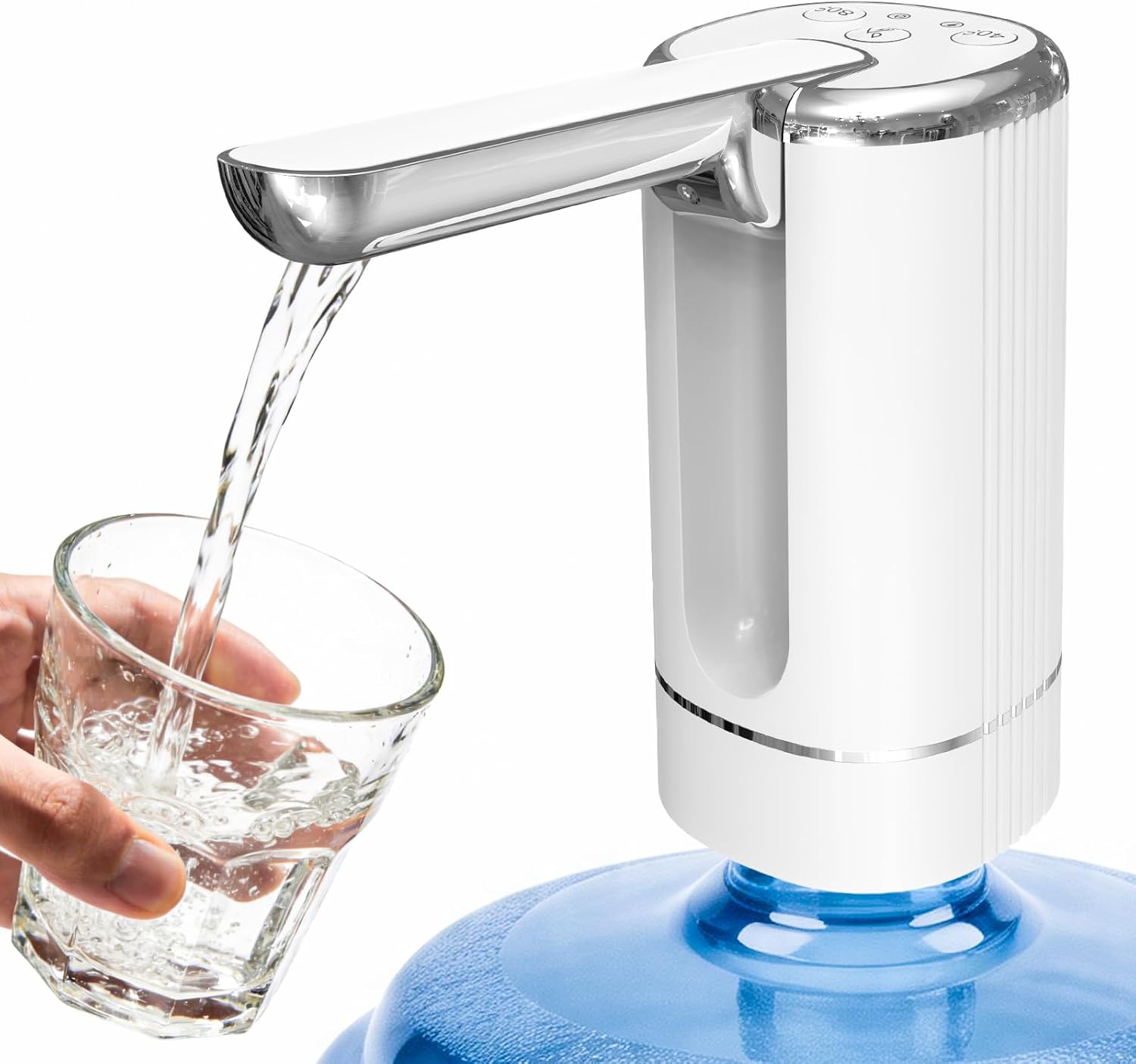
swardroof Water Dispenser Pump
| Capacity | 5 gallons |
|---|---|
| Power Source | Battery Powered |
| Included Components | USB charging cable, water pump |
This compact water dispenser pump converts large bottled jugs into a cordless, push‑button dispenser for home, office, or outdoor use. It uses a built‑in 1200mAh battery with USB‑C charging and offers two preset dispense times (40s and 80s) plus manual start/stop for precise pouring without repeatedly holding the button. The foldable spout and food‑grade water path keep dispensing hygienic, and the motor provides noticeably strong suction for quick flow from 3 to 5‑gallon bottles. Setup is straightforward: charge the unit, insert the tube into the bottle, and press the button. Expect several uses per charge depending on dispense length; the pump removes the need for alkaline batteries or proximity to an outlet but is not suited for continuous heavy commercial pouring. Its plastic housing and simple controls make it an affordable, portable solution, though those wanting continuous hot water or high‑volume industrial use will need a different class of dispenser.
Best for: Buyers seeking an inexpensive, portable way to turn bottled jugs into a cordless dispenser for occasional household, office, or camping use who prioritize low upfront cost and simple operation.
Less Ideal for: People who need hot water, industrial‑rate continuous dispensing, or a heavier‑duty, long‑term commercial pump should choose a sturdier, higher‑capacity model.
- USB‑C rechargeable 1200mAh battery avoids disposable batteries
- One‑touch control with 40s/80s timer for repeatable portions
- Foldable spout and food‑grade water path for hygienic dispensing
- Compatible with standard 3, 3.5, and 5‑gallon bottles for wide use
- Not intended for continuous heavy commercial use or hot water dispensing
- Plastic construction may feel less durable than metal pumps
Verdict: A budget‑minded, portable USB‑C rechargeable pump that makes 3–5 gallon bottled water easy to dispense without outlets or disposable batteries.
Avalon A4 Bottom Loading Water Cooler

| Capacity | 5 gallons |
|---|---|
| Number of settings | 3 |
| Power Source | Corded Electric |
| Wattage | 400 watts |
| Lower Temperature Rating | 8.3 °C |
The Avalon A4 is a freestanding bottom-loading water cooler designed for homes and small offices that need hot, cold, and room-temperature water without lifting heavy jugs. It accepts 3 to 5 gallon bottles hidden in a lower compartment to reduce spills and strain, and the stainless steel cabinet gives it a durable, professional look. Practical features include manual buttons for each temperature, an LED nightlight and empty-bottle indicator, and BioGuard antimicrobial treatment on high-contact surfaces. Heating and cooling are handled by separate systems so you can dispense near-boiling hot water or chilled water quickly, but this model is not intended as a high-capacity commercial unit and uses modest wattage for cooling. Setup is straightforward for a freestanding appliance and routine maintenance is limited to replacing bottles and occasional cleaning. If you prioritize a sturdy, simple dispenser with bottom-loading convenience and antimicrobial protection, the Avalon A4 delivers reliable everyday performance.
Best for: Buyers who want a durable, no-frills bottled dispenser that minimizes jug lifting and emphasizes day-to-day reliability and hygiene in a home or small office.
Less Ideal for: Large offices or heavy-use commercial environments that need high throughput or industrial cooling/heating capacity should consider higher-capacity commercial units instead.
- Bottom-loading design reduces lifting and spills by hiding 3–5 gallon bottles
- Three temperature settings (hot, cold, room) for versatile use
- Stainless steel cabinet for durable, easy-to-clean exterior
- BioGuard antimicrobial treatment on high-contact areas for cleaner surfaces
- Empty-bottle indicator and nightlight improve usability in low light
- Cooling and heating are powered at modest wattages, so chilling or reheating large volumes can be slow
Verdict: Choose the Avalon A4 if you need a sturdy, bottom-loading bottled cooler that reliably delivers hot, cold, and room-temperature water with antimicrobial protection.
Brio Bottom Load Water Cooler CLBL420V2

| Wattage | 500 watts |
|---|---|
| Installation Type | Freestanding |
| Access Location | Bottom |
| Number of settings | 3 |
| Capacity | 5 gallons |
The Brio bottom-load cooler is a freestanding dispenser designed to make bottled water easier to use at home or in small offices. It holds 3- or 5-gallon jugs in a bottom cabinet so you avoid lifting heavy bottles, and delivers three temperatures—hot, cold, and room—through separate spouts with a child-safety lock on the hot tap. The unit uses stainless steel reservoirs intended to preserve taste and includes an LED display that alerts you when the bottle is empty, simplifying maintenance. Setup is straightforward for a plug-in appliance and the cooler feels sturdy thanks to stainless construction. Expect typical trade-offs for this class: it is a sizable freestanding appliance that requires floor space and occasional internal cleaning, and replacement filters or repairs will add to lifecycle costs. For buyers who prioritize hands-off bottle changes and immediate hot and cold water, this model covers the essentials cleanly and reliably.
Best for: Buyers who want a low-effort bottled cooler that eliminates lifting and provides instant hot and cold water for homes, small offices, or shared spaces and who value straightforward, proven functionality backed by many user reviews.
Less Ideal for: People needing a compact countertop solution or a plumbed-in bottleless system should look at alternate products that save floor space or connect directly to plumbing.
- Bottom-load cabinet removes heavy lifting and fits both 3- and 5-gallon bottles.
- Three temperature settings (hot, cold, room) for versatile use.
- Stainless steel reservoirs help maintain water taste and hygiene.
- LED empty-bottle alert simplifies upkeep and prevents unexpected runouts.
- Large freestanding footprint requires dedicated floor space.
- Requires periodic cleaning and potential filter/replacement parts over time.
Verdict: Choose this Brio bottom-load dispenser if you want a sturdy, easy-to-refill bottled cooler that reliably delivers hot, cold, and room-temperature water without heavy lifting.
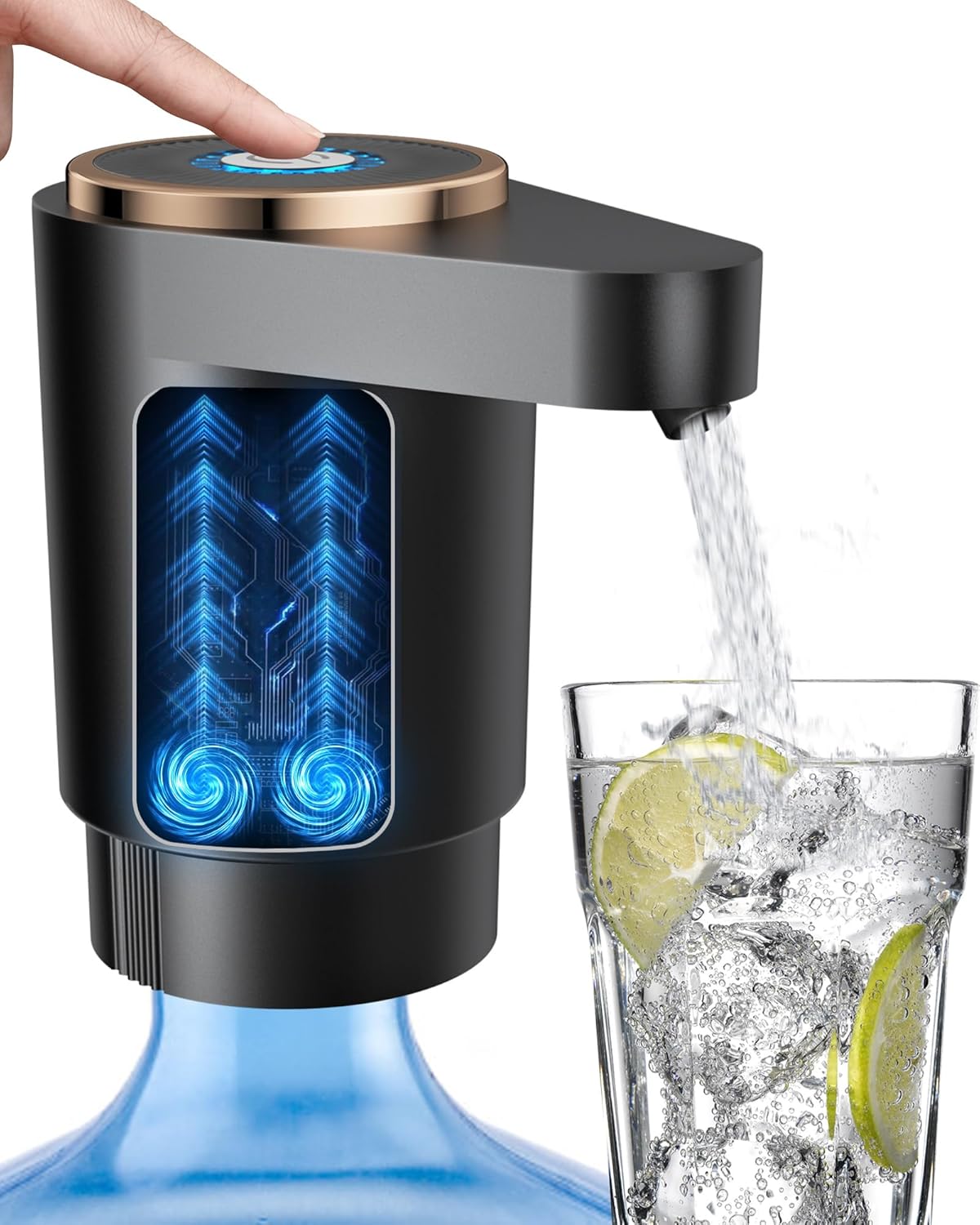
CozyCharm Water Jug Pump Z02
| Capacity | 18.93 liters |
|---|---|
| Power Source | Battery Powered |
| Installation Type | bottled |
| Material Type | Plastic, Silicone |
The CozyCharm Z02 is a compact electric water jug pump that lets you dispense water from standard 2, 3, and 5-gallon bottles without lifting the jug or removing the cap. It uses two motors to produce a stronger, steady stream—enough to fill a 16 oz cup in about nine seconds on a 5-gallon bottle—so pouring is quick for kitchens, offices, or camping. Installation is simple: fit the silicone hose and cap and press the button for hands-free dispensing, and the USB-C rechargeable battery removes the need for a wall outlet. The plastic body and silicone tubing are lightweight and easy to clean, and included caps aim to be leak-resistant. Limitations are typical for battery pumps: it is not a heated or cooled dispenser and you will need to recharge after extended use, and the unit relies on the fit of the supplied caps for a good seal on different jugs. For buyers who want a low-cost, portable alternative to bulky coolers, this pump is a practical, low-friction solution.
Best for: Buyers who want a simple, low-maintenance way to dispense bottled water without a bulky cooler and who prioritize reliable, easy operation and portability.
Less Ideal for: Anyone who needs hot or chilled water on demand or who requires a built-in filtration system should consider other solutions.
- Fast flow from dual motors; fills a 16 oz cup in about 9 seconds on a 5-gallon jug
- USB-C rechargeable battery for cordless use and portability
- Works with standard 2, 3, and 5-gallon jugs for broad compatibility
- Lightweight, compact design that is easy to install and carry
- Silicone hose and food-grade caps aimed at durability and leak resistance
- Does not heat or cool water
- Battery must be recharged after extended dispensing sessions
Verdict: Choose the CozyCharm Z02 when you want an affordable, portable, and easy-to-use rechargeable pump to dispense water from standard 2–5 gallon jugs without a bulky cooler.
Choosing the Right Bottled Water Dispenser: Key Factors to Consider
Flow Rate and Dispensing Control
How quickly and controllably water comes out affects everyday usability. Faster flow rates fill larger containers faster but can cause splashing if dispense controls are imprecise. Variable dispensing options, such as separate cold/hot taps or adjustable lever sensitivity, let you tailor flow for tasks ranging from filling a cup to topping a kettle.
Think about who will use the dispenser and for what. Families with kids often benefit from slower, guarded dispensing to reduce spills, while a small office may prioritize quicker pours to reduce wait time during breaks.
Sanitation and Ease of Cleaning
A dispenser that is easy to clean reduces the risk of biofilm and off-tastes. Look for sealed dispensing paths, removable drip trays, and access panels that let you reach internal surfaces without special tools. Models that allow routine sanitizing of the spout and reservoir without full disassembly will be easier to maintain on a weekly schedule.
Materials matter too. Smooth plastic or stainless surfaces resist staining and are less likely to harbor bacteria. If you plan to use inline filters or cartridges, check how they install and whether replacements are straightforward to change.
Installation, Footprint, and Placement
Where you plan to put the dispenser determines which size and configuration will work. Countertop units need a stable, level surface and enough clearance for bottles and cups. Freestanding units require floor space and may have higher capacity but can be harder to move. Make sure the dispenser's height, bottle-loading method, and drip-tray clearance match your intended location.
Also consider bottle compatibility and how easy it is to lift and load a full bottle. Some designs accept inverted bottles, others use a bottom-load option to reduce lifting. If mobility is important, check weight and whether the unit has casters or built-in handles.
Temperature Options and Performance
Many bottled dispensers offer cold and ambient dispensing, and some include hot or chilled functions. Cold performance depends on the compressor or thermoelectric system and how well the unit maintains set temperatures under repeated use. Hot dispensing requires safety features to prevent accidental scalding, such as child locks or guarded taps.
Consider the temperatures you actually need. If you only want cool water, skip units with complex hot systems that add maintenance. For frequent hot-water use, verify recovery time so the dispenser can meet repeated demands without long waits.
Noise, Energy Use, and Efficiency
Noise level affects where the dispenser can be placed. Compressor-based chillers and pumps can produce noticeable sound during cool-down cycles. If the dispenser will be in a quiet kitchen or near workspaces, choose a quieter design or one with low-power standby modes. Energy-efficient components reduce operating cost and lower heat output, which can be important in small rooms.
Some units offer eco or energy-saving modes that reduce compressor runtime. Also check whether the dispenser has indicators or automatic shutoffs to prevent wasteful continuous operation.
Durability and Serviceability
Durable components and easy access to wear parts lengthen useful life. Metal frames, reinforced bottle supports, and high-quality valves resist the wear of daily use. Serviceability includes how easy it is to replace faucets, tubing, or filters and whether parts use common fittings.
A unit that is simple to disassemble for routine maintenance will save time and money. Consider how long you expect to keep the dispenser and whether replacement parts are likely to be available.
Countertop Vs Freestanding Bottled Dispensers
Countertop and freestanding bottled dispensers serve similar functions but differ in size, capacity, and placement flexibility. Countertop models are compact and convenient for small kitchens, dorms, or offices with limited floor space. They are easier to move and often require less installation effort.
Freestanding dispensers typically hold larger bottles and can offer additional features like built-in storage or taller clearance for pitchers. They are better for high-use areas where capacity and permanence matter.
- Countertop: better for small spaces, easier to relocate
- Freestanding: higher capacity, more durable for continuous use
- Consider bottle-loading method when choosing placement
Bottle Loading Methods and Ergonomics
There are two common loading methods: top-load and bottom-load. Top-load designs require lifting and inverting the bottle, which can be challenging with heavy full bottles. Bottom-load dispensers eliminate the need to lift a heavy bottle above the unit but usually require a small pump or connection hose.
Ergonomics also include tap height, lever or push-button operation, and whether the dispenser allows one-handed use. Evaluate how easy it is to place cups and containers under the spout and whether drip trays are large enough to handle splashes.
- Top-load: simple design, fewer moving parts, may be harder to lift
- Bottom-load: easier bottle replacement, extra pump or hose maintenance
- Check spout clearance for the cups and pitchers you use
Maintenance Routines and Sanitizing Tips
Routine maintenance keeps water tasting fresh and prevents buildup. Wipe external surfaces weekly and empty and clean drip trays often. Follow manufacturer guidance for sanitizing internal components on a monthly or quarterly schedule depending on use.
If your dispenser uses replaceable filters or carbon cartridges, track replacement intervals and have spares on hand. Use food-safe cleaning solutions and ensure the unit is fully rinsed before returning it to service.
- Clean drip tray weekly; sanitize wetted parts monthly
- Replace filters per manufacturer interval or when taste changes
- Keep spare parts like faucets and tubing to reduce downtime
Safety Features to Look For
When a dispenser offers hot water, safety features are important. Child locks, guarded hot taps, and insulated spouts reduce the risk of accidental burns. Stable base design and non-slip feet prevent tipping when users place heavy bottles or apply force to taps.
Electrical safety is also a factor. Look for units with grounded plugs, accessible power switches, and clear instructions for safe placement away from sinks or wet areas.
- Child locks and guarded taps for hot water models
- Stable base and non-slip feet to prevent tipping
- Accessible power switch and grounded connection for safety
Troubleshooting Common Issues
Common problems include slow flow, leaking at the faucet, or off-tastes. Slow flow can result from clogged filters, air locks, or weak pumps. Leaks often stem from worn seals or loose fittings that are usually replaceable.
Off-tastes may indicate the need for a deep clean, filter replacement, or changing the bottle more frequently. Regular inspection and basic maintenance can prevent most issues and extend the dispenser's useful life.
- Slow flow: check filter and pump, purge air from lines
- Leaks: tighten fittings and inspect seals, replace damaged parts
- Off-taste: sanitize reservoir and replace filters or bottles
How We Chose the Best Bottled Water Dispenser
We prioritized features and performance metrics that determine how reliably a bottled water dispenser serves daily hydration needs. First, we evaluated flow rate and dispense control because users expect steady, spill-free pouring for glasses and pitchers. Second, sanitation and filtration-friendly design were key; models with sealed dispensing paths, removable drip trays, and easy-access components score better for long-term hygiene. Third, installation and footprint mattered for kitchens and small office spaces, so we favored units that fit standard countertop or freestanding arrangements and that offer simple, tool-free setup. Fourth, noise and pump efficiency were considered since quieter operation and lower power draw improve daily comfort. Finally, build quality and availability of replaceable parts were included to estimate longevity. We excluded products that require permanent plumbing or complex installation because this guide focuses on bottled dispensers. We also omitted novelty or single-function devices that lack basic sanitation features. The products that made the shortlist met these practical filters and excelled against the measurable criteria above.
Our full evaluation process is outlined in our review methodology.
FAQ
How often should I sanitize a bottled water dispenser?
Sanitize wetted internal parts monthly for average household use and more often for high-traffic areas. Wipe external surfaces weekly and clean drip trays as needed.
Are bottom-load dispensers harder to maintain?
Bottom-load models reduce lifting but may include a pump and extra tubing that require occasional cleaning and inspection. Maintenance is not harder, just different in focus.
Do bottled dispensers need filters?
Filters are optional for many bottled dispensers. They can improve taste and reduce odors but add maintenance and replacement costs. Decide based on water source and personal preference.
Can a bottled dispenser provide hot water safely?
Yes, many units offer hot dispensing with safety features like child locks and guarded taps. Check for insulated surfaces and reliable controls to reduce scald risk.
What causes unusual tastes in dispensed water?
Unusual tastes often result from old bottles, biofilm in the dispenser, or exhausted filters. Regular cleaning and timely filter or bottle replacement usually resolve taste issues.
Final Verdict
Choosing the right bottled water dispenser comes down to matching capacity, dispensing style, and sanitation features to your daily routine. Prioritize hygiene and ease of maintenance if the dispenser will see frequent use, and favor ergonomic bottle-loading and appropriate temperature options for your household. Balance noise and energy considerations against features like hot water or higher chilled capacity. With these tradeoffs in mind, you can select a dispenser that reliably delivers clean, convenient hydration for years.