
Note: This article contains affiliate links. If you click on these links and make a purchase, we may earn a small commission at no extra cost to you. This helps support our research and content. Read our full affiliate disclosure here.
A Bottom-Freezer Refrigerator changes daily kitchen flow by placing fresh-food storage at eye level and freezer items below where they stay organized. The right layout, capacity, and temperature control matter because you access fresh food far more often than frozen items. In this guide we shortlisted the top picks in the bottom-freezer category that excel at usable space, cooling performance, and thoughtful storage. Below you will find concise evaluations that focus on capacity, temperature consistency, and features that affect everyday use. Use the summary to narrow options quickly and then dive into the detailed sections to confirm which features match your kitchen habits.
Top Picks at a Glance
| Best Overall The best all-around choice for most situations | Forno Milano Espresso 31" |  |
| Best Quality Built to a higher standard if you want something more solid | LG LFDS22520S French Door Refrigerator |  |
| Best Value The sweet spot between price and what you get | Upstreman 7.1 Cu Ft Refrigerator BM71 |  |
| Best Budget The cheapest option that still gets the job done reliably | KRIB BLING Bottom-Freezer Fridge 4.0 Cu.Ft |  |
| Top Rated A top-rated pick with lots of positive feedback | Kenmore 31" Bottom-Freezer Refrigerator |  |
| Most Popular A crowd favorite that many people choose with confidence | BANGSON 7.1 Cu Ft Bottom-Freezer Refrigerator | 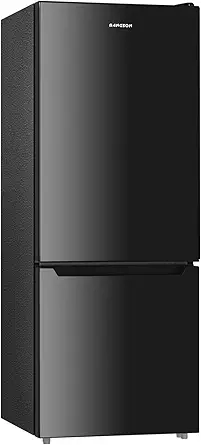 |
Forno Milano Espresso 31"

| Configuration | Freezer-on-Bottom |
|---|---|
| Capacity | 17.2 cubic feet |
| Voltage | 120 volts |
| Defrost System Type | Automatic |
| Refrigerant | R-600A |
The Forno Milano Espresso is a counter-depth, bottom-freezer refrigerator designed for kitchens that need a compact footprint without sacrificing storage. It delivers 17.2 cubic feet of usable space with four glass shelves, adjustable door bins and a crisper drawer that make organizing groceries straightforward. The touch control panel with LED readout and precision temperature settings (including Super Cool and Super Freeze modes) lets you quickly lower temperatures when loading warm items and monitor conditions at a glance. A compressor cooling system with R-600A refrigerant and an automatic defrost system keep operation efficient, and the unit is Energy Star certified for lower energy use. The unit is freestanding and has a right-hand door orientation, so plan placement accordingly. Buyers should note the unit is marketed as compact/counter-depth, so while storage is good for the footprint, very large platters or bulk purchases may require creative shelf arrangements. The clean stainless steel finish and quiet operation suit open kitchens, and the electronic lock adds convenience for transport or RV-style installs.
Best for: Buyers who want a stylish, space-conscious bottom-freezer fridge that balances usable storage and energy efficiency for everyday kitchen use.
Less Ideal for: Those who regularly need extra-wide interior space for oversized cookware or who require a left‑hand door orientation should consider larger or differently configured models.
- Counter-depth 31" footprint fits flush in tighter kitchens without sticking out
- 17.2 cu ft capacity with adjustable door bins and crisper drawer for flexible organization
- Touch control panel with LED display and precise temperature modes including fast cool/freeze
- Energy Star certified and uses R-600A refrigerant for efficient cooling
- Automatic defrost and quiet compressor operation suit everyday kitchen use
- Compact counter-depth design limits interior width for very large platters or bulk items
- Right-hand door orientation may restrict placement in some kitchen layouts
Verdict: Pick this counter-depth bottom-freezer if you want a compact, energy-efficient refrigerator that maximizes usable storage and precise temperature control in tighter kitchens.
LG LFDS22520S French Door Refrigerator

| Capacity | 21.8 cubic feet |
|---|---|
| Refrigerator Net Capacity | 14.5 cubic feet |
| Freezer Capacity | 7.3 cubic feet |
| Configuration | French Door |
| Specification Met | Energy Star |
The LG LFDS22520S is a compact French door refrigerator with a bottom freezer designed for small to medium households that need organized cooling without a large footprint. It uses a linear compressor and multi-air flow to maintain consistent temperatures, and the two full-width refrigerator doors plus a bottom freezer drawer make everyday access convenient. The interior offers seven shelves including four spill-protection tempered glass shelves and multiple door bins for flexible organization, while the cold water dispenser adds everyday convenience. Energy Star qualification and a modest annual energy consumption figure make it economical to run. Limitations include its 21.8 cu ft capacity, which is modest compared with larger models, and the bottom-freezer layout can require bending to access frozen items frequently. Overall it delivers reliable cooling performance and useful storage features for buyers who prioritize steady temperature control and practical family-oriented layout in a 30-inch footprint.
Best for: Buyers who want dependable cooling performance and organized, family-friendly storage in a standard 30-inch kitchen footprint and who prioritize consistent temperature control over maximum capacity.
Less Ideal for: Households that need very large refrigeration capacity or frequent deep-freeze access should consider larger or differently configured models instead.
- Linear compressor and multi-air flow for more consistent temperature control
- French door layout with bottom freezer offers easy access to fresh foods and organized storage
- Four split spill-protection tempered glass shelves simplify cleaning and prevent leaks
- Energy Star qualified for lower annual energy consumption
- Integrated cold water dispenser for convenient chilled water without a separate pitcher
- Total capacity of 21.8 cu ft is limited for larger families or heavy grocery users
- Bottom freezer drawer requires bending to access frozen items frequently
Verdict: Choose this LG if you want stable, energy-efficient cooling and a practical French-door layout in a 30-inch bottom-freezer refrigerator.
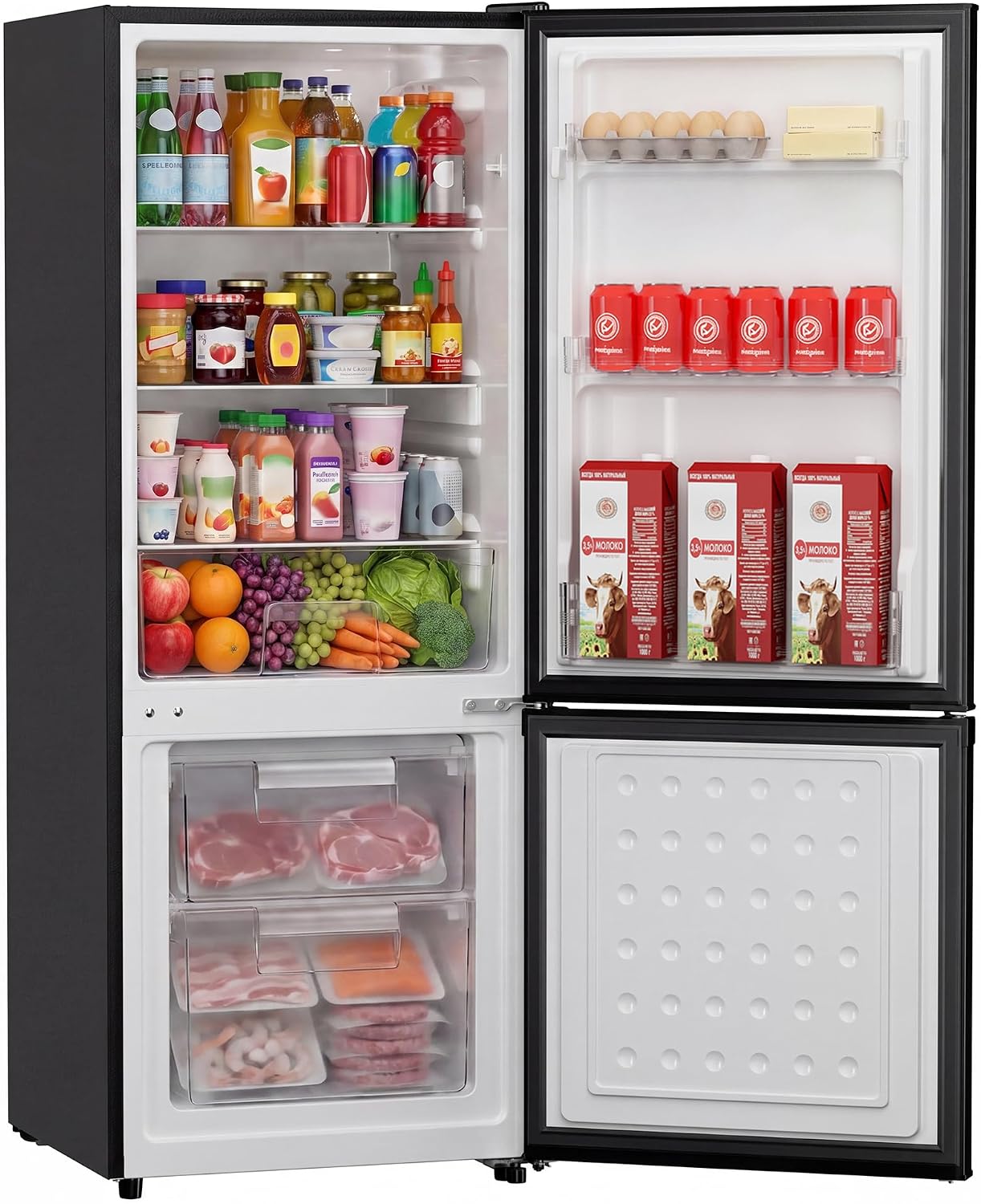
Upstreman 7.1 Cu Ft Refrigerator BM71
| Capacity | 7.1 cubic feet |
|---|---|
| Freezer Capacity | 1.65 cubic feet |
| Defrost System Type | Manual |
| Cooling Method | Compressor |
| Voltage | 115 volts |
The Upstreman 7.1 cu ft refrigerator positions the freezer on the bottom and offers a compact but usable interior for apartments, dorms, or small kitchens. It delivers compressor cooling with an adjustable thermostat and five temperature settings so you can fine-tune the fresh-food and freezer compartments for drinks, produce, or frozen meals. The layout includes removable shelves that fit gallon jugs upright, a built-in light, an egg shelf and an ice tray, and adjustable feet to level the unit on uneven floors. Manual defrost and a 1.65 cu ft freezer keep complexity and cost down, and the reversible door gives flexibility for tight layouts. Practical benefits are low noise operation and modest annual energy use, making it suitable where quiet and efficiency matter. Limitations are its small overall capacity compared with full-size household refrigerators and the manual defrost requirement for the freezer, so it works best as a primary fridge for small households or as a secondary unit.
Best for: Buyers who prioritize efficient, quiet cooling and space-saving design for apartments, dorms, or as a secondary household refrigerator and want an adaptable layout rather than maximum capacity.
Less Ideal for: Large families or anyone who needs sizeable frozen storage or a full-size primary refrigerator should choose a larger-capacity model instead.
- Bottom-freezer layout reduces bending for heavy frozen items
- Adjustable shelves and a removable layout that fits gallon jugs vertically
- Energy-efficient compressor with low-noise operation suitable for open areas
- Reversible door and adjustable feet allow flexible placement in small kitchens
- Freezer is small and requires manual defrost
- Overall capacity is limited compared with standard full-size refrigerators
Verdict: A compact, energy-efficient bottom-freezer fridge that delivers quiet, practical cooling and flexible placement for small homes or secondary use.
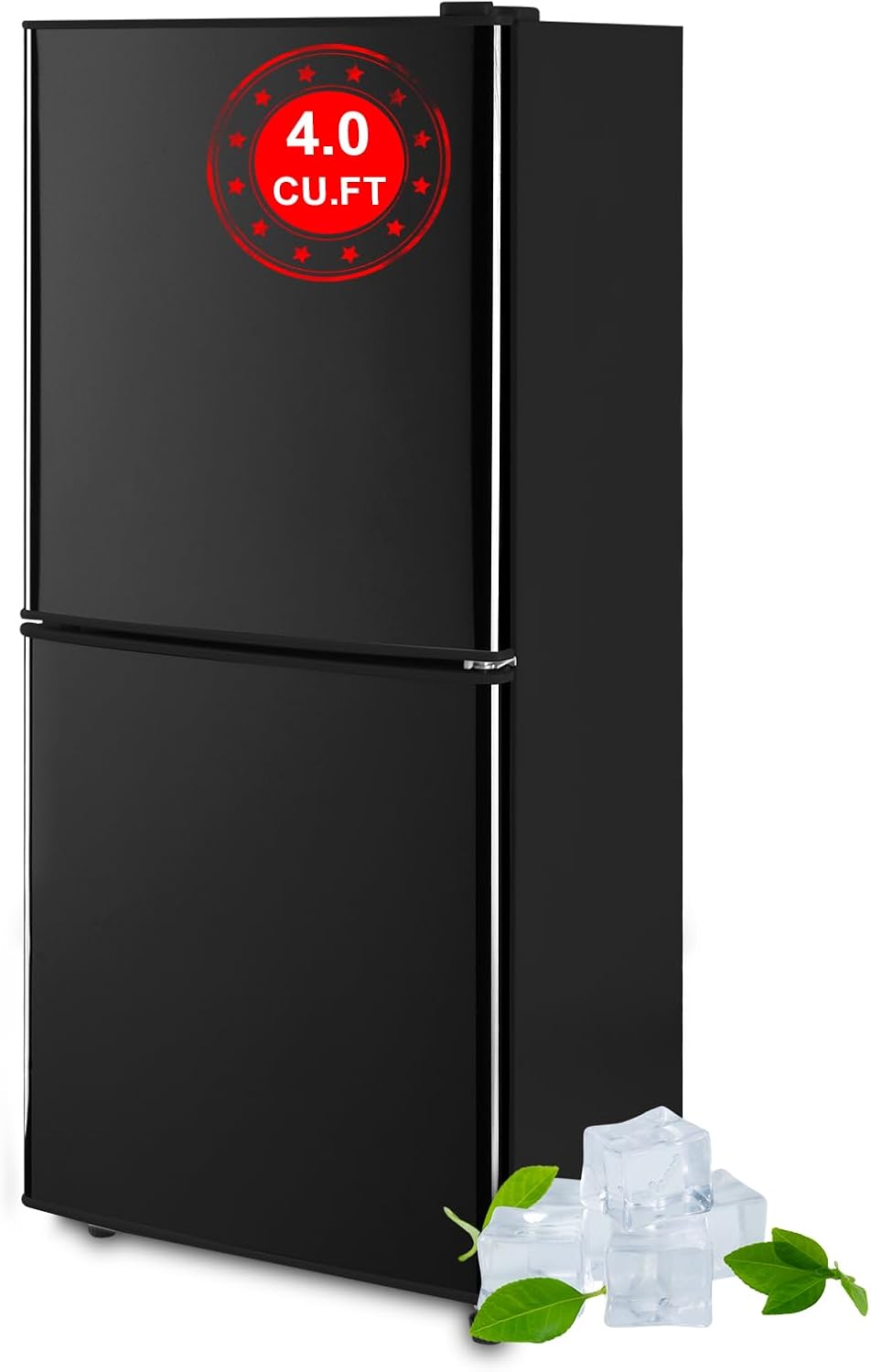
KRIB BLING Bottom-Freezer Fridge 4.0 Cu.Ft
| Capacity | 4 cubic feet |
|---|---|
| Freezer Capacity | 1 cubic feet |
| Defrost System Type | Manual |
| Voltage | 110 volts |
| Refrigerant | R-600A |
This KRIB BLING bottom-freezer refrigerator is a small two-door unit built for apartments, dorms, or offices where footprint and cost matter. It pairs a 1 cu ft freezer below with roughly 3 cu ft of fresh-food space above, and uses a rotary scroll compressor with manual defrost. The interior includes two removable glass shelves and adjustable thermostat control with seven settings that make it easy to tune temperatures for drinks, produce, or prepared food. Installation is flexible for countertop or tabletop placement and the unit runs quietly for a compact fridge, helping it stay unobtrusive in shared spaces. Practical limitations are its modest capacity and manual defrosting, which means more hands-on maintenance than higher-end models and less storage for families or heavy shoppers. Energy use is listed; buyers should compare operating costs if they plan continuous use. For buyers prioritizing a low-cost, space-saving bottom-freezer layout, this model is a straightforward option.
Best for: Buyers looking for an inexpensive, space-saving fridge for a single person, small household, or temporary housing who prioritize low upfront cost and a compact footprint.
Less Ideal for: Families, frequent batch cooks, or anyone who needs large refrigerated capacity or a frost-free, low-maintenance appliance should consider larger or automatic-defrost models instead.
- Compact bottom-freezer layout saves floor space while keeping frozen items separate from fresh food
- Adjustable thermostat with seven settings for basic temperature control
- Removable glass shelves allow flexible storage and easy cleaning
- Quiet operation suitable for bedrooms, dorms, and offices
- Manual defrost requires occasional thawing and more maintenance than frost-free models
- Limited overall capacity makes it a poor fit for large households
Verdict: A budget-friendly, space-saving bottom-freezer refrigerator that delivers basic cooling and flexible shelving for small living spaces.
Kenmore 31" Bottom-Freezer Refrigerator

| Capacity | 22.3 cubic feet |
|---|---|
| Freezer Capacity | 6.86 cubic feet |
| Configuration | Freezer-on-Bottom |
| Ice Maker Type | Cubed |
| Voltage | 115 volts |
This Kenmore 31" bottom-freezer refrigerator is a straightforward, no-frills full-sized unit that balances capacity and efficiency for everyday kitchen use. It uses an inverter compressor to keep temperatures steady and run quieter than conventional compressors, and ENERGY STAR certification plus an Eco Mode help control energy use. Inside, full-width adjustable tempered glass shelves, five door bins and two crisper drawers make it easy to organize groceries, while long-lasting LED lighting improves visibility. The built-in ice maker produces roughly 3.5 pounds of cubed ice per day, which covers routine household needs without requiring trays. Practical conveniences include reversible doors and a standard-depth 31-inch footprint that fits tighter kitchen spaces. Expect solid basic performance and user-friendly storage rather than high-end frills; the design focuses on reliable cooling and efficient operation rather than advanced smart features. If you need a dependable bottom-freezer with good capacity and efficient operation, this model covers the essentials well.
Best for: Buyers who prioritize steady, efficient cooling and practical storage in a compact footprint and want a straightforward, reliable refrigerator rather than feature-packed luxury.
Less Ideal for: Those seeking high-capacity ice production, integrated smart home controls, or premium designer styling should look elsewhere.
- Inverter compressor for quieter, consistent cooling and improved energy efficiency
- ENERGY STAR certified with Eco Mode to reduce power consumption
- 22.3 cu. ft. capacity in a 31-inch footprint fits smaller kitchens while still holding family groceries
- Adjustable full-width tempered glass shelves and multiple door bins for flexible organization
- Built-in ice maker provides about 3.5 lbs of cubed ice per day without trays
- Ice production rate is modest and may not meet heavy entertaining needs
- Lacks advanced smart features or touchscreen controls found on higher-end models
Verdict: A practical, energy-efficient bottom-freezer that delivers reliable cooling and flexible storage in a space-conscious 31-inch footprint.
BANGSON 7.1 Cu Ft Bottom-Freezer Refrigerator

| Capacity | 7.1 cubic feet |
|---|---|
| Refrigerator Net Capacity | 5.45 cubic feet |
| Defrost System Type | Manual Defrost |
| Cooling Method | Compressor |
| Number of Doors | 2 |
This compact bottom-freezer refrigerator is aimed at small apartments, offices, or secondary kitchens where floor space is limited but usable storage matters. It pairs a 5.45 cu ft refrigerated compartment with a 1.65 cu ft bottom freezer and offers adjustable glass shelves, a crisper drawer, and door racks for bottles. Five temperature settings let you tune the fridge and freezer separately, and the compressor cooling delivers reliable performance while the unit runs quietly at about 39 dB. Installation is straightforward as a freestanding unit and the reversible doors and leveling legs make placement flexible. Expect manual defrosting in the freezer; the package includes a defrost tool and an ice tray, but you will need to schedule periodic defrosts. Buyers should also allow the recommended upright rest before first use to avoid compressor issues. For its size this fridge balances usable layout and energy-conscious operation, though it lacks automatic defrost and higher-end temperature controls.
Best for: Buyers who prioritize a compact, well-organized refrigerator for small living spaces and want a straightforward, energy-conscious appliance with positive user feedback.
Less Ideal for: Those who need large freezer storage, automatic defrosting, or precise digital temperature control for specialty food storage should look for a different model.
- Space-saving footprint with a 7.1 cu ft total capacity suitable for tight kitchens and offices
- Adjustable glass shelves and crisper drawer provide flexible internal organization
- Five selectable temperature settings for tailored cooling in both fridge and freezer
- Quiet compressor operation around 39 dB that minimizes disturbance
- Freezer uses manual defrost, requiring periodic thawing and maintenance
- No advanced temperature controls or automatic defrost features
- Limited freezer capacity compared with larger bottom-freezer models
Verdict: A compact, quiet bottom-freezer refrigerator that delivers solid everyday cooling and flexible storage for apartments and small kitchens.
Choosing the Right Bottom-Freezer Refrigerator: Key Factors to Consider
Usable Fresh-Food and Freezer Capacity
Rated cubic feet only tell part of the story. Layout, shelf depth, and the number of drawers determine how much of the listed capacity you can actually use. Consider how you store items now: do you need wide shelves for platters, tall door bins for bottles, or multiple shallow drawers for deli and produce?
A bottom-freezer layout typically gives you more convenient access to fresh items, but freezer capacity and drawer design vary widely. Look for adjustable shelving and split drawers that let you convert space when needed. These design details have a direct effect on how much you will be able to fit and how easy it is to keep items visible and reachable.
Temperature Control and Stability
Consistent temperatures preserve food quality and safety. Features such as multi-zone cooling, independent temperature controls, and good insulation reduce fluctuations caused by door openings. Verify that the model offers fine-grain control or dedicated cooling zones when maintaining produce crispness matters.
Stable cooling is especially important for sensitive items like dairy, greens, and leftovers. For the freezer, look for consistent cold distribution and minimal warm spots in drawers. These aspects affect spoilage rates and the time it takes to refreeze thawed items.
Interior Organization and Adjustability
Organization options determine how efficiently you can use the refrigerator. Adjustable shelving, moveable door bins, and specialized drawers for deli, produce, or meat let you tailor the interior to your routine. Consider whether shelves are spill-resistant and if drawers glide smoothly without needing major effort.
Good organization reduces clutter and helps maintain airflow so cooling works as intended. The ability to reconfigure shelves and bins also increases the unit's versatility for different shopping trips or seasonal needs.
Energy Use and Efficiency
Energy efficiency affects operating cost and household sustainability. Look for documented energy consumption figures and efficient compressors or inverter-driven motors. While efficiency labels are helpful, also consider how features like automatic defrost, door alarms, and tighter seals contribute to lower running costs.
Higher upfront efficiency often translates to lower electricity use over the life of the appliance. If your kitchen is in a warm location or the unit will be opened frequently, a more efficient model can noticeably reduce monthly energy draw.
Maintenance and Ease of Cleaning
Daily upkeep should not be a chore. Removable shelves and drawer bins that are simple to lift and wash make cleaning faster and reduce food-safety risks. Look for materials and finishes that resist stains and fingerprints, and for shelf edges that contain spills to prevent crossover messes.
Accessibility of service points, such as an easily reachable condenser or clear access panels, makes routine maintenance simpler. The less time spent on deep cleaning and upkeep, the more pleasant the ownership experience.
Noise and Operational Comfort
Noise levels matter if the refrigerator is near living spaces or open-plan areas. Compressor type, compressor mounting, and insulation influence how noticeable operational sounds are. Check documented noise figures when available and consider models with quieter inverter compressors if noise sensitivity is a concern.
Operational comfort also includes how smoothly drawers and doors operate and whether controls are intuitive. Small ergonomic benefits reduce friction in everyday use and make the appliance feel higher quality.
How Bottom-Freezer Layout Changes Kitchen Workflow
Placing fresh food at eye level reduces bending and makes meal prep faster. You are more likely to keep frequently used items organized and visible, which cuts down on wasted food and the time spent searching for ingredients.
The freezer below is often organized as pull-out drawers, which can keep frozen items accessible without rummaging. Consider how your typical shopping and cooking habits align with this flow before deciding on a model.
- Frequent-access items are easier to reach.
- Freezer drawers improve visibility and reduce mess.
- Top fresh-food placement supports ergonomic use for most adults.
Layout Choices That Improve Daily Use
Look for flexible shelves, a mix of drawers and bins, and an adjustable door layout. These elements let you adapt the interior to tall bottles, large platters, or grocery runs with awkwardly shaped items.
Small conveniences such as a deli drawer with dedicated humidity control or a quick-access compartment for condiments can improve kitchen efficiency without adding complexity.
- Adjustable glass shelves for easy cleaning and spill containment.
- Split drawers for segregating frozen goods by type.
- Tall door bins for beverage storage.
Optimizing Temperature Zones for Different Foods
Different foods benefit from slightly different temperatures and humidity levels. Produce usually fares best in slightly higher humidity, while cheeses and deli meats prefer stable cool zones that are not as cold as the main compartment. Check for two-zone or multi-zone controls in models that list them.
For the freezer, look for even cold distribution across drawers to prevent partial thawing and refreezing. Features such as rapid-freeze modes are useful after large shopping trips but are not essential for day-to-day performance.
- Use produce drawers for vegetables to maintain crispness.
- Store dairy on middle shelves away from door openings.
- Keep frequently used condiments in door bins for quick access.
Installation and Fit for Standard Kitchen Spaces
Measure doorways, alcove depth, and clearance required for door swings before selecting a unit. Bottom-freezer models often require slightly different clearances because drawers need full extension to access the freezer completely. Confirm the height and depth specifications against your intended location.
Also consider leveling adjustments and whether the unit will sit flush with cabinetry or stand slightly proud. Proper leveling helps drawer operation and prevents door alignment issues.
- Confirm drawer clearance and door swing space.
- Check width and depth against alcove dimensions.
- Plan for service access to the rear and sufficient ventilation space.
Care and Seasonal Maintenance Tips
Regular cleaning of shelves and drawers prevents odors and stains. Wipe spills promptly and occasionally remove removable components for a deeper wash. Keeping interior gaskets clean helps maintain a tight seal and reduces energy loss.
Seasonally inspect the door seals and ensure the unit is level. If the refrigerator will be idle for extended periods, follow manufacturer guidance on emptying and cleaning to prevent mold and odors.
- Clean gaskets and drawer tracks every few months.
- Defrost manually only if the model requires it; most modern units have automatic defrost.
- Keep vents and coils free of dust for efficient operation.
How We Chose the Best Bottom-Freezer Refrigerator
We focused on practical, measurable attributes that affect real-world performance in kitchens. Primary filters included usable fresh-food and freezer capacity, verified temperature-control features, and energy efficiency ratings. We prioritized interior layout options such as adjustable shelving and drawer configurations because these determine how much of the rated capacity is actually usable. Noise levels and build quality were evaluated to reflect everyday comfort and long-term durability. We also considered features that simplify upkeep, such as removable drawers, spill-resistant shelving, and accessible condenser locations. Exclusions: units lacking clear capacity specs, poor temperature stability reports, or missing basic refrigeration protections were excluded. We did not include units without adequate documentation of energy use or those that omitted standard safety features. The result is a list of models that meet minimum thresholds in storage utility, temperature control, energy efficiency, and maintenance practicality.
Our full evaluation process is outlined in our review methodology.
FAQ
How much space do I need to open bottom-freezer drawers fully?
Drawer extension varies by model, but you should allow enough front clearance for full pullout. Measure from the appliance front to any cabinet or island to ensure drawers open without obstruction.
Are bottom-freezer refrigerators more energy efficient than other layouts?
Efficiency depends more on compressor technology and insulation than layout alone. Bottom-freezer designs can be efficient because cold air stays lower, but check documented energy ratings to compare models.
Is a bottom freezer harder to organize than a top freezer?
Not necessarily. Freezer drawers and dividers can make organization easier by providing dedicated compartments. The right drawer layout makes it simpler to separate types of frozen items compared with stacked shelves.
What maintenance keeps a bottom-freezer fridge running well?
Regularly clean shelves, drawers, and gaskets, and vacuum condenser coils if accessible. Level the unit and check door seals periodically to prevent unnecessary energy use and wear.
Can I store large platters and baking sheets in a bottom-freezer refrigerator?
Yes, but confirm that the model offers adjustable shelving or a quick way to remove shelves to create taller vertical space. Many bottom-freezer refrigerators have at least one shelf that can be repositioned for tall items.
Final Verdict
When choosing a bottom-freezer refrigerator, prioritize usable fresh-food capacity, reliable temperature control, and interior organization that matches how you shop and cook. Energy efficiency and ease of cleaning are practical tradeoffs that affect operating cost and long-term satisfaction. Decide which features you use daily and let those needs guide your choice. Focusing on capacity, temperature stability, and maintenance simplicity will lead to a confident selection that improves kitchen workflow and keeps food fresher longer.