
Note: This article contains affiliate links. If you click on these links and make a purchase, we may earn a small commission at no extra cost to you. This helps support our research and content. Read our full affiliate disclosure here.
If a loud compressor or constant humming disturbs your kitchen, choosing a quiet refrigerator can make a big difference in daily comfort. A low-noise unit matters not just for open-plan homes and small apartments but also for bedrooms and offices that share wall systems with the kitchen. You will want a model that balances silent operation with reliable cooling, good storage layout, and reasonable energy use. This guide presents six shortlisted quiet refrigerators selected for their low operational sound, cooling stability, and practical features. Below we explain the testing and selection criteria, outline what to consider when buying, and provide focused advice so you can pick a refrigerator that keeps both your food and your household quiet. Read on to see how the finalists were evaluated and which features matter most.
Top Picks at a Glance
| Best Overall The best all-around choice for most situations | Manastin 4.5 Cu.Ft Mini Fridge |  |
| Best Value The sweet spot between price and what you get | EUHOMY WC-6B Mini Fridge | 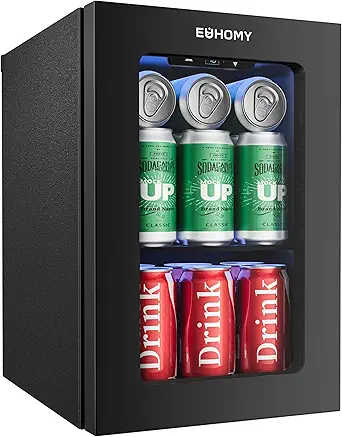 |
| Best Budget The cheapest option that still gets the job done reliably | Frestec 1.7 Cu Ft Mini Fridge |  |
| Top Rated A top-rated pick with lots of positive feedback | EUHOMY 3.2 Cu Ft Mini Fridge |  |
| Most Popular A crowd favorite that many people choose with confidence | Midea Compact Refrigerator WHS-65LB1 |  |
| Best Seller A high-volume bestseller chosen again and again | Upstreman 7.7 Cu Ft Refrigerator |  |
Manastin 4.5 Cu.Ft Mini Fridge

| Capacity | 4.5 cubic feet |
|---|---|
| Freezer Capacity | 1 cubic feet |
| Cooling Method | Compressor |
| Defrost System Type | Manual |
| Annual Energy Consumption | 181 kilowatt hours per year |
The Manastin 4.5 Cu.Ft Mini Fridge is a compact two-door refrigerator with a 1 cu.ft freezer on top and a 3.4 cu.ft refrigerator below, built around a low-noise compressor that claims operation under 38 dB. It is intended as a freestanding unit for dorms, offices, or small kitchens and includes three adjustable glass shelves, door bins, a clear crisper, and a 7-position temperature knob for tailored cooling. The separate freezer helps prevent odor transfer and the removable shelves make it fairly easy to reconfigure for tall bottles or meal prep containers. Energy use is moderate at about 181 kWh per year, and the manual defrost freezer keeps electronics simple but requires periodic maintenance. At roughly 41.5 inches tall it offers more vertical storage than countertop mini fridges while remaining space efficient. Expect quieter-than-average compressor noise for sleeping or working nearby, but plan to manually defrost the freezer and allow a little clearance for ventilation during continuous compressor cycles.
Best for: Buyers who want a quiet, taller compact refrigerator for a dorm room, office, or small apartment that balances usable freezer space with customizable fridge shelving and low operating noise.
Less Ideal for: Those needing a frost-free freezer, heavy-duty commercial use, or precise digital temperature control should consider other models.
- Two-door layout with a separate top freezer reduces odor transfer and improves organization.
- Quiet compressor operation rated under 38 dB suitable for bedrooms or offices.
- Seven-level thermostat and adjustable shelves let you tune temperature and layout for different foods and bottles.
- Removable glass shelves and a crisper drawer simplify cleaning and flexible storage.
- Freezer uses manual defrost so occasional thawing is required.
- Power source listed as battery powered in one field which may be an error and could confuse setup information.
Verdict: A quiet, taller compact refrigerator that delivers practical two-door storage and customizable shelving for buyers who prioritize low noise and everyday convenience.
EUHOMY WC-6B Mini Fridge

| Capacity | 18 liters |
|---|---|
| Temperature range | 40°F to 61°F |
| Cooling method | Compressor |
| Power | 115 volts |
The EUHOMY WC-6B is a small compressor-powered beverage fridge designed for counters, dorms, or home bars where space is tight. It holds roughly 24 330 ml cans in its 18 L capacity and uses a one-touch digital control to set temperatures between 40°F and 61°F, which keeps drinks consistently chilled compared with thermoelectric models. The unit includes a removable shelf to accommodate bottles or taller cans and an interior LED for visibility. It is freestanding, has a right-hinged UV-protected door and operates quietly at under 40 dB, making it suitable for bedrooms and offices. Because it is a compressor fridge it will cool reliably in warmer rooms but is heavier than similar thermoelectric mini fridges and uses standard 115 V power. Practical buyers will appreciate the stable temperature control and compact footprint, while those needing larger capacity or integrated installation should look elsewhere.
Best for: Buyers who prioritize consistent, quiet cooling in a very small footprint and want a practical countertop fridge for drinks in bedrooms, offices, or home bars.
Less Ideal for: People who need larger-capacity refrigeration, built-in installation, or the lightest possible portable cooler should consider larger or different models.
- Compressor cooling offers stable, consistent temperatures compared with thermoelectric designs
- Very quiet operation reported at under 40 dB, suitable for bedrooms and offices
- Digital temperature control with a 40°F to 61°F range for precise beverage chilling
- Removable shelf provides flexible storage for cans and taller bottles
- Small 18 L capacity limits storage to roughly two dozen cans or a few bottles
- Uses standard compressor which makes the unit heavier than thermoelectric mini fridges
Verdict: If you want a very compact, quietly running fridge that keeps drinks at stable, accurate temperatures, this compressor mini fridge is a sensible small-space choice.
Frestec 1.7 Cu Ft Mini Fridge

| Capacity | 1.7 cubic feet |
|---|---|
| Freezer Capacity | 0.2 cubic feet |
| Cooling Method | Compressor |
| Defrost System Type | Manual |
| Voltage | 115 volts |
This Frestec 1.7 cu ft mini fridge is a basic compressor refrigerator aimed at tight spaces like dorms, bedrooms, or offices. It provides a 0.2 cu ft freezer compartment and one adjustable glass shelf so you can store drinks, small containers, and a few frozen items. Controls are simple: a six-position thermostat knob plus a one-touch defrost button for quick manual defrosting, and a small interior light for visibility. Practical features include a reversible door and adjustable feet to fit different layouts, plus a detachable door seal for easier cleaning. The compressor cooling method and R-600A refrigerant mean it cools reliably compared with thermoelectric units, and the manufacturer rates operating noise around 37 dB so it stays unobtrusive in quiet rooms. Limitations include the very small capacity and a manual defrost system, so it is not suitable as a primary household freezer or for heavy food storage, and annual energy use is moderate at about 200 kWh per year.
Best for: Buyers prioritizing an affordable, quiet secondary fridge for a bedroom, dorm, or office who need a small freezer and compact footprint.
Less Ideal for: Anyone needing full-size refrigeration, significant frozen storage, or a hands-off frost-free model should consider larger or frost-free alternatives.
- Compact footprint fits under desks or in small rooms
- Compressor cooling with a small freezer for dependable chilling
- Reversible door and adjustable feet for flexible placement
- Low operating noise around 37 dB suitable for bedrooms or offices
- Very limited internal capacity not suited for large grocery storage
- Manual defrost requires occasional maintenance to remove frost buildup
Verdict: A budget-friendly, quiet compressor mini fridge that reliably cools small loads and fits tight spaces.
EUHOMY 3.2 Cu Ft Mini Fridge

| Capacity | 3.2 cubic feet |
|---|---|
| Freezer Capacity | 0.96 cubic feet |
| Cooling Method | Compressor |
| Defrost System Type | Manual |
| Number of Doors | 2 |
The EUHOMY 3.2 cu ft mini fridge pairs a small freezer compartment with a larger refrigerated section to offer basic, reliable cold storage for dorms, bedrooms, or offices. It uses a compressor cooling system with three temperature settings and an adjustable thermostat, so you can dial in colder freezer temps or milder fridge cooling depending on what you store. The unit includes adjustable glass shelves, a crisper drawer, internal LED lighting, and a reversible door for flexible placement. Practical touches like low-noise operation and adjustable feet make it straightforward to keep running in a quiet space without constant adjustments. Expect manual defrosting for the freezer and a straightforward electronic lock, not advanced smart controls or automatic defrost convenience. Energy use is moderate and the fridge ships as a freestanding unit that should be left upright before use. For buyers prioritizing quiet, dependable day-to-day cooling in a compact footprint, this model delivers the essentials without unnecessary complexity.
Best for: Buyers who need a compact, no-frills refrigerator that runs quietly and reliably in small living areas and want straightforward cooling rather than smart features.
Less Ideal for: Those who need a large-capacity fridge, automatic defrosting, or networked controls should look at larger or higher-end models instead.
- Two-zone layout with a dedicated top freezer plus fridge for mixed storage needs
- Compressor cooling with adjustable thermostat for consistent temperatures
- Reversible door and adjustable feet for flexible placement
- Internal LED light and adjustable glass shelves increase usable organization
- Designed for low-noise operation suitable for bedrooms or dorms
- Manual defrost freezer requires occasional maintenance
- No advanced features like automatic defrost or smart connectivity
Verdict: A compact, quiet compressor mini fridge that reliably covers basic fridge and freezer needs for small spaces.
Midea Compact Refrigerator WHS-65LB1

| Capacity | 1.6 cubic feet |
|---|---|
| Annual Energy Consumption | 207 kilowatt hours per year |
| Defrost System Type | Automatic |
| Cooling Method | Compressor |
| Voltage | 115 volts |
The Midea 1.6 cu ft compact refrigerator is a straightforward small-fridge option for dorms, bedrooms, or offices where quiet operation and energy efficiency matter. It uses an R600A compressor and is ENERGY STAR certified, which keeps annual energy use low and helps control running costs. The interior provides a single removable shelf, a small internal chiller compartment for short-term cooling, and door shelves sized to hold bottles including a 2L rack. Temperature is adjusted with a simple mechanical thermostat offering several settings and a low point near freezing for rapid chilling. The reversible door and compact footprint make placement flexible. Practical limits include very limited usable storage for meal prep or bulk items and a chiller that cannot freeze or long-term store frozen foods. Noise is advertised under 42 dB, which makes it suitable for quiet rooms, though compressor cycles are still audible in very quiet environments. Setup is plug-and-play with freestanding installation and a basic electronic lock option for securing contents.
Best for: Buyers who prioritize low running costs and quiet operation for a bedroom, dorm, or small office and want a simple, energy-efficient extra fridge with flexible placement.
Less Ideal for: People who need substantial refrigerated or frozen storage for meal prep, large families, or regular bulk grocery storage should choose a larger-capacity refrigerator.
- ENERGY STAR certified with R600A high-efficiency compressor for lower annual energy use
- Advertised ultra-quiet operation (under 42 dB) suitable for bedrooms and offices
- Reversible door and compact footprint allow flexible placement in small spaces
- Removable shelf and door racks accommodate taller bottles and odd-shaped items
- Very limited internal capacity not suitable for regular meal prep or bulk storage
- Chiller compartment is for short-term cooling only and cannot freeze or store frozen foods long-term
Verdict: A quiet, energy-efficient mini fridge that delivers low operating costs and flexible placement for small rooms where limited chilled storage is acceptable.
Upstreman 7.7 Cu Ft Refrigerator
| Capacity | 7.7 cubic feet |
|---|---|
| Freezer capacity | 1.5 cubic feet |
| Cooling method | Compressor |
| Defrost type | Manual Defrost |
| Voltage | 115 volts |
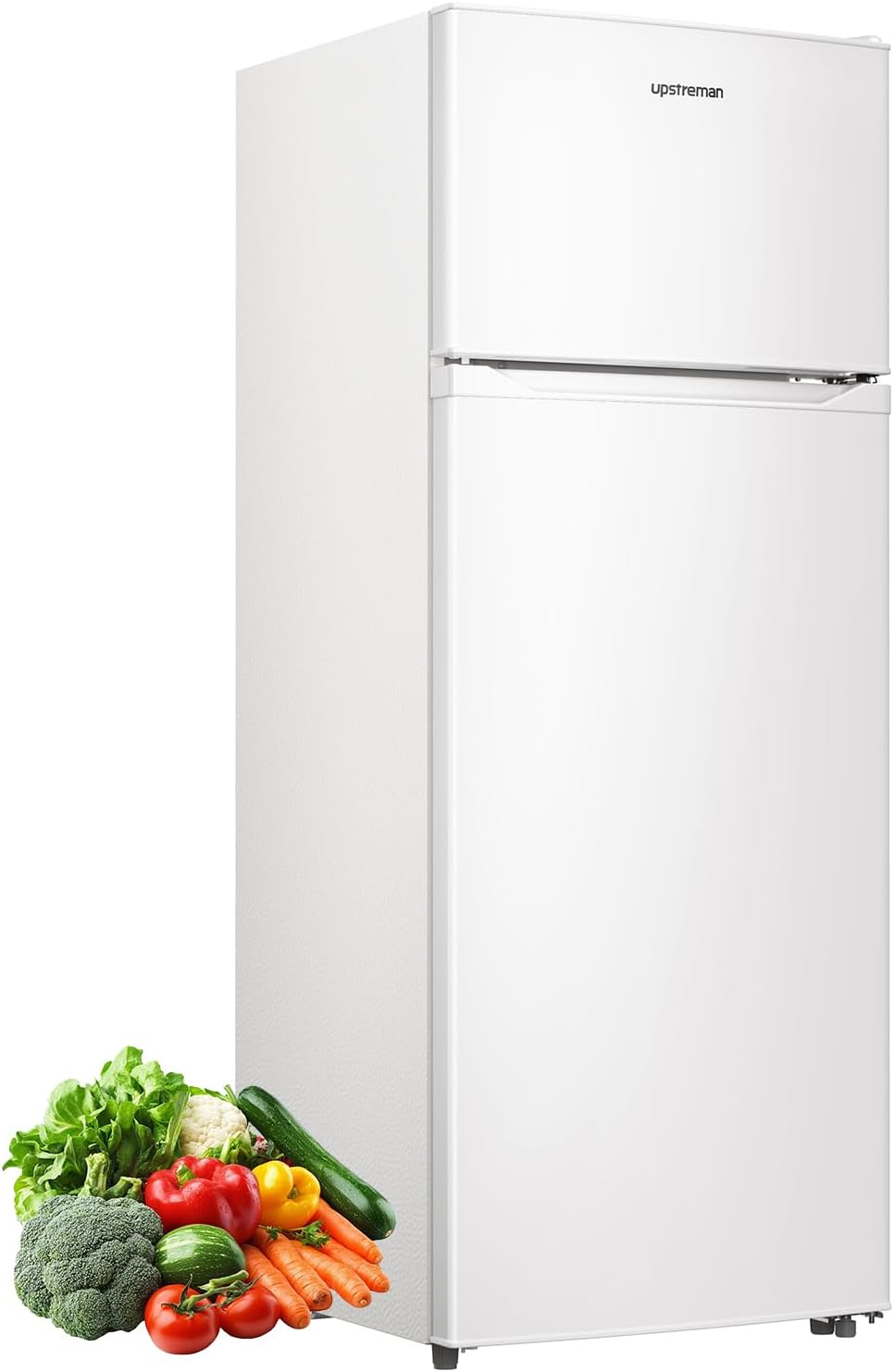
The Upstreman 7.7 cu ft refrigerator is a compact two-door unit built for small apartments, dorms, or offices where quiet operation and usable capacity matter. It uses a compressor cooling system with a 1.5 cu ft freezer and 6.2 cu ft fresh-food section, and offers five adjustable thermostat settings that let you tune freezer and fridge temperatures manually. Inside there are two tempered glass shelves and a crisper drawer plus door shelves, all removable to make room for taller items. The unit is advertised as energy efficient and runs at a low noise level (about 39 dB), which makes it suitable for bedrooms or shared spaces. Practical features include an automatic interior light and a reversible door for flexible placement. Expect basic, reliable performance rather than advanced temperature controls or automatic defrosting, and manual defrosting will add occasional maintenance. For buyers prioritizing quiet, straightforward cooling and a modest footprint with adaptable shelving, this model covers the essentials well.
Best for: A cautious buyer who values quiet, energy-efficient operation and a straightforward, low-maintenance refrigerator for small homes, dorms, or offices.
Less Ideal for: Those who want large-capacity, feature-rich refrigerators with automatic defrost, precise digital controls, or smart connectivity should look elsewhere.
- Quiet operation around 39 dB suitable for bedrooms or offices
- Compact footprint with relatively large usable capacity for small spaces
- Adjustable thermostat with five settings for manual temperature control
- Removable tempered glass shelves and crisper drawer for flexible storage
- Reversible door and automatic interior light for placement and convenience
- Manual defrost requires periodic maintenance
- No advanced digital temperature controls or smart features
Verdict: A low-noise, energy-conscious compact two-door refrigerator that delivers practical storage and simple, reliable cooling for small living spaces.
Choosing the Right Quiet Refrigerator: Key Factors to Consider
Measured Noise Output
Noise ratings and measured decibel levels are the most direct indicator of a refrigerator's impact on household sound. Look for reliable measurements for both idle fan noise and compressor run cycles, since peaks during start-up or defrost can be noticeably louder.
Consider whether noise specs are provided at a typical distance and under common conditions. Small differences in dB can be significant in quiet rooms, so prioritize models that maintain low continuous noise rather than those that only report low average figures.
Cooling Performance and Stability
A refrigerator that runs quieter but allows wider temperature swings can harm food longevity and safety. Evaluate how well a model holds steady temperatures in both fresh and frozen compartments across normal daily use and door openings.
Stable cooling often requires a compressor and fan system that run more frequently at lower power rather than short, loud cycles. Choose units with good temperature regulation to avoid noise tradeoffs that compromise performance.
Energy Use and Efficiency
Quiet operation should not come at the cost of excessive energy consumption. Check energy-efficiency metrics and typical power draw, since quieter compressors sometimes run longer to maintain temperature and can use more electricity over time.
Consider long-term operating costs and how efficiency ratings relate to your usage patterns. An efficient, quiet refrigerator reduces both noise and monthly energy bills while offering better environmental performance.
Internal Layout and Storage Options
Storage design affects how often you open the doors and for how long, which in turn influences compressor activity and audible cycling. Flexible shelving, adjustable door bins, and well-sealed drawers let you organize items to minimize door openings and reduce workload on the cooling system.
Choose configurations that fit your household habits so the refrigerator can operate with fewer interruptions and lower peak noise events.
Build Quality and Vibration Isolation
Rattles and amplified vibrations are a common source of perceived loudness. Look for solid door seals, well-secured panels, and effective compressor mounts or dampers that keep vibration from transferring to the cabinet.
Heavier insulation and denser materials can also reduce airborne noise. Pay attention to user guidance on leveling and placement since improper installation can worsen vibration and sound.
Defrost System and Fan Control
Defrost cycles and fan speed changes can produce noticeable noise spikes. Evaluate whether a refrigerator uses adaptive or scheduled defrost, and whether fans have multiple speeds or variable control to reduce abrupt sounds.
Models with quieter, electronically controlled fans and staggered defrost routines tend to minimize intrusive noise compared with units that use simple on/off cycles.
Where Quiet Refrigerators Make the Biggest Difference
Low-noise refrigerators are most valuable in open-plan living spaces, studio apartments, and homes where the kitchen borders sleeping or working areas. In these settings even moderate compressor hum can disrupt conversation, sleep, or concentration.
If your refrigerator sits against a shared wall or on a floor with noticeable resonance, selecting a model with strong vibration isolation and lower continuous noise will reduce the chance of complaints or long-term annoyance.
- Open-plan kitchens and living rooms
- Small apartments and studios
- Homes with adjacent bedrooms or home offices
- Shared housing with thin walls or floors
Placement and Installation Tips to Cut Noise
Proper placement and installation can reduce audible noise as much as choosing a quiet model. Ensure the unit is level and sits squarely on a solid, stable surface. Use adjustable feet or shims to eliminate rocking that amplifies vibration.
Leave adequate clearance for airflow around the back and sides to prevent the compressor from overheating and running harder. Where possible, place the refrigerator on a solid floor rather than directly on a hollow or suspended subfloor to minimize structure-borne noise.
- Level the refrigerator precisely to avoid rattles
- Provide manufacturer-recommended clearance for ventilation
- Avoid tight cabinetry without ventilation
- Use an anti-vibration mat if floor resonance is an issue
Maintenance That Keeps Noise Low
Routine maintenance reduces the risk of new or worsening noise. Clean condenser coils periodically to keep the compressor running efficiently and quietly. Inspect door gaskets and hinges for wear that can cause additional rattles or increased cycling.
Keep the interior organized so airflow paths are not blocked and fans do not have to work harder. If you hear new clicking or grinding noises, investigate promptly as they may indicate a fan motor or compressor issue that will get louder over time.
- Clean coils every 6–12 months
- Check and replace damaged door seals
- Tighten loose panels or mounting hardware
- Monitor for new or changing noises and act early
Sound Measurement: What To Look For
Manufacturers sometimes quote decibel figures, but those numbers vary with measurement distance and conditions. Look for measurements taken at a realistic distance such as one meter or across an open-plan kitchen to better reflect actual experience.
Pay attention to both continuous noise and peak events. A low average dB is good, but a refrigerator that produces occasional loud spikes during start-up or defrost can still be disruptive.
- Compare dB figures measured at similar distances
- Ask whether figures include peak noise events
- Seek models with low steady-state sound rather than only low averages
Design Features That Reduce Noise
Look for compressor isolation mounts, thicker insulation, and quieter fan motors as design features that reduce operational sound. Multi-speed or variable-frequency compressors and inverter-driven systems often run more smoothly and quietly than single-speed designs.
Cabinet rigidity and snug-fitting access panels also reduce rattles. Where available, models that advertise specifically engineered vibration control are worth considering for noise-sensitive environments.
- Inverter-style compressors for smoother operation
- Compressor dampers or isolation mounts
- Dense cabinet insulation to absorb sound
- Sealed fans with low-RPM operation
How We Chose the Best Quiet Refrigerator
We prioritized units that demonstrably reduce audible operating noise while still delivering consistent cooling and sensible storage. Key evaluation criteria included measured sound output during typical cycles, steady-state temperature control across compartments, energy efficiency ratings and typical power draw, and internal layout flexibility to support varied food storage needs. We also considered build quality factors that influence long-term vibration and rattle, such as compressor mounting, insulation density, and door seal design. Practical usability matters, so we checked control simplicity, usable shelf and bin configurations, and features that reduce nuisance noises like auto-defrost timers and fan speed control. Durability and serviceability were considered through common reliability indicators such as component accessibility and typical maintenance needs. We excluded units that sacrificed cooling performance for low noise, or that relied on skip-cycle strategies that cause temperature swings. The resulting shortlist balances quiet operation with real-world refrigeration performance, efficient running costs, and user-friendly design.
Our full evaluation process is outlined in our review methodology.
FAQ
How many decibels is considered quiet for a refrigerator?
Quiet refrigerators commonly operate in the low 30s to high 40s dB range measured at close distance. The perceived quietness depends on ambient room noise; lower dB figures are more important in very quiet rooms.
Will a quieter refrigerator use more energy?
Not necessarily. Some quiet systems use inverter compressors that run longer but more efficiently, reducing peak power draw. However, quieter operation that relies on extended runtime can increase energy use if the unit is not efficient overall.
Can placement affect how loud my refrigerator sounds?
Yes. Uneven floors, tight cabinetry, or proximity to shared walls can amplify noise through vibration and resonance. Proper leveling, spacing, and occasionally an anti-vibration pad can noticeably reduce perceived loudness.
Are sound spikes during defrost common and problematic?
Short spikes during defrost or compressor start-up are common. They are usually not harmful, but frequent or very loud spikes may indicate a component issue or poor insulation and should be inspected.
How should I prioritize noise versus storage needs?
Balance both according to daily habits. If noise is the primary concern for a bedroom-adjacent kitchen, prioritize low operational noise and vibration control. If you need more flexible storage, choose a model with adjustable shelving and accept a modest increase in sound if necessary.
Final Verdict
When choosing a quiet refrigerator, prioritize measured operational noise and vibration isolation while ensuring the unit maintains stable temperatures and efficient energy use. Consider how your placement and daily habits affect compressor cycling and choose internal layouts that minimize door openings. Accept tradeoffs where necessary: the quietest units may use different compressor strategies or have slightly different storage configurations. Focus on steady-state noise, good build quality, and proven temperature stability to get the best long-term balance of silence and refrigeration performance.