
Note: This article contains affiliate links. If you click on these links and make a purchase, we may earn a small commission at no extra cost to you. This helps support our research and content. Read our full affiliate disclosure here.
Choosing the right box fan for sleeping matters because airflow, noise, and placement directly affect how well you rest. A poorly matched fan can whistle, rattle, or create uneven cooling that disturbs sleep rather than improving it. This guide focuses on box fans optimized for nighttime use and summarizes the top shortlisted options we tested for bedroom comfort. You will see picks that prioritize low decibel operation, steady airflow patterns, and safe, stable designs for bedroom use. Below we explain the criteria used to evaluate each fan and walk through features that matter for sleep-focused cooling.
Top Picks at a Glance
| Best Overall The best all-around choice for most situations | Genesis 20" Box Fan G20BOX |  |
| Best Value The sweet spot between price and what you get | BLACK+DECKER 20" Box Fan BFB20SW |  |
| Best Budget The cheapest option that still gets the job done reliably | Generic 20" Classic Box Fan |  |
| Top Rated A top-rated pick with lots of positive feedback | Vornado Model 80 Box Fan |  |
| Most Popular A crowd favorite that many people choose with confidence | Amazon Basics 20-Inch Box Fan DK1901 |  |
| Best Seller A high-volume bestseller chosen again and again | Hurricane Classic 20" Floor Fan | 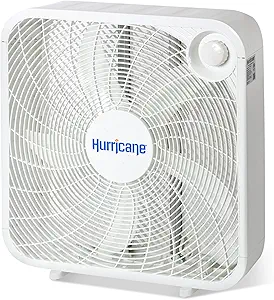 |
Genesis 20" Box Fan G20BOX

| Power Source | Corded Electric |
|---|---|
| Number of Speeds | 3 |
| Wattage | 60 watts |
| Motor Type | Copper |
| Indoor Outdoor Usage | Indoor |
The Genesis 20" Box Fan is a straightforward high-velocity floor fan built for basic room cooling. It uses a durable copper motor and five plastic blades to move a strong stream of air suitable for bedrooms or offices, and the 20" head can sit on the floor, a dresser, or a table. Three manual speed settings let you dial in airflow from gentle to powerful, and the molded carry handle makes it easy to relocate. The fan is ETL listed and includes overload safety protection in the plug, which adds a layer of reliability for overnight use. Expect clear, no-frills performance rather than noise-minimizing features; it delivers solid airflow but will be audible at higher speeds. There is no remote or timer, so adjustments must be made at the knob. For sleepers who want robust, energy-efficient cooling with a compact footprint, this fan is a dependable option; light sleepers who require ultra-quiet operation or smart controls should consider quieter or feature-rich alternatives.
Best for: Buyers who want a reliable, no-frills fan that delivers strong airflow for sleeping rooms and value long-lasting components and simple controls.
Less Ideal for: People who need ultra-quiet operation, programmable timers, or smart/remote control features should look at quieter or more feature-rich models instead.
- Durable copper motor for longer service life
- Large 20-inch head provides strong airflow for room cooling
- Three speed settings for simple airflow control
- Lightweight with built-in carry handle for easy repositioning
- ETL listed with overload safety protection in the plug
- No remote, timer, or advanced noise-reduction features
- Basic plastic blade and housing with a standard box-fan noise profile
Verdict: Choose this Genesis 20" box fan if you want a durable, high-airflow bedside fan with simple controls that reliably cools a bedroom through the night.
BLACK+DECKER 20" Box Fan BFB20SW

| Number of Speeds | 3 |
|---|---|
| Wattage | 80 watts |
| Air Flow Capacity | 1200 cfm |
| Number of Blades | 5 |
| Motor Type | brushed |
The BLACK+DECKER 20" Box Fan is a simple, no-frills portable fan that focuses on raw airflow and ease of use. It uses an 80W copper motor and a five-blade polypropylene design to push up to about 1200 CFM, and three mechanical speed settings are selected with a rotary dial for straightforward operation. Built-in stabilizing feet and a top carry handle make it easy to move between bedrooms, basements, garages, or windows, and recessed cord storage keeps things tidy when not in use. The motor housing is rain-resistant for durability, though the unit is intended for indoor use only. Noise is noticeable at higher speeds given the fan's power, which may affect light sleepers on high, but lower speeds provide usable airflow for white-noise masking. Cleaning is simple with a damp cloth on the plastic surfaces, but the fan is not designed for tool-free blade removal. For someone who prioritizes strong, reliable airflow over decorative design or advanced controls, this box fan is a practical choice.
Best for: Buyers who want straightforward, high-volume air circulation for bedrooms or living spaces and value portability and simple controls over quiet advanced features.
Less Ideal for: Those seeking an ultra-quiet fan for light sleepers who need near-silent operation or users wanting smart controls and app connectivity.
- High airflow capacity up to roughly 1200 CFM for strong room circulation
- Durable 80W copper motor with rain-resistant housing for longer runtime
- Simple rotary dial with three speeds makes operation intuitive
- Lightweight with a top carry handle and recessed cord storage for portability and tidy storage
- Noticeable noise at higher speeds that may disturb very light sleepers
- Plastic construction and fixed grille limit deep cleaning and repairability
Verdict: If you need a portable, high‑airflow box fan with simple controls for improving bedroom circulation and masking noise, this model delivers reliable performance.
Generic 20" Classic Box Fan
| Power Source | ac |
|---|---|
| Special Features | Weather Resistant |
| Recommended Uses For Product | Ventilating |
| Mounting Type | Window Mount |
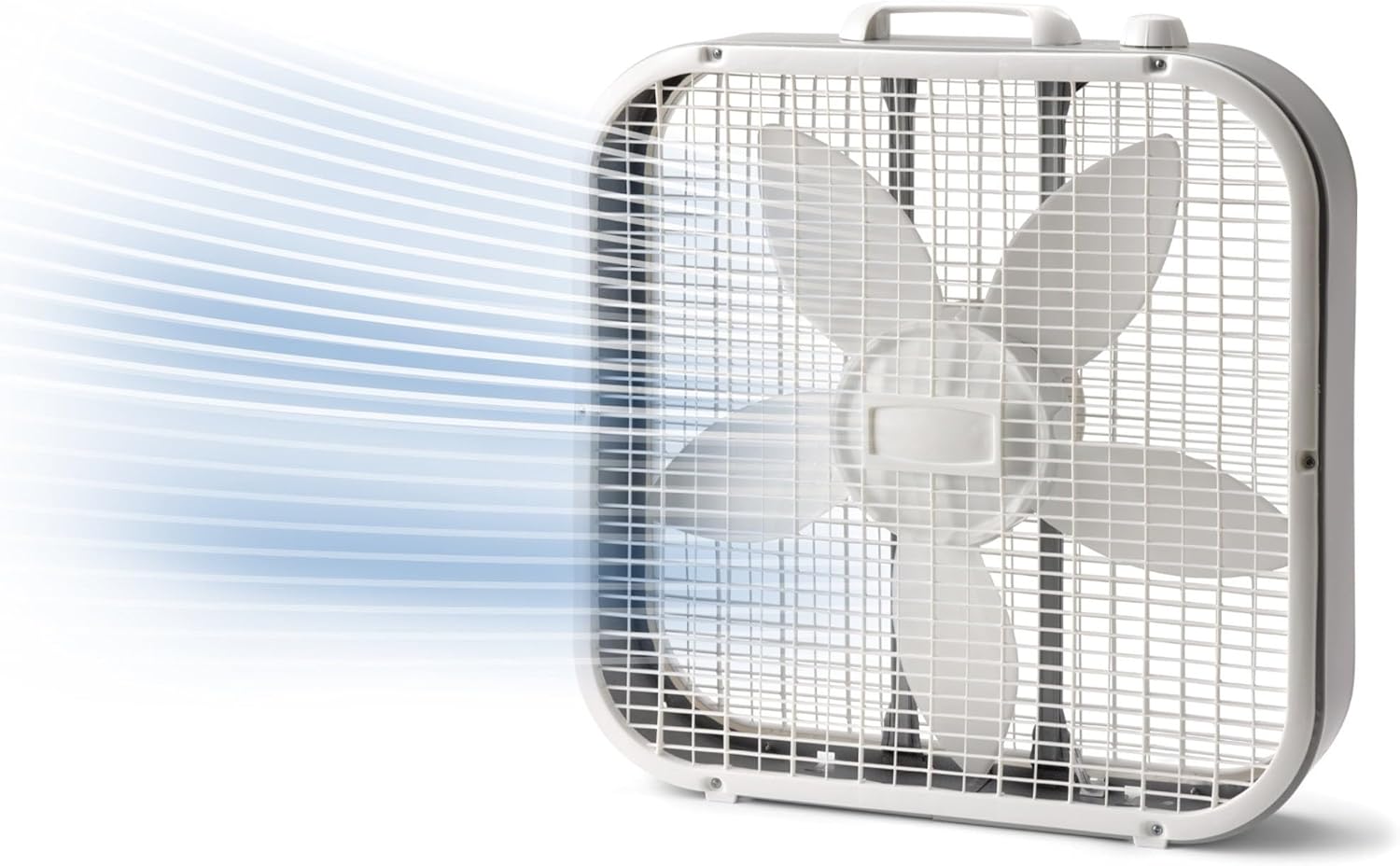
This 20-inch Classic Box Fan is a straightforward, no-frills unit that moves a lot of air for its size and is easy to use in bedrooms for sleeping. It offers three quiet speeds with manual top-mounted controls and a fused safety plug, and the built-in handle makes it simple to move between a table, floor, or window. The metal frame and removable front grill and blades make cleaning and basic maintenance quick without tools, and the weather-resistant motor gives added confidence when mounted in a window. The fan is not smart or programmable, so it stays on a steady setting through the night rather than offering timers or oscillation, and its sound profile is the typical steady hum of a box fan rather than a white-noise generator. For people who want a durable, portable airflow boost to cool a sleeping room or help an AC circulate air, this fan delivers dependable performance at a basic level.
Best for: Buyers who want a low-cost, durable fan to improve overnight airflow and cool a bedroom without extra smart features or complicated setup.
Less Ideal for: Those who need a whisper-quiet, tunable sleep machine with timers, app control, or specific white-noise profiles should consider more specialized sleep fans.
- Strong airflow from a 20-inch blade for effective bedroom cooling
- Three quiet speeds let you pick a lower, sleep-friendly setting
- Removable grill and blades for tool-free cleaning
- Weather-resistant motor suitable for window mounting
- Built-in handle and lightweight design for easy portability
- No timer, remote, or programmable settings for overnight automation
- Typical box-fan noise may not suit light sleepers seeking white-noise style sound
Verdict: A budget-friendly, portable 20-inch box fan that reliably boosts bedroom airflow for sleeping without smart controls.
Vornado Model 80 Box Fan

| Number of Speeds | 5 |
|---|---|
| Wattage | 120 watts |
| Motor Type | Brushless |
| Speed | 1400 rpm |
| Power Source | ac |
The Vornado Model 80 is a heavy-duty 20-inch box fan built to move large volumes of air around a room. It offers five speed settings and a brushless motor rated at 1400 rpm, so you can dial from a gentle breeze for sleeping to a strong push for faster cooling or drying. The fan's removable grille makes cleaning straightforward, and the alloy-steel construction with an integrated handle and cord storage feels durable for regular use. Because it emphasizes whole-room circulation rather than whisper-quiet operation, lower speeds are suitable for bedroom use but the higher settings are noticeably louder. Controls are simple button/touch style and the fan meets ETL safety standards for indoor use on standard 120V household power. If you want a straightforward, long-lasting box fan that can run night after night and is easy to maintain, the Model 80 delivers; if near-silent background operation is your top priority, consider quieter, purpose-built bedroom circulators instead.
Best for: Buyers who prioritize a dependable, hard-wearing fan that can run continuously and provide robust room circulation for sleeping spaces where airflow is more important than absolute silence.
Less Ideal for: People who need an ultra-quiet bedroom fan with specialized sleep modes or noise-optimized operation should look at fans designed specifically for whisper-quiet performance.
- Strong whole-room airflow across five speed settings
- Brushless motor intended for durable, long-running performance
- Removable grille for easy cleaning and maintenance
- Sturdy alloy-steel construction with integrated handle and cord storage
- Higher speeds produce noticeable noise compared with quiet sleep-focused fans
- No dedicated low-noise or timer sleep mode controls
Verdict: Choose the Model 80 when you want a reliable, heavy-duty box fan that delivers strong, whole-room airflow and easy maintenance for nightly use.
Amazon Basics 20-Inch Box Fan DK1901

| Number of Speeds | 3 |
|---|---|
| Wattage | 67 watts |
| Number of Blades | 5 |
| Power Source | Corded Electric |
| Voltage | 120 volts |
This 20-inch Amazon Basics box fan delivers straightforward, no-frills airflow for bedrooms and small to medium rooms. It offers three front-facing speeds controlled by a knob, with a five-blade plastic assembly driven by a 67-watt motor that moves a noticeable amount of air on medium and high settings. The fan is lightweight and has a top carry handle plus recessed cord wrap, which makes it easy to move between rooms and store when not in use. Large detachable feet add stability on carpet or hard floors, and the simple controls mean there is nothing complicated to learn. Noise is typical for a box fan at higher speeds, so while it provides effective circulation and can help cool a bedroom, light sleepers may prefer lower speeds or distance placement. The all-plastic construction keeps weight and cost down but may feel less durable than metal fans over many years of constant use.
Best for: Buyers who prioritize reliable, inexpensive airflow to improve bedroom comfort at night and want a portable, easy-to-use fan backed by many user reviews.
Less Ideal for: People seeking ultra-quiet fans for very light sleepers or those who want a premium metal build and advanced controls should consider other options.
- Three simple speed settings for easy airflow adjustment
- Lightweight with an integrated carry handle for easy relocation
- Recessed cord wrap and detachable large feet for neat storage and stable placement
- Five-blade design and 67-watt motor provide effective air movement for small to medium rooms
- Plastic construction may feel less durable than metal alternatives
- Higher speed settings produce noticeable operating noise
Verdict: A straightforward, portable 20-inch box fan that reliably improves bedroom airflow for most sleepers who want a low-cost, easy-to-use option.
Hurricane Classic 20" Floor Fan

| Air Flow Capacity | 2400 cfm |
|---|---|
| Number of Speeds | 3 |
| Noise Level | 42 db |
| Wattage | 55 watts |
| Motor Type | Brushed AC |
The Hurricane Classic 20" Floor Fan is a simple, no-frills box fan built to move a lot of air in bedrooms and other indoor spaces. It produces up to 2400 CFM and runs at about 1100 RPM on high, driven by a brushed AC motor and five polypropylene blades, so it creates a powerful, steady breeze for cooling or improving ventilation. Controls are straightforward push buttons for three speeds, and the unit is ETL listed with a standard NEMA 5-15 plug. At 42 dB on its lower settings it can be reasonably quiet for sleeping when dialed down, though the high setting is noticeably louder. The fan is lightweight and slim for easy placement and storage, and a 5-foot cord gives flexible outlet options. Expect durable, functional performance rather than premium extras like timers, remotes, or oscillation; maintenance is limited to occasional dusting. For sleepers who want dependable, high airflow from a simple, easy-to-use fan, it does the job well.
Best for: A buyer who prioritizes reliable, straightforward cooling and wants a durable, easy-to-use fan for night-time airflow and ventilation without extra smart features.
Less Ideal for: If you want silent operation, automated controls, oscillation, or a feature-rich bedroom fan, look at models with timers, remotes, or variable-speed digital motors instead.
- Very high airflow capacity (2400 CFM) for rapid room cooling or ventilation
- Three easy push-button speed settings for simple operation
- Lightweight and slim profile makes placement and storage easy
- ETL listed and uses a common NEMA 5-15 plug for standard indoor use
- No oscillation, timer, or remote control features
- Brushed AC motor can be louder on the highest setting
Verdict: A practical, high-airflow box fan that gives dependable, easy-to-use cooling for sleepers who value strong circulation over luxury features.
Choosing the Right Box Fan for Sleeping: Key Factors to Consider
Noise Level and Sound Profile
How loud a fan is and the character of the sound it produces are the most important factors when choosing a box fan for sleeping. Lower decibel ratings at bedside distances help preserve deep sleep stages. Beyond raw numbers, tonal qualities matter: a steady, low-frequency hum tends to be less disruptive than intermittent whines or rattles.
Consider models with multiple speed settings so you can reduce volume without cutting airflow too much. Also check for features that reduce mechanical noise, such as tightened housings, rubberized mounts, or balanced blades that minimize vibration.
Airflow Pattern and Coverage
A box fan's blade size, grill design, and any oscillation or tilt features determine how air moves through a bedroom. For sleeping, you want a smooth, even airflow that cools the sleeper or circulates room air without blasting one spot continuously.
Think about the typical layout and size of the bedroom: a fan that covers a wider arc or provides adjustable tilt will keep the whole room comfortable and reduce hot pockets that can wake you at night.
Control Options and Usability
Accessible, easy-to-use controls are important for nighttime adjustments. Physical knobs or tactile buttons are preferable for making quick changes in the dark. Speed control granularity matters because being able to choose a very low, whisper-quiet setting can make the difference between falling asleep and staying awake.
Additional convenience features like a built-in timer, remote, or memory for the last setting can reduce disruption and help automate overnight operation.
Size, Placement, and Stability
Box fans come in different sizes and profiles; whichever you choose must fit the intended placement. A fan placed on the floor near a bed should be stable and have a low center of gravity to avoid tipping. Fans with secure feet or rubber pads reduce vibration transfer to floorboards and furniture, which cuts noise.
Also consider whether the fan's dimensions allow it to sit on a nightstand or need floor placement. The easier it is to place the fan where it cools you effectively, the less likely you are to reposition it and cause nighttime disturbance.
Safety Features and Construction
For sleep use, safety features are nonnegotiable. A durable grill that prevents fingers or bedding from contacting the blades is essential, especially if the fan is placed near the bed. Overheat protection, secure wiring, and stable housing all reduce the risk of nighttime incidents.
Solid construction also reduces long-term noise issues because loose panels or fasteners can create new rattles after a few months of use. Prioritize fans with clear safety design choices appropriate for bedroom placement.
Energy Use and Overnight Running Cost
Since a box fan for sleeping may run for eight to ten hours a night, energy efficiency directly affects operating cost. Fans with lower wattage at effective airflow settings will cost less to run over time. Variable speeds that maintain airflow with lower power at the quietest settings are preferable.
Consider models that deliver good airflow per watt rather than those that only advertise top speed. Small efficiency differences add up over months of nightly use.
Choosing the Right Speed and Volume Balance
Finding the best compromise between airflow and noise is the core decision when buying a box fan for sleeping. Start by identifying the quietest setting that still delivers enough breeze to make you comfortable. A fan that is very quiet but does not move enough air will not help with heat or stuffiness.
If you share a room, consider how airflow direction and speed affect both sleepers. Lower speeds with a broader airflow arc are often better for shared sleeping environments because they cool the room without creating a direct blast.
- Test the lowest setting first to gauge background noise.
- Use tilt or oscillation to spread airflow instead of increasing speed.
- Place the fan so it circulates room air, not just blow directly across one person.
Placement Tips for Optimal Night Cooling
Placement changes how a fan feels. For single sleepers, pointing the fan toward the head and chest can maximize perceived cooling without needing high speeds. For whole-room circulation, position the fan to create a cross-breeze with an open window or doorway.
Elevating a fan slightly can help it move air more effectively across bed level while keeping it stable and away from bedding. Always ensure the fan sits on a flat surface and that cords are routed safely to avoid tripping hazards.
- Floor placement near a footboard can create gentle upward airflow.
- Nightstand placement focuses cooling on one sleeper but requires a stable base.
- Use oscillation to avoid constantly blowing on one spot.
Noise-Reducing Upgrades and Accessories
Several simple accessories or setup tweaks reduce operational noise and improve comfort. A thin foam mat under the fan isolates vibrations from hard floors and reduces rattle. Tightening screws and checking for loose grill fittings before use often eliminates new noise issues.
If you are sensitive to high-frequency sounds, choose a fan with balanced blades and a sealed motor housing. These construction details reduce tonal whines that are more likely to interrupt light sleepers.
- Place a vibration-isolating pad under the fan.
- Regularly inspect and tighten grill screws to prevent rattles.
- Avoid contact between fan housing and unsecured bedding.
When to Use Oscillation Vs. Fixed Direction
Oscillation helps spread airflow across a wider area, which is useful in larger bedrooms or when multiple people sleep in the room. A slowly oscillating fan can mimic natural breezes and is often perceived as more comfortable than a steady, concentrated stream.
Fixed direction is preferable when you want constant cooling on a single sleeper or need to avoid cooling other occupants. Fixed-angle setups are also slightly more energy efficient because the fan is not constantly changing direction.
- Use slow oscillation for shared rooms or bigger spaces.
- Set fixed direction for focused, personal cooling.
- Match oscillation speed to bedroom size to avoid uneven drafts.
Maintenance and Longevity for Night Use
Regular maintenance keeps a fan quiet and effective. Clean dust from blades and grills every few weeks to maintain airflow and reduce motor strain. Dust accumulation increases noise and reduces efficiency over time.
Lubricate motor bushings if the design allows and follow manufacturer cleaning recommendations. Address any new noises promptly; a rattle or squeak often indicates a loose fastener or imbalance that is simple to fix.
- Dust the blades and grill monthly during heavy-use seasons.
- Check mounting screws and rubber feet for wear.
- Avoid using harsh solvents that could damage plastic housing.
How We Chose the Best Box Fan for Sleeping
We focused on features that directly affect bedroom comfort and nighttime performance. Criteria included measured noise output at typical bedside distances, airflow distribution for a typical bedroom footprint, and speed control granularity to let you dial in a comfortable breeze without startling changes. Build quality and stability were included to reduce rattling and to ensure safe bedside operation, while power efficiency helped estimate overnight energy use. Additional checks covered tilt and oscillation options that influence how evenly a room cools and whether direct or indirect airflow is best for sleeping. We excluded fans designed mainly for workshop or outdoor use because those prioritize raw airflow over quiet operation and may lack bedroom-friendly controls. We also filtered out units with weak safety features or inconsistent speed controls. Our selections prioritize the balance between quiet operation and effective cooling, as reflected in the scoring metrics used for each pick.
Our full evaluation process is outlined in our review methodology.
FAQ
How loud should a box fan be for sleeping?
A comfortable nighttime noise level depends on personal sensitivity, but many sleepers prefer fans that produce background noise below typical conversation levels. Look for units with low decibel ratings at bedside distance and a steady, low-frequency sound profile rather than sharp mechanical tones.
Is oscillation better for nighttime use?
Oscillation can be better in larger rooms or shared bedrooms because it spreads airflow and avoids cooling one spot too much. For individual sleepers who want a steady breeze, a fixed direction set at a low speed often works best.
Will a box fan help with white noise for sleep?
Many box fans double as a source of steady ambient noise that masks other household sounds. The effectiveness depends on the fan's sound character; a consistent, non-intermittent hum is most useful for masking intermittent noises that might wake you.
How often should I clean a box fan used nightly?
If you run a fan every night, check and clean the blades and grill every two to four weeks to prevent dust buildup. Regular cleaning preserves airflow, reduces strain on the motor, and prevents new noises caused by trapped debris.
Are there safety concerns when running a fan all night?
Running a fan overnight is generally safe if the unit has a secure grill, stable base, and no exposed wiring. Overheat protection and well-ventilated motor housings reduce risk. Always follow the manufacturer's maintenance guidance and avoid placing the fan where bedding can contact the grill.
Final Verdict
When selecting a box fan for sleeping, prioritize a low and pleasant sound profile, consistent airflow coverage, and stable placement. Tradeoffs are common: the quietest models may move less air, while higher airflow units can be louder. Focus on speed control precision, solid construction, and safety features to ensure both comfort and peace of mind. Choose a model that matches your bedroom size and preferred cooling style. With attention to noise, placement, and maintenance, you can find a box fan that improves sleep without causing new disturbances.