
Note: This article contains affiliate links. If you click on these links and make a purchase, we may earn a small commission at no extra cost to you. This helps support our research and content. Read our full affiliate disclosure here.
Picking the right fan for bedrooms matters more than many shoppers expect. A fan affects sleep quality, temperature control, and nighttime noise. The right choice delivers steady airflow without rattles, uses power efficiently, and fits the size and layout of your room. This guide shortlists seven top fans for bedrooms selected for their quiet operation, effective circulation, and user-friendly controls. Below we explain the factors that mattered in our selection and walk through practical guidance so you can choose the best fan for your sleeping space.
Top Picks at a Glance
| Best Overall The best all-around choice for most situations | Vornado 630 Air Circulator |  |
| Best Quality Built to a higher standard if you want something more solid | Shark TurboBlade Fan TF202S |  |
| Best Value The sweet spot between price and what you get | Amazon Basics 16" Pedestal Fan |  |
| Best Budget The cheapest option that still gets the job done reliably | Lasko 2520 Oscillating Pedestal Fan | 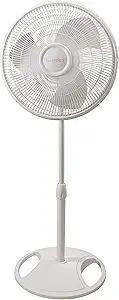 |
| Top Rated A top-rated pick with lots of positive feedback | DREO DR-HPF013 Pedestal Fan |  |
| Most Popular A crowd favorite that many people choose with confidence | Honeywell TurboForce HT-900 |  |
| Best Seller A high-volume bestseller chosen again and again | DREO Tower Fan 307 |  |
Vornado 630 Air Circulator

| Number of Speeds | 3 |
|---|---|
| Wattage | 50 watts |
| Noise Level | 52 db |
| Air Flow Capacity | 1120 cfm |
| Voltage | 120 volts |
The Vornado 630 is a compact whole-room air circulator designed to move air efficiently through a bedroom or small living space. It uses Vornado's vortex action combined with deep-pitched blades and a spiral grille to produce strong, continuous airflow rather than just a directional breeze. Controls are simple: a three-speed dial lets you dial in gentle circulation or more powerful cooling, and the adjustable tilt head directs air where you need it. At about 50 watts and a reported airflow capacity over 1,000 cfm, it offers effective performance while remaining relatively quiet for overnight use. The plastic housing and removable grill make it lightweight and easy to clean, and the unit carries safety certification. Limitations include only three fixed speeds and no remote or timer features, so it lacks finer control and smart conveniences some buyers expect. For bedroom use it excels at steady circulation and cooling, but if you need app control or variable-speed precision, look elsewhere.
Best for: Buyers who want a reliable, no-frills bedroom fan that delivers strong, continuous circulation and easy manual operation for everyday comfort.
Less Ideal for: If you want app control, a remote, programmable schedules, or very fine speed adjustments, choose a fan with digital controls or smart features instead.
- Vortex-designed airflow moves air across the whole room rather than only nearby spots
- Three-speed dial is straightforward and reliable for quick adjustments
- Adjustable tilt head directs airflow to targeted areas
- Removable grill and plastic construction keep it lightweight and easy to clean
- Certified safety testing and multi-year limited warranty provide support
- No remote control, timer, or smart connectivity for automated schedules
- Only three fixed speeds limit fine-grained airflow control
Verdict: Choose the Vornado 630 when you want a compact, durable bedroom fan that reliably circulates air across the whole room with simple manual controls.
Shark TurboBlade Fan TF202S

| Number of Speeds | 10 |
|---|---|
| Noise Level | 53 db |
| Wattage | 192 watts |
| Air Flow Capacity | 85 cfm |
| Motor Type | Brushless |
The Shark TurboBlade Fan TF202S is a performance-focused bladeless tower fan that directs strong, adjustable airflow across a bedroom or living area. It uses bladeless technology and a brushless motor to pull in surrounding air and project a concentrated breeze, and the head pivots between vertical and horizontal positions while twistable vents and 180° oscillation expand coverage. Ten speed and ten noise-level settings let you dial in anything from quiet background white noise for sleep to a powerful stream for fast cooling, and the included magnetic remote and adjustable height make positioning and control simple. DustDefense and the smooth plastic housing make the unit easy to wipe down compared with blade fans, but the listed air flow capacity is modest relative to very large window units and the max wattage means it can draw noticeable power at top settings. For bedroom use it balances strong directional cooling with low-noise options, though very large rooms may need supplemental airflow.
Best for: Buyers who prioritize strong, customizable airflow and quiet nighttime operation in a bedroom will appreciate this fan's adjustable modes and precise controls.
Less Ideal for: If you need to cool very large open-plan spaces quickly or want the absolute lowest possible power draw, consider a higher-capacity or lower-wattage cooling solution instead.
- Bladeless design with DustDefense for easier cleaning than traditional blade fans
- Pivoting head, twistable vents and 180° oscillation for wide and targeted coverage
- Ten speeds and ten noise levels for precise cooling and quiet sleep modes
- Brushless motor for durable, consistent performance
- Magnetic remote and adjustable height simplify placement and control
- Airflow capacity (85 cfm) is moderate and may be insufficient for very large rooms
- Maximum power draw (192 watts) can be high on top settings compared with low-power personal fans
Verdict: A highly adjustable, bladeless tower fan that delivers targeted, quiet cooling ideal for bedroom performance-focused users.
Amazon Basics 16" Pedestal Fan

| Power Source | Corded Electric |
|---|---|
| Number of Speeds | 3 |
| Wattage | 60 watts |
| Motor Type | AC |
| Controller Type | Remote Control |
This 16-inch Amazon Basics pedestal fan is a straightforward bedroom fan that focuses on effective air circulation and ease of use. It has a 60W AC motor and dual-layered blades that push steady airflow while remaining relatively quiet for sleeping environments. The fan offers three speeds and three breeze modes (normal, nature, sleep), plus an oscillation function and adjustable tilt and height so you can direct airflow across a bed or the room. A simple remote controls speed, mode, and the timer from across the room, which is convenient for nighttime adjustments. Build combines metal and plastic parts and the fan uses a standard corded power setup, so there is no battery hassle but it does need a nearby outlet. For buyers who want an effective, no-frills bedroom circulator the unit delivers reliable performance, though it lacks app control, very high-speed settings, or advanced filtration features found on more expensive models.
Best for: Buyers who prioritize practical, reliable bedroom cooling and want a simple, remote-controlled fan that circulates air effectively without extra smart features.
Less Ideal for: People seeking advanced smart controls, air purification features, or very high airflow power should consider other options.
- Adjustable height, tilt, and oscillation let you aim airflow where you need it
- Included remote and timer make night-time and hands-free control easy
- Energy-efficient 60W AC motor provides steady airflow with relatively quiet operation
- Three speeds and three breeze modes (normal, nature, sleep) give simple customization
- No smart home or app connectivity for remote scheduling or voice control
- Construction uses plastic blades and some plastic parts rather than all-metal build
Verdict: A practical, no-frills pedestal fan that delivers quiet, adjustable airflow and remote convenience for bedroom cooling.
Lasko 2520 Oscillating Pedestal Fan

| Power Source | Corded Electric |
|---|---|
| Number of Speeds | 3 |
| Wattage | 91 watts |
| Motor Type | AC |
| Blade Length | 16 inches |
The Lasko 2520 is a straightforward pedestal fan meant to move air in bedrooms and small living spaces. It has a 16-inch blade, three quiet speed settings, and widespread oscillation so you can push a gentle breeze across a bed or stronger airflow for hotter nights. Height adjusts up to 47 inches and the head tilts back, which helps aim air where you need it without moving the whole unit. Controls are manual via an easy-grip rotary and the fan uses a simple AC motor and standard plug for reliable operation. Assembly requires no tools and the fan includes safety features like Blue Plug electrical fault protection and ETL listing. Expect basic plastic construction and limited fine-grain speed control compared with higher-end models, and there is no remote, timer, or advanced noise-damping tech. For the price, it delivers dependable, portable airflow for sleeping areas but lacks premium extras found on more expensive bedroom fans.
Best for: Buyers who want a no-frills, reliable bedroom fan that is easy to set up and move and prioritizes quiet, effective airflow on a tight budget.
Less Ideal for: If you want app control, a remote, precise speed steps, or a premium build for long-term heavy-duty use, look at higher-end models instead.
- Adjustable height and tilt let you direct airflow precisely
- Widespread oscillation covers a larger area of the room
- Three quiet speed settings suitable for bedtime use
- Tool-free assembly and lightweight for easy moving between rooms
- Built-in Blue Plug safety feature and ETL listing
- Only three manual speeds with no remote or timer
- Plastic construction is basic compared with premium fans
Verdict: A budget-friendly, easy-to-use pedestal fan that provides quiet, adjustable airflow for bedrooms without extra frills.
DREO DR-HPF013 Pedestal Fan

| Power Source | Corded Electric |
|---|---|
| Number of Speeds | 8 |
| Noise Level | 28.2 db |
| Air Flow Capacity | 1000 cfm |
| Motor Type | Brushless |
The DREO DR-HPF013 is a freestanding pedestal air circulator built to move a lot of air quietly around a bedroom or living area. It uses a brushless DC motor and a three-blade TurboPoly design to push up to 1000 CFM and reach roughly 90 feet, and it offers eight speeds plus an auto mode that steps speed with temperature changes. Controls include a top touch panel and an included remote, and the head supports 90° horizontal oscillation, a 105° vertical pivot and a 38–42" adjustable height range. Practical touches include an 8-hour timer, detachable grill and blade for easier cleaning, and an aroma pad for optional scenting. At 28.2 dB on low settings the fan is suitable for bedrooms, and the mute option silences beeps for overnight use. Trade-offs are typical for high-output pedestal fans: the unit is plastic-bodied rather than metal and it lacks app or voice integration, so it favors straightforward, reliable operation over smart-home features.
Best for: Buyers who prioritize a dependable, quiet fan that consistently delivers strong whole-room airflow and simple, tactile controls for bedroom use.
Less Ideal for: Shoppers who want metal-bodied fans for a premium build or those seeking smart-home connected fans with app and voice control should look elsewhere.
- High airflow up to 1000 CFM suitable for whole-room circulation
- Brushless DC motor for quieter, energy-efficient operation
- Eight speeds plus auto mode and 8-hour timer for flexible control
- Detachable grill and blade for easier cleaning and maintenance
- Includes remote and top touch controls for convenient operation
- Plastic construction rather than metal may feel less durable long term
- No app, voice control, or network features for remote smart-home integration
Verdict: Choose this DREO pedestal fan if you want a quiet, high-output bedroom circulator with reliable DC motor performance and simple remote controls.
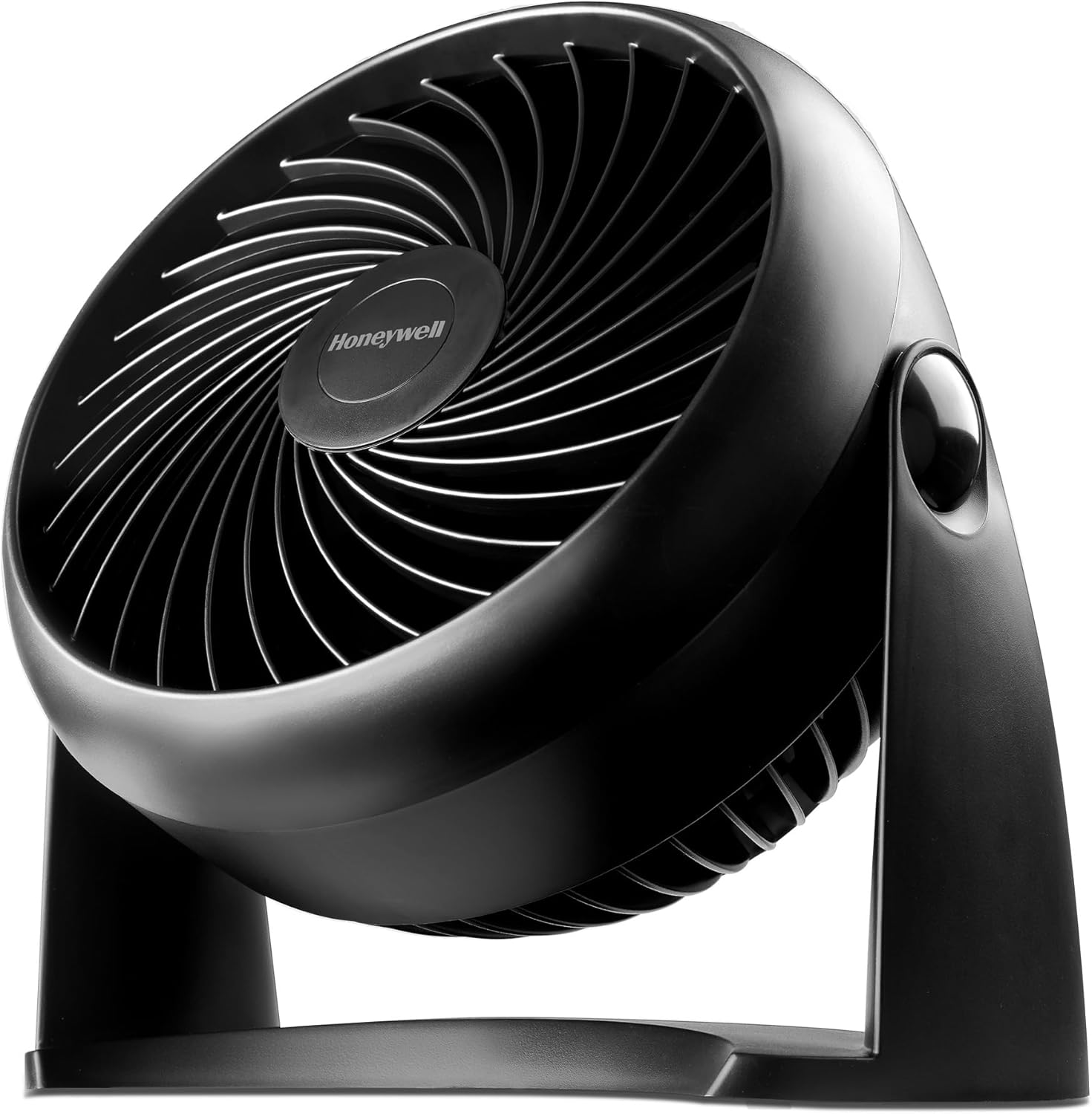
Honeywell TurboForce HT-900
| Power Source | Corded Electric |
|---|---|
| Number of Speeds | 3 |
| Air Flow Capacity | 185 cfm |
| Motor Type | brushless |
| Installation Type | Tabletop or Wall Mount |
The Honeywell TurboForce HT-900 is a small tabletop fan designed to move a surprising amount of air for its size while staying quiet. It offers three push-button speeds and a 90-degree pivoting head so you can direct airflow to a desk, bedside, or a wall-mounted position. The aerodynamic turbo housing and brushless motor are tuned to maximize airflow up to roughly 185 cfm, making it useful for personal cooling, improving room circulation, or boosting an air conditioner's efficiency. Practical benefits include a lightweight, portable body with a carry handle, simple controls that do not require setup, and low noise suitable for bedrooms. Limitations are its basic feature set—there is no remote, timer, or oscillation—so it is best for targeted cooling rather than whole-room circulation, and plastic construction means it is not as premium-feeling as higher-end models.
Best for: Buyers who prioritize a quietly powerful, no-frills fan for bedside or desk use and who prefer proven popularity and user approval when choosing appliances.
Less Ideal for: Those seeking full-room oscillation, programmable features, or a premium metal-bodied fan should consider other models with those capabilities.
- Strong airflow for a compact fan thanks to turbo-style design and brushless motor
- Three simple speed settings and 90-degree pivot let you aim cooling precisely
- Quiet operation suitable for bedroom or office use
- Lightweight and portable for tabletop or wall-mounted use
- No oscillation, remote, or timer for hands-off whole-room coverage
- Plastic build feels basic compared with premium fans
Verdict: Choose the HT-900 if you want a compact, quiet, and widely trusted tabletop fan that delivers strong targeted airflow for bedrooms or desks.
DREO Tower Fan 307

| Power Source | dc |
|---|---|
| Number of Speeds | 8 |
| Noise Level | 28 db |
| Wattage | 42 watts |
| Air Flow Capacity | 1408 cfm |
This DREO 36-inch tower fan is designed for bedroom use where quiet, adjustable airflow matters. The brushless DC motor and algorithmic impeller deliver a wide range of airflow—up to 28 ft/s—and 90° oscillation spreads air across a room while an 8-speed control and four modes (Normal, Natural, Sleep, Auto) let you tailor comfort. It includes both touch controls and a remote for easy adjustments from bed, plus a timer and a Sleep mode for low-noise overnight operation. The removable rear grille and impeller make maintenance straightforward, and ETL certification plus built-in safety features provide added reassurance. Expect solid airflow for cooling or air circulation and noticeably quieter operation than typical AC motor tower fans, although it is a plastic-bodied unit and its maximum airflow is best for single rooms rather than large open-plan spaces.
Best for: Buyers who prioritize a quiet, easy-to-use bedroom fan with customizable speeds and remote control for overnight comfort and simple maintenance.
Less Ideal for: People needing very high airflow for large or open-plan rooms or those who prefer a metal-bodied, heavy-duty fan.
- Brushless DC motor for efficient, relatively quiet operation
- Eight speed settings and four modes for fine-grained comfort control
- Remote and touch controls plus timer and Sleep mode for bedroom use
- Removable rear grille and impeller simplify cleaning and upkeep
- Plastic construction may feel less premium than metal alternatives
- Best suited to single rooms and may not move enough air for large open spaces
Verdict: A quiet, bedroom-friendly tower fan with a brushless DC motor, many speed and mode options, and remote control for low-effort, reliable night-time cooling.
Choosing the Right Fan for Bedrooms: Key Factors to Consider
Noise Level at Sleep Settings
Bedrooms demand fans that operate quietly at low to medium speeds. A unit that lists multiple low-noise settings or a measured decibel rating makes it easier to predict whether it will disturb sleep.
Noise matters because even low-level hums or motor whine can interrupt deep sleep cycles. Look for fans with documented nighttime modes, brushless motors, or vibration-dampening mounts to reduce audible disturbance.
Airflow Pattern and Coverage
Not all airflow is the same. For bedrooms you want a gentle, consistent breeze that can cover the bed area without creating cold spots or directly blasting the sleeper. Oscillation, adjustable tilt, and multiple speed steps let you shape the airflow to your room layout.
Consider room size and bed placement when evaluating stated CFM or airflow descriptions. A fan that distributes air broadly will work better in rooms where the unit sits against a wall, while a more focused airflow might be preferable for targeted cooling near the bed.
Size, Height, and Mounting
The physical dimensions and mounting options determine how the fan integrates into a bedroom. Tower and pedestal fans occupy different footprints and provide different elevation of airflow. A fan that is too tall or wide can obstruct pathways or bedside tables.
Evaluate whether you need a floor-standing unit, a compact tower, or a clip-on for limited space. Height and ability to angle the head influence whether the airflow reaches the sleeper without requiring awkward placement.
Control Options and Convenience
In-bed convenience is important. Fans with remote controls, simple dials, or easy-to-reach timers reduce the need to get up at night. Programmable timers, sleep modes that ramp down speed gradually, and memory functions add real-world value for nightly use.
Also consider the clarity of the control interface and whether indicators are backlit or can be disabled to avoid light pollution in a dark bedroom.
Energy Use and Long-Term Cost
Energy efficiency affects running cost, especially if you use the fan every night. Fans with efficient motors or ECO modes can deliver comparable airflow with lower energy draw. Lower power consumption is especially relevant for people on limited circuits or who run multiple devices overnight.
Look for units with quantifiable wattage at typical settings and consider how often you will run the fan when evaluating long-term electricity use.
Durability and Vibration Resistance
A well-built fan resists wobble and keeps bearings quiet over time. Materials, base design, and motor mounting influence whether a fan will develop rattles or imbalance that are especially annoying in a quiet bedroom.
Check for solid feet or weighted bases, balanced blades or airflow vanes, and construction that minimizes creaks when the unit oscillates. These details help ensure long-term quiet performance.
Choosing the Right Form Factor
Bedroom fans come in several common form factors, each with tradeoffs. Tower fans offer a slim footprint and broad vertical airflow, making them good for tight spaces and circulating air across a bed. Pedestal fans provide adjustable height and a more focused, directional breeze that can be raised to head level. Table or clip fans work well for compact rooms or for directing airflow close to a sleeping area without occupying floor space.
When deciding, think about where you will place the fan relative to the bed, whether you need adjustable elevation, and how much floor space you can spare. Also consider how the fan looks in the room since bedroom aesthetics often matter.
- Tower fans: slim, broad airflow, smaller footprint
- Pedestal fans: adjustable height, directional airflow
- Table/clip fans: compact, targeted cooling
Setting Up for Quiet, Effective Sleep
Placement and angle have an oversized impact on perceived comfort. Position the fan so airflow flows across the bed without hitting the face directly unless you prefer a direct breeze. Angling the head slightly above or below the bed can create gentle circulation rather than a concentrated blast.
Use oscillation on low speeds to spread airflow, and combine with ceiling fans or open windows where safe to create a layered cooling effect. If noise is an issue, place the fan on a soft surface or use rubber feet to reduce transmitted vibration.
- Avoid placing the fan directly at head height if sensitive to drafts
- Use oscillation for even distribution on low settings
- Isolate the fan from hard surfaces to reduce vibration noise
Maintenance and Simple Troubleshooting
Regular maintenance keeps a bedroom fan running quietly. Dust accumulates on blades and intake grills, reducing airflow and causing imbalance that increases noise. Most models allow grill removal for easy cleaning with a brush or cloth.
If you notice new rattles or increased hum, check for loose screws, worn feet, or unbalanced blades. Tightening fasteners and cleaning components often restores quiet operation. For persistent motor noise, consult the user manual for motor-care tips or service recommendations.
- Clean blades and grills periodically to maintain airflow
- Tighten loose fasteners to eliminate rattles
- Replace worn rubber feet to cut vibration transfer
Sleep Modes, Timers, and Smart Features
Several modern fans include sleep-focused features that make nighttime use easier. Sleep modes typically reduce speed gradually over a programmed period, which can help you fall asleep without waking to turn the fan off. Timers allow the unit to shut off after several hours to conserve energy.
Some fans offer app control or voice assistant compatibility that can be convenient, but these features are optional for many bedroom users. Prioritize reliable sleep modes and an easy-to-use timer before advanced connectivity if quiet operation is your main concern.
- Sleep modes gradually reduce speed to avoid abrupt changes
- Timers save energy by shutting the fan off after a set period
- Connectivity is convenient but not essential for quiet performance
Sizing Your Fan to Your Room
Match the fan to room size: small bedrooms need less aggressive airflow than large master suites. Consider how the fan will interact with existing ventilation or a ceiling fan. A modestly rated fan can be adequate for bedrooms under 150 square feet, while larger rooms may benefit from a higher-capacity tower or a pedestal with stronger airflow.
Also account for ceiling height and furniture placement. A fan with adjustable tilt or height gives more placement flexibility and often results in better personal comfort without needing maximum speed.
- Small rooms: compact or tower fans usually suffice
- Medium rooms: tower or pedestal with moderate airflow
- Large rooms: higher airflow or multiple circulation points
How We Chose the Best Fan for Bedrooms
We evaluated fans using bedroom-specific criteria to identify models that perform well at night and in small to medium rooms. Key filters included measured sound output at typical sleep speeds, steady airflow patterns that avoid direct blasting, and energy consumption at normal settings. Usability factors such as control layout, timer options, and ease of oscillation were weighted because bedroom fans are often adjusted from bed. Build quality and stability were checked to avoid vibration and noise over time. We excluded specialty industrial or outdoor fans and units designed only for very large open-plan spaces because those are not suitable for bedroom comfort. We also excluded fans with limited speed range or no low-noise options, since many bedroom users need whisper-quiet settings. Final selections focused on reliable airflow coverage, low decibel operation, adjustable speeds and modes, energy efficiency, and simple controls that make nightly use convenient.
Our full evaluation process is outlined in our review methodology.
FAQ
How loud should a bedroom fan be for good sleep?
A bedroom fan should be as quiet as possible at your chosen sleep setting. Many sleepers prefer fans that register in the low 30s dB range on low speeds, while others tolerate slightly higher levels. Look for models with low-noise or sleep modes and brushless motors if noise is a priority.
Is a tower fan or pedestal fan better for a bedroom?
It depends on your space and preference. Tower fans are space-efficient and provide broad vertical airflow, while pedestal fans offer adjustable height and a more directional breeze. Choose based on footprint, desired airflow direction, and whether you need height adjustment.
Do bedroom fans use a lot of electricity overnight?
Most bedroom fans use relatively little electricity compared with air conditioning. Energy use varies by motor type and speed setting. Selecting an efficient motor and using lower-speed or ECO modes reduces overnight consumption.
Can fan placement affect sleep comfort?
Yes. Placement and angle determine whether you get a gentle, cooling circulation or an uncomfortable draft. Position the fan to circulate air across the room or slightly above the bed to avoid a constant, direct blast to the face.
How often should I clean a bedroom fan?
Clean the blades and intake grills every few weeks if you use the fan frequently or if dust builds up quickly. Regular cleaning prevents airflow loss and imbalance that can increase noise and reduce effectiveness.
Final Verdict
When choosing a fan for bedrooms, prioritize low nighttime noise and an airflow pattern suited to your bed placement and room size. Balance features like timers and sleep modes with energy efficiency and a stable, vibration-resistant design. Focus on the tradeoffs that matter to you: compact footprint versus directional reach, quiet brushless motors versus simple mechanical controls, and convenience features versus battery-free simplicity. Select a fan that meets your noise threshold and provides the airflow coverage you need for consistent, comfortable sleep.