
Note: This article contains affiliate links. If you click on these links and make a purchase, we may earn a small commission at no extra cost to you. This helps support our research and content. Read our full affiliate disclosure here.
If you follow a low-carb diet but still want fresh, home-baked bread, choosing the right bread maker matters. Low-carb doughs behave differently from traditional wheat doughs: they can be denser, wetter, and slower to rise, and they often need gentler mixing and tailored baking cycles. A bread maker designed or programmable for these conditions can deliver better texture and more reliable results. This guide covers seven shortlisted bread makers that handle low-carb recipes well. We evaluate each on key user-focused factors like program flexibility, kneading and mixing behavior, and loaf consistency so you can pick a machine that fits your routine. Read on to find a machine that makes low-carb baking simpler and more dependable.
Top Picks at a Glance
| Best Overall The best all-around choice for most situations | Cuisinart Bread Maker CBK-110P1ES |  |
| Best Quality Built to a higher standard if you want something more solid | Zojirushi Home Bakery Virtuoso Plus BB-PDC20BA |  |
| Best Value The sweet spot between price and what you get | Amazon Basics 2-Pound Bread Maker |  |
| Best Budget The cheapest option that still gets the job done reliably | Elite Gourmet Programmable Bread Maker EBM8103B |  |
| Top Rated A top-rated pick with lots of positive feedback | Saluna Bread Maker BM901 |  |
| Most Popular A crowd favorite that many people choose with confidence | KITCHENARM 29-in-1 Bread Machine |  |
| Best Seller A high-volume bestseller chosen again and again | OSIPOTO 2LB Bread Maker BM8205 | 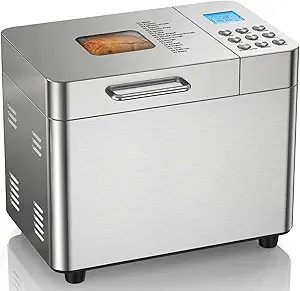 |
Cuisinart Bread Maker CBK-110P1ES

| Capacity | 2 pounds |
|---|---|
| Wattage | 550 watts |
| Number of Programs | 12 |
| Voltage | 120 volts |
The Cuisinart CBK-110P1ES is a countertop bread maker that mixes, kneads, and bakes up to a 2 lb. loaf using one of 12 preset programs. Typical use is simple: measure ingredients, choose loaf size and crust color, pick a program on the LCD and let the machine handle fermenting and baking, or set the 13-hour delay so fresh bread is ready later. Notable features include the removable nonstick vertical pan, audible beep reminders, a 60-minute keep-warm cycle, and presets that cover everything from basic and whole wheat to cake and jam. For someone baking lower-carb or specialty doughs, the machine saves effort on kneading and timing, though you may need to adjust recipes and hydration for heavier, low-carb mixes. The compact footprint fits most counters but the vertical loaf shape means slices are taller and narrower than traditional loaves. Controls are straightforward, cleaning requires hand washing of the pan and paddle, and the unit runs at 550 watts for efficient baking cycles.
Best for: A home baker who wants a dependable, hands-off machine to mix and bake a variety of breads and specialty recipes while valuing scheduling and consistent results.
Less Ideal for: Bakers who need traditional wide sandwich-style loaves or those who prefer fully dishwasher-safe components should consider other options.
- 12 preset programs for a wide range of breads and other recipes
- Three loaf sizes and crust color options for portion and texture control
- Removable nonstick vertical bread pan and paddle simplify cleanup and loaf removal
- 13-hour delay-start and 60-minute keep-warm let you schedule fresh bread when needed
- Vertical loaf shape produces taller, narrower slices compared with conventional ovens
- Pan and paddle require hand washing rather than being dishwasher-safe
Verdict: Choose this Cuisinart if you want a compact, reliable bread maker that handles a wide range of recipes and makes scheduling fresh loaves easy.
Zojirushi Home Bakery Virtuoso Plus BB-PDC20BA

| Capacity | 2 pounds |
|---|---|
| Wattage | 700 watts |
| Voltage | 120 volts |
| Number of Programs | 7 |
The Zojirushi Home Bakery Virtuoso Plus is built for consistent, high-quality loaves with minimal fuss. It bakes up to a 2-pound rectangular loaf using dual heating elements—one in the lid and one under the pan—for more even browning and a dependable crust. The machine includes seven preset programs that cover standard, whole wheat, rapid whole wheat, gluten-free, multigrain, salt-free and vegan recipes, plus crust shade control and a 13-hour delay timer so you can schedule a fresh loaf. Double kneading blades improve dough development and rise, and the removable nonstick bread pan and included measuring tools simplify cleanup and recipe setup. At 700 watts it can also run rapid cycles that produce a loaf in roughly 2 hours 25 minutes. The main limitations are its single loaf size and heavier 24-pound build, which reduces portability and flexibility for specialty small loaves; advanced bakers may miss manual temperature controls. For anyone prioritizing reliably even bakes and versatile health-focused programs, this model performs very well.
Best for: Buyers who want dependable, bakery-style results and a wide set of health-focused presets for low-carb or specialty doughs, and who value even browning and consistent rises over portability.
Less Ideal for: People who need multiple loaf sizes, a very compact countertop unit, or granular manual control over baking temperature and timing should consider other machines.
- Dual heaters in lid and base for more even baking and consistent browning
- Gluten-free and multiple whole-grain programs tailored to specialty diets
- Double kneading blades for thorough dough development and higher rise
- 13-hour delay timer lets you schedule fresh bread when you need it
- Rapid cycle produces a loaf in about 2 hours and 25 minutes for quick baking
- Only bakes a single 2-pound loaf size so portioning is fixed
- Relatively heavy and bulky compared with compact bread machines
Verdict: Choose this Zojirushi if you want a reliable, even-baking breadmaker with built-in gluten-free and whole-grain programs geared toward health-conscious home bakers.
Amazon Basics 2-Pound Bread Maker

| Voltage | 120 volts |
|---|---|
| Capacity | 2 pounds |
| Wattage | 550 watts |
| Number of Programs | 14 |
This Amazon Basics bread maker is a straightforward, no-frills machine for making homemade loaves without babysitting the process. You load ingredients, pick one of 14 programs (including gluten-free and dough modes), choose a crust color, and the unit handles mixing, kneading, rising, and baking for up to a 2-pound loaf. The ExpressBake setting is useful when you need bread in a hurry; it can finish a loaf in under 90 minutes. The stainless steel housing and nonstick pan make cleanup simple, and the LCD display keeps controls clear. For low-carb bakers the key advantage is reliable dough handling and a dough program that lets you shape or bake manually, but the machine is limited by its predefined cycles and loaf size when experimenting with unconventional low-carb flours and hydration levels. Expect good everyday performance for standard and gluten-free recipes, with occasional recipe tweaking required for specialty low-carb mixes.
Best for: Buyers who want a reliable, programmable machine to automate most steps of home breadmaking and who plan to experiment with low-carb or gluten-free recipes with occasional recipe tweaking.
Less Ideal for: People who need very large loaves, full manual control over every bake parameter, or who want a machine optimized specifically for heavily adapted low-carb formulas without further recipe development.
- 14 preset programs including gluten-free and dough modes for versatility
- ExpressBake option produces a loaf in under 90 minutes when needed
- Nonstick pan and stainless steel exterior make cleaning and care simple
- Clear LCD controls and selectable crust colors for easy operation
- 2-pound maximum loaf capacity limits batch size
- Presets may need recipe adjustments for nontraditional low-carb flours
Verdict: A simple, programmable 2-pound bread maker with gluten-free and express-bake options that works well for practical home bakers refining low-carb recipes.
Elite Gourmet Programmable Bread Maker EBM8103B

| Capacity | 2 pounds |
|---|---|
| Wattage | 550 watts |
| Number of Programs | 19 |
| Voltage | 120 volts |
This Elite Gourmet bread maker automates mixing, kneading, rising, and baking so you can make fresh loaves with minimal effort. Choose 1, 1.5, or 2 lb loaf sizes, pick crust darkness, and select from 19 programs that include gluten-free, whole wheat, quick bread, and dough cycles for pizza or low-carb dough experiments. The 15-hour delay timer and 60-minute keep-warm let you schedule baking for mornings, and the nonstick pan plus included measuring tools simplify cleanup and setup. At 550 watts it uses far less energy than a conventional oven, which helps with frequent small-batch baking. Limitations: the included kneading blade and compact pan shape can make shaping unconventional low-carb mixtures trickier than hand-forming, and program results can vary with recipe moisture and ingredient substitutions common in low-carb baking. Still, for daily homemade bread without the oven, it is a practical, budget-friendly way to test low-carb recipes and control ingredients.
Best for: Buyers looking for an inexpensive, easy way to make controlled-ingredient bread at home who plan to experiment with small loaves and gluten-free or low-carb recipes.
Less Ideal for: People who need perfect artisan-style loaves or who routinely bake very dense, high-fat low-carb breads that require manual shaping and custom ovens.
- Multiple loaf size options (1, 1.5, 2 lb) for smaller batches or family loaves
- 19 one-touch programs including a gluten-free cycle and dedicated dough settings
- 15-hour delay timer and 60-minute keep-warm for timed baking
- Compact, lower-wattage design uses less energy than a full oven and fits small kitchens
- Kneading paddle and pan shape limit handling of very sticky or dense low-carb doughs
- Results depend on recipe adjustments; may require trial and error for nonstandard flours
Verdict: A budget-friendly, compact bread maker that makes it easy to bake small, ingredient-controlled loaves and experiment with low-carb and gluten-free recipes.
Saluna Bread Maker BM901

| Capacity | 2 pounds |
|---|---|
| Wattage | 600 watts |
| Number of Programs | 25 |
| Voltage | 120 volts |
The Saluna BM901 is a compact, feature-rich bread maker aimed at hands-off home baking. It runs 25 preset programs including multiple bread types, cakes, special menus and a custom setting, and supports three loaf sizes (1, 1.5, 2 lb) and three crust colors so you can fine-tune low-carb recipes by loaf weight and bake time. A 13-hour delay timer makes it easy to load ingredients the night before and get fresh bread in the morning, while the automatic nut/fruit dispenser drops additions during kneading for consistent distribution. The touchscreen and visible lid simplify operation and let you monitor progress without opening the unit. The unit uses a 600 W heating system and includes a nonstick aluminum baking pan with detachable blades that are said to be dishwasher-friendly for easier cleanup. Trade-offs to consider: it is a compact countertop machine so loaf capacity tops out at 2 lb, and heavier low-carb doughs may require slight recipe adjustments for kneading and moisture. For reliability-focused buyers it offers straightforward controls, durable-seeming materials, and practical automation to reduce user error.
Best for: Home bakers who prioritize dependable, automated results and want flexible program options to test low-carb bread recipes with minimal hands-on time.
Less Ideal for: People who need larger commercial loaf capacity or who prefer fully manual mixers for custom, heavy artisan doughs.
- Wide 25-program selection covers breads, cakes, and custom settings for recipe flexibility
- Supports three loaf sizes and three browning levels for precise portion and crust control
- 13-hour delay timer for ready-at-meal baking and reduced hands-on time
- Automatic nut/fruit dispenser ensures even distribution of mix-ins during kneading
- Touchscreen plus visible lid make operation and progress monitoring easy
- Maximum loaf size is 2 pounds which limits large-batch baking
- Heavier or very low-carb doughs may need manual recipe tweaking for ideal kneading and texture
Verdict: Choose the Saluna BM901 if you want a reliable, automated countertop bread maker with many preset programs that simplifies testing and baking low-carb loaves.
KITCHENARM 29-in-1 Bread Machine

| Capacity | 2 pounds |
|---|---|
| Wattage | 550 watts |
| Voltage | 120 volts |
| Number of Programs | 29 |
The KITCHENARM 29-in-1 Bread Machine is a full-featured countertop baker aimed at both beginners and more adventurous home bakers. It runs 29 automatic programs including multiple whole wheat, gluten-free, and sugar-free options, plus non-bread cycles for cake, jam, and yogurt, and supports three loaf sizes and three crust colors. The machine lets you save personalized menus and adjust cycle times while a program is running, so you can fine-tune fermentation and bake times for low-carb or specialty doughs. Practical touches include a 15-hour delay timer, 1-hour keep-warm, add-nuts alarm, and a nonstick Teflon-coated pan. At 550 watts and ETL certified for North America, it uses a standard 120V plug and has a clear 2.5-inch LCD for controls. Trade-offs are its manual care requirement and the Teflon-coated pan, which some buyers prefer to avoid; heavier or very wet artisan doughs may still need occasional manual attention. For someone who wants programmable control to experiment with low-carb recipes, it provides broad flexibility without requiring a pro-level setup.
Best for: Buyers who value tested user feedback and want programmable control to experiment with low-carb, gluten-reduced, or specialty recipes will appreciate this machine's presets and customizable cycles.
Less Ideal for: People looking for a fully hands-off artisan oven or who want dishwasher-safe parts and non-coated bakeware should consider other options.
- Extensive 29 preset programs including gluten-free and sugar-free options for low-carb recipe support
- Customizable HOME MADE menu with up to four saved personalized cycles for precise timing and temperature control
- Supports three loaf sizes and three crust colors for portion and crust preference flexibility
- Practical features like 15-hour delay timer, add-nuts alarm, and 1-hour keep-warm enhance convenience
- ETL certified and designed for North America with a clear LCD for easy operation
- Bread pan has a Teflon nonstick coating which some buyers avoid for long-term durability or coating concerns
- Requires hand washing for care rather than dishwasher-safe components
Verdict: Choose this bread machine if you want a well-reviewed, highly programmable home baker that makes it easy to test and save low-carb and specialty bread recipes.
OSIPOTO 2LB Bread Maker BM8205

| Capacity | 2 pounds |
|---|---|
| Wattage | 600 watts |
| Number of Programs | 17 |
| Voltage | 120 |
The OSIPOTO BM8205 is a straightforward countertop bread maker aimed at home bakers who want reliable, no-fuss loaves. You add ingredients, pick one of 17 preset programs and the machine handles mixing, kneading, rising and baking for up to a 2 pound loaf in three selectable sizes and three crust colors. Practical features include a 15-hour delay timer and a one-hour keep-warm function for scheduling fresh bread, a nonstick pan for easier cleanup, and a built-in overheat protection that pauses operation if temperatures run high. The 600 W motor and claimed 360 degree heating promise even browning while the stainless steel housing looks more robust than plastic alternatives. For low-carb recipes you can use the gluten-free or custom program to control mixing and bake times, but like most single-bowl machines you may need to experiment with ingredient order and hydration to get dense, low-carb loaves to rise well. Noise is low in normal operation and the included measuring tools and recipe book help beginners get started.
Best for: Home bakers who prefer a dependable, beginner-friendly machine that automates mixing through baking and offers many presets to reduce guesswork when testing low-carb recipes.
Less Ideal for: Bakers who need a machine tailored specifically to sourdough starters, advanced low-carb techniques that require separate proofing, or fully dishwasher-safe parts.
- Large 2 pound capacity with three loaf size options for family-sized loaves
- Seventeen preset programs including gluten-free and custom cycles
- 15-hour delay timer and 1-hour keep-warm for scheduled baking
- Nonstick pan and included measuring tools make cleanup and setup easier
- Stainless steel body with overheat protection for more durable, safer operation
- Single-bowl design may require recipe tweaking for consistently good results with low-carb doughs
- Hand wash only components increase cleanup effort compared with dishwasher-safe inserts
Verdict: A reliable, beginner-friendly 2 lb bread maker with many presets and scheduling features that makes trying low-carb loaves simple and low-risk.
Choosing the Right Bread Maker for Low Carb Bread: Key Factors to Consider
Program Flexibility and Custom Cycles
Low-carb doughs often require different timing and temperatures compared with standard wheat doughs. Machines with multiple preset cycles are useful, but the ability to edit or create custom cycles is more valuable because it lets you reduce knead time, extend rest periods, or lower bake temperatures when a recipe calls for gentler handling.
When choosing, look for clear controls that let you adjust mix, rest, rise, and bake segments independently. Digital displays that show remaining times and allow step-by-step adjustments make trial-and-error recipes easier to refine.
Kneading System and Motor Strength
Dense, high-protein or fiber-rich low-carb mixes can stress the paddle and motor more than conventional dough. A robust motor with higher torque and a sturdy kneading paddle or twin paddles will mix heavy batters without stalling or overheating.
Think about how the paddle attaches and whether the machine supports alternative mixing speeds. Models that offer slower, gentler kneading phases or variable speed control reduce the risk of overworking sensitive low-carb doughs and improve texture.
Temperature Control and Crust Settings
Accurate temperature control matters because many low-carb recipes benefit from lower or more gradual heat to avoid an overly dry crumb or cracked crust. Units that allow fine-grained crust darkness settings and precise bake temperature management help achieve a softer interior while still producing a pleasant crust.
Also consider machines with preheat or delayed-start features that maintain a stable internal temperature. Consistent heat distribution across the pan leads to even crumb structure in denser loaves.
Capacity, Pan Shape, and Loaf Size Options
Low-carb loaves are often smaller or denser, so capacity and pan shape affect final loaf dimensions and sliceability. Machines offering multiple loaf sizes or removable pans give more flexibility for portion control or family-sized loaves.
Check whether the pan shape yields natural slicing dimensions for your household. Wider, shorter pans produce more evenly baked interiors for dense recipes, while taller pans may trap moisture and require adjusted bake times.
Ease Of Cleaning and Maintenance
Ingredients common in low-carb baking—nuts, seeds, psyllium, and egg-based batters—can stick more and leave residue that requires more work to clean. Nonstick pan coatings, easily removable paddles, and accessible corners reduce the effort needed after baking.
Also consider maintenance aspects like whether the paddle shaft is sealed to prevent buildup, how easy it is to reach the pan interior, and whether parts are hand-wash friendly. Machines that minimize trapped residue will save time and prevent odors or mechanical issues over months of use.
Timing Features and Delayed Start
Delayed-start and programmable timers let you mix and bake on a schedule, but low-carb doughs are more sensitive to long unattended rises. A timer that supports short delays and a reliable keep-warm function is preferable to one that leaves dough sitting for many hours at room temperature.
Consider models that offer clear guidance on delay limits for different dough types, or that let you disable automatic long proofs. This control helps avoid over-fermentation and stale results when you cannot attend to the machine immediately.
Why Low-Carb Doughs Need Different Handling
Low-carb doughs replace or reduce gluten-bearing flours and often use ingredients that change hydration, binding, and rise behavior. That means the standard mixing, proofing, and baking steps need adjustment to produce a palatable crumb and consistent shape.
Machines with adjustable cycles and gentle mixing options help manage these differences. For example, reducing knead intensity prevents overworking egg-based doughs while longer, cooler bakes can improve internal texture without burning the crust.
- Lower gluten affects gas retention and rise, so gentler mixing helps preserve structure.
- Alternative flours often require different hydration and rest times to hydrate fibers fully.
- Breads with added seeds or nuts need robust paddles to avoid jamming.
Recipes and Ingredient Tips for Better Low-Carb Loaves
Simple tweaks to recipes produce big improvements. Increasing liquid slightly, allowing an extended rest or autolyse phase, and incorporating binding agents like psyllium or xanthan can improve crumb without changing machine settings drastically.
Measure by weight where possible for repeatability and start with small batches to dial in timing. Note how sticky the dough is during kneading and reduce mix time if the machine pulls the dough into a tight ball too quickly.
- Weigh alternative flours to improve consistency between batches.
- Add liquids in small increments to reach the expected dough consistency.
- Use shorter knead cycles to avoid gummy textures with egg-heavy mixes.
Maintenance Practices to Keep Your Machine Reliable
Regular cleaning and maintenance extend the life of your bread maker and ensure better baking results. Remove paddles and pans promptly after cooling, wash with warm soapy water, and dry thoroughly to prevent buildup from sticky low-carb ingredients.
Inspect seals and paddle shafts periodically for trapped residue. If your machine's paddle is hard to remove, clean around the shaft carefully to avoid abrasive tools that can damage coatings.
- Soak stubborn residue in warm water before scrubbing.
- Avoid abrasive cleaners on nonstick surfaces.
- Run an empty warm cycle with a little water and lemon if odors develop.
Adjusting Bake Times and Crust Settings
Because low-carb loaves are denser, they may need longer, lower-temperature bakes to set the crumb without overbrowning the crust. Use machines that let you tweak crust darkness and extend bake times in small increments.
If your machine lacks fine bake adjustments, consider shortening initial knead or rise phases so the loaf structure is established before the full bake begins. Monitor the first few bakes to create a reliable routine for your recipes.
- Choose a lighter crust setting when trying a new low-carb recipe.
- Increase bake time in small steps and check internal temperature when possible.
- Allow loaves to cool fully to finish setting before slicing to avoid gummy crumbs.
Portioning and Storage for Low-Carb Bread
Low-carb loaves often store differently than traditional bread due to higher fat and protein content. Slice loaves when fully cooled and portion them for freezing if you do not plan to consume within a few days.
Store slices between parchment or in airtight containers to prevent moisture loss. Thaw frozen slices slowly or toast directly from frozen to restore texture.
- Freeze individual slices for convenient single-serve portions.
- Toast or reheat slices to refresh texture after refrigeration.
- Label and date portions to track freshness for higher-fat loaves.
How We Chose the Best Bread Maker for Low Carb Bread
We focused on machines that demonstrably handle low-carb formulas and techniques rather than only standard white or whole-wheat programs. We prioritized models that offer flexible programing and manual adjustments so doughs with alternative flours or reduced rise can be accommodated. Our selection criteria include program flexibility, which covers custom cycles, low-yeast or rapid options, and temperature control; mixing and kneading mechanics, which affect how well dense or sticky low-carb doughs incorporate ingredients without overworking; and baking performance, which looks at consistent heat distribution and crust control for smaller, heavier loaves. We also evaluated build quality and ease of cleaning, since sticky ingredients like psyllium and nut flours increase maintenance needs. We excluded machines that lack any programmable settings or that advertise only a single fixed cycle, because those are unlikely to yield consistent low-carb results. We also filtered out units with clearly insufficient motor torque or small paddle designs that struggle with heavy doughs. The remaining models were assessed on the concrete, product-specific dimensions listed here, ensuring practical relevance to low-carb bakers.
Our full evaluation process is outlined in our review methodology.
FAQ
Can I use a standard bread machine cycle for low-carb recipes?
Often, standard cycles are too aggressive for low-carb doughs. They may over-knead or overproof. It usually works better to use a gentle or custom cycle with reduced knead time and controlled rise temperatures.
How do I prevent my low-carb loaf from being gummy inside?
Gummy crumbs often come from underbaking or excessive moisture. Try reducing knead time, increasing bake duration slightly at a lower temperature, and ensuring binders are well hydrated before baking.
Are special paddles or attachments necessary for low-carb doughs?
Not always, but sturdier paddles or twin-paddle designs perform better with dense mixes and reduce the risk of motor strain. Look for machines with durable paddle attachments and easy-to-clean designs.
Can I use delayed start for low-carb doughs?
Delayed start is possible but risky for low-carb recipes because long unattended rests can cause over-fermentation. Use short delay windows and the machine's guidance on safe timing for nonstandard doughs.
How do I adjust recipes meant for ovens to run in a bread maker?
Reduce yeast and knead intensity and expect different rise behavior. Convert oven loaf volumes to your machine's capacity and monitor the first bake to refine timing and hydration for the machine's cycle.
Final Verdict
For low-carb baking, prioritize a bread maker that gives you control: adjustable programs, a capable kneading system, and precise baking settings make the biggest difference. Expect to trade some speed for consistency, since gentler mixing and longer, lower-temperature bakes often produce the best texture. Focus on machines that are easy to clean and have suitable pan sizes for the loaf you want. With a machine that matches these priorities and a few recipe tweaks, you can reliably produce satisfying low-carb loaves at home.