
Note: This article contains affiliate links. If you click on these links and make a purchase, we may earn a small commission at no extra cost to you. This helps support our research and content. Read our full affiliate disclosure here.
If you make pizza at home, the right bread maker can simplify dough prep and free up time for toppings and baking. A dedicated bread maker for pizza dough should mix and knead thoroughly, offer flexible dough cycles, and produce a textured, elastic dough that holds sauce and toppings without collapsing. This guide covers seven shortlisted options that excel at making pizza dough, with clear notes on cycle flexibility, knead performance, and ease of use. Read on to find the features that matter most and pick the machine that fits your pizza routine.
Top Picks at a Glance
| Best Overall The best all-around choice for most situations | Cuisinart Bread Maker CBK-200 |  |
| Best Quality Built to a higher standard if you want something more solid | Zojirushi Home Bakery Virtuoso Plus BB-PDC20BA |  |
| Best Value The sweet spot between price and what you get | OSIPOTO Bread Maker BM8205 | 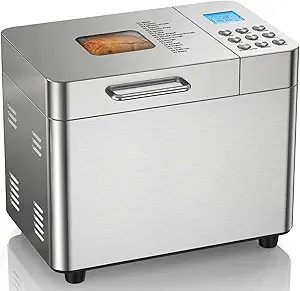 |
| Best Budget The cheapest option that still gets the job done reliably | Elite Gourmet Bread Maker EBM8103B |  |
| Top Rated A top-rated pick with lots of positive feedback | KITCHENARM 29-in-1 Bread Machine |  |
| Most Popular A crowd favorite that many people choose with confidence | Cuisinart CBK-110 Bread Maker |  |
| Best Seller A high-volume bestseller chosen again and again | KBS Pro Bread Maker MBF-010 |  |
Cuisinart Bread Maker CBK-200

| Capacity | 2 pounds |
|---|---|
| Wattage | 800 watts |
| Number of Programs | 16 |
| Voltage | 120 volts |
The Cuisinart CBK-200 is a countertop bread machine that handles kneading, rising, and baking with a built-in convection fan and 16 program presets. It is typically used to make standard loaves, specialty doughs, and mixes that benefit from timed add-ins via the automatic fruit and nut dispenser, and it also includes a Custom mode for manual cycle adjustments. For pizza dough the strong 800-watt motor and convection circulation help form a consistent gluten structure and even crust color, and the custom program makes it easy to shorten or lengthen kneading and rise stages to suit higher-hydration doughs. Practical benefits include reliable mix-in timing so add-ins do not interfere with dough development, multiple loaf sizes and crust settings for flexibility, and a metal construction that feels sturdy. Important limitations are that the machine is designed around loaf baking so dough capacity and pan shape are optimized for bread rather than very large pizza batches, and you may still need a short hand-knead or stretch-and-rest step after the cycle for the best thin-crust results.
Best for: Home cooks who want a dependable all-purpose bread machine that can also produce consistent pizza dough with adjustable cycles and timed add-ins.
Less Ideal for: Those who regularly make large quantities of pizza dough, prefer sheet-pan or very thin artisan crusts without any manual finishing, or need a stand mixer-style dough capacity should look elsewhere.
- Convection fan promotes even crust color and consistent baking.
- 16 preset programs plus Custom mode let you tailor knead and rise cycles for different doughs.
- Automatic dispenser times mix-ins so inclusions do not interrupt gluten development.
- 800-watt motor provides dependable kneading power for typical pizza doughs.
- Pan and paddle shape are optimized for loaf baking, not flat or very large pizza batches.
- Capacity tops out at a 2-pound loaf which limits batch size for multiple pizzas.
Verdict: If you want a sturdy, flexible bread machine that reliably produces ready-to-finish pizza dough with adjustable knead and rise cycles, the Cuisinart CBK-200 is a smart choice.
Zojirushi Home Bakery Virtuoso Plus BB-PDC20BA

| Capacity | 2 pounds |
|---|---|
| Wattage | 700 watts |
| Voltage | 120 volts |
| Number of Programs | 7 |
The Zojirushi Virtuoso Plus is a heavy-duty countertop breadmaker that handles everything from basic loaves to specialty healthy breads and gluten-free recipes. You load ingredients into the removable nonstick pan, pick one of the seven programs on the clear LCD control panel, choose crust shade, and the machine kneads with dual blades and bakes using heaters in both the lid and base for more even browning. Rapid cycle options can produce a loaf in about 2 hours 25 minutes, and the 13-hour delay timer makes it easy to have fresh bread or dough ready on your schedule. Practical benefits include thorough kneading for good dough development, a large viewing window to monitor progress, and useful accessories like measuring cups and a recipe book. At 700 watts and built like stainless steel, it is robust but fairly heavy and not portable for frequent moves, and it follows standard rectangular loaf shaping rather than producing round artisan-style loaves or pizza-specific forms without manual shaping.
Best for: Bakers who prioritize reliable performance and consistent results across a range of bread types and want a machine that produces well-kneaded dough with even crust for regular home baking and occasional dough preparation.
Less Ideal for: People seeking a compact, lightweight unit for occasional use or those who want a breadmaker that produces round artisan loaves or fully formed pizza crusts without additional manual shaping.
- Dual heaters (lid and bottom) promote even browning and consistent crust color
- Double kneading blades provide thorough dough development and higher rise
- Seven programs including gluten-free and whole wheat plus rapid cycles for quick bakes
- 13-hour delay timer lets you schedule fresh bread or dough for later
- Rectangular loaf pan limits loaf shape and requires manual shaping for pizza dough
- Heavy and bulky, so not ideal for frequent countertop relocation
Verdict: Choose the Virtuoso Plus if you want a durable, performance-focused breadmaker that consistently kneads and bakes a variety of breads and produces reliable dough for home pizza preparation with manual shaping.
OSIPOTO Bread Maker BM8205

| Capacity | 2 pounds |
|---|---|
| Wattage | 600 watts |
| Number of Programs | 17 |
| Voltage | 120 |
The OSIPOTO BM8205 is a countertop bread machine that handles mixing, kneading, rising, and baking for up to a 2 pound loaf using one-touch programs. Its 17 preset programs cover basics, whole wheat, gluten-free, jam, and even yogurt, while three loaf sizes and three crust settings let you dial in texture and color. The 600W motor promises steady heat and 360 degree even baking, and a 15-hour delay timer plus a one-hour keep-warm function are convenient for planning fresh bread when you want it. Practical touches include a nonstick removable pan for easier cleaning, an LCD display with simple controls aimed at beginners, and built-in overheat protection to safeguard the motor. For making pizza dough, the machine will mix and knead reliably and supports larger batches thanks to the 2 lb capacity, though you may need to remove dough and finish shaping by hand for best crust and hydration control. Noise is low in normal use, and included measuring tools and a recipe book help get consistent results. The main limits are that advanced bakers may find the presets inflexible for custom hydration or specialty doughs and the keep-warm window is short for delayed baking workflows.
Best for: Buyers who want a reliable, no-fuss machine that produces consistent loaves and can mix and knead pizza dough for home baking without needing advanced manual technique.
Less Ideal for: Serious artisan bakers who need fine control over hydration, fermentation timing, or who routinely make specialty high-hydration pizza or sourdough dough should look for a standalone mixer or manual process.
- Wide variety of 17 preset programs for many bread types and functions
- 2 lb capacity with three loaf-size options accommodates larger batches
- 15-hour delay timer and keep-warm function for scheduled baking
- Nonstick removable pan and included tools make cleanup and setup easier
- Quiet operation with overheat protection for safer long runs
- Presets offer limited control for advanced or high-hydration dough recipes
- Keep-warm only maintains temperature for about an hour, not long-term holding
Verdict: A practical, beginner-friendly bread maker that reliably mixes and kneads dough for home pizza and loaf baking with minimal fuss.
Elite Gourmet Bread Maker EBM8103B

| Capacity | 2 pounds |
|---|---|
| Wattage | 550 watts |
| Number of Programs | 19 |
| Voltage | 120 volts |
The Elite Gourmet EBM8103B is a compact, user-friendly bread machine that handles mixing, kneading, rising, and baking for 1, 1.5, or 2 pound loaves. It offers 19 one-touch programs including dough, gluten-free, and pizza dough modes, plus a delay timer and 60-minute keep-warm so you can schedule fresh bread for later. Practical inclusions like a nonstick bread pan, kneading blade, measuring tools, and a blade removal tool make setup and cleanup straightforward, and the unit's 550-watt motor runs efficiently for small kitchens. For making pizza dough, the dedicated dough setting lets you mix and knead automatically, producing a ready-to-roll dough without babysitting. Limitations include a single kneading blade and modest capacity, so it is best for small households rather than frequent large-batch baking, and the aluminum material may show wear over heavy long-term use. Noise and cycle time are similar to other machines in this price tier, so expect typical mixing sounds and multi-hour bake programs.
Best for: Buyers who want an affordable, no-fuss machine that will regularly produce fresh loaves and ready-to-use pizza dough without complex setup.
Less Ideal for: People who bake very large batches, run a small bakery, or need heavy-duty commercial performance should choose a larger, more robust machine.
- 19 preset programs including a dedicated dough cycle for pizza dough
- Three loaf size options (1, 1.5, 2 lb) for flexible batch sizes
- 15-hour delay timer and 60-minute keep-warm for scheduled baking
- Compact, energy-saving design suited to small kitchens
- Single kneading blade limits capacity for very heavy doughs or very frequent use
- Aluminum construction may show wear faster than heavier-duty materials
Verdict: A budget-friendly programmable bread maker that reliably produces loaves and ready-to-roll pizza dough for small households.
KITCHENARM 29-in-1 Bread Machine

| Voltage | 120 volts |
|---|---|
| Capacity | 2 pounds |
| Wattage | 550 watts |
| Number of Programs | 29 |
The KITCHENARM 29-in-1 Bread Machine is a fully programmable countertop bread maker aimed at both beginners and experienced cooks who want control over recipes. It offers 29 preset programs covering a wide range of breads plus cakes, jams, and yogurt, and it supports three loaf sizes and three crust colors for routine baking. The standout is the HOME MADE menu that lets you set individual cycle times for knead, rest, rise, and bake and save up to four custom programs, which is useful when adapting the machine for specialty doughs like pizza crust. Practical features include a 15-hour delay timer, 1-hour keep-warm, power interruption recovery, and alerts for adding nuts or removing the paddle. Build quality is solid with an ETL certification, stainless steel exterior, and a Teflon-coated nonstick pan. Trade-offs are typical for bread machines: you get convenience and consistent dough shaping but not the same oven-style crust or artisan oven spring you would from hand shaping and baking; cleanup requires hand washing removable parts.
Best for: Bakers who prioritize a reliable, programmable machine for consistently mixing and proofing doughs and who want to save and repeat custom recipes for things like pizza dough without manual timing.
Less Ideal for: People seeking oven-style artisan crusts or who prefer hand-kneading and baking for maximum control and texture should look elsewhere.
- Very flexible program set with 29 automatic menus including gluten-free and sourdough options
- Customizable HOME MADE menu allowing cycle-level adjustments and up to four saved recipes
- Three loaf sizes and three crust color settings for repeatable results
- Conveniences such as 15-hour delay timer, keep-warm, power interruption recovery, and add-nut/remove-paddle alarms
- ETL certified build with stainless steel exterior and nonstick bread pan
- Does not replicate oven-baked artisan crust or oven spring of hand-shaped dough
- Removable parts require hand washing rather than dishwasher-safe cleaning
Verdict: Choose this machine when you want a dependable, highly programmable bread maker that can save custom cycles and simplify making consistent pizza dough and other specialty breads.
Cuisinart CBK-110 Bread Maker

| Capacity | 2 pounds |
|---|---|
| Wattage | 550 watts |
| Number of Programs | 12 |
| Voltage | 120 volts |
The Cuisinart CBK-110 is a countertop bread machine that handles mixing, kneading, rising, and baking for home loaves and other dough-based recipes. It offers 12 preprogrammed menus plus settings for crust color and three loaf sizes, so you can make everything from standard sandwich loaves to smaller batches and sweet breads. The machine includes an LCD display, audible reminders, a 13-hour delay-start timer and a 60-minute keep-warm function, which makes scheduling fresh bread or dough for pizza convenient. The vertical nonstick bread pan is removable for easier cleanup, and the compact footprint fits most counters. At 550 watts it provides steady kneading power, but like most single-pan machines it produces a traditional vertical loaf shape rather than free-form pizza dough, and if you want very large or multiple dough batches you will need a larger mixer or separate proofing setup. For home cooks who want reliable, mostly hands-off dough preparation and straightforward controls, this model is a practical choice.
Best for: Home cooks who want a low-effort way to mix, knead, and proof dough for small to medium batches and value easy scheduling and dependable presets.
Less Ideal for: People who regularly make very large pizza dough batches, commercial quantities, or who need a free-form dough workflow for artisan-style crusts.
- Wide range of 12 preset programs for breads and other doughs
- Three loaf-size options and three crust settings for flexibility
- 13-hour delay-start and 60-minute keep-warm make timing convenient
- Compact, counter-friendly design with removable nonstick bread pan
- Produces a vertical loaf shape which may require reshaping for pizza bases
- 550-watt motor is adequate for home use but not for very large or heavy doughs
Verdict: Choose this Cuisinart if you want a compact, reliable bread maker that automates mixing and proofing for small-to-medium pizza dough batches and scheduled baking.
KBS Pro Bread Maker MBF-010

| Voltage | 120 volts |
|---|---|
| Capacity | 2 pounds |
| Wattage | 710 watts |
| Number of Programs | 17 |
This KBS bread maker is a full-featured countertop machine designed for hands-off loaf baking and dough preparation. It uses a 710W motor and 360° convection heating to knead and bake up to a 2.2 lb loaf, and the 17 preset programs include dough and specialty settings that make it convenient to mix, knead, and proof pizza dough automatically. The nonstick ceramic pan and paddle are healthier than traditional coatings and are straightforward to clean, and the automatic nut/fruit/dispenser helps add mix-ins without opening the cycle. The touchscreen controls, 15-hour delay timer, keep-warm function, and a 15-minute power-failure backup add practical reliability for predictable results. Trade-offs to note are that it is a dedicated bread machine rather than a standalone dough proofer, so shaping and final handling for pizza crust still require manual steps, and the unit is fairly heavy and countertop-sized. For risk-averse buyers the included accessories, recipe book, and apparent emphasis on quality give confidence that it will produce consistent dough and loaves with minimal tinkering.
Best for: Home cooks who want a reliable, low-maintenance way to mix and proof pizza dough and bake loaves without fuss and who prefer a product backed by included accessories and clear controls.
Less Ideal for: People seeking a dedicated artisan dough proofer or a device to fully automate shaping and oven baking of pizza crusts should consider other specialized equipment.
- 17 built-in programs including a dedicated dough setting for hands-off pizza dough preparation
- 710W motor with convection heating for stronger kneading and more even baking
- Healthy ceramic nonstick pan and paddle that are easy to clean
- Automatic dispenser for timed additions of nuts, fruit, or mix-ins
- Touchscreen controls with 15-hour delay and power-failure backup for predictable scheduling
- Not a separate proofer—final shaping and oven baking for pizza crust require extra steps
- Relatively heavy and takes significant countertop space
Verdict: A confident, feature-rich bread maker that reliably mixes and proofs dough for home pizza makers who want consistent, low-effort results.
Choosing the Right Bread Maker for Pizza Dough: Key Factors to Consider
Dough Program Versatility
Different pizza styles need different handling. A machine with dedicated dough and pizza settings lets you choose a short, intense knead for thin-crust pizzas or a gentler, longer cycle for Neapolitan-style dough. Customizable time and speed settings give you control over gluten development and hydration without manual intervention.
Look for a unit that allows pauses or manual adjustments mid-cycle so you can add extra water or flour if a batch looks off. Versatility reduces the need for hand-kneading and makes the machine useful for a wider range of pizza recipes.
Kneading Performance
Consistent kneading is the core function for pizza dough. Effective kneading builds the gluten network that provides structure and chew. Machines with robust, well-designed paddles or dual-knead systems tend to produce more uniform dough and fewer un-kneaded pockets.
Pay attention to how the paddle attaches and whether it leaves a large impression in the dough. A design that limits air pockets and thoroughly moves ingredients yields a more reliable base for stretching and topping.
Proofing Control and Timing
Accurate proofing affects flavor and texture. Bread makers that offer delayed start, extended proof cycles, or warm proofing settings let you manage fermentation for better taste and crumb. Temperature and timing control are especially important if you prefer cold ferment techniques or want to time dough readiness to meal plans.
Machines that provide clear indicators for stage changes and that maintain steady temperatures during proofing make the process more predictable and reduce the chance of overproofed or dense dough.
Capacity and Batch Size
Pizza recipes vary in required dough weight depending on crust thickness and pie size. Choose a machine whose minimum and maximum capacities align with the batch sizes you use most often. Some bread makers struggle with very small dough quantities, which can lead to uneven mixing, while others cannot handle larger double-batch doughs.
Consider whether you want to make multiple pies at once or smaller, individual crusts. A machine with adjustable loaf size settings or a clear capacity guideline will be easier to match to your recipe needs.
Ease of Cleaning and Maintenance
Dough can be sticky and messy, so simple cleanup saves time. Removable, nonstick pans and paddles that detach easily make post-batch cleaning straightforward. Fewer tight crevices and simple control panels reduce trapped flour and dough residues.
Also consider the availability of replacement parts like paddles and seals. A design that balances performance with user-friendly maintenance will keep the machine in service longer and reduce downtime between baking sessions.
Control Layout and Feedback
Clear controls and readable displays help you set the right program and monitor progress. A panel that provides timers, cycle phase information, and simple program selection reduces mistakes. Audible alerts or light indicators that signal knead end, proofing completion, or when to add ingredients can be especially useful when adapting recipes.
Panels with intuitive menus lower the learning curve and make it easier to experiment with hydration, salt, and rise times without guessing what the machine is doing.
Why a Dedicated Dough Cycle Matters
A dedicated dough cycle optimizes the mix and knead phases without engaging the bake element. That separation is important for pizza dough because you want strong gluten formation without premature browning. Machines that offer true dough-only programs preserve the neutral temperature environment needed for controlled fermentation.
Using the correct cycle reduces the risk of underdeveloped or overly dense dough, and it simplifies workflow by letting the machine handle repetitive physical work while you focus on shaping and toppings.
- Prevents accidental baking during knead and proof
- Maintains consistent low-temperature environment for fermentation
- Simplifies multi-step recipes like delayed fermentation
Adapting Recipes for Different Crust Styles
You can use the same machine to make thin-crust, thick-crust, and pan-style pizzas by adjusting hydration, knead time, and proof length. Higher hydration and shorter initial kneads favor open, airy crumbs common in Neapolitan dough, while longer kneads and slightly lower hydration yield a tighter crumb for chewy, New York-style slices.
Experiment in small batches and take notes on how changing one variable at a time affects dough feel. The machine's flexibility with timing and its ability to pause or extend cycles makes it easier to dial in a preferred crust profile.
- Increase hydration for lighter, airier crusts
- Extend proof time for flavor development
- Shorten knead time when using high-gluten flours
Managing Temperature and Fermentation
Temperature control is central to reliable fermentation. Some machines provide steady low heat or a warm proof setting that speeds rises, while others maintain near-room temperatures suitable for slower fermentation. If you plan to cold ferment in the refrigerator, the machine's role is primarily in mixing and initial knead.
Monitor dough temperature after mixing and adjust water temperature or proof settings accordingly. Consistent fermentation yields predictable stretchability and flavor, which are crucial when shaping pizza crusts for even baking.
- Use warm water for faster rises, cool water for slow fermentation
- Check dough temperature with a probe after kneading
- Avoid overproofing to prevent loss of oven spring
Common Troubles and Simple Fixes
Sticky or dry dough is usually a hydration or ingredient measurement issue rather than a machine fault. Add water a teaspoon at a time during an early pause if dough looks dry, or add a dusting of flour if it is excessively wet. Most bread makers allow manual intervention during mixing.
If dough does not develop gluten properly, try increasing knead time or using a higher-protein flour. Uneven mixing can sometimes be addressed by scraping down sides between kneads or reducing batch size so the paddle can move ingredients effectively.
- Pause and adjust hydration early in the mix cycle
- Increase knead time for weak gluten development
- Reduce batch size if ingredients are not fully incorporated
Routine Care to Extend Machine Life
Regular cleaning and timely replacement of worn paddles and seals keep performance consistent. Wipe the exterior and control panel after use, and wash removable parts according to the manufacturer guidelines. Avoid submerging motors or electrical parts.
Store the machine with the pan and paddle removed to prevent trapped moisture and odors. Periodic inspection of the paddle attachment and pan coating will alert you to wear before it affects dough quality.
- Clean pans and paddles after each use
- Inspect seals and paddle attachment points regularly
- Store components separately to prevent moisture buildup
How We Chose the Best Bread Maker for Pizza Dough
We shortlisted machines that consistently produce dough with good gluten development and structure, then filtered for programmable dough cycles and build quality. Key evaluation criteria included the variety and customization of dough programs, the machine's kneading mechanism and consistency, and available timing features such as delayed start and proofing. We also assessed ease of cleaning and maintenance, the durability of the pan and paddles, and how simple controls are for common pizza dough recipes. Capacity and batch size mattered because home pizza makers often need specific dough weights, and we gave extra attention to machines that handle both small and larger dough portions without over- or under-kneading. Exclusions: units with only basic loaf cycles, unreliable knead action, or unclear program options were not considered. Overall, selections favor repeatable dough results, user control over fermentation, and straightforward upkeep.
Our full evaluation process is outlined in our review methodology.
FAQ
Can a bread maker make pizza dough as good as hand-kneading?
Often a bread maker can match or exceed basic hand-kneading for gluten development because it provides consistent, repeatable kneading action. However, skilled hand-kneading or stretch-and-fold techniques may produce different textures, so results depend on recipe adjustment and preferred crust characteristics.
What dough setting should I use for Neapolitan-style pizza?
Use a dough-only cycle with a shorter, gentler knead and higher hydration to encourage an open crumb. After the machine finishes, finish shaping by hand and allow a final rest before baking at a very high oven temperature for best results.
Is it better to cold ferment dough after using the machine?
Cold fermentation often improves flavor and texture. Use the machine to mix and knead, then transfer the dough to a covered container and refrigerate for the desired time. The machine is primarily used for the mechanical work; long, slow fermentation is done outside the machine.
How do I adjust hydration when a recipe looks too sticky in the machine?
Pause the cycle early and add flour a tablespoon at a time until the dough forms a smooth, slightly tacky ball. Conversely, add water in very small increments if it looks dry. Small adjustments prevent overcorrection and help maintain proper gluten development.
Will small batch doughs work in most bread makers?
Some machines handle small batch doughs well, but others require a minimum volume for the paddle to engage properly. Check the machine's minimum capacity and be prepared to reduce knead time or use a manual finish if the batch is below that threshold.
Final Verdict
For home pizza makers, prioritize machines that provide a true dough cycle, reliable kneading action, and flexible proofing controls. Decide on capacity based on how many pies you typically make and favor units with easy-to-clean pans and detachable paddles. Tradeoffs will typically be between program complexity and simplicity of upkeep; choose the balance that matches how often you make pizza and how much control you want over fermentation and hydration.