
Note: This article contains affiliate links. If you click on these links and make a purchase, we may earn a small commission at no extra cost to you. This helps support our research and content. Read our full affiliate disclosure here.
Picking the right Budget Upright Freezer matters when you need dependable extra frozen storage without a large upfront or operating cost. You want a unit that fits the space, holds the kinds and amounts of food you freeze regularly, and keeps running expenses modest. This guide highlights seven shortlisted options that meet practical budget constraints and household needs. We evaluated capacity, energy use, organization features, and reliability. Read on to see which features matter most and which compact configurations suit different home setups.
Top Picks at a Glance
| Best Overall The best all-around choice for most situations | Electactic 3.2 Cu.ft Upright Freezer |  |
| Best Quality Built to a higher standard if you want something more solid | KoolMore KM-RUF-21S 21 Cu. Ft. Convertible Refrigerator/Freezer |  |
| Best Value The sweet spot between price and what you get | Kismile Compact Upright Freezer |  |
| Best Budget The cheapest option that still gets the job done reliably | Frostorm 3.2 Cu Ft Mini Fridge | 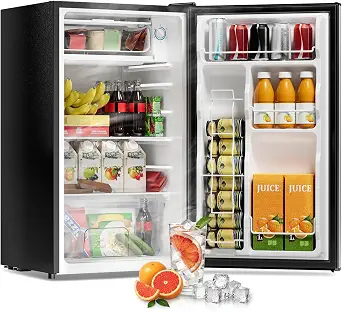 |
| Top Rated A top-rated pick with lots of positive feedback | Whynter CUF-301SS 3.0 cu ft Upright Freezer |  |
| Most Popular A crowd favorite that many people choose with confidence | Whynter CUF-210SS Upright Freezer |  |
| Best Seller A high-volume bestseller chosen again and again | Frigidaire Upright Freezer 6.5 cu ft |  |
Electactic 3.2 Cu.ft Upright Freezer

| Capacity | 3.2 cubic feet |
|---|---|
| Door Orientation | Reversible |
| Number Of Shelves | 2 |
| Voltage | 115 volts |
| Installation Type | Freestanding |
This Electactic 3.2 cu ft upright freezer is a space-conscious chest alternative that brings freezer storage to dorms, apartments, offices, or kitchens that need extra capacity. It cools using a high-efficiency compressor and a 7-level rotary thermostat that the back panel marks from 1 (warmest) to 7 (coldest), letting you target temperatures roughly in the range the manufacturer lists. Inside are two removable shelves for flexible organization and a reversible stainless steel door so installation can fit left- or right-handed layouts. The unit is freestanding and designed for low-noise operation under 40 dB with an estimated energy draw of about 0.6 kWh per day, which helps keep running costs down. Expect manual defrosting rather than an auto-defrost cycle, and while it claims fast ten-minute rapid freezing behavior, real-world performance will depend on ambient conditions and how often the door is opened. For buyers who need compact, inexpensive additional freezer space, this model delivers sensible features and efficient operation in a small footprint.
Best for: Buyers who want an affordable, energy-conscious secondary freezer for small living spaces and need straightforward temperature control and flexible shelf layout.
Less Ideal for: Large households or anyone who needs high-capacity long-term food storage or automatic defrosting should choose a larger or feature-rich model instead.
- Compact 3.2 cu ft capacity fits small spaces like dorms and apartments
- Seven-level adjustable thermostat for more precise temperature control
- Reversible stainless steel door adapts to different kitchen layouts
- Removable shelves let you reorganize storage for tall or bulky items
- Low-noise design and modest daily energy use for economical operation
- Requires manual defrosting; no automatic defrost feature
- Limited internal storage compared with full-size freezers
- Measurements and weight may be restrictive for some installation spots
Verdict: A compact, budget-friendly upright freezer that delivers practical extra freezer space and low running costs for small homes and tight kitchens.
KoolMore KM-RUF-21S 21 Cu. Ft. Convertible Refrigerator/Freezer

| Capacity | 21 cubic feet |
|---|---|
| Cooling Method | Compressor |
| Defrost System Type | Automatic |
| Voltage | 120 volts |
| Refrigerant | R-600A |
The KoolMore KM-RUF-21S is a large-capacity upright designed to serve as either a refrigerator or a freezer depending on your needs, which makes it well suited to garage or overflow food storage. It switches modes with a dedicated control, uses a compressor cooling method with R-600A refrigerant, and gives four adjustable shelves, two clear drawers and multiple door trays to organize fresh or frozen items. An electronic lock and control panel with interior LED lighting simplify monitoring and adjustments, while adjustable legs and rear roll wheels help with placement and leveling in a garage. The unit is freestanding, has automatic defrost, and lists an annual energy consumption figure to help estimate running cost. Expect solid storage flexibility and straightforward controls, but note the unit is large and intended for dedicated garage or utility use rather than tight kitchen spaces, and its annual energy draw may be higher than smaller, specialty garage models.
Best for: Buyers who need a robust, flexible secondary food storage solution for a garage or utility area and prioritize capacity and reliable compressor cooling over compactness.
Less Ideal for: Those with limited floor space, tight doorway access, or who want a low-energy compact fridge for occasional use inside a small apartment.
- Convertible fridge/freezer mode for seasonal or changing storage needs
- Large 21 cu. ft. capacity with adjustable shelves and clear drawers for organized storage
- Electronic control panel and LED interior light for easy monitoring and access
- Compressor cooling with automatic defrost for reliable temperature maintenance
- Adjustable legs and rear wheels simplify leveling and placement in a garage
- Relatively high annual energy consumption compared with smaller units
- Large footprint requires ample garage space and careful placement
Verdict: If you need a high-capacity, garage-ready unit that can switch between fridge and freezer modes, this convertible KoolMore delivers practical storage flexibility and dependable compressor cooling.
Kismile Compact Upright Freezer

| Capacity | 3.2 cubic feet |
|---|---|
| Wattage | 90 watts |
| Voltage | 115 volts |
| Number Of Shelves | 2 |
| Door Orientation | Reversible |
The Kismile Compact Upright Freezer is a small freestanding freezer intended as a budget-friendly secondary unit for dorms, apartments, offices, or RVs. It provides roughly 3.0 to 3.2 cubic feet of internal space with two removable shelves and a slide-out glass shelf to organize frozen goods like meat, ice cream, or meal prep portions. Temperature is set with a 7-level front-mounted dial that ranges about -7.6 to 6.8°F so you can dial in colder or milder settings, and the compressor is designed for modest energy use—about 0.6 kWh per day—while operating at under 40 dB for quiet locations. Practical touches include a reversible door, adjustable feet, a built-in top handle, and manual defrost with a plastic scraper. Limitations are typical for this class: manual defrosting requires occasional maintenance, the temperature range and accuracy suit everyday freezing rather than precise long-term storage, and interior capacity is limited compared with full-size freezers. For buyers wanting an inexpensive, small upright freezer that balances space, noise, and energy use, this model delivers solid value.
Best for: Buyers who need an affordable, space-saving secondary freezer for everyday frozen groceries, meal prep, or small households and who prioritize quiet, energy-efficient operation.
Less Ideal for: Those needing large-volume or long-term deep-freeze storage, precision temperature control for specialty items, or a fully maintenance-free frost-free unit.
- Compact 3.0–3.2 cu ft capacity fits small spaces like dorms or apartments
- 7-level front thermostat with a range down to about -7.6°F for flexible freezing
- Reversible door and adjustable feet make placement easier in tight layouts
- Low noise operation under 40 dB suitable for bedrooms or offices
- Energy-efficient compressor consuming about 0.6 kWh per day
- Manual defrost requires periodic maintenance and scraping
- Limited interior space compared with full-size freezers for bulk storage
- Temperature control is basic and not intended for precision long-term freezing
Verdict: A budget-friendly, compact upright freezer that maximizes small-space utility with quiet, energy-efficient operation and flexible placement options.
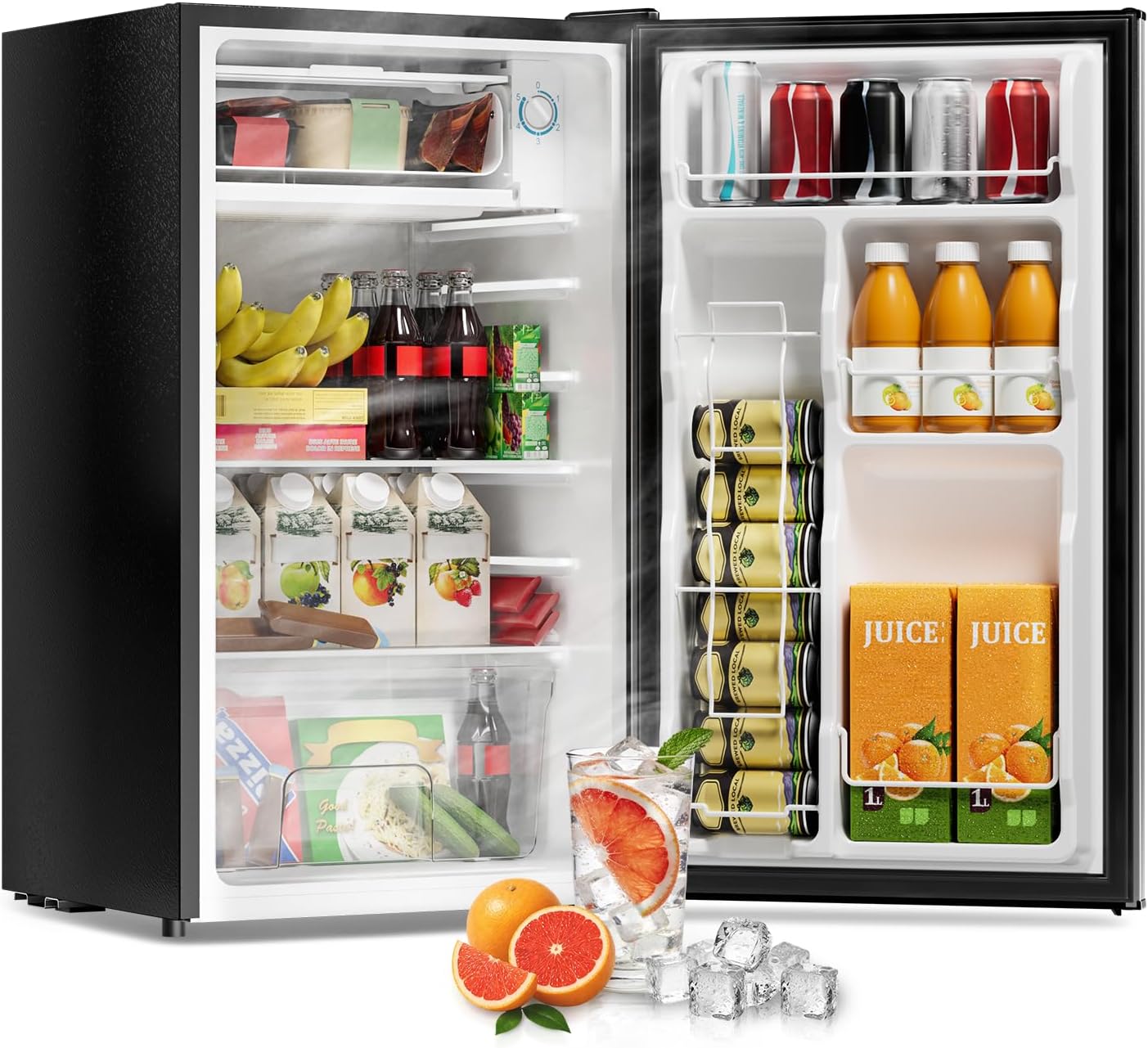
Frostorm 3.2 Cu Ft Mini Fridge
| Capacity | 3.2 cubic feet |
|---|---|
| Freezer Capacity | 0.3 cubic feet |
| Defrost System Type | Manual |
| Cooling Method | Compressor |
| Voltage | 115 volts |
The Frostorm 3.2 Cu Ft Mini Fridge packs a full-top freezer and usable refrigerator space into a compact freestanding cabinet meant for small rooms and offices. It uses a compressor cooling system with a mechanical 1–5 thermostat so you can dial in temperature easily; the separate 0.35 cu ft upright freezer reaches typical ice-making temperatures while the main compartment stores drinks, groceries, and meal prep. Adjustable shelves, door bins, and included accessories like a beverage rack and ice mold help organize contents, and the reversible door lets you fit the unit into tight layouts. Energy use is modest at about 0.6 kWh per day and the unit is ETL certified, which should reassure buyers prioritizing safe, economical operation. Expect manual defrosting and the usual noise and temperature swings associated with compact compressors, and the freezer is best for short-term frozen storage rather than long-term preservation.
Best for: Buyers who want a reliable, energy-conscious compact fridge for a bedroom, dorm, or office and prefer a straightforward, safety-certified appliance with easy temperature control.
Less Ideal for: Those needing large frozen storage, precise long-term freezing, or an ultra-quiet, silent cooler should consider larger freezers or different cooling technologies.
- Compact 3.2 cu ft capacity with a dedicated top freezer for ice and quick-freeze items
- Compressor cooling for reliable cold performance in varying room temperatures
- Reversible door improves placement flexibility in small spaces
- Adjustable shelves, door bins, and included accessories help organize food and beverages
- Relatively low energy use (~0.6 kWh/day) and ETL safety certification
- Freezer is small and suited to short-term storage and ice only
- Manual defrost requires occasional maintenance
- Compressor models can be louder than thermoelectric mini fridges
Verdict: A compact, ETL-certified mini fridge that balances usable fridge space with low daily energy use, making it a sensible pick for safety- and cost-conscious small-space buyers.
Whynter CUF-301SS 3.0 cu ft Upright Freezer

| Capacity | 3 cubic feet |
|---|---|
| Temperature range | -14° to 50° F |
| Wattage | 100 |
| Door orientation | Reversible |
| Number of shelves | 3 |
The Whynter CUF-301SS is a small upright freezer designed for tight spaces such as garages, offices, dorms, or kitchens and can be switched to refrigerator mode when you need chilled storage. It uses a compressor-based cooling system with a mechanical dial that sets refrigerator temperatures from 32 to 50°F or freezer temperatures from -14 to -11°F, and includes two wire shelves plus a removable slide-out basket for basic organization. The reversible-swing stainless steel door and recessed handle make placement flexible while the included cylinder lock and keys let you secure contents in shared spaces. Rated to use relatively little energy, this unit is quiet enough for nearby rooms and runs on standard 115V household power. Limitations for garage use include modest capacity—only 3 cubic feet—and basic mechanical controls rather than precise digital settings, so it is best for regular food and beverage storage rather than long-term bulk freezing or temperature-critical items.
Best for: Practical buyers who need a compact, energy-conscious cold storage unit for a garage, office, or small household space and value flexibility between fridge and freezer modes.
Less Ideal for: Users who need large capacity or precise temperature control for long-term freezing, or those who store large frozen loads regularly.
- Convertible freezer/refrigerator mode for flexible cold storage needs
- Reversible stainless steel door and recessed handle for flexible placement
- Integrated lock with two keys for secure shared-space storage
- Quiet compressor operation suitable for near-room placement
- Includes removable shelf and slide-out basket for basic organization
- Only 3.0 cu ft capacity, limiting bulk storage
- Mechanical thermostat lacks precise digital control
- Not designed for heavy-duty or large-volume freezing tasks
Verdict: A compact, energy-conscious convertible freezer that fits garages and small spaces when you need a reliable, secure solution for everyday frozen or chilled storage.
Whynter CUF-210SS Upright Freezer

| Capacity | 2.1 cubic feet |
|---|---|
| Wattage | 75 watts |
| Door Orientation | Reversible |
| Number Of Shelves | 1 |
| Voltage | 115 volts |
The Whynter CUF-210SS is a small upright freezer designed to add dedicated frozen storage where a full-size freezer is impractical. It holds about 2.1 cubic feet and uses a compressor to reach temperatures in the neighborhood of -10 to 2 degrees Fahrenheit, controlled with a mechanical thermostat and a single removable slide-out wire shelf for organizing items. The unit is freestanding with a reversible door and a recessed handle to keep the footprint neat, and it includes a cylinder lock and two keys for secure storage. At around 75 watts of power draw this model is economical to run compared with larger freezers and fits easily into kitchens, dorms, garages, or offices. Limitations include the small capacity and only one shelf which means frequent rearranging for bulk items, and the finish is stainless steel on the door with a black cabinet so it is not fully integrated for built-in installs. For buyers seeking an affordable, no-frills upright freezer for occasional or auxiliary use, the CUF-210SS covers the basics with sensible features and low running power.
Best for: Buyers who want an inexpensive, space-saving secondary freezer for occasional frozen food, ice cream, or secure storage in dorms, offices, or garages and who prioritize straightforward reliability and social-proof confidence.
Less Ideal for: People who need large-capacity frozen storage, multi-shelf organization for bulk groceries, or a built-in seamless cabinet appearance should look at larger or built-in models.
- Compact 2.1 cu ft footprint fits tight spaces
- Adjustable mechanical thermostat for reliable temperature control
- Reversible door and recessed handle for flexible placement
- Cylinder lock with two keys for secure storage
- Low power consumption around 75 watts
- Limited internal storage with only one removable shelf
- Not intended for built-in installation or large-scale freezing needs
Verdict: A small, efficient upright freezer that delivers secure, budget-friendly frozen storage for tight spaces.
Frigidaire Upright Freezer 6.5 cu ft

| Capacity | 6.5 cubic feet |
|---|---|
| Wattage | 760 watts |
| Voltage | 120 volts |
| Number Of Shelves | 6 |
| Installation Type | Freestanding |
This Frigidaire upright freezer is a straightforward, no-frills option for adding dedicated frozen storage in a small kitchen, garage, dorm, RV, or cabin. It offers 6.5 cubic feet of usable space organized by six wire shelves, which makes it easy to sort boxes, bags, and bulk items without digging through piles. The reversible door and recessed handle help the unit fit tight spaces, and the flush-back design keeps it close to walls. Controls are manual, so you can adjust temperature without complex electronics, and the vinyl-coated exterior plus stainless-steel door material keep maintenance simple. Expect manual defrosting rather than automatic frost-free operation, and the unit runs at standard household voltage with a 760-watt rating, so it will draw noticeable power during initial pull-downs and heavy use. For buyers who prioritize reliability and plain functionality over smart features or ultra-low energy draw, this freezer delivers solid capacity and basic convenience at a budget-friendly level.
Best for: Buyers who want a dependable, easy-to-use upright freezer to add extra frozen storage without paying for advanced features or smart controls.
Less Ideal for: Shoppers who need a frost-free model or the lowest possible long-term energy use should consider higher-end options instead.
- 6.5 cu ft capacity with six wire shelves for organized storage
- Reversible door and recessed handle for flexible placement in small spaces
- Simple manual temperature control that is easy to operate
- Flush-back design and adjustable legs for stable installation on uneven floors
- Manual defrost requires periodic draining and more hands-on maintenance
- Not a frost-free model so ice buildup can occur over time
Verdict: A practical, budget-friendly upright freezer that delivers straightforward extra frozen storage and simple controls for risk-averse buyers.
Choosing the Right Budget Upright Freezer: Key Factors to Consider
Usable Interior Capacity
Capacity numbers can be misleading because interior layout, shelf spacing, and drawer sizes determine how much you can actually store. Think about the types of food you freeze most often. Bulk bags, tall items like juice cartons, and frozen poultry have different space needs.
Measure the items you plan to store and compare those dimensions to shelf spacing and drawer dimensions. A slightly smaller cubic-foot rating with adjustable shelving can outperform a larger unit with fixed narrow shelves.
Energy Efficiency and Long-Term Cost
An inexpensive upfront purchase can still cost more over time if the unit uses a lot of electricity. Look for models with good insulation, efficient compressors, and favorable energy ratings. Lower annual energy use reduces operating costs and is especially important if the freezer is in a conditioned living space.
Also consider standby features and how often the compressor runs. Better-sealed doors and thicker insulation mean the compressor cycles less and helps protect frozen food during brief power interruptions.
Temperature Control and Stability
Consistent temperature matters to prevent freezer burn and preserve texture. Models with precise thermostats or digital controls maintain setpoints more accurately than simple mechanical dials. Good airflow inside the cabinet also helps keep temperatures even across shelves.
Rapid recovery after door openings and a quick-freeze option for newly added items are helpful for busy households. Check whether the unit has an interior fan or circulation system if you routinely store mixed loads.
Storage Organization and Accessibility
Organization features such as adjustable shelves, removable drawers, and door bins make it easier to keep an inventory and access items without long door-open times. Clear, labeled drawers or baskets are especially useful for family kitchens and meal prep.
Consider how often you will access the freezer. Vertical organization with pull-out drawers reduces bending and lets you rotate stock more effectively. If you plan to store large cuts or sheet-pan-sized items, verify shelf and drawer dimensions first.
Physical Footprint and Installation
A budget upright freezer must still fit the intended location. Leave adequate clearance for door swing, ventilation, and heat dissipation from the compressor. Check doorway widths and stair clearances before purchase to avoid installation headaches.
Also consider whether the model requires a dedicated circuit or specific electrical outlet placement. Some owners prefer units with a reversible door to accommodate tight spaces; confirm that option if doorway direction matters.
Reliability, Serviceability, and Warranty
Durable components and straightforward serviceability extend a freezer's useful life. Look for simple, widely available replacement parts and accessible compressor compartments. A clear warranty that covers sealed-system components gives extra peace of mind.
Consider how easy it is to defrost or access interior components for cleaning. Models with user-friendly service points reduce repair hassle and can save money over the long term.
Sizing a Budget Upright Freezer for Your Household
Estimate weekly freezer volume by tracking what you currently store for a few days. Small households or single cooks often need 3 to 5 cubic feet of extra space while families typically require 10 cubic feet or more. Account for seasonal bulk purchases like meat, preserves, or large batches of prepared meals.
Remember that usable layout matters as much as raw capacity. If you freeze many flat items or sheet-pan meals, look for shelves that accommodate those shapes. If you store many small packaged items, removable baskets and dividers help maintain order.
- Measure doorways and entry paths before selecting a unit.
- Prefer adjustable shelving if your inventory changes seasonally.
- Allow clearance for ventilation to maintain compressor efficiency.
Placement and Ventilation Tips
Upright freezers need airflow around the back and sides to dissipate heat. Install the unit with the recommended clearance from walls and avoid enclosed cabinets unless the manufacturer explicitly allows it. Placing a freezer in a garage or unconditioned space can affect energy use and temperature performance depending on climate.
Avoid locations with direct sunlight or near heat sources. A level surface prevents compressor strain and reduces noise. If noise is a concern, choose an installation spot away from living areas and on a stable, vibration-damping floor.
- Maintain recommended clearance for airflow and service access.
- Keep the freezer away from direct heat or sunlight.
- Use a level, stable surface to minimize compressor noise.
Organization Strategies for Busy Kitchens
Adopt simple labeling and rotation methods to reduce waste. Keep frequently used items at eye level and bulk or long-term storage in lower drawers. Clear or semi-transparent bins let you see contents quickly without leaving the door open.
Divide inventory by meal type or frequency of use. For example, breakfast items in one drawer, meats in another, and prepared meals in a separate shelf. Regularly purge frost buildup and expired items to maintain usable space and airflow.
- Label items with date and contents using freezer tape.
- Store flat bags stacked to save space.
- Use drawer inserts to keep small items from getting lost.
Defrosting and Maintenance Practices
Even frost-free units benefit from occasional cleaning and inspection. If you have a manual-defrost model, plan regular defrost cycles before ice buildup reaches an inch thick. Excess frost reduces usable space and forces longer compressor cycles, which increases energy use.
Clean door gaskets periodically to maintain a tight seal. Inspect vents and condenser coils and keep them dust-free. Simple maintenance extends service life and preserves temperature performance.
- Defrost manual units when frost exceeds about 1 inch.
- Wipe gaskets with mild soap and water to preserve sealing.
- Vacuum condenser coils annually to improve efficiency.
Managing Energy Use on a Budget
Small habits add up. Keep door openings short and organized, cool foods before freezing, and avoid overfilling which can restrict air circulation. Set the thermostat to a stable, efficient point rather than continuously lowering it beyond what is necessary for safe storage.
If the freezer is located in a non-climate-controlled area, be mindful that extreme ambient temperatures can affect compressor operation and efficiency. Use insulation or location choices to minimize energy penalties where possible.
- Pre-chill items before adding to the freezer to reduce extra compressor load.
- Keep the freezer reasonably full; empty space wastes energy but overpacking restricts circulation.
- Use a thermometer to verify internal setpoints and adjust for efficiency.
How We Chose the Best Budget Upright Freezer
Our selection focused on upright freezers aimed at buyers prioritizing affordability and ongoing economy. We filtered for models that provide practical frozen storage rather than specialty or commercial units, excluding chest freezers, drawer-style systems, and any units intended exclusively for professional kitchens. We evaluated candidates across several concrete dimensions: usable interior capacity and shelving flexibility, energy consumption and efficiency ratings, temperature control stability and insulation quality, build durability and finish, and user-facing convenience features such as reversible doors and quick-freeze functions. We also considered installation factors like available sizes and clearances for typical home layouts. Products that lacked adequate capacity for common household needs, had poor energy performance, or omitted basic reliability features were excluded. The result is a curated set of budget upright freezers that balance storage, operating cost, and day-to-day usability.
Our full evaluation process is outlined in our review methodology.
FAQ
How much clearance does an upright freezer need from walls?
Most upright freezers require a few inches of clearance on the sides and back for ventilation and service access. Check the unit's installation recommendations, but plan for at least 2 to 3 inches behind and 1 to 2 inches at each side as a practical minimum.
Are frost-free models worth it on a budget?
Frost-free models reduce maintenance but can use slightly more energy due to automatic defrost cycles. For many users the convenience outweighs the small efficiency penalty, but if you are comfortable with periodic manual defrosting, a manual-defrost unit can be more economical upfront.
Can I put a freezer in an unheated garage?
You can, but performance depends on the ambient temperature range. Some budget upright freezers are rated for garage use, while others are optimized for conditioned spaces. Extreme cold or heat can affect compressor cycling and temperature stability, so verify the installation environment against the unit's specifications.
How should I organize food to reduce freezer burn?
Use airtight, labeled packaging and remove as much air as possible before freezing. Arrange items to avoid long exposure during retrieval and keep frequently used foods near the front. Regularly rotate stock so older items are used first.
What maintenance keeps a freezer running efficiently?
Regularly defrost manual units, clean door seals, and vacuum condenser coils. Keep the interior organized to minimize door-open time and inspect the gasket for tight sealing. These simple steps reduce energy use and extend component lifespan.
Final Verdict
Choosing a Budget Upright Freezer requires balancing usable capacity, energy efficiency, and daily convenience. Prioritize the interior layout and organization features that match how you freeze and retrieve food, and confirm the unit's energy performance to avoid surprise operating costs. Weigh tradeoffs between convenience features such as frost-free cycles and the slightly higher energy use they can incur. Focus on fit, ventilation, and reliability when making a final choice so your freezer serves your household dependably for years.