
Note: This article contains affiliate links. If you click on these links and make a purchase, we may earn a small commission at no extra cost to you. This helps support our research and content. Read our full affiliate disclosure here.
When you need extra long-term cold storage without taking over the garage or utility room, choosing the right Small Chest Freezer matters. The right freezer balances usable capacity, energy use, and reliability so you can store bulk buys, seasonal goods, or meal prep without surprises. This guide shortlists the top Small Chest Freezers across common sizes and layouts. We evaluated each option for energy efficiency, interior organization, temperature stability, and day-to-day convenience. Read on to see the top picks and the criteria used to select them.
Top Picks at a Glance
| Best Overall The best all-around choice for most situations | Frigidaire Chest Freezer 2.0 Cu Ft |  |
| Best Quality Built to a higher standard if you want something more solid | Igloo 3.5 Cu Ft Upright Deep Freezer |  |
| Best Value The sweet spot between price and what you get | DEMULLER 3.5 Cu Ft Chest Freezer |  |
| Best Budget The cheapest option that still gets the job done reliably | Climate Choice 3.5 Cu.Ft Chest Freezer |  |
| Top Rated A top-rated pick with lots of positive feedback | Koolatron Chest Freezer KTCF99 |  |
| Most Popular A crowd favorite that many people choose with confidence | Kismile 3.2 Cu Ft Chest Freezer |  |
| Best Seller A high-volume bestseller chosen again and again | BODACIOUS 7.0 Cu Ft Chest Freezer |  |
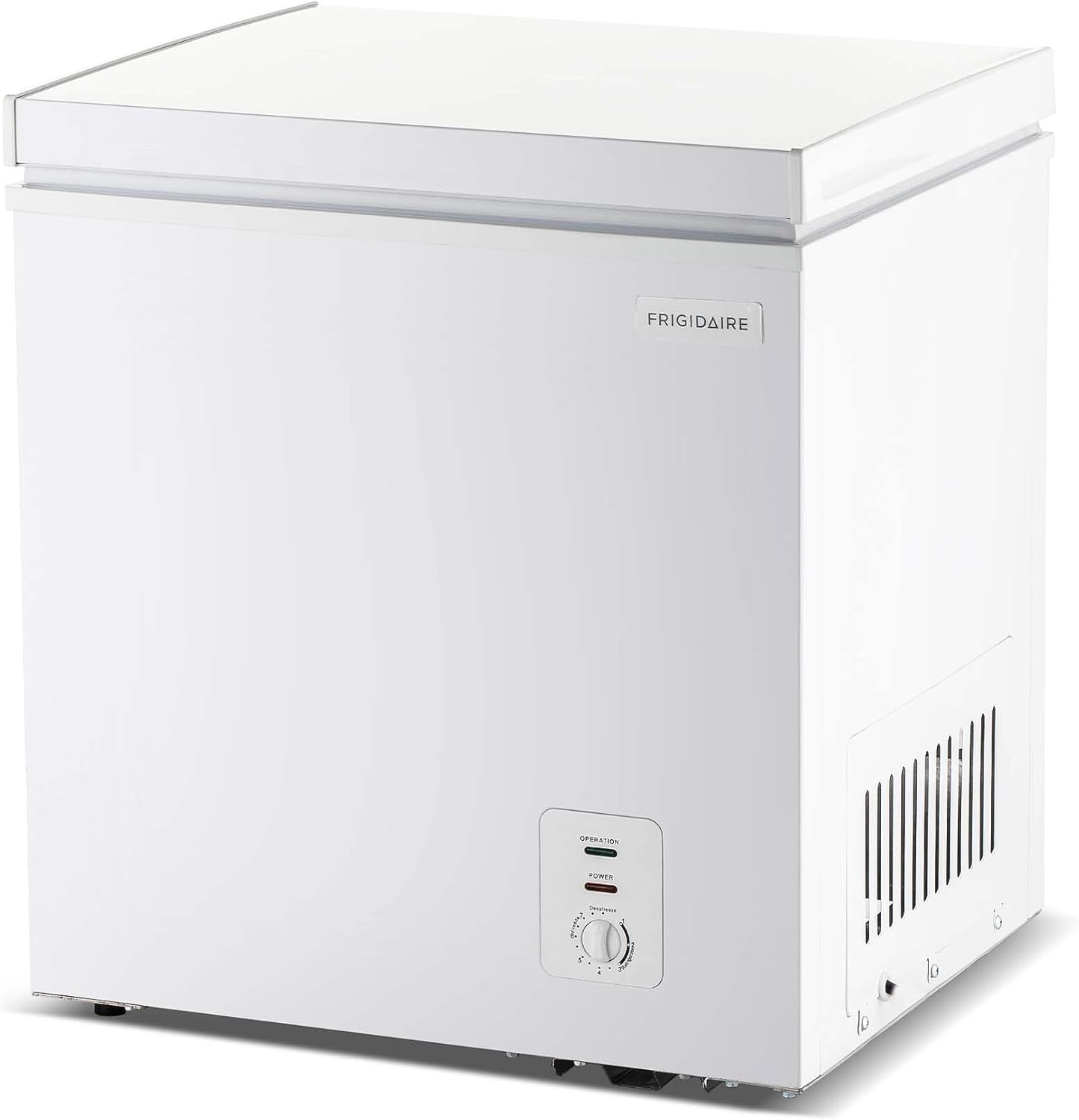
Frigidaire Chest Freezer 2.0 Cu Ft
| Capacity | 2.1 cubic feet |
|---|---|
| Wattage | 300 watts |
| Voltage | 120 volts |
| Number Of Shelves | 1 |
This compact Frigidaire chest freezer is built for small spaces where extra frozen storage is needed. It provides roughly 2.1 cu ft of capacity accessed through a single flip-up lid and includes a removable vinyl-coated wire basket to keep small items organized while larger items sit below. Temperature is set with an exterior adjustable thermostat and a power-on compressor indicator shows when the unit is running. Because it uses manual defrost and includes an easy-access drain plug, maintenance is straightforward but requires occasional defrosting. Adjustable leveling legs and a recessed handle make placement and access simple, and the unit runs on standard 120V power at about 300 watts. Expect reliable, basic freezing performance without advanced features like auto-defrost or temperature alarms, which helps keep the footprint and complexity low. For buyers wanting compact, no-frills extra freezer space, this model delivers practical performance and easy upkeep.
Best for: Buyers who need a reliable, space-saving secondary freezer for everyday frozen groceries, seasonal harvests, or overflow storage and value simplicity and straightforward maintenance.
Less Ideal for: Users who want a low-maintenance freezer with automatic defrost, smart features, or large-capacity long-term storage should consider larger or feature-rich alternatives.
- Compact footprint fits small kitchens, garages, or basements
- Removable vinyl-coated wire basket helps organize small items
- Adjustable thermostat lets you fine-tune internal temperature
- Manual defrost with drain plug simplifies cleaning and draining
- Manual defrost requires periodic thawing and draining
- No advanced features such as auto-defrost, alarms, or digital controls
Verdict: A compact, no-frills chest freezer that delivers practical extra frozen storage for small spaces and straightforward maintenance.
Igloo 3.5 Cu Ft Upright Deep Freezer

| Capacity | 3.5 cubic feet |
|---|---|
| Wattage | 100 watts |
| Door Orientation | Top |
| Number Of Shelves | 1 |
The Igloo 3.5 cu ft upright deep freezer is a compact solution for buyers who need extra frozen storage without a large footprint. It uses a D-type refrigeration tube and foam insulation to get cold quickly and hold steady temperatures, while an adjustable thermostat (-15°F to 0°F listed in the product copy) lets you set the cooling level for different foods. The upright layout and removable wire basket make organization easier than a traditional chest freezer and the balanced hinge keeps the lid propped open for loading. Practical touches include bright LED interior lighting, front rollers for repositioning, and a drain plug for simple defrosting and cleaning. Noise is described as low and the unit consumes about 100 watts, making it suitable for garages or apartments where quiet, efficient operation matters. The main limitations are the modest 3.5 cu ft capacity, which is small for large-batch storage, and the single shelf/basket configuration that may require extra containers to maximize organization.
Best for: Buyers who prioritize fast, reliable cooling in a compact footprint and need a quiet, energy-conscious freezer for a garage, apartment, or secondary storage.
Less Ideal for: Anyone who needs large-volume or bulk long-term storage for big households or hunting/food-preservation runs should choose a larger-capacity freezer instead.
- Quick-freezing D-type refrigeration tube that cools the interior faster
- Adjustable thermostat for precise temperature control
- Removable wire basket and upright layout for easier organization and access
- Quiet, energy-efficient operation with foam insulation and LED interior light
- Balanced hinge, drain plug, and front rollers for easy use and maintenance
- 3.5 cu ft capacity is limited for large-volume storage
- Only one included basket/shelf may require additional organizers for efficient use
Verdict: A compact, performance-focused upright freezer that cools quickly and runs quietly, ideal when you need dependable secondary frozen storage in a small space.
DEMULLER 3.5 Cu Ft Chest Freezer

| Capacity | 3.5 cubic feet |
|---|---|
| Wattage | 70 watts |
| Voltage | 110 volts |
| Number Of Shelves | 1 |
| Installation Type | Freestanding |
This DEMULLER 3.5 cubic foot chest freezer is built for small spaces where extra frozen storage is needed. It uses an electronic digital display to set internal temperature to the nearest degree between -15°F and 41°F, making it usable for everything from rapid freezing to chilled drinks. Two removable stainless steel baskets help keep small items organized, and D-shaped cooling tubes around the inner cabinet are claimed to improve cooling efficiency. The unit is freestanding with a top-opening lid, manual defrost and a side drain hole to help with melting and cleanup. At roughly 70 watts the compressor is relatively low power and the brand states noise under 38 dB, which suits apartments, dorms, or garages. Limitations include manual defrost rather than frost-free operation and a compact internal envelope that will not replace a full-size freezer, so buyers should plan storage layout carefully. The included one-year support provides basic coverage if issues arise.
Best for: Buyers who need reliable extra frozen storage in tight spaces and prioritize precise temperature control and low-noise operation for shared or quiet living areas.
Less Ideal for: People who want a hands-off frost-free freezer or need large-volume long-term storage for bulk meat and large containers should look at larger or auto-defrost models instead.
- Compact 3.5 cu ft capacity fits small apartments, dorms, or garages
- Digital temperature display with 1°F precision and wide -15°F to 41°F range
- Two removable stainless steel baskets for organized storage
- Low power draw (70 watts) and quiet operation suitable for shared spaces
- Side drain hole and removable baskets simplify manual defrost and cleaning
- Not frost-free — requires periodic manual defrosting
- Internal usable space is limited compared with upright or larger chest freezers
Verdict: A quiet, energy-efficient small chest freezer with precise digital temperature control that works well where space is limited and organized frozen storage is needed.
Climate Choice 3.5 Cu.Ft Chest Freezer

| Capacity | 4.2 cubic feet |
|---|---|
| Wattage | 58 watts |
| Voltage | 115 volts |
| Door Orientation | Top |
This small chest freezer delivers usable extra frozen storage in a compact footprint, making it a good fit where space and budget are limited. It features a top-opening lid, a removable storage basket for organizing smaller items, and seven temperature settings that span roughly -11.4°F to 10.2°F for flexible storage needs. The unit advertises quiet operation under 40 dB and low daily energy use, which helps keep operating costs down. A drain at the base simplifies manual defrosting and cleanup, and side handles make moving the unit easier than many similarly sized freezers. Practical limitations include modest capacity that will not replace a full-size freezer and a single compartment design with no internal shelving beyond the basket, so longer items must lie flat. For buyers focused on affordability and compact extra storage, this freezer offers sensible features and low running cost in a small package.
Best for: Buyers who need an inexpensive, space-saving secondary freezer for occasional bulk buys, extra meal storage, or limited household use and who prioritize low operating cost.
Less Ideal for: Households that need large-capacity long-term storage, frequent access to a wide variety of organized shelves, or a replacement for a full-size freezer should consider larger models instead.
- Compact footprint fits tight spaces like apartments, dorms, or garages
- Adjustable temperature range with seven settings for different frozen goods
- Removable storage basket helps organize small items
- Energy-efficient operation rated around 0.37 kWh/24h and quiet below 40 dB
- Built-in drain simplifies defrosting and cleanup
- Small 3.5 cu. ft. capacity limits bulk storage and large items
- Single compartment, no adjustable shelving beyond the one basket
Verdict: A budget-friendly compact chest freezer that gives quiet, energy-efficient extra frozen storage for small homes and tight spaces.
Koolatron Chest Freezer KTCF99

| Capacity | 99 liters |
|---|---|
| Wattage | 125 watts |
| Voltage | 120 volts |
| Number Of Shelves | 1 |
The Koolatron 3.5 cu ft chest freezer is a straightforward, no-frills compact freezer built for dependable long-term food storage in tight spaces. It uses a low-vibration compressor to hold temperatures between 0 and -24°C (32 to -11.2°F) and a front-mounted mechanical control dial to let you set the cooling level without opening the lid. Practical touches include a removable vinyl-coated wire basket for small items, a stay-open swing-top lid with rear hinges, and a manual defrost system with an easy-access front drain and leak-proof plug for simpler cleaning. The foam-insulated cabinet and magnetic seal help keep temperatures stable, while the narrow flat-back footprint makes it easy to tuck into an apartment, garage, or basement. Expect basic, reliable performance rather than advanced features like auto-defrost or smart controls, and you will need to schedule occasional manual defrosting as ice builds. For buyers who want a compact, solidly built freezer that focuses on steady cooling and ease of maintenance, this model delivers practical value.
Best for: Buyers who prioritize steady, dependable freezing performance in a compact footprint and want an easy-to-maintain appliance for extra frozen storage in small homes or secondary spaces.
Less Ideal for: Families who need very large volume storage, automated defrosting, or connected/smart features should consider larger or more feature-rich models instead.
- Reliable compressor cooling with a wide temperature range down to -24°C for long-term frozen storage
- Compact flat-back design fits into small spaces like apartments, garages, or basements
- Front-mounted mechanical dial and magnetic seal for simple, stable temperature control
- Removable vinyl-coated wire basket and stay-open lid make everyday access and organization easier
- Manual defrost requires periodic draining and maintenance
- Limited capacity compared with full-size freezers, so not suitable for very large households
Verdict: A compact, dependable chest freezer that delivers steady compressor cooling and straightforward maintenance for buyers needing reliable extra frozen storage in small spaces.
Kismile 3.2 Cu Ft Chest Freezer

| Capacity | 3.2 cubic feet |
|---|---|
| Door Orientation | Top |
| Number Of Shelves | 1 |
| Installation Type | Freestanding |
The Kismile 3.2 cu ft chest freezer is a small, freestanding unit designed for apartments, dorms, or as secondary storage in a kitchen or garage. It cools using a high-efficiency compressor and offers a 7-grade adjustable thermostat that ranges roughly from 6.8°F to -7.6°F so you can choose gentler chilling or deeper freezing. The top-open balanced hinge holds the lid at fixed angles for easier loading, and two removable wire baskets make organizing small items like frozen meals, breast milk, or ice packs convenient. Practical touches include a water drain for easier defrosting and power/run indicator lights. The unit is marketed as energy efficient at about 0.68 kWh per day and runs quietly under 40 dB, making it suitable for living spaces. Limitations are its small internal volume compared with full-size freezers and a modest low-temperature range that may not be ideal for long-term storage of very large bulk items or professional use.
Best for: Buyers who want a compact, quiet secondary freezer for everyday frozen goods and value social proof that the model performs reliably in small-space living.
Less Ideal for: People who need large-capacity or commercial-grade freezing for bulk storage or those requiring very low long-term storage temperatures.
- Compact 3.2 cu ft footprint fits small kitchens, dorms, or offices
- 7-level adjustable thermostat offers flexible temperature control from mild chilling to deeper freeze
- Two removable baskets help separate and organize small items
- Balanced hinge lid that holds open at multiple angles for easier access
- Low noise operation under 40 dB and relatively low daily energy draw
- Limited internal capacity compared with full-size freezers
- Lowest temperature is only around -7.6°F, which may be insufficient for some long-term freezing needs
Verdict: A compact, quiet chest freezer that gives reliable small-space cold storage with flexible temperature control, ideal as a secondary or dorm-sized unit.
BODACIOUS 7.0 Cu Ft Chest Freezer

| Capacity | 7 cubic feet |
|---|---|
| Voltage | 110 volts |
| Number Of Shelves | 2 |
| Door Orientation | Top |
| Specification Met | ETL |
This 7.0 cu ft chest freezer is aimed at buyers who need extra frozen storage without a large footprint. It uses energy-saving tech and a six-position thermostat so you can dial in cooling for meats, vegetables, or prepared meals, while a removable basket helps keep frequently used items accessible. The unit is advertised as quiet, suitable for apartments or garages, and includes a defrost drain to make occasional thaw-and-clean cycles easier. Expect straightforward setup after the recommended 24-hour rest period and manual defrosting rather than an automatic defrost cycle. The compressor can run harder on the coldest setting, which may raise noise and surface warmth, so avoid leaving it on MAX continuously. Build details like a stainless steel top and ETL listing signal basic safety and quality. For someone prioritizing a compact, efficient secondary freezer, this model covers core needs with simple controls and useful organization features, though it lacks advanced frost-free convenience and digital temperature monitoring.
Best for: Buyers who want a reliable, no-frills secondary freezer that saves energy and fits tight spaces and who prefer simple mechanical controls over smart features.
Less Ideal for: Anyone who needs a frost-free, maintenance-free freezer or remote/digital temperature monitoring should consider other models.
- Compact 7.0 cu ft capacity fits smaller spaces
- Energy-efficient design to lower daily power consumption
- Quiet operation suitable for apartments or garages
- Adjustable 6-setting thermostat for flexible temperature control
- Removable basket and drain make organizing and defrosting easier
- Manual defrost design requires periodic thawing
- No digital temperature readout or advanced controls
Verdict: A compact, energy-efficient chest freezer that delivers straightforward, quiet frozen storage for risk-averse buyers seeking a simple, dependable secondary freezer.
Choosing the Right Small Chest Freezer: Key Factors to Consider
Usable Capacity and Internal Layout
Published volume figures do not always equate to practical storage. The shape of the interior, presence and placement of storage baskets, and the height of the walls change how many items you can fit. A freezer with clever basket placement or removable dividers lets you store tall items and keep frequently used food accessible.
When choosing a small chest freezer, think about the types of items you will freeze most often. Large cuts of meat require different space than flat bags of vegetables. Consider models that maximize flat floor space and offer one or two shallow baskets to separate frequently accessed items from bulk storage.
Energy Efficiency and Operating Cost
Small chest freezers run continuously and their energy use adds up over months and years. Look for units with low annual kWh estimates and efficient compressors. Better insulation and a tight lid seal reduce compressor run time, lowering electricity bills.
Consider where the freezer will be located. A unit placed in a conditioned basement will operate more efficiently than one in an uninsulated garage exposed to temperature extremes. Factor energy use into your long-term cost expectations rather than focusing only on purchase cost.
Temperature Stability and Recovery
How well a freezer holds temperature during heavy loading or short power interruptions affects food safety and product longevity. Fast recovery time after the lid is opened or after loading warm items reduces the time food spends in temperature danger zones.
Look for freezers with a reliable thermostat and good compressor performance. Solid insulation thickness and a strong lid gasket also support temperature stability. Temperature consistency is especially important if you plan to store perishable meats or long-term frozen goods.
Defrosting, Maintenance, and Upkeep
Most small chest freezers use manual defrosting. Ease of defrosting, availability of a drain channel or plug, and how quickly frost builds up all affect convenience and maintenance costs. A freezer that accumulates frost quickly will reduce usable capacity and require more frequent defrost cycles.
Check for accessible baskets and a removable gasket for cleaning. Consider how easy it is to empty and dry the interior during defrost. Regular maintenance routines influence how much time you will spend on upkeep over the life of the unit.
Size, Footprint, and Placement
Small chest freezers vary widely in footprint and height. Measure the intended location before choosing a model, and leave space for ventilation around the compressor compartment. Consider door and lid clearance as well as the route for delivery into tight spaces.
Also think about how the freezer will be used daily. If you access it frequently, placing it in a convenient location reduces friction. If it will be mostly for seasonal use, prioritize compact footprint and insulation over easy reach.
Noise and Compressor Performance
Compressor noise can be a concern if the freezer sits near living spaces. Look for units with quieter compressors or vibration-dampening mounts. Noise levels often correlate with compressor type and the quality of the housing.
A reliable compressor also affects long-term performance and repair likelihood. Consider models with robust compressor designs and clear documentation on serviceability. Quieter operation and solid compressor performance both contribute to a better ownership experience.
How Much Capacity Do You Really Need
Estimate your storage needs by inventorying what you plan to freeze and how often you buy in bulk. A small chest freezer is a compromise between extra storage and footprint. If you frequently buy family-size packages or whole poultry, choose a model with extra depth and flexible basket options to accommodate larger items.
Think in terms of usable shelf area rather than advertised liters or cubic feet. Models with high internal walls but few flat surfaces can be less practical than slightly smaller units with a more usable layout.
- Measure large items you plan to freeze to check fit.
- Account for airflow space around items; do not pack to absolute capacity.
- Plan occasional defrosting by leaving empty zones for quicker thaw cycles.
Where to Place a Small Chest Freezer
Placement affects efficiency and convenience. A conditioned indoor location stabilizes compressor workload and extends compressor life. Avoid locations with wide temperature swings like uninsulated garages unless the unit is rated for those conditions.
Allow several inches of clearance around the compressor compartment for airflow. If noise is a concern, avoid placing the freezer near bedrooms or main living areas.
- Indoor utility room or basement is often best for efficiency.
- Keep away from direct sunlight and heating sources.
- Ensure door or lid has clearance for full opening.
Organizing a Small Chest Freezer for Easy Access
Organization reduces time the lid stays open and helps maintain stable temperatures. Use removable wire baskets for frequently accessed items and label groups of food so you can find items quickly. Stack flat, freezer-safe bags to maximize space and prevent air pockets that slow cooling.
Consider grouping by use case such as ready meals, proteins, and vegetables. Leaving a small pathway or empty channel through the center can improve airflow when the freezer is heavily loaded.
- Use transparent freezer bags and label by date.
- Store similar items together to minimize search time.
- Rotate stock so older items are more accessible.
Defrosting and Seasonal Care
Plan a defrosting schedule that matches your freezing habits. If you open the chest frequently, frost will build faster. Manual defrost models benefit from a shallow basket and a drain plug to speed cleanup. When defrosting, move items to a cooler with ice packs or a temporary chest to keep them frozen.
After defrosting, thoroughly dry the interior and inspect the gasket and drain for damage. Regular seasonal checks help prevent leaks and maintain seal integrity.
- Defrost when frost reaches about 1/4 inch thick.
- Use a drain plug for easier water removal after defrost.
- Inspect and clean the gasket annually.
Power Outages and Emergency Preparedness
A small chest freezer holds temperature better than an upright during short power outages because of cold air stratification, but recovery depends on load and insulation. Keep a freezer thermometer to monitor core temperatures and use a reliable generator or cooler with ice when extended outages occur.
If you regularly experience outages, favor models with thicker insulation and strong lid seals. Make a plan for high-priority items and consider keeping a list of what to move first in an emergency.
- Keep a thermometer inside to track temperature.
- Have a plan for moving perishables during extended outages.
- Prioritize high-value or high-risk food for cold retention.
How We Chose the Best Small Chest Freezer
We focused on attributes that affect daily ownership and long-term running costs for small chest freezers. Key evaluation criteria included energy efficiency and annual power draw, because operating cost is often the largest lifetime expense for a continuously running freezer. Usable capacity and internal layout were measured next, with attention to how much truly usable volume the interior design provides versus the published gross volume. Temperature stability and recovery time were considered to assess how well a freezer holds set temperatures during power interruptions or heavy loading. Build quality and insulation thickness were reviewed for durability and cold retention. Practical features such as manual or electronic thermostat control, defrost method, lid seal quality, and basket configuration were also part of the assessment. We excluded models designed primarily for portable car or marine use and any units larger than the small freezer category. We prioritized models with clear specification sheets and documented energy ratings. Final selections balanced operating cost, usable storage, and owner-friendly features rather than relying on advertised capacity alone.
Our full evaluation process is outlined in our review methodology.
FAQ
How much freezer burn can I expect in a small chest freezer?
Freezer burn depends more on packaging and air exposure than the unit itself. Use airtight freezer-safe bags or vacuum sealing and remove as much air as possible. Proper packing and consistent temperature control minimize freezer burn.
Can I install a small chest freezer in an unheated garage?
It depends on the unit's temperature rating. Many small chest freezers perform best within a moderate ambient range. Extreme cold or heat can stress the compressor or hinder proper operation, so check the manufacturer ambient temperature recommendations before placing it in an unheated space.
How often should I defrost a small chest freezer?
Defrosting frequency depends on usage. For frequent access, you may need to defrost every few months. If frost builds to around 1/4 inch thickness, it is time to defrost since excess frost reduces usable space and efficiency.
What maintenance keeps a small chest freezer running efficiently?
Keep the gasket clean and inspect it for gaps. Vacuum dust from the compressor and condenser area periodically to maintain airflow. Avoid overpacking the freezer and ensure adequate ventilation around the unit to reduce compressor strain.
Are small chest freezers noisy?
Noise levels vary by compressor design and installation. Many small chest freezers are relatively quiet, but placing them near living areas can make compressor cycles noticeable. Look for units with vibration isolation and place the freezer on a stable, level surface.
Final Verdict
Prioritize usable capacity and energy efficiency when choosing a small chest freezer. Balance how much you need to store against the footprint you can accommodate and the ongoing operating cost. Consider temperature stability, maintenance needs, and where the unit will live in your home to avoid surprises. Focus on insulation quality, reliable thermostat control, and convenient organization features to get the best performance for the long term. With those tradeoffs in mind, you can confidently pick a small chest freezer that matches your storage habits and space constraints.