
Note: This article contains affiliate links. If you click on these links and make a purchase, we may earn a small commission at no extra cost to you. This helps support our research and content. Read our full affiliate disclosure here.
If you need extra frozen storage in a basement, choosing the right chest freezer makes a big difference for food organization, operating cost, and temperature reliability. Basements pose specific challenges such as limited clearances, potential humidity, and lower ambient temperatures, so you want a model that handles those conditions while offering the capacity you actually need. This guide highlights seven top chest freezers selected for typical basement situations. We explain the evaluation criteria that matter, walk through factors to consider when sizing and placing a unit, and outline practical tips to keep a basement freezer running efficiently. Read on for the shortlisted options and the decision points that should guide your pick.
Top Picks at a Glance
| Best Overall The best all-around choice for most situations | Frigidaire Chest Freezer 5.0 Cu. Ft. |  |
| Best Quality Built to a higher standard if you want something more solid | Hamilton Beach Chest Freezer 17 cu ft |  |
| Best Value The sweet spot between price and what you get | DEMULLER Chest Freezer 3.5 cu ft |  |
| Best Budget The cheapest option that still gets the job done reliably | LifePlus Chest Freezer 3.5 Cu.Ft |  |
| Top Rated A top-rated pick with lots of positive feedback | Koolatron Chest Freezer KTCF99 |  |
| Most Popular A crowd favorite that many people choose with confidence | Kismile BD-80 3.2 Cu Ft Chest Freezer |  |
| Best Seller A high-volume bestseller chosen again and again | BODACIOUS 7.0 Cu Ft Chest Freezer |  |
Frigidaire Chest Freezer 5.0 Cu. Ft.
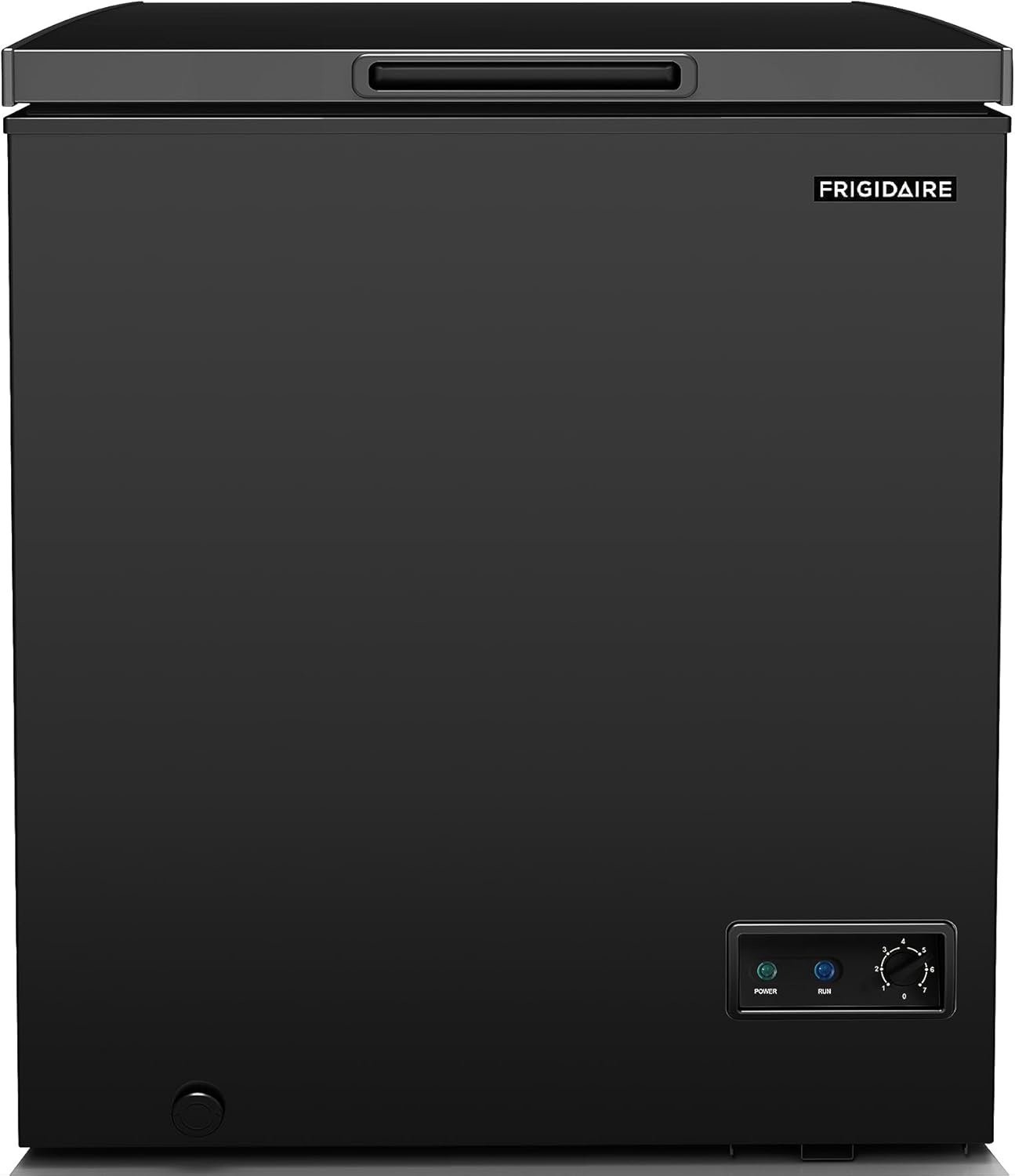
| Capacity | 5 cubic feet |
|---|---|
| Voltage | 120 volts |
| Door Orientation | Top |
| Number Of Shelves | 1 |
This Frigidaire chest freezer provides straightforward extra frozen storage in a compact, garage- and basement-ready package. It opens from the top with a single lid and includes a removable vinyl-coated wire basket for sorting smaller items while the adjustable external thermostat lets you tune the interior temperature across multiple settings. The manual defrost drain and aluminum interior liner make cleaning and defrost cycles simple, and adjustable leveling legs help keep the unit stable on uneven basement floors. Expect reliable basic performance rather than advanced features: there is no frost-free system or digital controls, so occasional defrosting is required and temperature precision is manual. Its modest 5.0 cubic feet capacity fits families who need overflow space, meal preppers, or anyone who wants a compact freezer for basement use without extra bells and whistles.
Best for: Buyers who want a reliable, no-frills chest freezer for extra basement storage and value straightforward controls and easy maintenance.
Less Ideal for: Shoppers seeking a frost-free model, precise digital temperature control, or larger capacity for heavy commercial use should consider alternatives.
- Compact 5.0 cu. ft. footprint fits tighter basement corners
- Adjustable external thermostat for simple temperature control
- Removable vinyl-coated wire basket keeps small items organized and accessible
- Manual defrost drain and aluminum liner simplify cleaning and defrosting
- Adjustable legs improve stability on uneven floors
- Manual defrost requires periodic thawing and draining
- No digital controls or frost-free technology for hands-off operation
Verdict: A compact, basement-ready chest freezer that delivers simple, dependable extra storage with easy manual maintenance.
Hamilton Beach Chest Freezer 17 cu ft

| Capacity | 17 cubic feet |
|---|---|
| Voltage | 110 volts |
| Number Of Shelves | 1 |
| Door Orientation | Top |
This Hamilton Beach 17 cu ft chest freezer gives you large-capacity cold storage suited to a basement, garage, or cottage. It opens from the top with a stay-open lid and includes a removable vinyl-coated wire basket for organizing frequently used items while the main cavity holds bulk purchases or game. Temperature is controlled with a seven-position adjustable thermostat and a power-on indicator light shows when the unit is running. Practical touches include an exterior front-access drain to make manual defrosting and cleaning easier and two adjustable leveling legs to sit flat on uneven basement floors. Because it is a manual-defrost chest freezer, it tends to be more energy efficient than many upright models but requires periodic thawing and defrosting. The metal lid and flat-back design help the unit fit against walls to save space, but you should plan for clearance when loading long items. For buyers who need simple, heavy-duty frozen storage in a lower-temperature space, this is a straightforward, capable choice.
Best for: Buyers who need reliable, high-capacity frozen storage for a basement or garage and prioritize straightforward performance and organized bulk storage.
Less Ideal for: Those who want a frost-free, low-maintenance freezer or need frequent upright-style shelving and door access should consider other formats.
- Large 17 cu ft capacity for bulk or long-term storage
- Removable wire basket keeps frequently used items accessible
- Adjustable 7-position thermostat for simple temperature control
- Front-access drain makes manual defrosting and cleaning easier
- Manual defrost requires periodic thawing and maintenance
- Top-opening design can limit access for very tall or oversized items
Verdict: Choose this chest freezer when you want large, dependable basement storage with simple temperature control and easy-to-clean manual defrost.
DEMULLER Chest Freezer 3.5 cu ft

| Capacity | 3.5 cubic feet |
|---|---|
| Voltage | 115 volts |
| Number Of Shelves | 2 |
| Door Orientation | Top |
This DEMULLER chest freezer provides small-space cold storage geared toward basements, garages, or apartment utility areas. It offers an electronic control panel with 1°F increments and a wide temperature range from -15°F to 41°F, so you can rapidly freeze items or keep produce and drinks chilled. Two removable stainless steel hanging baskets help keep small items accessible without digging to the bottom and the full door seal and manual defrost with side drain make maintenance straightforward. The unit is freestanding and compact, which makes placement in tight basement corners easy, and the top lid stays open between 45 and 75 degrees for hands-free loading. Important limits: capacity is 3.5 cubic feet so it suits overflow storage rather than bulk long-term food preservation, and manual defrosting means occasional maintenance compared with frost-free models. The straightforward controls and compact footprint make it a practical basement freezer for extras and seasonal bulk items.
Best for: Buyers who want a space-efficient, easy-to-control secondary freezer for basements or utility rooms and value precise temperature control and simple organization.
Less Ideal for: People who need large-capacity or frost-free long-term storage for a big household or frequent bulk freezing should look at larger or frost-free models.
- Precise digital temperature control adjustable to 1°F for specific freezing needs.
- Compact 3.5 cu ft footprint fits small basement or utility spaces.
- Two removable wire baskets keep small items organized and easy to reach.
- Top-opening lid that stays propped open for hands-free loading and unloading.
- Full door seal and a side drain simplify manual defrost and help preserve cold performance.
- Manual defrost requires occasional draining and more upkeep than auto-defrost designs.
- Limited 3.5 cu ft capacity is not suited for large households needing extensive long-term storage.
Verdict: A compact, precisely controlled chest freezer that fits basement utility spaces and keeps overflow frozen goods organized and easy to access.
LifePlus Chest Freezer 3.5 Cu.Ft

| Capacity | 3.5 cubic feet |
|---|---|
| Wattage | 58 watts |
| Voltage | 115 volts |
| Installation Type | Freestanding |
This 3.5 cubic foot LifePlus chest freezer is a compact, freestanding deep-freeze solution geared toward small spaces like basements, garages, or apartments. It offers seven adjustable temperature settings (about -7.6°F to 21.2°F) so you can tailor freezing for meat, ice cream, or prepared meals, and the removable basket keeps frequently used items organized and accessible. The top-opening lid uses balanced metal hinges so the door can stay open without dropping, and a built-in drain simplifies defrosting and cleaning. At roughly 0.37 kWh per day and a reported quiet compressor, it is designed to be economical to run and unobtrusive in living areas. Limitations include its modest capacity, which restricts bulk storage, and the chest format means bending to reach lower items rather than adjustable shelving. For buyers who need a simple, efficient freezer in a basement or secondary space, it delivers sensible performance without frills.
Best for: Buyers on a tight budget who need an economical, space-saving secondary freezer for a basement, garage, or apartment and value low running costs over large capacity.
Less Ideal for: Those who frequently store large quantities or want upright-style shelving and easy top-to-top visibility should consider larger or upright models instead.
- Compact 3.5 cu.ft capacity fits small basements and tight spaces
- Seven adjustable temperature settings for tailored freezing
- Removable basket and drain simplify organization and maintenance
- Energy-efficient operation at about 0.37 kWh per day
- Quiet compressor suitable for living areas or finished basements
- Small overall capacity not suited for large households or bulk storage
- Chest layout requires bending to access items at the bottom
Verdict: A budget-friendly, compact chest freezer that delivers quiet, energy-efficient freezing for basements and other small secondary spaces.
Koolatron Chest Freezer KTCF99

| Capacity | 99 liters |
|---|---|
| Wattage | 125 watts |
| Voltage | 120 volts |
| Door Orientation | Top |
The Koolatron KTCF99 is a compact chest freezer aimed at adding dependable frozen storage in tight spaces like basements, apartments, or cottages. It uses a low-vibration compressor to maintain temperatures between 0 and -24°C and offers an external mechanical dial for straightforward temperature control. The 3.5 cu ft interior includes a hanging wire basket for organizing small items and a stay-open swing-top lid that makes loading easier. Cleaning and defrosting are handled manually via a front-mounted drain with a leak-proof plug, which keeps maintenance simple but means you must plan periodic defrost cycles. The narrow, flat-back footprint and enclosed evaporator coils let it tuck against a wall or in a corner, while quiet operation helps when placed near living areas. This freezer prioritizes basic, reliable performance over advanced features like auto-defrost or digital controls, so it works well as a solid, no-frills secondary freezer for long-term food storage in a basement or utility space.
Best for: Buyers who want a straightforward, dependable secondary freezer for a basement or utility space and value quiet, proven compressor cooling over smart features.
Less Ideal for: People who need large capacity, automatic defrosting, or digital temperature monitoring should consider larger or feature-rich models instead.
- Reliable compressor cooling that holds temperatures down to -24°C for long-term storage
- Compact 3.5 cu ft capacity and flat-back design fit well in basements or tight corners
- Front-mounted drain and leak-proof plug simplify manual defrost and cleaning
- Included removable wire basket and stay-open lid make organization and access easier
- Manual defrost requires periodic maintenance and draining
- No digital controls or advanced features for precise monitoring
Verdict: A compact, quiet, and reliable chest freezer built for straightforward long-term frozen storage in basements and small spaces.
Kismile BD-80 3.2 Cu Ft Chest Freezer

| Capacity | 3.2 cubic feet |
|---|---|
| Door Orientation | Top |
| Number Of Shelves | 1 |
| Installation Type | Freestanding |
The Kismile BD-80 is a small chest freezer designed to give extra frozen storage in tight spaces like basements, dorms, or garages. It offers a 7-step adjustable thermostat that ranges from about 6.8°F to -7.6°F so you can choose milder refrigeration or deeper freezing, and two removable wire baskets help keep smaller items accessible. The balanced hinge lid stays open at set angles for safer loading and a rear drain speeds defrost cleanup. Kismile says the compressor is energy efficient and runs under 40 dB, which makes the unit suitable for locations where low noise and modest power draw matter. Practical limits are its compact 3.2 cu ft capacity and modest cold range, so it is best for meal prep, frozen groceries, and breast milk rather than long-term storage of large catches or whole carcasses. Installation is simple since it is freestanding, but buyers should allow the unit to sit upright 24 hours before first use and plan electrical access based on the cord location.
Best for: Buyers who need a reliable, low-noise secondary freezer for a basement or small utility space and prefer units with visible user reviews and straightforward features.
Less Ideal for: Those wanting a large-capacity deep freezer for long-term bulk meat or commercial use should choose a larger, colder model instead.
- Compact footprint fits tight basement corners or utility rooms
- Seven-level adjustable thermostat for flexible cold settings
- Two removable baskets make organizing small items easier
- Balanced hinge lid that holds open for safer loading and defrosting
- Low claimed noise (under 40 dB) and modest daily energy use
- Limited maximum cold temperature compared with larger deep freezers
- Small 3.2 cu ft capacity restricts bulk storage
- Power cord placement may affect placement options
Verdict: A compact, low-noise chest freezer that fits tight basement spots and provides flexible temperature control for everyday frozen storage.
BODACIOUS 7.0 Cu Ft Chest Freezer

| Capacity | 7 cubic feet |
|---|---|
| Voltage | 110 volts |
| Number Of Shelves | 2 |
| Specification Met | ETL |
| Installation Type | Countertop, Freestanding |
This Bodacious 7.0 cu ft chest freezer is a straightforward, no-frills deep freezer suited to small households and secondary storage in basements or garages. It provides roomy internal capacity with two removable baskets to organize meats and bulk goods, and a top-opening lid with metal double hinges for wide access. The unit emphasizes low noise and energy efficiency, marketed under 40 dB operation and an energy-saving compressor, and includes a 6-position adjustable thermostat with an LED indicator to dial temperatures between about -0.4°F and 32°F. Practical features include stabilizer feet, a built-in drain port for easy defrosting, and a relatively light 48.5 lb cabinet that is easier to move than full-size freezers. Important limits are its small footprint and single-compartment chest layout, which means no upright shelving or separate freezer zones, and the recommendation from the brand to avoid running at the coldest setting continuously to preserve compressor life. For basement use it offers a balance of capacity, quiet operation, and simple maintenance without advanced controls or smart features.
Best for: Buyers who want a reliable, simple secondary freezer for a basement or small home and prioritize quiet, energy-conscious performance over advanced features.
Less Ideal for: People seeking a large-capacity, multi-zone, or upright freezer with shelves, or those who need precise digital temperature control and smart connectivity.
- Generous 7.0 cu ft capacity with two removable baskets for organized storage
- Quiet operation (advertised under 40 dB) suitable for basement or living spaces
- Energy-efficient compressor and adjustable 6-position thermostat for temperature control
- Built-in drain port and stabilizer feet make defrosting and placement easier
- Chest layout offers no internal shelves or separate compartments for better organization
- Manufacturer warns against long-term use at maximum cold to avoid higher power draw and compressor wear
Verdict: A quiet, energy-conscious 7 cu ft chest freezer that fits basement use when you want dependable, simple frozen storage without bells and whistles.
Choosing the Right Chest Freezer for Basements: Key Factors to Consider
Usable Capacity and Internal Layout
Capacity on the spec sheet can be misleading because of interior shape, basket arrangement, and accessibility. Measure the items you plan to store and think about how often you will access them. Long items like game cuts or party-sized trays need flat floor space, while frequent small-item use benefits from baskets and dividers.
For basements, consider depth and lid opening clearance. A chest freezer with a shallow but wide footprint might fit under window wells or along low walls better than a very deep unit. Also check whether interior lighting or lift-out baskets are included to keep everyday organization simple.
Energy Efficiency and Operating Cost
Basements are often cooler than the rest of the house, which can help efficiency but also can lead to overworking of thermostats if the unit is not designed for lower ambient temps. Look for well-insulated cabinets and compressors rated for cool-room operation. Better insulation reduces runtime and cuts electricity use over the life of the freezer.
Factor in estimated annual energy use based on your local electricity rates and expected duty cycle. A more efficient unit may cost more up front but save money in a basement setting where the freezer runs more consistently through the year.
Temperature Stability and Cold Recovery
Temperature stability is crucial for food safety and long-term storage quality. A freezer that holds steady prevents thaw-refreeze cycles that can degrade food. Pay attention to cold recovery performance, which determines how quickly the unit returns to temperature after the lid is opened or after a power interruption.
Solid thermostatic control, adequate insulation, and a robust compressor help maintain stable temperatures. In basements with occasional temperature swings, choose models with tighter control ranges and good cold-hold time without power.
Moisture Management and Corrosion Resistance
Basements tend to be more humid than above-grade rooms, which increases the risk of surface corrosion and gasket degradation. Choose units with rust-resistant exteriors, durable interior coatings, and tight door seals to limit moisture ingress.
Also consider drain or defrost features that simplify moisture removal. A model designed with humidity in mind will have fewer long-term service issues and will retain efficiency longer in a damp basement environment.
Installation, Clearances, and Placement
Basement layouts can restrict where a chest freezer fits. Check the unit footprint against doorways, stair landings, and any narrow halls you must move the freezer through during delivery. Also verify required side and rear clearances for ventilation and servicing.
Consider the floor surface and potential for water exposure. Placing the freezer on a slightly raised, level platform helps protect it from minor basement flooding and eases cleaning underneath. If the basement has limited headroom, ensure the lid can open fully without hitting overhead obstructions.
Noise, Vibration, and Local Comfort
Because basements are connected to living spaces, compressor noise and vibration can be noticeable upstairs. Check published noise levels and look for units with vibration-damping feet or compressors tuned for quiet operation.
Placement matters as much as the spec. Position the freezer away from shared walls or under bedrooms when possible, and use anti-vibration pads if the unit transmits sound through floor joists.
Sizing a Chest Freezer for Typical Basement Needs
Estimate the volume you need by inventorying what you plan to store now and what you might add over a year. Common household basements benefit from mid-size freezers for bulk staples, while hunters or large families often require larger capacities. Think in cubic feet but translate that to real items to avoid over- or under-buying.
Also factor in future flexibility. A slightly larger unit can prevent repeated upgrades, but larger freezers consume more space and may use more energy. Balance current needs against the physical constraints of the basement footprint.
- Measure doorways and stair widths before selecting a unit.
- Sketch a placement plan showing lid swing and service access.
- Account for seasonal spikes in stored food, such as holiday meals.
Basement Ventilation and Ambient Temperature Effects
A basement's ambient temperature impacts compressor cycling and thermostat behavior. Units designed to operate in cooler rooms will run more efficiently and avoid excessive on-off cycling. If the basement is unheated and frequently drops to near-freezing, confirm the freezer's lower ambient operating limit.
Adequate ventilation around the cabinet is important for heat rejection. Even though basements are cool, cramped placement against a wall or in a closet can trap heat around the compressor and reduce efficiency.
- Leave recommended clearances around the unit for airflow.
- Avoid enclosing the freezer in a tight cabinet unless ventilation is provided.
Maintenance Routine for Basement Freezers
Regular maintenance keeps a chest freezer running well in a damp basement. Wipe down the exterior and gasket periodically to prevent mold and corrosion. Check the seal for gaps and clean the drain and defrost channels as recommended by the manufacturer.
Defrost schedules depend on frost buildup. Manual-defrost models are simpler and use less electricity while frozen, but they require periodic thawing. Automatic-defrost models reduce upkeep but can be more complex and may run slightly warmer inside.
- Keep the area around the freezer clean and dry.
- Inspect seals monthly and clean coils or vents yearly if accessible.
Protecting a Basement Freezer From Water and Flood Risk
Basements are susceptible to minor water events. Elevating the freezer on a platform a few inches above the floor and placing a water alarm nearby reduces the risk of undetected damage. Some buyers also add a small drain pan or run a nearby floor drain to catch meltwater during a defrost cycle or a leak.
Avoid placing electrical outlets on low walls without GFCI protection. If your basement has a history of flooding, consider alternative storage strategies or movable containment that lets you relocate the freezer quickly in an emergency.
- Use a raised, level platform to keep the base away from puddles.
- Install a battery backup alarm to alert you to temperature rises.
Organizing Food for Easy Access and Minimal Hold-Time
Good organization reduces lid-open time and improves energy performance. Use baskets, bins, and labels to keep like items together and avoid long searches. Place frequently used items near the top and reserve bottom space for long-term storage to minimize disturbance.
Consider vacuum-sealing or uniform packaging for space efficiency and faster inventory management. A simple first-in, first-out labeling system helps prevent forgotten items from degrading inside a basement unit.
- Group items by category and season to reduce rummaging.
- Keep a running inventory list on the freezer or nearby wall.
How We Chose the Best Chest Freezer for Basements
We started by focusing on features that affect long-term basement performance and daily usability. Core evaluation criteria included usable interior capacity and layout for practical storage, energy efficiency and estimated annual operating cost in cooler environments, temperature stability and insulation for consistent freezing, and build features that reduce moisture and corrosion risk in basements. We also assessed ease of installation and required clearances, simple controls and diagnostics, and maintenance features such as removable baskets and defrosting access. Noise level and compressor design were considered because basement locations can transmit sound to living spaces. Finally, we screened out units lacking adequate rust-resistant finishes, poor insulation ratings, or unclear capacity specifications. The resulting shortlist reflects models that balance space, efficiency, and durability for basement use.
Our full evaluation process is outlined in our review methodology.
FAQ
Can a chest freezer operate efficiently in an unheated basement?
Often it depends on the unit. Some chest freezers are rated for cool-room operation and will run efficiently in unheated basements. Check the manufacturer's ambient temperature rating and choose a model with robust insulation and a compressor suited to lower temperatures.
How much clearance does a chest freezer need in a basement?
Clearance needs vary, but you should leave several inches at the rear and sides for ventilation and service access. Also ensure there is enough space for the lid to open fully and for you to remove baskets or large items.
Is manual defrost better for basement installations?
Manual-defrost models are often more energy efficient and hold lower temperatures, but they require scheduled thawing. In a basement where humidity and frost can be issues, manual models give better long-term performance if you are willing to maintain them.
How do I protect a freezer from basement moisture and rust?
Choose a unit with rust-resistant finishes and tight door gaskets, and keep the surrounding area well ventilated. Wiping down seals regularly and using moisture absorbers or a dehumidifier in very damp basements helps reduce corrosion risk.
Will a chest freezer be noisy in a basement?
Noise varies by compressor design and how the unit is installed. Many chest freezers are relatively quiet, but vibrations can transmit through floors. Use anti-vibration pads and avoid placing the freezer under sensitive living areas when possible.
Final Verdict
For basement use, prioritize a chest freezer that balances usable internal space with strong insulation and reliable temperature control. Think through capacity in terms of real items, not just cubic feet, and plan placement to allow ventilation, lid clearance, and service access. Accept some tradeoffs between maintenance style and energy use. If humidity or flood risk is a concern, favor corrosion-resistant finishes and elevated placement. With those priorities in mind you can choose a basement chest freezer that delivers steady cold, manageable operating costs, and long service life.