
Note: This article contains affiliate links. If you click on these links and make a purchase, we may earn a small commission at no extra cost to you. This helps support our research and content. Read our full affiliate disclosure here.
If you need extra frozen storage without a big up-front spend, a chest freezer under $300 can be a practical solution. These units give you more cubic feet per dollar than many upright models and make it easy to store bulk purchases, seasonal garden harvests, or emergency supplies. Choosing the right chest freezer matters because size, energy draw, and temperature stability determine how much you can store and how much it will cost to run. This guide covers the top shortlisted chest freezers under $300. We focus on capacity, energy efficiency, temperature control, and usability so you can pick the unit that fits your space and freezing needs. Read on for the key decision points and practical advice before the product list.
Top Picks at a Glance
| Best Overall The best all-around choice for most situations | BODACIOUS 7.0 Cu Ft Chest Freezer |  |
| Best Quality Built to a higher standard if you want something more solid | Frigidaire Chest Freezer 2.0 Cu. Ft. |  |
| Best Value The sweet spot between price and what you get | DEMULLER Chest Freezer 3.5 cu ft |  |
| Best Budget The cheapest option that still gets the job done reliably | Climate Choice 3.5 cu ft Chest Freezer |  |
| Top Rated A top-rated pick with lots of positive feedback | Koolatron Chest Freezer KTCF99 |  |
| Most Popular A crowd favorite that many people choose with confidence | Kismile Chest Freezer BD-80 |  |
| Best Seller A high-volume bestseller chosen again and again | BODACIOUS 5.0 Cu Ft Chest Freezer |  |
BODACIOUS 7.0 Cu Ft Chest Freezer

| Capacity | 7 cubic feet |
|---|---|
| Voltage | 110 volts |
| Number Of Shelves | 2 |
| Door Orientation | Top |
| Specification Met | ETL |
This 7.0 cu ft BODACIOUS chest freezer provides straightforward extra freezing capacity for a small household, apartment, or garage. It uses an energy-saving compressor and a six-setting thermostat so you can dial in colder temperatures for long-term storage or gentler settings for everyday frozen goods, and the brand quotes low daily energy use. The top-opening design includes a removable storage basket for organizing smaller items and a front defrost drain that makes manual defrosting and cleanup easier. It is built to sit freestanding or on a countertop and is ETL listed, and the stainless-steel lid and compact footprint help it fit tighter spaces. Expect modest noise and some warmth on the cabinet exterior while the compressor runs, and the unit requires a 24-hour resting period before first use; there is no automatic defrost or frost-free cycle, so periodic manual defrosting is necessary. For buyers who want a simple, efficient secondary freezer under $300, this is a practical option.
Best for: Buyers who need an affordable, no-frills secondary freezer with decent capacity and low operating costs for everyday frozen storage in tight spaces.
Less Ideal for: People who want a fully frost-free, hands-off freezer or need a large-capacity unit for bulk long-term storage should consider other options.
- Good usable capacity for small households at 7.0 cu ft
- Energy-efficient design that lowers daily power consumption
- Quiet operation suitable for indoor spaces like apartments or garages
- Removable basket and defrost drain simplify organization and cleaning
- Requires manual defrosting since it is not frost-free
- May feel warm on the exterior and be noisier at colder settings
Verdict: A compact, energy-efficient 7.0 cu ft chest freezer that delivers practical extra freezing space and low running costs for budget-conscious buyers.
Frigidaire Chest Freezer 2.0 Cu. Ft.
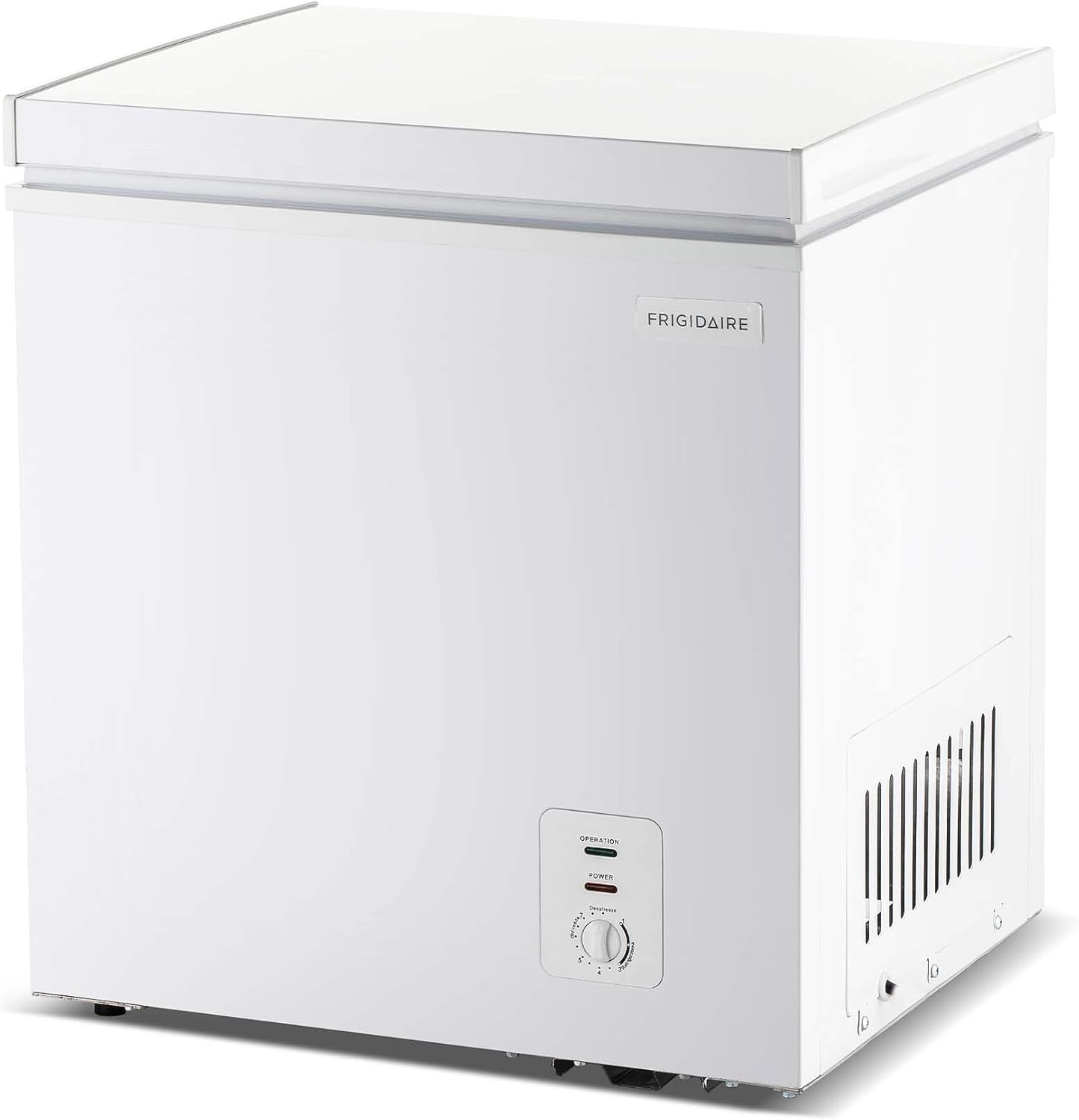
| Capacity | 2.1 cubic feet |
|---|---|
| Wattage | 300 watts |
| Voltage | 120 volts |
| Door Orientation | Top |
This small Frigidaire chest freezer is built to add dedicated frozen storage in tight spaces like garages, basements, or tiny kitchens. It uses a top-opening lid with a removable vinyl-coated wire basket to keep small items accessible while the main cavity stores bulkier packages. The exterior thermostat and compressor-on indicator make temperature management straightforward, and the manual defrost with an easy-access drain simplifies occasional maintenance. Adjustable leveling legs and a recessed handle improve placement and usability. Practical benefits include a low footprint for the internal capacity and simple controls that do not require a learning curve. Trade-offs are its manual defrost design and limited 2.1 cubic foot volume, so it is not meant for large households or high-volume long-term storage, and the basic feature set lacks automated frost management or advanced temperature displays. For buyers prioritizing straightforward, efficient frozen storage under a tight budget, this unit covers the essentials reliably.
Best for: Buyers who need affordable, no-frills frozen storage for a garage, condo, small kitchen, or seasonal use and value straightforward controls and a compact footprint.
Less Ideal for: Those who need large capacity, automatic frost-free operation, or advanced temperature monitoring for long-term bulk storage should look at larger or feature-rich models.
- Compact footprint provides surprising internal capacity for small spaces
- Adjustable exterior thermostat and power indicator make temperature control simple
- Removable vinyl-coated wire basket improves organization and access to small items
- Easy-access defrost drain and manual defrost keep maintenance straightforward
- Adjustable legs and recessed handle aid placement and usability
- Manual defrost requires periodic melting and draining rather than automatic defrost
- Small 2.1 cu ft capacity is not suitable for large families or heavy freezer users
Verdict: A compact, budget-friendly chest freezer that delivers simple, reliable frozen storage for small spaces and light-duty use.
DEMULLER Chest Freezer 3.5 cu ft

| Capacity | 3.5 cubic feet |
|---|---|
| Voltage | 115 volts |
| Number Of Shelves | 2 |
| Installation Type | Freestanding |
This 3.5 cu ft DEMULLER chest freezer is a compact chest-style unit meant to add extra frozen storage in apartments, garages, or basements. It uses a top-opening lid, a digital control panel that adjusts temperature to the nearest 1°F across a wide -15°F to 41°F range, and a fast-freeze mode for quicker chilling. Two removable wire baskets make it easy to organize small items and keep frequently used foods accessible without digging to the bottom. The unit is freestanding, plugs into standard 115V power, and includes a manual defrost drain to make occasional defrosting simpler. Expect straightforward operation and reasonable energy performance for a small freezer, but note it is a manual-defrost chest rather than a frost-free model, so periodic thawing is required. The compact footprint and one-year support make it a practical choice when you need extra freezer space without a large appliance commitment.
Best for: Buyers who need an efficient, space-saving secondary freezer to store frequent-use items and organized small-batch frozen goods without upgrading to a full-size unit.
Less Ideal for: Not a good fit for households that need large-volume long-term storage or require a frost-free, low-maintenance freezer solution.
- Precise digital temperature control adjustable to 1°F for tailored storage
- Compact 3.5 cu ft capacity fits small spaces like dorms or garages
- Two removable hanging baskets for organized, easy-access storage
- Top-open lid stays propped between 45 and 75 degrees for hands-free loading
- Fast-freeze feature helps lock in flavor and nutrients for new items
- Manual defrost requires periodic draining and thawing
- Smaller capacity limits bulk long-term storage for large households
Verdict: A compact, digitally controlled chest freezer that delivers precise cooling and tidy storage for buyers who want extra freezer space on a budget.
Climate Choice 3.5 cu ft Chest Freezer

| Capacity | 4.2 cubic feet |
|---|---|
| Wattage | 58 watts |
| Voltage | 115 volts_ac |
| Installation Type | Freestanding |
This small chest freezer offers practical extra freezer space for apartments, dorms, garages, or offices where floor space is limited. It uses an adjustable thermostat with seven settings to hold temperatures from about -11.4°F to 10.2°F, letting you fine-tune storage for everything from ice cream to long-term frozen goods. The top-opening lid and removable storage basket make organizing and accessing items straightforward, while the built-in drain simplifies manual defrosting. At below 40dB it runs quietly and the listed energy use (0.37 kWh/24h) keeps operating costs low. Construction includes side handles for easier moving and a stainless steel door surface that resists wear. Important limitations are its modest 3.5 cu ft capacity and single compartment layout, which means limited bulk storage compared with upright or larger chest freezers, and manual defrost rather than automatic. For buyers who need an inexpensive, compact extra freezer, this model balances features and efficiency well.
Best for: Shoppers on a tight budget who need an efficient, space-saving secondary freezer for everyday frozen items in an apartment, garage, or office.
Less Ideal for: Large families or anyone needing to store big volumes or long items should choose a larger or upright freezer instead.
- Compact footprint fits small rooms and apartments
- Adjustable temperature range for different frozen foods
- Removable storage basket and top lid improve organization and access
- Quiet operation and low daily energy consumption
- Built-in drain simplifies defrosting and cleanup
- Small overall capacity limits bulk storage
- Manual defrost requires occasional maintenance
Verdict: A budget-friendly, energy-efficient compact chest freezer that delivers reliable extra frozen storage for small spaces.
Koolatron Chest Freezer KTCF99

| Capacity | 99 liters |
|---|---|
| Wattage | 125 watts |
| Voltage | 120 volts |
| Number Of Shelves | 1 |
The Koolatron 3.5 cu ft chest freezer is a straightforward, no-frills compact deep freezer designed for small spaces like apartments, cottages, or garages. It cools with a low-vibration compressor to maintain temperatures between 0 and -24°C and uses a front-mounted mechanical dial to adjust settings without opening the lid. The swing-top stay-open lid and removable vinyl-coated wire basket make loading and organizing small items convenient, and the front drain with leak-proof plug simplifies manual defrosting and cleaning. Its flat-back, narrow footprint helps place it against a wall or in a corner, and the foam-insulated cabinet with magnetic seal keeps cold air in for consistent storage. Expect quiet, reliable operation but plan for periodic manual defrosting since it is not frost-free, and note it lacks advanced features like digital controls, interior lighting, or an auto-defrost cycle. For buyers who want a dependable, compact secondary freezer that emphasizes simple, effective cooling, this model delivers solid performance without extras.
Best for: Buyers who prioritize a reliable, simple secondary freezer for small spaces and want steady compressor cooling and easy maintenance over feature-rich electronics.
Less Ideal for: Shoppers who need a frost-free freezer, digital controls, or advanced convenience features should consider other models with automatic defrost and more modern controls.
- Reliable compressor cooling that maintains 0 to -24°C for safe long-term food storage
- Compact 3.5 cu ft capacity with a flat-back design that fits small spaces
- Removable vinyl-coated wire basket for organizing frequently used items
- Front-mounted drain with leak-proof plug makes manual defrosting and cleaning easier
- Stay-open swing-top lid and external mechanical control dial for simple one-handed use
- Manual defrost design requires periodic thawing; no auto-defrost feature
- Basic mechanical controls and no interior light or advanced temperature display
Verdict: A dependable, compact chest freezer that delivers quiet, consistent compressor cooling and simple maintenance for buyers seeking reliability over bells and whistles.
Kismile Chest Freezer BD-80

| Capacity | 3.2 cubic feet |
|---|---|
| Door Orientation | Top |
| Number Of Shelves | 1 |
| Installation Type | Freestanding |
The Kismile 3.2 cu ft chest freezer is a compact top-opening unit designed to add extra frozen storage in small kitchens, offices, dorms, or bars. It offers a 7-grade adjustable thermostat with a 6.8°F to -7.6°F range so you can shift between normal and deeper freezing, and two removable wire baskets make organizing smaller items simple. A balanced hinge allows the lid to hold open at several angles and a bottom drain speeds defrosting and cleaning. The manufacturer highlights a low-noise compressor and modest daily energy draw that suit overnight or apartment use. Practical downsides are its limited capacity compared with upright models and the relatively warm lowest temperature, which may not be ideal for long-term storage of certain items. For buyers focused on space efficiency and straightforward operation, it delivers predictable cooling and useful storage features in a compact footprint.
Best for: Buyers who need a reliable, space-saving secondary freezer for everyday frozen groceries, meal prep, or short-term storage and who value user-friendly features and social-proof confidence from reviews.
Less Ideal for: People who need large-capacity or deep-freeze performance for bulk long-term storage should consider larger or commercial-grade freezers instead.
- Compact 3.2 cu ft capacity fits tight spaces like dorms or small kitchens
- Seven-level adjustable thermostat for selectable cooling from 6.8°F to -7.6°F
- Two removable baskets help organize smaller items and make access easier
- Balanced hinge and lid positions (45° to 90°) for convenient loading and cleaning
- Quick-drain port simplifies defrosting and water removal
- Lowest temperature is modest, so it is less suited for very long-term deep freezing
- Limited internal volume compared with larger freezers
Verdict: A compact, easy-to-use chest freezer that delivers convenient extra frozen storage and user-friendly features for small spaces under $300.
BODACIOUS 5.0 Cu Ft Chest Freezer

| Capacity | 5 cubic feet |
|---|---|
| Wattage | 58 watts |
| Voltage | 110 volts |
| Door Orientation | Top |
| Specification Met | ETL |
This Bodacious chest freezer is a straightforward compact deep freezer built for small kitchens, apartments, garages, or light commercial use. It provides 5.0 cu ft of storage with a top-opening lid, one removable basket and a fast-freeze function to lock in freshness for meat, seafood and prepared meals. Notable practical touches include a hidden handle for a cleaner look, a built-in drain for easier defrosting, and an ETL safety listing. The unit emphasizes efficiency and quiet operation, claiming under 40 dB noise and roughly 0.36 kWh per 24 hours energy use, which keeps operating costs low. Setup is simple since it is freestanding or countertop compatible and runs on standard 110 V power. The main limitations are its small footprint and single internal shelf arrangement, so deep stacking or organizing many small items may require additional baskets or containers, and its listed weight means it is not highly portable. For buyers seeking a compact, energy-efficient chest freezer with quiet operation and basic features, this model covers the essentials without complicated controls.
Best for: Buyers who want a low-noise, energy-efficient chest freezer for everyday household use or a small side business and who prioritize reliability and simple, functional features.
Less Ideal for: People who need large-capacity freezing for bulk shopping, extensive meal prep, or frequent moving where a more portable or higher-capacity unit would be better.
- Energy efficient operation at about 0.36 kWh per 24 hours, keeping running costs low
- Ultra-quiet performance under 40 dB suitable for apartments and living spaces
- Fast-freeze function helps preserve freshness of meats and perishables
- Built-in drain and removable basket simplify defrosting and cleaning
- ETL listed for basic safety compliance
- Single internal basket/shelf limits organization for many small items
- Compact capacity and heavier weight reduce portability and large-batch storage
Verdict: A quiet, energy-efficient 5.0 cu ft chest freezer that offers simple, reliable freezing for risk-averse buyers needing compact cold storage.
Choosing the Right Chest Freezer: Key Factors to Consider
Capacity Vs Footprint
Measure both the cubic footage listed and the actual usable layout. Chest freezers often advertise total volume, but internal baskets, hinge mechanisms, and rounded corners reduce usable space.
Also consider the external footprint and the available location in your home. You may have room for a deep but narrow unit or a wider, shallower model. Account for clearance space needed to open the lid fully and for ventilation around the compressor area. A unit that fits your floor space but leaves little room for access can make loading and unloading awkward.
Energy Consumption
Look at the freezer's energy draw and any provided estimated annual kWh usage. Because chest freezers are typically left running year-round, small differences in efficiency add up over time and directly affect operating cost.
Also consider insulation quality and lid seal performance. Better-insulated cabinets and tight seals reduce run time. If you plan to store the freezer in an unheated garage or basement, choose a model rated for colder ambient temperatures to avoid excessive cycling or compressor stress.
Temperature Control & Stability
Assess how the thermostat is controlled and whether the unit maintains consistent temperatures across the cabinet. Chest freezers usually keep food colder with fewer warm spots compared with uprights, but model-to-model differences exist.
A reliable and accessible temperature control dial with clear markings helps you set temperatures for bulk storage or for long-term preservation. Consider how quickly the freezer recovers after the lid is opened and whether the design includes features that direct cold to the center or corners.
Defrosting and Maintenance
Most chest freezers require manual defrosting. Check how easy it is to remove frost and where drainage is positioned for defrost water. A drain plug near the base can save time and reduce mess during thaw cycles.
Also consider the accessibility of interior baskets and whether they can be removed for cleaning. Smooth interior surfaces are easier to wipe down, and movable storage solutions make it simpler to organize food and rotate stock effectively.
Durability and Build Features
Examine cabinet materials, hinge design, and lid construction. A well-built lid with a good gasket improves cold retention and reduces energy use. Strong hinges that hold the lid open are useful during loading and defrosting.
Look for corrosion-resistant finishes if the unit will be in a damp area. Solid exterior panels and thicker insulation generally indicate a longer service life and better performance in varied ambient conditions.
User Convenience Features
Small features can change the ownership experience. Removable baskets, interior lighting, latchable lids, and lock compatibility are convenience items to weigh based on how you intend to use the freezer.
Also consider mobility options like optional casters or recessed handles for easier positioning. If you plan to move the unit occasionally, built-in handles and the ability to remove baskets will make the task safer and faster.
Sizing the Freezer for Your Household
Estimate how much frozen storage you need by inventorying the items you plan to store. A few bulk meat purchases, frozen vegetables, or emergency meals each require different shelving and basket organization. Think in terms of categories: long-term bulk goods, short-term meal prep, and irregular items like game or garden produce.
Match the internal layout to those categories. If you store many small packages, removable baskets and dividers help keep items accessible. For large roasts or bulk bags, a wide, unobstructed floor space is more useful. Also anticipate seasonal changes in storage needs and buy with a modest growth margin.
- Measure doorways and staircases to ensure the freezer can be moved into position.
- Allow several inches of clearance on the back and sides for ventilation.
- Plan lid opening clearance and a comfortable working height for loading.
Placing a Chest Freezer in an Unheated Space
If you plan to install the freezer in a garage or unheated basement, check the operating ambient temperature range. Some models struggle to maintain safe temperatures in very cold environments or may run almost continuously in marginal conditions. Choose a unit with specifications that match the expected low-temperature range for reliable performance.
Insulation and compressor protection matter more in unheated spaces. Also consider elevating the unit slightly on a platform if the floor may get damp, and provide some shelter from direct exposure to outdoor elements if the garage is not well sealed.
- Confirm manufacturer guidance on minimum ambient temperature before purchase.
- Keep the compressor and ventilation area free from heavy dust and debris.
- During very cold weather, monitor the freezer initially to ensure stable temperatures.
Organizing Inside a Chest Freezer
Good organization makes a chest freezer functionally larger. Use removable baskets for frequently accessed items and keep long-term storage on the bottom. Label bags and rotate stock so older items are used first. Flat stacking of items like pizzas or packaged vegetables increases space efficiency.
Consider a simple inventory system or taped list on the lid showing what is stored and its location. That reduces time the lid is open and helps maintain consistent internal temperature.
- Use clear, stackable containers for smaller items.
- Keep a dry-erase list or magnetized inventory inside the lid for quick reference.
- Group similar items together to minimize search time with the lid open.
Common Maintenance Tasks
Regularly check the lid gasket for pliability and clean it with mild detergent to maintain a tight seal. Inspect the drain plug and clear it during defrost cycles to prevent water backup. Vacuum the condenser area periodically to remove dust and improve compressor efficiency.
Schedule manual defrosting when frost buildup reaches about a quarter inch. Defrost in a warm, dry environment and use towels to manage runoff. After defrosting, dry the interior fully before returning food to reduce ice formation.
- Test temperatures periodically with a freezer thermometer.
- Keep the exterior and interior clean to prevent odors and bacterial growth.
- Address any unusual noises early, as they may indicate airflow or compressor issues.
Safety and Food-Storage Best Practices
Store perishable items at consistent freezing temperatures and avoid overpacking, which can obstruct air circulation. Use freezer-grade packaging to prevent freezer burn and label items with dates to track freshness. Keep raw meats sealed and ideally placed below other items to avoid cross-contamination when packaging leaks occur.
Have a plan for power outages. Keep a small supply of dry ice or frozen gel packs if you expect extended outages, and minimize opening the lid during interruptions to preserve cold. If the freezer will hold bulk or high-value items, consider placing a thermometer with an alarm or a passive temperature recorder inside.
- Use heavy-duty freezer bags or vacuum seal for long-term storage.
- Rotate stock using first-in, first-out principles.
- Keep a thermometer inside to verify safe storage temperatures.
How We Chose the Best Chest Freezer
We shortlisted chest freezers priced under $300 and evaluated each option against concrete, buyer-relevant dimensions. Primary considerations were usable internal capacity and cabinet footprint so you can match a unit to your storage needs and available floor space. Energy efficiency was assessed via typical draw and estimated annual operating cost to reflect long-term ownership impact. Temperature control and defrost type were examined because stable low temperatures and easy maintenance protect food quality and reduce hassle. Build quality and insulation thickness figured in for cold retention and durability during power interruptions. Finally, user-oriented features such as adjustable temperature control, removable baskets, and lid construction were included to gauge daily convenience. We excluded units outside the stated budget and any models that lack clear capacity or energy specifications. We also filtered out specialist or commercial-grade equipment; this list focuses on consumer home chest freezers suitable for household use. The result is a tightly curated set of units that meet practical cold-storage needs while staying within the under-$300 budget.
Our full evaluation process is outlined in our review methodology.
FAQ
How often should a chest freezer be defrosted?
Defrost when frost reaches roughly a quarter inch thick, or at least once a year for light users. Heavy-use environments may require more frequent defrosting to maintain capacity and efficiency.
Will a chest freezer under $300 be energy efficient?
Many budget chest freezers can still be reasonably efficient, but efficiency varies by insulation thickness and compressor design. Check the estimated annual kWh and look for solid insulation and tight seals to keep operating costs lower.
Can I store a chest freezer in an unheated garage?
It depends on the unit's specified ambient operating range. Some models are designed to run in colder spaces, while others may struggle. Confirm manufacturer guidance and monitor interior temperatures after installation to ensure safe storage.
How do I organize items to minimize cold loss?
Use removable baskets for frequently accessed items and group similar foods together. Keep an inventory list on the lid and avoid prolonged lid openings. Flat stacking and smart packaging reduce search time and maintain stable temperatures.
What maintenance extends a chest freezer's life?
Regular gasket cleaning, periodic condenser area vacuuming, prompt defrosting when needed, and keeping the unit in a dry, ventilated space all help. Addressing unusual noises or temperature swings early can prevent larger failures.
Final Verdict
When choosing a chest freezer under $300, prioritize usable capacity relative to the space you have and the unit's energy efficiency. Tradeoffs between slightly higher insulation and internal layout will affect both running costs and everyday usability. For most home users, a model with reliable temperature control, removable baskets, and a good lid gasket offers the best balance of convenience and long-term value. Focus on matching the freezer to how you plan to use it and where it will live. That approach will help you select a practical, low-cost chest freezer that meets storage needs without surprises.