
Note: This article contains affiliate links. If you click on these links and make a purchase, we may earn a small commission at no extra cost to you. This helps support our research and content. Read our full affiliate disclosure here.
If you plan to keep a chest freezer in a warm garage, picking a model that holds steady in higher ambient temperatures matters more than run-of-the-mill units. You need reliable temperature control, a compressor designed for extended duty, and insulation that minimizes warm-air gain so frozen food stays safe and ice does not build up excessively. This guide collects seven shortlisted chest freezers suited to hot garage use and explains the practical differences that affect long-term performance and operating cost. Below you will find the criteria we used to choose these units and clear buying guidance to help you match capacity, efficiency, and installation needs to your space.
Top Picks at a Glance
| Best Overall The best all-around choice for most situations | Frigidaire Chest Freezer 5.0 Cu. Ft. |  |
| Best Quality Built to a higher standard if you want something more solid | VEVOR Chest Freezer 17.2 Cu.ft |  |
| Best Value The sweet spot between price and what you get | PLENTORA Chest Freezer B80 |  |
| Best Budget The cheapest option that still gets the job done reliably | LifePlus 3.5 Cu.Ft Chest Freezer |  |
| Top Rated A top-rated pick with lots of positive feedback | DEMULLER 3.5 cu ft Chest Freezer |  |
| Most Popular A crowd favorite that many people choose with confidence | Arctic King 7 cu ft Chest Freezer |  |
| Best Seller A high-volume bestseller chosen again and again | BODACIOUS 7.0 Cu Ft Chest Freezer |  |
Frigidaire Chest Freezer 5.0 Cu. Ft.
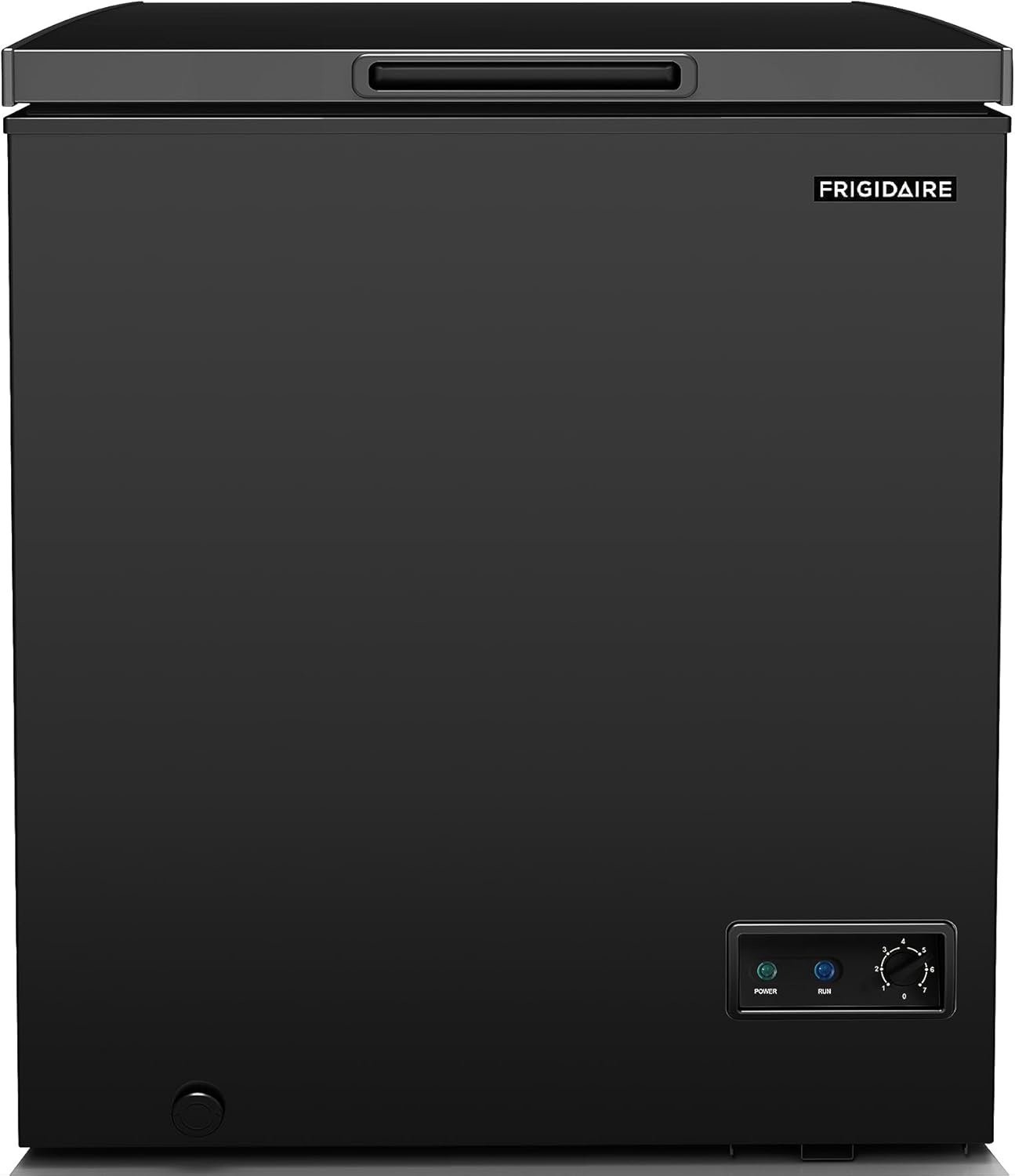
| Capacity | 5 cubic feet |
|---|---|
| Voltage | 120 volts |
| Door Orientation | Top |
| Installation Type | Freestanding |
This Frigidaire chest freezer delivers straightforward extra freezer space in a compact footprint, making it useful for garages, basements, or kitchens that need overflow storage. It is manually defrosted and uses an adjustable front thermostat with seven settings, so you can fine tune temperatures for meats, prepared meals, or bulk buys. The top-opening lid and removable vinyl-coated wire basket help keep smaller items accessible while the aluminum interior liner is easy to wipe clean. Built-in adjustable legs and a recessed handle make placement and access easier on uneven floors and in tight spots, and the exterior drain speeds up defrosting. Expect basic, reliable performance rather than advanced features like frost-free operation or digital controls, so you will need to schedule occasional defrost cycles. For buyers wanting a no-frills, energy-conscious freezer that fits a hot garage environment, this model balances usable capacity and simple controls without complexity.
Best for: Buyers who want a dependable, no-frills extra freezer for seasonal storage or bulk buys and prefer simple mechanical controls over digital complexity.
Less Ideal for: Those who need fully frost-free operation, precise digital temperature monitoring, or a larger capacity for heavy commercial use should consider other options.
- Compact 5.0 cu ft capacity fits small spaces while still holding a useful amount of frozen food
- Adjustable manual thermostat with seven settings for simple temperature control
- Removable vinyl-coated wire basket keeps small items organized and accessible
- Exterior defrost drain and aluminum liner make manual defrosting and cleaning easier
- Adjustable legs and recessed handle improve stability and access on uneven garage floors
- Manual defrost design requires periodic draining and is more hands-on than frost-free models
- No digital display or precise temperature readout for exact monitoring
Verdict: A practical, compact chest freezer that offers simple, adjustable manual temperature control and easy maintenance for balanced everyday garage use.
VEVOR Chest Freezer 17.2 Cu.ft

| Capacity | 17.2 cubic feet |
|---|---|
| Wattage | 174 watts |
| Voltage | 115 volts_of_alternating_current |
| Door Orientation | Top |
The VEVOR 17.2 cu.ft chest freezer is a large-capacity top‑opening unit designed for heavy home or light commercial use in warm spaces such as garages. It uses a compressor-driven cooling system advertised as energy efficient (about 1.62 kWh/day) and offers seven temperature settings that span deep‑freeze to cool‑refrigeration ranges, so you can store everything from bulk meat to beverages. Practical details include four removable baskets for organization, an LED interior light, power and compressor indicator lights, a lockable lid and balanced hinge that holds the lid open at 45°–90°, and six casters to roll the unit into place. The body and door are metal, and the thermostat is a manual knob rather than a digital panel. Expect strong cold performance and substantial usable space, but also a heavy, wide cabinet that needs a suitable location and proper clearance for ventilation. The manual control and heavier build keep the price and complexity down, but buyers seeking precise digital readouts or a built‑in alarm will need a different model.
Best for: Buyers who prioritize strong cooling performance and maximum raw storage volume for bulk foods in a hot garage or utility area and who value simple, reliable compressor operation over digital features.
Less Ideal for: Shoppers who need precise digital temperature control, remote monitoring, or a low-profile built-in unit for tight kitchen cabinetry should consider other options.
- Very large 17.2 cu.ft capacity with 4 removable baskets for organized storage
- Seven temperature settings covering deep freeze to refrigeration for flexible use
- Compressor-driven cooling with modest listed energy consumption (1.62 kWh/day)
- Locking lid, LED light, indicator lights, and balanced hinge for convenient daily use
- Six casters make it relatively easy to move and position in a garage or utility space
- Manual temperature knob without digital display or programmable controls
- Heavy and wide cabinet requires significant floor space and clearance
- No built-in alarm or smart monitoring features
Verdict: Choose this VEVOR chest freezer when you need large, reliable compressor cooling and flexible temperature range to store big volumes in a hot garage or utility space.
PLENTORA Chest Freezer B80
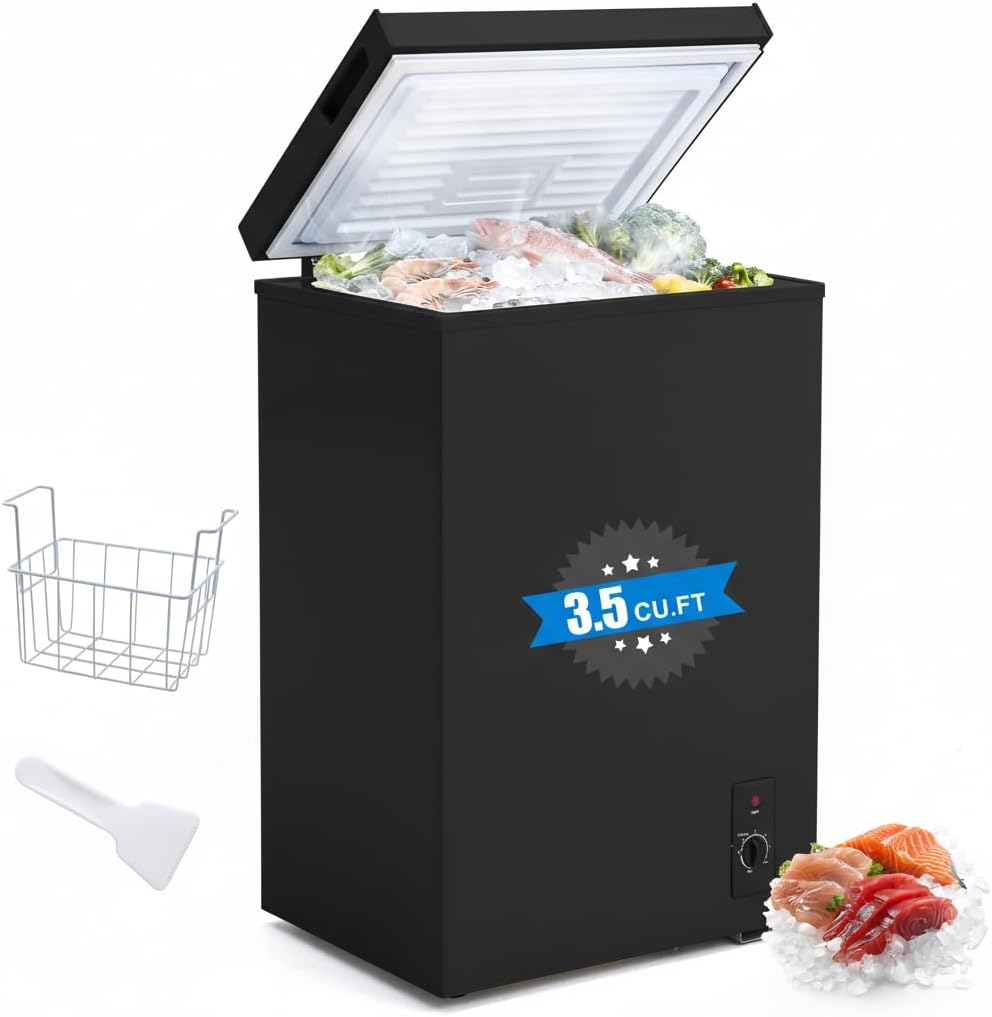
| Capacity | 3.5 cubic feet |
|---|---|
| Voltage | 110 volts |
| Number Of Shelves | 1 |
| Specification Met | ETL |
This 3.5 cubic foot PLENTORA chest freezer is a small, utilitarian secondary freezer designed for apartments, garages, and kitchens that need extra frozen storage. It uses an R600a compressor for quiet, energy-efficient cooling and a rapid-cool function to lower temperatures quickly after loading. The top-opening lid and included removable wire basket make it simple to organize and retrieve frequently used items, while a 7-level temperature control lets you dial in everything from soft freeze to deep freeze. Practical touches include an ice shovel and a compact footprint that fits into tighter spaces. Limitations are its modest capacity, which will not replace a full-size freezer for bulk storage, and it comes with a six-month limited warranty rather than a longer manufacturer backing. For garage use it is ETL listed and the quiet operation helps reduce noise in attached living areas, but buyers should consider where it will be sited to avoid exposure to extreme outdoor temperatures.
Best for: Buyers who want a space-saving, energy-efficient secondary freezer for a garage, apartment, or kitchen and prioritize quiet operation and easy organization.
Less Ideal for: Users who need large-capacity or long-term bulk storage for a full household or for commercial use should choose a bigger unit.
- Compact 3.5 cu ft capacity fits small spaces and apartments
- R600a compressor for energy-efficient, quiet operation
- 7-level temperature control for precise freezing settings
- Removable wire basket and included ice shovel aid organization and access
- Small overall capacity not suitable for large households
- Short six-month limited warranty
Verdict: A compact, quiet, and energy-efficient chest freezer that makes a practical secondary freezer for garages, apartments, or small households.
LifePlus 3.5 Cu.Ft Chest Freezer

| Capacity | 3.5 cubic feet |
|---|---|
| Wattage | 58 watts |
| Voltage | 115 volts |
| Installation Type | Freestanding |
This LifePlus 3.5 cu.ft chest freezer is a compact deep-freezing unit intended for small households, apartments, garages, or offices where space is limited. It provides seven adjustable temperature settings from about -7.6°F to 21.2°F so you can tailor freezing for meat, ice cream, or ready meals, and a removable storage basket gives quicker access to frequently used items. The top-opening lid includes side handles and balanced metal hinges that hold the lid open for loading and cleaning, and a drain hole simplifies defrosting and water removal. At roughly 0.37 kWh per day and a 58-watt compressor, the unit emphasizes low energy use and is described as quiet in operation, which helps in noise-sensitive spaces. Limitations to expect are the modest 3.5 cu.ft capacity, which suits short-term or supplemental storage rather than large bulk freezing, and the chest layout means items toward the bottom require more digging compared with upright models. For a budget-focused buyer needing a simple, space-conscious freezer, this packs practical features without extras.
Best for: Buyers looking for an affordable, space-saving secondary freezer to keep frequently used frozen foods close at hand in a garage, office, or small home.
Less Ideal for: Households that need to freeze large quantities long-term or prefer upright-style organization and shelving should consider larger or upright models instead.
- Compact footprint fits garages, apartments, and small kitchens
- Seven temperature settings for flexible freezing needs
- Removable basket and drain hole simplify organization and defrosting
- Energy-efficient operation at approximately 0.37 kWh per day
- Limited 3.5 cu.ft capacity not suited for bulk storage
- Chest design makes accessing items at the bottom less convenient
Verdict: A budget-friendly, compact chest freezer that delivers quiet, energy-efficient secondary freezing for garages and small spaces.
DEMULLER 3.5 cu ft Chest Freezer

| Capacity | 3.5 cubic feet |
|---|---|
| Wattage | 70 watts |
| Voltage | 110 volts |
| Door Orientation | Top |
| Number Of Shelves | 1 |
The DEMULLER 3.5 cu ft chest freezer delivers straightforward freezer storage for small spaces such as garages, apartments, and dorms. It uses an electronic digital display that lets you set temperatures precisely between -15°F and 41°F, and the manufacturer highlights a D-shaped cooling tube system and a fast-freeze mode to help lock in food quality. The interior includes removable stainless-steel baskets for organizing smaller items and a side drain hole for manual defrost and easy water removal. At about 70 watts the compressor is described as high-efficiency and whisper-quiet, which makes it suitable for locations where noise matters. Important limitations are its small capacity — it is best for overflow storage rather than long-term bulk freezing — and it requires manual defrosting. For those who need a compact, temperature-accurate chest freezer for a hot garage or limited space, this model balances usable features with simple operation.
Best for: Buyers who prioritize dependable, temperature-accurate freezer performance in a compact footprint for garages, dorms, or small apartments and value quiet, energy-conscious operation.
Less Ideal for: Not a good fit for buyers who need large-capacity long-term storage or an automatic defrost freezer for low-maintenance use.
- Digital temperature display with 1°F increments for precise control
- D-shaped cooling tubes and fast-freeze option to speed freezing and preserve quality
- Removable stainless steel storage baskets for organization
- Whisper-quiet, energy-efficient compressor for low-noise operation
- Side drain hole simplifies manual defrosting
- Small 3.5 cu ft capacity limits long-term bulk storage
- Manual defrost rather than automatic defrost system
Verdict: A compact, quiet chest freezer with precise digital temperature control that suits garage or small-space overflow freezing needs.
Arctic King 7 cu ft Chest Freezer

| Capacity | 7 cubic feet |
|---|---|
| Voltage | 115 volts |
| Installation Type | Freestanding |
| Door Orientation | Top |
The Arctic King 7 cu ft chest freezer is a compact, freestanding top-opening unit meant for extra frozen storage in places like garages or basements. It provides straightforward cold storage with a 7 cubic foot capacity and a top stainless steel door that seals the compartment; typical use cases are bulk food storage, overflow for seasonal needs, or keeping meat and game frozen. The 115 volt unit is simple to operate and is designed without complicated controls, which keeps maintenance and troubleshooting easy. Its modest footprint fits tighter spaces while still offering useful interior volume, and the chest layout helps maintain temperature stability during power cycles. Expect basic features rather than smart controls or specialized drawers, and plan for manual defrosting if your environment encourages frost buildup. For a value-oriented secondary freezer intended for non-kitchen locations, this model gives reliable cold storage but lacks advanced convenience features and precise temperature management found on higher-end models.
Best for: Buyers looking for an affordable, no-frills secondary freezer to store bulk food or overflow in a garage or utility area and who prioritize simple, reliable operation over bells and whistles.
Less Ideal for: Users who need precise temperature control, automatic defrost, or integrated organization features for frequent daily kitchen use should consider a different model.
- Compact 7 cu ft capacity fits tight garage or utility spaces
- Top-opening chest design helps preserve cold when opened briefly
- Stainless steel door material offers durable exterior and cleaner look
- Simple freestanding setup with 115V compatibility for standard outlets
- No advanced temperature controls or smart features
- Likely requires manual defrosting under heavy frost conditions
Verdict: A straightforward, space-conscious 7 cu ft chest freezer that delivers reliable secondary cold storage for garage or utility use.
BODACIOUS 7.0 Cu Ft Chest Freezer

| Capacity | 7 cubic feet |
|---|---|
| Voltage | 110 volts |
| Number Of Shelves | 2 |
| Specification Met | ETL |
| Installation Type | Countertop, Freestanding |
This BODACIOUS 7.0 cu ft chest freezer gives straightforward cold storage in a compact footprint that fits small kitchens, apartments, or garages. It uses an energy-efficient compressor and a 6-position adjustable thermostat with an LED indicator so you can set temperatures from about -0.4°F to 32°F for long-term freezing or gentle cold storage. The unit includes two removable wire baskets for organizing smaller items, a built-in drain for easy defrosting, and metal double-hinges that hold the lid open between 45° and 85° for easier access. At under 40 dB listed noise it runs quietly, and the seller recommends letting it sit 24 hours before first use and avoiding continuous MAX setting to protect the compressor. Practical limits: the freezer is relatively lightweight and compact, so it is best for moderate amounts of food rather than large bulk storage, and like most chest freezers its top-access layout can make deep items harder to reach without lifting baskets. For a buyer wanting a simple, efficient garage-capable chest freezer with basic controls and easy maintenance, it performs as expected.
Best for: Buyers who prioritize a dependable, easy-to-use freezer for extra food storage in a garage, apartment, or small household and want straightforward controls and low noise.
Less Ideal for: Those needing heavy-duty, high-capacity bulk storage or a front-access upright layout for frequent small-item retrieval should consider larger or different freezer types.
- Spacious 7.0 cu ft capacity suitable for moderate freezer needs
- Energy-efficient compressor with quoted low daily energy usage
- 6-speed adjustable thermostat with LED indicator for precise control
- Removable baskets and built-in drain simplify organization and defrosting
- Quiet operation under 40 dB suitable for garages or near living spaces
- Top-access chest design can make reaching deep items less convenient
- Not intended for very large or family-scale bulk storage
Verdict: A compact, energy-conscious chest freezer that gives quiet, reliable extra storage for small homes or garages.
Choosing the Right Chest Freezer for Hot Garage: Key Factors to Consider
Ambient Temperature Rating
Many freezers are tested for operation in standard indoor temperatures. For a hot garage application, check the unit's ambient temperature rating or any mention of suitability for unconditioned spaces. A higher ambient rating indicates the compressor and control systems are designed to maintain low internal temperatures even when the surrounding air is warm.
If the manufacturer provides an ambient operating range, use it to assess reliability in summer months. Units without explicit guidance may still work but can struggle during prolonged heat, leading to higher energy use, more frequent cycling, and increased wear on the compressor.
Compressor Type and Duty Cycle
The compressor is the workhorse that keeps the freezer cold. For warm environments, a compressor with a robust duty cycle and thermal protection will tolerate longer run times without overheating. Look for units with compressors sized to handle extra heat load rather than minimal-duty designs meant for cool indoor basements.
A compressor built for continuous or heavy-duty use often includes better cooling components and serviceability options. This reduces the risk of premature failure from extended operation during hot spells and helps maintain consistent freezer temperatures.
Insulation Thickness and Material
Thicker, high-quality insulation reduces heat infiltration and lowers compressor workload. Rigid foam with a higher R-value or denser panels slows warm-air transfer, which is especially valuable when garage temperatures climb. Pay attention to stated insulation thickness or R-value when available.
Improved insulation also helps the cabinet recover temperature more quickly after a lid opening or during short power interruptions. That reduces frost buildup and limits the time the compressor must run at peak capacity.
Seal Quality and Lid Design
A tight lid gasket and well-designed seal prevent warm, humid air from entering the cabinet. Poor seals allow moist air in, which increases frost accumulation and forces the freezer to work harder. Hinges and lid closing mechanisms that ensure even compression of the gasket improve long-term performance in humid garage conditions.
Some chest freezers include dual gaskets or recessed gasket designs that improve sealing. Consider how easy the gasket is to inspect and replace, because wear over time can create leaks that significantly reduce efficiency in a hot environment.
Energy Use Under Load
Operating a freezer in a hot garage increases its energy consumption. Look for documentation or test data on power draw at higher ambient temperatures if available. Energy-efficient components, variable-speed compressors, or smart defrost strategies can reduce operating cost and strain on the compressor when the unit runs more frequently.
Estimating annual energy use for your climate and usage pattern helps compare models. Remember that models with slightly higher initial efficiency but poor long-term reliability in heat may cost more in service and replacement.
Installation Site and Ventilation Needs
How and where you place the freezer in the garage affects performance. The unit needs sufficient clearance for airflow around the compressor and condenser to dissipate heat. Placing the freezer near walls, in tight corners, or in confined cabinetry can trap heat and reduce cooling capacity.
Elevating the unit off a cold or uneven floor, avoiding direct sun, and keeping the surrounding area clear of dust and debris all help the freezer operate more effectively. Plan for service access and ensure the power supply is stable and appropriately rated.
Sizing for Long-Term Storage in a Garage
Choose a capacity based on how much long-term frozen inventory you plan to store and how often you will access it. Larger chests hold more and gain less relative temperature when opened, but they also require a compressor and insulation that can cope with the extra interior volume in a hot space.
Think in terms of usable organization as well. Baskets and compartments reduce the time the lid is open during retrievals, which matters more when the surrounding air is hot.
- Pick slightly larger capacity than current needs to reduce frequent refilling and door openings
- Use removable baskets to organize items and shorten access time
- Avoid overfilling, which can obstruct airflow inside the cabinet
Placement and Ventilation Best Practices
Allow adequate clearance around the freezer, especially at the back and sides. The compressor and condenser need airflow to shed heat. Tight placements or blocked vents will increase run time and shorten component life in a hot garage.
Keep the unit out of direct sunlight and away from heat sources such as water heaters or furnaces. If the garage gets extremely hot, consider placing the freezer where shade and airflow are best, or elevate it to avoid heat radiating off the floor.
- Maintain manufacturer-recommended clearances for ventilation
- Keep at least a few inches of air space around the unit for airflow
- Periodically clean condenser coils and clear dust to maintain heat rejection
Managing Defrosting and Frost Buildup
Warm, humid garages are more prone to frost formation. Manual defrosting cycles will be more frequent if the lid is opened often or if seals degrade. Make a defrost plan that fits your usage pattern and the freezer's design: manual-defrost chests typically have less frost buildup overall but need scheduled attention.
Check how easy it is to drain defrost water and to access internal surfaces for cleaning. A chest designed with a removable drain plug and smooth interior surfaces simplifies maintenance and reduces ice-related problems.
- Expect more frequent defrosting in humid summers
- Choose cabinets with easy-to-access drains and smooth liners
- Inspect and replace gaskets as they age to limit moisture ingress
Power Reliability and Surge Protection
Garages sometimes have less reliable circuits or are fed by external panels. Protecting the freezer from brownouts and surges preserves compressor life. Consider using a dedicated circuit or a surge protector rated for motor loads to reduce the risk from power events.
If your area experiences frequent outages, plan for how long the freezer will maintain safe temperatures without power and avoid opening the lid during outages to preserve cold.
- Use a dedicated outlet on a properly sized circuit where possible
- Install a surge protector built for appliances
- Have a contingency plan for extended outages to minimize food loss
Routine Maintenance Tips for Hot Environments
Regular maintenance extends the life of a freezer used in a hot garage. Clean dust from condenser coils, check gasket condition, and keep drainage points clear. These tasks are more important when the appliance runs more frequently due to ambient heat.
Monitor internal temperature with an independent thermometer and log readings seasonally. Early detection of rising temperatures can prevent food loss and point to needed service before failure.
- Schedule coil cleaning at least twice yearly in dusty garages
- Inspect gaskets quarterly for cracks or compression loss
- Keep an analog or digital thermometer inside to verify set temperatures
How We Chose the Best Chest Freezer for Hot Garage
We focused on factors that directly affect a chest freezer's ability to perform in garages and other warm, unconditioned spaces. Our evaluation emphasized temperature stability under higher ambient conditions, compressor durability and duty-cycle design, insulation thickness and quality, power consumption at elevated loads, and practical installation features such as lid seals and placement flexibility. We also looked at temperature controls and packaging that help maintain safe internal temperatures during routine power fluctuation. Units that lacked garage-capable specifications, used marginal insulation, or had no guidance for warm-location operation were excluded. We prioritized measurable specs and real-world design features over marketing claims. The resulting selection highlights models that balance robust cooling components, efficient insulation, and installation features that reduce maintenance and energy penalties in hot garages.
Our full evaluation process is outlined in our review methodology.
FAQ
Can a chest freezer run reliably in a hot garage year-round?
Often, yes. Reliability depends on the unit's ambient operating range, compressor design, and insulation. Choose a freezer specified for warmer ambient use and maintain ventilation and regular maintenance to increase lifespan.
How much extra energy will a chest freezer use in a hot garage?
It usually uses noticeably more energy because the compressor runs longer to reject heat. The exact increase depends on ambient temperature and insulation quality, so compare energy-use specifications and expect higher consumption in warmer conditions.
Should I get a frost-free or manual-defrost chest for a hot garage?
Manual-defrost chests are often simpler and can be more energy efficient, but they require scheduled defrosting which is more frequent in humid garages. Frost-free models reduce manual maintenance but may cycle more often and draw more power in high ambient temperatures.
What clearance do I need around a chest freezer in a garage?
Follow the manufacturer's clearance recommendations, but as a rule allow several inches around the back and sides for airflow. Extra space helps heat dissipation and reduces compressor strain.
How can I protect the freezer compressor from heat-related failure?
Ensure adequate ventilation, use a surge protector rated for motor loads, avoid placing the unit near other heat sources, and keep condenser coils clean. Regular monitoring of internal temperatures also helps catch problems early.
Final Verdict
For garage installations, prioritize units with higher ambient ratings, robust compressors, and thicker insulation. Balance capacity against how often you open the lid, and arrange the installation to maximize ventilation and minimize direct heat exposure. Regular maintenance and attention to seals, coils, and power protection will keep a chest freezer operating reliably in a hot garage. If you match these priorities to your storage needs and space constraints, you can choose a freezer that delivers dependable cold storage and reduced service risk.