
Note: This article contains affiliate links. If you click on these links and make a purchase, we may earn a small commission at no extra cost to you. This helps support our research and content. Read our full affiliate disclosure here.
If you routinely buy meat in bulk or need room to store seasonal harvests, choosing the right chest freezer for meat makes a big difference in preservation and convenience. The right unit keeps temperatures steady, minimizes freezer burn, and gives you usable space for whole cuts, packages, and vacuum-sealed portions. This guide presents seven top chest freezers selected for meat storage and explains the practical tradeoffs buyers face. Below are our shortlisted options for a variety of households and storage needs, plus clear evaluation criteria to help you pick the best freezer for your routine and kitchen layout.
Top Picks at a Glance
| Best Overall The best all-around choice for most situations | Frigidaire Chest Freezer 7 Cu. Ft. |  |
| Best Quality Built to a higher standard if you want something more solid | SMETA Chest Freezer 21 Cu. Ft |  |
| Best Value The sweet spot between price and what you get | Kismile BD-80 Chest Freezer |  |
| Best Budget The cheapest option that still gets the job done reliably | TACOOL 2.2 Cu. Ft. Chest Freezer |  |
| Top Rated A top-rated pick with lots of positive feedback | Koolatron KTCF99 Chest Freezer |  |
| Most Popular A crowd favorite that many people choose with confidence | Arctic King 7 cu ft Chest Freezer |  |
| Best Seller A high-volume bestseller chosen again and again | BODACIOUS 7.0 Cu Ft Chest Freezer |  |
Frigidaire Chest Freezer 7 Cu. Ft.

| Capacity | 7 cubic feet |
|---|---|
| Voltage | 120 volts |
| Number Of Shelves | 1 |
| Installation Type | Freestanding |
This Frigidaire chest freezer provides straightforward extra freezing capacity for home cooks who need reliable cold storage for meat and bulk groceries. It uses a top flip-up lid and an adjustable external thermostat with seven settings so you can tune interior temperature for long-term meat storage or short-term freezing of day-to-day items. The removable vinyl-coated wire basket keeps smaller cuts or frequently used packages up top, while the main cavity holds larger roasts and bulk boxes. Manual defrosting is handled via a front drain hole that simplifies water removal when you thaw the unit, and adjustable leveling legs help stabilize the freezer on imperfect floors. The aluminum interior liner and power-on indicator are practical touches, but this model is a basic chest freezer without advanced features like fast-freeze modes, digital controls, or frost-free operation, so expect occasional manual maintenance and routine temperature checks for long-term meat preservation.
Best for: Buyers who want a dependable, no-frills chest freezer to store large quantities of meat and bulk foods and who prioritize capacity and simple mechanical controls over advanced features.
Less Ideal for: People who need frost-free operation, precise digital temperature management, or rapid deep-freeze performance should consider other models with those capabilities.
- Generous 7.0 cu. ft. capacity suitable for whole cuts and bulk meat storage
- Adjustable external thermostat with seven settings for tailored temperature control
- Removable vinyl-coated wire basket for organizing small items and frequent-use packages
- Front defrost drain speeds manual defrosting and water removal
- Adjustable legs and recessed handle improve placement and daily use
- Manual defrost requires periodic thawing and draining
- No digital controls or fast-freeze feature for rapid temperature recovery
Verdict: A practical, no-frills 7 cu. ft. chest freezer that delivers roomy, reliable cold storage for meat and bulk purchases.
SMETA Chest Freezer 21 Cu. Ft
| Capacity | 21 cubic feet |
|---|---|
| Wattage | 115 watts |
| Door Orientation | Top |
| Installation Type | Freestanding |
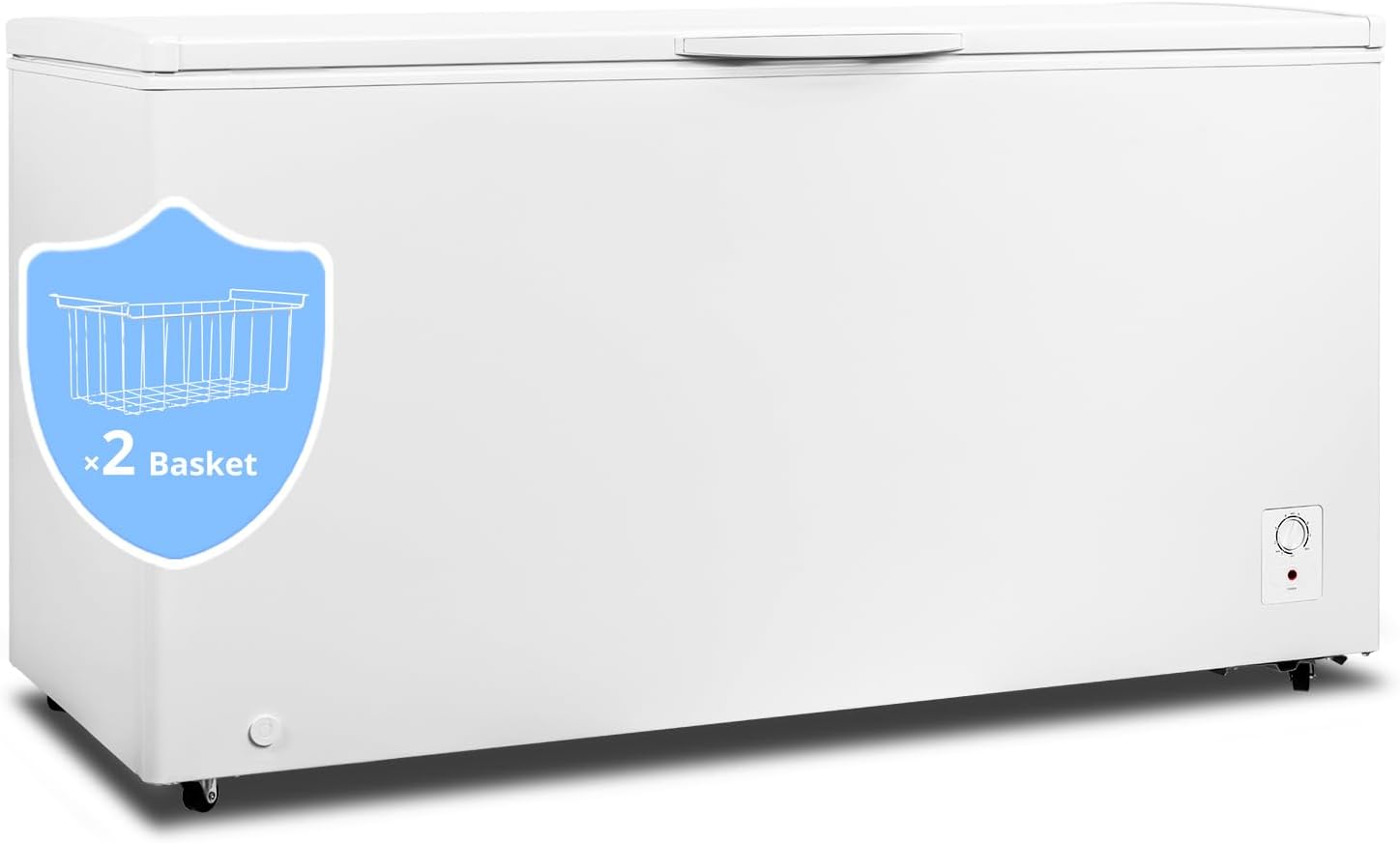
This SMETA chest freezer is built to store large volumes of meat and bulk food with a 21 cubic foot capacity and a simple, no-frills feature set. It uses an R600a compressor and an adjustable thermostat with a 7-level control that ranges roughly from 10.4°F to -4°F, which lets you dial in colder settings for long-term meat storage or quicker freezing for fresh cuts. The top-hinged lid holds between 45° and 90° for hands-free access, and the included removable wire baskets make it easy to separate portions you plan to use soon from bulk packs below. Mobility is practical thanks to four wheels and adjustable feet for uneven floors, and a front drain and embossed aluminum liner simplify defrosting and cleaning. Noise levels are advertised as low, and the unit is freestanding for garage or basement placement. Limitations to note are straightforward controls with no digital display or alarm and the absence of an explicit fast-freeze function, so very large loads may take longer to reach deep-freeze temperatures compared with commercial-grade models.
Best for: Buyers who prioritize roomy, practical cold storage for bulk meat and want a straightforward, adjustable unit they can place in a garage or basement and organize with baskets.
Less Ideal for: Those who need precise digital controls, built-in alarms, or commercial-grade ultra-fast freezing should consider higher-end or specialty freezers instead.
- Large 21 cu ft capacity suitable for bulk meat storage
- Adjustable thermostat with multiple settings for colder temperatures
- Removable baskets keep frequently used items reachable and organized
- Wheels and adjustable feet make placement and leveling easier
- Front drain and aluminum liner simplify defrosting and cleaning
- No digital temperature display or alarm for exact monitoring
- No dedicated fast-freeze mode for rapid freezing of large batches
Verdict: Choose this SMETA 21 cu ft chest freezer when you need large, organized cold storage for meat and simple, reliable adjustable freezing in a home or garage setting.
Kismile BD-80 Chest Freezer

| Capacity | 3.2 cubic feet |
|---|---|
| Door Orientation | Top |
| Number Of Shelves | 1 |
| Installation Type | Freestanding |
This compact chest freezer is designed for small-space storage and short- to medium-term meat freezing. The 3.2 cu ft interior and two removable baskets make it easy to organize cuts and portioned packages, and the seven-step adjustable thermostat (6.8 F to -7.6 F) gives control over normal versus deeper freezing. Practical extras include a drain for quick defrost cleanup and a balanced hinge that can hold the lid open at several angles for loading. The unit uses a low-energy compressor and claims daily consumption under 1 kWh, which helps keep running costs down, and reported noise under 40 dB keeps it quiet in a kitchen or garage. Trade-offs are its small capacity compared with full-size chest freezers and a narrower temperature range than commercial deep freezers, so it is best for households that need extra freezer space rather than long-term bulk storage. Assembly is minimal since it ships freestanding, but allow 24 hours upright before first use and mind cord placement at the side when planning location.
Best for: Buyers who need an efficient secondary freezer to keep portioned meat and everyday frozen goods close at hand in small spaces and want straightforward temperature control and easy maintenance.
Less Ideal for: Not a good fit for users who want to freeze and store large volumes of meat long term or need commercial-level ultra-low temperatures.
- Compact 3.2 cu ft footprint fits small kitchens, dorms, or offices
- Seven-step adjustable thermostat allows selection between normal and deeper freezing
- Two removable baskets help separate and organize meat portions
- Convenient water drain speeds defrosting and cleaning
- Low-noise operation under 40 dB and modest daily energy use
- Limited interior volume for large-batch or long-term meat storage
- Temperature range tops out at about -7.6 F, not as cold as commercial deep freezers
Verdict: A space-saving, energy-conscious chest freezer that makes storing portioned meat and everyday frozen items simple for small households.
TACOOL 2.2 Cu. Ft. Chest Freezer

| Capacity | 2.2 cubic feet |
|---|---|
| Voltage | 110 volts |
| Wattage | 160 KW |
| Door Orientation | Top |
This TACOOL chest freezer is a small, no-frills unit aimed at storing frozen food and small meat portions for a single person or couple. It uses an R600a compressor and a circulating refrigeration tube to keep temperatures cold while claiming quiet operation under 40 dB and average energy use of about 0.44 kWh per day. Control is via a simple 7‑level temperature knob that ranges from about -11.2 to 50°F, and the lid is supported by metal double hinges; an included removable basket helps organize smaller items. The exterior is freestanding and compact enough for dorms, offices, or tight garage spaces. Expect straightforward performance for short- to medium-term meat storage, but not the deep commercial freezing or large bulk storage of bigger chest freezers. There are no digital controls, alarm, or advanced temperature monitoring, so if precise temperature logging or large capacity is important you will need a higher-end model.
Best for: Buyers on a tight budget who need a reliable small freezer for storing weekly meat portions, single-person meal prep, or overflow in limited spaces.
Less Ideal for: Those who need to freeze large quantities of meat, require precise digital temperature control or long-term deep freezing for inventory.
- Compact 2.2 cu ft size fits small spaces like dorms, apartments, or offices
- Simple 7‑level manual thermostat makes temperature adjustments easy
- Uses R600a compressor with modest energy use (about 0.44 kWh/24h) and low noise under 40 dB
- Durable metal double hinges and a removable basket for basic organization
- Limited capacity for bulk meat storage or long‑term large cuts
- No digital temperature readout, alarm, or advanced monitoring features
Verdict: A pocket‑friendly compact chest freezer that delivers quiet, energy‑efficient basic freezing for small batches of meat and everyday use.
Koolatron KTCF99 Chest Freezer

| Capacity | 99 liters |
|---|---|
| Wattage | 125 watts |
| Voltage | 120 volts |
| Door Orientation | Top |
| Number Of Shelves | 1 |
The Koolatron KTCF99 is a compact chest freezer intended for extra frozen storage in apartments, garages, or basements and works well as dedicated meat storage for small households. It uses a low-vibration compressor to maintain temperatures from 0 to -24°C (32 to -11.2°F) and has an external mechanical dial for straightforward temperature adjustments. The flat-back, narrow footprint and stay-open swing-top lid make placement and loading easy, and the included removable wire basket keeps frequently used items accessible. Manual defrosting is simplified by a front-mounted drain with a leak-proof plug, but you will need to plan for periodic defrost cycles since it is not frost-free. The unit runs quietly and is built with foam insulation and a magnetic seal to hold temperatures steady, which helps protect meat from temperature swings. For buyers who prioritize dependable, no-frills freezing and easy maintenance in a small footprint, this freezer delivers sensible performance without complicated controls.
Best for: Buyers who want a dependable, no-frills secondary freezer to store meat and frozen goods in tight spaces and who value steady compressor cooling over advanced features.
Less Ideal for: Large households or serious bulk meat preppers who need greater capacity or a frost-free model with less hands-on maintenance.
- Reliable compressor cooling that holds temperatures down to -24°C (−11.2°F)
- Compact, flat-back design fits tight spaces and allows corner placement
- Front-mounted drain and leak-proof plug make manual defrosting and cleaning easier
- Removable hanging wire basket keeps small items organized and accessible
- Simple external mechanical dial for quick temperature adjustments
- Manual defrost requires periodic maintenance rather than automatic defrosting
- Smaller 3.5 cu ft capacity may be limiting for larger meat hoards
Verdict: A compact, reliable compressor chest freezer that keeps meat well frozen and is ideal when you need dependable, space-saving secondary storage.
Arctic King 7 cu ft Chest Freezer

| Capacity | 7 cubic feet |
|---|---|
| Voltage | 115 volts |
| Door Orientation | Top |
| Installation Type | Freestanding |
This Arctic King 7 cu ft chest freezer is a basic, no-frills chest unit for long-term frozen storage. It is designed as a freestanding top-opening freezer with 7 cubic feet of capacity, which makes it suitable for storing bulk packs of meat, large cuts, and seasonal harvests. The stainless steel door material and simple interior layout prioritize cold retention and durability rather than advanced features; there are no visible digital controls or smart features in the listing. Practical benefits include efficient cold storage for extended freezing, a top lid that helps maintain low temperature when closed, and a compact footprint that fits garages or basements. Important limitations are the lack of explicit temperature readout, fast-freeze mode, or organizational baskets included in the listing, so you may need to add storage accessories and a thermometer to manage meat portions and monitor food safety. For buyers seeking straightforward frozen capacity for meat storage, this model delivers solid basic performance without premium extras.
Best for: Buyers who want straightforward, economical frozen storage for bulk meat and long-term inventory without needing digital controls or smart features.
Less Ideal for: Shoppers who need precise temperature monitoring, quick-freeze capability, or an appliance with built-in organizational accessories should consider other models.
- 7 cubic feet of storage suitable for bulk meat and large packages
- Top-opening chest design helps preserve cold when not in use
- Freestanding installation allows placement in garage, basement, or utility room
- Stainless steel door material adds durability and a clean exterior
- No listed digital thermostat or temperature display for precise monitoring
- No included organizational baskets or accessories for portioning meat
Verdict: A practical, no-frills chest freezer that delivers reliable 7 cu ft frozen storage ideal for bulk meat preservation.
BODACIOUS 7.0 Cu Ft Chest Freezer

| Capacity | 7 cubic feet |
|---|---|
| Voltage | 110 volts |
| Number Of Shelves | 2 |
| Door Orientation | Top |
This 7.0 cu ft chest freezer is aimed at buyers who need extra frozen storage without a large footprint. It uses energy-saving technology and a six-position thermostat so you can dial in colder settings for long-term meat storage, and the removable basket helps organize smaller cuts while the main cavity holds bulkier packages. The unit is marketed as quiet and rated ETL, making it suitable for garages, apartments, or utility rooms where noise and safety certifications matter. Practical touches include an exterior defrost water drain for easier maintenance and a top-opening lid that keeps cold air contained during loading. Expect it to consume modest power compared with larger freezers, but note that chest-style loading can make long-term organization slightly more hands-on since items are stacked rather than racked. The brand recommends letting the freezer sit 24 hours before first use and avoiding running the thermostat on the maximum setting continuously to preserve compressor life.
Best for: Buyers who want a reliable, compact dedicated freezer for storing bulk meat and seasonal purchases while prioritizing energy savings and low-noise operation.
Less Ideal for: People who need upright-style shelving or frequent, quick access to many small packages should consider a different form factor.
- Energy-efficient design suitable for extended meat storage
- Quiet operation appropriate for garages and living areas
- Adjustable 6-setting thermostat for temperature control
- Removable basket and drain make organization and cleaning easier
- Top-open chest layout can make accessing deeply buried items less convenient
Verdict: A compact, energy-conscious chest freezer built to store bulk meat quietly and reliably in small spaces.
Choosing the Right Chest Freezer for Meat: Key Factors to Consider
Usable Capacity and Internal Layout
Capacity matters more than the exterior cubic foot number because meat is bulky and often stored in odd-shaped packages. Look for a chest freezer with a wide, unobstructed interior and minimal interior protrusions so you can stack whole cuts and vacuum-sealed bundles efficiently.
Removable baskets or dividers help organize by cut, date, or meal plan, reducing time the lid is open. Consider the vertical clearance if you store roasts or turkeys; some units with taller interior heights are more practical even if their stated capacity is similar to lower-profile models.
Temperature Stability and Cold Holding
Meat quality depends on consistent subfreezing temperatures. A freezer that holds a steady temperature through power cycles and frequent door openings reduces the risk of partial thaw and refreeze, which damages texture and safety.
Evaluate how quickly the unit can recover after lid openings and whether it maintains target temps without running constantly. Good temperature stability also reduces moisture migration and helps prevent freezer burn on exposed surfaces.
Seal, Insulation, and Thaw Protection
High-quality gaskets and thick insulation slow heat gain and limit frost buildup. A solid lid seal prevents warm air infiltration that accelerates frost and power consumption.
Also consider features that reduce thaw risk, such as tight-closing lids, strong hinges that prevent accidental opening, and easy-to-replace gaskets. Insulation quality affects both temperature stability and long-term energy usage.
Energy Use and Operating Cost
Chest freezers are expected to run continuously, so energy consumption has a direct impact on household operating costs. Energy-efficient compressors and good insulation lower running cost and reduce on/off cycling, which supports stable internal temperatures.
Check for efficient compressor designs and consider how the freezer will be used. A unit kept mostly full will use energy differently than one that is frequently emptied; plan capacity and insulation accordingly to avoid surprising electricity costs.
Organization, Access, and Handling
How you access and arrange meat affects food safety and convenience. Removable baskets, dividers, and shelf rails let you separate frequently used items from long-term storage so you avoid extended lid-open times.
Consider the lid height and hinge design for comfortable loading and unloading. Clear organization reduces rummaging, which shortens recovery time and helps maintain stable internal temperatures.
Durability and Serviceability
A freezer is a long-term appliance investment, so durability matters. Look for sturdy hinges, corrosion-resistant interiors, and easily accessible compressor compartments for maintenance.
Units designed for straightforward gasket replacement or with accessible service panels are easier to keep in optimal condition. Longevity reduces the chance of unexpected failures that can compromise long-term meat storage.
How Much Capacity Do You Really Need?
Estimate based on how often you buy in bulk and whether you preserve whole animals or smaller vacuum packs. A household that stores multiple large roasts will need more uninterrupted internal volume than one storing portioned packages.
Think about day-to-day access too. A larger freezer with poor organization can be less convenient than a slightly smaller unit with baskets and dividers that let you separate short- and long-term stores.
- Measure your intended storage items to ensure they fit without bending or inefficient stacking
- Plan for about 20 to 30 percent extra space to avoid overpacking and allow air circulation
- Use baskets for frequently accessed items to avoid long lid-open times
Placement and Ventilation Considerations
Chest freezers need clearance around the compressor and adequate airflow to run efficiently. Place the unit on a level surface in a cool, dry area away from direct sunlight or heat sources.
If you plan to install the freezer in a garage or unconditioned space, account for seasonal temperature swings that can affect performance and energy use. Some models are designed to handle wider ambient temperature ranges better than others.
- Leave manufacturer-recommended clearance at the back and sides for airflow
- Avoid placing the freezer near ovens, furnaces, or windows
- Consider a drip pan or floor protection in case of defrosting or condensation
Organization Strategies for Long-Term Meat Storage
Use vacuum sealing and clear labeling with dates to track aging and rotation. Organize by protein type, cut, and harvest or purchase date so you can use older items first.
Stacking whole cuts with separators or using removable baskets reduces contact between packages and helps maintain airflow. Create a simple map or inventory list to speed retrieval and reduce lid-open time.
- Label packages with date and weight for easy meal planning
- Group similar items together and keep an inventory log
- Reserve an easy-access basket for items you reach for weekly
Managing Frost, Defrosting, and Maintenance
Regularly check gaskets and clean frost buildup to maintain efficiency. A thin layer of frost is normal, but heavy buildup reduces usable volume and temperature control.
Plan for periodic manual defrosting unless the unit has an automatic frost-management feature. When defrosting, move meat to a secondary freezer or use cooler packs to keep temperatures low during the process.
- Inspect and clean the gasket at least twice a year
- Defrost before frost becomes thicker than a quarter inch
- Keep replacement gasket material and basic tools on hand for quick fixes
Power Outages and Emergency Preparedness
Chest freezers hold cold longer than upright units because of their insulation and cold-air-retention design, but you should still prepare for outages. Keep a thermometer inside so you can monitor internal temperature during an outage.
Mark a safe-storage window for meat based on internal temps and consider having ice packs or a generator as contingency options for long outages.
- A full chest freezer can stay safely frozen for up to 48 hours in many cases; monitor with a thermometer
- Avoid opening the lid during an outage to retain cold
- Have a plan for transferring critical items if an outage extends beyond safe timeframes
How We Chose the Best Chest Freezer for Meat
We focused on features that matter specifically to people who store meat long term. Key evaluation dimensions included usable capacity and layout, sustained temperature stability, energy efficiency during continuous operation, and build quality that supports low-humidity, low-oxygen storage. We also considered thaw-risk controls such as gasket integrity and lid seals, ease of organization for large cuts and vacuum packs, and serviceability for compressors and components. Excluded were compact refrigerator-freezer combos and upright freezers that do not match bulk meat storage ergonomics. We prioritized units with demonstrable cold-holding performance and simple organizational options rather than units that trade cold stability for extra convenience features. The result is a selection focused on preserving meat texture, flavor, and safety over months, with attention to operating cost and practical handling in a home setting.
Our full evaluation process is outlined in our review methodology.
FAQ
How cold should I set a chest freezer for storing meat?
Aim for 0 degrees Fahrenheit for long-term preservation. That setting slows enzymatic activity and microbial growth and preserves texture and flavor better than higher freezer temperatures.
Can I store different types of meat together in a chest freezer?
You can store different meats together if they are well wrapped or vacuum-sealed to prevent cross-contamination and odor transfer. Organize by type and date so you can use older items first.
How often should I defrost a chest freezer used mainly for meat?
Defrost when frost buildup exceeds about a quarter-inch or when airflow is noticeably restricted. For many home users, this is once or twice a year depending on usage and humidity.
Will a chest freezer keep meat safe during a power outage?
A properly packed chest freezer can keep meat at safe temperatures for a day or two, especially if left unopened. Use an internal thermometer and avoid opening the lid to maximize safe time.
Is vacuum sealing necessary for long-term meat storage?
Vacuum sealing is not strictly necessary but it significantly reduces freezer burn and preserves quality by limiting air exposure. Combined with proper labeling, it makes long-term rotation and portioning much easier.
How should I arrange a busy household freezer to minimize thaw risk?
Place frequently accessed items in a top basket or near the lid and reserve the main chest volume for long-term storage. This reduces lid-open time and helps the unit recover temperature quickly.
Final Verdict
Prioritize steady temperature control, usable internal volume, and a reliable lid seal when choosing a chest freezer for meat. Decide on capacity based on how often you buy in bulk and whether you store whole cuts or portioned packages. Tradeoffs are common: very large units offer more storage but may be less energy efficient if kept largely empty, while smaller units need careful organization to avoid repeated thawing. Focus on insulation quality, organization features, and serviceability to protect meat quality over the long term. With those priorities in mind, you can confidently select a chest freezer that matches your storage habits and preserves meat safely and efficiently.