
Note: This article contains affiliate links. If you click on these links and make a purchase, we may earn a small commission at no extra cost to you. This helps support our research and content. Read our full affiliate disclosure here.
Putting a chest freezer outdoors expands your frozen storage without cramping indoor space, but not every unit handles changing temperatures, humidity, or pests. A properly chosen chest freezer for outside delivers reliable cold performance, efficient operation, and protection from the elements. This guide shortlists the top options built for outdoor use and rates them on thermal efficiency, weather resistance, and ease of maintenance. Read on to learn which features matter most and how each shortlisted freezer fits typical outdoor setups.
Top Picks at a Glance
| Best Overall The best all-around choice for most situations | Frigidaire Chest Freezer EFRF5003 |  |
| Best Quality Built to a higher standard if you want something more solid | Hamilton Beach 25 Cu. Ft. Chest Freezer |  |
| Best Value The sweet spot between price and what you get | DEMULLER Chest Freezer 3.5 cu ft |  |
| Best Budget The cheapest option that still gets the job done reliably | Climate Choice 3.5 Cu.Ft Chest Freezer |  |
| Top Rated A top-rated pick with lots of positive feedback | Landeagle 5.1 Cu.Ft Chest Freezer |  |
| Most Popular A crowd favorite that many people choose with confidence | Kismile Chest Freezer BD-80 |  |
| Best Seller A high-volume bestseller chosen again and again | BODACIOUS Chest Freezer 7.0 Cu Ft |  |
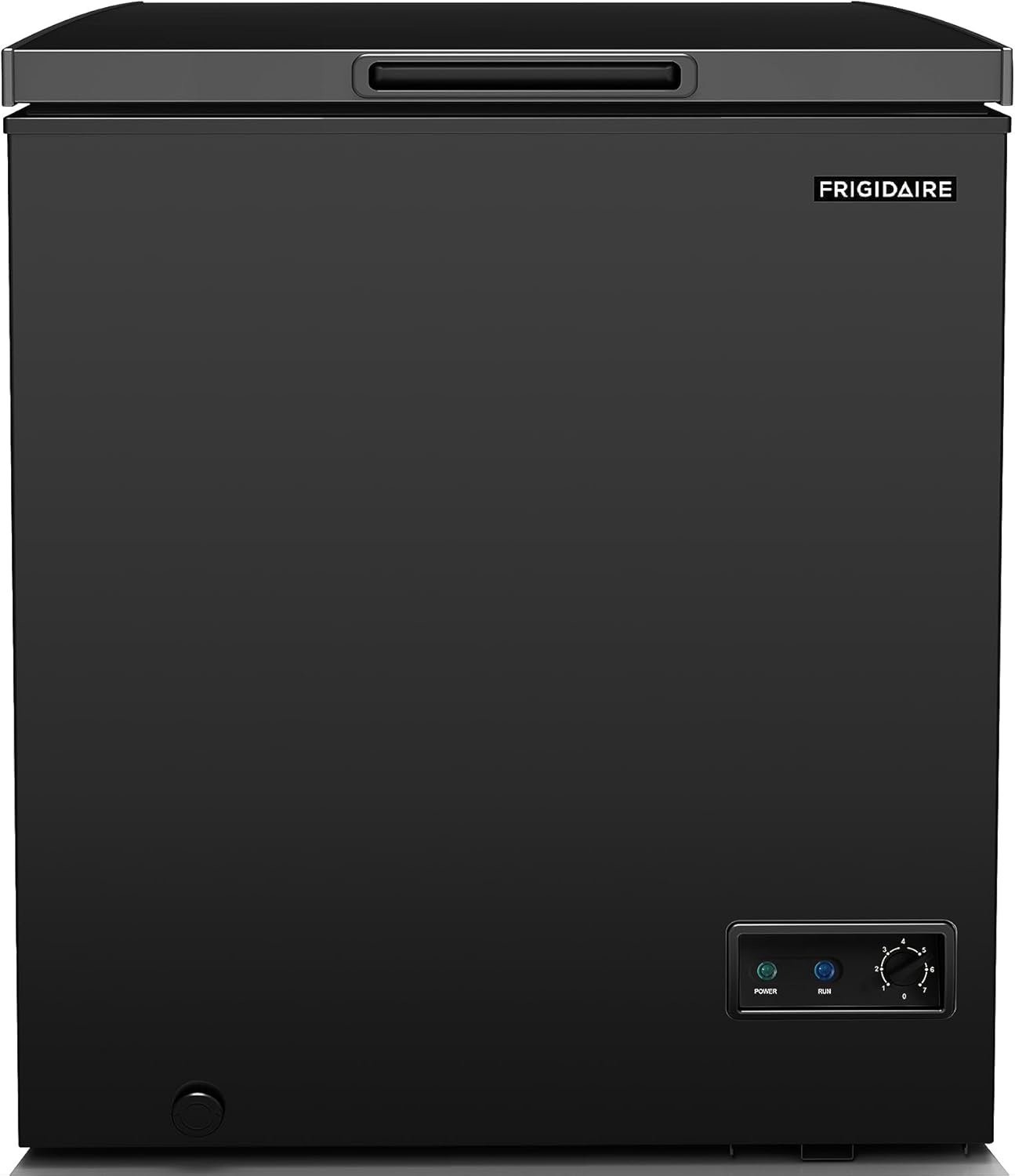
Frigidaire Chest Freezer EFRF5003
| Capacity | 5 cubic feet |
|---|---|
| Voltage | 120 volts |
| Door Orientation | Top |
| Number Of Shelves | 1 |
This Frigidaire chest freezer delivers straightforward cold storage in a compact footprint suited for garages or small households. It offers 5.0 cubic feet of usable space with a top lid, a removable vinyl-coated wire basket for organizing small items, and a front-mounted adjustable thermostat with seven settings for simple temperature control. The aluminum interior liner and recessed handle make it durable and easy to use, while the exterior defrost drain speeds manual defrost cycles. Adjustable feet help level the unit on uneven floors and a power-on indicator light shows operating status at a glance. Expect a no-frills operation: it is a manual-defrost chest, so it will require occasional thawing and water removal, and it does not include advanced features like an auto-defrost mode or smart controls. For everyday frozen storage in an outdoor garage setting the unit balances capacity, simplicity, and reliability without added complexity.
Best for: Buyers who want a dependable, no-frills chest freezer for extra frozen storage in a garage or workshop and value simple controls and easy maintenance.
Less Ideal for: Those who need a maintenance-free auto-defrost unit, remote monitoring, or very large capacity for long-term bulk storage should consider other models.
- Compact 5.0 cu. ft. capacity fits smaller garages and tight spaces
- Removable vinyl-coated basket keeps frequently used items accessible
- Adjustable thermostat with multiple settings for simple temperature control
- Easy-defrost drain simplifies manual defrosting and cleanup
- Adjustable legs improve stability on uneven floors
- Manual defrost requires periodic thawing and draining
- No advanced features such as auto-defrost, Wi‑Fi, or temperature alarms
Verdict: A practical, compact chest freezer that gives reliable extra freezer space for garage use with simple controls and easy manual defrosting.
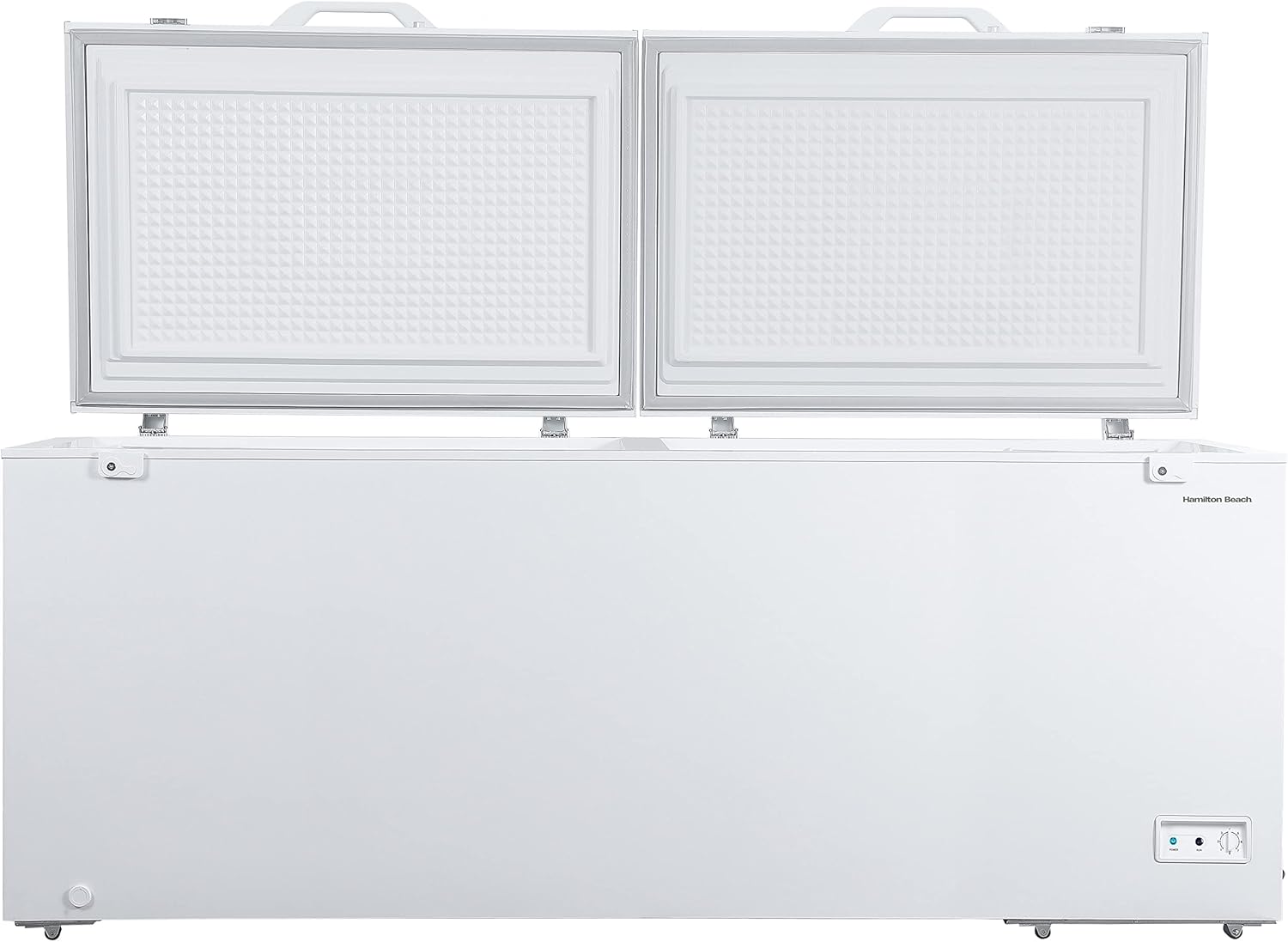
Hamilton Beach 25 Cu. Ft. Chest Freezer
| Capacity | 25 cubic feet |
|---|---|
| Voltage | 110 volts |
| Number Of Shelves | 1 |
| Door Orientation | Top |
This Hamilton Beach chest freezer delivers a lot of usable frozen storage in a straightforward, garage-ready package. It is built for large-volume cold storage and is typically used in garages, basements, cabins, or by families who bulk-buy meat and frozen meals. Key features include a 25 cu ft capacity, seven-setting adjustable thermostat with a power-on indicator, a removable vinyl-coated wire basket for organizing smaller items, and an exterior defrost drain to make manual defrosting and cleaning easier. The double door lid and external handle with lock help keep contents secure and accessible. The freezer is freestanding on standard 110V power and relies on manual defrosting, so it favors simple, rugged use rather than automated convenience. Expect a heavy, room-dominant unit that provides reliable performance for long-term storage but requires occasional manual maintenance and adequate outdoor shelter from the elements when placed outside.
Best for: Buyers who need high-capacity, reliable frozen storage for garages, cabins, or heavy household use and prioritize raw freezing performance over automatic features.
Less Ideal for: People who need a compact, lightweight, or frost-free freezer for indoor tight spaces or who want low-maintenance automatic defrosting.
- Very large 25 cu ft capacity for bulk storage
- Adjustable thermostat with multiple settings for temperature control
- Exterior defrost drain simplifies manual defrost and cleaning
- Removable vinyl-coated wire basket helps organize smaller items
- Manual defrost requires periodic maintenance rather than automatic frost-free operation
- Large and heavy footprint makes placement and moving more difficult
Verdict: If you need rugged, high-capacity frozen storage for an outdoor or garage setting, this 25 cu ft Hamilton Beach chest freezer delivers dependable performance and straightforward maintenance.
DEMULLER Chest Freezer 3.5 cu ft

| Capacity | 3.5 cubic feet |
|---|---|
| Voltage | 115 volts |
| Number Of Shelves | 2 |
| Door Orientation | Top |
| Installation Type | Freestanding |
This DEMULLER chest freezer is a space-efficient option for adding dedicated frozen storage outside the kitchen, offering a 3.5 cubic foot capacity and a digital control panel that adjusts temperature to 1°F between -15°F and 41°F. Its top-opening lid and two hanging stainless steel baskets make organizing small items easy without digging to the bottom, and the manual defrost design includes a side drain for simpler thaw cycles. The fast-freeze feature and precise electronic control let you quickly lock in food quality when you add fresh groceries, and the unit is freestanding on a compact footprint so it fits in garages, basements, or covered porches. Expect straightforward setup: plug in, hold the unlock button, and set the desired temperature; the display shows the setpoint rather than current internal temp. The freezer is best when used in a sheltered outdoor location because it is compact and not designed for extreme weather exposure, and manual defrosting means occasional maintenance to remove ice buildup.
Best for: Buyers who want an efficient, no-frills extra freezer to expand frozen storage in a garage, basement, or covered outdoor area and who prioritize precise temperature control and organized small-item storage.
Less Ideal for: People needing a weatherproof, heavy-duty outdoor freezer for unprotected exterior placement or those who prefer a frost-free model with no manual maintenance.
- Precise digital temperature control adjustable to 1°F with range -15°F to 41°F
- Compact 3.5 cu ft footprint fits in garages, basements, dorms, or small outdoor shelters
- Two removable stainless steel hanging baskets keep small items accessible and organized
- Top-open lid stays propped between 45 and 75 degrees for easy loading and hands-free access
- Manual defrost with side drain simplifies thawing maintenance
- Manual defrost requires periodic ice removal rather than automatic defrost
- Not rated for exposure to extreme outdoor weather so needs a sheltered location
Verdict: A compact, precisely controlled chest freezer ideal for adding reliable frozen storage in sheltered outdoor spaces where space efficiency and organization matter.
Climate Choice 3.5 Cu.Ft Chest Freezer

| Capacity | 4.2 cubic feet |
|---|---|
| Wattage | 58 watts |
| Voltage | 115 volts alternating current |
| Installation Type | Freestanding |
This small chest freezer is a straightforward compact freezer for adding extra frozen storage where space is tight. It uses a top‑open lid and removable wire basket to organize frozen groceries, with seven temperature settings that cover a wide range from just below freezing to deep freeze for long‑term storage. The unit emphasizes low noise under 40 dB and modest energy use, which makes it practical for patios, garages, or small apartments where constant loud operation would be a nuisance. Useful touches include a drain for easy defrosting and side handles to move the unit when needed. Expect basic mechanical controls and a simple stainless steel top rather than advanced digital features or smart controls. Because it is a compact, freestanding chest it works best as a secondary freezer rather than a primary family freezer and may require sheltered placement outdoors to avoid weather exposure.
Best for: Buyers on a tight budget who need reliable extra frozen storage in a compact, low‑noise chest for sheltered outdoor spots, garages, or small homes.
Less Ideal for: Those who need a large-capacity primary freezer, weatherproof outdoor installation, or remote temperature monitoring features should look elsewhere.
- Compact footprint fits tight spaces like garages, porches, or small kitchens
- Adjustable temperature range with seven settings for precise freezing needs
- Removable storage basket and top lid make organizing and accessing items easy
- Low noise operation (under 40 dB) suitable for living areas or outdoor covered spaces
- Not designed for exposed outdoor installation; needs a sheltered, temperature-stable location
- Basic controls with no digital readout or Wi‑Fi monitoring
Verdict: A budget-friendly, compact chest freezer that delivers quiet, energy‑efficient extra frozen storage for sheltered outdoor or small-space use.
Landeagle 5.1 Cu.Ft Chest Freezer

| Capacity | 5.1 cubic feet |
|---|---|
| Wattage | 110 watts |
| Voltage | 115 volts |
| Door Orientation | Top |
This Landeagle 5.1 cu.ft chest freezer puts reliable long-term freezing into a small footprint, making it a practical option for garages, basements, and outdoor-ready locations. It uses R600a refrigerant and embossed aluminum panels for faster, more even cooling, and offers seven thermostat settings (about 8.6°F to -14.8°F) plus an intelligent auto-cycle system to hold temperature with less energy waste. The unit includes two removable baskets for organization, a bottom drain for easier defrosting, and an auto-sensing LED lid light so you can find items in low light. Insulated with seamless PC foam and engineered to run under 40 dB, it is built to minimize heat transfer and vibration noise in enclosed or semi-outdoor spaces. Expect steady, quiet operation and straightforward maintenance, though its 5.1 cu.ft capacity limits how much bulk you can store compared with larger models. For outdoor use, follow typical placement guidance—shelter from direct weather and provide a level surface—to keep the compressor and electronics working reliably.
Best for: Buyers who prioritize steady, quiet freezing performance in a compact, space-conscious unit for semi-outdoor locations and want simple, low-maintenance operation.
Less Ideal for: People who need large-capacity freezing for bulk storage or who plan to expose the unit to unprotected outdoor elements should consider larger or fully outdoor-rated alternatives.
- Compact footprint fits garages, basements, and small outdoor-ready spaces
- R600a refrigerant with embossed aluminum panels for faster, uniform cooling
- Seven adjustable thermostat settings for precise temperature control
- Seamless PC foam insulation and low-noise operation under 40 dB
- Removable baskets, bottom drain, and LED lid light simplify organization and maintenance
- 5.1 cu.ft capacity is limited for very large bulk storage needs
- Requires sheltered, level placement outdoors to protect compressor and controls
Verdict: A quiet, well-insulated compact chest freezer built for dependable, energy-conscious freezing in garages and other semi-outdoor spots.
Kismile Chest Freezer BD-80

| Capacity | 3.2 cubic feet |
|---|---|
| Door Orientation | Top |
| Number Of Shelves | 1 |
| Installation Type | Freestanding |
The Kismile 3.2 cu ft chest freezer is a small freestanding deep freezer built for tight spaces where extra frozen storage is needed. It cools with a 7‑grade thermostat that ranges about 6.8°F to -7.6°F so you can pick milder or deep‑freeze settings, and two removable baskets make organizing smaller items convenient. The balanced hinge lets the lid stay propped at several angles for hands‑free access and there is a bottom drain to make defrosting and cleaning easier. The compressor is billed as energy efficient and the unit runs quietly under 40 dB, which helps if you place it on a porch or garage corner. Limits to keep in mind are its modest capacity and that the temperature range is not deep‑freeze cold enough for very long‑term storage of certain meats; also the listed power cord location may affect placement near an outlet. For someone wanting a compact, quiet extra freezer for seasonal overflow, meal prep, or storing breast milk, this is a practical, space‑saving option.
Best for: Buyers who want a compact, quiet secondary freezer for overflow storage, short‑term food prep, or locations with limited floor space and who prefer choices supported by steady customer feedback.
Less Ideal for: Those needing large commercial capacity or very low deep‑freeze temperatures for long‑term meat storage should look at larger, colder chest freezers instead.
- Compact 3.2 cu ft footprint fits small kitchens, dorms, or garages
- Adjustable 7‑grade thermostat lets you choose milder or colder settings
- Two removable baskets keep small items organized and easy to access
- Balanced hinge lid that can hold open at multiple angles for safe access
- Low noise operation under 40 dB suitable for indoor or sheltered outdoor spots
- Temperature floor around -7.6°F may not be cold enough for some long‑term meat storage
- Small capacity limits bulk storage or large frozen purchases
Verdict: A compact, quiet chest freezer that provides practical overflow frozen storage for small spaces and sheltered outdoor spots.
BODACIOUS Chest Freezer 7.0 Cu Ft

| Capacity | 7 cubic feet |
|---|---|
| Voltage | 110 volts |
| Number Of Shelves | 2 |
| Door Orientation | Top |
| Installation Type | Countertop, Freestanding |
This 7.0 cu ft BODACIOUS chest freezer is a compact, energy-conscious deep freezer designed for extra food storage in homes, apartments, or garages. It uses an adjustable 6-setting thermostat so you can dial in colder or milder temperatures depending on what you store, and the removable basket helps keep frequently used items accessible. The unit emphasizes energy efficiency and quiet operation, which is useful if you plan to place it in a garage or near living spaces. Practical touches include a defrost water drain for easier cleaning and a top-opening door that is simple to load with bulkier items. Expect routine chest-freezer behavior: occasional compressor noise and warm exterior panels during heavy use, and the brand recommends avoiding the MAX setting long-term to reduce power draw and wear. For buyers looking for a straightforward, space-saving secondary freezer with basic controls and decent organization, this model offers sensible performance without complex electronics.
Best for: Buyers who want a reliable, no-frills secondary freezer for storing bulk food or overflow in a garage or small living space and prioritize quiet, energy-conscious operation.
Less Ideal for: People who need precise digital temperature control, frequent vertical access like an upright freezer, or a solution that must blend into finished indoor living areas without occasional exterior warmth.
- Energy-efficient design aimed to lower daily power consumption
- Quiet operation suitable for garages or near living areas
- Adjustable 6-setting thermostat for flexible temperature control
- Removable basket and defrost drain for easier organization and maintenance
- Top-open chest design requires bending to access contents
- No digital controls or precise temperature readout
Verdict: A compact, energy-saving chest freezer well suited for buyers who want a quiet, practical secondary freezer for garages or small spaces.
Choosing the Right Chest Freezer for Outside: Key Factors to Consider
Insulation and Temperature Range
Thicker, high-quality insulation reduces compressor run time and helps the freezer maintain steady internal temperatures when outdoor conditions vary. Look for foam density and overall lid sealing that minimize thermal bridging.
A unit rated to operate across a wide ambient temperature range is essential for outdoor placement. Without adequate insulation and tolerance for high or low ambient temperatures, the freezer may struggle to keep contents fully frozen or cycle inefficiently.
Weatherproofing and Corrosion Resistance
Outdoor freezers are exposed to rain, snow, humidity, and UV light. Corrosion-resistant exterior materials and durable powder-coat finishes extend service life and help prevent rust where moisture collects. Effective gasket design and raised drain locations limit water ingress.
Pay attention to how components like hinges, handles, and drain plugs are protected. Stainless or treated hardware and sealed control panels reduce the risk of weather-related failures and make long-term outdoor ownership less troublesome.
Compressor and Cooling System Design
The compressor should be sized and designed to run reliably under wider temperature swings. A robust compressor with a thermostatic control that compensates for ambient heat helps maintain internal temperatures without excessive wear.
Also consider ventilation and placement of the condenser coils. Outdoor models that shield critical components from direct sun and allow adequate airflow will run cooler and last longer than units with exposed, poorly ventilated parts.
Energy Use and Operating Cost
Operating a freezer outdoors can increase energy consumption, especially in warmer months. Look for thicker insulation, efficient compressors, and good airflow management to keep electricity use reasonable.
Energy-efficient choices matter if the freezer will run continuously in a hot climate. Consider units with reliable thermostats and low standby draw to limit ongoing costs without sacrificing holding temperatures.
Capacity, Footprint, and Placement
Match internal capacity to how much frozen storage you need while balancing the physical footprint for your outdoor space. Chest freezers typically offer flexible storage but require clearance for the lid to open and for airflow around the cabinet.
Think about where you will place the freezer to avoid direct sunlight, pooling water, or heavy debris. Allowing sufficient clearance on the back and sides for ventilation will improve reliability and lifespan.
Maintenance and Service Access
Routine maintenance like defrosting, gasket inspection, and cleaning the condenser coils is easier when the unit provides accessible service points. Removable baskets, external drains, and user-accessible access panels reduce hassle.
Consider how easy it will be to diagnose issues outdoors. Units designed with clear service access points and simple component layouts will minimize downtime and repair complexity.
Preparing an Outdoor Location
Site selection matters more for outdoor freezers than indoor ones. Choose a flat, stable surface that keeps the cabinet off the ground and prevents water pooling under the base. A slightly elevated platform with proper drainage prevents standing water from contacting the cabinet and reduces rust risk.
Shelter the freezer from direct sun and heavy precipitation when possible. A covered patio, lean-to, or ventilated enclosure can dramatically reduce thermal stress and electricity use. Make sure the chosen shelter still allows adequate airflow around the condenser and access for service.
- Place on a level concrete pad or raised plastic/metal platform.
- Avoid direct sun exposure to limit heat gain.
- Ensure at least a few inches clearance for rear ventilation.
- Keep away from areas where debris or snow will accumulate.
Installing and Ventilating an Outdoor Freezer
Proper ventilation prevents overheating and improves compressor life. Leave manufacturer-recommended clearance on the sides and back for airflow. Do not enclose the unit tightly; even sheltered installations need open airflow paths to dissipate heat.
Location of the condenser and fan matters. Avoid placing the freezer against a wall or inside a closed cabinet. If you place the unit near a structure, maintain recommended clearance and consider adding a small air gap or louvers to promote crossflow.
- Follow clearance specs for the condenser and compressor.
- Use breathable covers only when the unit is off and dry.
- Keep leaves and debris away from vents to ensure airflow.
Defrosting and Year-Round Care
Outdoor chest freezers can accumulate frost faster if humidity is high or if the lid gasket is compromised. Plan a defrost schedule based on use and conditions; heavy frost requires manual defrosting to maintain efficiency. Use the external drain to speed water removal during defrost cycles.
Seasonal checks help prevent failures. Inspect gaskets, remove debris from under the cabinet, and rinse coils if accessible. In winter, check that snow does not block vents or stress the lid closure.
- Defrost before frost builds beyond manufacturer recommendations.
- Clean gaskets and re-seat if they show gaps.
- Use the drain plug to channel defrost water away from the base.
Security, Pest Prevention, and Safe Storage
Outdoor freezers need protection against pests and curious wildlife. Choose units with tight-fitting lids and robust gaskets. In areas with animals, consider a lockable lid or secondary enclosure to prevent access and potential damage.
Store items in sealed containers or bags to minimize odors that attract pests. Keep the exterior clean and free of food residue that could invite animals or insects.
- Use airtight packaging to reduce odors and freezer burn.
- Consider a lock or bolted latch if wildlife is a concern.
- Keep the perimeter clear of food and trash to reduce attraction.
Winter Operation and Cold-Weather Considerations
Some models include thermostats rated for low ambient temperatures. If you live in very cold climates, check that the freezer can maintain set points when outside temperatures drop below typical room conditions. In extreme cold, compressors may cycle less or struggle to maintain consistent operation.
If you plan to leave the unit outdoors year-round, protect controls and exposed fittings from ice buildup, and ensure the drain and gasket function in freezing conditions. Occasional manual checks in deep cold help catch issues early.
- Verify the operating ambient range before winter placement.
- Insulate around—but not over—the unit to avoid trapping heat.
- Clear snow and ice from vents and hinges regularly.
How We Chose the Best Chest Freezer for Outside
We focused on features and build qualities that matter when a chest freezer lives outdoors rather than in a climate-controlled room. Core evaluation criteria included insulation performance across a wide ambient temperature range, enclosure sealing and weather resistance, compressor and thermostat design for consistent temperatures, long-term durability and rust protection for metal components, and serviceability for routine maintenance. We also weighed energy efficiency because outdoor units can see higher run times in warm conditions, and we considered capacity versus footprint to match common outdoor spaces. Units were excluded if they lacked clear cold-weather or weather-resistant specifications, had vulnerable exterior finishes, or lacked basic service access. The final list prioritizes freezers that combine strong insulation, robust exterior protection, thermostatic control suitable for variable ambient temperatures, and features that keep outdoor operation practical and safe.
Our full evaluation process is outlined in our review methodology.
FAQ
Can I place a chest freezer outdoors under a covered patio?
Often yes. A covered patio that keeps the unit out of direct rain and sun but allows airflow is usually a good location. Ensure there is recommended clearance around the cabinet and that the area stays dry to limit corrosion.
How does outdoor placement affect energy use?
Energy use can increase when ambient temperatures are higher or fluctuate widely because the compressor runs longer to maintain set temperatures. Good insulation, shade, and ventilation help reduce extra energy consumption.
Do outdoor chest freezers need special maintenance?
Yes. Outdoor units benefit from more frequent gasket inspections, periodic cleaning of coils and vents, and timely defrosting if frost accumulates. Protecting exterior finishes from moisture also extends service life.
Will pests and animals damage an outdoor freezer?
They can if lids or gaskets are compromised. Tight seals, proper packaging of food, and optional locks or enclosures minimize the chance of animals accessing the interior or chewing on insulation and wiring.
Is it safe to operate a chest freezer outdoors in winter?
It depends on the unit's rated ambient temperature range. Some freezers can operate in cold conditions, but very low temperatures can affect compressor cycling and thermostat accuracy. Verify the unit's cold-weather rating before leaving it outdoors in winter.
Final Verdict
Outdoor chest freezers offer flexible, high-capacity frozen storage when you pick a model built for exposure to changing temperatures and moisture. Prioritize insulation quality, weather-resistant materials, and a compressor designed for outdoor duty. Plan for proper placement, ventilation, and seasonal maintenance to keep operating costs and repair needs low. Focus on the features that match your climate and site. If you need a freezer to live outside year-round, choose one with explicit weather protections and accessible service points so you can enjoy reliable storage without frequent surprises.