
Note: This article contains affiliate links. If you click on these links and make a purchase, we may earn a small commission at no extra cost to you. This helps support our research and content. Read our full affiliate disclosure here.
If you brew with oily coffee beans, choosing the right grinder has a big impact on extraction and daily reliability. Oily roasts tend to clump, gum up burrs, and leave residue that reduces consistency over time, so a grinder built to handle slick beans helps preserve flavor and reduces maintenance. This guide spotlights the top seven coffee grinders shortlisted for oily beans across a range of styles and user needs. We evaluated each option for grind consistency, how easily it handles oily grounds, and how simple it is to clean and maintain. Read on to find a model that matches your brewing method and maintenance tolerance, with clear tradeoffs explained for each buyer profile.
Top Picks at a Glance
| Best Overall The best all-around choice for most situations | Breville Smart Grinder Pro BCG820BSS | 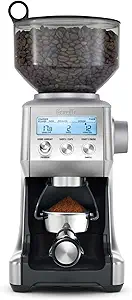 |
| Best Quality Built to a higher standard if you want something more solid | Baratza Virtuoso+ | 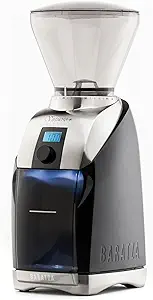 |
| Best Value The sweet spot between price and what you get | Ollygrin Burr Coffee Grinder BG702S |  |
| Best Budget The cheapest option that still gets the job done reliably | BLACK+DECKER Coffee Grinder CBG110S |  |
| Top Rated A top-rated pick with lots of positive feedback | Aromaster Burr Coffee Grinder |  |
| Most Popular A crowd favorite that many people choose with confidence | Cuisinart Supreme Grind DBM-8P1 | 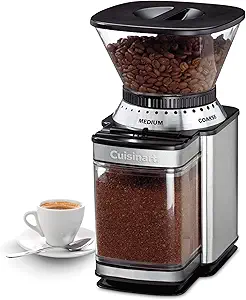 |
| Best Seller A high-volume bestseller chosen again and again | OXO Brew Conical Burr Grinder |  |
Breville Smart Grinder Pro BCG820BSS

| Wattage | 165 |
|---|---|
| Voltage | 120 |
| Capacity | 1.1 pounds |
The Breville Smart Grinder Pro is a countertop conical burr grinder designed for home enthusiasts who want repeatable, precise dosing across brew methods. It grinds directly into a portafilter, airtight container or filter basket and uses a digital timer that adjusts in 0.2 second increments so you can fine tune dose for espresso, drip or French press. The clear LCD shows grind setting, grind time and number of shots or cups, while 60 grind settings cover very fine to very coarse grinds. Included portafilter cradles and a sealed grounds container make switching between espresso and filter easy, and the dosing IQ helps reduce waste from overgrinding. Practical limits are typical for consumer burr grinders: it is not a commercial high-throughput machine and will need occasional burr replacement for heavy use, and very oily beans can require more frequent cleaning to prevent clumping. For home use the Smart Grinder Pro balances flexibility and user control, making it simple to dial in consistent results across multiple brew styles.
Best for: Home brewers who want precise, repeatable control across espresso and filter methods and appreciate digital dosing and many grind settings to dial in taste.
Less Ideal for: Those who need a commercial-grade, high-throughput grinder or want a completely maintenance-free machine for continuous heavy use.
- Wide range of 60 grind settings for espresso through French press
- Digital dosing with 0.2 second increments for repeatable doses
- Grinds directly into portafilter or airtight container for convenience
- Clear LCD displays grind setting, time and shot/cup selections
- Includes portafilter cradles and sealed grounds container
- Requires regular cleaning when used with oily beans to avoid clumping
- Not intended for high-volume commercial use
Verdict: Choose the Breville Smart Grinder Pro if you want a flexible, digitally dosed home burr grinder that makes it easy to dial in consistent shots and filter brews.
Baratza Virtuoso+
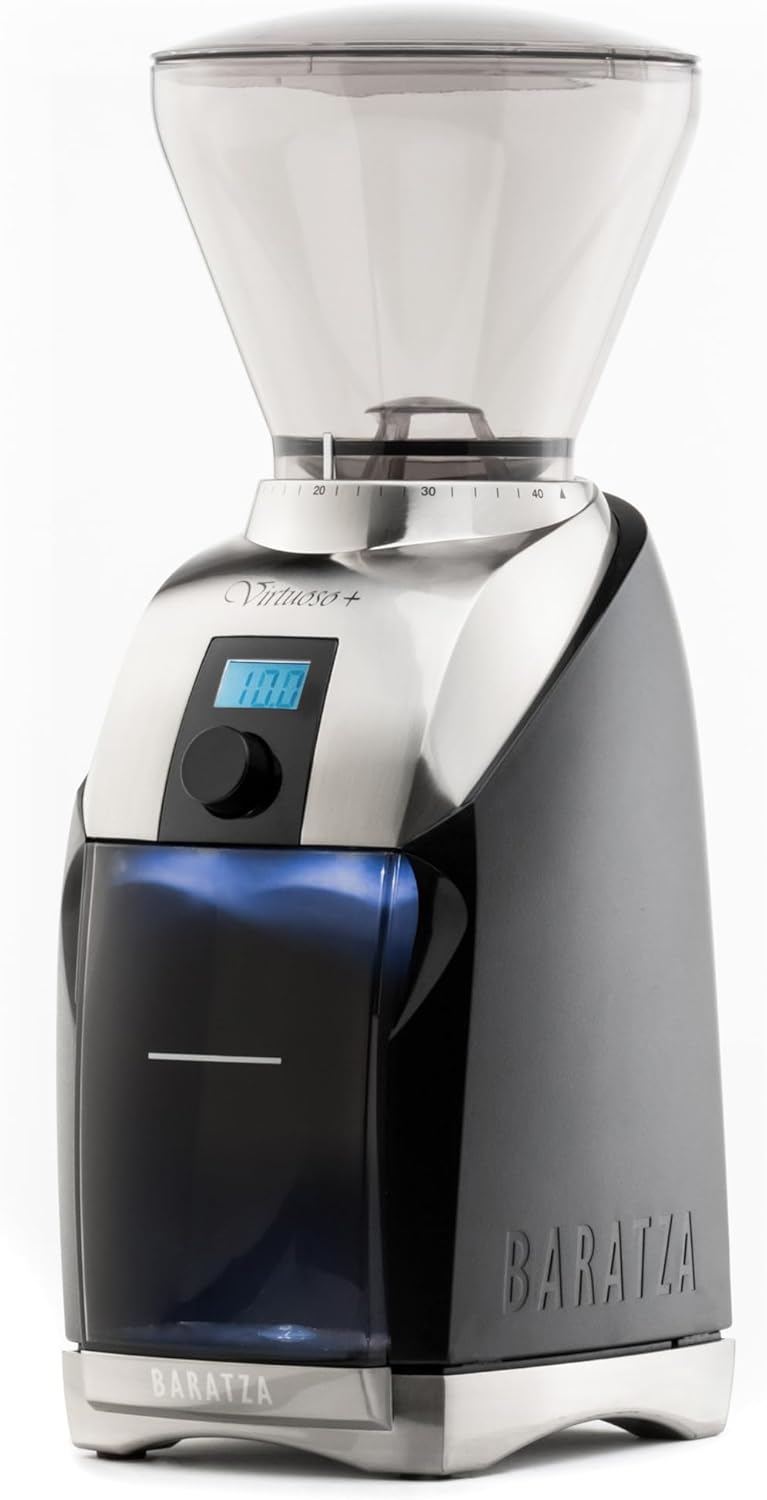
| Capacity | 230 g |
|---|---|
| Wattage | 70 watts |
| Voltage | 230 volts |
The Virtuoso+ is a compact, performance-focused burr grinder aimed at home users who want consistent, repeatable grinds across a wide range of brew methods. It uses hardened commercial-grade conical burrs and a DC motor to deliver steady particle size, while the 40-step grind adjustment covers espresso through French press. The built-in digital timer and backlit grounds bin make dosing simple and accurate down to tenths of a second, which helps with reproducible shots and recipes. Its metal top and base give it a durable, kitchen-friendly presence and the grounds bin design keeps collected coffee tidy. Limitations include a modest 230 g capacity and a motor/wattage spec suited to home use rather than high-throughput commercial work, and oily beans may require more frequent cleaning to avoid buildup on the burrs and chute. For home baristas who prioritize grind control and consistency, the Virtuoso+ balances precision and daily practicality.
Best for: Buyers who want precise, repeatable grinds for multiple brew methods and who care about dose control and consistent extraction in a home or small-batch setting.
Less Ideal for: People who need very large daily throughput or a commercial-grade grinder for cafe service should look at higher-capacity, heavy-duty models.
- Commercial-grade conical burrs provide consistent particle size across settings
- 40 grind settings let you dial in coffee for espresso to French press
- Digital timer and LED backlit grounds bin enable precise, repeatable dosing
- Sturdy metal top and base improve durability and kitchen fit
- 230 g capacity is limited for high-volume grinding
- Motor and wattage are geared for home use, not continuous commercial throughput
Verdict: Choose the Virtuoso+ if you want a durable, high-precision home burr grinder that delivers reliable, repeatable dosing across a wide range of brew styles.
Ollygrin Burr Coffee Grinder BG702S

| Burr size | 40 millimeters |
|---|---|
| Grind settings | 30 settings |
| Capacity | 10 ounces |
| Wattage | 150 watts |
| Voltage | 220 volts |
The Ollygrin burr grinder uses 40 mm stainless steel conical burrs and a gear-reduction motor to produce consistent grounds across 30 grind settings, from fine for espresso to coarse for French press. It is designed for straightforward daily use: load up to the 10-ounce hopper, select one of the 2–12 cup settings or an exact grind level, then press the single rotary button to grind. The slower gear-driven motor minimizes heat and static, which helps preserve aroma and reduces clumping with oily beans. Practical touches include an auto-locking removable hopper, a removable grounds container, a lift-off upper burr for cleaning, a brush, and built-in protections such as a friction clutch and overheating cutoff. Limitations are typical for compact home grinders: it runs on 220V and is sized for household batches rather than commercial throughput, and very large or continuous grinding sessions could trigger thermal protection. For everyday home use it balances capacity, consistent grind, and easy maintenance well.
Best for: Home brewers who value consistent, low-heat grinding and want an easy-to-clean grinder that handles oily beans without excessive clumping.
Less Ideal for: Commercial users or households that need very high daily throughput or run the grinder continuously for large batches.
- 40 mm stainless steel conical burrs for uniform particle size
- Wide 30-step grind range from espresso to French press
- Gear-reduction motor reduces heat and preserves flavor for oily beans
- 10-ounce hopper and removable grounds container for several servings
- Safety features include friction clutch and overheating protection
- Intended for 220V operation which may limit plug compatibility in some regions
- Not designed for heavy commercial use or continuous large-batch grinding
Verdict: A feature-rich home burr grinder that delivers consistent, low-heat grounds ideal for oily beans and everyday brewing.
BLACK+DECKER Coffee Grinder CBG110S

| Capacity | 56.6 g |
|---|---|
| Wattage | 130 |
| Voltage | 110 volts |
The BLACK+DECKER CBG110S is a small, one-touch blade grinder built for quick, everyday grinding tasks. You fill the stainless steel bowl, press the push-button and it pulverizes coffee beans, spices, herbs or grains into coarse or fine particles depending on how long you run it. The lid-lock safety feature prevents the motor from running unless closed, and the stainless steel blades and bowl resist staining and retain a neutral taste better than plastic. Its compact footprint and 56.6 g capacity make it convenient for single-cup brewing or grinding small amounts of oily beans for immediate use. Because it is a blade-style grinder, particle size is less uniform than burr grinders, so extraction can be uneven for precision brewing methods, and it can heat quickly if run for long periods. For budget shoppers who want a durable, no-frills grinder for occasional oily-bean use, this model delivers reliable performance in a simple package.
Best for: Buyers on a tight budget who need a durable, easy-to-use grinder for small batches and occasional oily-bean grinding for drip or single-cup brewing.
Less Ideal for: People seeking very consistent, grind-size control for espresso or pour-over who should consider a burr grinder instead.
- Stainless steel blades and bowl resist staining and minimize retained oils
- Simple one-touch push-button operation for quick grinding
- Lid-lock safety prevents accidental operation
- Compact size that fits small kitchens and at-home single-cup use
- Blade design yields less uniform particle size than burr grinders
- Small 56.6 g capacity requires frequent refills for multiple cups
Verdict: A compact, budget-friendly blade grinder that reliably handles small batches of oily beans with durable stainless-steel components.
Aromaster Burr Coffee Grinder

| Capacity | 3.9 ounces |
|---|---|
| Grind settings | 48 |
| Material Type | Stainless Steel |
| Power Source | AC adapter (120V, 60Hz) |
This Aromaster burr grinder is built around a conical stainless steel burr and 48 grind settings that cover everything from fine espresso to coarse French press, making it versatile for different brew methods. It grinds up to about 3.9 ounces per batch and uses anti-static technology to keep grounds from clinging or scattering, which helps when working with oily beans. The removable ring burr and included brush simplify cleaning and help prevent clogs, and the slower grind speed is designed to limit heat build-up so beans retain more flavor. Practical limits are its 120V power requirement and modest hopper capacity, which means larger households may need multiple batches, and the unit is best for countertop use rather than commercial volume. For reliability-minded users the stainless steel burr and straightforward mechanical controls make this grinder easy to maintain and serviceable over time.
Best for: Buyers who value consistent, serviceable home grinding for oily beans and want adjustable grind control with easy cleaning and low static mess.
Less Ideal for: People needing high-volume commercial grinding or a very large hopper for brewing many cups at once should look for a larger-capacity model.
- Conical stainless steel burr preserves flavor by reducing heat during grinding
- 48 grind settings provide precise control from espresso to French press
- Anti-static design reduces clumping and messy grounds, helpful with oily beans
- Removable burr and included brush make cleaning and clog prevention straightforward
- 3.9 ounce hopper capacity may require repeated batches for larger servings
- Requires 120V, 60Hz power which limits use in regions with different voltage
Verdict: A reliable, easy-to-clean burr grinder with anti-static tech and broad grind range that handles oily beans well for home use.
Cuisinart Supreme Grind DBM-8P1

| Wattage | 500 |
|---|---|
| Voltage | 110 volts |
| Capacity | 0.23 kg |
The Cuisinart Supreme Grind DBM-8P1 is a home-oriented flat burr grinder designed to produce consistent grinds from ultra-fine to extra-coarse using an 18-position selector. You load beans into the removable 8 oz hopper, choose one of the 18 grind settings, and press the one-touch power bar; an internal timer stops the motor when the selected grind cycle completes so you get repeatable results without guessing. The removable grind chamber holds the grounds for 4 to 18 cups, which makes it convenient when brewing for a few people or a larger batch. Practical touches include cord storage and a cleaning brush/scoop, and the stainless steel housing is easy to wipe down. For oily beans the flat burr design helps reduce clumping compared with blade grinders, but heavy oils may still require periodic cleaning of the chamber and burrs to prevent buildup and inconsistent dosing. The unit is built for countertop use and does not offer advanced dosing controls or a cooling/anti-static system found on higher-end models.
Best for: Buyers who want a reliable, easy-to-use burr grinder that delivers consistent, cafeteria-to-home grind ranges and values a removable hopper and simple programmable stop.
Less Ideal for: If you need professional-level dosing precision, advanced anti-static handling for very oily single-origin beans, or commercial throughput, look to higher-end specialty grinders.
- 18-position grind selector for a wide range of grind sizes
- Removable 8 oz bean hopper and grind chamber for easier filling and cleaning
- Automatic timer with one-touch power bar delivers consistent, repeatable cycles
- Flat burr design produces more uniform grinds than blade grinders, improving extraction
- Cord storage and included scoop/brush aid tidy countertop use and maintenance
- No advanced dosing or micro-adjustment controls for precise single-dose grinding
- Lacks anti-static or specialized features to manage very oily beans without extra cleaning
Verdict: Choose the Cuisinart DBM-8P1 for a dependable, easy-to-clean flat-burr grinder that gives consistent grind control for everyday home brewing.
OXO Brew Conical Burr Grinder

| Burr size | 40 mm |
|---|---|
| Burr type | Stainless steel conical burrs |
| Grind settings | 15 settings plus micro-adjustments |
| Hopper capacity | 12 ounces |
| Power source | DC power supply |
The OXO Brew Conical Burr Grinder is a user-friendly electric grinder built around 40 mm stainless steel conical burrs that produce uniform grounds across a wide grind range. You set the grind size with a dial and use the one-touch timer to start grinding; the unit remembers your last setting so daily use is quick and predictable. The large 12 ounce UV-tinted hopper keeps beans shaded and reduces the need to refill for larger batches, while the DC motor is tuned for low vibration to keep noise and heat down. Practical benefits include a broad grind range suitable from espresso to French press, precise micro-adjustments for dialing in consistency, and a removable hopper for easier filling and cleaning. For oily beans the stainless steel burrs and larger burr diameter help cut through oils without excessive clumping, though oily beans can still require occasional wiping of the grounds chute and hopper. The grinder is solidly built and aimed at straightforward, repeatable performance rather than advanced automation or heavy commercial duty.
Best for: Buyers who prioritize reliable, repeatable home grinding with minimal fuss and want a durable, low-noise grinder that handles a range of brew methods.
Less Ideal for: People who need a commercial-grade grinder for continuous heavy use or those wanting built-in dosing scales or advanced digital automation.
- 40 mm stainless steel conical burrs for uniform grounds
- 15 grind settings plus micro-adjustments for precise tuning
- One-touch timer that remembers last setting for repeatable use
- Large 12 oz UV-tinted hopper reduces refills and protects beans from light
- Low-vibration DC motor keeps noise and heat minimal
- Oily beans may still leave residue requiring periodic cleaning of hopper and chute
- Not designed for commercial or continuous high-volume grinding
Verdict: A dependable, low-noise conical burr grinder that delivers consistent, adjustable grinds and handles oily beans well for everyday home brewing.
Choosing the Right Coffee Grinder for Oily Beans: Key Factors to Consider
Grind Consistency Across Settings
Consistent particle size is the foundation of good extraction. Oily beans are prone to clumping, which can create uneven flow through the puck or filter. That makes it essential to choose a grinder with stable burr alignment and a mechanism that holds settings reliably.
Look for grinders that demonstrate uniform grind size at the intended range for your brew method. The difference between consistent and inconsistent grinding shows up as wild swings in flavor and extraction. For espresso users, small changes in distribution matter a lot; pour-over and immersion brewers are more forgiving but still benefit from predictable particle distribution.
Oil Handling and Retention
Oily beans transfer surface oils to the burrs and internal surfaces, increasing retention and the chance of clogging. A grinder designed to minimize dead space and provide an easy purge or brush-out routine reduces buildup and preserves flavor clarity.
Consider the hopper, chute, and portafilter interface when judging retention. Designs with narrow chutes or fixed dosing chambers tend to trap more oily grounds. Removable dosing cups, short chutes, and low-retention burr housings make cleaning quicker and limit stale-oil carryover between roasts.
Ease of Cleaning and Serviceability
How quickly you can clean a grinder determines whether you will actually maintain it. Oily beans demand more frequent cleaning to avoid rancid buildup that dulls flavor. Grinders with tool-free access to burrs, simple disassembly, and user-replaceable parts make routine maintenance doable.
Check for models that include cleaning brushes, accessible screw points, and clear instructions for deep cleans. Consider whether spare parts are standardized; simple, serviceable components extend usable life and reduce the risk of permanent jams caused by heavy oil accumulation.
Dosing System and Adjustment Precision
Accurate dosing reduces waste and improves repeatability, especially with oily grounds that can cling and cause inconsistent portions. Whether you prefer timed dosing, weight-based dosing, or manual doserless systems, the mechanism should be precise and consistent under real-world conditions.
Also evaluate how the grinder behaves when switching doses or grind sizes. Some dosing systems require a purge or re-tare to avoid cross-contamination between oily roasts. Easy, quick adjustments help maintain workflow during back-to-back brewing sessions.
Motor Performance and Heat Management
Grinders working against sticky, oily grounds can experience heavier loads and elevated operating temperatures. A motor that manages heat and recovers quickly helps maintain consistent grind and extends component life.
Look for grinders with adequate cooling vents, sensible duty cycles, and motors rated for the expected daily workload. Overheating can alter grind behavior and accelerate wear on burrs and bearings, so motor design and ventilation are practical considerations for frequent users.
Burr Material and Geometry
Burr material affects durability, heat transfer, and how oils interact with the grinding surfaces. Hardened steel burrs are common and long-wearing, while ceramic burrs resist heat but may be more brittle. Geometry determines how aggressively beans are sheared and how prone a grinder is to clogging with oily material.
Choose burrs that match your brewing goals: fine, consistent burrs for espresso and more open geometries for coarser methods. Also consider whether the burr set is replaceable and straightforward to align, since burr wear or misalignment increases retention and reduces consistency.
Why Oily Beans Behave Differently
Oily beans carry surface fats that change how they interact with a grinder compared with drier beans. The oil redistributes inside the burr housing and chute, promoting clumping and sticky deposits that alter flow and dosing over time.
Understanding those mechanics explains why certain design choices reduce headaches. Short chutes, removable dosing chambers, and low-retention pathways help limit where oil can accumulate, while accessible burr assemblies make it practical to clean the parts that matter most.
- Surface oil increases particle adhesion and retention
- Clumping can cause channeling in espresso and inconsistent pour-over extraction
- Designs that minimize dead space reduce stale-oil carryover
Routine Maintenance Tips for Oily Beans
Develop a short daily routine and a deeper weekly procedure. Daily maintenance should focus on a quick purge or brush of the chute and portafilter area to prevent compacted residue. Weekly or biweekly cleaning should include burr removal and a wipe of internal surfaces.
When performing deeper cleans, use manufacturer-recommended brushes and avoid solvents unless explicitly allowed. For stubborn build-up, dry brush and dislodge debris, then run a small amount of very dry beans to help absorb and carry away residual oils before another brush-out.
- Purge short doses through the chute after each session
- Brush burrs and chute weekly
- Use dry purge beans sparingly to clear light residue
Choosing Between Doser and Doserless Designs
Doser systems collect grounds in a chamber for later dispensation. They can be convenient for pre-batch grinding, but oily grounds tend to stick to chamber walls and increase stale carryover. Doserless designs grind directly into a portafilter or container, reducing the number of surfaces where oil can accumulate.
If you favor batch grinding for multiple coffees, a doser with easy-to-disassemble parts may still work well. For single-shot espresso work or frequent roast changes, a doserless grinder typically offers cleaner transitions and less retention-related flavor contamination.
- Doserless: lower retention, better for quick roast changes
- Doser: convenient for batch work but needs more cleaning
- Consider your workflow and how often you switch roasts
How Burr Geometry Affects Oily Bean Performance
Burr geometry controls how beans are cut and how much surface area is exposed during grinding. Tighter, more aggressive geometries may produce finer, more consistent particles but can also force oil into crevices where it is harder to remove.
Open-geometry burrs tend to handle oily beans with fewer clogs and are easier to clean. However, they may sacrifice some fineness at the lowest espresso ranges. Matching burr geometry to your primary brew method reduces maintenance tradeoffs.
- Open geometry: less clogging, easier cleanup
- Tighter geometry: better for fine espresso but higher retention risk
- Replaceable burrs extend usable life and allow geometry changes
Workflow Adjustments to Reduce Problems
Small changes in how you dose and distribute coffee can lessen oily-bean headaches. Weighing doses rather than relying on time helps account for variable retention. Distribution tools and gentle tapping reduce clumps introduced during dosing.
If you switch between oily roasts and drier profiles, plan brief cleaning steps between sessions. A quick brush and a two-second purge of a small dose before the next grinding run can prevent flavor crossover and buildup.
- Weigh rather than time doses when possible
- Purge a small amount after switching roasts
- Use distribution tools to break clumps before tamping
How We Chose the Best Coffee Grinder for Oily Beans
We focused on criteria that matter specifically when grinding oily beans rather than general-purpose features. Primary evaluation points included grind consistency across settings to ensure even extraction, how resistant the burrs and dosing mechanisms are to oil-related clumping, and the ease of cleaning to keep residue from building up. We also considered dosing accuracy and retention, because oily grounds cling and increase leftover coffee in the chute and hopper. Durability and motor cooling were important for users who grind frequently or in larger batches, since oil can accelerate wear and cause motor strain if clogging forces higher loads. Products excluded from consideration were those lacking clear information on burr material or retention characteristics, grinders with fixed blade mechanisms, or designs that are inherently difficult to disassemble for cleaning. We prioritized grinders with user-serviceable parts, accessible burrs, and documented low retention or easy purge routines. The resulting shortlist balances day-to-day reliability for oily beans with practical maintenance demands.
Our full evaluation process is outlined in our review methodology.
FAQ
Can I use any grinder with oily beans?
Often you can, but not all grinders handle oily beans equally. Models with high retention, long chutes, or non-removable dosing chambers are more likely to clog and require frequent cleaning.
How frequently should I deep-clean my grinder when using oily roasts?
Usually a weekly deep clean is sufficient for home use, but frequency depends on roast oiliness and daily volume. Higher volumes or very oily roasts may need more frequent burr removal and wiping.
Are ceramic burrs better for oily beans than steel burrs?
It depends. Ceramic resists heat transfer but can be more brittle. Steel burrs are generally durable and handle heavy use well. The key factor is burr geometry and how accessible the burr housing is for cleaning.
Will oily beans make my grinder smell bad over time?
Oils can accumulate and oxidize, producing stale or rancid notes if not cleaned periodically. Regular brushing and occasional deeper cleans prevent lingering odors and keep flavor neutral.
Does using dry 'purge' beans help with oily residue?
A small amount of very dry beans run through the grinder can help pick up light oily residues, but this is a temporary measure. It should be paired with physical cleaning to remove trapped oils and grounds.
Final Verdict
When shopping for a coffee grinder for oily beans, prioritize low retention, easy access to burrs for cleaning, and a dosing system that fits your workflow. Expect tradeoffs: burr geometry that reduces clogging may slightly alter the finest espresso range, and robust motors that handle sticky loads can add bulk. Focus on the criteria that match how often you brew, whether you switch roasts frequently, and how much maintenance you are willing to perform. Choosing a grinder that balances consistent output with straightforward maintenance will reduce frustration and preserve flavor when working with oily roasts. Use the factors and workflow tips above to narrow options and pick a model that fits your brewing routine with minimal fuss.