
Note: This article contains affiliate links. If you click on these links and make a purchase, we may earn a small commission at no extra cost to you. This helps support our research and content. Read our full affiliate disclosure here.
If you brew with a percolator, the grinder you choose has an outsized impact on extraction, clarity, and bitterness. The right grinder produces uniform medium-coarse grounds that let percolator water cycle without over-extraction or excessive fines that cause cloudiness. This guide covers seven shortlisted coffee grinders for percolator use, focusing on consistent particle size, ease of cleanup, and durability for regular stovetop brewing. Below you will find the practical pros and cons that matter for percolator brewing along with the criteria we used to evaluate each option.
Top Picks at a Glance
| Best Overall The best all-around choice for most situations | Hamilton Beach Burr Grinder 80385 |  |
| Best Quality Built to a higher standard if you want something more solid | OXO Brew Conical Burr Grinder | 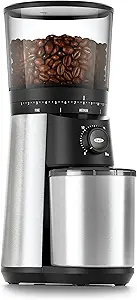 |
| Best Value The sweet spot between price and what you get | Cuisinart DCG-20 Coffee Grinder |  |
| Best Budget The cheapest option that still gets the job done reliably | Amazon Basics Electric Coffee Grinder |  |
| Top Rated A top-rated pick with lots of positive feedback | Cuisinart Supreme Grind DBM-8P1 | 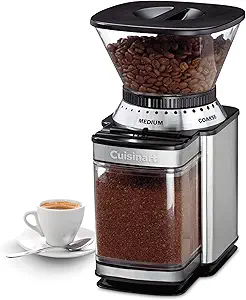 |
| Most Popular A crowd favorite that many people choose with confidence | Hamilton Beach Fresh Grind 80335R |  |
| Best Seller A high-volume bestseller chosen again and again | BLACK+DECKER One-Touch Coffee Grinder CBG110S |  |
Hamilton Beach Burr Grinder 80385

| Wattage | 200 watts |
|---|---|
| Capacity | 2 cups |
| Voltage | 120 volts |
The Hamilton Beach Burr Grinder (80385) is a straightforward electric burr grinder that covers the full range from extra-fine to coarse with an 18-position dial and a removable top burr for cleaning. You choose how much to grind with a 2–14 cup selector and pour grounds from a snap-on lidded container to reduce spills, which makes it easy to dose for a percolator or other brew methods. The hopper holds about two cups of beans and the plastic and stainless-steel build keeps the unit light and kitchen-friendly. Dishwasher-safe containers and a soft-bristle brush simplify cleanup, though the main housing is plastic and the grinder is powered by a modest 200-watt motor, so expect it to be best for home use rather than heavy commercial schedules. Practical features like the removable burr and the range of settings make it versatile, but if you need pro-level throughput or ultra-quiet operation you may want a higher-end model.
Best for: Buyers who want a flexible, easy-to-clean home burr grinder that can produce grind sizes suitable for percolators and a range of other brew methods.
Less Ideal for: Users who need commercial-level throughput, very quiet operation, or metal-heavy construction for heavy daily use should consider a higher-end grinder.
- Wide 18-position grind range covers espresso through French press and percolator grinds
- 2–14 cup selector lets you grind only the amount you need
- Removable top burr and dishwasher-safe containers make maintenance easier
- Large 16 oz hopper stores beans and the snap-on lid helps mess-free pouring
- 200-watt motor and plastic housing are aimed at home use rather than heavy-duty or commercial grinding
- Not optimized for ultra-quiet operation
Verdict: A practical, easy-to-clean home burr grinder that delivers the grind range and adjustable dose most percolator users need.
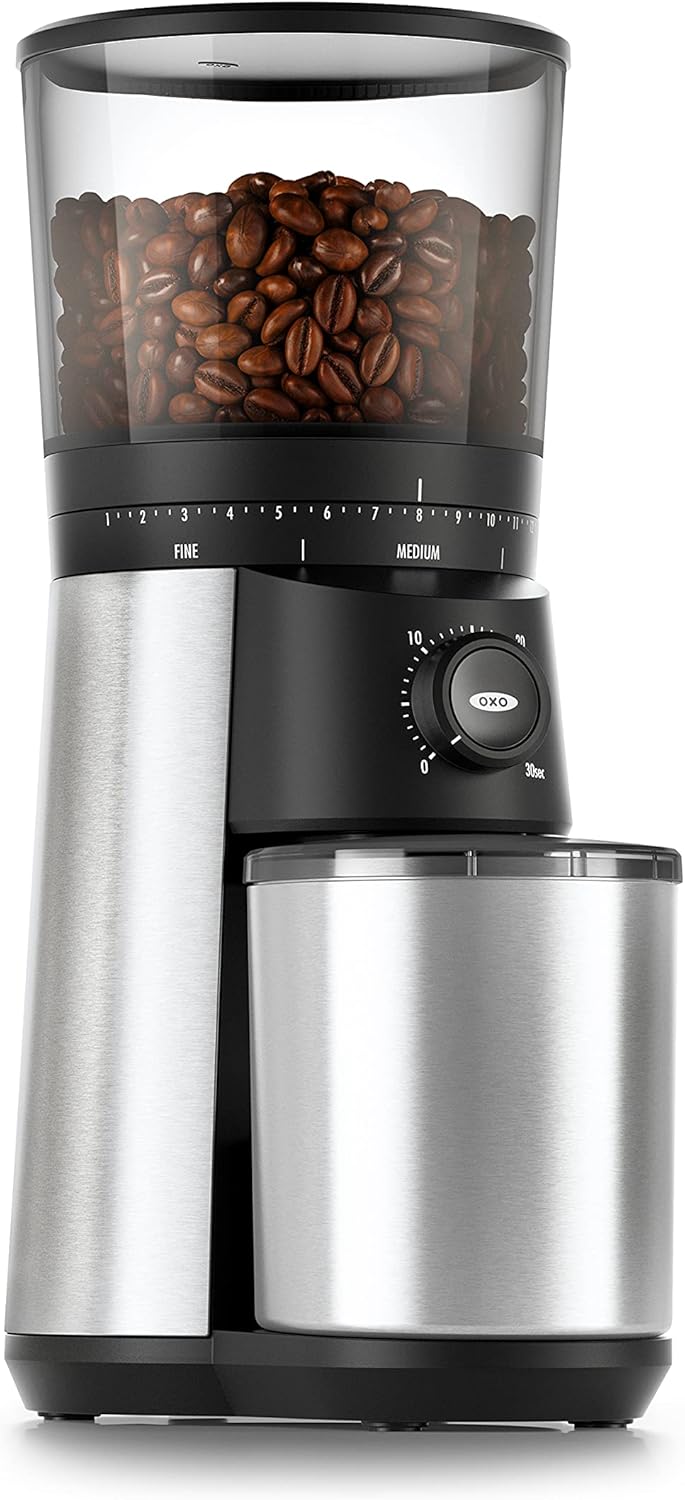
OXO Brew Conical Burr Grinder
| Burr type | Stainless steel conical burrs |
|---|---|
| Burr size | 40 mm |
| Grind settings | 15 settings plus micro-adjustments |
| Hopper capacity | 12 oz |
| Wattage | 100 watts |
The OXO Brew Conical Burr Grinder is a compact electric burr grinder built to deliver consistent, uniform grounds across a wide range of brew methods. It uses 40 mm stainless steel conical burrs and offers 15 grind settings plus micro-adjustments, so you can dial coarser sizes suitable for percolators or finer settings for other methods. A one-touch start with a timer that remembers your last setting makes repeated dosing quick and easy, and the removable UV-tinted hopper holds up to 12 ounces of beans to keep them protected from light. The grinder runs smoothly and with low vibration, which helps reduce noise and keeps grounds from scattering. Practical limitations are its fixed-timer dosing rather than weight- or grind-by-volume dosing, and while the 15 macro settings plus micro steps cover a broad range, achieving an exact percolator-specific particle distribution may require tuning. Cleaning is straightforward for routine maintenance, but full burr access takes a few steps. For someone focused on performance and consistent extraction, this grinder gives predictable, repeatable results for coarser percolator grinds when you take time to calibrate the dial.
Best for: Buyers who prioritize consistent, performance-oriented grinding and want a grinder they can tune for coarser percolator-style grinds while keeping repeatable settings for daily use.
Less Ideal for: If you need gram-accurate dosing, single-dose workflow, or a built-in scale for precision brewing, consider grinders designed specifically for weight-based dosing instead.
- 40 mm stainless steel conical burrs for consistent, uniform grounds
- 15 grind settings plus micro-adjustments for fine tuning from espresso to coarse
- One-touch timed start that remembers the last setting for repeatable dosing
- Removable 12 oz UV-tinted hopper preserves bean freshness and reduces light exposure
- Engineered for low vibration and quieter operation
- Dosing is timer-based rather than weight- or volume-based, so repeatable dose mass may vary
- No integrated scale or advanced dosing features for precision single-dose workflows
Verdict: A performance-focused burr grinder that delivers consistent, tunable grounds and repeatable timed dosing ideal for dialing in coarser percolator grinds.
Cuisinart DCG-20 Coffee Grinder

| Capacity | 2.5 ounces |
|---|---|
| Wattage | 150 watts |
| Material Type | Stainless Steel |
| Power Source | AC adapter |
The Cuisinart DCG-20 is a straightforward blade grinder for home use that handles small to moderate batches of whole beans quickly. It grinds up to about 2.5 ounces (roughly 12 cups worth) in a single cycle using stainless steel blades powered by a 150-watt motor; operation is a simple push-button on/off with a safety interlock that prevents the unit from running unless the lid is secured. The removable stainless steel bowl and lid make cleanup easy and the compact footprint and cord storage help keep counters tidy. As a blade grinder, it produces a range of particle sizes rather than a uniform grind, so it is best suited for drip, percolator, and other methods that tolerate mixed grind sizes rather than espresso or precise pour-over recipes. The unit is durable for everyday home use and the simple controls make it quick to use, but buyers wanting consistent, adjustable grind settings should consider a burr grinder instead.
Best for: Buyers who prioritize fast, no-fuss grinding for percolator or drip coffee and want a compact, easy-to-clean unit that works reliably for daily home use.
Less Ideal for: People seeking uniform, adjustable grind size for espresso or precision brewing should choose a burr grinder instead.
- Compact, countertop-friendly footprint with cord storage
- Stainless steel bowl and blades that are easy to clean
- Simple one-touch operation with safety interlock
- Enough capacity to grind about 12 cups worth of beans per cycle
- Blade-style grinding yields uneven particle sizes compared with burr grinders
- Limited 2.5 oz capacity may require multiple batches for larger pots
Verdict: A compact, easy-to-use blade grinder that delivers quick, convenient home grinding ideal for percolator or drip coffee.
Amazon Basics Electric Coffee Grinder

| Capacity | 2.1 ounces |
|---|---|
| Voltage | 120 volts |
This Amazon Basics electric coffee grinder is a small, no-frills blade grinder built for quick everyday grinding. It handles about 2.1 ounces (roughly 30 g) of beans and can produce a drip- to medium-coarse grind in short bursts, with a stainless steel blade and a clear lid so you can watch progress. It is convenient for single-cup or small-batch prep and also works for spices, grains, and nuts, making it multi-use in the kitchen. The unit is simple to operate with short pulse runs rather than adjustable grind settings, so consistency will vary compared with burr grinders and it is not ideal for very fine espresso grinds. Its compact footprint and fast grind time make it a practical budget choice for percolator owners who only need modest, coarser grinds and want an inexpensive, easy-to-store grinder for occasional use.
Best for: Buyers looking for an inexpensive, compact grinder for occasional percolator brewing or general kitchen use who prioritize value and simplicity over precision.
Less Ideal for: Users who need very consistent, dialed-in grind sizes for espresso or specialty brewing methods should choose a burr grinder instead.
- Compact, space-saving design that stores easily in small kitchens
- Heavy-duty stainless steel blade suitable for quick grinding of beans and spices
- Clear safety lid lets you monitor grind progress
- Can grind multiple ingredients (coffee, herbs, spices, grains, nuts) for versatile use
- Blade grinder design offers less consistent particle size than burr grinders
Verdict: A straightforward, budget-friendly grinder that gives percolator owners a fast, compact way to grind small batches of beans and other ingredients.
Cuisinart Supreme Grind DBM-8P1

| Wattage | 500 |
|---|---|
| Voltage | 110 volts |
| Capacity | 0.23 kg |
| Grind selector | 18-Position |
The Cuisinart Supreme Grind DBM-8P1 is a straightforward burr grinder designed for home use and daily brewing. It uses flat burrs with an 18-position slide-dial to produce consistent sizes from ultra-fine to extra-coarse, and an internal timer with a one-touch power bar stops the grind automatically when the cycle is done. The removable 8 oz bean hopper and grind chamber make it easy to switch beans and clean without leaving grounds all over the counter, and cord storage plus a scoop and brush keep the countertop tidy. The unit grinds enough coffee for roughly 4 to 18 five-ounce cups in one batch, so it is convenient for single-cup to family-size batches. Practical limits include a fairly heavy motorized housing that takes countertop space and a basic feature set without app or precision weight/dose control, so you get repeatable, reliable grinds but not café-grade programmability. For percolator users the extra-coarse settings are useful, and the simple controls make it easy to dial in a consistent coarse grind each time.
Best for: Buyers who prioritize a reliable, easy-to-use burr grinder that produces consistent coarse grinds for percolator brewing and requires minimal fuss for daily use.
Less Ideal for: Users seeking highly precise dosing, app connectivity, or professional-level grind control should look at more advanced or specialty models.
- 18-position grind selector for a wide range of grind sizes
- Removable 8 oz hopper and grind chamber for easier cleaning and bean changes
- Automatic timer and one-touch power bar for repeatable, hands-off grinding
- Includes cord storage and cleaning tools to reduce countertop clutter
- No precision dose or weight-based programming for exact single-dose grinding
- Lacks advanced features like app control or built-in scale
Verdict: A dependable, no-nonsense burr grinder that consistently produces coarse grinds suitable for percolators while being easy to clean and operate.
Hamilton Beach Fresh Grind 80335R

| Capacity | 4.5 ounces |
|---|---|
| Wattage | 125 watts |
| Voltage | 110 |
| Power Source | AC |
The Hamilton Beach Fresh Grind is a straightforward blade grinder built for home use and small batches. It grinds beans, spices, and seeds by pressing the lid-mounted button; release to stop when you reach the desired particle size. The removable stainless steel grinding bowl makes filling, pouring, and cleanup easier and the lid and bowl are dishwasher-safe for quick maintenance. At 125 watts it handles everyday grinding quickly enough to make up to a 12-cup pot or a few smaller percolator fills, and hidden cord storage keeps the counter tidy. Because it is a blade grinder, achieving very uniform grind size takes some practice and coarse-to-medium settings are easiest to repeat by timing pulses rather than relying on preset settings. The unit is compact and lightweight, so it fits small kitchens but will require manual portioning for larger batches. Overall this is a practical, no-frills option for buyers who want a reliable, easy-to-clean grinder for occasional fresh grounds and general kitchen use.
Best for: Buyers who prioritize an affordable, easy-to-clean grinder for occasional fresh coffee and kitchen use and who value straightforward operation and compact storage.
Less Ideal for: Serious coffee enthusiasts seeking precise, consistent grind size or those who routinely grind large volumes for multiple brews should choose a burr grinder or a larger-capacity model instead.
- Removable stainless steel grinding bowl for easy filling, pouring, and dishwasher cleaning.
- Compact footprint with built-in cord storage to reduce countertop clutter.
- Simple one-button operation makes it quick and intuitive to use.
- Durable stainless steel blades able to grind coffee, seeds, and spices.
- Blade grinding produces less uniform particle size compared with burr grinders, which can affect extraction consistency.
- Small capacity requires multiple batches for large pots or frequent brewing.
Verdict: A simple, compact grinder that delivers quick, easy-to-clean fresh grounds ideal for occasional brewing and general kitchen grinding.
BLACK+DECKER One-Touch Coffee Grinder CBG110S

| Capacity | 56.6 g |
|---|---|
| Wattage | 130 |
| Voltage | 110 volts |
| Power Source | Electric |
The BLACK+DECKER One-Touch Coffee Grinder CBG110S is a small, straightforward blade grinder intended for quick everyday grinding tasks. It uses stainless steel blades and a stainless steel bowl to grind coffee beans, spices, herbs, and grains with a single push-button control, and an integrated lid-lock prevents the motor from running unless the lid is securely in place. Typical use is short bursts to reach a coarse-to-fine consistency suitable for percolators and other simple brew methods rather than precise espresso dosing. The compact 56.6 g capacity and 130-watt motor make it easy to store and fast to run a single cup or small batch, and the removable bowl simplifies emptying and cleaning. Limitations include the usual blade-grinder variability in particle size compared with burr grinders and a smaller capacity that means multiple batches for larger servings. For buyers prioritizing safety, ease of use, and a reliable kitchen workhorse for percolator-style brewing, this grinder covers the basics well.
Best for: Buyers who want a no-fuss, safe, easy-to-use grinder for small batches and percolator or drip-style brewing will appreciate its simplicity and reliable everyday performance.
Less Ideal for: Those who need precise, consistent grind size for espresso or who frequently brew large batches should consider a larger-capacity burr grinder instead.
- Stainless steel blades and bowl resist wear and are easy to clean
- One-touch push-button and lid-lock safety make operation simple and child-safe
- Compact footprint stores easily on counters or in cabinets
- Quick 130-watt motor handles small batches for percolator brewing
- Blade grinder produces less uniform particle size than burr grinders
Verdict: A compact, safe, and easy-to-use blade grinder that reliably handles small batches for percolator and other straightforward brew methods.
Choosing the Right Coffee Grinder for Percolator: Key Factors to Consider
Grind Size and Uniformity
Percolators perform best with a medium-coarse grind that produces few fines. Uniform particle size helps water pass evenly through the bed and reduces over-extraction and muddy cups.
When choosing a grinder for percolator use, focus on how consistently a model delivers medium-coarse particles across multiple doses. Look for burr designs or adjustment ranges that explicitly handle coarser settings. Inconsistent output forces you to compensate with shorter brew times or coarser settings, which can reduce flavor clarity.
Adjustment Mechanism and Repeatability
You will likely tweak grind settings as beans and roast levels change. A clear, repeatable adjustment system makes it easy to return to a preferred setting for percolator brewing.
Prefer grinders with index markings, detents, or micro-adjust features that hold position when you grind. Coarse ranges should be reachable without sacrificing the ability to fine-tune by one or two clicks. If the mechanism slips during grinding, you lose consistency between batches.
Retention and Ease of Cleaning
Old grounds retained in the grinder will stale and negatively affect subsequent brews. For percolator users who may switch beans or brew infrequently, low retention and easy access for cleaning are essential.
Choose grinders with removable burrs or grinding chambers that can be brushed or rinsed. Evaluate how much disassembly is needed for a thorough clean and whether the design traps grounds in crevices. Materials that resist oil buildup also simplify maintenance.
Build Quality and Materials
Durable construction ensures consistent performance and fewer frustrating repairs. Metal burrs and a solid chassis typically outlast cheaper plastic parts, especially with regular use.
Consider the tradeoff between weight and portability: heavier units often provide steadier grinding but are less convenient for storage. For stovetop coffee routines, robustness in the adjustment shaft, burr retention, and hopper fastening are practical indicators of longevity.
Noise, Speed, and Heat
Grinding speed affects convenience, while noise and heat can influence extraction and user comfort. High-speed grinders may heat beans faster, subtly affecting flavor, and noisy motors can be disruptive for morning routines.
For percolator brewing, a balance is ideal: a grinder that is quick enough for routine use but not so fast that it produces excess heat or a lot of fines. Also check for design choices that dampen vibration and reduce perceived noise during operation.
Capacity and Hopper Design
Think about how much coffee you typically brew at once. Hopper capacity and how easily you can load and pour grounds matter for a smooth workflow.
Smaller hoppers are fine for single-pot percolator use and reduce retention, while larger hoppers are convenient if you prepare multiple pots. A hopper that seals well also helps preserve bean freshness between uses.
Why Percolators Need a Different Grind
Percolators circulate boiling or near-boiling water through a bed of grounds repeatedly, so extraction dynamics differ from drip or immersion methods. Coarse, even particles reduce the amount of fines that would otherwise over-extract during multiple passes of water.
If the grind is too fine or uneven, percolator brewing often results in harsh, bitter flavors or a cloudy cup. Selecting a grinder that reliably produces medium-coarse grounds helps control extraction and preserves bright and balanced notes.
- Aim for larger particles than drip coffee but smaller than French press extremes
- Reduce fines to avoid over-extraction during cycling
- Consistent particle size improves clarity and repeatability
Manual Vs Electric Grinders for Percolator Use
Manual hand grinders often excel at low retention and quiet operation. They can produce excellent medium-coarse grinds with minimal heat build-up, making them a good match for percolator brewers and for users who appreciate control and portability.
Electric grinders are faster and more convenient for daily use or larger batches. When choosing an electric model, prioritize those with clear coarse settings and burrs designed to minimize fines. Be mindful of motor speed and whether the unit generates excess heat during longer sessions.
- Manual: quieter, lower retention, portable, slower
- Electric: faster, more consistent for multiple doses, may produce more heat
Cleaning Routines That Preserve Flavor
Regular cleaning reduces stale oil buildup and prevents cross-contamination of flavors. For percolator brewing, where subtle clarity matters, even a small amount of old grounds can alter taste.
Develop a quick daily brush-out habit for the grinding chamber and burrs, and plan deeper cleans every few weeks depending on roast level and usage frequency. Removable parts and simple tool-free disassembly speed this process and encourage consistent maintenance.
- Brush out hopper and burrs after each use
- Deep clean removable burrs and housings monthly or when switching beans
- Avoid harsh detergents; use warm water on parts rated for washing
Matching Grind Output to Percolator Size
Percolators come in varying pot sizes, which changes how long water cycles through the grounds. For smaller pots, slightly finer medium-coarse settings can help extract enough flavor in fewer cycles, while larger pots may need coarser settings to avoid over-extraction.
When testing a grinder for percolator use, try a couple of settings and note how many cycles are typical for your pot. Keep a simple log so you can reproduce the same brew profile when swapping beans or roast levels.
- Smaller percolators: lean slightly finer within the medium-coarse band
- Larger percolators: prioritize coarser settings to limit over-extraction
- Record preferred settings for each pot size to speed setup
Practical Tips for Dialing In Your Grind
Start with a medium-coarse baseline and run short test brews. Observe extraction time and cup clarity. If the cup tastes thin, try slightly finer; if it tastes bitter or muddy, go coarser.
Make only one adjustment at a time and grind enough for a single brew to evaluate the change. Use consistent dosing and water temperature to isolate the effect of grind size on flavor.
- Adjust by one click or notch between tests
- Keep dose and water temperature constant during trials
- Taste for muddiness versus under-extraction to guide changes
How We Chose the Best Coffee Grinder for Percolator
We focused on attributes that directly affect percolator brewing performance and user experience. Key evaluation criteria included grind consistency for medium-coarse settings, adjustment precision and repeatability, retention and cleanliness between uses, build quality and durability, and ease of maintenance. We prioritized grinders that can reliably produce an even distribution of particle sizes in the medium-coarse range favored by percolators. Adjustment mechanisms were assessed for how clearly they indicate setting changes and whether they hold calibration over repeated use. We excluded grinders optimized only for espresso or ultra-fine Turkish grinds because those designs do not translate to percolator needs. We also filtered out models with poor cleaning access or high retention that would trap old grounds and harm flavor. Final selections favored options that balance grind uniformity, straightforward cleaning, and robustness for daily stovetop brewing.
Our full evaluation process is outlined in our review methodology.
FAQ
What grind size should I use with a percolator?
Aim for a medium-coarse grind that is coarser than drip but finer than very large French-press chunks. The goal is to minimize fines while allowing water to cycle without excessive resistance.
Can I use a blade grinder for a percolator?
Blade grinders tend to produce uneven particle sizes with more fines, which can make percolator brews bitter or cloudy. If a blade grinder is your only option, pulse carefully and sift out fines where possible.
How often should I clean the grinder when brewing with a percolator?
Brush out loose grounds after each use and perform a deeper cleaning of burrs or removable chambers every few weeks or when changing beans. Regular maintenance reduces stale flavors and retention.
Does grind speed affect percolator coffee flavor?
Speed can influence heat buildup and the amount of fines produced. Slower, steady grinding typically reduces heat transfer and may yield more consistent medium-coarse particles, which helps percolator flavor clarity.
Should I choose a manual or electric grinder for percolator brewing?
Manual grinders offer low retention and quiet operation, which is great for single pots and portability. Electric grinders are better for speed and larger batches but choose models with reliable coarse settings to avoid excess fines.
Final Verdict
For percolator brewing, prioritize a grinder that reliably produces an even medium-coarse grind, is easy to clean, and holds adjustment settings. Expect tradeoffs between speed and retention: manual options tend to minimize fines and heat, while electric units add convenience for larger batches. Focus on consistent particle size, simple maintenance, and solid build quality to get the best results from your stovetop percolator.