
Note: This article contains affiliate links. If you click on these links and make a purchase, we may earn a small commission at no extra cost to you. This helps support our research and content. Read our full affiliate disclosure here.
Picking the right coffee grinder for pour over and espresso matters because these brew methods demand very different grind ranges and consistency. You want a machine that can dial in a fine, uniform grind for espresso while also producing a clean medium-coarse grind for pour over without excess retention or heat buildup. This guide covers seven shortlisted coffee grinders that meet those needs, each evaluated for grind consistency, adjustment control, and daily usability. Read on for a practical look at the features that separate grinders suited to both pour over and espresso and how to match them to your brewing routine.
Top Picks at a Glance
| Best Overall The best all-around choice for most situations | Baratza Encore Grinder ENCORE |  |
| Best Quality Built to a higher standard if you want something more solid | Breville Smart Grinder Pro BCG820BSS | 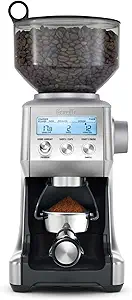 |
| Best Value The sweet spot between price and what you get | AMZCHEF Conical Burr Grinder UL-CG209 |  |
| Best Budget The cheapest option that still gets the job done reliably | HAUSCAFE Conical Burr Grinder |  |
| Top Rated A top-rated pick with lots of positive feedback | Cusinice Conical Burr Grinder CG-182 |  |
| Most Popular A crowd favorite that many people choose with confidence | OXO Brew Conical Burr Grinder |  |
| Best Seller A high-volume bestseller chosen again and again | Cuisinart Supreme Grind DBM-8P1 | 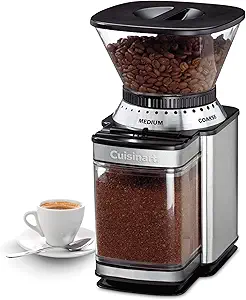 |
Baratza Encore Grinder ENCORE

| Capacity | 5 ounces |
|---|---|
| Wattage | 70 watts |
| Voltage | 120 volts |
The Baratza Encore is a straightforward conical burr grinder built for everyday home use, offering 40mm hardened steel burrs and 40 stepped grind settings that cover pour-over, drip, and coarse methods and approach finer espresso-friendly settings. It is typically used on a countertop with an easy on/off switch and a front-mounted pulse button for short bursts, making dosing and small adjustments simple. The 70W DC motor and commercial-grade burrs deliver consistent, even particles for clearer extraction across brew methods, and the compact footprint fits small kitchens. Practical benefits include reliable consistency, easy operation, accessible replacement parts, and strong brand support. Important limitations are that the stepped adjustments can make micro-tuning for pressurized or pro-level espresso less precise than stepless or dedicated espresso grinders, and the 5 ounce hopper limits batch size for heavy daily volume. For home brewers seeking one grinder to handle pour-over, Aeropress, and French press while still reaching near-espresso settings, the Encore is a durable, user-friendly choice.
Best for: Home brewers who want a reliable, easy-to-use burr grinder that produces consistent grinds for pour-over, drip, and other manual methods while occasionally approaching espresso range.
Less Ideal for: Users who primarily need a dedicated espresso grinder for precise micro-adjustments or those who grind large daily volumes without wanting to refill frequently.
- 40mm hardened conical steel burrs provide consistent grind quality across brew methods
- Wide stepped range with 40 grind settings covers pour-over, drip, Aeropress, and coarse brews
- Compact footprint and simple controls make it easy to use and fit in small kitchens
- Durable components and accessible support from the manufacturer
- Stepped adjustment limits micro-tuning needed for true espresso dialing
- Small 5-ounce hopper requires frequent refills for larger batches
Verdict: A dependable, beginner-friendly burr grinder that delivers consistent grinds for pour-over and other manual brewing while offering durable, serviceable construction.
Breville Smart Grinder Pro BCG820BSS

| Wattage | 165 |
|---|---|
| Voltage | 120 |
| Capacity | 1.1 pounds |
The Breville Smart Grinder Pro is a countertop conical burr grinder built for precise, repeatable dosing across brew methods from espresso to French press. It is typically used to grind beans directly into a portafilter, airtight container, filter basket, or paper filter, and the clear LCD shows grind setting, grind time, and selected shots or cups. Notable features include 60 grind settings, digital dosing that adjusts in 0.2 second increments for consistent dose, and preprogrammed cup/shot modes that simplify switching between pour over and espresso. Practical benefits are accurate portion control, a wide range of grind sizes to dial in extraction, and included portafilter cradles for espresso preparation. Limitations to consider are its 165 W motor which is appropriate for home use but not commercial throughput, the grinder produces some noise typical of burr grinders, and the brushed stainless housing requires occasional wiping to stay looking clean. For home brewers chasing consistent grind size and repeatable dosing, this grinder makes dialing in both pour over and espresso straightforward.
Best for: Home brewers and coffee enthusiasts who prioritize precise, repeatable grind control to optimize extraction for both pour over and espresso.
Less Ideal for: People who need a commercial-capacity grinder for heavy daily use or an ultra-quiet appliance for noise-sensitive environments.
- Wide 60-step grind range covering espresso through French press
- Digital dosing with 0.2 second increments for repeatable portion control
- Grinds directly into portafilter or container for flexible workflow
- Clear LCD that displays grind setting, time, and cups/shots selected
- Includes portafilter cradles and a sealed grounds container for clean handling
- Not designed for high-volume commercial use due to motor power and throughput
- Produces typical burr-grinder noise during operation
Verdict: Choose this grinder if you want a versatile, programmatic home grinder that delivers consistent dosing and a wide grind range for both pour over and espresso.
AMZCHEF Conical Burr Grinder UL-CG209

| Grind settings | 48 |
|---|---|
| Burr size | 40 mm stainless steel conical |
| Hopper capacity | 10.6 ounces |
| Wattage | 150 watts |
| Voltage | 120 volts |
This AMZCHEF conical burr grinder is built to handle a full range of home brewing needs from fine espresso to coarse French press. The 40 mm stainless steel conical burrs and 48 stepped grind settings let you dial in consistent particle size, and the LED touchscreen timer provides 0.5 second increments up to 40 seconds so you can reproduce the same grind for pour over or espresso routines. Anti-static tech and a stainless grounds cup reduce mess when dosing, and the 10.6 ounce removable hopper with a UV-tinted lid makes refilling and storage convenient. The grinder includes practical touches like a manual start/stop mode and a removable hopper for cleaning, but it is a countertop appliance that weighs several pounds and lacks built-in scales or an integrated portafilter adapter for direct dosing to some espresso machines. For someone who wants repeatable grinds for both pour over and home espresso without stepping up to a pro unit, this offers strong value and control.
Best for: Buyers who want a single grinder that reliably covers pour over and home espresso and who prioritize repeatable, adjustable grind control over pro-level features.
Less Ideal for: Users seeking a commercial or prosumer grinder with integrated scales, direct portafilter dosing, or the highest-duty components should consider higher-end models instead.
- Wide 48-step grind range for espresso through French press
- 40 mm stainless steel conical burrs for consistent particle size
- Precise LED touchscreen timer with 0.5s increments for repeatable dosing
- Anti-static design and stainless grounds cup reduce mess and make dosing cleaner
- 10.6 oz removable hopper with UV tint for easier refilling and storage
- No built-in scale for weight-based dosing
- No integrated portafilter holder or adapter for direct dosing to some espresso setups
Verdict: A versatile, countertop conical burr grinder that gives repeatable, adjustable grinds for both pour over and home espresso routines.
HAUSCAFE Conical Burr Grinder

| Wattage | 200 watts |
|---|---|
| Voltage | 120 volts |
| Material Type | Acrylonitrile Butadiene Styrene (ABS) |
This HAUSCAFE conical burr grinder targets home brewers who want consistent grounds without a large footprint or complicated controls. It uses conical burrs and 38 adjustable settings to cover fine espresso through coarse French press, which makes it useful for pour over and espresso routines. One-touch operation and removable hopper and grounds container simplify daily use and cleaning, and the 200W motor promises steady performance for small batches. The compact ABS body fits easily on a crowded counter, and the reduced heat from the burrs helps preserve aroma compared with blade grinders. Limitations include its small capacity and basic build materials, so it is best for single- to two-cup brewing rather than high-volume grinding, and the controls are simple rather than micro-adjustable like higher-end models. For buyers prioritizing space, ease of use, and a wide grind range on a budget, this grinder delivers a practical balance of performance and value.
Best for: Buyers seeking an affordable, space-saving burr grinder for daily single-serve or small-batch pour over and espresso who value ease of use over premium materials.
Less Ideal for: People who grind large volumes for entertaining or who demand commercial-grade durability and ultra-precise stepless adjustments should consider a larger, more robust grinder.
- Conical burr mechanism with 38 grind settings for consistent grounds across espresso to French press
- Compact footprint that fits easily on small kitchen counters
- One-touch operation and removable parts for straightforward cleaning
- 200-watt motor provides steady grinding for home brewing
- Small hopper and grounds capacity limit usefulness for large batches
- ABS construction is less durable and premium-feeling than metal-bodied grinders
Verdict: A budget-friendly, compact conical burr grinder that gives home brewers a wide range of reliable grind settings for pour over and espresso without complexity.
Cusinice Conical Burr Grinder CG-182

| Burr size | 40mm stainless steel conical burr |
|---|---|
| Grind settings | 34 settings |
| Timer resolution | 0.1 second |
| Power source | AC adapter |
| Capacity | 11.3 ounces |
The Cusinice CG-182 is a home-focused conical burr grinder built to deliver consistent grounds for espresso, pour-over, and French press. It uses a 40mm stainless steel conical burr and offers 34 grind settings so you can dial in fine to coarse textures, while a 0.1s electronic timer and smart memory let you repeat exact doses. The touchscreen provides cup or time modes and the included portafilter holder enables direct-to-portafilter grinding for faster espresso workflow. Anti-static design and a dosing cup help reduce stray grounds and make cleanup easier, and several removable parts and a small brush are provided for maintenance. The 150W motor is sized for regular home use, but the grinder is not silent and performance will vary with bean type and grind size; it is intended for roasted coffee beans only and cannot handle spices or wet ingredients. For buyers who want repeatable dosing and broad grind range without a commercial footprint, this delivers practical, reliable performance for daily brewing.
Best for: Buyers who prioritize consistent, repeatable daily dosing and a clean, straightforward espresso workflow at home will appreciate this grinder’s controls and anti-static features.
Less Ideal for: If you need an industrial‑grade commercial grinder for high-volume cafe use or require extremely quiet operation, this home model is not the best fit.
- 40mm stainless steel conical burr for more uniform grounds than blade grinders
- Wide 34-step grind range covering espresso through French press
- 0.1s electronic timer with smart memory for repeatable dosing
- Anti-static design and included dosing cup/portafilter holder reduce mess and simplify workflow
- Touchscreen cup and time controls make switching modes quick and intuitive
- Not suitable for grinding spices, nuts, or wet ingredients
- Motor noise is noticeable during operation compared with very quiet models
Verdict: A dependable home conical-burr grinder that delivers repeatable dosing and a broad grind range for espresso and manual brewing.
OXO Brew Conical Burr Grinder

| Capacity | 12 ounces |
|---|---|
| Burr type | 40 mm stainless steel conical burrs |
| Grind settings | 15 settings plus micro-adjustments |
| Power source | DC power supply |
| Voltage | 120 volts |
The OXO Brew Conical Burr Grinder is a user-friendly electric grinder built to deliver consistent, uniform grounds for everything from fine espresso to coarse French press. It uses 40 mm stainless steel conical burrs and offers 15 main grind settings with additional micro-adjustments, so dialing in a pour-over or espresso grind is straightforward. The large removable hopper holds up to 12 ounces of beans and is UV-tinted to reduce light exposure, while the one-touch start and memory for the last setting speed up repeated use. A DC motor and low-vibration design help keep noise and heat down during grinding. Practical benefits include consistent extraction across brew methods, an easy-to-read dial for repeatable results, and a generous bean capacity for households that grind several mornings a week. Important limitations are that there is no built-in scale or timed dosing by weight, and micro-adjustments require patience to perfect rather than instant digital presets. The grinder is best for home brewers who value consistent, adjustable grinds and prefer a tactile dial-based workflow.
Best for: Buyers who want consistent, adjustable grinds for both pour-over and espresso and prefer a reliable, dial-based grinder that remembers settings for daily use.
Less Ideal for: People who need automatic weight-based dosing, digital presets, or the smallest countertop footprint should consider other options.
- 40 mm stainless steel conical burrs for uniform grounds
- 15 grind settings with micro-adjustments for precise control
- Large removable 12 oz hopper with UV tint to protect beans
- One-touch start with memory of last setting for quick, repeatable grinds
- Low-vibration DC motor reduces noise and heat during use
- No built-in scale or weight-based dosing
- Adjustments are mechanical and require trial to fine-tune micro-settings
Verdict: A versatile, easy-to-use conical burr grinder that delivers repeatable, high-quality grounds for both pour-over and espresso brewing.
Cuisinart Supreme Grind DBM-8P1

| Wattage | 500 |
|---|---|
| Voltage | 110 volts |
| Capacity | 0.23 kg |
The Cuisinart Supreme Grind DBM-8P1 is a user-friendly flat burr grinder built for everyday home use, offering 18 grind settings that span ultra-fine to extra-coarse. It is typically used to prepare grounds for drip, pour over, and coarser methods and can grind enough coffee for roughly 4 to 18 cups in one cycle. The removable 8 oz. bean hopper and grind chamber make loading and cleaning straightforward, and the one-touch power bar plus internal timer automatically stops the grind for consistent results. At 500 watts the motor handles routine household volumes without fuss, and cord storage and a small scoop/brush are convenient extras. Limitations include a basic feature set compared with higher-end specialty grinders: there is no stepped micrometric adjustment, and precision for espresso-level fines can vary compared with dedicated espresso grinders. For risk-averse buyers who want a reliable, easy-to-clean burr grinder that improves over blade models, this is a practical middle-ground option.
Best for: Buyers who prioritize a dependable, easy-to-use burr grinder that upgrades flavor over blade grinders and values straightforward cleaning and automatic stop features.
Less Ideal for: Those seeking precision micrometric adjustments for pro-level espresso or users who need a high-volume commercial grinder should look elsewhere.
- 18-position grind selector covers ultra-fine to extra-coarse for flexible brewing methods
- Removable 8 oz. bean hopper and grind chamber for easy filling and cleaning
- One-touch power bar with internal timer automatically stops for consistent dosing
- Includes cord storage and a scoop/cleaning brush to keep the counter tidy
- Lacks the fine stepped adjustments and consistency of higher-end espresso grinders
- Not optimized for heavy commercial use or very large daily volumes
Verdict: A practical, low-friction flat burr grinder that gives consistent, easy results for home pour over and everyday brewing needs.
Choosing the Right Coffee Grinder for Pour Over and Espresso: Key Factors to Consider
Burr Type and Size
Burr geometry and diameter directly affect how consistently beans are fractured. Larger burrs usually produce more uniform grinds with less heat buildup at a given motor speed, which helps preserve flavor for both espresso and pour over.
Steel and ceramic are common burr materials. Steel burrs hold a sharp edge longer and are often preferred for heavy daily use, while ceramic can be gentler on beans but may chip under stress. For dual-use grinding, look for burrs designed to deliver a narrow particle distribution at fine settings while still producing clean medium grinds for pour over.
Adjustment Range and Resolution
A grinder that claims to do espresso and pour over needs both a wide adjustment range and fine resolution between settings. Espresso demands tiny incremental changes to dial in extraction, whereas pour over requires coarser settings and sometimes a different burr exposure.
Check whether the adjustment mechanism is stepped or stepless. Stepped systems give repeatable detents for common settings, while stepless systems allow micro-adjustments but require more technique to return to precise settings. The quality of the adjustment mechanism affects how easily you can switch between brew methods without wasting beans.
Retention and Dosing Behavior
Grind retention is the amount of ground coffee that remains in the grinder between uses. High retention makes it hard to change grind sizes without stale carryover and wastes beans when testing settings. Low-retention designs are preferable for users who switch between pour over and espresso regularly.
Dosing options matter too. Some grinders deliver grounds directly into a portafilter or a grounds bin, while others offer timed or weight-based dosing. For espresso, precise dosing reduces shot variability. For pour over, a predictable single-dose output simplifies workflow.
Motor Power and Heat Management
Motor power affects throughput and how long the burrs take to grind a dose. Weak motors can stall on darker roasts or fine settings and may overheat if used continuously. Excessive heat during grinding can alter bean oils and degrade flavor, which is especially noticeable in espresso.
Look for grinders with sufficient torque and cooling considerations. Slower, high-torque motors paired with larger burrs often yield cooler operation and better consistency for both fine and coarse grinds.
Maintenance and Build Quality
Daily maintenance needs and long-term durability affect cost of ownership and consistency. Easily removable hoppers and burr assemblies make cleaning faster and reduce stale buildup. Materials and chassis rigidity influence how precisely the burrs stay aligned over time.
Consider how often you will need to disassemble the grinder for cleaning and whether replacement burrs are readily available. A well-built machine reduces the need for frequent calibration and preserves performance across many months of use.
Why Dual-Purpose Grinders Are a Different Class
Grinders intended to handle both pour over and espresso must balance competing demands. Espresso requires a very narrow particle distribution and tiny adjustment steps, while pour over benefits from a wider spread and more pronounced coarse fractions for even extraction. Not all grinders marketed as versatile actually deliver on both fronts, so understanding the mechanical tradeoffs helps set realistic expectations.
A grinder designed for dual use typically emphasizes burr quality, a reliable adjustment mechanism, and low retention. Users who prioritize one brewing method heavily may still prefer a dedicated grinder, but many home setups will benefit from a single, well-chosen machine that handles both adequately.
- Espresso needs micro-adjustability and minimal fines.
- Pour over needs consistent medium-coarse grinds and low chaff.
- Mechanical design choices determine how well a grinder performs across the range.
Stepped Vs Stepless Adjustment: Practical Tradeoffs
Stepped grinders use indexed positions that make it easy to return to a previous setting. For users who switch regularly between pour over and espresso, stepped adjustments can speed transitions and reduce guesswork. Stepless grinders offer infinite adjustment and allow ultra-fine dialing for espresso but demand more patience to replicate exact settings.
If you frequently alternate brewing styles or prefer repeatability during morning routines, an indexed system may be more convenient. If your priority is the very last bit of grind tuning for competition-level espresso, stepless gives more control at the cost of convenience.
- Stepped: better repeatability and ease of switching.
- Stepless: ultimate precision for fine tuning.
- Choose based on how often you adjust and how precise you need to be.
Single Dose Vs Bulk Hopper Use
Single-dose grinding involves measuring beans for each brew and grinding immediately, which minimizes retention and keeps flavors fresher when switching grind sizes. Bulk hopper use is convenient for high-volume households but can increase retention and stale carryover between settings.
Think about your daily routine. If you change from espresso in the morning to pour over later in the day, single dosing simplifies transitions. If you brew the same way continuously, a larger hopper and automated dosing may be more efficient.
- Single dosing reduces waste and retention.
- Bulk hoppers are convenient for repeated use of the same grind.
- Some grinders combine both features for flexibility.
Cleaning Routines That Preserve Flavor
Regular cleaning prevents stale oils and fine particles from accumulating in the burr chamber and altering subsequent extractions. A quick weekly brush and periodic deeper cleaning will maintain consistent performance for both pour over and espresso.
Look for designs with removable burrs or easy-access housings to make thorough cleaning feasible. Avoid grinders that require complex disassembly for basic maintenance if you value low upkeep time.
- Brush out the chute and hopper weekly.
- Deep clean burrs monthly depending on use.
- Keep beans dry and store them properly to reduce chaff and moisture.
How Grind Distribution Impacts Extraction
The particle size distribution produced by a grinder affects how water interacts with the coffee bed. Espresso benefits from a tight distribution with minimal very fine or very coarse particles, which promotes even extraction under pressure. Pour over tolerates a wider distribution but still gains from consistent mid-size particles for balanced flavor.
Understanding distribution helps explain why two grinders set to the same nominal setting can yield different cups. Focus on grinders that emphasize uniformity and low fines for espresso and predictable, clean coarser fractions for pour over.
- Uniform particles reduce channeling in espresso.
- Controlled coarse fractions improve pour over clarity.
- Fines contribute to bitterness and can overextract under pressure.
How We Chose the Best Coffee Grinder for Pour Over and Espresso
We focused on grinders that can reliably do double duty: produce a low-retention, stable fine grind for espresso and a wider, clean range for pour over. Our selection filtered for clear mechanical quality, precise and repeatable adjustment systems, and burr materials and profiles that favor consistent particle distribution. We prioritized models with adequate motor control to avoid heat transfer at higher throughput and those with manageable retention for quick changes between grind sizes. Ease of cleaning, hopper and doser design, and build durability were included because they directly affect long-term performance. We excluded entry-level blade grinders and devices lacking a true micro-adjustment mechanism because they do not offer the control required for espresso extraction. Final choices reflect balanced tradeoffs across consistency, adjustability, throughput, and maintenance.
Our full evaluation process is outlined in our review methodology.
FAQ
Can one grinder really handle both pour over and espresso well?
Often yes, but it depends on the grinder's burr quality, adjustment range, and retention. Many dual-purpose grinders can produce acceptable espresso and pour over, but dedicated machines still edge out in extreme cases. For most home users, a well-specified dual grinder offers the best balance of convenience and performance.
How often should I clean the grinder when switching between grind sizes?
Brush the chute and grounds bin between changes to reduce carryover and perform a deeper burr cleaning weekly for regular use. If you switch frequently in a single day, run a small purge dose of beans or use a brief grind of neutral beans to clear trapped particles.
Is stepless adjustment necessary for good espresso?
Not strictly. Stepless adjustment allows very fine control but stepped systems with good resolution can still deliver excellent espresso while offering easier repeatability. The overall build quality and burr performance are as important as the adjustment style.
What grind settings should I start with for pour over versus espresso?
Start with manufacturer or general benchmark settings as a baseline, then adjust based on extraction speed and taste. Espresso requires much finer settings and small incremental changes, while pour over needs coarser settings and larger steps. Expect to calibrate to your beans and brewer.
Does burr size really matter for home use?
Burr size influences throughput and heat generation. Larger burrs tend to grind more quickly and keep temperatures lower, which can be beneficial for maintaining flavor. For typical home volumes, medium to large burrs offer a good compromise between speed and consistency.
Final Verdict
When choosing a coffee grinder for pour over and espresso, prioritize consistent grind distribution, a usable adjustment system, and low retention. Decide which tradeoffs matter most to you: ultimate micro-adjustability versus repeatable, easy switching, or single-dose control versus hopper convenience. Focus on burr quality, maintenance accessibility, and motor torque to ensure reliable performance across the full grind range. With those priorities in mind, you can confidently pick a grinder that supports both methods and delivers better extraction from your beans.