
Note: This article contains affiliate links. If you click on these links and make a purchase, we may earn a small commission at no extra cost to you. This helps support our research and content. Read our full affiliate disclosure here.
Picking the right coffee grinder matters more than most home-brewing upgrades. A grinder that delivers consistent particle size and reliable dosing makes the difference between a flat cup and one with clarity, especially when you are investing up to $1,000. This guide covers seven shortlisted coffee grinders under $1,000 that deliver the control, durability, and repeatability serious home brewers want. Below you will find practical notes on the factors that separate good grinders from great ones, plus clear evaluation criteria we used to narrow the field. Use the short product summaries to match features to your brewing style before reading deeper into the buying guidance.
Top Picks at a Glance
| Best Overall The best all-around choice for most situations | Baratza Encore Grinder ENCORE |  |
| Best Quality Built to a higher standard if you want something more solid | Baratza Virtuoso+ | 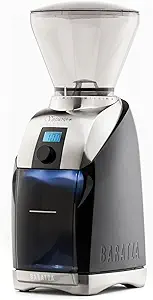 |
| Best Value The sweet spot between price and what you get | Breville Smart Grinder Pro BCG820BSS | 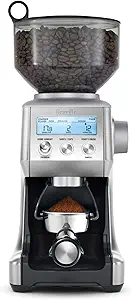 |
| Best Budget The cheapest option that still gets the job done reliably | BLACK+DECKER Coffee Grinder CBG110S |  |
| Top Rated A top-rated pick with lots of positive feedback | Fellow Ode Gen 2 Grinder |  |
| Most Popular A crowd favorite that many people choose with confidence | Hamilton Beach Fresh Grind 80335R |  |
| Best Seller A high-volume bestseller chosen again and again | OXO Brew Conical Burr Grinder | 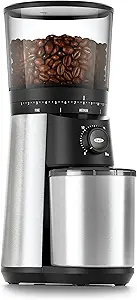 |
Baratza Encore Grinder ENCORE

| Wattage | 70 watts |
|---|---|
| Capacity | 5 ounces |
| Voltage | 120 volts |
The Baratza Encore is a straightforward entry-level burr grinder aimed at home brewers who want consistent, grind-ready coffee without complexity. It uses 40mm conical steel burrs and a 70W DC motor to deliver 40 stepped grind settings that cover everything from pour-over and automatic drip to French press and coarse methods, with a front-mounted pulse button and an on/off switch for simple operation. The compact footprint and 5-ounce hopper make it easy to fit on a counter and keep for daily use, and the hardened alloy burrs and serviceable parts mean it can be maintained long-term. Limitations include a modest hopper capacity and no built-in timer, so you measure grind time manually for dose consistency, and its plastic exterior will feel less premium than metal-bodied grinders. For most home users seeking reliable, repeatable grinds under a thousand dollars, the Encore balances performance, ease of use, and serviceability.
Best for: Buyers who want a reliable, easy-to-use burr grinder that produces consistent grinds across common home brewing methods and is serviceable for long-term ownership.
Less Ideal for: People who need large-capacity hoppers, automated dosing, or a premium metal finish should consider other models tailored to those specific needs.
- Commercial-grade 40mm conical steel burrs for consistent particle size
- 40 stepped grind settings to cover a wide range of brew methods
- Simple, user-friendly controls with a pulse button and on/off switch
- Serviceable design and durable burrs that support long-term maintenance
- Small 5-ounce hopper requires frequent refilling for larger batches
- No built-in dosing timer so grind time must be managed manually
Verdict: A durable, beginner-friendly burr grinder that delivers consistent, versatile grinds for everyday home brewing under $1,000.
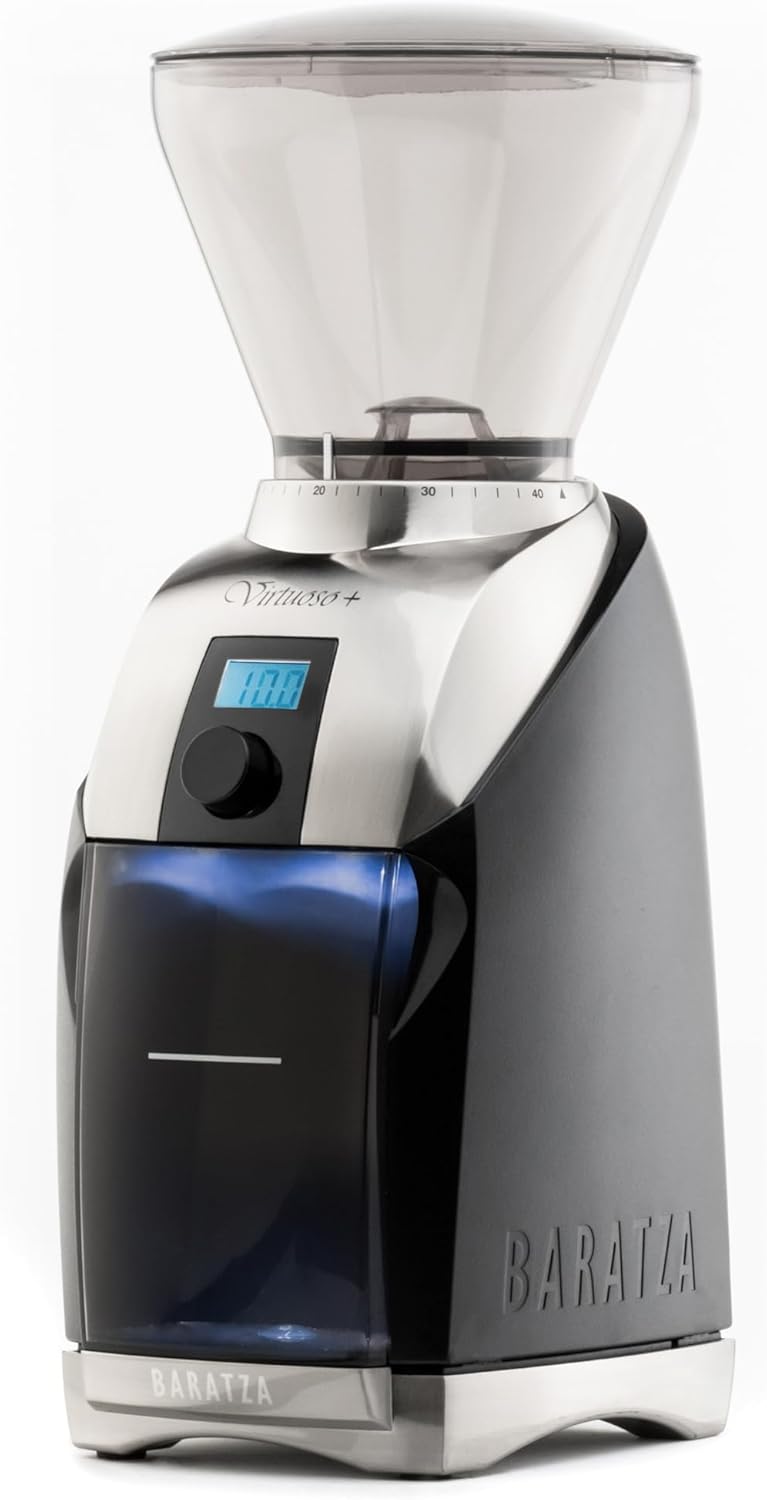
Baratza Virtuoso+
| Capacity | 230 g |
|---|---|
| Wattage | 70 watts |
| Voltage | 230 volts |
The Baratza Virtuoso+ is a countertop conical burr grinder aimed at users who want consistent, repeatable grinds across many brew methods. It uses commercial-grade conical steel burrs driven by a DC motor and offers 40 stepped grind settings that cover espresso through French press. A digital timer with tenth-of-a-second adjustment and an LED backlit grounds bin make dosing straightforward for single or multiple shots, and the metal top and base give it a sturdy, pro-oriented feel. In practice it delivers even particle distribution and reliable output for filter brewing and home espresso setups, and the 70-watt motor handles typical daily use without strain. Limitations include a modest 230 g capacity that means more frequent refills for heavy users and a single-dosed grounds bin rather than a direct portafilter holder, so workflow for some espresso purists may require an additional distribution step. For performance-focused home brewers the Virtuoso+ balances precision, build quality, and user controls in a compact package.
Best for: Home brewers who prioritize grind consistency and precise dosing across multiple brew methods and want a robust, shop-quality grinder without moving into commercial models.
Less Ideal for: People who need built-in portafilter grinding or very large daily batch capacity should consider grinders designed specifically for espresso workflow or high-volume use.
- 40 stepped grind settings cover a wide range of brew methods from espresso to French press
- Digital timer with 0.1-second adjustment enables consistent dose control
- Commercial-grade conical steel burrs provide even particle distribution and durability
- Sturdy metal top and base give a solid, professional feel on the counter
- Does not grind directly into a portafilter, which may slow espresso workflow for some users
- 230 g bean capacity is modest for very high-volume brewing
Verdict: Choose the Virtuoso+ if you want a compact, performance-focused burr grinder that delivers consistent, repeatable grinds and precise digital dosing for home brewing.
Breville Smart Grinder Pro BCG820BSS

| Capacity | 1.1 pounds |
|---|---|
| Wattage | 165 |
| Voltage | 120 |
| Bean Hopper Capacity | 18oz |
The Breville Smart Grinder Pro is a countertop conical burr grinder that gives hobbyist brewers fine control over dose and grind size. It is typically used to grind beans directly into a portafilter, airtight container, or paper filter for espresso, filter coffee, and French press. The clear LCD and Dosing IQ let you program grind time in 0.2 second increments and choose between cup or shot dosing, while 60 stepped grind settings cover everything from espresso-fine to coarse. Included portafilter cradles and a sealed grind container make it convenient for daily use, and the stainless steel build feels sturdy on the counter. Limitations to note are that the motor is modest at 165 watts so very large batches take longer, and the unit is relatively heavy for a home grinder which affects portability. The Smart Grinder Pro suits home brewers who want repeatable, adjustable dosing without moving up to prosumer gear.
Best for: Buyers who want precise, repeatable control over grind size and dose to optimize home brewing routines and consistency.
Less Ideal for: People who need a lightweight, highly portable grinder for travel or those who routinely grind very large commercial batches.
- Extensive 60-step grind range for espresso to French press
- Digital dosing with 0.2 second increments for repeatable doses
- Clear LCD that shows grind setting, time and shot/cup selection
- Grinds directly into portafilter or airtight container for flexibility
- Includes portafilter cradles and sealed grind container for daily convenience
- Motor power is modest so grinding very large batches is slower
- Relatively heavy for moving between locations
Verdict: Choose this grinder if you want accurate, programmable dosing and a wide range of grind settings to consistently optimize home-brewed coffee.
BLACK+DECKER Coffee Grinder CBG110S

| Capacity | 56.6 g |
|---|---|
| Wattage | 130 |
| Voltage | 110 volts |
| Power Source | Electric |
The BLACK+DECKER CBG110S is a small, straightforward blade grinder designed for quick daily use. It uses stainless steel blades and a stainless steel bowl to chop coffee beans, spices, herbs, and grains, with a one-touch push-button that runs while the lid is locked for safety. In practice it delivers fast, coarse-to-fine grinding that is best for drip or French press rather than precision espresso dosing; the blade design produces mixed particle sizes rather than uniform burr-style grinds. The 56.6 g capacity is enough for a few cups at a time and the compact footprint stores easily in a cupboard. The lid-locking safety feature and simple electric operation make it low-effort to use and clean, though heat and repeated runs can slightly warm grounds. If you want a durable, no-frills grinder for everyday brewed coffee or for grinding spices and grains, this model is practical and reliable, but buyers seeking uniform, café-quality espresso grinds should look to burr machines instead.
Best for: Buyers who want an inexpensive, easy-to-use grinder for daily brewed coffee and occasional spice or grain grinding and prioritize simplicity and compact storage.
Less Ideal for: Those who need highly uniform grind sizes for espresso or high-volume households that require larger batch capacity should consider other options.
- Stainless steel blades and bowl for durability and easier cleaning
- One-touch push-button with lid-lock safety for simple, safe operation
- Compact size that stores easily in small kitchens
- Suitable for grinding coffee beans, spices, herbs, and grains
- Blade grinder produces mixed particle sizes and is not ideal for precise espresso grinding
- Small 56.6 g capacity limits batch size for larger households
Verdict: A compact, budget-friendly blade grinder that reliably handles daily brewed coffee and spice grinding without the complexity of burr machines.
Fellow Ode Gen 2 Grinder

| Burr size | 64 mm |
|---|---|
| Capacity | 100 g |
| Wattage | 140 watts |
| Voltage | 120 volts |
The Fellow Ode Gen 2 is a purpose-built single-dose burr grinder focused on brewed coffee styles such as pour-over, drip, French press, and cold brew. It uses professional-grade 64 mm flat stainless steel burrs and 31 stepped grind settings so you can dial in consistent particle size for clearer extraction and sweeter flavor. Practical touches include a magnetic catch cup, anti-static tech and a built-in knocker to reduce retention and mess, plus an automatic stop so you can press the button and walk away. The 100 g single-dose bin encourages grinding only what you need and keeps leftover beans fresher. The motor runs quietly compared with many consumer grinders, and the compact footprint fits comfortably on most counters. Limitations are the single-dose orientation and the stated “not for espresso” guidance, so it is not intended for heavy espresso use or high-volume commercial environments. Cleaning access is straightforward but, as with any flat-burr grinder, periodic burr maintenance is required to keep performance consistent.
Best for: Buyers who prioritize reliable, repeatable brewed-coffee results and low grind retention will appreciate a precise, user-friendly single-dose grinder that fits a home counter and simplifies daily brewing.
Less Ideal for: People who need an all-in-one grinder for heavy espresso use or very high-volume grinding should consider dedicated espresso or commercial models instead.
- Professional-grade 64 mm flat burrs for consistent particle size
- 31 grind settings tuned for brewed methods to fine-tune flavor
- Anti-static tech, built-in knocker, and magnetic catch cup reduce retention and mess
- Quiet operation and compact footprint suitable for home countertops
- Automatic stop and single-dose bin simplify daily use and portioning
- Not intended for espresso so cannot replace an espresso-specific grinder
- Single-dose design limits speed for high-volume brewing sessions
Verdict: Choose the Ode Gen 2 if you want a reliable, quiet single-dose grinder that delivers consistent brewed-coffee grinds and minimal retention.
Hamilton Beach Fresh Grind 80335R

| Capacity | 4.5 ounces |
|---|---|
| Wattage | 125 watts |
| Voltage | 110 |
| Power Source | AC |
The Hamilton Beach Fresh Grind is a straightforward electric blade grinder aimed at everyday home use. It grinds coffee beans, spices, and seeds with stainless steel blades in a removable grinding bowl that is dishwasher-safe for easy cleanup. Its single-button press operation makes short work of small batches — the 4.5 ounce capacity is sized to grind enough beans for up to a 12-cup pot. The unit stores its cord under the base to keep the countertop tidy and runs on a typical 110V, 125-watt motor that handles occasional spice and seed grinding as well as coffee. Expect coarse to fine results typical of blade grinders rather than the consistent particle size of a burr grinder, so it is best for drip coffee or recipes where grind uniformity is not critical. The compact footprint and removable parts make it simple to maintain, but it is not designed for high-volume or precision espresso grinding.
Best for: Buyers who want a low-effort, easy-to-clean grinder for drip coffee and occasional spice or seed grinding and who value simplicity and space savings over precision.
Less Ideal for: Those seeking consistent, professional-grade grind size for espresso or high-volume daily grinding should consider a burr grinder instead.
- Removable stainless steel grinding bowl that is dishwasher-safe for easy cleanup.
- Compact footprint with built-in cord storage keeps countertops neat.
- Simple one-button operation suitable for quick daily use.
- Can grind coffee, spices, and seeds for versatile kitchen use.
- Blade design produces inconsistent particle sizes compared with burr grinders.
- Small 4.5 oz capacity limits batch size for frequent large-pot brewing.
Verdict: A compact, easy-to-clean blade grinder that delivers quick, convenient fresh grinds for drip coffee and general kitchen use.
OXO Brew Conical Burr Grinder
| Burr size | 40 mm |
|---|---|
| Grind settings | 15 settings plus micro-adjustments |
| Hopper capacity | 12 oz |
| Wattage | 100 watts |
| Voltage | 120 volts |
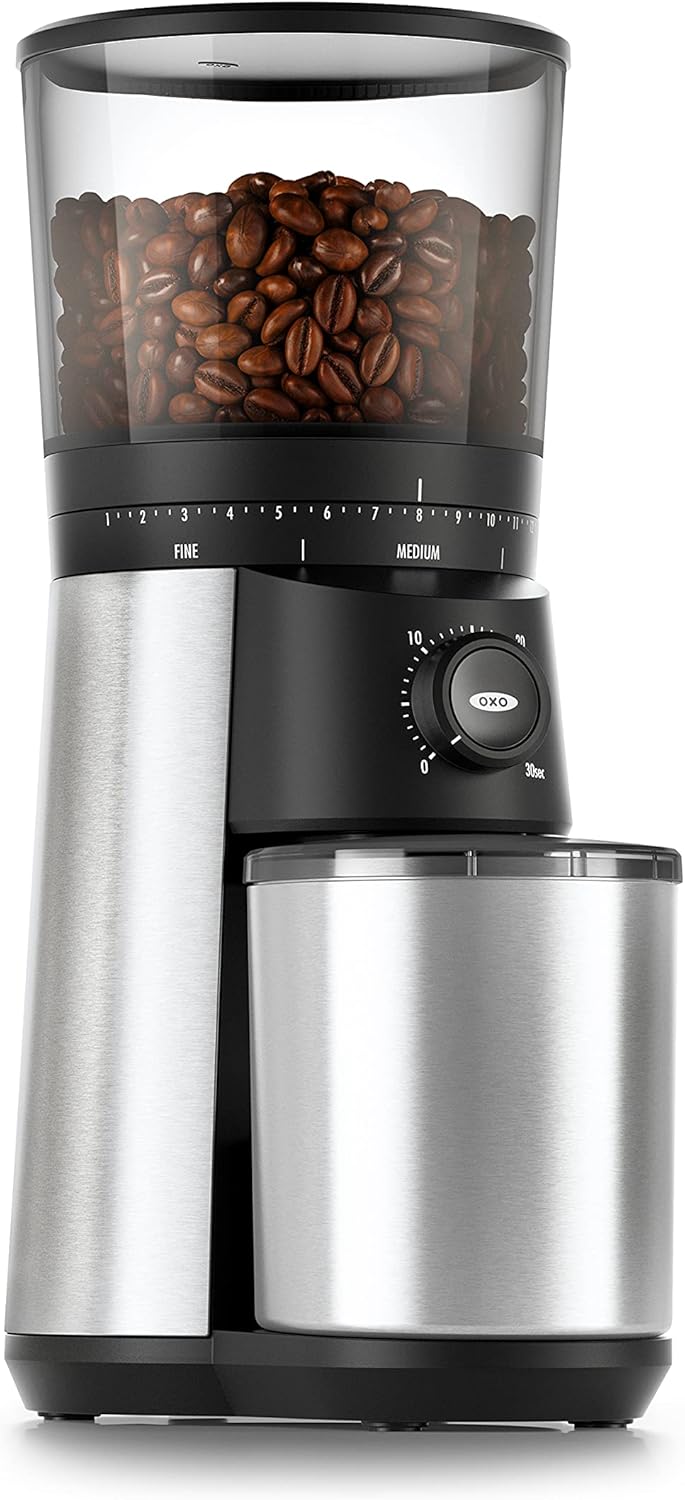
The OXO Brew Conical Burr Grinder is a compact electric grinder built around stainless steel 40 mm conical burrs that deliver consistent, uniform grounds for a wide range of brew methods. It is typically used on a kitchen counter to grind whole beans for drip, pour-over, French press, cold brew and finer settings approaching espresso; the removable hopper holds up to 12 ounces and has a UV-tint to help preserve beans. Controls are simple: a dial for grind size with 15 main settings plus micro-adjustments and a one-touch start that remembers the last timed grind, which makes repeatable morning routines quick. Practical benefits include relatively quiet operation, a sturdy stainless steel body and a grounds cup designed to reduce static. The grinder is not a commercial machine so it is sized for household use, and very fine espresso dialing may take extra micro-adjustment compared with dedicated espresso grinders. Still, for home users wanting reliable, consistent results across many brew styles, it balances performance, ease of use and a compact footprint.
Best for: Buyers who want a reliable, easy-to-use home burr grinder that delivers consistent grounds across multiple brew methods and simplifies daily use with remembered settings.
Less Ideal for: Users seeking a heavy-duty commercial grinder or a prosumer espresso-specific grinder where ultra-fine, repeatable espresso performance is the top priority.
- 40 mm stainless steel conical burrs deliver uniform grounds for even extraction
- 15 grind settings with micro-adjustments for a wide range of brew methods
- One-touch timer that remembers the last setting for fast, repeatable grinding
- Large removable 12 oz hopper with UV tint helps preserve bean freshness
- Designed for relatively quiet, low-vibration operation suitable for early mornings
- Not intended for commercial or high-volume use and may wear faster under heavy daily loads
- Extremely fine espresso dialing can require patience and micro-adjustments
Verdict: A dependable, user-friendly home conical burr grinder that delivers consistent results for most brewing styles and simplifies daily grinding routines.
Choosing the Right Coffee Grinder: Key Factors to Consider
Burr Type and Size
Burr geometry and diameter strongly influence particle distribution and extraction. Larger burrs typically cut beans with less heat buildup and produce a narrower particle distribution at similar speed, which helps with clarity in brewed coffee.
The choice between flat and conical burrs also affects flavor character and retention. Flat burrs can yield very uniform particles and are often preferred for espresso, while conical burrs can be more forgiving and generate less fines for certain filter methods. Consider the burr material too, as hardened steel and ceramic have different wear characteristics and heat conduction.
Adjustment Mechanism and Grind Steps
How you change grind size matters for repeatability. Stepped adjustments offer repeatable settings that make it easy to return to a known point, which is useful if you switch between brew methods. Stepless or micro-adjust systems allow finer control but require more care to document exact positions.
Look for clear indexing, tactile detents, or digital readouts that record grind size. The range should cover what you need from coarse filter grinds to fine espresso. Adjustment ergonomics also affect how quickly you can dial in during a session without disturbing dosing or wasting beans.
Dosing Options and Hopper Capacity
Dosing solutions range from timed on-demand to weight-based systems and doser chambers. Timed or volumetric dosing is simpler but can vary with bean density and hopper level. Weight-based dosing tied to a scale offers precise dosing every time but can add workflow steps.
Hopper capacity affects how often you refill and whether beans sit long enough to stale. Smaller hoppers reduce retention and are better for single-origin work, while larger hoppers suit heavier daily use. Also consider whether the hopper locks securely and how easy it is to remove for cleaning or bean changes.
Motor, RPM, and Heat Management
Motor specification and rotor speed influence how much heat the grinder produces during a dosing cycle. High RPM motors can grind quickly but risk heating the beans and the burrs, which alters flavor and causes clumping. Lower speed motors or gear reduction designs tend to preserve volatile aromatics.
Effective heat management includes motor cooling, short duty cycles, and burr materials that dissipate heat. For heavy daily use consider models designed for sustained operation rather than intermittent home-only duty cycles.
Build Materials and Serviceability
Durable materials and modular construction extend a grinder's useful life. Metal housings, properly supported shafts, and accessible burr mounts reduce vibration and wear. Serviceability includes user-replaceable burrs, available spare parts, and clear disassembly for cleaning.
A grinder that is easy to maintain will remain consistent longer and costs less to keep in service. Check whether the design allows cleaning without specialized tools and whether routine maintenance tasks are straightforward for a home user.
Retention, Static, and Cleanliness
Bean and grind retention affects consistency between doses and the time needed to switch beans. Low-retention designs produce fewer stale grounds and make single-origin work more practical. Static can cause grounds to cling and mismeasure doses; some grinders include anti-static coatings or grounded hoppers to counter this.
Ease of cleaning influences both hygiene and flavor. Removable burrs, accessible grind chutes, and smooth internal pathways make regular cleaning practical and reduce hidden stale buildup that degrades cup quality.
Matching Grinder Choices to Your Brew Method
Different brewing methods place distinct demands on particle distribution and dose control. Espresso requires a tight distribution and precise dosing; pour-over and drip benefit from uniform medium-coarse particles and lower fines; French press tolerates a wider distribution but favors coarse, even chunks.
Choose a grinder whose adjustment range covers your preferred methods without sacrificing repeatability. If you switch between espresso and filter often, look for a grinder with a broad, well-indexed range and easy conversion between settings.
- Espresso: prioritize fine adjustment and low retention.
- Pour-over: focus on uniform medium grind and adjustable flow.
- Press methods: prefer coarse range and minimal fines.
Workflow and Countertop Considerations
Think about how the grinder fits into your daily routine. Do you want quick on-demand dosing into a portafilter or a timed/manual process for batch brews? The grinder should match your workflow to reduce steps and speed up consistent extraction.
Also account for footprint and noise. A compact, quieter model works better in small kitchens or shared living spaces. If you value a tidy counter, choose a grinder with sealed hoppers and easy-to-empty catch bins.
- On-demand vs doser: choose based on single-serving or batch needs.
- Footprint: measure counter space and clearance for hopper removal.
- Noise: consider motor type and sound dampening features.
Maintenance Routines That Keep Performance Stable
Regular maintenance preserves grind quality. Establish a cleaning schedule for burrs, hoppers, and chutes to prevent stale oils and buildup. Many grinders benefit from occasional burr alignment checks and replacement after heavy use.
Keep a small toolkit and a soft brush available. Short, routine cleaning sessions are more effective than infrequent deep cleans because they prevent residue accumulation that alters dosing and grind distribution.
- Daily: brush chute and wipe hopper rim.
- Weekly: remove and clean hopper, brush burrs.
- Yearly: inspect and replace burrs as needed based on wear.
Noise and Heat: Living With a Higher-End Grinder
Higher-end grinders under $1,000 can still be loud or generate heat, depending on motor design and burr speed. If you make coffee early in a quiet household, look for models with lower RPM motors or sound-dampening housings.
Heat affects flavor and clumping. For heavy morning routines consider grinders engineered to limit heat transfer during continuous dosing, or plan short rest periods between doses to allow cooling.
- Check duty cycle specs if you brew several back-to-back doses.
- Look for insulation or cooling features when heavy use is expected.
Integrating Scales and Accessories
A grinder is one part of a brewing system. Consider whether you will use a separate scale, a weigh-based dosing system, or accessories like anti-static funnels. Integrating a scale-based workflow reduces dosing variability and can improve cup-to-cup consistency.
Also evaluate accessory compatibility such as portafilter adaptors, dosing cups, and tamping stations. Accessories can streamline workflow without changing the grinder itself.
- Weight-based dosing is the most reproducible approach for espresso.
- Anti-static tools reduce mess and improve dose accuracy.
How We Chose the Best Coffee Grinder
We focused on machines that give measurable improvements in grind uniformity, dosing repeatability, and long-term reliability for home and light commercial use while keeping the price cap under $1,000. Our shortlist excludes consumer-only blade grinders and large-scale commercial grinders designed for high-throughput cafes. We prioritized grinders with proven burr geometry, robust build materials, and user-accessible adjustments that matter for extraction. Concrete evaluation criteria included grind consistency across particle sizes, adjustment range and repeatability, build quality and serviceability, dosing control and hopper capacity, and noise and heat management. We also considered how straightforward routine maintenance and burr replacement are. Exclusions included single-use or poorly documented models, units lacking clear grind-step indexing, and grinders with serviceability concerns. The resulting list favors machines that balance precise control with dependable everyday performance for home and small-batch brewing.
Our full evaluation process is outlined in our review methodology.
FAQ
How often should I replace burrs on a home grinder?
Burr replacement frequency depends on volume and burr material. For regular home use expect years of service, but inspect for dulling or inconsistent grind size. If you notice more fines or difficulty dialing in, it is likely time to replace the burrs.
Is a stepped or stepless adjustment better for switching brew methods?
Stepped adjustments are easier to return to repeatable settings, which helps if you swap between methods frequently. Stepless systems allow finer control for precise dialing but require you to document positions carefully to reproduce settings.
Will a bigger burr always make better coffee?
Bigger burrs can improve speed and reduce heat buildup, which helps consistency, but they are not a guarantee of better flavor. Design, burr geometry, motor control, and user technique all interact to determine final cup quality.
Can I use one grinder for both espresso and filter coffee?
You can, but a single grinder must have a wide, well-indexed adjustment range and low retention to move between fine espresso settings and coarser filter grinds reliably. Be prepared to spend time dialing in and to purge grounds between changes.
How much does hopper size matter for home use?
Hopper size matters based on how often you change beans and how much coffee you make. Smaller hoppers reduce retention and are better for frequent bean changes, while larger hoppers reduce refills for heavier daily use.
Final Verdict
Prioritize grind consistency, a usable adjustment system, and serviceable construction when choosing a coffee grinder under $1,000. Balance burr size and motor design against the brewing methods you use most often, and pick a dosing approach that matches your workflow. Focus on a grinder that offers repeatable settings, manageable retention, and straightforward maintenance. That combination will give you the most reliable path to better, more consistent coffee.