
Note: This article contains affiliate links. If you click on these links and make a purchase, we may earn a small commission at no extra cost to you. This helps support our research and content. Read our full affiliate disclosure here.
If you want fresher, more flavorful coffee at home, choosing the right coffee roaster matters. The right machine gives you control over roast level, consistency between batches, and the ability to dial in profiles that match your beans and brewing method. This guide covers six shortlisted coffee roasters that represent reliable approaches for home roasting, from hands-on air roasters to drum-style options suitable for small batches. We evaluated machines for their roast consistency, temperature and airflow control, build quality, and ease of use so you can match a roaster to your skill level and goals. Read on to compare the top picks and find the model that fits your workflow and flavor targets.
Top Picks at a Glance
| Best Overall The best all-around choice for most situations | Fresh Roast SR800 Coffee Roaster |  |
| Best Quality Built to a higher standard if you want something more solid | Kaffelogic Nano7 Coffee Roaster |  |
| Best Value The sweet spot between price and what you get | ANGELLOONG Coffee Roaster 750g |  |
| Top Rated A top-rated pick with lots of positive feedback | Nuvo Eco Ceramic Handy Roaster |  |
| Most Popular A crowd favorite that many people choose with confidence | Fresh Roast SR540 | 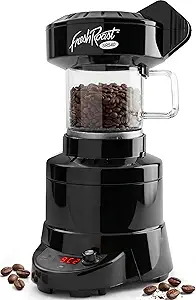 |
| Best Seller A high-volume bestseller chosen again and again | JIAWANSHUN Home Coffee Roaster FBA066 |  |
Fresh Roast SR800 Coffee Roaster

| Roast capacity | 6–8 oz (170–226 g) per batch |
|---|---|
| Heat settings | 9 levels |
| Fan settings | 9 levels |
| Display | Real-time temperature digital display |
The Fresh Roast SR800 is a compact, user-friendly home coffee roaster designed to turn green beans into freshly roasted coffee in under 10 minutes. You load 6–8 ounces into the clear glass roasting chamber, then use the single push-turn knob to set one of nine heat levels, nine fan speeds, and the timer while watching real-time temperature on the digital display. The convection-style airflow and speed roast system promote even color development, and the three-stage cooling process helps stop roast development quickly. It is practical for experimenting with roast levels, creating small-batch blends, and producing fresh daily coffee without a steep learning curve. Limitations are its small batch size if you want large quantities and the lack of automated roast profiles, so repeatable results require logging settings or practice. For home enthusiasts who value control and fast turnaround, the SR800 offers a lot of capability in a small footprint, but it is not intended for commercial volumes or fully automated roasting workflows.
Best for: Home coffee enthusiasts who want hands-on control to experiment with roast levels and flavor development in small, fast batches.
Less Ideal for: People who need to roast large quantities regularly or who want a fully automated, set-and-forget commercial-style roaster.
- Clear glass roasting chamber for visual monitoring of roast color
- Push-turn knob with 9 heat and 9 fan settings for fine manual control
- Digital real-time temperature display for precise adjustments
- Fast roast cycle that completes typical roasts in under 10 minutes
- Three-stage cooling to halt roast development quickly
- Small 6–8 oz batch capacity not suitable for brewing large quantities at once
- No built-in automatic roast profiles so consistency depends on manual recording of settings
Verdict: Buy this if you want an affordable, compact roaster that gives precise manual control for small-batch, fast home roasting.
Kaffelogic Nano7 Coffee Roaster

| Wattage | 1400 watts |
|---|---|
| Capacity | 120 g |
| Power Source | Electric |
| Human Interface Input | Touchscreen |
The Kaffelogic Nano7 is a small, countertop electric coffee roaster that targets serious home roasters and lab users who want precise, repeatable results. It roasts green beans in flexible batch sizes (recommended 100–120 g green, or 50–200 g with the Boost Kit) and offers PID temperature control, adjustable fan speed, and a touchscreen interface for programing profiles. The unit stores and runs preloaded recipes or fully user-programmed roast curves and integrates with Kaffelogic Studio for saving and sharing profiles. In practice the Nano7 delivers fast, consistent heats and good control over development thanks to PID and the look-ahead/gain scheduling, which helps hit desired roast points without constant manual intervention. Its small footprint and included chaff collector and scoop make setup and cleanup straightforward, though the limited batch size means it is best for small-batch roasting rather than feeding a cafe. Power options for 110v or 220v and the optional Boost Kit expand flexibility, but buyers should plan around the 120 g default capacity when estimating output for frequent roasting sessions.
Best for: Buyers who prioritize roast control and profile repeatability for small-batch home or sample roasting and want a machine that is programmable and integrates with roast software.
Less Ideal for: People who need large-volume roasting for a cafe or wholesale production should consider larger commercial roasters instead.
- Precise PID temperature control with look-ahead and gain scheduling for repeatable roast profiles
- Touchscreen and fully user-programmable interface with recipe saving and software integration
- Supports flexible batch sizes and an optional Boost Kit to extend 50–200 g range
- Compact countertop footprint with included chaff collector and bean scoop
- Small recommended batch size limits output for high-volume or commercial use
- 14-pound unit is relatively heavy for a small footprint
Verdict: Choose the Nano7 if you want precise, software-backed small-batch roasting with professional-grade PID control.
ANGELLOONG Coffee Roaster 750g

| Capacity | 0.75 kg |
|---|---|
| Wattage | 1200 watts |
| Voltage | 110 volts |
This ANGELLOONG roaster is a countertop machine designed for home users who want to roast small batches of green coffee beans and other snacks. It heats to a selectable range (212 to 464 F) and offers a 0–60 minute timer so you can run short or longer profiles; an internal stirring rod and vented glass lid keep beans moving and let you watch color development. The 750 g chamber and 1200 W heater roast a full batch in roughly 20–30 minutes depending on settings, while the Teflon-coated honeycomb pan helps prevent sticking and wipes clean with a damp cloth. Practical features include thick anti-scald handles and visible vents for monitoring. Important limits are the warning to use it outdoors or in very well-ventilated areas due to smoke and chaff, and the inner pot must not be washed with water which makes deep cleaning more hands-on. The controls are straightforward, so it suits hands-on hobbyists who want control without pro-level complexity.
Best for: Home roasters who want to move beyond store-bought beans and prefer a practical, hands-on machine that lets them control roast time and temperature for small to mid-size batches.
Less Ideal for: People who need a fully enclosed, low-odor solution for indoor use or who prefer a model with dishwasher-safe removable parts for easy cleaning.
- Large 750 g batch capacity suitable for full home roasts
- Visible heat-resistant lid and vents let you monitor color changes during roasting
- Adjustable temperature (212–464 F) and 0–60 minute timer for flexible roast profiles
- Automatic stirring and honeycomb pan promote even roasting and reduce hot spots
- Produces smoke and chaff so it requires outdoor or very well-ventilated use
- Inner pot cannot be washed with water which complicates thorough cleaning
Verdict: A straightforward, batch-capable home roaster that gives practical temperature and timing control for hobbyists who roast outdoors or in very well-ventilated spaces.
Nuvo Eco Ceramic Handy Roaster

| Material Type | Ceramic, Cowhide |
|---|---|
| Capacity | 70 g |
| Model Number | NV-1CHR |
The Nuvo Eco Ceramic Handy Roaster is a compact, all-ceramic manual roaster for people who want to try small-batch home coffee roasting. You load green beans (30–70 g, with about 30 g recommended), hold the waffle-patterned ceramic bowl over heat, and rotate or stir so the ceramic walls and waffle-like interior promote even heating; a rear vent lets you hear the beans pop as they roast. Because it is fully ceramic with a cowhide grip, the roaster resists direct flame damage better than thin metal pans and gives predictable, gentle heat transfer for short batches. Its small capacity and manual operation make it best for experimenting with roast profiles or producing single-cup batches rather than roasting for a crowd. Expect to spend a bit of time monitoring temperature and stirring; there is no temperature control or automatic airflow, so consistency depends on user technique. For home roasters focused on simple, low-tech reliability and clean, ceramic construction, this is a practical entry-level tool.
Best for: Buyers who prioritize a simple, durable, low-tech roaster for small-batch home experiments and value predictable ceramic heat behavior over automation.
Less Ideal for: People who need larger capacity, automated controls, or turnkey consistency for multiple cups at once should choose a different roaster.
- 100% ceramic body provides stable, even heat transfer and is durable against high cooking temperatures
- Waffle-shaped internal surface promotes more even roasting across small batches
- Compact size is suited to single-batch experiments and easy storage
- Rear vent produces audible popping cues that help judge roast stages
- Very small capacity limits output to single-batch roasts only
- No built-in temperature control or airflow means repeatable results require practice and attention
Verdict: If you want a reliable, all-ceramic, low-tech way to roast single small batches at home, this compact Nuvo roaster is a solid choice.
Fresh Roast SR540
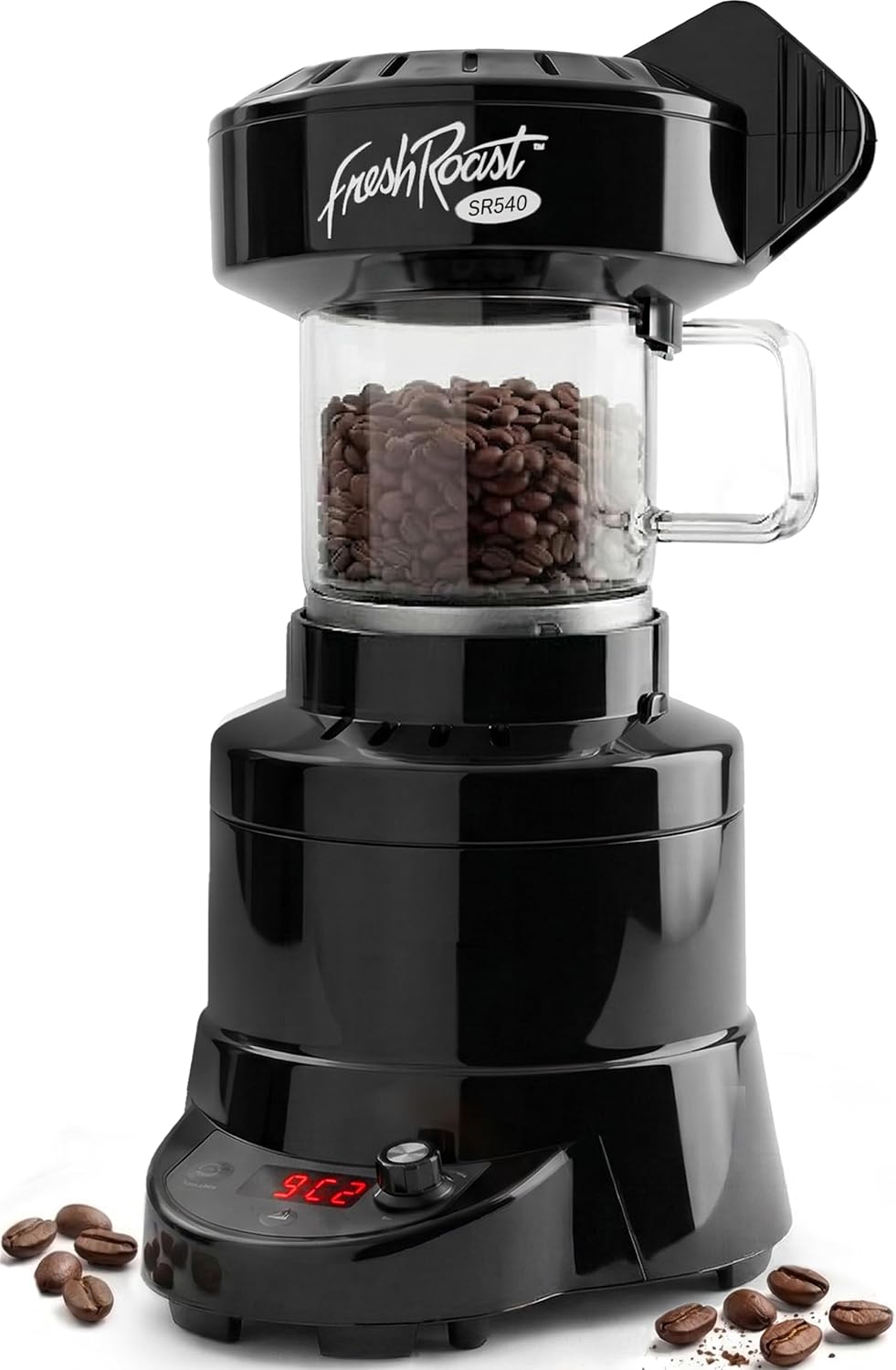
| Model Number | SR540 |
|---|---|
| Included Components | Chaff Basket, Glass Roasting Chamber |
| Item Form | Whole Bean |
| Manufacturer | Fresh Roast |
| Unit Count | 1 Count |
The Fresh Roast SR540 is a countertop coffee roaster designed for small-batch home roasting of green beans. You load roughly 3–4 ounces (about 120 g) into the clear glass chamber, set one of nine heat levels and nine fan speeds with the single push-turn knob, and watch the beans roast in under 10 minutes while monitoring real-time temperature on the digital display. The unit combines a convection fan and variable heat for fast, even roasts and includes a chaff basket and glass roasting chamber for cleanup and visibility. Its single-knob interface makes it approachable for beginners while still offering enough control for experienced hobbyists to dial in profiles. Limits to expect are the small roast capacity—this is built for daily single-batch use rather than larger groups—and the learning curve required to reproduce roast profiles consistently without logging or software. Noise and slight countertop heat are normal with fan-driven roasters. For someone focused on daily fresh small-batch coffee and manual control, the SR540 delivers a straightforward, capable at-home roasting workflow.
Best for: Buyers who prioritize daily-fresh, small-batch coffee and want manual control to experiment with roast levels, guided by visible and numeric feedback rather than automated presets.
Less Ideal for: People who need to roast large quantities at once, want fully automated timed profiles, or prefer a near-silent appliance for shared living spaces.
- True small-batch fresh roasting for 3–4 oz per roast so you get daily-fresh beans
- Nine heat levels and nine fan speeds for granular manual control
- Clear glass chamber lets you monitor color changes during the roast
- Digital real-time temperature readout helps with repeatability
- Includes chaff basket and glass roasting chamber for easier cleanup
- Small capacity not suited for brewing for large groups
- No built-in profiling software or automated roast presets for exact replication
- Fan-driven operation produces noticeable noise and countertop heat
Verdict: The SR540 is the go-to compact roaster for home enthusiasts who want hands-on, small-batch roasting with visible, real-time control.
JIAWANSHUN Home Coffee Roaster FBA066
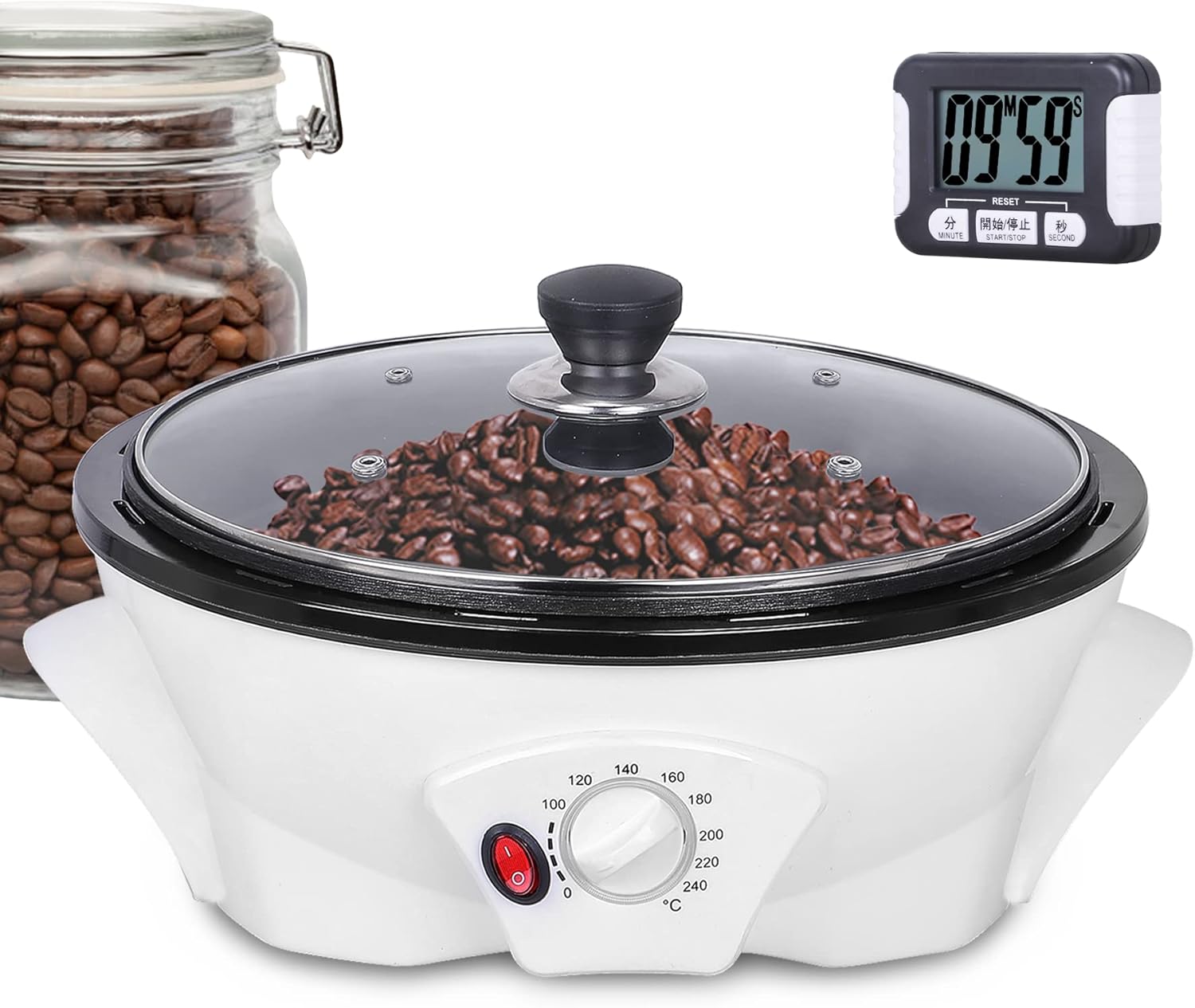
| Capacity | 500g/1.1lb |
|---|---|
| Wattage | 1200 |
| Voltage | 120 volts |
| Temperature range | 0-240℃ |
| Special features | Timer, Temperature Adjustment |
This JIAWANSHUN countertop roaster is designed for home users who want to roast small batches of beans without complex controls. It accepts roughly 300–500 g per batch for even results and uses a rotating stirrer plus a transparent glass lid so you can watch color development while beans tumble. Temperature is adjustable up to 240 C and a built-in timer and one-key operation simplify repeatable roasts, making it approachable for beginners. The honeycomb nonstick interior and glass lid are easy to wipe clean, and the 1200 W heater gets the job done quickly. The unit also handles nuts and seeds for extra versatility. Important limits are its small batch size if you need larger weekly volumes and the plastic/glass construction that may feel less heavy-duty than pro machines; beginners should still expect a learning curve to dial roast profiles. For a risk-averse mainstream buyer, it offers straightforward controls, visible progress, and predictable, repeatable batches for home use.
Best for: Home coffee enthusiasts who want a simple, visible, and repeatable way to roast fresh beans in small batches without complex controls.
Less Ideal for: People who need to roast large weekly volumes or require a heavy-duty, commercial-grade machine for frequent high-capacity use.
- Adjustable temperature up to 240 C for light to dark roasts
- Built-in timer and one-key operation make it easy for beginners
- Transparent glass lid lets you monitor bean color during roasting
- Rotating stirrer promotes even heating across the batch
- Nonstick honeycomb interior is simple to clean with a damp cloth
- Recommended batch size is limited to about 300–500 g for best uniformity
- Plastic and glass construction is less robust than commercial metal roasters
Verdict: A beginner-friendly home roaster that gives visible, controllable small-batch roasting with simple controls and reliable repeatability.
Choosing the Right Coffee Roaster: Key Factors to Consider
Roast Consistency
Consistent heat distribution is the foundation of repeatable roasting. Machines that maintain stable temperature and even airflow will produce fewer under- or over-roasted beans within a single batch. Uneven heating leads to mixed flavors and makes it harder to learn from each roast.
When assessing consistency, consider how quickly the roaster recovers from adjustments and whether it keeps the entire bean mass at a uniform temperature. Consistent performance reduces the number of test roasts needed to dial in a profile.
Temperature and Airflow Control
Accurate control of heat and airflow lets you shape development during critical phases such as first crack and the finish. Temperature that reads true and responds predictably to adjustments makes it possible to reproduce a profile from one roast to the next.
Airflow affects how heat is transferred and how chaff is removed. Adjustable fan speed or airflow settings let you balance convective and conductive heating, which changes surface development and internal bean chemistry. Look for roasters with clear, discrete controls or programmable profiles if you plan to experiment frequently.
Capacity and Batch Size
Batch size impacts both convenience and roast dynamics. Small home roasters typically handle between 100 g and 500 g per batch. Larger batches are efficient but can be harder to heat evenly and may require more robust machines.
Choose a capacity that matches how much coffee you drink between roasts. Smaller batches are easier to tweak and faster to cool, while larger batches reduce roast frequency but demand better thermal management.
Ease of Use and Learning Curve
Some roasters are designed for hands-on control, while others automate many parameters. Beginners may prefer units with guided profiles and straightforward controls, whereas experienced roasters will value manual adjustment and data output for profiling.
Consider how the machine reports temperatures, whether it allows you to set and save profiles, and how simple it is to sample beans mid-roast. A steep learning curve can be rewarding but will require more time and more test batches to master.
Cooling and Chaff Management
Rapid cooling after the roast stops heat development and preserves the intended roast level. Integrated cooling systems or easily accessible cooling trays shorten cooling time and reduce residual heat that can push beans past the desired endpoint.
Effective chaff collection prevents airborne debris and makes cleanup easier. Machines that isolate or contain chaff reduce maintenance time and help keep the roasting area clean. Consider how easy it is to empty and clean chaff receptacles.
Build Quality and Serviceability
Roasting involves high heat and abrasive chaff, so durable materials and well-engineered airflow paths prolong component life. Robust construction reduces the risk of warping, failed seals, or electronic issues.
Serviceable designs with replaceable drums, accessible fans, and straightforward electrical components extend the roaster's useful lifespan. Check whether routine maintenance tasks can be completed without specialized tools to avoid long downtime.
Choosing Between Air and Drum Roasters
Air roasters typically use a hot airflow to suspend and roast beans, producing quicker roasts and pronounced surface development. They are often lighter, faster to heat, and easier to clean, which appeals to people roasting small, frequent batches. Drum roasters roast via contact with a heated drum and more conduction, which can produce fuller, more even development for larger batches but usually requires a sturdier machine and longer roast times.
- Air roasters: fast ramp, clearer surface development, easier cleanup
- Drum roasters: even conduction, better for larger batches, often more durable
Setting Up a Roasting Space
Good ventilation and a stable countertop are the two most important setup considerations. Roasting emits smoke and chaff, so locate the machine near a vent or run it under an exhaust hood. Leave clearance around the roaster for heat dissipation and routine cleaning.
- Use heat-resistant surfaces and keep combustibles away
- Allow room for cooling trays and chaff collection access
Recording and Reproducing Roast Profiles
Keeping a simple roast log helps you replicate successful roasts. Record starting bean temperature, ambient temperature, roast time to first crack, and total roast time. If the roaster supports profile saving or exports data, use those features to iterate more quickly.
- Note bean origin, weight, and moisture when learning a profile
- Adjust one variable at a time to understand its effect
Noise, Smell, and Indoor Use Considerations
Roasters vary widely in operational noise and the amount of smoke produced during darker roasts. If you live in an apartment or shared housing, prioritize models with lower noise and better smoke control. Expect roasted coffee aroma to build up in the space even with ventilation, which some users find pleasant while others may prefer stronger extraction.
- Test noise level if possible or read specs for dB ratings
- Plan ventilation for darker roasts to limit smoke buildup
Cleaning and Routine Maintenance
Regular cleaning keeps the roaster performing consistently. Remove chaff after each roast and check airflow passages for buildup. Periodic deeper cleaning of the drum, heating elements, and cooling tray will preserve thermal response and extend component life.
- Empty chaff receptacle after every roast
- Inspect seals and fasteners every few months for wear
How We Chose the Best Coffee Roaster
To build this list we focused on the features and real-world behaviors that most affect roasting outcomes and everyday usability. We prioritized machines that offer precise heat control and stable airflow so users can reproduce roast profiles and adjust development time. Thermal response and consistency across the entire batch were essential filters because uneven heating produces off-flavors and inconsistent results. We also assessed user controls and feedback: clear temperature readouts, adjustable fan or drum speed, and the ability to set or record profiles makes learning and repeating roasts easier. Durability and build quality mattered since frequent roasting exposes components to heat and wear. We favored units with serviceable parts and straightforward access for cleaning. Usability was evaluated for both beginners and experienced roasters: machines that balance automation with manual control scored higher. Finally, we excluded experimental prototypes and industrial-scale equipment that are unsuitable for typical home or hobby use. The final picks reflect machines that perform well across these practical, roast-focused dimensions.
Our full evaluation process is outlined in our review methodology.
FAQ
How often should I roast to keep coffee fresh?
It depends on how quickly you consume coffee, but many hobbyists roast weekly. Smaller batches preserve freshness and let you adjust profiles more frequently. Store roasted beans in a sealed container away from light and heat for best short-term results.
Can I roast dark roasts at home safely?
Yes, but darker roasts produce more smoke and require good ventilation and proper cooling. Dark roasts also mean less room for error on the finish, so monitor development closely and use the cooling system promptly.
What batch size is best for a beginner?
Start with smaller batches you can finish quickly, typically 100 g to 250 g. Smaller batches make it easier to learn how heat and airflow affect development and require less cleanup between attempts.
Do I need specialized tools to measure roast progress?
Basic tools such as a small scale, a reliable thermometer or the roaster's built-in probe, and a roast log are sufficient. More advanced users may add data-loggers or external temperature probes for detailed profile work.
How long does a typical home roast take?
Home roasts typically run from about 6 to 15 minutes depending on roaster type, batch size, and desired roast level. Air roasters are often at the shorter end, while drum roasts take longer due to conduction and larger thermal mass.
Final Verdict
Prioritize roast consistency, controllable temperature and airflow, and a capacity that matches how often you want to roast. Beginners will value intuitive controls and quick cooling, while more advanced users should favor machines that offer precise adjustments and profile-saving features. Balance convenience against the ability to fine-tune roasts. Choose the features that align with your learning goals and the volume you plan to roast, and you will be better positioned to achieve consistent, satisfying home-roasted coffee.