
Note: This article contains affiliate links. If you click on these links and make a purchase, we may earn a small commission at no extra cost to you. This helps support our research and content. Read our full affiliate disclosure here.
A combination microwave can replace multiple appliances by combining microwave heating with convection or grilling elements, so you can reheat, brown, and bake from a single unit. Choosing the right Combination Microwave matters because capacity, power, and cooking modes directly affect how well it handles everything from simple reheats to crisped leftovers and small roast jobs. This guide shortlists the top Combination Microwaves to suit common kitchen needs and explains the practical tradeoffs between size, power, and features. Below you will find our top picks plus the evaluation criteria used to judge each model, helping you narrow options quickly and confidently.
Top Picks at a Glance
| Best Overall The best all-around choice for most situations | Breville Combi Wave 3-in-1 |  |
| Best Quality Built to a higher standard if you want something more solid | Panasonic HomeChef NN-CV87QS |  |
| Best Value The sweet spot between price and what you get | TOSHIBA Master Series Microwave Air Fryer | 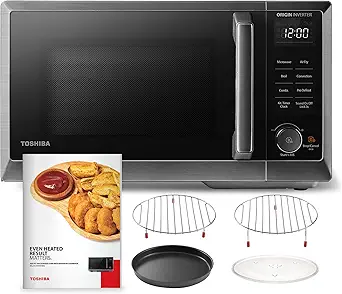 |
| Best Budget The cheapest option that still gets the job done reliably | Frigidaire EMW1220AMZ Combo Microwave |  |
| Top Rated A top-rated pick with lots of positive feedback | Ninja Crispi Microwave MW101 |  |
| Most Popular A crowd favorite that many people choose with confidence | BLACK+DECKER 5-in-1 Microwave Oven ES9P032NA | 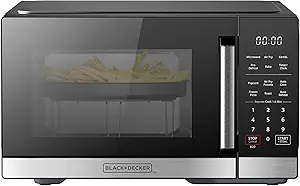 |
| Best Seller A high-volume bestseller chosen again and again | TOSHIBA Air Fryer Combo 1.0 Cu.Ft |  |
Breville Combi Wave 3-in-1

| Capacity | 1.1 cubic feet |
|---|---|
| Microwave Input Power | 1200 watts |
| Convection Input Power | 1400 watts |
| Grill Input Power | 1100 watts |
| Number of Power Levels | 10 |
The Breville Combi Wave 3-in-1 packs an air fryer, convection oven and inverter microwave into a single countertop unit designed to replace multiple appliances. It uses Breville's Element iQ system to steer power between convection, grill and microwave modes, and offers presets for Smart Cook, Smart Reheat, Smart Defrost, Fast Combi and Cook From Frozen, plus an Air Fry setting for crisp results without much oil. Practical touches include a soft-close door, a shortcuts panel for common tasks and a turntable-off option for baking. In real-world use it shines at quick reheats, crisping frozen fries, and baking small batches more evenly than a basic microwave; the fast combi mode noticeably cuts cooking time for mixed-method recipes. The 1.1 cu ft capacity handles most family plates but is not as large as a full oven, and the unit is fairly heavy for a countertop appliance. If you need compact versatility and want to retire both a microwave and a small toaster oven or air fryer, this combi is a convenient all-in-one solution, though users who regularly cook very large roasts will still need a full-sized oven.
Best for: Buyers who want a compact, versatile appliance to replace a separate microwave and small air fryer or toaster oven and value convenient presets and faster combined cooking.
Less Ideal for: Those who regularly need to cook large roasts, sheet pans, or multiple large dishes at once should choose a full-size oven instead.
- Three functions in one unit: air fry, convection oven and inverter microwave for multi-mode cooking.
- Element iQ system that shifts power for more even cooking and faster combi cycles.
- Hands-on convenience features including one-touch presets, soft-close door and shortcuts panel.
- Includes useful accessories: combi crisp pan and trivet for air frying and raised cooking.
- 1.1 cu ft capacity limits large cookware and big batches.
- Unit is relatively heavy for countertop placement and may be bulky in small kitchens.
Verdict: If you want one countertop appliance that reliably reheats, crisps and bakes with smart presets and faster combi cooking, this Breville Combi Wave is a strong all-in-one choice.
Panasonic HomeChef NN-CV87QS

| Wattage | 1000 watts |
|---|---|
| Power Consumption | 1350 watts |
| Capacity | 1.2 cubic feet |
| Number of Programs | 20 |
| Number of Power Levels | 7 |
The Panasonic HomeChef NN-CV87QS combines microwave, air fry, broil, and convection bake into a single countertop unit aimed at simplifying everyday cooking. You pick recipes in the Panasonic Kitchen+ app and the oven applies the appropriate mode and settings, which makes multi-step dishes and reheating easier for busy cooks. Its inverter and Genius Sensor heating help deliver more even defrosting and reheating than basic microwaves, while a 14.2-inch turntable and 1.2 cu ft interior fit family-size items like a whole chicken. The unit offers 20 programs, seven power levels, and included accessories such as an airfry basket and wire rack for crispy results without a separate appliance. Practical trade-offs are its large footprint and 1350 watt power draw, which require a dedicated countertop spot and attention to kitchen circuit limits, and a weight that makes it less convenient to move. For buyers focused on performance, the HomeChef delivers versatile, faster cooking and app-guided convenience, though you should plan space and power before installing it.
Best for: Buyers who prioritize cooking performance and want a single countertop appliance that handles roasting, air frying, baking, and microwave tasks with smart recipe guidance.
Less Ideal for: People with very small kitchens, limited counter space, or those who need a lightweight, portable microwave for occasional reheating.
- Four modes in one unit: microwave, convection bake, broil, and air fry for flexible cooking.
- Inverter and Genius Sensor systems improve evenness for defrosting, reheating, and cooking.
- App integration with Panasonic Kitchen+ provides guided recipes and the ability to apply settings from the phone.
- Generous 1.2 cu ft interior and 14.2-inch turntable accommodate larger dishes like a whole chicken.
- Relatively high power consumption and a sizable countertop footprint require planning for placement and circuit capacity.
- Heavy unit makes it difficult to reposition once installed.
Verdict: Choose the HomeChef NN-CV87QS if you want a high-performance, app-connected countertop oven that consolidates microwave, convection, broil, and air-fry functions into one reliable unit.
TOSHIBA Master Series Microwave Air Fryer

| Wattage | 1800 watts |
|---|---|
| Power Consumption | 1400 watts |
| Voltage | 120 volts |
| Capacity | 0.9 cubic feet |
| Number of Programs | 27 |
The TOSHIBA Master Series is a compact countertop combination microwave that pairs inverter microwave power with convection and grill modes to act as an air fryer and small oven. You control it via a touch panel and presets—there are 27 programs plus multiple auto and air-fry menus—so it is useful for reheating, defrosting, crisping frozen foods, and finishing roasts without a separate oven. Inverter technology promises more even heating and gentler defrosting, while the convection/air-fry capability circulates hot air to brown and crisp foods using the included bake tray and wire racks. Power output is strong for a unit this size, and combi-modes let you run microwave plus convection or grill together to speed cooking. Trade-offs are its 0.9 cu ft capacity and 11.3-inch turntable, which limit batch cooking, and it is fairly heavy for a countertop unit. Expect a learning curve to dial timing and temperature for air-fry results, and the built-in fan may run after cooking for cooling.
Best for: Buyers who want to replace multiple small appliances with one versatile countertop unit and prioritize cooking flexibility and even reheating in a compact footprint.
Less Ideal for: Those who regularly cook large casseroles, whole chickens, or feed several people at once should choose a larger oven or built-in option instead.
- Combines microwave, convection, broil and air-fry in one countertop unit for versatile cooking
- Inverter technology for more even cooking and gentler defrosting than basic microwaves
- Multiple presets and included cookbook simplify use for novices
- Combi-modes (microwave+convection/grill) speed up cooking and deliver browned exteriors
- 0.9 cubic foot capacity and 11.3-inch turntable limit space for larger dishes
- Relatively heavy for a countertop appliance which can make placement or moving inconvenient
Verdict: Choose this unit if you need a compact, multi-function countertop microwave that reliably combines inverter heating with convection and air-fry capabilities to replace several appliances.
Frigidaire EMW1220AMZ Combo Microwave

| Capacity | 1.2 cubic feet |
|---|---|
| Wattage (microwave) | 900 watts |
| Power consumption | 1000 watts |
| Cooking programs | Bake, Roast, Microwave, Convection Oven |
| Included components | Air Frying Kit, Bake Plate, Microwave |
This Frigidaire combo microwave packs microwave, convection oven and air-fry functionality into a 1.2 cu ft countertop unit aimed at everyday cooking. It offers 900W microwave power, convection and a 1000W oven mode with preset cook menus and 10 power levels, so you can reheat, bake, roast or air-fry without a separate appliance. The unit includes an air frying kit and bake plate and uses touch controls and one-touch menus for common tasks like popcorn, potato and frozen dinners. Practical benefits include space savings—replacing a small oven and air fryer—and relatively simple operation for quick weeknight meals. Trade-offs are its modest interior capacity that limits large casserole dishes, and a reported weight and footprint that require a sturdy, roomy counter space. For buyers focused on a budget-friendly all-in-one, it delivers versatile cooking modes and useful presets, though users who need larger baking capacity or a lighter countertop unit may want to compare other options.
Best for: Buyers looking to replace multiple small kitchen appliances with a single, affordable countertop unit that handles reheating, baking and air-frying for everyday family meals.
Less Ideal for: People who regularly cook large roasts, multi-dish meals, or need a lightweight, highly portable microwave should consider a larger oven or a simpler, lighter microwave instead.
- Combines microwave, convection oven and air-fry functions in one countertop unit
- Includes air frying kit and bake plate so you can crisp and bake without extra appliances
- Ten power levels and five one-touch cook menus simplify common tasks
- Stainless steel interior and exterior for easier cleaning and a durable finish
- 1.2 cu ft capacity limits the size of dishes you can cook at once
- Relatively heavy and sizable for a countertop appliance, requires ample counter space
Verdict: A cost-conscious all-in-one countertop microwave that adds convection and air-fry capability to handle everyday cooking without buying separate appliances.
Ninja Crispi Microwave MW101

| Microwave Input Power | 1000 Watts |
|---|---|
| Convection/Air Fry Input Power | 1700 Watts |
| Capacity | 0.9 Cu. Ft. |
| Included Components | 5.5-qt CleanCrisp Glassware, Crisper Plate |
The Ninja Crispi Microwave MW101 replaces a separate microwave and air fryer by combining a 1000W microwave with a 1700W convection air fryer in one countertop appliance. It uses FusionCrisp technology to start cooking with microwave energy and finish with air-fry heat, which speeds up frozen-to-crispy results and reduces oven time. The flatbed interior gives more usable cooking space than turntable models and fits a 9"x11" pan, while included CleanCrisp glassware and a crisper plate are dishwasher-safe for easier cleanup. Controls blend buttons and touch input and offer 14 cooking modes including microwave presets and air-fry presets like Max Crisp and Air Broil. Practical limits include the fairly heavy unit and the 0.9 cu ft capacity that, while roomy for a flatbed design, is not as large as some full-size countertop ovens, and some air-fry functions require the included glassware. For buyers who want one dependable, space-saving appliance that handles reheating, baking, roasting, and air frying with factory-quality accessories, this model delivers consistent, everyday performance.
Best for: Buyers who want a reliable, single countertop appliance to replace both a microwave and an air fryer and prioritize consistent performance and easy cleanup.
Less Ideal for: Those needing a very large interior for sheet pans or who prefer a lightweight, easily moved countertop unit should consider other options.
- Combines 1000W microwave speed with 1700W air-fry convection for faster crisping than a conventional oven
- Flatbed interior offers about 40% more usable cooking space versus turntable microwaves
- Includes dishwasher-safe CleanCrisp glassware and crisper plate designed for nontoxic cooking
- 14 cooking functions and presets cover common tasks from reheating to Max Crisp finishing
- Child safety lock and simple button/touch controls for everyday convenience
- 0.9 cu ft capacity may be limiting for very large families or oversized cookware
- Unit is relatively heavy and bulky for countertop placement
- Certain air-fry and FusionCrisp functions require the included proprietary glassware
Verdict: Choose the Ninja Crispi MW101 if you want a dependable, space-saving combo that reliably combines microwave speed with air-fry crisping for everyday cooking.
BLACK+DECKER 5-in-1 Microwave Oven ES9P032NA

| Wattage | 900 watts |
|---|---|
| Capacity | 0.9 cubic feet |
| Turntable Diameter | 11.3 inches |
| Number of Power Levels | 10 |
| Cooking Program | Air Fry, Bake, Combi (Grill/Convection), Microwave, Roast |
This BLACK+DECKER 5-in-1 Microwave Oven packs five cooking methods into a small countertop footprint, making it useful for kitchens, dorms, and RVs where space is limited. It functions as a conventional microwave for reheating and defrosting, and adds an air fryer mode with 11 presets for frozen snacks plus a combi grill/convection mode for browning, baking, and roasting. The 900-watt output and 10 power levels give straightforward, speedy heating while the touch controls and preset menus simplify common tasks like popcorn, potato, and vegetable cooking. Included accessories such as a bake tray and two grill racks expand what you can roast or crisp. The 0.9 cu ft capacity and 11.3-inch turntable limit the size of dishes you can use, and high-heat modes will take longer than a full-size oven for larger items. For buyers focused on proven performance and broad functionality in a compact package, this model delivers a reliable multiuse appliance with practical presets and child-lock safety features.
Best for: Buyers who prioritize verified, versatile performance in a compact unit and prefer an appliance with clear presets and safety features for everyday cooking.
Less Ideal for: Those who need to cook full-size casseroles, large baking sheets, or high-volume family meals should choose a larger oven or full-size microwave combo.
- Five cooking modes in one unit: microwave, air fry, combi (grill/convection), bake, and roast.
- 11 air-fry presets and 10 power levels make common foods easy to cook without guesswork.
- Compact 0.9 cu ft footprint fits small counters, RVs, and tight kitchens.
- Includes bake tray and two grill racks to expand roasting and air-fry capability.
- Small internal capacity and 11.3-inch turntable restricts large plates or baking pans.
- 900W microwave power is lower than many full-size models, so some tasks take longer.
- Stainless steel interior and multifunction controls may require more careful cleaning after air-frying or roasting.
Verdict: A compact, confidence-inspiring 5-in-1 countertop microwave that delivers multiple cooking modes and easy presets for buyers wanting proven versatility in small spaces.
TOSHIBA Air Fryer Combo 1.0 Cu.Ft

| Capacity | 1 cubic feet |
|---|---|
| Microwave output | 1000 watts |
| Input power | 1600 watts |
| Turntable diameter | 12.4 inches |
| Cooking programs | Air Fry, Defrost, Keep Warm, Reheat, Soften |
This TOSHIBA combo microwave packs eight cooking modes into a compact, countertop unit so you can microwave, air fry, convection bake and broil without multiple appliances. Typical use cases include reheating and defrosting, crisping frozen foods with the air fry function, roasting small poultry or casseroles on the 12.4-inch turntable, and using preset one-touch programs for convenience. Notable features are a child safety lock, a position-memory turntable that helps keep plates aligned, knob and touch controls, a bright LED interior light, and an ECO standby mode to cut display power. At 1000 W output and 1600 W input, it offers enough power for everyday cooking while remaining relatively compact for smaller kitchens. Limitations are its modest internal capacity compared with larger combination ovens and the learning curve for dialling in optimal times when switching between microwave and convection or air fry modes, which may require trial and error for best results.
Best for: Buyers who want a single, reliable countertop unit to handle everyday reheating, occasional air frying and small roasts while prioritizing safety and straightforward controls.
Less Ideal for: People who regularly cook for large families or need a higher-capacity or professional-grade oven should consider larger combination ovens or separate appliances.
- Multiple built-in modes (microwave, air fry, convection, grill) replace several countertop appliances
- Child safety lock and control panel lock for safer household use
- 12.4-inch position-memory turntable fits a 12-inch pizza or small roast
- ECO mode reduces standby power consumption
- 1.0 cu.ft capacity is smaller than many full-size combination ovens
- Switching between cooking modes requires time to learn ideal settings for best results
Verdict: A compact, safety-focused combo microwave that replaces several countertop appliances for everyday cooking and occasional air frying.
Choosing the Right Combination Microwave: Key Factors to Consider
Cooking Modes and Flexibility
Combination Microwaves differ by the cooking modes they include and how those modes interact. Convection cooking adds true oven-style heating for baking and roasting, while grilling elements help brown and crisp foods that microwaves alone leave soggy. Combination modes blend microwave bursts with convection or grill cycles to shorten cook times while improving texture.
Understanding the available modes matters because it determines whether the appliance can replace your oven or just supplement it. If you plan to bake small dishes, roast vegetables, or finish foods with a crisp top, prioritize models with robust convection and grill options rather than ones that only offer basic reheating presets.
Power Output and Heat Distribution
Microwave wattage and convection heating capacity directly affect how quickly and evenly foods cook. Higher microwave wattage reduces reheating time and provides stronger defrosting performance, while effective convection elements with consistent temperature control offer more reliable browning and baking results.
Even heat distribution matters for batch cooking or when using the full interior. Look for features that promote even heating such as turntables sized appropriately for the cavity, inverter or variable power control, and explicit descriptions of convection element design. Poor distribution leads to cold spots, uneven browning, and longer cooking cycles.
Internal Capacity and Practical Layout
The cavity size and internal layout determine what cookware fits and how many servings you can prepare. Capacity is typically expressed in liters or cubic feet, but the practical metric is whether plates, casserole dishes, or baking pans you own will fit comfortably on the turntable or rack.
Consider the available clearances and whether the unit includes a removable rack for two-level cooking. For smaller kitchens, a compact footprint with a well-shaped interior may be more useful than a larger unit with awkward internal dimensions that restrict what you can cook.
Control Scheme and Preset Usefulness
A Combination Microwave's control system affects both ease of use and cooking accuracy. Intuitive dials or clearly labeled buttons and presets reduce the time needed to learn a new appliance. Useful presets should match common tasks like popcorn, defrost by weight, convection bake, and combination reheat modes.
Advanced interfaces that offer custom memory or sensor cooking can be helpful, but overly complex menus can hinder quick everyday use. Evaluate whether you prefer mechanical controls for durability or digital controls for precision and programmable options.
Cleaning, Materials, and Upkeep
Maintenance is a practical concern because food spatters and grease from grilling or baking accumulate faster in combination units. Interior coatings such as enamel or easy-clean stainless finishes make wiping spills simpler. Removable turntables and racks reduce cleaning time and allow for soaking when needed.
Also consider ventilation and drip management for grilling tasks, and whether parts are dishwasher-safe. Regular upkeep affects longevity and performance, so prioritize materials and serviceability that match how frequently you plan to use the more aggressive cooking modes.
Installation, Venting, and Kitchen Fit
Where you place a Combination Microwave influences airflow, safety, and convenience. Countertop models need sufficient clearance for ventilation; built-in or over-the-range installations require compatible venting and clearances as specified by the manufacturer. The unit's depth and door swing affect placement near cabinets or walls.
Measure the intended location and plan for power access. Some larger combination units will need dedicated outlets or specific clearances to prevent heat buildup. Considering installation early avoids surprises and ensures the appliance performs reliably in your space.
How Combination Modes Save Time
Combination cooking shortens total cook time by using microwave energy to heat food quickly while convection or grill elements finish with dry heat for browning. This hybrid approach reduces reliance on a full-size oven for small to medium dishes and speeds up meal prep during busy evenings.
For many home cooks, that means quicker weeknight casseroles, pizza reheats with crisp crusts, and faster roasting for vegetables without compromising texture. The time savings are most noticeable on recipes that require both internal heating and external browning.
- Microwave for rapid internal heating
- Convection or grill for exterior browning
- Combination cycles automate sequencing to reduce user intervention
Sizing the Right Unit for Your Household
Choose capacity based on the typical dish sizes and number of people you cook for. Small units are suitable for singles and couples who mainly reheat or bake small dishes. Families or those who often cook for guests should prioritize models with larger cavities and the option for two-level cooking.
Remember to check interior dimensions rather than relying solely on stated capacity numbers. A wider, shallower interior may fit casserole dishes better than a tall, narrow cavity with identical volume.
- Measure plates and pans you use frequently
- Account for rack or multi-level cooking needs
- Factor in countertop or cabinet space constraints
Practical Tips for Better Results
Use cookware rated for both microwave and convection use when running combination cycles. Glass and ceramic bakeware typically performs well, while some plastics and metal pieces are restricted in microwave mode. Follow guidance on single-portion versus multi-portion timing to avoid overcooking.
Rotate or rearrange items on the turntable if you see uneven browning. For grilling or crisping, preheating the convection mode for a few minutes can produce a better crust. Utilize manufacturer presets as starting points and adjust times as you learn how your specific appliance behaves.
- Prefer microwave-safe glass or ceramic for hybrid cooking
- Preheat convection briefly for better browning
- Adjust suggested presets to match your recipes
Energy Use and Efficiency Considerations
Combination Microwaves can be more energy-efficient for small meals compared with a full kitchen oven because they heat a smaller cavity and often cook faster. Using microwave or combination modes for reheating and single-dish meals reduces energy consumption versus firing up a large convection oven.
However, using high-power convection for extended roasting will approach the oven's energy use. For frequent baking, consider whether the unit's convection thermostat is accurate and whether the speed gains offset higher energy draw during longer cycles.
- Use microwave or combination modes for quick tasks to save energy
- Reserve full convection for dishes that need steady, dry heat
- Consider actual cook time and power draw when planning frequent use
How We Chose the Best Combination Microwave
We focused on objective, kitchen-relevant dimensions that affect day-to-day use of Combination Microwaves. Key evaluation criteria included cooking versatility, measured by available modes such as convection, grill, and combination presets; power delivery, assessed by microwave wattage and the presence of variable convection temperatures; capacity and internal layout, which determine what cookware fits and how evenly food heats; user interface and preset practicality, including one-touch programs and digital controls; and durability and maintenance, covering materials, finish, and ease of cleaning. Products were excluded if they lacked a true combination cooking mode or offered only basic microwave functions, or if they were designed strictly for commercial use rather than home kitchens. We also filtered out models with minimal documentation about power output or cooking modes. The chosen shortlist balances real-world performance with straightforward operation so buyers can match features to their typical meal tasks.
Our full evaluation process is outlined in our review methodology.
FAQ
Can a Combination Microwave replace my oven?
Often it can for small to medium dishes, baking, and roasting if the unit has reliable convection capability. For large roasts or multi-rack baking, a full-size oven still offers greater capacity and more consistent results.
Is it safe to use metal cookware in combination mode?
Metal is typically not safe in microwave-only mode but may be permitted in convection or grill modes depending on the appliance. Always follow the manufacturer's guidelines and avoid using metal when microwave energy is active.
How do I avoid soggy reheats with a Combination Microwave?
Use combination or convection finish cycles to reintroduce dry heat for crisping. Separating components and using a short convection or grill step after microwaving helps restore texture to fried or breaded foods.
Do combination units require special maintenance?
Maintenance is similar to other microwaves but pay attention to grease buildup from grilling tasks and food residue from baking. Regularly clean the interior, remove and wash the turntable and racks, and check ventilation openings for blockages.
What should I look for in presets and controls?
Look for presets that match frequent tasks like popcorn, defrost by weight, convection bake, and combination reheat. Intuitive controls with clear labeling reduce the learning curve and help ensure repeatable results.
Final Verdict
Prioritize the features that match how you plan to cook. If you often reheat, crisp leftovers, and bake small dishes, look for strong combination cycle performance, even heat distribution, and a cavity that fits your cookware. If larger roasts or extensive baking are common, pay closer attention to capacity and convection power. Balancing cooking flexibility, control simplicity, and ease of cleaning will get you the best everyday experience from a Combination Microwave. Focus on the tradeoffs you are willing to accept and choose a model whose strengths align with your most frequent meal tasks.