
Note: This article contains affiliate links. If you click on these links and make a purchase, we may earn a small commission at no extra cost to you. This helps support our research and content. Read our full affiliate disclosure here.
If you want cafe-quality espresso and reliable daily performance, a commercial espresso machine for home can bridge the gap between prosumer gear and true professional hardware. These machines are built for higher volume, tighter temperature control, and heavier-duty build quality than typical home models, which matters if you brew multiple drinks a day or want repeatable shots without constant fiddling. This guide shortlists five well-suited commercial espresso machines for home use and explains the practical tradeoffs involved. We evaluate the picks on shot consistency, steaming power, and long-term serviceability so you can choose a machine that fits your routine and space. Read on for the criteria we used and what to consider before upgrading to commercial-grade equipment.
Top Picks at a Glance
| Best Overall The best all-around choice for most situations | Gaggia Classic Evo Pro |  |
| Best Value The sweet spot between price and what you get | CASABREWS Ultra Espresso Machine |  |
| Best Budget The cheapest option that still gets the job done reliably | SHARDOR Espresso Machine CM1661 |  |
| Most Popular A crowd favorite that many people choose with confidence | Gevi 20 Bar Espresso Machine ECMG0 | 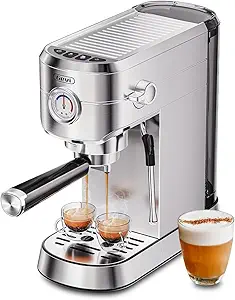 |
| Best Seller A high-volume bestseller chosen again and again | CASABREWS CM5418 Espresso Machine |  |
Gaggia Classic Evo Pro
| Operation Mode | Semi-Automatic |
|---|---|
| Output Pressure | 9 bar |
| Wattage | 1200 watts |
| Coffee Input Type | ground, pod |
| Filter Type | Reusable |
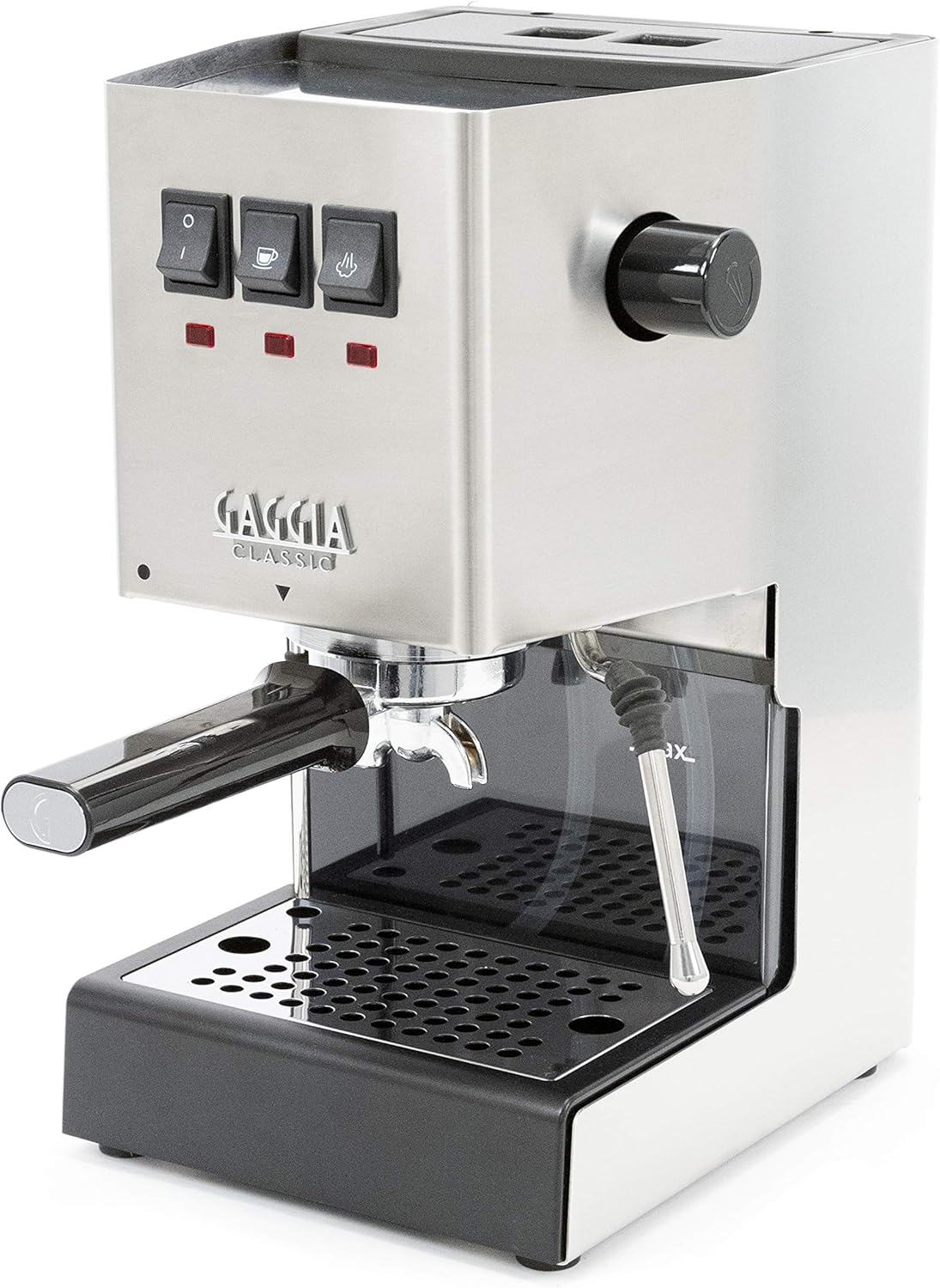
The Gaggia Classic Evo Pro brings commercial-style espresso features to a home countertop, using a 9-bar pump, a 58 mm stainless steel portafilter, and a commercial steam wand for milk texturing. It is typically used by home baristas who want café-quality shots and microfoam for latte art; the machine accepts ground coffee and ESE pods and ships with single and double commercial baskets plus a pressurized basket for convenience. Practical benefits include a heavy-duty steel housing that feels durable, updated pump mounting for quieter operation, and a boiler designed to resist scale buildup, all of which support regular use without frequent service. The included tamper and multiple baskets make it straightforward to experiment with dosing and extraction, while the manual controls give direct control over shot timing and steaming. Limitations are that semi-automatic operation requires a learning curve to dial in consistent shots, and the machine's commercial features make it heavier and more of an investment in countertop space and maintenance compared with compact consumer machines.
Best for: Home baristas who want a durable, commercial-style machine to learn and refine espresso technique and produce café-quality shots and milk drinks.
Less Ideal for: Casual users who prefer fully automatic, set-and-forget brewing or need a very small, lightweight machine for limited counter space.
- Commercial 58 mm stainless steel portafilter and commercial single/double baskets for pro-level extraction
- Commercial steam wand capable of creating velvety microfoam for latte art
- Durable steel housing and made-in-Italy construction for long-term reliability
- Updated pump mounting for reduced brewing noise and boiler improvements to resist scale
- Semi-automatic controls require practice to consistently pull great shots
- Relatively heavy and large compared with compact home espresso machines
Verdict: A rugged, commercial-component espresso machine that delivers pro-level shots and milk texturing for dedicated home baristas.
CASABREWS Ultra Espresso Machine

| Operation Mode | Semi-Automatic |
|---|---|
| Wattage | 1350 watts |
| Voltage | 120 volts |
| Filter Type | 58mm Portafilter & one/two cup filters |
| Capacity | 73 fluid ounces |
The CASABREWS Ultra is a semi-automatic espresso machine built to bring café-style extraction and milk texturing to the home kitchen. It uses a 20-bar Italian pump with pre-infusion and an adjustable PID-style temperature system (four settings) to deliver consistent shots and dense crema, while a 10mm commercial steam wand produces strong steam for microfoam and latte art. The machine includes a 58mm portafilter, single boiler heating, an intuitive buttons-and-LCD interface, and a removable 73 oz water tank for easier refills and cleaning. Practical touches such as an automatic pressure release valve, a cup warmer, and multiple filter baskets make daily use straightforward. Expect a short heat-up time thanks to its 1350W heater, but note this is a single-boiler unit so simultaneous steaming and brewing requires a short wait between functions. For home baristas who want a step up in control and milk performance without professional installation, this model delivers strong extraction and reliable frothing in a compact stainless steel package.
Best for: Buyers who want a compact, café-capable machine at home that prioritizes consistent extraction and strong milk steaming while keeping operation and maintenance straightforward.
Less Ideal for: If you need rush-order throughput or simultaneous brew-and-steam performance for frequent entertaining, choose a dual-boiler or prosumer machine instead.
- 20-bar pump with pre-infusion for stable extraction and good crema
- Adjustable temperature control (4 settings) for tuning shot flavor
- Commercial-style 58mm portafilter and included filter set for flexible dosing
- Powerful steam wand that produces fine microfoam suitable for latte art
- Removable 73 oz water tank and cup warmer simplify daily use and cleaning
- Single boiler design means you cannot brew and steam simultaneously
- Buttons-and-LCD interface is less advanced than full PID touch controls
Verdict: A compact, café-capable home espresso machine that delivers consistent extraction and strong steam performance for buyers seeking practical, barista-level results without pro installation.
SHARDOR Espresso Machine CM1661

| Output Pressure | 20 bar |
|---|---|
| Wattage | 1350 watts |
| Operation Mode | Semi-Automatic |
| Human Interface Input | Touchscreen |
| Filter Type | Reusable |
The SHARDOR CM1661 is a compact semi-automatic espresso maker that brings several pro-style features into a budget-friendly package. It uses a 20-bar pump and a 1350W motor to extract espresso and offers a professional steam wand for frothing milk, so you can make cappuccinos and lattes at home. The LED touchscreen exposes single/double cup presets, manual mode for strength adjustments, three temperature settings, a one-touch descaling function, and an auto-shutoff after 15 minutes. Practical touches include a 45 oz removable water tank, reusable 51mm filter, cup warmer, and a detachable drip tray for easier cleaning. While it does not replace a commercial machine in throughput or the nuance of a dedicated prosumer group head, it delivers strong extraction and rich crema for its price class and is easy to maintain with the descaling and removable parts. Expect a learning curve dialing in grind and tamping to avoid slow or small-volume shots, but for everyday home use this model balances features and value effectively.
Best for: Home buyers who want near-professional features without a big investment and who prioritize a compact machine that can make espresso-based drinks and frothed milk for daily use.
Less Ideal for: Customers seeking a true commercial machine for heavy café throughput or those who want fully automated bean-to-cup operation should look elsewhere.
- 20-bar pump and 1350W motor for strong extraction and good crema
- Professional steam wand produces creamy milk foam for cappuccinos and lattes
- One-touch touchscreen with presets, manual mode, and temperature control
- 45 oz removable water tank and detachable drip tray for easier refills and cleaning
- Not designed for high-volume commercial use or continuous back-to-back shots
- Requires some tuning of grind size and tamp pressure to avoid slow or low-volume brews
Verdict: If you want a compact, feature-rich espresso machine that delivers strong extraction and milk steaming on a tight budget, the SHARDOR CM1661 is a smart buy.
Gevi 20 Bar Espresso Machine ECMG0
| Output Pressure | 20 bar |
|---|---|
| Wattage | 1350 watts |
| Operation Mode | Semi-Automatic |
| Power Source | AC adapter |
| Filter Type | Reusable |
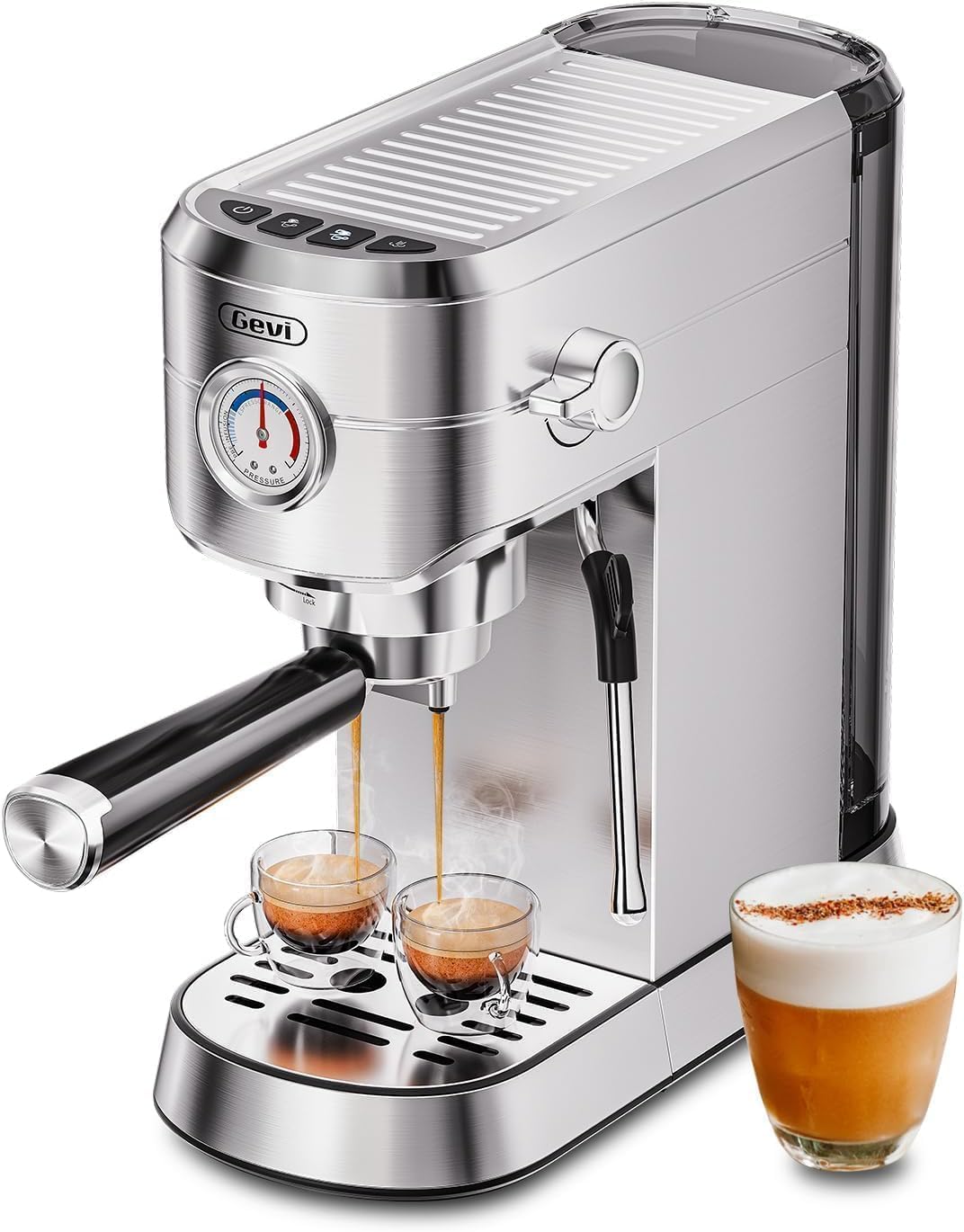
The Gevi 20 Bar Espresso Machine is a compact semi-automatic unit that brings pressure-based espresso extraction and milk steaming to a countertop setting. It uses a 20‑bar pump, NTC temperature control, pre-infusion, and a built-in pressure gauge to help dial in extraction and make consistent shots, while the steam wand and removable froth nozzle let you texture milk for lattes and cappuccinos. The 34 oz removable water tank and cup warmer simplify multiple uses without frequent refilling, and the stainless steel housing feels durable for daily use. Controls are button-based and the machine includes a 51 mm portafilter, single and double baskets, tamper, and cleaning tools so you can start pulling shots right away. Expect some vibration and noise from the high-pressure pump and moderate warm-up time before optimal temperature is reached, and cleaning the portafilter parts requires hand care rather than dishwasher use. For buyers seeking café-style features in a smaller footprint, this model balances useful pressure and steaming features with straightforward operation.
Best for: Buyers who want near-commercial pressure and steaming performance in a compact, ready-to-use machine and who prefer products with demonstrable customer feedback and practical features.
Less Ideal for: Those who want a fully integrated workflow with a built-in grinder or a completely silent machine should consider different models.
- 20‑bar pump with built-in pressure gauge and pre-infusion for more consistent extractions
- Powerful steam wand with removable froth nozzle for good milk texturing
- Includes portafilter, single and double baskets, tamper and cleaning tools so it is ready to use
- Removable 34 oz water tank and cup warmer make multiple drinks and cup preheating convenient
- Stainless steel housing is compact and feels durable on the countertop
- Portafilter parts are not dishwasher-safe and require manual cleaning
- Machine produces some vibration and audible pump noise during operation
- No built-in grinder so you must supply ground coffee or a separate grinder
Verdict: A compact, cafe-capable espresso machine that delivers strong pressure and powerful steaming for buyers who want near-commercial performance without a large footprint.
CASABREWS CM5418 Espresso Machine
| Operation Mode | Semi-Automatic |
|---|---|
| Wattage | 1350 watts |
| Output Pressure | 20 bar |
| Coffee Input Type | ground_coffee |
| Filter Type | Reusable |
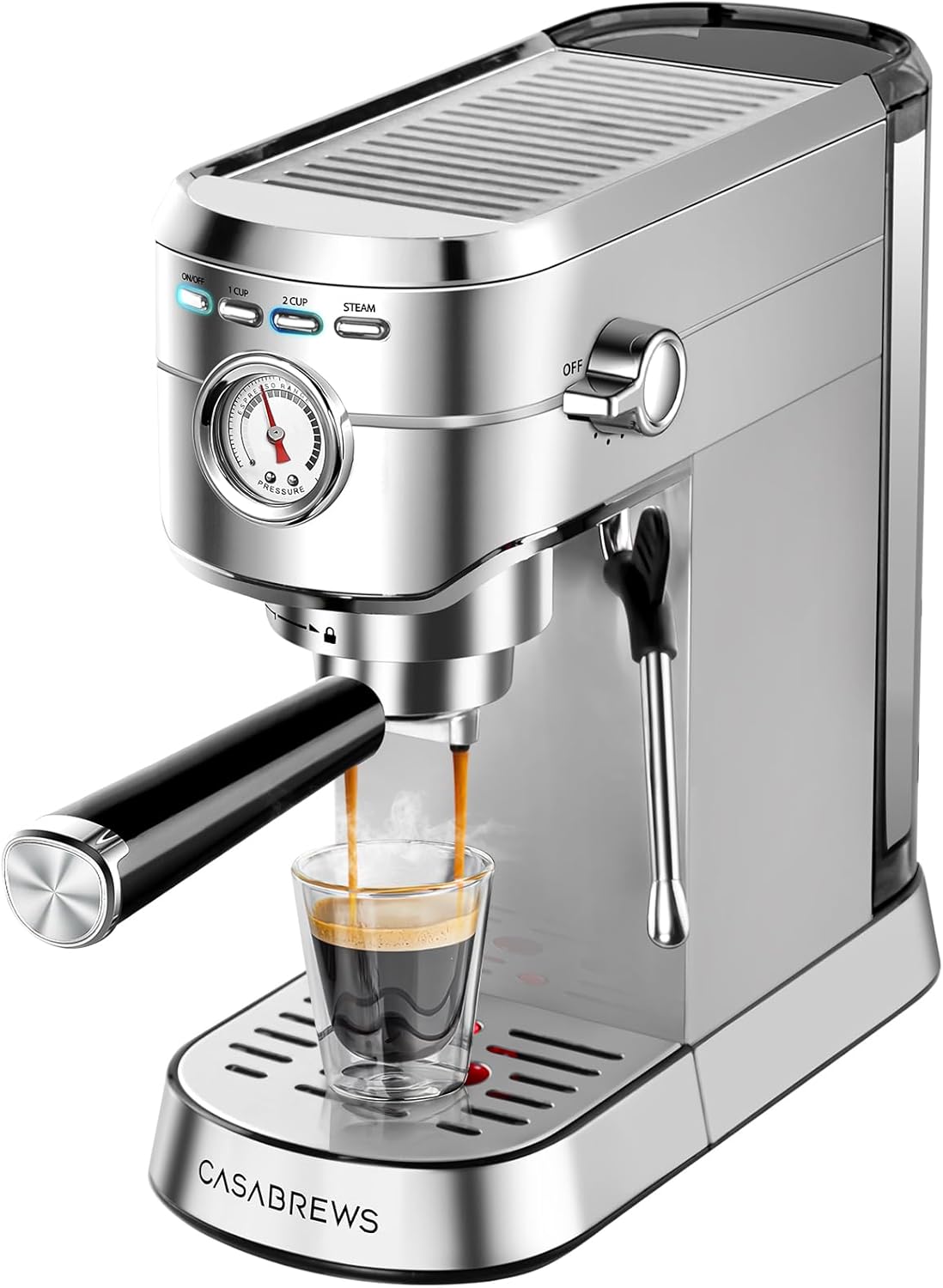
The CASABREWS CM5418 is a small counter-top semi-automatic espresso maker aimed at home users who want café-style drinks without a large footprint. It uses a 20-bar Italian pump and built-in pressure gauge to help dial in extraction, and a pre-infusion system to gently wet grounds for more even flavor. The steam wand produces creamy microfoam for cappuccinos and lattes, and the top cup warmer plus removable stainless drip tray make routine use convenient. A detachable 34 oz water tank lets you brew multiple cups before refilling and is easy to remove for cleaning. Expect short warm-up times thanks to the 1350 W boiler, but follow the manufacturer guidance to let the unit cool after steaming to avoid overheating protection kicking in. As with many compact single-boiler machines, you will need to manage dosing, tamping, and grind size to get consistent shots, and back-to-back steam then brew requires a cooldown step. For buyers who want a compact, feature-packed home espresso setup, the CM5418 offers practical tools to learn and improve your barista skills.
Best for: Buyers who want a compact, café-style home espresso machine with visible pressure control and a capable steam wand and who prefer a straightforward semi-automatic workflow they can tune over time.
Less Ideal for: People who need high-throughput output for entertaining multiple guests rapidly or who want a fully automatic, hands-off brewing experience.
- High-pressure 20-bar pump with built-in pressure gauge for visible extraction feedback
- Pre-infusion feature for more even extraction and improved flavor balance
- Powerful steam wand capable of producing microfoam for latte and cappuccino milk texture
- Compact stainless steel design with removable 34 oz water tank for easy refilling and cleaning
- Top cup warmer and removable drip tray that accommodates taller cups for practical daily use
- Single-boiler design requires cooldown between steaming and brewing, limiting back-to-back drink speed
- Requires careful grind, dose, and tamp adjustments to achieve consistent shots
Verdict: A compact semi-automatic that brings pressure feedback and a powerful steam wand to home baristas who want café-style control without a large machine.
Choosing the Right Commercial Espresso Machine for Home: Key Factors to Consider
Extraction Consistency
Consistent extraction is the core reason to choose a commercial machine for home use. Stable brew pressure and precise temperature control produce repeatable shot volumes and flavor balance, reducing the trial-and-error typical of lower-end machines.
When extraction is consistent you will spend less time compensating with grind adjustments and more time dialing in your preferred flavors. This matters whether you pull single shots for espresso lovers or pull double shots for milk-based drinks.
Steam Capacity and Recovery Time
Milk drinks are a major reason buyers select commercial-grade equipment. Larger boilers or separate steam systems deliver stronger steam pressure and faster recovery between steam cycles, which is crucial if you make back-to-back lattes or cappuccinos.
Consider how much steaming you expect to do daily. A machine with quick recovery avoids long waits between drinks and reduces the temptation to overheat milk, which preserves texture and taste.
Footprint and Installation Needs
Commercial machines tend to be larger and heavier than typical home units. Think about countertop space, ventilation, and whether you have the electrical capacity the machine requires.
Some commercial models need dedicated circuits or higher amperage. Measure your intended location and verify that the machine's water connection and drainage requirements fit your setup to avoid complicated retrofits.
Maintenance and Serviceability
Durable construction is only part of the story; ease of routine maintenance determines whether a commercial machine is practical at home. Accessible group-head components, replaceable gaskets, and straightforward descaling procedures reduce the time and cost of upkeep.
Also factor in availability of local service technicians or straightforward user-replaceable parts. Machines that are difficult to service can sit idle longer when repairs are needed.
Controls and Programmability
Commercial machines offer a range from simple rocker switches to fully programmable volumetric dosing. Choose the control level that matches your skill and goals. Programmable dosing ensures consistent shot volumes, while manual options give more control for experimenting.
Good ergonomics and intuitive controls speed up workflow and reduce user error during busy periods. Consider whether you want pressure gauges, shot timers, or PID temperature control as part of the interface.
Noise, Heat, and Daily Comfort
Commercial-grade components can generate more noise and heat than consumer models. If the machine sits in a small kitchen, consider how noise and residual heat will affect comfort during use.
Some machines include insulation and quieter pumps to mitigate these issues. Factor in ventilation and placement so that daily operation remains comfortable for household members.
Electrical and Plumbing Considerations for Home Installation
Before selecting a commercial espresso machine for home use, verify the electrical and plumbing requirements. Many commercial machines have higher voltage or amperage needs than standard kitchen outlets, so you may need a dedicated circuit or professional electrical work.
Water supply and drainage are also factors. Some machines accept a direct water line, which reduces the need to refill reservoirs but requires a clean water connection and possibly a filter system. If you plan to use a reservoir, confirm capacity and ease of refilling.
- Check voltage and amperage requirements against your home circuits
- Decide between reservoir-fed or plumbed-in water systems
- Plan for filter and softening systems if your water is hard
- Allow clearance for ventilation and steam wand use
Space-Saving Tips Without Sacrificing Performance
Commercial machines for home use vary in footprint. If counter space is limited, seek compact chassis designs and consider vertical clearance for cup warming areas. Smaller machines can still offer strong steam and consistent extraction when well engineered.
Other strategies include wall-mounting accessories, using under-counter water connections, and consolidating grinder placement. Prioritize the features you use most to avoid paying for unused capacity.
- Measure countertop depth and overhead clearance before ordering
- Place grinders and knock boxes to optimize workflow
- Use dedicated trays or mats to protect surfaces from steam and spills
Grinder Pairing and Its Impact on Shots
A commercial espresso machine will only perform as well as the grinder you pair with it. Consistent particle size, low retention, and precise adjustment are essential to match the machine's extraction capabilities.
Investing in a grinder that provides stable dosing and fine adjustment often yields bigger improvements in shot quality than upgrading other peripherals. Evaluate burr type, motor stability, and dosing features when matching a grinder to a commercial machine.
- Match grinder output to your daily shot volume to avoid overheating or wear
- Look for low-retention designs to keep blends fresh
- Consider timed or weight-based dosing for consistent puck weight
Routine Care: Daily, Weekly, and Monthly Tasks
Keeping a commercial-grade machine performing well requires a regular maintenance routine. Daily tasks typically include backflushing with a mild detergent for machines that allow it, wiping group heads, and purging steam wands after each use.
Weekly and monthly tasks often include deeper cleaning, descaling where appropriate, and checking seals and gaskets for wear. Regular maintenance preserves extraction quality and reduces the risk of more significant repairs later.
- Wipe and purge steam wands after each use to prevent milk buildup
- Backflush according to manufacturer guidance; replace blind filters as needed
- Monitor and replace water filters on schedule to prevent scale
Workflow and Ergonomics for Home Baristas
Designing an efficient workflow around your machine improves consistency and reduces fatigue. Place the grinder close to the group head, keep tools like tampers and knock boxes within arm's reach, and arrange a clear path for cup placement and milk steaming.
Ergonomics also includes choosing the right portafilter size and handle orientation, as well as setting group-head height for your preferred cups. Small layout tweaks can shave seconds off each drink and make regular use more enjoyable.
- Position grinder, tamping station, and steam pitcher in a compact triangle
- Keep cleaning supplies nearby for quick wipe-downs
- Consider anti-fatigue mats if you stand for long periods
How We Chose the Best Commercial Espresso Machine for Home
We focused on attributes that matter most when bringing commercial-grade espresso capability into a home environment. Primary evaluation criteria included extraction consistency under typical home workloads, steam boiler capacity and recovery for milk drinks, and temperature stability and control. Build quality and serviceability were assessed to predict longevity and the realistic maintenance burden for a homeowner. Usability features such as programmable dosing, ergonomic group-head and portafilter design, and intuitive controls were also important for daily reliability. We excluded machines intended exclusively for high-volume commercial environments with extreme footprint or power requirements that are impractical for a residential kitchen. Consumer-focused super-automatic machines were also excluded because they do not offer the manual control and extraction flexibility of commercial lever or pump-driven systems. Final selections balance professional extraction capability with reasonable size, domestic electrical compatibility, and accessible maintenance.
Our full evaluation process is outlined in our review methodology.
FAQ
Do commercial espresso machines need a dedicated electrical circuit at home?
It depends on the model. Many commercial-grade machines draw more current than a standard kitchen outlet and may require a dedicated circuit or specific voltage. Check the machine's electrical specifications before installation and consult an electrician if unsure.
Can I use a commercial machine with a water reservoir instead of plumbing it in?
Yes, some commercial machines support a reservoir option which simplifies installation. Reservoirs require manual refilling and may need more frequent filter changes, but they avoid the need for a plumbed-in connection.
How often should I descale or service a commercial machine used at home?
Frequency depends on water hardness and usage. Light home use with filtered water might only need descaling a few times per year, while harder water or heavier daily use increases frequency. Regular inspections and following the manufacturer's maintenance schedule help prevent scale buildup.
Will a commercial machine improve espresso quality compared with a prosumer home model?
Often it will, because commercial units typically offer better temperature stability, stronger steam, and more robust construction. However, grinder quality, coffee freshness, and user technique remain crucial factors that influence final cup quality.
Are commercial machines louder than consumer espresso machines?
They can be, due to larger pumps and boilers, but noise varies by design. Some commercial units include quieter pumps or insulation to reduce sound. If noise is a concern, look for models that emphasize low-noise operation.
Final Verdict
Choosing a commercial espresso machine for home use means balancing professional extraction capability with the practical constraints of your kitchen and routine. Prioritize shot consistency, steam capacity, and serviceability to match how you plan to use the machine daily. If you make frequent milk drinks, give extra weight to steam power and recovery. If space or installation is limited, focus on footprint and electrical compatibility. With the right balance of features, a commercial machine can deliver reliable, cafe-quality results at home for years to come.