
Note: This article contains affiliate links. If you click on these links and make a purchase, we may earn a small commission at no extra cost to you. This helps support our research and content. Read our full affiliate disclosure here.
Running a successful laundromat depends on reliable, high-capacity equipment that turns quickly and lasts under heavy daily use. Choosing the right commercial washing machines affects customer wait times, utility bills, maintenance schedules, and long-term profitability. This guide narrows the field to the top shortlisted machines suited specifically for laundromat operations and explains the practical reasons these units earn a spot on the list. Below you will find concise evaluations based on the most relevant operational factors, plus guidance on sizing, installation, and upkeep so you can pick machines that match your location and throughput goals.
Top Picks at a Glance
| Best Overall The best all-around choice for most situations | EQCOTWEA Commercial Washer Dryer 44lb |  |
| Best Quality Built to a higher standard if you want something more solid | INTSUPERMAI Commercial Washing Machine 44lbs |  |
| Best Value The sweet spot between price and what you get | DINENOVATE Commercial Front Load Washer |  |
| Best Budget The cheapest option that still gets the job done reliably | WYDDDARY 44lb Commercial Washer Dryer |  |
| Top Rated A top-rated pick with lots of positive feedback | WYDDDARY Commercial Washer 33lb |  |
| Most Popular A crowd favorite that many people choose with confidence | Yokoma Industrial 44lb Washer |  |
EQCOTWEA Commercial Washer Dryer 44lb

| Capacity | 44 pounds |
|---|---|
| Voltage | 220 volts_of_alternating_current |
| Wattage | 2200 watts |
| Controls Type | Touch |
| Operation Mode | automatic |
This EQCOTWEA unit combines washing, spinning, and drying in a single front-load machine sized for commercial use. It is built around a 44 lb stainless steel drum and uses a frequency-conversion copper motor plus a centrifugal fan for drying, so one cycle can clean and partially dry large loads without separate equipment. The touch control LCD and multiple wash programs make it straightforward to run mixed workwear, hotel linens, and heavier fabrics, while vibration-reduction suspension and belt drive aim to keep noise and movement low on a laundry room floor. The machine runs on 220V and offers strong heating power for faster drying, and safety features include a tempered-glass door, safety lock, vents, and an emergency stop. Expect heavy-duty performance and lower labor time, but plan for a professional electrical hookup and a significant footprint and weight; service access and regular maintenance will be important in high-throughput laundromat settings.
Best for: Operators who need a dependable all-in-one commercial washer for steady laundromat or hotel workloads and who prioritize throughput and reduced handling over compactness.
Less Ideal for: Small businesses with limited floor space, low monthly laundry volume, or sites that cannot support a 220V commercial electrical installation should consider smaller or differently configured units.
- Large 44 lb capacity suitable for commercial loads
- 304 stainless steel drum and shell resist rust and are fabric-safe
- Integrated wash, spin, and drying eliminates separate dryer space
- Frequency conversion motor and centrifugal fan improve energy use and drying efficiency
- Safety features include tempered-glass door, safety lock, vents, and emergency stop
- Requires 220V electrical supply and professional installation
- Very heavy and large footprint that needs dedicated floor space
Verdict: Buy this if you need a heavy-duty, single-unit washer-dryer that handles large commercial loads and reduces handling by washing and drying in one cycle.
INTSUPERMAI Commercial Washing Machine 44lbs

| Capacity | 44 pounds |
|---|---|
| Voltage | 220 volts |
| Heating power | 6KW |
| Shell material | SUS304 Stainless Steel |
| Controls Type | Touch (LCD) with Dial |
This INTSUPERMAI commercial washing machine is built for high-throughput settings like laundromats, hotels, and hospitals, offering a 44 lb (20 kg) dry-clothes capacity and integrated wash, spin and heated dry functions. It uses a frequency-conversion drive and copper-wire motor for adjustable drum speed and stable power, and the SUS304 stainless steel shell and drum make it corrosion resistant for continuous use. Controls are handled via an LCD with touch and dial inputs, and the unit includes shock-absorbing suspension, a safety-locked tempered-glass top lid and an emergency stop for safer operation in busy environments. Practical benefits include fewer handlings because it washes and partially dries in one cycle, strong heating (6 kW) for faster moisture removal, and a large drum suitable for bulky items and linens. Important limitations are the 220V requirement and absence of a pre-fitted power cord, which means professional electrical hookup is needed, and the machine is large and heavy so it requires freight delivery and a dedicated installation space.
Best for: Operators who prioritize high-capacity, heavy-duty throughput and need a single machine that can wash, spin and partially dry linens for commercial laundry environments.
Less Ideal for: Small businesses or locations without 220V electrical service, limited floor space, or those wanting a plug-and-play machine for occasional residential use.
- Large 44 lb (20 kg) capacity suited for commercial loads and bulky linens
- Integrated wash, spin and heated drying (6 kW) reduces time between cycles
- SUS304 stainless steel drum and shell for durability in continuous use
- Frequency conversion drive and copper motor allow adjustable, stable drum speeds
- Full suspension and safety lock with emergency stop improve operational safety
- Requires 220V/60Hz supply and does not include a power cord, needing professional wiring
- Large footprint and weight require freight delivery and dedicated installation space
Verdict: Buy this machine if you need a durable, high-capacity washer that combines washing, spinning and heated drying for heavy commercial laundry throughput.
DINENOVATE Commercial Front Load Washer

| Capacity | 44 pounds |
|---|---|
| Operation Mode | Fully Automatic |
| Controls Type | Touch |
| Voltage | 220 volts_of_alternating_current |
| Material Type | Stainless Steel |
This DINENOVATE commercial front-load washer is designed for heavy-duty, high-throughput laundry environments like laundromats, hotels, and hospitals. It combines washing, dehydration, and drying in a single freestanding unit with a 44 lb capacity drum made from SUS304 stainless steel and touch controls for program selection. The machine uses a variable-frequency motor for adjustable drum speed and more efficient extraction, and an industrial full-suspension vibration isolation system with hydraulic and spring shock absorption to reduce vibration and noise during high-speed spin. Practical features include multiple cycle options, a powerful 2.2 kW drive and 6 kW heating element for robust performance, and standard 220V power suited to commercial electrical setups. Expect durable construction and simplified operation that cuts labor and turnaround time, though installation requires 220V three-phase power and commercial drainage connections, and the unit is large and heavy which affects siting and delivery. For a laundromat focused on reliability and throughput, this washer offers the core performance and durability typical of industrial machines.
Best for: Operators running a laundromat or commercial laundry who prioritize durable, high-throughput equipment that reduces cycle handling and stands up to continuous daily use.
Less Ideal for: Residential users or small businesses without three-phase or 220V power and those who cannot accommodate a large, heavy freestanding machine.
- Large 44 lb commercial capacity suitable for high-volume loads
- Durable SUS304 stainless steel drum and shell for long service life
- Variable frequency motor enables adjustable drum speed and strong extraction
- Integrated wash, spin, and dry cycles reduce handling and labor
- Full suspension with hydraulic and spring shock absorption reduces vibration
- Requires 220V commercial electrical supply and proper drainage plumbing
- Very large and heavy, which complicates delivery and placement
Verdict: Buy this if you need a heavy-duty, stainless-steel commercial washer that combines washing, extraction, and drying to maximize laundry throughput in a laundromat setting.
WYDDDARY 44lb Commercial Washer Dryer
| Capacity | 44 pounds |
|---|---|
| Power | 2.2KW motor |
| Heating power | 6KW |
| Operation Mode | Fully Automatic |
| Controls Type | Touch |
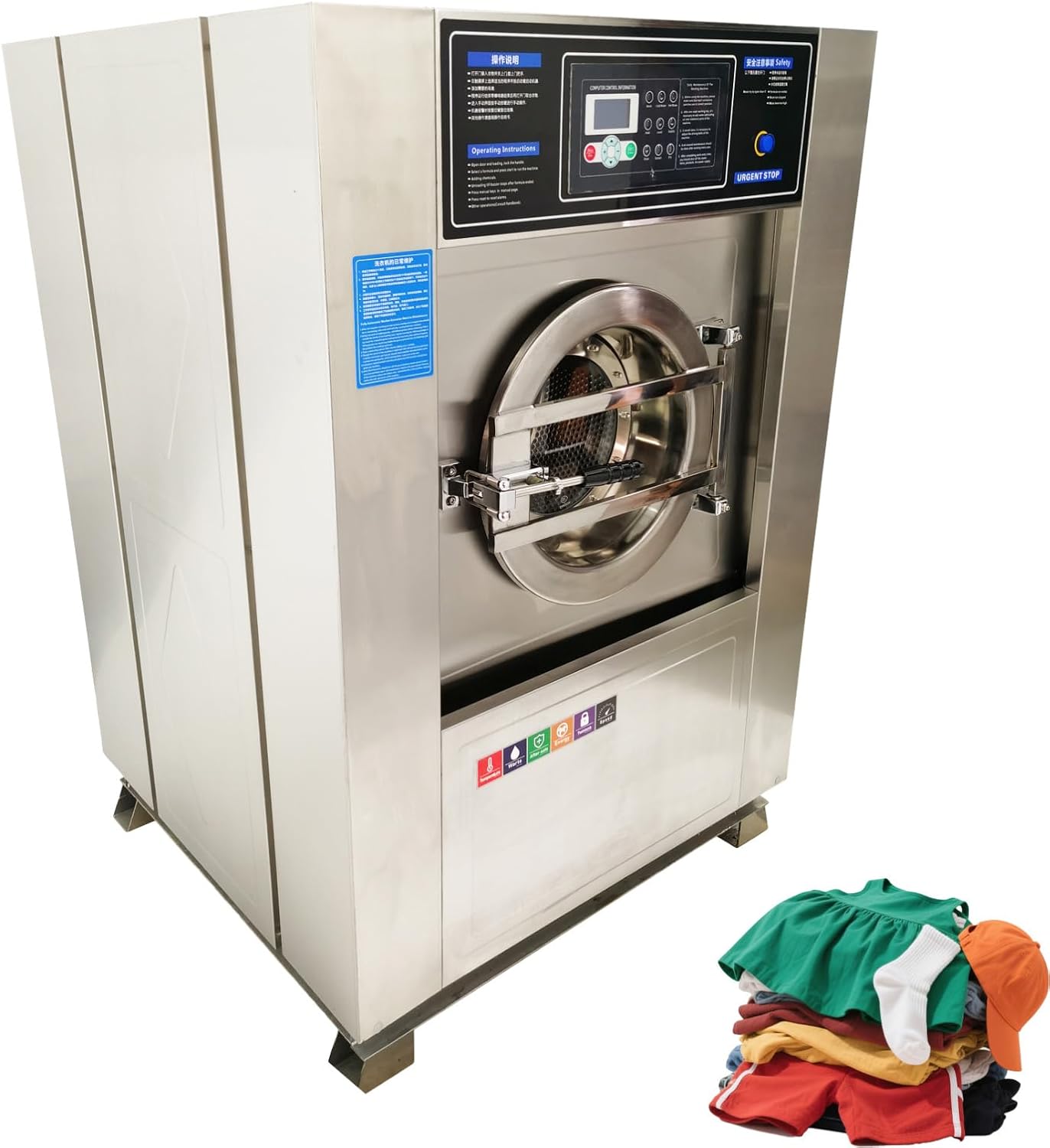
This industrial-grade 3-in-1 washer packs washing, spinning, and drying into a single freestanding unit aimed at commercial use. It uses a 2.2 kW inverter motor with 6 kW electric heating to accelerate drying, a large 75 cm stainless steel drum, and a belt-drive transmission for steady, lower-noise operation. The control panel is a full-computer LCD with touch input and preset cycles for normal, heavy, delicates, spin, rinse, and drain, so staff can run standard loads quickly without complex setup. Built-in hydraulic and spring shock absorption keeps vibration low during high-speed dehydration and the tempered-glass locked door adds safety and visibility. Practical benefits include corrosion-resistant 304 stainless construction for heavy daily use and the single-unit design that saves floor space compared with separate machines. Limitations for a budget-focused buyer are the high initial cost and the need for 220V three-phase power and substantial installation weight and space, which increases total ownership expense in smaller or legacy laundromat locations.
Best for: Small laundromat or hospitality operators who prioritize durable, space-saving equipment that can handle frequent medium-to-large loads and simplify staff workflow.
Less Ideal for: Operators with only single-phase power, very tight startup budgets, or locations that cannot accommodate the machine's weight and service access should consider other options.
- Combined wash, spin, and dry in one unit reduces floor space and handling between machines
- 304 stainless steel drum and shell resist corrosion for heavy commercial use
- Intuitive full-computer LCD touch controls with multiple preset cycles simplify operation
- High heating power and inverter motor provide strong drying and adjustable spin speeds
- Advanced hydraulic and spring shock absorption reduces vibration on hard floors
- Requires 220V three-phase electrical supply which adds installation cost
- Large and heavy unit needs professional delivery and placement
- Initial purchase price is high for strictly budget-constrained operators
Verdict: Buy this if you need a durable, space-saving commercial washer that washes, spins, and dries medium-sized loads reliably in a laundromat setting.
WYDDDARY Commercial Washer 33lb

| Capacity | 33 pounds |
|---|---|
| Voltage | AC220V |
| Heating power | 6kW |
| Operation Mode | Fully Automatic |
| Controls Type | Touch |
This WYDDDARY commercial washer is built for frequent, heavy-duty use in laundromats and similar commercial settings. It pairs a 33 lb dry capacity stainless steel drum with a belt-driven inverter motor and a fully automatic control panel that includes an intelligent LCD and touch controls for selecting one of five standard cycles. The unit supports hot-water heating via a 6 kW heater for disinfection, stepless speed adjustment for gentle or aggressive spinning, and large inlet/drain ports to shorten cycle time and reduce clogs. A bottom suspension system with large springs and hydraulic dampers keeps vibration and noise low so the machine can run without floor anchoring, and the SUS304 construction resists corrosion under frequent use. Practical limits include its single detergent compartment and top-load access, which can slow bulk loading compared with front-load commercial models, and it requires 220V 1-phase power and a sizable footprint. For commercial operators prioritizing durable construction, efficient water handling, and reliable shock absorption, this washer is a solid workhorse.
Best for: Operators who need a rugged, corrosion-resistant washer that withstands frequent commercial use and values low vibration, simple touchscreen controls, and reliable wash-plus-spin performance.
Less Ideal for: Small businesses or locations without 220V single-phase power or those needing rapid front-loading throughput and advanced multi-detergent dosing options.
- Durable SUS304 stainless steel drum and casing built to resist corrosion under heavy use
- Inverter belt-drive motor with stepless speed control for smooth, low-noise operation
- Large 33 lb capacity suited to commercial loads like bedding and uniforms
- 6 kW heating and intelligent LCD touch controls for precise temperature and cycle management
- Robust suspension with hydraulic dampers reduces vibration so floor anchoring is not required
- Top-load design and single detergent compartment can be slower for high-throughput loading and dosing
- Requires 220V 1-phase power and a significant installation footprint
- Limited to five standard cycles which may restrict highly specialized programs
Verdict: A heavy-duty, low-vibration commercial washer built for reliable, high-frequency laundry loads in a laundromat environment.
Yokoma Industrial 44lb Washer

| Capacity | 44 pounds |
|---|---|
| Cycle Options | Wash, Spin, Dry |
| Controls Type | Touch |
| Voltage | 220 volts |
| Material Type | Stainless Steel |
The Yokoma Industrial 3-in-1 washer is a heavy-duty front-load machine built for commercial laundry use, combining wash, spin, and dry cycles in a single freestanding unit. It uses a 44 lb drum and a belt drive with frequency-conversion motor to adjust rotation speed, while an intelligent LCD touch panel offers straightforward cycle control including hot and cold water options, heating, drain and dry functions. The cabinet and drum are stainless steel SUS304 for corrosion resistance and longer service life, and the unit includes a lower suspension system with hydraulic and spring shock absorbers to reduce vibration during high-speed extraction. Practical benefits include large single-load throughput for busy laundromats or hospitality back-of-house workflows and integrated drying to shorten turnaround time. Trade-offs are that it requires 220V power and professional handling for installation and maintenance, and its substantial size and weight limit placement to facilities prepared for commercial equipment and drainage hookups.
Best for: Operators running laundromats, hotels, or other high-volume laundry services who need a durable, high-capacity machine that combines washing and drying to speed throughput and simplify workflow.
Less Ideal for: Small businesses or locations without commercial electrical service, reinforced floors, or dedicated drainage where lighter, single-home appliances are more appropriate.
- 44 lb drum capacity suitable for large loads and high-throughput use
- SUS304 stainless steel drum and shell resist corrosion for longer service life
- Integrated wash, spin, and dry cycles reduce turnaround time and floor space compared with separate machines
- Touch LCD controls and frequency-conversion motor allow adjustable, easy-to-read operation
- Full suspension vibration-avoidance with hydraulic and spring shock absorbers for stable operation during extraction
- Requires 220V electrical supply and professional installation
- Very heavy and large, not suitable for locations without reinforced floor or proper handling equipment
Verdict: A robust, high-capacity commercial washer-dryer that delivers integrated wash, spin, and dry performance for busy laundromats and service operations.
Choosing the Right Commercial Washing Machine for Laundromat: Key Factors to Consider
Load Capacity and Cycle Throughput
Capacity determines how many pounds per load the machine can handle and directly affects customer throughput. Larger drums shorten peak wait times because each cycle carries more laundry, but you must balance capacity with your typical customer load mix to avoid underutilized cycles.
Cycle time and the ability to run back-to-back loads without cooling delays also shape how many cycles per hour a machine can deliver. For laundromats, favor machines with short effective cycle times at commercial settings and options for heavy, medium, and quick cycles to serve diverse customer needs.
Durability and Commercial Build Quality
Commercial machines run for many hours each day and require components built for continuous use. Look for heavy-gauge tubs, industrial bearings, commercial-grade motors and direct-drive or gear-reduction systems designed for frequent starts and stops.
Durability reduces the frequency of unplanned repairs and extends service life, protecting your investment. Machines with replaceable wear parts and reinforced housings are easier to keep operational in a high-traffic laundromat.
Energy and Water Efficiency
Operating costs are a major factor in laundromat margins. Efficient water extraction reduces dryer time and energy use, while low-water cycles and variable load sensing can lower utility bills over time.
Energy-efficient motors and effective heat recovery or optimized rinse cycles can further cut costs. When choosing machines, consider not only labeled efficiency metrics but also how those savings compound across dozens of cycles daily.
Serviceability and Parts Availability
Fast repairs keep machines earning revenue. Machines designed with easy access to pumps, seals, belts, and control boards reduce technician time and downtime. Check for front or rear access panels, modular assemblies, and clear service documentation.
Parts availability and local service networks matter because long lead times for replacement parts translate into extended out-of-service periods. Prioritize machines with widely available consumables and straightforward diagnostic systems.
Control Options and Cycle Flexibility
Commercial settings require programmable controls for varied fabric types, soil levels, and customer preferences. Robust cycle programming, coin or card payment integration compatibility, and clear, durable interfaces improve customer experience and reduce operator errors.
Flexible controls also let you optimize water temperature, spin speed, and chemical dispensing by load, which improves cleaning results and can reduce rewash rates.
Sizing Your Laundry Floor for Peak Demand
Estimate peak hourly throughput by observing local demand patterns or projecting customer visits during the busiest shifts. Multiply expected peak customers by average loads per visit to determine the number of machines you need to maintain acceptable wait times.
Mix machine capacities to cover both bulky items and small loads. A combination of high-capacity washers for heavy bedding and midsize units for smaller loads can increase overall utilization without wasting cycles on underfilled drums.
- Plan for short-term growth by leaving space for additional machines.
- Locate fast-extract machines near dryers to reduce transfer time and congestion.
Installation and Utility Considerations
Commercial installations often require reinforced flooring, dedicated electrical circuits, high-flow water hookups, and efficient drainage. Confirm local codes for plumbing and electrical work and allow budget for professional installation.
Evaluate hot water supply capacity and consider on-site water heating or hot-water boost systems to maintain consistent cycle temperatures during peak periods.
- Check floor loading limits before placing large-capacity machines.
- Plan utility routing to minimize visible plumbing and avoid customer areas.
Maintenance Planning and Preventive Care
Establish a routine maintenance schedule covering door seals, drain pumps, bearings, and control board checks. Preventive care reduces costly emergency repairs and extends equipment life.
Train on-site staff or contracted technicians in common troubleshooting steps and maintain a small inventory of high-failure consumables to speed repairs.
- Log all service events to spot recurring issues early.
- Schedule deeper inspections during slow periods to avoid daytime disruptions.
Customer-Facing Features That Reduce Support Calls
Clear user interfaces, simple cycle selection, and visible status indicators reduce customer confusion and misuse. Consider coin or cashless payment compatibility and bright, durable labeling for common cycles.
Durable doors, easy-to-clean exteriors, and accessible lint or filter traps minimize routine customer complaints and lower the frequency of intervention by staff.
- Provide simple instructions near machines for basic troubleshooting.
- Use signage to explain load size guidelines and cycle choices.
Utility Cost Management Strategies
Monitor machine cycles and utility usage to identify cost-saving opportunities. Time-of-use electricity rates can favor shifting heavy loads to off-peak hours when possible.
Consider installing meters on high-consumption machines and compare measured consumption to expected benchmarks to detect inefficiencies early.
- Negotiate service contracts that include periodic efficiency checks.
- Assess whether water recycling or low-water rinse options make sense for your operation.
How We Chose the Best Commercial Washing Machine for Laundromat
We focused on attributes that matter in a laundromat environment: load capacity and cycle throughput, long-term reliability under continuous commercial use, water and energy efficiency at commercial scale, ease of maintenance and parts availability, and control flexibility for varied customer needs. Editorial filtering prioritized models with robust drive systems, commercial-grade bearings and seals, proven warranty support, and serviceability features such as front-access panels and modular components. Excluded from consideration were residential-grade units, machines intended only for light-duty or domestic use, and models lacking clear documentation of commercial ratings or parts support. We also deprioritized experimental technologies without a track record in multi-shift operations. The final shortlist balances throughput, operating cost, and downtime risk to reflect real-world laundromat priorities.
Our full evaluation process is outlined in our review methodology.
FAQ
How many commercial washers do I need for a small laundromat?
It depends on peak hourly demand and average load sizes. Estimate peak customers per hour and average loads per visit, then size machines so peak wait times stay reasonable. Mixing large and medium capacities lets you handle bulky items without wasting cycles.
What maintenance tasks should I expect to perform weekly?
Weekly tasks typically include cleaning lint or filter traps, checking door seals for wear, inspecting drain pumps for clogs, and verifying visible hoses and fittings. Regular visual inspections help catch problems before they cause breakdowns.
Can energy-efficient washers handle heavy bedding and large loads?
Most commercial energy-efficient machines are engineered to balance low water use with effective extraction. However, very bulky loads can still require larger-capacity drums or specialized cycles to ensure thorough cleaning and efficient spinning.
How important is parts availability for commercial machines?
Parts availability is critical because long lead times increase downtime and revenue loss. Choose machines with commonly stocked components and consider local service providers who can source and install parts quickly.
Should I prioritize faster cycle times or gentler cycles?
Prioritize faster cycle times for peak throughput but maintain a selection of gentler or specialty cycles for delicate fabrics. A flexible control system that offers both options optimizes customer satisfaction and machine utilization.
Final Verdict
When selecting commercial washing machines for a laundromat, prioritize throughput, durability, and serviceability. High-capacity drums and short effective cycle times increase revenue potential, while commercial-grade components and easy parts access reduce downtime and repair costs. Balance efficiency features with real operational needs so machines perform well across varied loads and peak periods. Focus on machines that match your expected hourly demand, can be maintained quickly, and offer the control flexibility to serve different customer needs. That approach will minimize interruptions and help your laundromat run profitably over the long term.