
Note: This article contains affiliate links. If you click on these links and make a purchase, we may earn a small commission at no extra cost to you. This helps support our research and content. Read our full affiliate disclosure here.
If you rely on a single kitchen countertop appliance to reheat, bake small dishes, and crisp leftovers, a convection countertop microwave can make a big difference. These units combine microwave heating with a convection element and fan to brown foods, finish casseroles, and roast small portions that a standard microwave cannot. This guide highlights seven shortlisted convection countertop microwaves chosen for reliable cooking versatility, temperature control, and ease of use. We outline the evaluation criteria and practical tradeoffs to help you pick the best option for daily reheating, occasional baking, or finishing crispy dishes. Read on for focused buying guidance before the product list.
Top Picks at a Glance
| Best Overall The best all-around choice for most situations | Sharp SMC1585KB Convection Microwave |  |
| Best Quality Built to a higher standard if you want something more solid | Breville Combi Wave 3‑in‑1 BMO870BSS |  |
| Best Value The sweet spot between price and what you get | Avanti MTAF130K3S Convection Microwave |  |
| Best Budget The cheapest option that still gets the job done reliably | Frigidaire EMW1220AMZ 1.2 cu ft |  |
| Top Rated A top-rated pick with lots of positive feedback | TOSHIBA OptiChef Pro Max 1.3 Cu.Ft. |  |
| Most Popular A crowd favorite that many people choose with confidence | BLACK+DECKER 5-in-1 Microwave ES9P032NA | 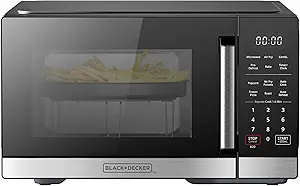 |
| Best Seller A high-volume bestseller chosen again and again | TOSHIBA Air Fryer Combo 1.0 Cu.Ft |  |
Sharp SMC1585KB Convection Microwave

| Capacity | 1.5 cubic feet |
|---|---|
| Wattage | 900 watts |
| Heating Method | Convection |
| Number of Power Levels | 10 |
| Turntable Diameter | 15.4 inches |
The Sharp SMC1585KB combines a 1.5 cubic foot cooking cavity with 900 watts of microwave power plus convection heating to handle everything from quick reheats to roasting and baking. It offers sensor cooking and auto defrost for more precise thawing and reheating, preset buttons and an express +60 second key for simple one-touch use, and ten power levels for finer control. Convection modes include auto broil, roast, and bake as well as Low Mix and High Mix settings that blend microwave and convection heat for faster, browned results. The stainless steel interior and dishwasher-safe 15.4-inch ceramic turntable make cleanup straightforward, and a bright white LED display is easy to read. Downsides are that at 900W it is not the most powerful countertop model for very large roasts and the family-size cavity may require careful rack placement for bulky bakeware; users who need heavy-duty baking capacity or faster microwave-only cook times may look elsewhere. For everyday mixed cooking tasks it delivers flexible performance and convenient controls.
Best for: Buyers who want a single countertop oven that handles reheating, baking, roasting and everyday cooking with easy presets and sensor convenience.
Less Ideal for: Those who need very high microwave power or large multi-rack baking capacity for frequent heavy-duty baking or commercial-style use.
- Convection plus microwave modes let you roast, bake, brown and reheat in one unit.
- Sensor cook and auto defrost remove much of the guesswork for timing.
- Dishwasher-safe 15.4" ceramic turntable and stainless steel interior simplify cleaning.
- Convenient one-touch +60s key, express cook presets, and ten power levels for easy control.
- 900W microwave output is moderate rather than high-end for very fast heating.
- Family-size interior may limit placement of large bakeware or multi-rack baking.
Verdict: A versatile countertop convection microwave that balances everyday reheating, baking and roasting needs in a single, easy-to-use unit.
Breville Combi Wave 3‑in‑1 BMO870BSS

| Capacity | 1.1 cubic feet |
|---|---|
| Microwave Input Power | 1200 watts |
| Convection Input Power | 1400 watts |
| Cooking Programs | Air Fry, Oven, Smart Cook, Smart Defrost, Smart Reheat |
The Breville Combi Wave 3‑in‑1 blends a 1200 W inverter microwave, 1400 W convection heating, and an air fry mode into a single countertop unit aimed at replacing multiple appliances. Typical use cases include quick reheats and defrosts with the inverter microwave, crisping fries or frozen snacks with air fry presets, and baking or roasting smaller dishes with convection. Notable features are the Element iQ system that directs power dynamically for more even results, Fast Combi and Cook From Frozen programs that combine microwave and convection for quicker cooking, and a soft‑close quiet door with shortcut one‑touch settings. Practical benefits include faster cook times than a conventional oven for many items, more consistent reheating without dry edges thanks to inverter control, and the convenience of preset programs and included combi crisp pan and trivet. Limitations are the modest 1.1 cu ft capacity that restricts large roasts or multiple racks of food and the unit's footprint which requires counter space. Users should also expect that high‑volume baking or sheet‑pan cooking still favors a full‑size oven.
Best for: Buyers who prioritize fast, versatile cooking performance in a single countertop appliance and want smart presets that deliver reliable, evenly cooked results without maintaining multiple devices.
Less Ideal for: Those who need to cook large batches, full sheet‑pan meals, or frequent family‑sized roasts should consider a full‑size oven instead.
- Combines inverter microwave, convection oven, and air fry in one countertop unit
- Element iQ power‑steering for more even cooking results
- Fast Combi and Cook From Frozen presets speed up common tasks
- Quiet soft‑close door and convenient one‑touch shortcut panel
- Includes combi crisp pan and trivet for air fry and convector use
- Limited 1.1 cu ft capacity not suited for large roasts or multiple dishes at once
- Requires significant counter space compared with a simple microwave
Verdict: If you want a high‑performance countertop appliance that replaces a microwave and air fryer while delivering faster, more even cooking with smart presets, this Breville combi oven is the top choice.
Avanti MTAF130K3S Convection Microwave

| Capacity | 1.3 cu. ft. |
|---|---|
| Functions | Microwave, Convection, Air Fry |
| Cooking Programs | 5 |
| Interior Material | Stainless Steel |
| Features | Speed Defrost; Cook by Weight |
The Avanti MTAF130K3S is a 3-in-1 countertop microwave that pairs standard microwave cooking with convection baking and an air-fry mode, making it a flexible secondary oven for a small kitchen. It offers five cooking presets, speed defrost, and weight-based cooking, and uses a stainless steel interior that is easy to wipe clean. Controls mix buttons and a touchscreen which makes common tasks quick, and the 1.3 cubic foot cavity fits small baking dishes and plates for reheating. The convection and air-fry modes let you crisp and roast foods that straight microwaves cannot, so it is useful for finishing frozen foods or doing small baked dishes without heating a full oven. Limitations are the modest internal capacity and countertop footprint, so it will not replace a full wall oven for large roasts or multiple racks of baking, and the unit is relatively heavy for a portable countertop appliance. For buyers prioritizing a compact all-in-one that handles quick microwave jobs plus occasional baking and crisping, this unit delivers practical versatility.
Best for: Buyers who want a compact countertop appliance that replaces basic reheating with added convection and air-fry flexibility while keeping operation simple and practical.
Less Ideal for: Households that need large-capacity baking or to replace a full-size oven should look at larger built-in or standard ovens instead.
- Combines microwave, convection, and air-fry modes for versatile cooking.
- Stainless steel interior for easier cleaning and durability.
- Speed defrost and cook-by-weight simplify reheating and frozen-food prep.
- Touchscreen and button controls provide straightforward operation.
- 1.3 cu. ft. capacity is limited for large dishes or multiple trays.
- At 48 pounds the unit is heavier than many countertop microwaves.
Verdict: A compact, practical 3-in-1 countertop microwave that adds convection and air-fry capability for buyers wanting more than simple reheating.
Frigidaire EMW1220AMZ 1.2 cu ft

| Capacity | 1.2 cubic feet |
|---|---|
| Wattage (microwave) | 900 watts |
| Power consumption | 1000 watts |
| Cooking programs | Bake, Roast, Microwave, Convection Oven |
| Included components | Air Frying Kit, Bake Plate, Microwave |
The Frigidaire EMW1220AMZ is a multifunction countertop appliance that mixes a 900W microwave with convection heating and an air-fry mode to handle baking, roasting, reheating, and crisping in a single unit. Typical use cases are small households or kitchens that need a space-saving solution for quick microwave tasks plus occasional roasting or air frying without a separate oven. Notable features include ten power levels, five one-touch cook menus, programmable controls, and an included air frying kit and bake plate, which make it straightforward to switch between modes. The practical benefits are clear: it replaces multiple appliances, reduces counter clutter, and the air fry option cuts visible oil use compared with deep frying. Limitations are its modest 1.2 cu ft capacity, which is best for singles or couples rather than large-family meals, and the unit's combined power ratings mean heavier convection tasks may take longer than a full-size oven. If you need an affordable, all-in-one countertop convection microwave with basic air-fry capability, this model delivers solid everyday performance.
Best for: Buyers who want a lower-cost, space-saving appliance that replaces a microwave and basic oven functions and who value versatility over large capacity.
Less Ideal for: Those who cook large batches, entertain frequently, or need professional-level convection performance should consider a larger dedicated oven.
- Combines microwave, convection oven, and air-fry modes in one countertop unit
- Includes air frying kit and bake plate for versatile cooking right out of the box
- Ten power levels and five one-touch menus simplify common tasks
- Compact 1.2 cu ft size saves counter space compared with full ovens
- 1.2 cu ft capacity limits larger dishes and full-family meals
- Convection and air-fry performance is constrained compared with full-size ovens
Verdict: A budget-friendly countertop convection microwave that packs microwave, convection, and air-fry capabilities into one compact unit for everyday versatility.
TOSHIBA OptiChef Pro Max 1.3 Cu.Ft.

| Capacity | 1.3 cubic feet |
|---|---|
| Output Power | 1100 watts |
| Number of Programs | 25 |
| Human Interface Input | Touchscreen |
| Heating Method | Convection |
The TOSHIBA OptiChef Pro Max is a countertop microwave that blends inverter microwave cooking with convection and an integrated air-fry-style fan for versatile meal prep. It is typically used as an all-in-one appliance for reheating, defrosting, baking, and crisping foods that benefit from convection heat, plus air-fry presets for frozen snacks. Notable features include Origin Inverter Technology for steadier power and more even defrosting, a humidity sensor for automated cook adjustments, 25 preset programs, and a responsive 2.4-inch color touchscreen with touch controls and Alexa compatibility. Practical benefits are evenly cooked leftovers and better texture on meats and baked items compared with basic microwaves, plus the convenience of app and voice control. Limitations include the relatively modest 1.3 cu ft capacity for larger roasts or multiple dishes and an output of 1100 watts which may be slower than higher-power countertop ovens for some convection tasks; countertop footprint is also larger than compact microwaves. For buyers prioritizing reliable, even cooking and sensor-driven convenience, this model delivers a capable multifunction option.
Best for: Buyers who want a dependable, sensor-driven countertop microwave that improves heating consistency and adds convection/air-fry functions without moving to a full-sized oven.
Less Ideal for: Those who need a larger cavity for big roasts, frequent family-scale batch cooking, or faster high-wattage convection performance should consider larger countertop ovens or higher-power models.
- Inverter technology for steadier power and more even heating
- Convection plus air-fry-style fan for crisping and baking
- Built-in humidity sensor for automated, consistent results
- Large set of 25 preset programs and a responsive color touchscreen
- Alexa and app connectivity for hands-free or remote control
- 1.3 cu ft cavity limits simultaneous cooking of multiple large dishes
- 1100W output may be slower than higher-power convection ovens for some tasks
Verdict: A reliable inverter-based countertop microwave that adds convection and air-fry capability for consistently even cooking and sensor-managed convenience.
BLACK+DECKER 5-in-1 Microwave ES9P032NA

| Capacity | 0.9 cubic feet |
|---|---|
| Wattage | 900 watts |
| Cooking Program | Air Fry, Bake, Combi (Grill/Convection), Microwave, Roast |
| Number of Power Levels | 10 |
| Turntable Diameter | 11.3 inches |
This compact 5-in-1 countertop microwave mixes a 900W microwave with convection, grill and dedicated air-fry capability to handle a wider range of cooking than a basic microwave. Typical use cases are reheating and defrosting, baking small items, roasting single portions and air-frying frozen snacks using the built-in presets. Controls are touch and button based with 10 power levels, 7 auto menus for common microwave foods, and 11 air-fry presets that simplify cooking frozen fries, nuggets and other snacks. The stainless steel interior and included bake tray and two grill racks make it straightforward to switch between cooking modes, and the child-lock adds safety for family kitchens. Because capacity is 0.9 cu ft with an 11.3-inch turntable, it is best suited to singles, couples or RV kitchens rather than large-batch cooking, and the 900W output means some microwave tasks take longer than higher-watt models. If you want a space-saving convection countertop microwave that also air-fries, this unit delivers versatile functionality in a small footprint but expect limited interior space for larger dishes.
Best for: Buyers who want a single compact appliance that expands a countertop microwave into baking, roasting and air-frying capabilities while prioritizing reliable, widely used presets and practical safety features.
Less Ideal for: Those who regularly cook large family meals, need to fit wide casserole dishes, or require high-wattage, faster microwave performance should consider larger or higher-power ovens.
- Combines microwave, convection, grill, roast and air-fry in one compact countertop unit
- 11 air-fry presets and 7 auto microwave menus make common foods easy to cook
- Stainless steel interior with included bake tray and two grill racks for flexible cooking
- Child-lock and straightforward touch/button controls add safety and ease of use
- 0.9 cu ft capacity and 11.3-inch turntable limit larger dishes and casserole-size cooking
- 900 watts is modest for a convection microwave so some tasks take longer than higher-watt models
Verdict: A compact, multi-function countertop microwave that adds convection and air-fry versatility for small kitchens and snack-focused cooking.
TOSHIBA Air Fryer Combo 1.0 Cu.Ft

| Capacity | 1 cubic feet |
|---|---|
| Wattage | 1000 watts |
| Power Consumption | 1600 watts |
| Turntable Diameter | 12.4 inches |
| Number of Programs | 5 |
This TOSHIBA countertop microwave pairs a 1000-watt microwave output with convection and broil functions plus an air-fry mode, giving you one oven for reheating, defrosting, baking, broiling and lower-fat frying. It is typically used as an all-in-one replacement for a small countertop oven and microwave, with a 12.4-inch turntable that can handle a 12-inch pizza or a small roast. Notable conveniences include multiple cooking programs, a Pro Defrost setting, a bright LED cavity light, a child safety lock and both knob and touch controls for straightforward operation. Practical benefits are the space savings and flexibility: you can crisp frozen foods with the air-fry mode, bake with convection, or quickly reheat with microwave power without needing separate appliances. Important limitations are its footprint and weight for smaller counters and the manual turntable format rather than a flatbed cavity, which can restrict larger sheet pans; programming depth is solid but not as advanced as high-end built-in convection ovens. For buyers who want a simple, multiuse countertop unit, it delivers useful daily performance without a steep learning curve.
Best for: Buyers seeking a straightforward, low-risk all-in-one countertop solution that replaces separate microwave and small oven functions and values simple presets and safety features.
Less Ideal for: Users who need to fit large baking sheets or who want the highest-end, programmable convection performance for frequent full-size roasting should consider larger dedicated ovens.
- 8-in-1 cooking modes combine microwave, convection, broil and air fry in one unit
- 1000 watt microwave output with Pro Defrost and preset programs for simple use
- 12.4-inch turntable accommodates a 12-inch pizza or small roast
- Child safety lock and ECO standby mode for safer, lower-power operation
- Bright LED cavity light and mixed knob/touch controls for clear, easy operation
- Position memory turntable and interior size limit use of larger sheet pans
- Relatively heavy and wider footprint for tight countertop spaces
Verdict: A practical, easy-to-use countertop convection microwave with air-fry capability that suits cautious buyers who want one dependable appliance to handle reheating, baking and crisping without fuss.
Choosing the Right Convection Countertop Microwave: Key Factors to Consider
Cooking Modes and Combination Functions
A true convection countertop microwave should offer separate convection, microwave, and combination modes. Convection mode uses a heating element and fan to circulate hot air, which browns and crisps in a way a microwave alone cannot. Combination functions let you speed up cooking by using microwave bursts while finishing with convection heat for a better crust.
Look for flexible mode settings and adjustable time/temperature controls rather than only one-touch presets. That flexibility matters when you move from reheating to light baking or roasting, because different recipes need distinct blends of convection and microwave power.
Power Output and Heat Distribution
Microwave wattage and the convection element wattage both affect how quickly and evenly food cooks. Higher microwave power reduces reheating time but can increase hotspots unless the unit has good turntable or inverter technology. Convection element wattage and fan design determine how uniformly the oven browns and how close results are to a small conventional oven.
Consider how power relates to your typical dishes. If you plan to bake or roast regularly, steady convection heat and good air circulation are more important than raw microwave wattage. For frequent reheating, look for even microwave distribution and settings that reduce overcooking at the edges.
Interior Size, Rack Options, and Turntable
Countertop space is limited, so interior volume and usable height matter. A slightly taller cavity that accommodates a removable rack lets you heat two small items at once or position food closer to the convection element for better browning. The turntable diameter affects what plates and casserole dishes fit; some models offer a halogen or ceramic tray instead of a traditional turntable for more stable convection use.
Think about the largest dish you typically use and whether you will need an internal rack. Usable capacity determines whether the microwave can double as a light oven for casseroles or small baking projects.
Control Layout and Preset Usefulness
Controls should match how you cook. Clear temperature and time settings for convection mode, plus combination presets for common tasks like crisping pizza or baking small items, reduce guesswork. Intuitive dials or well-labeled touchpads speed set up and minimize errors when switching modes.
Also consider whether the unit permits incremental adjustments to time, power, and temperature. Experienced cooks will want direct temperature entry for convection baking, while casual users benefit from reliable presets and quick-access buttons for popcorn, defrost, and reheating.
Cleaning and Maintenance
Convection countertop microwaves handle both wet microwave spills and dry roasting drips, so interior finishes matter. Smooth enameled interiors wipe clean more easily than textured surfaces. Removable crumb trays, racks that lift out, and accessible fan areas simplify maintenance.
Filter and vent access is also important. Some countertop convection microwaves have vents and fans that accumulate grease when used for roasting; units designed for easy access let you clean these parts without tools. Consider how much routine maintenance you are willing to do based on the types of food you will cook.
Noise, Venting, and Countertop Placement
Convection mode uses an internal fan, which adds noise and airflow. Consider how loud the unit can be during extended baking cycles and where it will sit in the kitchen. Units with efficient fan designs tend to be quieter and move air more evenly, which helps browning.
Venting direction and clearance requirements affect placement. Allow adequate space around vents to prevent heat buildup on cabinets and ensure the unit draws fresh air. If countertop space is tight, check the rear clearance and whether nearby walls will funnel hot exhaust into cabinets.
Using a Convection Countertop Microwave Like a Mini Oven
A convection countertop microwave can replace short baking and finishing tasks that would otherwise need a full-sized oven. To use it effectively, preheat the convection mode to the target temperature and give the unit time to stabilize before inserting food. This reduces temperature swings that cause uneven browning.
Place items on the included rack when you need airflow underneath and position trays to allow even circulation around the food. For small baking jobs, reduce recipe temperatures by 25 to 50 degrees Fahrenheit compared with a conventional oven and monitor more frequently because the smaller cavity can brown faster.
- Preheat the convection mode for 5 to 10 minutes before baking.
- Use a rack to encourage air circulation for crisping.
- Lower recipe temperature slightly and check early to prevent over-browning.
Tips to Avoid Uneven Microwaving and Cold Spots
Even with improved designs, microwave energy can produce hotspots. Use a rotating turntable or manually rotate dishes during longer microwave cycles to promote even heating. For combination mode, allow brief rest periods so heat redistributes inside the food.
Cut food into uniform pieces for reheating, and add a short covered steam period for denser items to avoid dry edges while the center warms. When possible, use cookware rated for microwave and convection use to maintain safety and heat transfer performance.
- Stir or rotate halfway through reheating dense foods.
- Cover with a vented lid to retain moisture during microwave bursts.
- Choose cookware suitable for high convection temperatures.
Cleaning Routine for Mixed-Use Cooking
Because you will use both wet and dry cooking modes, establish a simple cleaning routine to keep the cavity and vents clear. Wipe splatters after they cool slightly and remove the turntable and rack for deeper cleaning once a week depending on use.
Inspect vents and fan housings periodically for grease buildup when you do light roasting. A shallow tray or silicone mat under items that tend to drip will catch loosened crumbs and make cleanup easier.
- Wipe the interior after each spill to prevent stubborn stains.
- Remove and hand-clean the rack and turntable weekly.
- Check vent areas monthly and clean if you notice residue buildup.
When to Use Combination Mode Versus Straight Convection
Combination mode saves time by using microwave power for internal heating and convection heat for surface browning. Use combination for dishes that need both rapid warming and crisping, such as casseroles or pre-baked frozen items.
Choose straight convection for recipes that require steady dry heat and a consistent oven-like environment, like roasting small vegetables or baking single-layer cookies. If a recipe calls for long, slow browning, convection-only is usually the better option.
- Use combination for quick finishing and faster reheating with browning.
- Use convection-only for recipes needing steady dry heat and even crust development.
- Adjust time and temperature when switching modes to avoid overcooking.
Placement and Ventilation Best Practices
Place the unit on a stable, heat-resistant countertop with at least the manufacturer-recommended clearance on the sides and back for airflow. Keep the top clear of flammable items to avoid heat buildup during extended convection runs.
Avoid placing the microwave in a recessed cabinet without adequate ventilation. If you must, leave larger clearances and check vents after the initial few uses to ensure hot air is not trapped against cabinet surfaces.
- Leave recommended clearance around vents to prevent heat buildup.
- Use on a stable, level surface to avoid rattling and ensure even turntable rotation.
- Keep the top and vents free of objects during operation.
How We Chose the Best Convection Countertop Microwave
We shortlisted models that deliver usable convection performance on a countertop footprint and prioritized features that directly affect cooking results. Core evaluation criteria included cooking versatility, which looks at how well the unit handles microwave, convection, and combination modes; temperature accuracy and uniformity under convection settings; and power distribution for even microwave heating across common plate sizes. We also judged ease of use and controls, giving weight to straightforward presets, clear dials or touch controls, and accessible interior layout. Durability and maintenance were considered through build quality cues such as interior finish, rack stability, and ease of cleaning. Capacity and footprint were evaluated to ensure the units fit typical countertop spaces while accommodating common dish sizes. We excluded compact units with only basic crisping accessories and any models lacking a true convection heating element and forced-air circulation. We did not consider built-in or over-the-range models because they have different ventilation and installation constraints. The result is a set of countertop convection microwaves that balance practical home-kitchen performance with everyday usability.
Our full evaluation process is outlined in our review methodology.
FAQ
Can a convection countertop microwave bake the same way as a regular oven?
It can perform many of the same small baking tasks but in a smaller space and with faster browning. Expect shorter cook times and slightly different temperature adjustments because the cavity is smaller and heats faster than a full-sized oven.
Do I need special cookware for convection microwave use?
Use cookware labeled safe for microwave and oven use. Glass, ceramic, and some metal racks are suitable for convection, but avoid cookware that is only rated for microwave use and cannot withstand higher dry heat.
Will convection mode make the unit much louder?
Convection mode runs a fan, so it will be noisier than microwave-only cooking. Most units are tolerable for normal kitchen use, but noise levels vary. Check fan operation and expect steady airflow noise during extended baking cycles.
How do I avoid soggy reheated foods?
Use a combination or convection finish to restore crispness. Start with microwave bursts to heat through, then finish under convection to dry and brown surfaces. Placing food on a rack rather than a flat plate also helps air circulate and prevent sogginess.
Is preheating required for convection cooking?
Preheating generally improves results for baking and roasting. Give the unit a few minutes to reach the set temperature so the food begins cooking in a stable environment and browns evenly.
Final Verdict
When choosing a convection countertop microwave, prioritize the cooking modes and heat distribution that match how you plan to use the unit. If you want to reheat quickly and occasionally finish dishes with a crispy top, combination modes and good microwave uniformity are most important. If you plan to bake or roast frequently, look for accurate convection temperature control, a usable internal rack, and effective fan circulation. Balance capacity and countertop footprint against the tasks you expect it to handle. With the right tradeoffs, a convection countertop microwave can serve as a compact, versatile alternative to a full-sized oven for many small-batch cooking needs.