
Note: This article contains affiliate links. If you click on these links and make a purchase, we may earn a small commission at no extra cost to you. This helps support our research and content. Read our full affiliate disclosure here.
If you bake frequently, the right convection oven can be the difference between uneven loaves and consistently browned, well-risen results. Convection ovens circulate hot air to reduce hotspots and shorten bake times, which matters for everything from delicate cookies to multi-rack sheet cakes. This guide highlights seven top convection ovens for baking, narrowed to units that deliver reliable temperature control, sensible interior capacity, and predictable airflow. Below you will find our shortlisted picks and a clear explanation of the evaluation criteria used, so you can match an oven to your usual batch sizes, preferred baked goods, and kitchen layout.
Top Picks at a Glance
| Best Overall The best all-around choice for most situations | Breville Smart Oven Pro BOV845BSS |  |
| Best Quality Built to a higher standard if you want something more solid | Breville Smart Oven Air Fryer Pro BOV900BSS |  |
| Best Value The sweet spot between price and what you get | Ninja Foodi XL Pro DT201 | 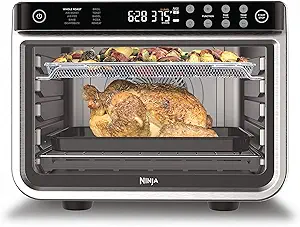 |
| Best Budget The cheapest option that still gets the job done reliably | BLACK+DECKER 4-Slice Toaster Oven |  |
| Top Rated A top-rated pick with lots of positive feedback | NutriChef 30-Quart Convection Oven |  |
| Most Popular A crowd favorite that many people choose with confidence | Emeril 26QT French Door Air Fryer Oven |  |
| Best Seller A high-volume bestseller chosen again and again | Cuisinart Airfryer Toaster Oven TOA-70 |  |
Breville Smart Oven Pro BOV845BSS

| Wattage | 1800 watts |
|---|---|
| Capacity | 0.49 cubic feet |
| Control Type | Knob Control |
| Number of Shelves | 1 |
The Breville Smart Oven Pro is a roomy countertop convection toaster oven designed to replace multiple appliances for everyday baking and roasting. It uses the Element iQ system with five independent quartz elements and an internal fan to concentrate heat where needed, which shortens cook times and promotes even browning. Typical uses include baking cookies or small pizzas, toasting bread, roasting a chicken, and slow-cooking stews using the dedicated slow-cook mode. The oven includes 10 preset functions, an LCD for clear status and preheat indication, an interior light, and a set of practical accessories including a baking pan, broiling rack, pizza pan, and wire rack. At 1800 watts it heats up quickly and the convection mode can reduce baking times substantially. Trade-offs are its countertop footprint and weight, which require counter space and limit portability, and it lacks touchscreen or smart-home connectivity for remote control. For home bakers who want reliable, consistent results across a range of tasks, it performs very well.
Best for: Home bakers who prioritize consistent, reliable baking results and want a single countertop appliance that handles baking, roasting, toasting and slow cooking without fuss.
Less Ideal for: Those who need a very compact, lightweight toaster oven for small kitchens or who require smart-home connectivity and remote control features.
- Element iQ with five quartz elements for targeted, even heating
- Convection fan reduces cook time and improves browning
- Includes versatile preset functions for baking, roast, pizza, cookies and slow cook
- Comes with useful accessories: enamel baking/broiling racks and a pizza pan
- LCD display and interior light make monitoring and timing easy
- Large countertop footprint and relatively heavy compared with small toaster ovens
- No Wi-Fi or app control for remote operation
Verdict: Buy this if you want a dependable, high‑performance countertop oven that delivers consistent baking and roasting results across many functions.
Breville Smart Oven Air Fryer Pro BOV900BSS

| Wattage | 1800 watts |
|---|---|
| Control Type | Knob Control |
| Power Source | Corded Electric |
| Temperature Range | 80-480 °F |
| Capacity | 1 cubic feet |
The Breville Smart Oven Air Fryer Pro is a countertop convection oven that combines a large interior with dedicated air-fry and dehydrate modes for versatile cooking. It uses the Element iQ system with five quartz heating elements and a two-speed convection fan to direct heat precisely, which helps reduce cook times and deliver more even browning. Typical uses include toasting, roasting a whole turkey, baking cookies or pizza, air frying fries, and dehydrating multiple trays at once; the oven accepts 9×13 pans and can hold up to four dehydration trays. Controls are a mix of knobs and an LCD display, and the oven includes useful accessories such as racks, a roasting pan, pizza pan, and a mesh basket. Practical benefits are consistent results from the smart heating algorithm, large capacity that replaces several appliances, and versatile presets that simplify common tasks. Trade-offs are the unit's substantial countertop footprint and 1800 W power draw, which require ample space and a dedicated outlet, and the learning curve for dialing in custom times and temperatures compared with simpler toaster ovens.
Best for: Buyers who prioritize high-performance cooking and want one countertop appliance to handle roasting, baking, air frying, and dehydrating for family-sized meals.
Less Ideal for: Those with very small kitchens, limited counter space, or who need a lightweight travel-friendly toaster oven should consider smaller models instead.
- Element iQ system with 5 quartz elements for even, targeted heating
- Super convection fan with two speeds for faster, crispier air frying
- Large 1 cubic foot interior fits 9 slices of toast, a 14 lb turkey, or 9×13 pans
- Includes multiple accessories: pizza pan, roasting pan, racks, and mesh basket for dehydrating/air frying
- 13 preset cooking functions plus LCD for easy selection and monitoring
- Large footprint and heavy unit that requires significant counter space
- High power draw (1800 W) may limit simultaneous use with other heavy appliances
Verdict: Choose this oven if you want a high-performance, large-capacity countertop unit that reliably air fries, roasts, bakes, and dehydrates with precise, convection-driven results.
Ninja Foodi XL Pro DT201

| Wattage | 1800 watts |
|---|---|
| Capacity | 21 liters |
| Number of Shelves | 2 |
The Ninja Foodi XL Pro DT201 is a high-power countertop convection oven that combines air frying, roasting, baking, broiling, toasting, dehydrating and more into one unit. Its True Surround Convection system and 1800-watt motor heat quickly for faster preheating and up to 30% faster cooking than a traditional oven, while two rack positions let you cook two sheet pans at once without rotating. The oven includes an air fry basket, two sheet pans, roast tray and wire racks so you can move between functions and cook family-sized meals like a 5 lb chicken or two 12-inch pizzas. Programmable controls and an illuminated rack-position guide simplify multi-step bakes and roasts. Practical benefits are speed, even crisping with less oil and the ability to replace several appliances on the countertop. Limitations include its heavy countertop footprint and weight, and while it fits large items it still requires planning for very large roasts or bulky cookware that exceed the 21-liter interior capacity.
Best for: Buyers who prioritize fast, restaurant-style results and want a single countertop oven that crisps and cooks evenly across two racks for family meals and entertaining.
Less Ideal for: People with very small countertops or who need a lightweight, highly portable appliance; also not the best choice if you frequently cook extremely large roasts or oversized baking dishes.
- Powerful 1800W convection heats quickly for faster preheat and cooking
- Two-level cooking lets you run two sheet pans or multiple items at once
- 10-in-1 functionality replaces several kitchen appliances
- Includes useful accessories: air fry basket, two sheet pans, wire racks and roast tray
- Programmable controls with illuminated rack-position guidance for repeatable results
- Large and relatively heavy for a countertop oven
- 21-liter capacity may limit very large roasts or oversized cookware
Verdict: Choose this oven if you want a high-power, two-rack air fryer convection oven that delivers faster, crispier results for family-sized cooking.
BLACK+DECKER 4-Slice Toaster Oven

| Wattage | 1150 watts |
|---|---|
| Control Type | Knob Control |
| Temperature Range | 450 °F |
| Capacity | 10 liters |
This BLACK+DECKER 4-slice toaster oven is a compact countertop oven that bakes, broils, toasts, and keeps food warm using natural convection to circulate heat for more even results. It fits a 9-inch pizza or four slices of bread, and includes a baking/broiler pan, toasting rack, and a removable crumb tray for easy cleanup. Controls are simple knob dials for function, temperature, and a 30-minute timer with a stay-on option and auto shut-off for safety. The manufacturer highlights EvenToast Technology to reduce uneven browning, and the built-in convection can shorten cook times compared with non-convection toaster ovens. Practical downsides are its small interior—limited to single-serving dishes—and that outer surfaces become hot during use, so careful clearance and mitts are required. For everyday baking of small items, reheating, and crisping frozen foods, it delivers consistent, straightforward performance without complicated settings.
Best for: Buyers who want a reliable, no-frills countertop oven for everyday small-batch baking, reheating, and toasting where space and simplicity matter.
Less Ideal for: People who frequently bake for crowds or need to cook full-size sheet pans and large casseroles should choose a larger oven or full-size range instead.
- Convection heating for more even cooking and faster results
- Fits a 9-inch pizza or four slices of bread for compact baking tasks
- Simple knob controls and a 30-minute timer with stay-on for easy operation
- Includes baking/broiler pan, toasting rack, and removable crumb tray for convenience
- Stainless steel exterior with large viewing window to monitor food while cooking
- Small 10-liter interior limits batch size and larger bakeware
- Exterior surfaces get hot during use requiring caution and clearance
Verdict: A compact, convection-equipped toaster oven that reliably handles small baking and reheating jobs with simple controls and practical accessories.
NutriChef 30-Quart Convection Oven

| Capacity | 30 quarts |
|---|---|
| Wattage | 1400 watts |
| Temperature Range | 160 – 450 °F |
| Power Source | Corded Electric |
| Number of Shelves | 1 |
The NutriChef 30-Quart Convection Oven combines a convection heating chamber with two hot plates to handle baking, broiling, roasting, toasting and rotisserie tasks on a countertop. It is typically used as a compact secondary oven for small families or as the primary oven in tight kitchens, with an adjustable thermostat, 60-minute timer and a dropdown tempered-glass door for easy access. Notable features include convection circulation for more even heating, a 1400 watt oven element, dual burners for stovetop tasks, and included accessories such as a baking tray, grill rack and rotisserie fork. Practical benefits include faster preheat and shorter bake times than a conventional full-size oven, versatility to cook multiple styles, and an easy-clean interior with a removable crumb tray and slide-out tray. Important limitations are its single shelf capacity which restricts larger sheet-batch baking, modest temperature ceiling compared with some pro ovens, and basic knob controls rather than precise digital programming.
Best for: Bakers who want a reliable, energy-efficient countertop oven that speeds up small-batch baking and doubles as an extra cooktop without needing advanced digital controls.
Less Ideal for: Home bakers who regularly bake multiple full-size sheets at once or need exact digital controls and higher-end commercial temperature ranges should consider larger or pro-grade ovens.
- Convection heating for more even cooking and faster bake times than a non-convection toaster oven
- Dual hot plates add stovetop functionality without needing a separate burner
- Includes practical accessories (baking tray, grill rack, rotisserie fork) for varied baking and roasting
- Easy-clean interior with removable tray and crumb tray for simple maintenance
- Single internal shelf limits capacity for multiple baking sheets or large trays
- Knob controls lack the precision of digital temperature/timer presets
- Temperature tops at 450°F which may be lower than some specialty baking ovens
Verdict: A compact, dependable convection countertop oven that speeds small-batch baking while also serving as a handy extra cooktop for everyday kitchen tasks.
Emeril 26QT French Door Air Fryer Oven

| Capacity | 24.6 liters |
|---|---|
| Wattage | 1700 watts |
| Voltage | 120 volts |
| Control Method | Touch |
| Max Temperature Setting | 500 °F |
This Emeril 26 QT French door air fryer toaster oven is built to replace several appliances and handle family-sized meals. It uses 360° hot air circulation and a 1700W dual-speed fan to air fry, roast, bake, broil, dehydrate and slow cook, and the rotisserie and included spit make it easy to roast whole chickens. The touchscreen control and 24 one-touch presets simplify common tasks, while French doors and an interior light make loading and monitoring food straightforward. The extra-large 26 QT cavity fits 12-inch pizzas or a full sheet of cookies, and the seven included accessories (air fry basket, bake pan, drip tray, crisper basket, rotisserie spit and tools) let you use it for many recipes out of the box. Practical limits are countertop footprint and power draw from the 1700W heater, and like many all-in-one ovens it takes some experimenting to dial in times for specific recipes compared with a conventional oven. Noise from the fan is noticeable at high speeds. For families who want one versatile unit for everyday meals and entertaining, it covers most bases well.
Best for: Buyers who need a single, versatile countertop appliance to prepare full family meals and want presets and accessories that simplify a range of cooking tasks.
Less Ideal for: Those with very limited counter space or who prefer using separate full-size ovens and stovetops for high-volume cooking should consider alternatives.
- Very large 26 QT capacity fits whole chickens and 12-inch pizzas
- Wide function set with 24 presets including air fry, roast, dehydrate and rotisserie
- Includes seven useful accessories so you can start cooking right away
- Touchscreen controls and French doors make loading and control intuitive
- 1700W power draw requires a dedicated outlet in some kitchens
- Takes countertop space and may be bulky for small counters
- Fan can be somewhat loud on high-speed settings
Verdict: A family-focused, all-in-one countertop oven that combines large capacity, rotisserie and many presets to replace multiple appliances for everyday family cooking.
Cuisinart Airfryer Toaster Oven TOA-70

| Output Wattage | 1800 watts |
|---|---|
| Capacity | 0.6 cubic feet |
| Max Temperature Setting | 450 °F |
| Control Method | Touch |
The Cuisinart TOA-70 combines an 1800W heater with AirAdvantage top-fan technology to deliver fast, crispy results for a wide range of foods. It offers eight modes including air fry, convection bake, broil, grill, and toast, and the interior is roomy enough for a 12-inch pizza, six slices of toast, or several pounds of wings. Controls are a mix of touch and a jog dial for temperature (Warm to 450°F) and a 60-minute timer with auto-shutoff, while included accessories—oven rack, baking pan, air-fry basket and reversible grill/griddle—let you switch between searing, griddling, and crisping without extra purchases. The stainless steel interior is easy to wipe clean but the unit is fairly heavy and takes counter space, so it is best for users who will use multiple functions regularly. Overall it excels at producing crispy textures quickly, though those who need ultra-compact gear or want fully digital controls may prefer something smaller or more modern in interface.
Best for: Buyers who prioritize reliable, versatile countertop cooking that produces crispy results and value a broadly capable, well-built appliance for everyday family meals.
Less Ideal for: Those needing a very compact, lightweight unit for small kitchens or users who prefer fully digital touchscreen controls and app connectivity.
- Powerful 1800W heating with top-fan AirAdvantage for fast, crispy results
- Eight cooking functions cover air fry, bake, broil, grill, toast and warming
- Includes versatile accessories: air-fry basket, baking pan, oven rack, and reversible grill/griddle
- Spacious 0.6 cu. ft. interior fits a 12-inch pizza or multiple servings
- Wide temperature range to 450°F and 60-minute timer with auto-shutoff
- Relatively heavy and takes significant countertop space
- Controls are a mix of touch and jog dial rather than a fully digital interface
- Interior requires hand washing of accessories and careful cleaning
Verdict: A heavy-duty, multi-function countertop oven that reliably delivers fast, crispy results for families who want one appliance to air fry, bake, broil, and grill.
Choosing the Right Convection Oven for Baking: Key Factors to Consider
Temperature Control and Accuracy
Precise and stable temperature control is critical for predictable baking. Small variances can change crumb structure, rise, and browning, so look for ovens with reliable thermostats and minimal swing.
Consider whether the oven offers a calibrated or adjustable thermostat and how it performs at both low and high bake temperatures. Bakers often use probe thermometers for verification, but starting with an oven that tracks and holds its set temperature will reduce guesswork and variation between batches.
Airflow and Fan Design
How a convection oven moves air affects evenness of browning and rise. Fan placement, fan speed, and whether the oven uses true convection with a separate heating element behind the fan versus a basic fan-forced mode will change results.
For delicate items like meringues or souffles, gentler circulation is preferable. For sheet trays and multiple racks, stronger, well-directed airflow prevents cold pockets and uneven color. Think about the typical items you bake and whether you need aggressive circulation or a milder convection action.
Interior Capacity and Rack Configuration
Usable internal volume and how racks are spaced determine what you can bake at once. Large batches, multiple-sheet cookies, or tall breads need roomy interiors and flexible rack positions.
Check the distance between racks and the number of height settings. Pull-out racks or glide systems improve access and reduce the risk of spills when moving heavy pans. An oven with more vertical clearance lets you bake larger pans without blocking airflow between levels.
Preheat Speed and Heat Recovery
Faster preheat saves time, but heat recovery after opening the door is more important for consistent bakes. Frequent door openings for glazing, checking, or rotating pans should not collapse the oven temperature for long periods.
Look for models that return to set temperature quickly after the door is opened and that reach common bake temperatures without long waits. This helps maintain schedule and avoids underbaking on multi-step recipes.
Control Usability and Programming
Clear, intuitive controls reduce user error. Precise temperature entry, easy mode selection, and memory features for custom bake profiles can speed repetitive tasks for avid bakers.
Some ovens offer preset modes for specific baked goods while others provide fine-grain manual control. Consider how confident you are with manual settings and whether programmable timers or multi-stage baking profiles will benefit your routine.
Cleaning and Maintenance
An oven that is easy to clean saves time and keeps heat transfer consistent over the long term. Removable racks, smooth interior surfaces, and accessible crumb trays simplify upkeep.
Self-clean cycles can be convenient but may stress internal components over time. Evaluate whether you prefer manual cleaning accessibility or mechanized cycles, and consider how easy it is to reach fan housings and heating elements for occasional maintenance.
Why Convection Helps Baking
Convection works by circulating hot air with a fan, reducing temperature differences between the top and bottom of the oven. This promotes more consistent browning and can shorten bake times, which is especially helpful when baking multiple trays at once.
For many home bakers, the biggest practical benefits are even crust color and the ability to stack sheet pans without one taking much longer than the other. However, some delicate recipes require adjustments to temperature or time, so knowing how your oven behaves is essential.
- Even browning across multiple racks
- Reduced bake times for many recipes
- Better heat consistency for larger batches
Adjusting Recipes for Convection
Most recipes designed for conventional ovens benefit from a small temperature reduction or a shortened bake time when using convection. A common rule is to lower the temperature by 20 degrees Fahrenheit or check for doneness earlier, but the exact change depends on the recipe and your oven.
Run a few test batches with cookies, loaves, or cakes to establish how much to reduce temperature or time. Keep notes on results so you can reproduce the same outcomes reliably.
- Lower temp by about 20 F for many recipes
- Start checking 5 to 10 minutes earlier
- Use an internal probe or visual cues for doneness
Rack Placement and Pan Selection
Rack position influences airflow and how heat contacts pans. For best results, avoid blocking the fan with oversized pans. Centering pans on the rack and leaving space between trays improves circulation.
Thinner, dark pans absorb heat faster and can brown the bottoms more quickly. Lighter-colored pans and insulated baking sheets reduce bottom over-browning, useful when using aggressive convection settings.
- Leave space around pans for airflow
- Rotate pans when baking multiple trays if needed
- Match pan type to the desired crust and browning
Testing Your Oven Before Important Bakes
Before attempting a showpiece bake, perform simple tests to map your oven. Use an oven thermometer to check temperature at several rack positions and run a multi-rack cookie test to observe color consistency.
Document preheat times, how long it takes to recover temperature after opening, and any hot or cool spots. That baseline information helps you plan positioning and timing for critical bakes.
- Measure temperatures at rack levels
- Run a multi-rack cookie test
- Record recovery time after opening the door
Maintenance Tips to Preserve Bake Performance
Regular cleaning keeps heating surfaces and fans working efficiently. Remove loose crumbs and wipe spills so they do not carbonize and affect heat distribution. Check seals and door gaskets for gaps that let heat escape.
Inspect racks and guides for warping or damage that can tilt pans and change how heat reaches the bakeware. Replace or realign components as needed to keep heat transfer consistent.
- Clean spills promptly to avoid burning
- Check door seals and hinges regularly
- Maintain straight, undamaged racks for even bakes
How We Chose the Best Convection Oven for Baking
We focused on characteristics that directly affect baking outcomes and everyday usability. Temperature accuracy and stability were prioritized because even small deviations change rise and crumb. Bake capacity and rack layout were next, since the number and spacing of racks determine what you can cook at once and how heat distributes in multi-rack bakes. Airflow design and fan placement were considered to judge how evenly heat circulates across pans. Preheat time and recovery matter for busy bakers who open the door often. Finally, ease of cleaning and control clarity impact long-term ownership and consistent results. We excluded units that lack a dedicated convection or fan-forced mode, ovens with marginal temperature control, and designs that severely restrict usable interior space. Our picks emphasize ovens that balance accurate thermostats, useful interior layouts, and durable components. The criteria below guided selection and map directly to the scoring metrics used for each product entry.
Our full evaluation process is outlined in our review methodology.
FAQ
Do I always need to lower the temperature when using convection?
Not always, but many bakers reduce temperature by about 20 F or shorten baking time. The exact adjustment depends on the recipe and how aggressive your oven's circulation is.
Can I bake delicate items like souffles in a convection oven?
You can, but delicate items may require a milder convection setting or turning convection off. Strong circulation can disrupt fragile structures, so test and adjust fan settings if possible.
How many racks can I use at once with reliable results?
It depends on oven size and airflow. Many convection ovens handle two to three racks well when pans are spaced properly, but very full loads can still cause uneven results.
Should I use special bakeware for convection baking?
Use lighter-colored, reflective pans for more even browning if you want to avoid over-darkened bottoms. Avoid oversized pans that block airflow around other trays.
How do I know if my convection oven is heating evenly?
Place an oven thermometer on different racks and run a test bake, like multiple sheets of cookies. Compare color and thermometer readings to identify hot or cool spots and adjust rack placement accordingly.
Final Verdict
Prioritize ovens that give consistent temperature control, even airflow, and an interior layout that matches your usual baking scale. Tradeoffs usually involve speed versus delicacy: stronger convection shortens times and browns faster but may need careful adjustments for fragile bakes. Choose a convection oven that aligns with the kinds of baking you do most often. If you bake multi-rack batches or heavy breads, favor capacity and robust airflow. If you focus on delicate pastries, look for gentler circulation and precise temperature control.