
Note: This article contains affiliate links. If you click on these links and make a purchase, we may earn a small commission at no extra cost to you. This helps support our research and content. Read our full affiliate disclosure here.
Picking the right single wall oven matters because it affects dinner timing, baking results, and kitchen ergonomics. A well-chosen single wall oven gives you predictable heat, easy cleanup, and installation options that match your cabinetry. This guide shortlists the top single wall ovens available and focuses on measurable factors like cooking consistency, temperature accuracy, and how straightforward installation and maintenance are. Below you will find our top picks and the evaluation criteria we used to narrow the field, followed by guidance to help you select the best oven for your kitchen layout and cooking habits.
Top Picks at a Glance
| Best Overall The best all-around choice for most situations | Empava 24" Single Electric Wall Oven |  |
| Best Quality Built to a higher standard if you want something more solid | EliteEdge 30-Inch Single Wall Oven | 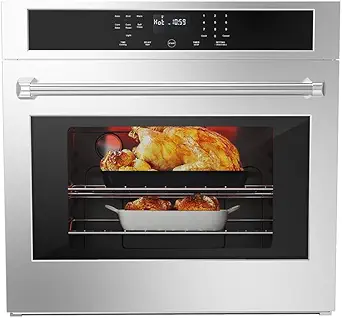 |
| Best Value The sweet spot between price and what you get | Magic Chef 24-Inch Wall Oven MCSWOE24S |  |
| Best Budget The cheapest option that still gets the job done reliably | Takywep 24" Single Wall Oven | 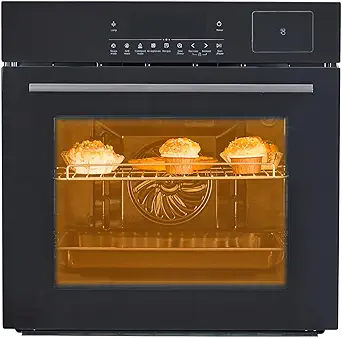 |
| Top Rated A top-rated pick with lots of positive feedback | ThermoMate 24 Inch Wall Oven |  |
| Most Popular A crowd favorite that many people choose with confidence | Empava 24" Single Wall Oven |  |
| Best Seller A high-volume bestseller chosen again and again | ThermoMate 24" Single Wall Oven ESMW605 |  |
Empava 24" Single Electric Wall Oven

| Fuel Type | Electric |
|---|---|
| Wattage | 2800 watts |
| Voltage | 240 volts |
| Capacity | 2.3 cubic feet |
| Additional Features | Broiling, Interior Light, Racks, Temperature Control, Timer |
This Empava 24" single electric wall oven combines true convection performance with a compact 2.3 cu ft cavity suited to smaller kitchens and apartments. It uses a convection fan to circulate heat for more even baking and roasting, and offers seven cooking modes including convection roast, broil, bake, pizza, and keep warm that cover most day-to-day recipes. The hidden heating elements and ceramic interior make wipe-down cleaning straightforward, and the halogen interior light plus a triple-layer tempered glass door help you monitor food safely without large heat loss. Controls are mechanical knobs rather than touch panels, which many buyers find reliable and simple to adjust, and the unit ships with a broiler pan, rack, and power cord. At 2800 watts and 240V it delivers solid cooking power but will require a proper 240V built-in circuit for installation. If you want a professional-feeling convection oven in a small footprint that prioritizes straightforward controls and easy maintenance, this model fits well, though buyers should plan for standard built-in wiring and measure cutouts carefully before purchase.
Best for: Buyers wanting a compact built-in oven that delivers reliable convection cooking, simple mechanical controls, and easy cleanup for everyday home baking and roasting.
Less Ideal for: Those who need a large-capacity oven for frequent big holiday roasts or who cannot accommodate a 240V built-in electrical connection should consider larger or alternative units.
- True convection fan for more even, faster cooking
- Seven cooking modes cover roast, broil, bake, pizza and keep-warm needs
- Ceramic interior with hidden heating elements for easy wipe-down cleaning
- Mechanical knob controls are durable and simple to use
- Triple-layer tempered glass door with halogen light for safe viewing
- Requires a 240V hardwired installation which may need an electrician
- 2.3 cu ft capacity is smaller than full-size wall ovens for very large roasts
Verdict: A compact built-in convection oven that balances reliable, professional-style cooking modes and easy maintenance for buyers who need strong performance in a smaller footprint.
EliteEdge 30-Inch Single Wall Oven

| Heating Method | Convection |
|---|---|
| Fuel Type | Electric |
| Wattage | 3800 |
| Size | 4.8 cubic feet |
| Voltage | 240 |
This EliteEdge 30-inch single wall oven is a performance-focused built-in electric oven that uses true convection and a 3800W power rating to deliver even, fast cooking across multiple racks. It is typically used for family meals and entertaining when you need to roast, bake, or broil large items; the 4.8 cu ft interior with six rack positions and a gliding rack makes it easy to fit large pans or multiple trays. Notable features include a pyrolytic self-clean cycle that converts spills to ash for quick cleanup, a digital LED touch control with timer and delay start for precise scheduling, and a temperature probe for accurate roasting. The double-layer Low-E glass door and safety lock improve usability and safety, while the enamel interior is straightforward to wipe down. Buyers should note the oven requires 240V installation and is a built-in appliance, so installation planning is required, and professional installation may be necessary for homes without existing hookups. For cooks who prioritize even results and roomy capacity, this oven delivers solid professional-style performance for the price point.
Best for: Home cooks who value even, reliable results and need a spacious built-in oven for large meals and frequent multi-rack baking.
Less Ideal for: Renters without access to a 240V built-in hookup or buyers seeking a longer factory warranty and extended service plan.
- True convection with 3800W delivers even heating and faster cook times across multiple racks
- Large 4.8 cu ft interior and six rack positions accommodate big roasts and multi-tray baking
- Pyrolytic self-cleaning cycle reduces manual scrubbing by turning residue to ash
- Digital LED touch controls with timer, delay start, and included temperature probe enable precise cooking
- Requires 240V built-in installation which may need professional electrical work
- Limited manufacturer warranty period listed as one month
Verdict: Choose this oven if you want a roomy, true-convection built-in that delivers even, professional-style cooking for large family meals and entertaining.
Magic Chef 24-Inch Wall Oven MCSWOE24S

| Heating Method | Convection |
|---|---|
| Fuel Type | Electric |
| Installation Type | Built-In |
| Voltage | 240 volts |
| Capacity | 2.2 cubic feet |
The Magic Chef 24-inch built-in electric wall oven is a compact convection oven intended for kitchens with limited space. It provides 2.2 cubic feet of cooking capacity, a convection cooking mode, a broiler pan and two racks, and a programmable digital clock for timed cooking. The oven includes a cooling fan that runs when the cavity is hot and a manual defrost/rapid-defrost feature for frozen foods. In everyday use it handles roasting, baking, and broiling in a smaller footprint and the convection mode helps promote more even results on multiple racks. Practical touches like the oven light and timer simplify monitoring and scheduling. Expect straightforward, no-frills operation rather than advanced smart controls or professional-grade performance, and the left-hinged door and 240V installation requirement mean this is best for built-in kitchen setups that match those specs.
Best for: Buyers optimizing for practical value in limited kitchens who need a reliable built-in oven that delivers convection cooking in a small footprint.
Less Ideal for: Those wanting a large-capacity or professional-grade oven, or people who require Wi-Fi controls and advanced preset cooking modes.
- Convection cooking for more even baking and roasting
- Compact 2.2 cu ft capacity fits smaller kitchens or remodels
- Includes broiler pan and two racks for flexible cooking setups
- Programmable digital clock and timer for scheduled cooking
- Cooling fan helps keep exterior cooler during extended use
- Basic feature set without smart connectivity or advanced controls
- Left-hand door orientation may limit installations where right-hand access is preferred
Verdict: A compact, no-frills built-in convection oven that delivers practical, space-saving cooking performance for value-focused kitchen upgrades.
Takywep 24" Single Wall Oven

| Wattage | 3000 watts |
|---|---|
| Voltage | 240 volts |
| Heating Method | Convection |
| Capacity | 2.5 cubic feet |
The Takywep 24" single wall oven is a budget-oriented built-in electric oven that packs a lot of features into a compact 2.5 cu ft cavity. It provides convection cooking powered by a 3000W, 240V supply and adds modes such as steam, grill, and air fry to handle baking, roasting, broiling, and crisping without extra appliances. The touch glass control panel and digital display make mode selection and timing straightforward, while the 3-layer insulated glass door improves visibility and reduces heat loss. Practical touches include a timer and presumed easy-clean surfaces, and the oven advertises 3D surround heating for more even results. Expect some trade-offs for the price: control refinement, long-term durability, and factory-installed support may not match premium brands, and it requires a 240V connection for installation. For buyers replacing or installing a basic built-in oven on a budget, this model delivers versatile cooking modes and solid capacity, but those wanting professional-grade finishes or extended service coverage should consider higher-end options.
Best for: Buyers seeking an affordable built-in oven that adds convection plus specialty modes like air fry and steam to a small-to-medium kitchen without paying for premium brands.
Less Ideal for: Users who need professional-grade build quality, extended factory warranty, or those who cannot accommodate a 240V dedicated circuit should look elsewhere.
- Multiple cooking modes including convection, steam, grill, and air fry for flexible meal types
- Spacious 2.5 cu ft capacity suitable for casseroles and mid-size roasts
- Touch glass control panel with digital display and timer for simple operation
- 3-layer insulated glass door improves visibility and reduces heat loss
- Requires 240V hardwired installation, which may add installation cost
- Budget brand with limited stated warranty and unknown long-term reliability
Verdict: A feature-rich, budget-friendly 24" built-in electric oven that brings convection plus steam, grill, and air-fry modes to kitchens needing a capable mid-size wall oven.
ThermoMate 24 Inch Wall Oven

| Capacity | 2.6 cubic feet |
|---|---|
| Wattage | 3100 watts |
| Cooking Modes | 12 |
| Installation Type | Built-In, Undercounter |
| Voltage | 240 volts |
The ThermoMate 24 Inch Wall Oven is a built-in electric convection oven sized for smaller kitchens that still need flexible cooking power. It uses a 3100W convection system and 12 cooking modes to speed preheat and circulate heat for more even baking, roasting, and broiling, and it includes a rotisserie and temperature sensor probe for precise internal readings. The oven's 2.6 cu ft cavity and five shelf positions let you run multiple racks or a rotisserie while the 3-layer tempered glass door helps retain heat and keeps the exterior cooler. Touch controls and a timer make day-to-day use straightforward, and the ETL certification indicates it meets US and Canadian safety standards. Expect practical benefits like faster, more even results than a conventional bake-only oven and easier monitoring through the large viewing window. Limitations to consider are the modest interior compared with full-size models and the requirement for a 240V connection for installation.
Best for: Buyers who prioritize dependable, safety-certified performance and want a versatile convection wall oven that delivers consistent, even results in a compact footprint.
Less Ideal for: Anyone needing a very large interior for commercial-size trays or who cannot accommodate a 240V built-in connection should look at larger or differently powered alternatives.
- Convection system and 3100W power for faster preheating and even cooking
- 12 cooking modes plus sensor probe and rotisserie expand cooking versatility
- 3-layer tempered glass door improves heat retention and visibility
- Five shelf positions and 2 oven racks maximize usable cooking space
- ETL certification for US and Canadian electrical safety compliance
- Requires a 240V hardwired installation, which may not fit every kitchen
- Interior capacity is smaller than standard 30-inch wall ovens
Verdict: A compact, safety-certified convection wall oven that offers reliable, even cooking and flexible modes for cooks who need consistent performance in a smaller built-in unit.
Empava 24" Single Wall Oven

| Heating Method | Convection |
|---|---|
| Wattage | 3200 watts |
| Voltage | 240 volts |
| Capacity | 2.3 cubic feet |
| Additional Features | Rotisserie,Led,Touch |
The Empava 24" single wall oven is a compact built-in electric convection oven aimed at homeowners who need a full-featured oven in a smaller footprint. It offers 10 cooking functions including convection roast, broil, and a 360° rotisserie, controlled via an LED touch display and supported by a halogen interior lamp and five rack positions for flexible cooking. The forced cooling exhaust and two-layer tempered glass on the door help with safety and high-temperature use, while the enamel interior is designed for easier wipe-downs after cooking. At 2.3 cubic feet it can handle family-sized dishes without taking a full 30-inch cavity, and the oven includes basic accessories such as a baking tray and installation wiring. Expect a straightforward, modern-looking unit that covers most everyday roasting, baking, and broiling needs; however, buyers should note it requires 240V hard wiring and the build quality and long-term reliability have mixed feedback from other owners, so factor in patience for setup and occasional service.
Best for: Buyers who need a full-featured built-in wall oven in a compact 24-inch footprint and value multiple cooking modes and modern controls for everyday family cooking.
Less Ideal for: People who want plug-and-play installation on standard 120V circuits or who prioritize proven long-term reliability without any risk of service calls.
- 10 cooking functions including convection and 360° rotisserie for versatile meal types
- 2.3 cu ft interior with five rack positions for flexible cooking layouts
- LED touch controls and halogen interior lamp for easy programming and visibility
- Enamel inner tank and two-layer tempered glass door designed for easier cleaning and safer use
- Requires 240V hard wiring and a 30A circuit which may need professional installation
- Mixed reliability feedback from other owners means possible servicing or support needs
Verdict: A compact built-in convection oven that gives you multi-mode cooking and a rotisserie in a 24-inch package for kitchens that need full oven capability without a larger cavity.
ThermoMate 24" Single Wall Oven ESMW605

| Fuel Type | Electric |
|---|---|
| Installation Type | Built-In |
| Wattage | 2200 watts |
| Voltage | 240 volts |
| Capacity | 2.8 cubic feet |
The ThermoMate 24" ESMW605 is a basic built-in electric wall oven aimed at straightforward home cooking. It offers five modes including bake, broil, grill, keep warm, and a light function, plus a sensor probe that monitors internal temperature up to 480°F for more consistent results. The 2.8 cu ft interior with five rack positions and two supplied racks handles family meals and baking sheets without crowding. Controls are simple mechanical knobs that push back to prevent accidental changes and include a blue light ring for visibility. The oven door uses three-layer tempered glass for improved heat retention and a clear viewing window, and the enamel cavity and detachable door make cleanup easier. There is no convection option, so roasting performance and multi-rack baking are more traditional rather than fast or fan-driven, and the unit requires 240V installation by a qualified technician. For buyers who want a reliable, easy-to-use wall oven with clear controls and a roomy cavity, this model covers the essentials without extra complexity.
Best for: Buyers who prioritize a straightforward, dependable built-in oven with clear mechanical controls and a roomy cavity for family cooking and everyday baking.
Less Ideal for: Those who need convection cooking, advanced digital controls, or a plug-and-play 120V unit should consider other options.
- Spacious 2.8 cu ft interior with five rack positions for flexible cooking layouts
- Sensor probe and temperature range to 480°F for more accurate cooking
- Anti-mistouch push-back knobs with light rings improve safety and night visibility
- Three-layer tempered glass door and detachable design aid heat retention and cleaning
- No convection mode, so baking and roasting lack fan-assisted speed and evenness
- Requires 240V hardwired installation by a qualified technician
Verdict: A reliable, no-frills 24-inch built-in electric oven that delivers a roomy cavity and simple, safe controls for buyers who want dependable everyday performance.
Choosing the Right Single Wall Oven: Key Factors to Consider
Cooking Performance
Cooking performance determines how reliably the oven produces even results. Look for ovens with well-tuned heat distribution, convection options when needed, and stable temperature control. Better performance reduces the need to rotate pans mid-cycle and yields more predictable baking and roasting results.
Performance matters because it affects everything from a loaf of bread to a roasted chicken. If you bake frequently, small temperature variances can alter rise and crumb. For roasting, even heat avoids overcooked edges and underdone centers. Consider whether the oven offers convection, how its heating elements are arranged, and whether users can adjust fan or bake modes to suit recipes.
Temperature Accuracy and Controls
Temperature accuracy influences cook time, consistency, and repeatability. Ovens with reliable thermostats and clear calibration options give you predictable outcomes and make recipe timing trustworthy. Check whether the control panel reports internal temperature, supports precise increments, and includes calibration settings.
Control layout and clarity also affect daily use. Intuitive knobs or touch controls with clear feedback reduce user error. Useful presets and a clear display shorten the learning curve and prevent mistakes when switching between modes like bake, broil, or convection roast.
Interior Capacity and Rack Flexibility
Interior capacity determines how much you can cook at once and what equipment will fit. Look beyond total cubic feet and examine usable space between racks, maximum pan dimensions, and the number of rack positions. Flexible rack configurations let you accommodate tall roasts or multiple sheet pans without crowding.
If you cook for families or entertain, a larger usable interior and more rack positions minimize the need for staggered cooking. Also consider whether accessories like telescoping racks or removable racks are available to improve access and handling of heavy dishes.
Installation and Fit
A single wall oven must match your cabinet cutout and electrical supply for safe, straightforward installation. Verify the unit's exact dimensions, required clearance, and whether it needs a dedicated circuit. Some ovens are easier to install with standard cutouts, while others require minor cabinet modification or professional electrical work.
Installation complexity affects overall cost and timeline. If you plan a DIY install, pick a model with clear instructions and typical power requirements. If your kitchen has nonstandard dimensions or power constraints, prioritize models designed for easier professional install.
Cleaning and Maintenance
Cleaning options change how often you need to scrub and how much maintenance the oven requires. Self-clean cycles reduce hands-on cleaning but can heat the cavity to high temperatures and require ventilation. Catalytic liners or easy-wipe interiors cut down on effort for everyday splatters.
Consider how accessible the oven interior is for wiping down, whether racks are easy to remove, and if the door design allows simpler access. Regular maintenance tasks like replacing light bulbs or cleaning seals should be straightforward to avoid service calls.
Controls, Features, and Safety
Controls and safety features influence both convenience and peace of mind. Look for clear interfaces, useful presets, and timers that prevent overcooking. Safety features such as child locks, cool-touch doors, and reliable door latches matter in households with children or mobility concerns.
Additional features like probe thermometers, delay start, and remaining-cook-time displays can improve daily usability. Balance the desire for advanced features with how often you will use them, since complex interfaces can add to the learning curve.
Convection: When It Helps and When It Does Not
Convection uses a fan to circulate hot air for more even browning and reduced bake times. It is especially helpful for roasting and multi-rack baking because it promotes uniform heat distribution across shelves.
However, convection can be unnecessary or even detrimental for some delicate baked goods that rely on still air to rise evenly. Use convection for roasting and larger baked goods, and switch to standard bake for pies, custards, and certain pastries.
- Use convection for consistent roasts and multi-rack baking
- Disable convection for delicate pastries and some cakes
- Reduce temperature slightly when using convection per recipe guidance
Cabinet Cutouts and Venting Considerations
Measure your cabinet opening carefully and compare to the oven's cutout dimensions before purchase. Pay attention to required clearances for ventilation to avoid heat buildup that can damage cabinetry.
Some installations require a trim kit or specific spacing above and below the oven. Plan for adequate airflow and check whether the oven vents from the front or the back, as that affects placement and cabinet design.
- Confirm cutout width, height, and depth with your cabinet maker
- Check vent location to avoid heat-sensitive materials nearby
- Leave enough clearance for electrical connections and service access
Door Types and Access: Drop-Down Versus Side-Swing
Most single wall ovens use a drop-down door that offers a flat work surface when open and straightforward access to racks. Some designs include glide or telescoping racks that make removing heavy pans safer and easier.
If mobility or repetitive bending is a concern, look for models with smooth gliding racks or options that reduce the need to reach deep into the cavity. Door insulation and seal design also affect how hot the exterior gets during use.
- Telescoping racks improve safety when handling heavy dishes
- Well-insulated doors keep exterior temperatures lower
- Consider door style against your kitchen ergonomics and cabinet height
Everyday Usability: Controls, Presets, and Probe Thermometers
Simple, readable controls reduce guesswork in daily cooking. Presets for common tasks like bake, broil, and roast can speed operation, while a clear display helps monitor time and temperature at a glance.
Integrated probe thermometers are useful for precise roasting without opening the door. If you frequently cook large cuts of meat, a probe that works with the oven controls prevents overcooking and cuts down on guesswork.
- Choose clear, tactile controls or intuitive touch panels
- Look for built-in probe support if you roast meats often
- Favor presets you will actually use to avoid overly complex menus
Energy Use and Cycle Times
Oven energy use depends on insulation, bake cycles, and whether convection shortens cooking time. Better-insulated cavities retain heat longer and reduce recurring energy to maintain temperature.
Convection and rapid heat modes can reduce total cook time, which may save energy on extended roasts. Balance energy considerations with the cooking results you need, since the fastest cycle is not always the best for desired texture or crust development.
- Well-insulated ovens often use less energy for long cooks
- Convection can reduce total cook time but may alter texture
- Consider typical cycle lengths for your regular meals when choosing
How We Chose the Best Single Wall Oven
We focused on criteria that matter most to people buying a single wall oven for regular home cooking and baking. First, we evaluated cooking performance using indicators such as temperature accuracy and bake-even results, because precise heat control is central to reliable outcomes. Second, we assessed oven capacity and rack configuration to ensure the interior can handle typical household needs from sheet pans to roasting pans. Third, we considered ease of installation and fit, covering cabinet cutout compatibility, electrical requirements, and whether typical home installations require professional help. Fourth, we examined cleaning and maintenance features, like self-clean modes and accessible interior finishes that reduce scrubbing time. Fifth, we looked at control usability and feature set, including intuitive interfaces, useful presets, and safety features such as child locks and clear feedback. We excluded specialty commercial units and compact countertop ovens that do not match standard built-in dimensions. Products were advanced to the final list only if they demonstrated consistent performance across these measurable dimensions and met common residential installation requirements.
Our full evaluation process is outlined in our review methodology.
FAQ
What electrical requirements do single wall ovens typically need?
Most single wall ovens require a dedicated circuit and specific voltage that varies by model. Check the technical specifications for amperage and whether a 240V supply or a standard residential circuit is necessary before installation.
Is convection necessary for everyday home baking?
Convection is helpful for roasting and multi-rack baking but is not required for all baking tasks. Many delicate pastries and some cakes bake better with still air, so having both convection and conventional modes provides flexibility.
How important is oven capacity when choosing a single wall oven?
Capacity matters if you frequently cook large items or multiple dishes at once. Beyond cubic feet, consider usable interior height and the number of rack positions to ensure typical pans and baking sheets fit comfortably.
Can I install a single wall oven myself?
DIY installation is possible for experienced homeowners who understand electrical work and cabinet modifications. However, many installations require a dedicated circuit and precise fit, so professional installation is often recommended to ensure safety and proper venting.
How do self-clean cycles affect oven maintenance?
Self-clean cycles remove baked-on residue by heating the cavity to very high temperatures. They reduce manual scrubbing but require time and proper ventilation. For light daily messes, easy-wipe interiors or catalytic liners can be more convenient.
Final Verdict
When choosing a single wall oven, prioritize consistent cooking performance, temperature accuracy, and an interior layout that fits your typical cookware. Balance installation complexity and venting needs against features like convection, probe thermometers, and easy-clean surfaces. Your best choice will match how you cook most often: favor larger usable capacity and flexible racks for entertaining, or prioritize precise temperature control and user-friendly interfaces for baking. Focus on the criteria discussed here to pick a dependable built-in oven that suits your kitchen and cooking style.