
Note: This article contains affiliate links. If you click on these links and make a purchase, we may earn a small commission at no extra cost to you. This helps support our research and content. Read our full affiliate disclosure here.
Upgrading an existing deadbolt to a smart lock can add convenient remote access, guest codes, and activity logs without rekeying or replacing your entire lockset. If you want the benefits of modern access control while keeping your current exterior hardware, these retrofit deadbolt smart locks are designed for that exact scenario. This guide shortlists the top options that work with standard single-cylinder deadbolts and evaluates them on security, compatibility with common door preparations, and how straightforward installation is for a typical DIYer. Below you will find the top picks for retrofit deadbolt smart locks plus the decision factors we used to evaluate each option, so you can choose a model that fits your door, tech preferences, and daily routine.
Top Picks at a Glance
| Best Overall The best all-around choice for most situations | Google Nest x Yale Lock |  |
| Best Quality Built to a higher standard if you want something more solid | Level Lock Pro D4 |  |
| Best Value The sweet spot between price and what you get | ULTRALOQ Bolt SE Smart Deadbolt | 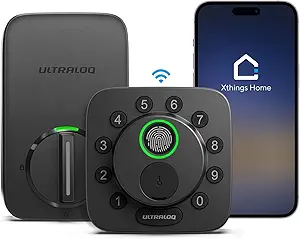 |
| Best Budget The cheapest option that still gets the job done reliably | TEEHO TE002 Fingerprint Deadbolt |  |
| Top Rated A top-rated pick with lots of positive feedback | Wyze Lock Bolt v2 |  |
| Most Popular A crowd favorite that many people choose with confidence | August Wi‑Fi Smart Lock (4th Gen) |  |
| Best Seller A high-volume bestseller chosen again and again | Philips 4200 Series Smart Lock DDL242X-1HW |  |
Google Nest x Yale Lock

| Lock Type | Deadbolt |
|---|---|
| Connectivity Protocol | Wi-Fi |
| Controller Type | Amazon Alexa, Google Assistant, nest |
| Included Components | 4 AA Batteries, Mounting Hardware, Nest Connect, Nest x Yale Lock |
The Nest x Yale Lock replaces a standard deadbolt with a key-free smart lock that supports keypad codes, one-touch locking, and remote control through the Nest app when paired with the included Nest Connect. It is typically used on a front door to remove physical keys and provide temporary or scheduled access for guests via unique passcodes, plus mobile alerts and access history so you can see who locks or unlocks the door. The lock connects to your Wi-Fi ecosystem through Nest Connect, offers tamper alerts and low-battery notifications, and supports voice assistants for hands-free control. Installation is straightforward for anyone swapping an existing deadbolt, though remote features require the Nest app, Wi-Fi, and the included bridge. Practical limits include reliance on the Nest Connect for remote access and the need to measure your door for proper fit, and while the keypad and app give flexible access control, users who need a keyed backup will miss a traditional key option.
Best for: Buyers who want a secure, modern replacement for an existing deadbolt and value remote access, temporary guest codes, and activity alerts to manage front door entry.
Less Ideal for: People who need a traditional keyed backup, prefer a fully standalone battery-only lock, or who cannot provide a stable Wi-Fi connection and bridge device.
- Keypad and app-based keyless entry with unique, schedulable passcodes
- Remote locking, access alerts, and access history via the Nest app and Nest Connect
- Tamper and low-battery alerts for added security
- Works with voice assistants for hands-free control
- Requires Nest Connect and a working Wi-Fi/internet connection for remote features
- No keyed backup option for users who prefer a physical key
Verdict: Swap an existing deadbolt for the Nest x Yale Lock when you want keypad codes, app control, and activity alerts for balanced everyday smart-lock convenience.
Level Lock Pro D4

| Lock Type | Deadbolt |
|---|---|
| Connectivity Protocol | Matter, Bluetooth |
| Control Method | App, Remote, Voice |
| Additional Features | Apple home keys, Fob Unlock, One-Touch Lock |
| Controller Type | Amazon Alexa, Android, Apple Home, Google Assistant, iOS |
The Level Lock Pro is a low-profile smart deadbolt built to hide almost entirely inside the door while giving you smartphone, voice and keyless access options. It installs with just a screwdriver on standard U.S. doors and replaces the interior hardware so the outside still looks like a traditional lock. The lock supports Bluetooth for local control and Matter for cloud and remote integrations when paired with a compatible hub or the Level Connect bridge, and it adds Apple Home Key, NFC fobs, touch-to-unlock and physical key backup. Notable practical benefits include BHMA AAA and ANSI Grade 1 security certification, door status detection without external magnets, and an activity feed in the Level app for access history. Limitations to keep in mind are the need for a Matter-capable hub or optional Wi-Fi bridge for seamless remote control and that advanced keypad access requires a separately sold accessory. For buyers who want a high-security, discreet smart upgrade and are prepared to add a hub for full remote features, this is a polished choice; buyers wanting built-in Wi-Fi or integrated keypad hardware out of the box should look elsewhere.
Best for: Buyers who prioritize high security, a minimal visible footprint, and modern smart home interoperability and are willing to add a Matter hub or bridge for full remote capabilities.
Less Ideal for: Users who need built-in Wi-Fi or an included keypad out of the box or who prefer a smart lock that operates fully via cloud service without adding a hub.
- Nearly invisible interior design that preserves a traditional exterior aesthetic
- Supports Matter for local smart home integration and Apple Home Key for phone-based entry
- BHMA AAA and ANSI Grade 1 certification for high security and durability
- Door status detection and activity history available through the Level Home app
- Remote access requires a Matter hub or Level Connect Wi-Fi Bridge sold separately
- Keypad functionality is an add-on accessory rather than included
Verdict: If you want a high-security, nearly invisible smart deadbolt that integrates with Matter and Apple Home Key, the Level Lock Pro delivers a professional-grade upgrade for existing doors.
ULTRALOQ Bolt SE Smart Deadbolt
| Connectivity Protocol | Bluetooth, Matter, Wi-Fi |
|---|---|
| Lock Type | Biometric, Deadbolt, Keypad |
| Included Components | 2 Emergency Keys, Installation Kit and User Guide |
| Additional Features | Auto Lock, AI-driven Fingerprint Scanner, App Remote Control |
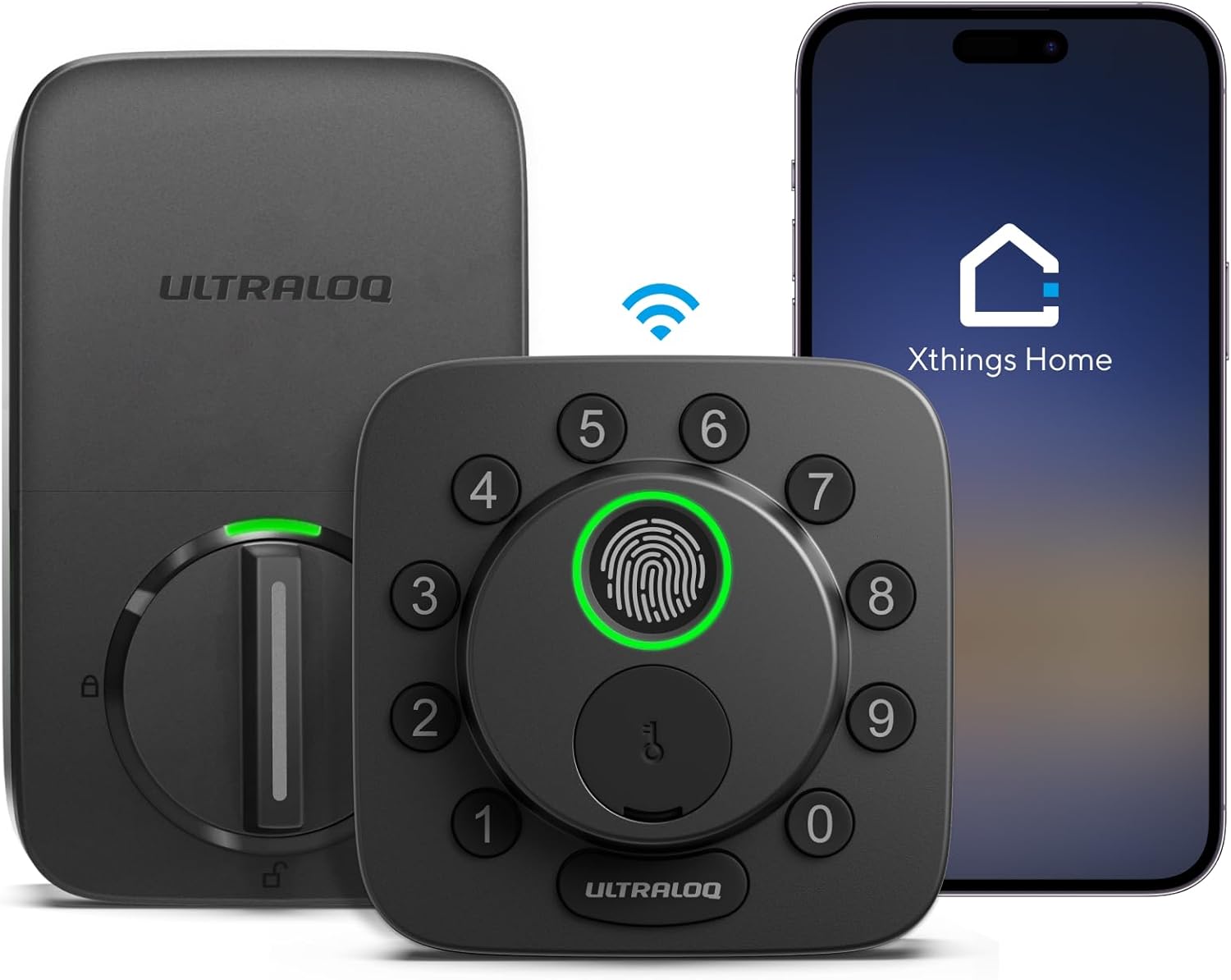
The ULTRALOQ Bolt SE is a versatile retrofit deadbolt that combines biometric access, keypad codes, and app-based remote control using built-in Wi‑Fi or Matter over Thread. It is typically installed in place of an existing deadbolt with a screwdriver and works for front doors, rentals, and garages; setup can be done in about 10 minutes and includes two mechanical backup keys. Notable features include a fast AI-driven fingerprint reader that claims 0.3 second unlocks, support for up to 50 fingerprints and 50 passcodes, auto-lock scheduling, and web/app access for sharing temporary or scheduled eKeys. Matter over Thread lets the lock integrate with Apple Home and other Matter ecosystems when a Thread border router is available, and the lock also supports Alexa, Google, and SmartThings natively. Practical benefits include long battery life thanks to Thread efficiency, IP65 weather resistance for exterior use, and local encrypted storage of user data. Limitations to keep in mind are the requirement of a compatible Matter Thread hub to use Matter features, and Wi‑Fi remote access is limited to 2.4 GHz networks.
Best for: Buyers who want a practical, easy-to-install retrofit deadbolt that adds fast biometric entry, remote control, and broad smart-home compatibility without replacing existing doors.
Less Ideal for: Users who lack a Matter-capable Thread hub and who need multi-band Wi‑Fi support or specialized enterprise access control should consider other solutions.
- Multiple access methods: fingerprint, keypad codes, app, voice, and mechanical keys
- Built-in Wi‑Fi and Matter over Thread for remote access and smart home integration
- Fast, AI-driven fingerprint reader with support for up to 50 fingerprints
- IP65 weather resistance and ANSI/BHMA certification for exterior durability
- Long reported battery life (up to 18 months) using 4 AA batteries
- Matter features require a compatible Thread border router to work
- Only supports 2.4 GHz Wi‑Fi which may limit some home network setups
Verdict: A practical retrofit deadbolt that adds fast fingerprint entry, remote Wi‑Fi access, and Matter smart-home integration for homeowners who want secure, easy upgrades to an existing door.
TEEHO TE002 Fingerprint Deadbolt

| Unlock methods | Fingerprint, Password, Keys |
|---|---|
| User capacity | 20 fingerprints and 20 passcodes |
| Waterproof level | IP54 |
| ANSI certification level | Grade 3 |
| Power | 4 AA batteries, up to 365 days |
The TEEHO TE002 is a nonconnected fingerprint deadbolt that replaces a standard deadbolt and adds fingerprint, passcode, and key access. It stores up to 20 fingerprints and 20 passcodes, supports one-time PINs for temporary visitors, and includes two backup keys. The fingerprint sensor uses AI to recognize prints quickly (claimed 0.3s recognition, 1s unlock) and the back-lit keypad has anti-peep code entry and adjustable auto-lock between 10–99 seconds. It runs on four AA batteries with a low-battery indicator and an estimated 365-day life. IP54 weather resistance and BHMA Grade 3 build mean it is intended for exterior use in varied climates. Because it is nonconnected there is no app or remote control, which keeps configuration simpler but means no remote unlocking or activity logs. Installation fits standard 2-1/8" bore holes and is straightforward with common tools, though compatibility is limited to the listed door hole and thickness range. For buyers wanting a straightforward, budget-friendly upgrade from a mechanical deadbolt, this model covers core smart-entry features without the complexity of Wi‑Fi or bridge accessories.
Best for: Homeowners who want a low-cost, easy-to-install upgrade from a mechanical deadbolt that adds fingerprint and keypad access without dealing with apps or hubs.
Less Ideal for: Anyone who needs remote unlocking, smart-home integration, or activity reporting should choose a Wi‑Fi or Bluetooth-connected lock instead.
- Multiple unlock methods including fingerprint, keypad, one-time PINs, and mechanical keys for flexible access
- Claims fast fingerprint recognition and one-second unlock for near-instant entry
- Back-lit keypad with anti-peep password and adjustable auto-lock improves security and convenience
- IP54 weather resistance and BHMA Grade 3 build suitable for exterior doors in varied climates
- Long battery life on four AA batteries with low-battery alert reduces maintenance frequency
- No network connectivity or app means no remote control, notifications, or audit logs
- Compatibility restricted to standard 2-1/8" bore holes and specified door thickness range
Verdict: A budget-friendly, no-frills deadbolt replacement that adds fast fingerprint and keypad access without smart-home complexity.
Wyze Lock Bolt v2

| Lock Type | Biometric, Deadbolt, Keypad |
|---|---|
| Connectivity Protocol | Wi-Fi |
| Additional Features | Auto-Lock |
| Material Type | Aluminum, Glass |
| IP Rating | IP53 |
The Wyze Lock Bolt v2 is a smart deadbolt designed to replace a standard bolt-style lock and provide fast fingerprint, keypad, app and physical-key access. Its AI-learning fingerprint scanner adapts over time for quicker, more accurate reads and claims unlocks in under a second, while the tempered glass sensor resists scratches and smudges. Built-in Wi‑Fi lets you control and monitor the lock remotely from the Wyze app and integrate with voice assistants or Wyze doorbells for verified unlocks. Convenience features include auto-lock, tamper alarms, up to 50 stored fingerprints or codes, USB‑C emergency power and included backup keys; the package also ships with eight AA batteries for months of operation. The unit is rated IP53 for weather resistance and BHMA2 for durability, which helps it stand up to regular use, but installation requires a compatible deadbolt cut and some alignment work typical of aftermarket smart bolts. For buyers prioritizing consistent, fast biometric access and remote control on an existing deadbolt, it delivers practical, reliable functionality.
Best for: Homeowners who want a dependable, fast biometric replacement for an existing deadbolt and value remote control and adaptive fingerprint reliability.
Less Ideal for: Renters or users who cannot modify their existing door hardware or who need a simple no-installation solution should consider non-invasive alternatives.
- Fast AI-learning fingerprint scanner for subsecond unlocks
- Built-in Wi‑Fi for remote control and integrations with voice assistants
- Multiple entry options: fingerprint, keypad codes, app, physical key and USB‑C emergency power
- IP53 weather resistance and BHMA2 durability for everyday exterior use
- Requires proper deadbolt cut and alignment for installation which may be fiddly for some users
- Relies on Wi‑Fi and batteries so prolonged outages or depleted power require emergency USB input or keys
Verdict: Choose the Wyze Lock Bolt v2 when you want a fast, adaptive fingerprint smart bolt with Wi‑Fi control that replaces an existing deadbolt for reliable daily access.
August Wi‑Fi Smart Lock (4th Gen)

| Connectivity Protocol | Wi‑Fi |
|---|---|
| Lock Type | Biometric, Deadbolt, Smart Lock, Wi‑Fi |
| Included Components | August Wi‑Fi Smart Lock, Batteries, Mounting Hardware |
| Controller Type | Amazon Alexa, Google Assistant, Vera |
The August Wi‑Fi Smart Lock (4th Generation) converts your existing deadbolt into a smart lock by attaching to the interior thumbturn and providing built‑in Wi‑Fi so you can lock and unlock from your phone, grant temporary or scheduled guest keys, and view an activity feed. Installation is intended to be quick and noninvasive, taking about 10 minutes and preserving your exterior keys and door appearance. Useful features include Auto‑Lock and Auto‑Unlock, DoorSense to report open/closed status, remote access without an extra hub, and voice control with Alexa, Google Assistant, Apple HomeKit, and other hubs. Practical benefits are hands‑free entry, easy guest management, and notifications so you can see who comes and goes. Limitations to note are dependency on the August app and your home Wi‑Fi for remote features, occasional compatibility caveats with unusual deadbolt hardware, and the fact that the electronic components sit on the inside of the door so exterior keypad access requires adding a separate keypad sold separately.
Best for: Buyers who want a proven, compact retrofit smart lock that preserves their existing exterior hardware and prioritizes remote access, guest management, and integration with popular voice assistants.
Less Ideal for: People who need phone‑free primary access out of the box or who prefer a complete replacement deadbolt with integrated keypad included.
- Built‑in Wi‑Fi provides remote lock/unlock and voice assistant integration without a separate hub
- Retrofits to your existing deadbolt so you keep exterior keys and original door appearance
- Guest keys with time limits and an activity feed let you manage and monitor access
- Auto‑Lock/Auto‑Unlock and DoorSense add hands‑free convenience and door status alerts
- Relies on the August app and home Wi‑Fi for full remote functionality
- No built‑in exterior keypad; phoneless access requires purchasing an additional keypad
Verdict: If you want an easy, noninvasive way to add remote control, guest keys, and voice integration to your existing deadbolt, this August Wi‑Fi Smart Lock is a compact, widely compatible choice.
Philips 4200 Series Smart Lock DDL242X-1HW

| Lock Type | Wifi Lock |
|---|---|
| Control Method | App, Remote, Voice |
| Controller Type | Amazon Alexa, Google Assistant |
| Additional Features | Anti-Peeping Password, Auto-Lock, Fingerprint, Passcode Unlock, Remote Unlock |
The Philips 4200 Series Wi‑Fi Smart Deadbolt replaces a standard deadbolt to add remote access, multiple unlocking options and activity logging. It offers fingerprint, passcode, app control and voice commands through Alexa and Google Assistant, plus a physical key for backup. Built‑in Wi‑Fi removes the need for a separate hub and allows real‑time notifications, one‑time or scheduled codes, and up to 100 custom passcodes for guests or services. Practical features include auto‑lock (10 to 180 seconds), away mode that locks out all methods except the master code, low battery alerts and a backlit touchscreen for night use. Installation is designed for DIY with only a screwdriver and fits most standard door thicknesses when the tailpiece is routed correctly. Important limits to note are the lock's 2.4 GHz Wi‑Fi requirement and recommendation to keep router and lock within about 65 feet for reliable remote control, and that it does not include a door sensor, which means the lock cannot confirm door position before auto‑locking.
Best for: Homeowners who want a straightforward, factory‑quality smart deadbolt that adds remote access and multiple secure entry options while keeping installation and day‑to‑day use simple.
Less Ideal for: People who need advanced multi‑sensor smart home integration or users with only a 5 GHz Wi‑Fi network and no 2.4 GHz option should consider other solutions.
- Built‑in Wi‑Fi for remote lock/unlock without an extra hub
- Multiple unlock methods: fingerprint, passcode, app, voice and physical key
- Supports up to 100 custom passcodes plus one‑time and scheduled codes
- Real‑time notifications and access history for monitoring comings and goings
- Auto‑lock and Away Mode add convenience and extra security
- Requires 2.4 GHz Wi‑Fi and works best within about 65 feet of the router
- No door sensor included so the lock cannot detect whether the door is fully closed
Verdict: A user‑friendly Wi‑Fi smart deadbolt that adds fingerprint, keypad and remote access with simple DIY install for buyers prioritizing reliable, straightforward smart locking.
Choosing the Right Deadbolt Smart Lock for Existing Deadbolts: Key Factors to Consider
Compatibility With Existing Deadbolt
Confirming compatibility is the first step because retrofit smart locks are designed to work with the interior side of a standard deadbolt. Measure your backset and check whether the lock accepts common thickness ranges and single-cylinder configurations. Some retrofit units only fit deadbolts that meet specific dimension or thumb-turn orientations.
Compatibility matters because an incompatible fit can lead to poor engagement, uneven deadbolt travel, or the need to remove and replace your exterior hardware—defeating the purpose of a retrofit. Double-check that your existing deadbolt is a single-cylinder type and that the replacement will sit flush against your door without forcing the cylinder.
Installation Difficulty and Tools Required
Ease of installation affects both cost and the likelihood you will succeed without professional help. Most retrofit deadbolt smart locks aim for simple installation using the existing screw holes and require only a screwdriver and possibly a drill for minor adjustments. Instructions and included templates can reduce margin for error.
If a lock requires drilling new holes, carpentry skills, or routing wires, factor that into your decision. Also consider whether the unit offers reversible mounting for left- or right-handed doors and clear mechanical alignment guides to avoid binding during operation. A model that installs in 20 to 45 minutes with common tools will be a better fit for typical homeowners.
Security and Tamper Resistance
Physical security remains the primary function of any deadbolt, smart or not. Look for devices with solid construction, reinforced mounting plates, and tamper-resistant features such as anti-pick inserts, hardened screws, or design elements that prevent forced rotation. Locks rated to meet recognized industry standards provide an added layer of assurance about strike resistance and cylinder durability.
Also understand how the electronic portion behaves under attack. Some units disable remote commands when tampering is detected or offer auto-lock and alarm features that activate after repeated failed code attempts. Good security design balances convenience with robust mechanical and electronic protections.
Access Methods and Connectivity Options
Different users prefer different ways to unlock the door. Typical access methods include keypad codes, Bluetooth proximity, smartphone apps, and integration with smart home hubs via Wi-Fi or bridge accessories. Evaluate which methods you need: keypad codes are useful for guests and service personnel, Bluetooth is convenient for occupants, and Wi-Fi or hub integration enables remote control and notifications.
Consider how the lock handles multiple users, temporary codes, and access scheduling. Also check whether the lock requires an optional bridge for remote access or if it connects directly to your home network. Simpler connectivity reduces points of failure but may limit remote features.
Battery Life and Power Fail Safety
Battery reliability is critical because the lock must remain operational during power loss. Look for models with long advertised battery life, clear low-battery alerts, and straightforward battery replacement procedures. Some smart locks use common AA or AAA batteries, which are easy to source and swap, while others use proprietary packs that may be less convenient.
Evaluate power-fail behavior: does the deadbolt default to mechanical operation via the interior thumb turn, or can electronics leave you unable to operate the lock if batteries die? Also check for emergency power options like a temporary external battery contact for 9V batteries or backup ports that allow a deadbolt to be unlocked in a pinch.
App Quality and Integration With Home Automation
A well-designed mobile app makes daily use less frustrating. Important app features include intuitive code management, activity logs, clear battery indicators, and reliable push notifications. If you plan to integrate the lock with a broader smart home system, confirm supported platforms and whether a separate bridge or hub is required.
Good integrations allow automations such as locking on schedule, unlocking with presence sensors, or triggering scenes when the door status changes. Prioritize solutions with secure cloud practices and straightforward account recovery to avoid access issues tied to the app.
Measuring Your Door and Deadbolt Before You Buy
Before purchasing a retrofit smart lock, measure the door thickness, backset distance, and the diameter of the existing deadbolt hole. Most retrofit locks accept common door thicknesses and backsets, but confirming these dimensions prevents surprises during installation.
Also check the orientation of your thumb turn and whether any escutcheon plates or rosettes interfere with the new interior assembly. If the exterior cylinder protrudes significantly, verify that the retrofit mechanism can still engage the existing bolt without binding.
- Measure door thickness at the latch area and compare to product specs
- Check backset from the edge of the door to the center of the bolt
- Inspect exterior cylinder protrusion and trim clearances
Managing Shared Access: Codes, Guests, and Schedules
Retrofit deadbolt smart locks usually support multiple unique user codes and temporary or scheduled access. Use these features to assign limited-time entry to cleaners, contractors, or guests without sharing your main code or key.
Set clear policies for code creation and rotation, and remove codes promptly when access is no longer needed. For homes with frequent short-term visitors, prefer locks that allow easy creation and deletion of temporary codes via the app or on-device keypad.
- Assign time-limited codes for service providers
- Use unique codes per guest to track activity
- Enable automatic code expiration when possible
Troubleshooting Common Retrofit Installation Issues
Binding, deadbolt misalignment, or weak engagement are common problems when retrofitting an existing deadbolt. Start by ensuring the bolt fully extends and retracts manually before attaching the smart unit. If the bolt binds with the new assembly, loosen screws, re-seat the interior plate, and retest mechanical movement before connecting electronics.
If the keypad or motor does not operate as expected, verify battery polarity and seating, then consult the alignment steps in the manual. Many issues stem from slight rotational offsets in the thumb turn mechanism; using the provided shims or adjustable mounting plates often resolves these.
- Test manual bolt travel before installing the smart unit
- Recheck screw torque and plate seating if binding occurs
- Use included alignment guides or shims to correct rotation offsets
Privacy and Data Considerations
Smart locks generate logs and sometimes upload event data to cloud services. Review the privacy practices associated with the lock's app and services. Prefer vendors that offer clear data retention policies and local control options if you are privacy-conscious.
Consider whether activity logs are stored locally on the device or in the cloud and whether two-factor authentication is available for app accounts. Minimizing unnecessary cloud connectivity reduces exposure but may limit remote features.
- Check whether activity logs are local or cloud-stored
- Enable two-factor authentication for app accounts
- Opt for local control modes if privacy is a priority
Maintaining Your Retrofit Smart Deadbolt
Routine upkeep keeps the lock reliable. Replace batteries proactively based on app alerts, clean mechanical surfaces annually, and exercise the deadbolt occasionally to prevent stiffness. Inspect mounting screws and strike plates for loosening over time, especially on high-traffic doors.
If your lock supports firmware updates, apply them when notified to benefit from security patches and feature improvements. Keep a small toolkit and spare batteries on hand so you can address minor issues without delay.
- Replace batteries when the app indicates low power
- Check mounting hardware and strike plate tightness semiannually
- Install firmware updates to maintain security and stability
How We Chose the Best Deadbolt Smart Lock for Existing Deadbolts
We focused on retrofit deadbolt smart locks that replace only the interior portion of a standard single-cylinder deadbolt so homeowners can keep their existing exterior hardware. Key evaluation criteria included physical security features such as tamper resistance and ANSI/BHMA alignment where applicable, the range and reliability of electronic access methods like keypad codes, Bluetooth, or Wi-Fi, and the breadth of third-party integrations and mobile app controls. We also weighed installation complexity and tool requirements, prioritizing models that a typical homeowner can install in 20 to 45 minutes without drilling or door modification. Battery life and power-fail behavior were considered since long runtimes and predictable low-battery alerts reduce maintenance and lockouts. We excluded bifold or non-deadbolt locks, smart latch systems that require replacing the entire hardware set, and designs that mandate professional installation. Products that required proprietary door preparation or special backset dimensions outside common standards were also removed. The remaining candidates were compared on measurable specs and user-focused features that matter when retrofitting an existing deadbolt.
Our full evaluation process is outlined in our review methodology.
FAQ
Will a retrofit deadbolt smart lock work with my current exterior key cylinder?
Often yes. Retrofit deadbolt smart locks are designed to attach to the interior side and use the existing exterior cylinder. Confirm your deadbolt is a standard single-cylinder type and matches the product's dimensional requirements to ensure proper engagement.
How long do batteries typically last in these smart deadbolts?
Battery life varies by usage and connectivity but commonly ranges from six months to a year on standard alkaline batteries. Locks with frequent Wi-Fi activity or many unlock events will consume power faster, so check the manufacturers' estimates and app battery reporting.
Can I still use a physical key if the smart portion fails?
Yes. Retrofit smart locks are designed to preserve mechanical key operation at the exterior. The interior electronic assembly controls the thumb turn while the exterior key cylinder continues to operate the bolt in most designs.
Do I need a bridge or hub for remote access?
It depends on the model. Some retrofit locks connect directly to Wi-Fi and offer remote access without extra hardware, while others use Bluetooth locally and require a bridge or hub to enable cloud-based remote control and integrations.
Will the smart lock fit a reinforced or oversized strike plate?
Fit depends on how the strike plate affects bolt travel and alignment. Reinforced or oversized strike plates can alter engagement, so verify that the bolt retracts and extends cleanly with the existing strike before committing to a retrofit model.
Final Verdict
When retrofitting an existing deadbolt, prioritize compatibility and installation ease first, then balance security features with the access and connectivity you need. A device that fits your door without extra drilling and provides reliable battery behavior will minimize headaches. Consider how you manage guest access and whether remote control or local-only operation best fits your privacy preferences. Choose a retrofit smart deadbolt that aligns with your door measurements, preferred entry methods, and maintenance habits. With those priorities in place, you can confidently add smart access while keeping your current exterior hardware intact.