
Note: This article contains affiliate links. If you click on these links and make a purchase, we may earn a small commission at no extra cost to you. This helps support our research and content. Read our full affiliate disclosure here.
If you live in a two-bedroom home, choosing the right dehumidifier matters for comfort, air quality, and protecting walls and belongings from damp-related damage. A unit sized for a two-bedroom house balances extraction capacity, noise, and energy use so you do not end up with an undersized appliance that runs constantly or an oversized unit that wastes power. This guide covers the top shortlisted dehumidifiers suited for a two-bedroom house and explains how we evaluated them across capacity, noise, and operating costs. Read on to find units that fit typical floor plans, run quietly at night, and require reasonable upkeep.
Top Picks at a Glance
| Best Quality Built to a higher standard if you want something more solid | AEOCKY RHEA 80-Pint Dehumidifier |  |
| Best Value The sweet spot between price and what you get | VEAGASO VG380 34-Pint Dehumidifier |  |
| Best Budget The cheapest option that still gets the job done reliably | BeOkay DH-A2 Dehumidifier |  |
| Top Rated A top-rated pick with lots of positive feedback | Hisense 35-Pint Compact Dehumidifier |  |
| Most Popular A crowd favorite that many people choose with confidence | hOmeLabs 32-Pint Dehumidifier |  |
| Best Seller A high-volume bestseller chosen again and again | ToLife Dehumidifier TZ-C2 |  |
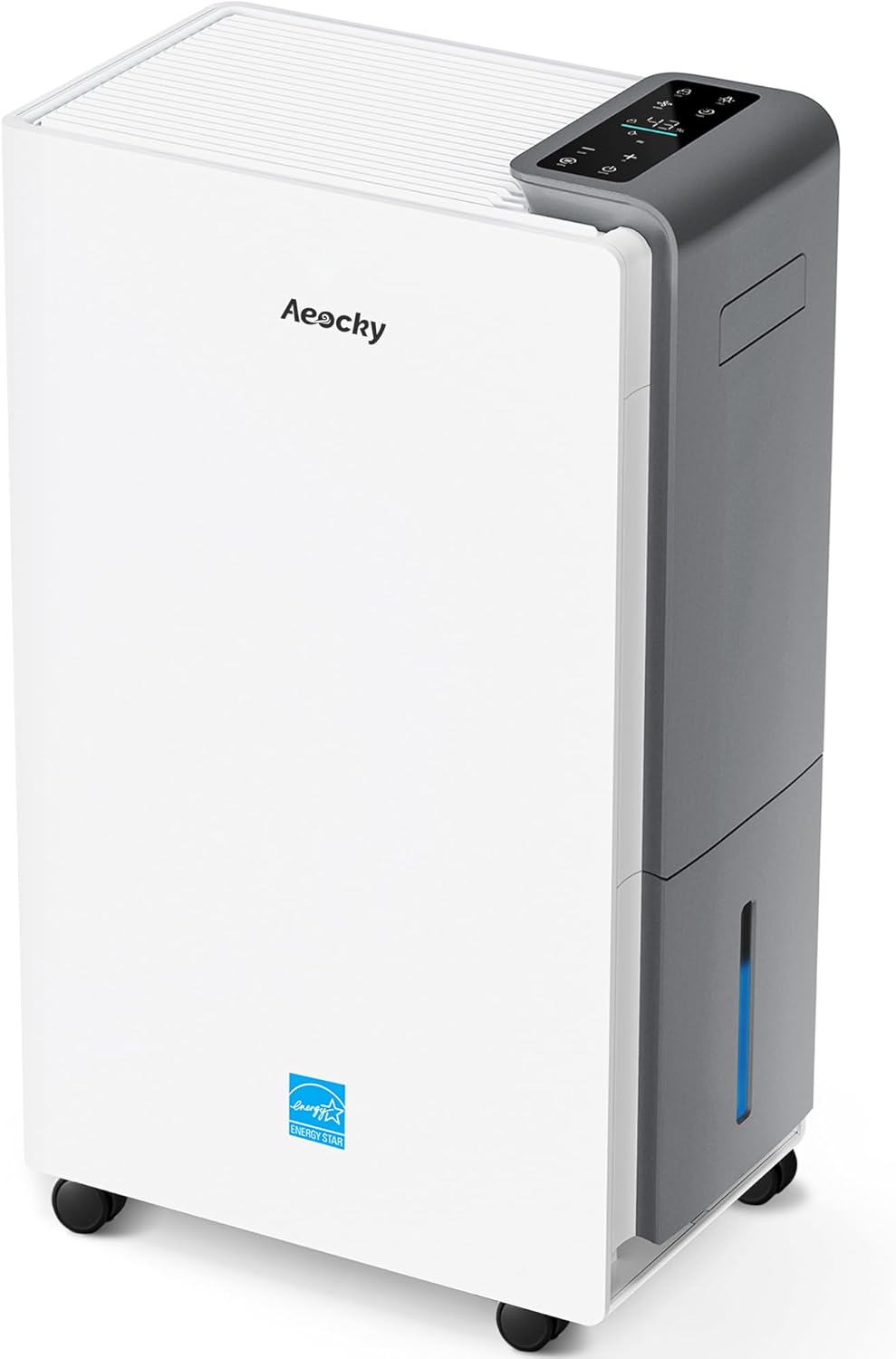
AEOCKY RHEA 80-Pint Dehumidifier
| Capacity | 80 pints per day |
|---|---|
| Tank Volume | 1.45 gallons |
| Wattage | 280 watts |
| Operation Mode | Auto, Constant Humidity, Continuous, Smart Drying, Sleep |
| Air Flow Capacity | 9006 cubic feet per hour |
The AEOCKY RHEA-001 is a high-capacity compressor dehumidifier built to remove up to 80 pints of moisture per day and manage humidity in large homes. It is typically used in basements, multi-room living spaces, or whole-house setups where humidity is persistently high and energy efficiency matters. Key features include an ENERGY STAR Most Efficient 2025 rating, multi-mode operation (Auto, Constant Humidity, Continuous, Smart Drying, Sleep), adjustable humidity control, and a 1.45-gallon tank with included drain hose and garden-hose adapter for continuous drainage. Practical benefits are strong dehumidification throughput and high air-flow that let it dry large spaces quickly while using less power than many rivals, plus built-in low-temperature defrosting for basement conditions and reportedly quiet operation at low fan speeds. Important limitations are a single listed fan speed setting (though modes vary), a relatively large footprint for storage or tight rooms, and dependence on a drain setup to avoid frequent tank emptying when run continuously. For buyers prioritizing fast, efficient moisture removal across multiple rooms, the RHEA-001 delivers solid performance with energy savings.
Best for: Buyers who need fast, high-capacity moisture removal across a two-bedroom house or basement and who prioritize long-term energy efficiency and dependable compressor performance.
Less Ideal for: People looking for a compact, lightweight dehumidifier for a single small room or those who cannot set up a continuous drain should consider smaller or portable alternatives.
- ENERGY STAR Most Efficient 2025 certified for strong energy savings
- High dehumidification rate of up to 80 pints per day for large spaces
- Multiple operation modes and adjustable humidity control for tailored use
- Includes drain hose and garden-hose adapter for continuous drainage
- Low-temperature defrost and engineered components for reliable basement operation
- Tank holds 1.45 gallons so continuous drain is recommended for heavy use
- Only one numbered fan speed is listed which may limit fine noise/power control
- Size and weight make it less convenient to move or store in small homes
Verdict: Choose the RHEA-001 if you need a powerful, energy-efficient dehumidifier that removes moisture quickly across a two-bedroom home while minimizing electricity use.
VEAGASO VG380 34-Pint Dehumidifier

| Capacity | 34 pints per day |
|---|---|
| Coverage Area | Up to 2500 square feet |
| Tank Volume | 0.53 gallons / 2 liters |
| Wattage | 230 watts |
| Noise Level | ≤40 dB |
The VEAGASO VG380 is a compressor-based 34‑pint dehumidifier built to handle damp large rooms and basements while staying quiet enough for bedrooms. It offers three modes — automatic humidity control, a high-intensity dry mode for faster laundry drying, and a continuous mode for persistently wet spaces — all set from an LED touch panel that shows real-time humidity and includes a 1–24 hour timer and child lock. Practical features include a removable 0.53 gallon tank with an auto-shutoff/full indicator and an included drain hose for continuous unattended drainage, plus power-failure memory that restores the previous settings after outages. The unit uses an auto-defrost system to operate down to about 41°F and claims nighttime noise below 40 dB, while recessed handles and swivel casters make moving it between rooms straightforward. Trade-offs are typical for compressor dehumidifiers: the tank is modest in size so high-humidity environments may need frequent draining unless using the hose, and it is not the smallest or lightest option for occasional spot use.
Best for: Buyers who want a reliable, practical dehumidifier for keeping a two‑bedroom house dry and preventing damp in basements or laundry areas while minimizing noise and manual intervention.
Less Ideal for: Those seeking an ultra-compact or lightweight unit for occasional spot use, or buyers who prefer condensate-free desiccant models for very low-temperature applications.
- Three operating modes (DEHU, DRY, CONT) for everyday humidity control, laundry, or continuous basement use.
- Includes both a removable tank with auto shutoff and a drain hose for continuous unattended drainage.
- Quiet compressor design and sleep-friendly features with noise under 40 dB and dimmable indicators.
- Power failure memory and child lock add convenience and safety for unattended locations.
- Auto-defrost allows operation down to about 41°F for cold basements and crawl spaces.
- Relatively small 0.53 gallon tank requires frequent emptying in very humid conditions unless using continuous drain.
- Airflow/dehumidification specs are given for ideal conditions and actual removal will vary by room layout and temperature.
Verdict: A quiet, feature-rich 34‑pint dehumidifier well suited for steady whole-room moisture control in a two‑bedroom house, especially when you want hands‑off continuous drainage.
BeOkay DH-A2 Dehumidifier

| Floor Area | 230 square_feet |
|---|---|
| Capacity | 1657 ml |
| Number of Speeds | 3 |
| Wattage | 28 watts |
| Dehumidification Capacity | 0.3 liters_per_day |
The BeOkay DH-A2 is a small portable dehumidifier designed for enclosed spaces up to about 230 sq ft, intended to quietly remove moisture using a 28 W semiconductor system. Setup is straightforward: plug it in, choose one of three modes (sleep, normal, performance) and optionally set a timer for 24–96 hours or continuous run. The 1657 ml removable tank and automatic shutoff protect against overflow, and a defrost function helps keep the unit running in cooler conditions. It runs quietly in sleep mode (under 40 dB), which makes it suitable for bedrooms and bathrooms, and the RGB night light and adjustable brightness give some customizable ambiance. Expect slow, gradual dehumidification rather than rapid room drying since capacity is small and the spec lists about 0.3 L/day; it is best for maintaining moderate humidity rather than tackling severe damp or whole-house needs. The unit is lightweight and simple to move, but its limited daily extraction and small coverage mean you may need multiple units or a larger model for a two-bedroom house.
Best for: Buyers looking for an inexpensive, easy-to-use unit to control humidity in single rooms like bedrooms or bathrooms and who prioritize low noise and simple maintenance.
Less Ideal for: People needing fast moisture removal across multiple rooms or whole two-bedroom apartments should choose a higher-capacity or whole-house dehumidifier instead.
- Large 1657 ml removable water tank reduces how often you need to empty it
- Multiple modes plus 5 timer options for flexible scheduling
- Quiet sleep mode under 40 dB suitable for bedrooms
- Auto shutoff and tilt/fall protection for safer unattended use
- Low dehumidification rate (about 0.3 L/day) limits effectiveness in very damp rooms
- Designed for small spaces up to ~230 sq ft, not for whole two-bedroom coverage
Verdict: A budget-friendly, quiet personal dehumidifier that is handy for single rooms but not powerful enough to handle whole two-bedroom humidity problems.
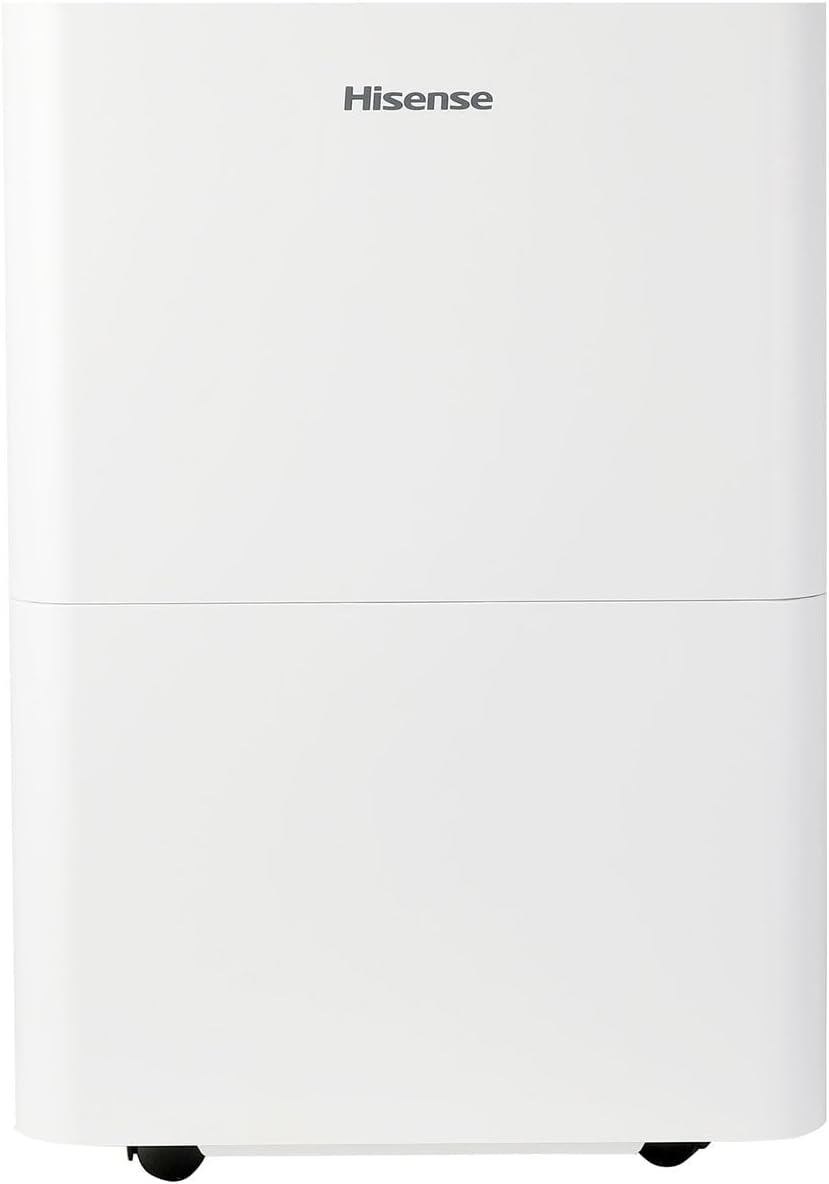
Hisense 35-Pint Compact Dehumidifier
| Capacity | 35 pints |
|---|---|
| Dehumidification Capacity | 35 pints_per_day |
| Floor Area | 3000 square_feet |
| Number of Speeds | 3 |
| Operation Mode | Continuous |
The Hisense 35-Pint Compact Dehumidifier is a portable unit meant to control humidity across large rooms or multiroom homes without taking up much floor space. It removes up to 35 pints per day and is intended for continuous operation, with a slide-out bucket and auto shut-off to prevent spills when the tank is full. The unit has three fan speeds, a washable removable filter for simple maintenance, and an easy-carry handle for moving between bedrooms, living areas, and basements. It runs quietly enough for bedrooms and home offices and is rated to operate down to 38°F, which helps in cooler spaces where dampness lingers. Meeting ENERGY STAR standards keeps running costs reasonable. Expect solid day-to-day reliability from the straightforward design, though emptying the bucket periodically is still required unless you use a continuous drain option where available. The combination of quiet performance, low-temperature operation, and basic self-protection features makes it a practical pick for two-bedroom homes that need steady moisture control.
Best for: Buyers who prioritize a dependable, low-maintenance dehumidifier for steady humidity control across a two-bedroom house and want quiet, energy-efficient operation.
Less Ideal for: People who need a near-zero maintenance solution or built-in plumbing drain integration without buying additional accessories should consider other options.
- Rated to remove 35 pints per day for effective moisture reduction in larger rooms
- Slide-out bucket with auto shut-off simplifies emptying and prevents overflows
- Washable, removable filter reduces maintenance cost and keeps airflow clean
- Quiet operation suitable for bedrooms and home offices
- Low-temperature operation down to 38°F for use in basements and garages
- No continuous drain hose included in the listed components so manual emptying may be necessary
- Unit weight is substantial which can make moving it between floors awkward
Verdict: A reliable, energy-efficient 35-pint unit that delivers quiet, low-temperature moisture control ideal for steady humidity management in a two-bedroom house.
hOmeLabs 32-Pint Dehumidifier

| Dehumidification Capacity | 35 pints_per_day |
|---|---|
| Capacity | 1.8 gallons |
| Tank Volume | 1.6 gallons |
| Number of Speeds | 2 |
| Floor Area | 4500 square_feet |
This hOmeLabs unit is a straightforward, room‑scale dehumidifier built for large spaces like basements and open living areas. It removes up to 32 pints per day under typical conditions (and higher at very warm, humid extremes), and offers both a removable 1.6 gallon water tank with auto shutoff and a continuous drain outlet for hands‑free operation. The machine includes washable filter media, two fan speeds plus a TURBO mode for faster moisture removal, and smart features such as Wi‑Fi control and voice assistant compatibility so you can monitor and change humidity from your phone. Mobility is simple thanks to built‑in casters and a handle, and safety conveniences include automatic defrost and auto restart after power interruptions. Expect practical, reliable performance for basement humidity control, though it is a single‑hose portable unit so performance will vary with room layout and extreme cold conditions can reduce extraction rates. For buyers who want easy setup, remote control, and reliable daily dehumidification, this model covers the essentials without complex installation.
Best for: Buyers who want a reliable, easy‑to‑use dehumidifier for a basement or large room and value remote control, straightforward maintenance, and portability.
Less Ideal for: People seeking a hard‑plumbed or whole‑house solution or those who need maximum extraction in consistently cold spaces should consider other types of systems.
- Removes up to 32 pints per day with higher capacity at very high temperature and humidity
- Wi‑Fi control and compatibility with Alexa and Google Assistant for remote monitoring and adjustments
- Continuous drain option plus a removable tank with auto shutoff reduces manual emptying
- Washable air filter and caster wheels make maintenance and relocation simple
- Performance drops in cold environments since rated capacity is specified at warmer test conditions
- Only two fan speeds may limit fine control of noise versus extraction rate
Verdict: A portable, Wi‑Fi enabled dehumidifier that delivers dependable moisture removal and easy maintenance for large basements and open rooms.
ToLife Dehumidifier TZ-C2

| Floor Area | 1000 square_feet |
|---|---|
| Tank Volume | 95 fluid ounces |
| Number of Speeds | 2 |
| Wattage | 93 watts |
The ToLife TZ-C2 is a small, portable dehumidifier that uses semiconductor condensation technology to pull moisture from the air and store it in a 95 oz removable tank. It offers two speeds including a low-noise sleep mode claimed to run under 30 dB for overnight use, plus a higher-power setting for faster humidity reduction. The unit includes an automatic shutoff when the tank is full or improperly seated, and a cycling seven-color LED that can be locked to a single color for use as a night light. At about 93 watts it is intended for localized rooms—bedrooms, bathrooms, closets, RVs and similar areas—and the listing states coverage up to 1,000 sq ft, though real-world performance will depend on room layout and how well doors and windows are closed. Setup is simple: place, plug in and empty the tank as needed; maintenance is limited to occasional tank cleaning. Trade-offs are the modest reported dehumidification rate and the use of semiconductor cooling which typically extracts moisture more slowly than compressor models, so it is best for humidity control rather than rapid drying of very damp spaces.
Best for: Buyers who want a low-maintenance, easy-to-move dehumidifier for bedrooms, bathrooms, or small living areas and prioritize quiet overnight operation and simple safety features.
Less Ideal for: Households needing rapid drying for very damp basements or whole-house dehumidification should consider higher-capacity compressor models instead.
- Large 95 oz removable tank reduces frequency of emptying
- Quiet low-speed sleep mode for overnight use (under 30 dB claimed)
- Automatic shutoff when tank is full or not seated prevents overflow
- Seven-color LED with lockable color doubles as a night light
- Portable, lightweight design suitable for moving between rooms
- Semiconductor condensation technology generally removes moisture slower than compressor units
- Dehumidification capacity listed is modest and may be insufficient for very damp areas
Verdict: A quiet, portable choice for modest humidity control in bedrooms and small rooms where easy operation and safety features matter most.
Choosing the Right Dehumidifier for 2 Bedroom House: Key Factors to Consider
Extraction Capacity
Extraction capacity is the amount of moisture a dehumidifier can remove in 24 hours, typically expressed in pints. For a two-bedroom house you want a unit whose rated capacity matches the combined square footage and typical humidity load. A unit that is too small will run continuously and still fail to lower relative humidity, while an oversized unit may cycle too frequently and waste energy.
Also consider the rating conditions. Many manufacturers list capacity at a higher indoor temperature and humidity than you will experience during cooler months, which reduces real-world extraction. Prefer models with clear performance curves or specs showing lower-temperature capacity if you expect year-round use.
Energy Efficiency
Energy efficiency determines how much electricity the unit uses to remove each pint of moisture. This affects operating cost and long-term ownership expense, especially if the dehumidifier runs for many hours per day during humid seasons.
Look for models with favorable energy-factor specifications or ENERGY STAR-type performance indicators when available. Also consider features like variable fan speeds and automatic humidistat control that prevent unnecessary runtime and lower monthly energy bills.
Noise Level
Noise matters because dehumidifiers often operate in living spaces and bedrooms. A noisy unit can disrupt sleep or make living areas uncomfortable, so check rated sound levels and look for models with quieter low-speed settings.
Pay attention to where you plan to place the unit. If it will run in a bedroom overnight, prioritize low-decibel operation and features like sleep mode. If placed in a hallway or utility closet, higher noise may be acceptable but ventilation and airflow must still be adequate.
Water Handling and Drainage Options
How a dehumidifier handles collected water affects maintenance and convenience. Most units include a removable bucket with an automatic shutoff when full; others offer continuous drain ports that let you attach a hose for unattended operation.
For a two-bedroom house, continuous drainage is useful if the unit will run frequently or be placed near a floor drain. Also evaluate bucket capacity and access: larger buckets reduce emptying frequency but may be heavier to lift and pour.
Controls, Monitoring, and Features
Controls determine how easy it is to set target humidity and manage runtime. Useful features include a reliable humidistat, programmable timer, adjustable fan speeds, and clear display indicators for tank full and filter status.
Advanced features like automatic restart after power loss, built-in pumps for vertical drainage, and washable filters add convenience. Balance desired features against complexity and potential points of failure.
Portability and Installation
Portability affects whether you can move the unit between bedrooms, a living room, and a basement. Look for caster wheels, handles, and a manageable weight for lifting stairs or through doorways.
Installation considerations include where continuous drain tubing will route, proximity to electrical outlets, and whether the unit needs any permanent modifications. A plug-and-play portable dehumidifier is usually best for typical two-bedroom homes.
Sizing a Dehumidifier for a Two-Bedroom Layout
To size a dehumidifier, estimate the square footage of the living space you need to cover and the humidity sources, such as cooking, showers, or an attached garage. Two bedrooms plus shared living areas typically fall into a medium home range, but open floor plans or high ceilings increase the humidification load.
Consider whether you need whole-house coverage from a single large portable unit or whether two smaller units placed in problem rooms make more sense. A single centrally located unit will be easiest to manage, but multiple units allow targeted control where condensation or mold is most likely.
- Measure combined square footage of bedrooms and adjoining living spaces.
- Account for high-humidity activities like frequent hot showers or indoor drying.
- Prefer slightly higher capacity if your home has poor ventilation or high ceilings.
Placement and Airflow Tips
Correct placement ensures the dehumidifier works efficiently. Place the unit where air can circulate freely around the intake and exhaust and avoid tight corners or behind furniture. Elevating the unit a few inches from the floor can improve airflow and help condensate collection.
Ensure continuous drainage tubing has a clear downhill route to a floor drain or sink when using gravity drain. If routing a hose is impractical, choose a model with a built-in pump to move water vertically to a nearby drain.
- Keep 12 to 18 inches of clearance around the unit for best airflow.
- Avoid placing the unit directly against exterior walls where cold surfaces can reduce efficiency.
- Use ducting only if recommended by the manufacturer; otherwise rely on open airflow.
Maintenance Routines That Keep Performance High
Regular maintenance preserves extraction efficiency and extends the unit's lifespan. Empty and clean the water bucket on a schedule that matches your local humidity and the unit's bucket size. Rinse or wash reusable filters monthly when the unit is in frequent use.
Inspect coils and drain lines for scale or mold buildup and clear blockages promptly. If your model has a pump, test it periodically to ensure reliable drainage. Keep the intake grille free of dust and avoid smoking or heavy cooking directly near the unit to reduce filter loading.
- Empty buckets before mold can form and sanitize occasionally with a mild detergent.
- Wash or replace filters per manufacturer guidance to maintain airflow.
- Check hoses for kinks and ensure downward slope for gravity drains.
Balancing Noise and Performance
Higher extraction rates often come with louder operation. If quiet overnight operation is important, compare low-speed decibel ratings and seek units with sleep or quiet modes. Some models use variable fans to maintain humidity targets while minimizing noise.
When evaluating noise, consider perceived sound as well as decibel numbers. A unit with a steady low hum may be less disturbing than one with intermittent high-frequency sounds. Place noisier units away from bedrooms or use multiple smaller, quieter units in sensitive areas.
- Check low-speed noise specs for bedroom placement.
- Prefer models with multiple fan speeds to adapt performance to comfort needs.
- Consider vibration-isolating feet or surface padding to reduce rattles.
Using Dehumidifiers Year-Round
A dehumidifier can be useful beyond peak summer months. In shoulder seasons and winter, it prevents condensation on windows and reduces the risk of mold in cooler homes. Ensure the model you choose includes an auto-defrost feature if you expect operation in cooler conditions, as frost buildup reduces efficiency.
Adjust your target relative humidity seasonally. Aim for 40 to 50 percent in most homes to balance comfort and mold prevention. Keep in mind that very low indoor humidity in winter can cause static and dry skin, so reduce run time accordingly.
- Use humidistat control to maintain consistent relative humidity.
- Enable auto-defrost or move the unit if coils freeze at low temperatures.
- Reduce runtime in winter to avoid over-drying the air.
How We Chose the Best Dehumidifier for 2 Bedroom House
We shortlisted dehumidifiers that match the real-world needs of a typical two-bedroom house and filtered out models that are clearly undersized or designed only for single rooms. Selection started with units rated for medium-sized homes and those with specifications indicating dependable moisture removal at household temperatures. Our evaluation emphasized specific, measurable attributes: moisture extraction capacity at typical indoor temperatures, energy efficiency and running cost, operational noise during low and high fan speeds, ease of maintenance including filter and bucket access, and built-in controls such as humidistats and washable filters. We excluded units intended solely for basements under constant flooding conditions or compact personal dehumidifiers sized only for closets. We also prioritized designs that offer practical features for home use, like continuous drainage options, caster mobility for moving between bedrooms, and reliable auto-defrost for seasonal performance. Models that lacked basic safety or maintenance features were disqualified. The final picks represent a balance of capacity, user convenience, and predictable operating costs for two-bedroom homes.
Our full evaluation process is outlined in our review methodology.
FAQ
How large of a dehumidifier do I need for a two-bedroom house?
It depends on combined square footage and moisture sources. Choose a unit rated for medium-sized homes with a capacity that accounts for high-humidity activities and any open floor plan. When in doubt, pick a slightly higher capacity rather than an undersized unit.
Can I run a single dehumidifier in a central hallway to cover both bedrooms?
Often yes if the unit is sized correctly and the home has reasonable airflow. Place it centrally with clear intake and exhaust paths. For homes with closed doors or poor ventilation, using two smaller units may deliver more even control.
What humidity level should I set in a two-bedroom house?
A target of about 40 to 50 percent relative humidity is comfortable and helps prevent mold growth. Adjust slightly based on personal comfort and seasonal needs to avoid over-drying during winter.
Are continuous drain options necessary for home use?
Continuous drain is not strictly necessary but can be very convenient if the unit runs frequently or you prefer not to empty the bucket. Gravity drain requires a nearby floor drain or lower sink; a built-in pump is helpful when vertical lift is needed.
How often should I clean the filter and empty the bucket?
Empty the bucket as often as needed based on your local humidity and bucket size, which may be daily during very humid weather. Rinse or clean reusable filters monthly during heavy use and inspect coils and hoses periodically for buildup.
Final Verdict
For a two-bedroom house, prioritize a dehumidifier that balances real extraction capacity with low noise and reasonable energy consumption. Focus on units that offer clear water-handling options and straightforward controls so you can set and forget the desired humidity level. Accept tradeoffs between maximum extraction and quiet operation depending on where the unit will run. With attention to sizing, placement, and routine maintenance, you can choose confidently and keep indoor humidity in a healthy range year-round.