
Note: This article contains affiliate links. If you click on these links and make a purchase, we may earn a small commission at no extra cost to you. This helps support our research and content. Read our full affiliate disclosure here.
Winter brings cold air and indoor humidity challenges that can lead to mold, condensation on windows, and swollen floorboards. Picking the right dehumidifier for winter matters because cold-season performance, defrosting ability, and energy efficiency determine whether a unit will actually reduce moisture without overworking or freezing up. This guide shortlists seven dehumidifiers that perform well in winter conditions and explains the features that matter for seasonal use. We evaluate extraction capacity, low-temperature operation, energy use, and ease of upkeep so you can pick a model that fits your space and keeps moisture under control. Read on for practical buying criteria and tips to match a dehumidifier to your room and winter routines.
Top Picks at a Glance
| Best Overall The best all-around choice for most situations | yaufey 31-Pint Dehumidifier |  |
| Best Quality Built to a higher standard if you want something more solid | Gasbye DryPrime-50 Dehumidifier |  |
| Best Value The sweet spot between price and what you get | Waykar 34 Pint Dehumidifier |  |
| Best Budget The cheapest option that still gets the job done reliably | Eva-Dry Mini Dehumidifier E-333 |  |
| Top Rated A top-rated pick with lots of positive feedback | YTE PRO 34 Pint Dehumidifier DH1800S |  |
| Most Popular A crowd favorite that many people choose with confidence | hOmeLabs 50 Pint Dehumidifier | 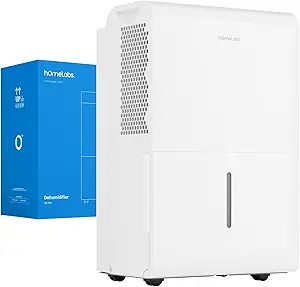 |
| Best Seller A high-volume bestseller chosen again and again | ToLife C2 Dehumidifier |  |
yaufey 31-Pint Dehumidifier
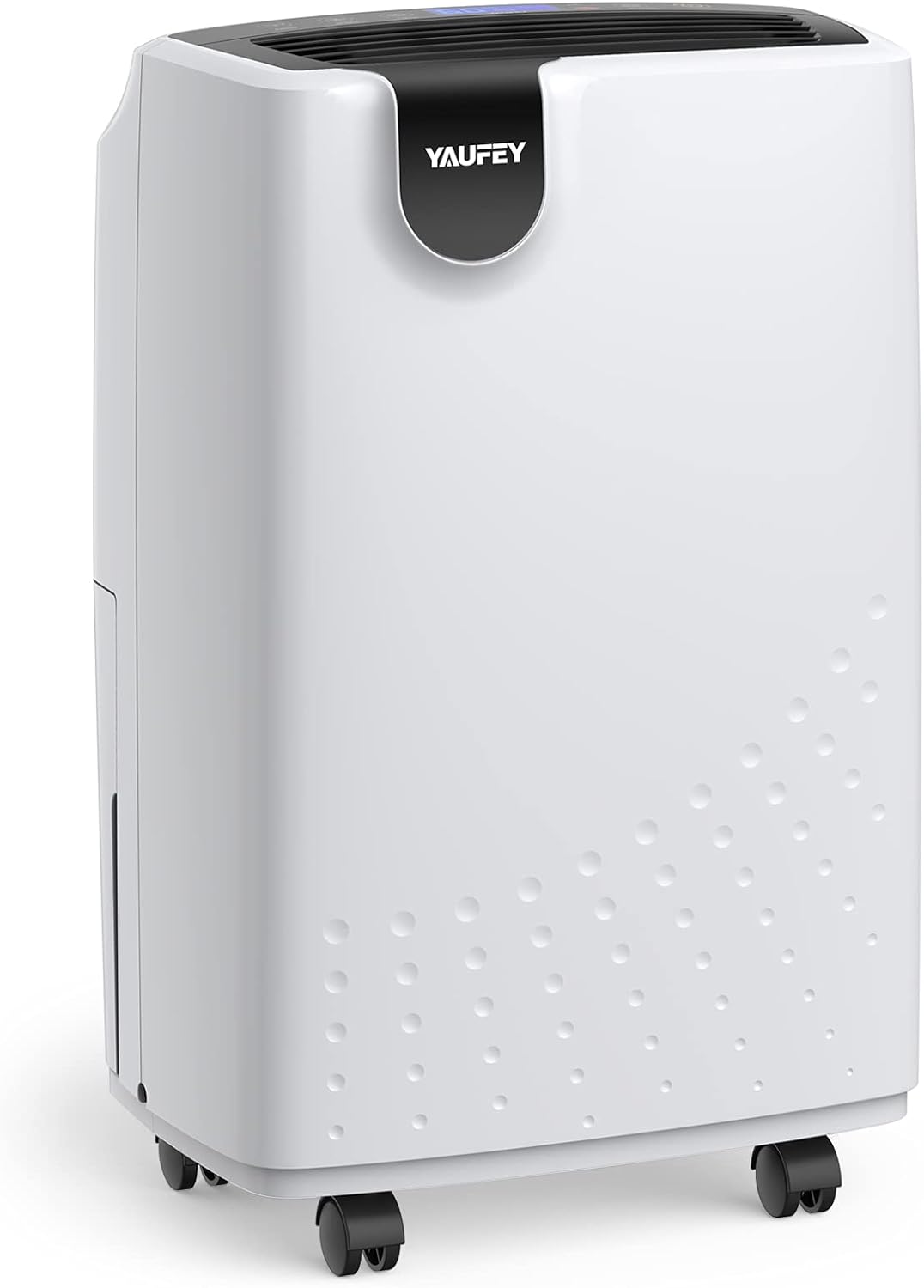
| Dehumidification Capacity | 31 pints_per_day |
|---|---|
| Floor Area | 2500 square_feet |
| Tank Volume | 0.48 gallons |
| Wattage | 230 watts |
| Air Flow Capacity | 64.7 cfm |
This yaufey 31-pint dehumidifier removes up to 31 pints per day under test conditions and is sized for spaces up to about 2,500 sq ft, making it a solid mid-capacity option for winter moisture control in basements and medium rooms. It offers two fan speeds including a turbo setting, an intuitive touch control panel with adjustable humidity and a 24-hour timer, and an included 6.56 ft drain hose for continuous gravity drainage to avoid frequent emptying. The washable, removable filter is easy to maintain and the unit rolls on castors with a built-in handle for moving between rooms. Practical winter benefits include quieter operation for overnight use and an auto-defrost feature so it can run in cooler basement temperatures. Expect real-world removal to vary with temperature and humidity, and note the 0.48 gallon tank is relatively small if you plan to rely on tank mode rather than a continuous drain.
Best for: Buyers who want a balanced, easy-to-use dehumidifier for winter moisture control in basements, laundry rooms, or medium-sized living spaces and value portability and simple maintenance.
Less Ideal for: Do not choose this if you need industrial-scale moisture removal for very large spaces or continuous high-volume drainage without gravity downhill routing.
- Mid-size 31-pint capacity suitable for basements and medium rooms
- Includes 6.56 ft drain hose and continuous drain outlet for unattended operation
- Washable, removable filter simplifies maintenance
- Quiet operation with two fan speeds and 24-hour timer for overnight use
- Wheels and handle make it easy to move between spaces
- 0.48 gallon water tank is small for heavy dehumidification when not using continuous drain
- Performance rating is based on high-temperature test conditions and will be lower in typical winter basement temps
Verdict: A versatile mid-capacity dehumidifier that balances portability, quiet operation, and continuous-drain convenience for winter basement and medium-room use.
Gasbye DryPrime-50 Dehumidifier
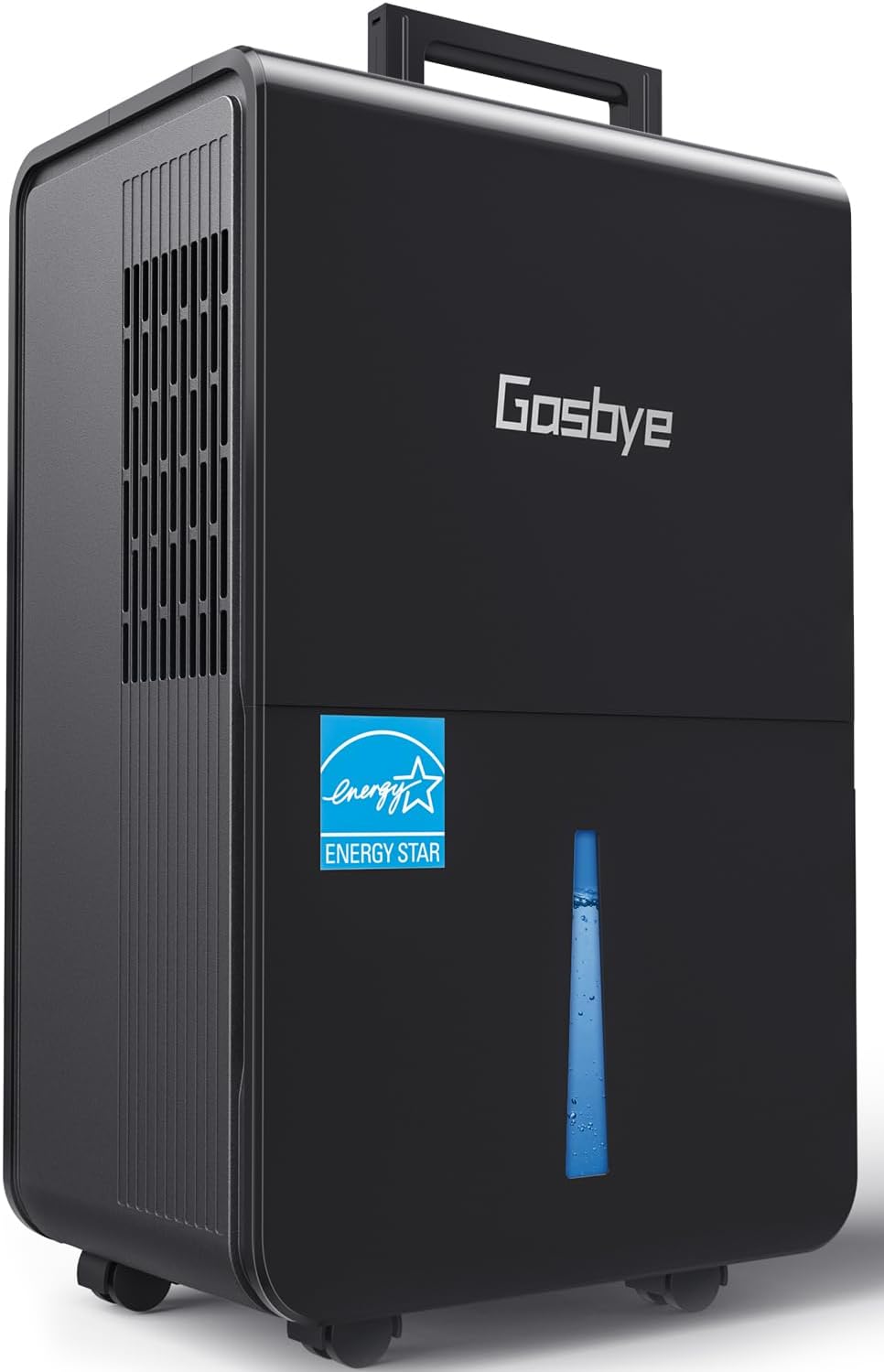
| Capacity | 115 pints |
|---|---|
| Tank Volume | 1.72 gallons |
| Wattage | 500 watts |
| Air Flow Capacity | 12600 cubic_feet_per_hour |
| Energy Certification | ENERGY STAR 2026 |
The Gasbye DryPrime-50 is a compressor dehumidifier built for big, damp spaces like basements and large living areas where steady moisture removal is needed through the winter. It uses a robust copper coil and a 500-watt compressor to deliver lab-tested capacities (up to 115 pints/day at very hot, humid conditions and lower outputs at cooler temps), plus an Energy Star rating that helps keep running costs down. Practical features include a 1.7-gallon internal tank, three drainage methods (tank, gravity hose, or threaded garden-hose outlet), auto shut-off and auto restart after power loss, and a washable filter. At roughly 45 dB it runs quietly enough for common areas but may be too loud for bedrooms. The unit is relatively heavy compared with compact models, reflecting thicker copper tubing and a more durable build, but that also makes it less portable. For winter use the DryPrime-50 performs best in cooler, enclosed spaces where steady extraction and energy efficiency matter, though real-world pint rates drop as temperature and humidity fall.
Best for: Buyers who prioritize strong, reliable moisture removal and energy efficiency for large or damp winter spaces like basements and laundry rooms and who value durable construction over lightweight portability.
Less Ideal for: People who need a lightweight, ultra-quiet unit for small bedrooms or those who want multiple fan speeds and highly portable, compact designs.
- High lab-tested dehumidification capacity with multiple published performance points for different temperature and humidity conditions
- Energy Star 2026 certified, improving energy efficiency compared with noncertified compressor units
- Three drainage options including a 1.7 gallon tank and threaded garden-hose outlet for continuous unattended operation
- Reinforced copper tubing and solid build aimed at durability and longer service life
- Relatively heavy and less convenient to move between rooms
- Single fan speed and compressor noise around 45 dB make it less suitable for bedroom use
Verdict: Choose the DryPrime-50 when you need a durable, Energy Star compressor dehumidifier that consistently removes large volumes of moisture from basements and big winter spaces.
Waykar 34 Pint Dehumidifier
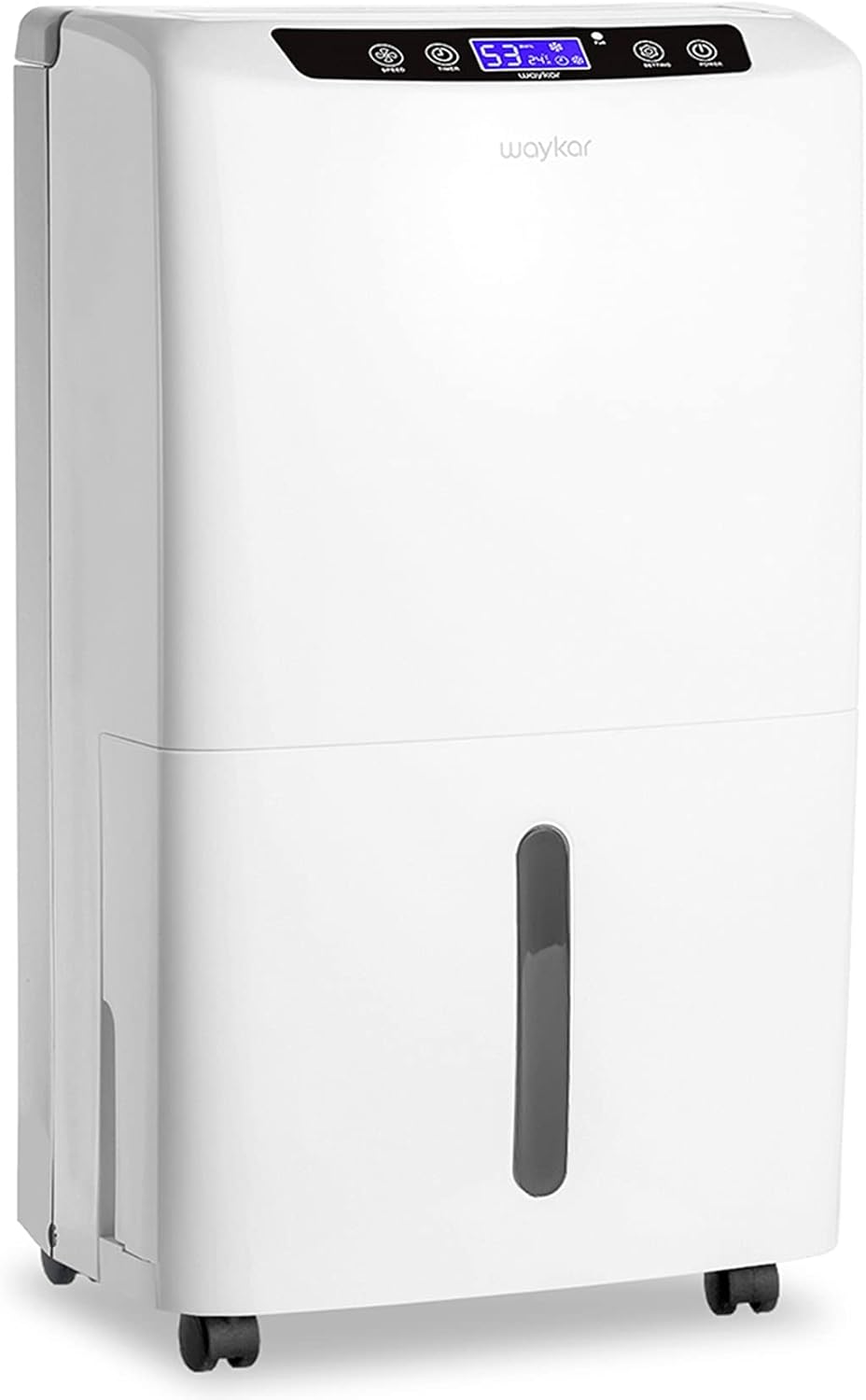
| Capacity | 34 pints |
|---|---|
| Floor Area | 2000 square_feet |
| Tank Volume | 0.66 gallons |
| Wattage | 230 watts |
| Air Flow Capacity | 62 cfm |
The Waykar 34 Pint Dehumidifier is a mid‑capacity unit meant to remove excess moisture in basements and large rooms, and it is tuned for efficient year‑round use including colder months. It pulls up to 34 pints per day (tested at 95°F, 90% RH) and offers Auto and Continuous operation modes plus a 30%–80% adjustable humidity setpoint so you can target a specific indoor relative humidity. Practical features include a 90° manual airflow direction, two fan speeds, a washable filter, 24‑hour timer, and an included drain hose for continuous drainage to avoid frequent tank emptying. The unit is Energy Star certified and has automatic defrost and overload protection for more reliable winter operation when temperatures drop. On the downside the water tank is modest (0.66 gal) so continuous drain is recommended for extended use, and the unit is relatively heavy compared with smaller portable models which affects moving it between rooms. For winter dehumidification in basements or whole rooms this model balances energy efficiency with useful controls and safety features.
Best for: Buyers who want an efficient, practical dehumidifier for winter basement or large-room use and who prioritize steady humidity control and energy savings over ultra-light portability.
Less Ideal for: Those who need a very lightweight, frequently moved unit or who prefer a model with a larger internal reservoir for long unattended runs without plumbing.
- Energy Star certified for lower operating costs during extended use
- Wide 30%–80% humidity setpoint for precise control including deep drying
- Automatic defrost and overload protection suited for colder environments
- Dual drain options: removable tank plus included hose for continuous drainage
- Washable filter and 24-hour timer simplify maintenance and scheduling
- Small 0.66 gallon tank requires frequent emptying unless using continuous drain
- Relatively heavy for a portable unit, making frequent relocation less convenient
Verdict: A dependable, energy-efficient 34‑pint dehumidifier built for winter use in basements and large rooms where precise humidity control and continuous drainage matter most.
Eva-Dry Mini Dehumidifier E-333

| Floor Area | 333 square_feet |
|---|---|
| Capacity | 6 ounces |
| Dehumidification Capacity | 0.38 pints_per_day |
| Operation Mode | Continuous |
| Wattage | 22.5 |
The Eva-Dry E-333 is a compact, rechargeable silica gel dehumidifier meant for small, enclosed spaces like closets, bathrooms, cars, and gun safes. It uses non-toxic crystallized silica beads to pull moisture out of the air without pumps, water tanks, or electricity during normal use, and the beads change color to indicate when recharging is needed. Practical benefits include true cordless operation, simple placement or hanging with the included hook, and a renewable design that can be reused for years by heating to recharge the beads. Its 4 to 6 ounce absorption capacity and roughly 20 to 30 day run between recharges make it convenient for low-humidity control rather than continuous whole-room drying. Important limitations are its very low daily dehumidification rate and small capacity, so it will not replace an electric dehumidifier in damp basements or large rooms, and you must manually recharge it when the beads are saturated. For winter use in small spaces or to protect gear and closets from seasonal moisture, it is an inexpensive, low-maintenance option.
Best for: Buyers seeking an inexpensive, low-maintenance way to control occasional winter moisture in small enclosed spaces and to protect stored items from dampness.
Less Ideal for: People needing continuous dehumidification for basements, whole rooms, or persistently damp areas should choose a powered electric dehumidifier instead.
- Completely cordless and reusable with no water tanks or compressors
- Simple visual moisture indicator to show when recharge is needed
- Small, lightweight design fits closets, cars, lockers, and gun safes
- Renewable silica gel beads can be recharged for long-term use
- Very limited daily dehumidification capacity not suited for large or very damp spaces
- Requires periodic manual recharging rather than continuous automatic operation
Verdict: A budget-friendly, cordless silica-gel dehumidifier that provides simple, reusable moisture protection for small winter storage spaces.
YTE PRO 34 Pint Dehumidifier DH1800S

| Floor Area | 2500 square_feet |
|---|---|
| Capacity | 2 liters |
| Operation Mode | Automatic |
| Noise Level | 40 dB |
The YTE PRO 34 Pint Dehumidifier (DH1800S) is a compressor-style unit built to remove moisture from large indoor spaces up to roughly 2,500 sq ft. It is typically used in basements, bedrooms, and living areas to control humidity during damp seasons or in winter when homes can trap moisture. Notable features include a high-efficiency compressor, front-facing LED humidity readout with a sensitive sensor, two fan speeds, three dehumidification modes (including continuous and auto), a 24-hour timer, and an included 6.56 ft drain hose for unattended continuous drainage. Practical benefits are straightforward: it moves a meaningful amount of water for the size, the audible level is low enough for overnight use, and the washable filter and automatic defrost lower ongoing maintenance. Limitations are that the tank is modestly sized at 2 liters so manual emptying is more frequent unless you use the drain hose, and the front display lights cannot be switched off which may bother light-sensitive sleepers despite the low brightness setting.
Best for: Buyers who prioritize a reliable, compressor-based dehumidifier for winter damp control in large rooms and want quiet, set-and-forget operation with the option for continuous drainage.
Less Ideal for: Those who need a very large onboard tank for long intervals without plumbing or who require a completely dark control panel for bedroom installation.
- Compressor system rated to cover large spaces up to 2,500 sq ft
- Includes 6.56 ft drain hose for continuous unattended drainage
- Quiet operation around 40 dB suitable for bedrooms
- Front LED with sensitive humidity sensor for easy monitoring
- Auto-defrost and washable filter reduce maintenance needs
- Small 2 L water tank requires frequent emptying if not plumbed to drain
- Front display lights cannot be turned off which may be distracting at night
Verdict: A dependable, quiet compressor dehumidifier that handles winter damp in large rooms and supports continuous drainage for low-maintenance operation.
hOmeLabs 50 Pint Dehumidifier
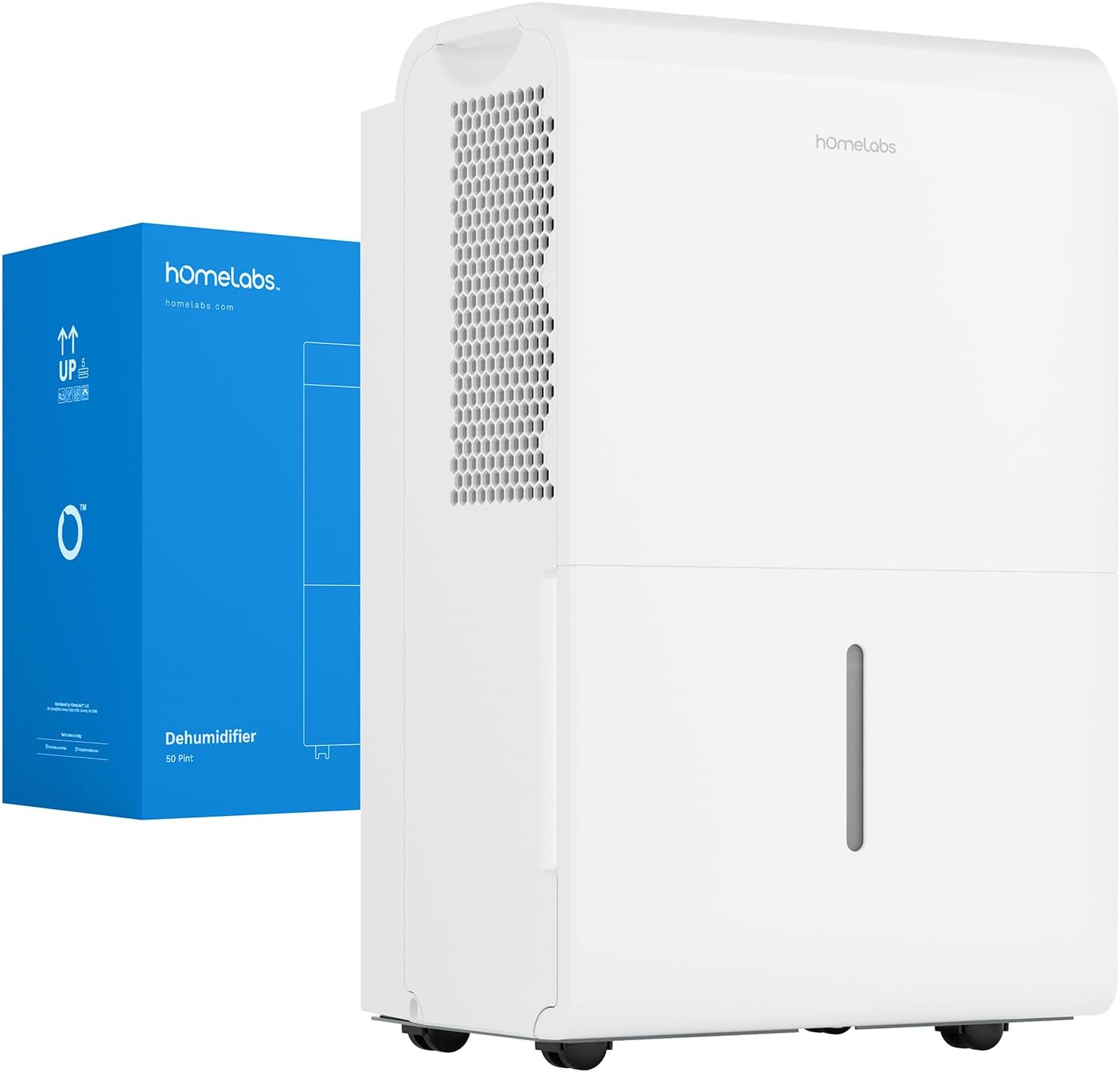
| Dehumidification Capacity | 50 pints_per_day |
|---|---|
| Floor Area | 7000 square_feet |
| Wattage | 322 watts |
| Air Flow Capacity | 165 cfm |
| Capacity | 1.6 gallons |
This hOmeLabs 50‑pint dehumidifier is built to remove significant moisture from large indoor areas and is practical for winter use when basements and large rooms tend to stay damp. It handles up to 50 pints per day at standard test conditions and claims higher capacity at extreme heat and humidity, and it offers two fan speeds plus a Turbo mode to accelerate drying. The unit includes a removable tank with auto shutoff and a hose outlet for continuous drainage, a washable filter, a touch control panel, and Wi‑Fi for remote monitoring and control. Wheels and handles make it portable despite a heavier cabinet, and automatic defrost and restart features keep it running through colder cycles. The main compromises are its size and weight, which make it less convenient to move frequently, and its power draw when running at high speed, which could matter for continuous winter operation in very cold rooms without easy drainage. For winter dampness control, it offers strong performance and smart controls that simplify long stretches of unattended operation.
Best for: Buyers who want a proven, high-capacity dehumidifier with remote control and unattended drainage for controlling winter dampness in large rooms or basements and who weigh real‑world performance and user feedback when deciding.
Less Ideal for: Those needing a lightweight, ultra-compact unit for small rooms or infrequent spot use should consider smaller portable models instead.
- Removes up to 50 pints per day under standard conditions for effective large‑space dehumidification
- Wi‑Fi connectivity lets you monitor and adjust settings remotely
- Continuous drain option with hose outlet plus removable tank and auto shutoff for unattended use
- Automatic defrost and restart support operation in colder environments
- Washable filter and touch control panel simplify maintenance and daily use
- Relatively heavy and bulky, making frequent relocation awkward
- Higher wattage when running at Turbo or high fan speed increases energy use during continuous operation
Verdict: Choose this model if you need a high‑capacity, Wi‑Fi‑enabled dehumidifier that can run unattended to tackle winter dampness in large spaces.
ToLife C2 Dehumidifier

| Floor Area | 1000 |
|---|---|
| Capacity | 95 fluid ounces |
| Number of Speeds | 2 |
| Wattage | 93 watts |
| Air Flow Capacity | 95 liters per minute |
The ToLife C2 is a small, portable dehumidifier that uses semiconductor condensation to pull moisture from rooms up to about 1,000 sq ft and stores it in a removable 95 oz tank. It offers two fan speeds including a low-noise sleep mode that the manufacturer rates below 30 dB and an automatic shutoff when the tank is full or not seated correctly. The unit is lightweight and has a built-in handle for moving between bedrooms, bathrooms, closets, or basements, and a seven-color LED that can be locked for use as a night light. Practical benefits include quiet overnight operation, easy tank removal for emptying, and simple two-mode controls that make setup straightforward. Limitations are typical for thermoelectric designs: it is better suited to smaller spaces or milder winter humidity because semiconductor systems are less efficient than compressor dehumidifiers in cold conditions and it requires manual tank emptying rather than continuous drain by default. The unit runs on 220 volts and consumes about 93 watts on higher setting, so expect modest energy use for continuous operation.
Best for: Buyers who prioritize a low-noise, easy-to-use unit for bedrooms, bathrooms, or small basements and want a portable dehumidifier that is simple to operate and maintain.
Less Ideal for: Homes with very cold basements or large, very damp spaces that need heavy continuous moisture removal should consider a larger compressor dehumidifier with a drain option instead.
- Portable and lightweight with a built-in handle for easy room-to-room use
- Quiet sleep mode for overnight operation (manufacturer lists <30 dB)
- Large removable 95 oz water tank with automatic shutoff to prevent overflow
- Simple two-speed control keeps operation and maintenance straightforward
- Seven-color LED can be locked and used as a night light for bedrooms
- Thermoelectric (semiconductor) dehumidification is less efficient in cold conditions compared with compressor units
- No built-in continuous drain option listed, so regular manual emptying may be required
Verdict: A quiet, easy-to-move dehumidifier with a large removable tank that fits risk-averse buyers wanting simple, low-noise moisture control in small winter rooms.
Choosing the Right Dehumidifier for Winter: Key Factors to Consider
Low-Temperature Extraction Capacity
Cold air holds less moisture, and dehumidifiers rated at warm-room conditions often lose extraction power in winter. Look for capacity figures or manufacturer notes that include performance at lower temperatures or specify a low ambient operating range. A unit that lists extraction at 41 to 50 degrees Fahrenheit or that uses a cold-climate compressor design will remove moisture more consistently when indoor temperatures dip.
Choosing a model with a stronger low-temp extraction capacity reduces runtime and helps prevent condensation on windows and walls during the coldest months. It also minimizes cycling that can stress the compressor and shorten unit life.
Automatic Defrost and Frost Management
Frost buildup on the evaporator coils is a common winter problem that stops moisture removal and can cause the unit to cycle off. Automatic defrost modes use sensors and timed cycles to melt frost before it accumulates enough to impair operation. Some designs switch to a fan-only mode or briefly heat the coils to shed ice.
Reliable defrost behavior matters because manual defrosting is inconvenient and often impractical in basements or utility rooms. A unit with responsive defrost logic will maintain steady humidity control and avoid long downtime during cold stretches.
Drainage Options and Continuous Run
Winter often brings long periods of elevated indoor relative humidity, so you may run a dehumidifier for extended stretches. Gravity-drain and pump-assisted continuous drain options let the unit empty directly into a floor drain or sink so you do not need to manually dump the tank. Consider the layout of the room and whether you can route a hose downhill for gravity drainage or need a pump to move water upward.
Choosing an easy continuous-drain setup reduces maintenance and makes the unit practical for unattended operation in basements, crawlspaces, or holiday periods when you cannot regularly empty the tank.
Energy Efficiency and Running Cost
Dehumidifiers operate a lot in winter, so energy use matters for household bills and environmental impact. Look for units with efficient compressor designs, optimized fan motor control, and clear power-draw specs. Energy Factor (EF) ratings or kilowatt-hour usage estimates are useful when available.
Balancing capacity against wattage is the right approach: a higher-capacity unit that removes moisture faster and runs less can be more efficient overall than a weak unit running continuously. Energy-efficient controls like humidity setpoints and timers also help minimize unnecessary runtime.
Control Features and Automation
Useful control options reduce hassle and improve winter performance. A reliable humidistat with precise setpoints helps maintain target relative humidity without constant manual adjustments. Timers, auto-restart after power loss, and digital readouts simplify operation during short winter days and intermittent utility interruptions.
Smart features such as remote monitoring and scheduling can be beneficial but prioritize solid basic controls and accurate humidity sensing because winter conditions change slowly and predictably.
Placement, Size, and Airflow
Room size and airflow determine how effective a dehumidifier will be. Place units where airflow is unobstructed and where moist air accumulates, such as basements, laundry rooms, or near cold exterior walls. Match the unit's rated coverage to your actual space, accounting for ceilings, partitions, and insulation levels.
A physically larger unit with stronger fan airflow can move air around a room faster, improving whole-room humidity control, but it may be noisier and less convenient to relocate. Consider portability and footprint relative to the intended placement.
Why Winter Dehumidifying Is Different
Winter indoor humidity problems often stem from the contrast between cold exterior air and warmer interior spaces. Moisture sources include indoor drying, showers, cooking, and inadequate ventilation. When warm humid air hits cold surfaces it condenses, making basements and window sills prime trouble spots.
Because ambient temperatures are lower, many dehumidifiers operate less effectively or risk frost buildup. Understanding these seasonal dynamics helps you pick a unit with the right features for steady moisture control throughout winter.
- Cold air reduces a unit's moisture removal efficiency.
- Frost on coils can halt dehumidification until defrost cycles run.
- Placement near cold surfaces or moisture sources delivers the best results.
Sizing a Unit for Winter Conditions
Nominal capacity ratings are usually given in pints per day at warm-room test conditions. For winter planning, choose a higher-rated unit than you would for summer because real-world performance will drop as temperatures fall. Consider the activity level in the room: a laundry area or frequently used basement will need more capacity than a seldom-used storage room.
Also factor in insulation and ceiling height. A well-insulated, heated space may retain moisture differently than an unheated cellar, so adjust capacity upward if the area is cold or has exposed foundations.
- Increase nominal capacity selection for colder ambient temperatures.
- Prioritize airflow and placement to improve effective coverage.
- Account for ceilings and room layout in coverage estimates.
Maintenance Tips for Winter Reliability
Regular maintenance keeps a dehumidifier effective when you need it most. Clean or replace air filters on schedule, inspect coils for dust that can accelerate frost buildup, and verify drainage paths are clear and free of ice in unheated areas. If you use a hose for continuous drainage, ensure the line is insulated or routed inside to prevent freezing.
Check seals around windows and doors to reduce the workload on the unit, and set the humidistat to a reasonable target. Too low a setpoint forces excessive runtime without additional benefit and can make interior air uncomfortably dry.
- Keep filters clean to maintain airflow and efficiency.
- Insulate drain hoses and route them to avoid freezing.
- Inspect the unit's coils and defrost function before peak winter use.
Placement Strategies for Basements and Living Spaces
In basements, place the dehumidifier centrally or near the main moisture source to assist whole-room circulation. Keep the unit at least a few inches from walls to allow inlet and outlet airflow. In finished living areas, prioritize quiet models and locate units where airflow is not obstructed by furniture or curtains.
If you need to cover multiple rooms, consider using doorways and fans to improve distribution rather than relocating the dehumidifier frequently. For permanent basement setups, plan for a permanent drain to minimize manual intervention.
- Allow free airflow around the unit for best performance.
- Use doorways and fans to help distribute dry air to adjacent spaces.
- Choose quieter models for bedrooms and living areas.
Energy Use and Cost-Saving Practices
You can lower energy use by setting a realistic humidity target, using a timer to avoid unnecessary daytime runtime, and ensuring the dehumidifier is sized correctly so it removes moisture efficiently. Check that the unit cycles sensibly and restarts automatically after power interruptions to avoid manual resets in winter.
Complement dehumidification with simple home fixes like sealing drafts, improving ventilation where safe, and using exhaust fans when showering or cooking to reduce the unit's workload.
- Match unit size to the task to avoid continuous low-efficiency operation.
- Use timers and accurate humidistats to avoid over-drying.
- Combine dehumidification with basic air sealing for best results.
How We Chose the Best Dehumidifier for Winter
We focused on features and specifications that directly affect winter performance and everyday convenience. Primary evaluation criteria included low-temperature extraction capacity, automatic defrost performance, and energy efficiency since cold air reduces a unit's effective moisture removal and can cause frost buildup. We also considered tank or drainage options and runtime convenience so a unit will stay functional through long cold stretches without frequent emptying. Noise levels and control options were included because winter use often means running a unit in living spaces or bedrooms. We excluded units that lack documented low-temperature ratings or that rely solely on dehumidification specs measured at warm-room conditions. We also filtered out specialty industrial units whose capacity and operating design do not suit typical home winter needs. The final shortlist reflects balanced performance across winter-specific extraction, frost management, energy draw, ease of continuous drainage, and user-facing convenience features.
Our full evaluation process is outlined in our review methodology.
FAQ
Can a dehumidifier run effectively in a cold basement during winter?
Often yes, if the unit is designed or rated for low-temperature operation. Models with cold-climate specs or reliable auto-defrost will remove moisture at lower ambient temperatures. Without those features, performance may drop and frost can form on coils.
What humidity level should I target in winter to prevent condensation?
Aim for a relative humidity between 30 and 50 percent depending on comfort and how cold the exterior surfaces get. Lower targets reduce condensation risk but excessively low indoor humidity can feel uncomfortable.
Is continuous drain necessary for winter use?
Continuous drain is highly useful for unattended or long-term winter use because it removes the need to empty a tank during cold periods. Choose a pump-assisted model if gravity drainage is not possible.
Will running a dehumidifier in winter increase my heating bills?
A dehumidifier consumes electricity and can slightly affect heating load because it changes air temperature through fan and compressor heat, but efficient models that remove moisture quickly can be more cost-effective than weaker units that run continuously.
How do I prevent the drain line from freezing in an unheated area?
Insulate the drain hose and route it through heated spaces where possible. If routing through cold areas is unavoidable, use a pump-assisted drain that moves water to a warm drain point or inside plumbing to minimize freezing risk.
Final Verdict
For winter use, prioritize dehumidifiers that maintain extraction at lower temperatures and include reliable defrosting. Balance capacity against energy draw and pick a drainage option that suits how often you can perform maintenance. Focusing on low-temp performance, continuous drainage, and practical controls will help you keep condensation and mold risks under control through the cold months. Choose the unit that best aligns with the size of your space and how hands-on you want maintenance to be.