
Note: This article contains affiliate links. If you click on these links and make a purchase, we may earn a small commission at no extra cost to you. This helps support our research and content. Read our full affiliate disclosure here.
A dehumidifier with pump and drain hose removes moisture continuously so you do not have to empty a tank every day. If you manage damp basements, laundry rooms, or finished crawl spaces, a model that handles self-drainage can save hours of maintenance while protecting wood, drywall, and stored items. This guide shortlists the top picks across household capacities and installation styles, and evaluates each by water removal performance, drain reliability, noise, and ease of setup. Read on for practical pros and cons to help you pick the right continuous-drain dehumidifier for your space.
Top Picks at a Glance
| Best Overall The best all-around choice for most situations | GoveeLife Smart Dehumidifier Max H7152 |  |
| Best Quality Built to a higher standard if you want something more solid | Waykar 125-Pint Dehumidifier AFW2.0DPM |  |
| Best Value The sweet spot between price and what you get | Gasbye DryPrime-35-WP Dehumidifier |  |
| Best Budget The cheapest option that still gets the job done reliably | Sijipt Guardian SJ80P 80-Pint Dehumidifier |  |
| Top Rated A top-rated pick with lots of positive feedback | DuraComfort DH50PWM 50-Pint Dehumidifier | 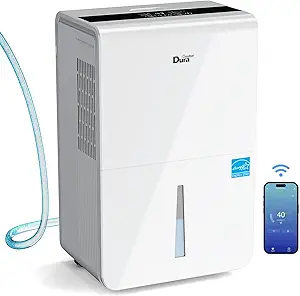 |
| Most Popular A crowd favorite that many people choose with confidence | AEOCKY LEO Dehumidifier |  |
| Best Seller A high-volume bestseller chosen again and again | avylo 90-Pint Dehumidifier ADC018 |  |
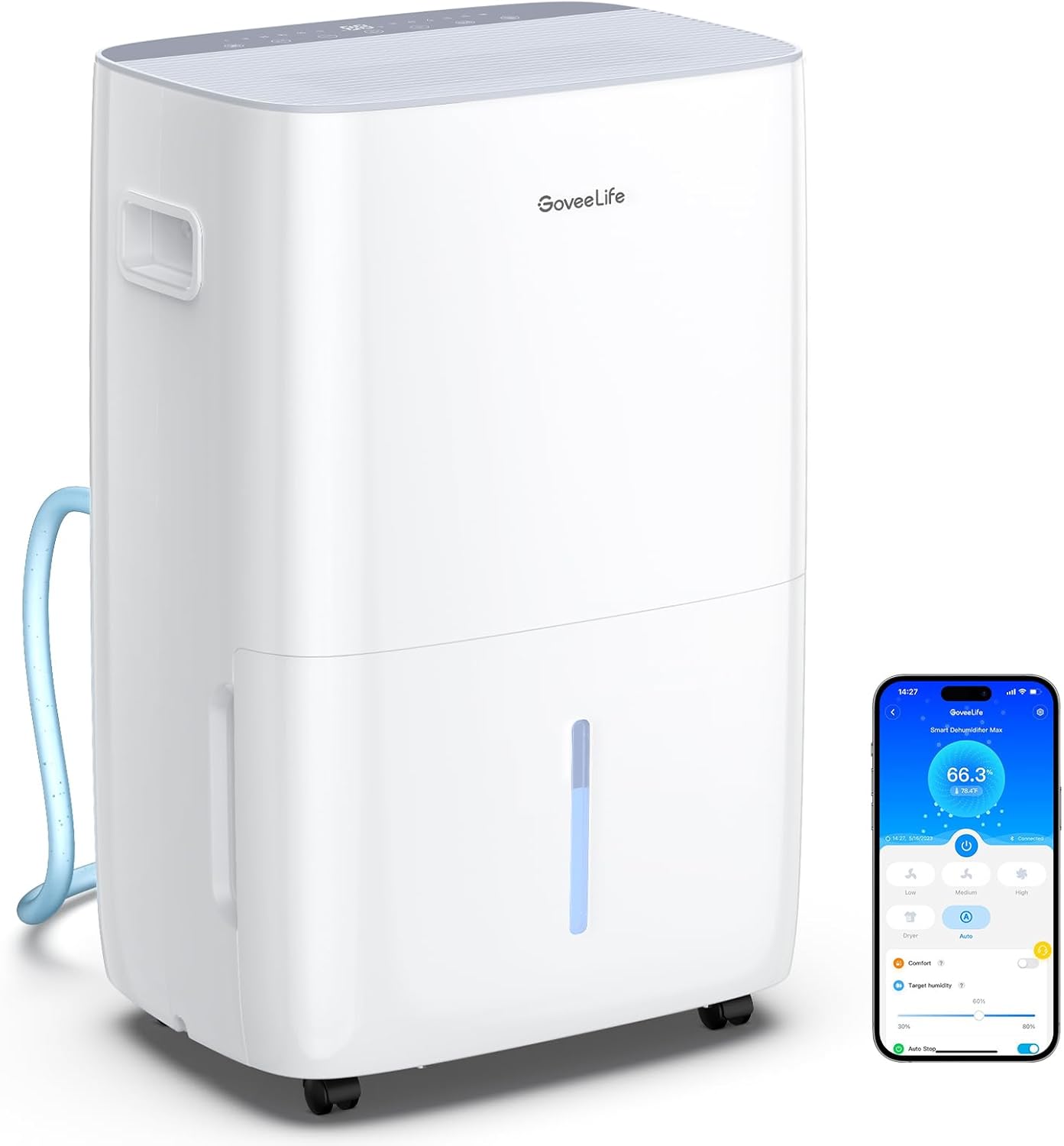
GoveeLife Smart Dehumidifier Max H7152
| Dehumidification Capacity | 50 pints/day (65°F, 60% RH) |
|---|---|
| Floor Area | up to 4,500 square feet |
| Tank Volume | 1.8 gallons |
| Wattage | 860 watts |
| Operation Mode | Auto, Comfort, Drying, Maintain, Sleep |
The GoveeLife Smart Dehumidifier Max H7152 is a compressor dehumidifier intended for large residential spaces, offering automatic modes, app and voice control, and a built-in pump with a 16 ft drain hose for continuous drainage. It pulls moisture from air with a rated daily capacity (50 pints at 65°F/60% RH) and supports operation across several modes including Auto, Maintain, Drying and Sleep, plus a touch lock and water-full reminder for convenience. The integrated pump and pump-drain safeguards that dry residual water after shutdown make it well suited for basements, garages, and laundry areas where gravity drainage is impractical. Practical trade-offs are its substantial power draw (860 watts) and the need for clearance around the intake for efficient performance, and the unit is fairly heavy compared with compact consumer models which affects portability. For buyers who need reliable, automated moisture control for large rooms and prefer the convenience of a pump and smart controls, this unit covers core needs; for very small spaces or ultra-low-energy operation, a smaller or lower-wattage model may be a better fit.
Best for: Buyers who need automated, high-capacity dehumidification for basements, garages, or large home spaces and value a built-in pump and smart controls to minimize manual maintenance.
Less Ideal for: Those looking for a lightweight, highly portable unit or a very low-energy dehumidifier for small bedrooms or occasional use should consider smaller models instead.
- Built-in pressurized pump with included 16 ft drain hose for continuous automatic drainage
- Smart app and voice control plus multiple operation modes for hands-off humidity management
- Automatic defrost, auto-restart and water-full reminder improve reliability in varied conditions
- Copper tube evaporator for improved corrosion resistance and longer component life
- High power consumption at 860 watts which may increase operating costs during heavy use
- Relatively heavy and large, making it less convenient to move between locations
Verdict: If you need a high-capacity, low-maintenance dehumidifier for large, damp spaces, this unit’s built-in pump, long hose, and smart controls make it the practical choice.
Waykar 125-Pint Dehumidifier AFW2.0DPM

| Capacity | 125 pints |
|---|---|
| Floor Area | 6500 square_feet |
| Air Flow Capacity | 176.47 cfm |
| Wattage | 530 watts |
| Voltage | 110 volts |
The Waykar AFW2.0DPM is a heavy-duty 125-pint dehumidifier made for large, damp spaces where continuous removal is required. It uses a rotary compressor and a high-brush motor to deliver up to 177 CFM and a rated extraction of 125 pints per day, with an adjustable humidity setpoint from 10% to 90% RH. Practical features include a built-in pump with a 16.4 ft vertical lift plus a 6.6 ft gravity hose for flexible drain routing, a touchscreen control panel, automatic defrost and restart, and a washable filter for easier maintenance. The metal cabinet and reinforced condenser design target durability and improved heat exchange for more consistent performance in harsh or commercial environments. Trade-offs are its single fan speed and substantial power draw relative to smaller residential units, and its size and weight make it less convenient to move frequently despite ergonomic handles. For spaces that need robust, continuous dehumidification and reliable pump drainage, this unit focuses on performance and longevity rather than compact portability.
Best for: Buyers who prioritize strong, reliable moisture removal and pump drainage for large basements, crawl spaces, or commercial rooms and need a unit built for continuous, performance-focused use.
Less Ideal for: If you want a lightweight, quiet unit for occasional home use or small rooms, or need multiple fan speeds for precise airflow tuning, look at compact residential models instead.
- High extraction capacity rated at 125 pints per day for large areas up to 6,500 sq ft
- Built-in pump with 16.4 ft vertical lift plus gravity drain hose for flexible drainage layouts
- Durable metal housing and enhanced condenser for prolonged commercial use
- Adjustable humidity range (10%–90% RH) and touchscreen controls for precise humidity management
- Automatic defrost, auto-restart after power loss, and washable filter for low-maintenance continuous operation
- Only one fan speed limits finer airflow control
- Relatively heavy and bulky compared with residential dehumidifiers
- Higher wattage consumption typical of commercial-grade extraction
Verdict: Choose this dehumidifier when you need industrial-strength extraction and a reliable built-in pump for continuous moisture control in large or demanding spaces.
Gasbye DryPrime-35-WP Dehumidifier

| Capacity | 75 pints |
|---|---|
| Tank Volume | 1.45 gallons |
| Wattage | 350 watts |
| Air Flow Capacity | 156 cfm |
| Voltage | 115 volts |
The Gasbye DryPrime-35-WP is a 75-pint-per-day dehumidifier built for basements, laundry rooms, and other large humid spaces that need continuous drainage. It pairs a sizable 1.45-gallon tank with a user-accessible pump and a 16.5-foot drain hose, so you can either collect water in the bucket or pump it up and away. The pump sits inside the tank so it can be removed for cleaning or replaced without discarding the whole unit, which reduces long-term maintenance risk. Energy Star 2026 certification and a 350-watt rating point to decent efficiency for its capacity, and the unit offers four modes plus auto shut-off and auto restart after power loss for hands-off operation. At typical operating sound levels around 44 dB during pump drainage, it is relatively quiet. Trade-offs include the bulk and weight of a high-capacity portable dehumidifier and the usual need to service the pump periodically despite its cleanable design.
Best for: Buyers who want a durable, serviceable dehumidifier for large rooms or basements and prioritize long-term maintenance savings and flexible drainage options.
Less Ideal for: People who need a lightweight, ultra-compact unit for small rooms or who want a permanently maintenance-free option should consider smaller tank models or non-pump units instead.
- Removable, cleanable pump that can be replaced without replacing the entire unit
- Includes a 16.5-foot drain hose for flexible pump drainage placement
- ENERGY STAR 2026 certified for improved energy efficiency at this capacity
- Auto shut-off and auto restart for low-maintenance, continuous operation
- Multiple operation modes (Normal, Continuous, Auto, Sleep) to match different use cases
- Relatively heavy and large compared with small-capacity units, limiting portability
- Pump and pump parts may still require periodic cleaning or replacement over time
Verdict: Choose this model if you want a high-capacity, Energy Star dehumidifier with a removable pump and long drain hose that minimizes the risk of full-unit replacement.
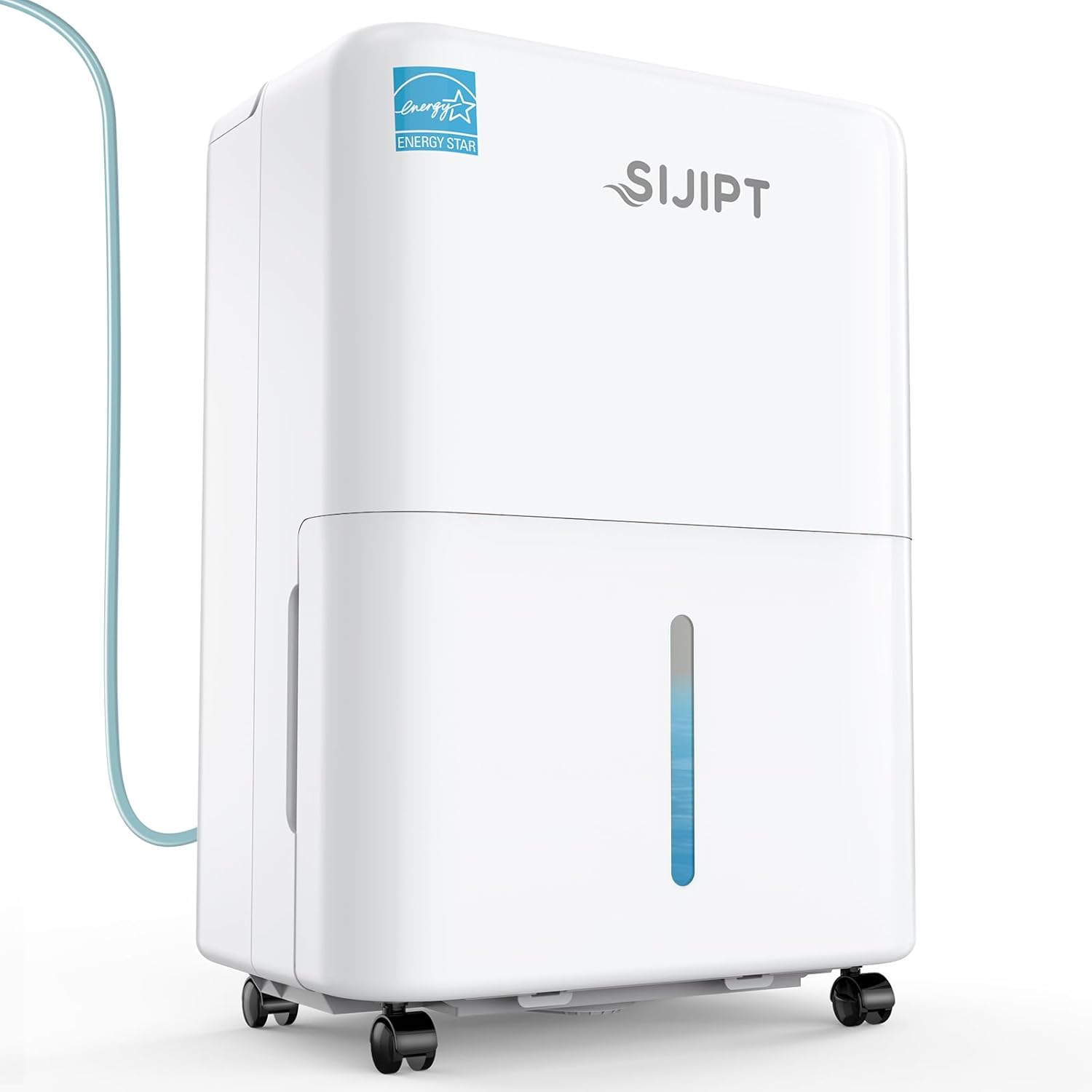
Sijipt Guardian SJ80P 80-Pint Dehumidifier
| Capacity | 80 pints |
|---|---|
| Dehumidification Capacity | 80 pints_per_day |
| Floor Area | 5000 square_feet |
| Wattage | 440 watts |
| Air Flow Capacity | 230 cfm |
The Sijipt Guardian SJ80P is a high-capacity dehumidifier intended for large areas such as basements or homes up to about 5,000 sq ft. It removes up to 80 pints per day and offers three operating modes for continuous dehumidifying, quick drying, or maintaining set humidity. The key convenience is the built-in pump that can push condensate up to 16.4 feet vertically and the included 6.56 ft gravity drain hose for continuous unattended drainage, so you do not need to empty a bucket. Controls include an adjustable knob to set humidity between 30 and 80 percent, a 24-hour timer, auto-restart after power loss, child lock, and a washable filter. Energy Star certification and a quoted 440 W power draw mean it is designed to be reasonably efficient for prolonged use, though performance figures are measured under specific test conditions. At typical operating sound levels around 45 dB, it is fairly quiet for living areas but will still be noticeable in very quiet rooms. For buyers prioritizing robust pump-enabled drainage and large-capacity moisture removal on a budget, this model packs useful automation and mobility into a compact package, while buyers needing ultra-quiet operation or the absolute lowest energy use may want to compare specs across models.
Best for: Buyers looking for an affordable, high-capacity dehumidifier that reliably removes large volumes of moisture and eliminates frequent bucket emptying with a built-in pump and drain options.
Less Ideal for: People who need an ultra-quiet unit for a bedroom or those seeking the absolute lowest possible power draw for continuous operation should consider quieter or lower-wattage alternatives.
- Built-in condensate pump with up to 16.4 ft vertical lift for hands-free drainage
- 80-pint daily capacity suitable for large basements and whole-house coverage up to 5,000 sq ft
- Energy Star certified for better efficiency during long runtime
- Multiple modes plus adjustable humidity control and auto-restart for convenient, automated operation
- Washable filter and caster wheels make maintenance and placement simple
- Quoted dehumidification performance is based on high-temperature, high-humidity test conditions and may be lower in cooler rooms
- Noise around 45 dB may be noticeable in very quiet bedrooms
- Tank volume listed is relatively small if relying on manual emptying without pump or gravity drain
Verdict: If you need hands-free, high-volume dehumidification for a basement or large home, this pump-equipped 80-pint unit delivers the most practical, budget-friendly solution.
DuraComfort DH50PWM 50-Pint Dehumidifier

| Capacity | 50 pints per day |
|---|---|
| Tank Volume | 12 pints |
| Air Flow Capacity | 150 cfm |
| Wattage | 510 watts |
| Operation Mode | Continuous |
The DuraComfort DH50PWM is a large-capacity dehumidifier built to remove up to 50 pints of moisture per day and handle rooms as large as 4,500 square feet. It is typically used in basements, garages, laundry rooms, and other large or damp spaces where continuous moisture control is needed. Notable features include an integrated condensate pump with a 5 m pump hose for forced drainage up to about 16.4 feet, a separate 1 m gravity drain hose and garden-hose connection for long unattended runs, and 2.4 GHz WiFi with app control to set humidity, timers, and modes remotely. The unit offers multiple modes including Comfort, Smart, Continuous, and Laundry Drying, plus a washable filter with a clean reminder, child lock, and casters for portability. Practical benefits include flexible, low-maintenance drainage options and remote monitoring that reduce the need for frequent emptying. Important limitations are its relatively high wattage for heavy-duty operation and the fan/noise range that, while moderate, may be noticeable in quiet living spaces.
Best for: Buyers who prioritize a dependable, low-maintenance dehumidifier for large, consistently damp spaces and want flexible drainage and remote control to minimize hands‑on upkeep.
Less Ideal for: People who need an ultra-quiet unit for bedrooms or who have very small rooms where a lower-capacity, lower-power model would be more appropriate.
- Built-in pump with long lift capacity simplifies unattended drainage
- Multiple drainage options including pump hose and gravity hose for installation flexibility
- App control and WiFi let you monitor and change settings remotely
- Washable filter with reminder and child lock reduce maintenance and safety concerns
- Designed for large spaces up to 4,500 sq ft and continuous operation
- Rated wattage indicates higher power draw during heavy dehumidification
- Three-speed noise levels may be noticeable in quiet rooms
Verdict: If you need a reliable, large-capacity dehumidifier with a factory-quality pump and multiple drain options for long unattended runs, the DuraComfort DH50PWM is a practical choice.
AEOCKY LEO Dehumidifier

| Capacity | 80 pints |
|---|---|
| Applicable Area | 4500 square_feet |
| Tank Volume | 1.45 gallons |
| Operation Mode | Automatic |
| Included Components | Drain Hose |
The AEOCKY LEO is a pump-equipped compressor dehumidifier built to handle high-humidity areas like basements and large living spaces. It actively removes up to 80 pints per day (tested at very humid conditions) and includes a 5 m drain hose plus an internal pump so you can route condensate upward or away without frequent emptying. Controls include automatic operation and a smart humidistat with millisecond-level sensing for tight humidity control and a power‑off memory function for use with smart sockets. The unit claims ENERGY STAR Most Efficient 2025 certification and uses a rotary compressor and multi-row heat-exchange design intended to balance strong drying performance with energy efficiency. Practical benefits are hands-off drainage, wide coverage for whole-level dehumidifying, and quieter pump design for overnight use. Trade-offs are the relatively large water tank and footprint for portability, and more complex internals that may require attention if a pump needs service compared with simple gravity-only models.
Best for: Buyers who prioritize proven performance and want 24/7 hands-off drainage for basements or large, damp rooms and value certification-backed energy efficiency and social-proof from a top-selling brand.
Less Ideal for: Those who need an ultra-compact or lightweight dehumidifier for small rooms, occasional use, or who prefer the simplest gravity-drain or bucket-only models.
- Integrated pump with included 5 m drain hose enables upward or remote drain without manual emptying
- High dehumidification capacity suitable for large areas and heavy humidity
- ENERGY STAR Most Efficient 2025 certification indicating top-tier energy performance
- Automatic mode and precise humidistat with fast sensing for stable humidity control
- Larger physical footprint and 1.45 gallon tank make it less convenient to move between rooms
- More complex pump and compressor system may be costlier to repair than simpler non-pump units
Verdict: If you need a high-capacity, energy-efficient dehumidifier with reliable pump drainage for continuous use in basements or large rooms, the AEOCKY LEO is a strong, proven choice.
avylo 90-Pint Dehumidifier ADC018

| Dehumidification Capacity | 90 pints_per_day |
|---|---|
| Floor Area | 4500 square_feet |
| Tank Volume | 2.11 gallons |
| Number of Speeds | 3 |
| Wattage | 235 watts |
The avylo ADC018 is a high‑capacity dehumidifier designed for basements and large rooms that need continuous moisture control. It uses a high‑efficiency compressor and optimized airflow to remove up to 90 pints per day and can cover very large areas while claiming low daily operating cost thanks to its ENERGY STAR Most Efficient 2025 rating. The unit offers three fan speeds, an LED display with humidity and temperature readout, auto humidity control, and a top-mounted 2.11 gallon tank with full‑tank reminder and automatic shutoff. A built‑in pump with 15 ft lift plus an included 15 ft drain hose enables unattended continuous drainage, and there are multiple operating protections including child lock and compressor safeguards. Practical limits to note are its fairly large footprint and weight for placement and that gravity or pump drainage setup requires some initial tank emptying and a suitable drain path. Noise is moderate with a quoted low of about 41 dB on quiet modes, which makes it usable in living areas overnight but not completely silent.
Best for: Buyers who prioritize reliable, hands‑off dehumidification for large, moisture‑prone areas and want a pump-equipped unit that can run unattended with energy efficiency and safety features.
Less Ideal for: People needing a very compact or lightweight unit for small rooms or those who cannot provide a drain path for continuous discharge should consider smaller, portable models instead.
- High daily dehumidification capacity rated at 90 pints for large basements and rooms
- Built‑in condensate pump with 15 ft lift plus included 15 ft drain hose for continuous unattended drainage
- ENERGY STAR Most Efficient 2025 certification for lower operating cost
- Top‑mounted 2.11 gallon tank with full‑tank alert and auto shutoff to prevent spills
- Multiple protections and child lock for safer long‑term use
- Relatively heavy and sizable which may limit placement in tight spaces
- Requires initial tank emptying and proper drain routing when switching to pump or gravity drain
Verdict: Choose this avylo unit if you want a pump‑equipped, energy‑efficient dehumidifier made to handle large basements or long unattended drain runs safely and reliably.
Choosing the Right Dehumidifier with Pump and Drain Hose: Key Factors to Consider
Water Removal Capacity
Water removal capacity is the core function of any dehumidifier and is usually stated in pints or liters per day. Higher capacity is important for large or very damp spaces because it reduces continuous run time and prevents persistent condensation.
When evaluating capacity, consider the typical temperature and humidity of the room. Capacity ratings are often measured at warm, controlled conditions; real-world performance in cool basements will be lower. Choosing a unit with a little extra capacity for the expected conditions helps the unit keep up during prolonged damp periods.
Drain System Design and Pump Strength
A pump and drain hose option lets the dehumidifier move condensate to a nearby sink or higher drain point without manual emptying. Pump strength determines how high or far the unit can discharge and whether it can cope with vertical lifts required in a basement or crawl space.
Also evaluate hose routing options and ease of accessing the pump for service. A well-designed drain system should include overflow protection and a simple method to switch between pump and gravity drain modes if both are supported. Compatibility with standard hose fittings reduces installation hassle.
Installation Flexibility
Installation flexibility covers where the unit can be placed and how easily it connects to a drain. Consider clearance requirements for air intake and exhaust, the ability to mount a hose outlet on different sides, and whether the unit can operate safely on uneven surfaces common in basements and utility rooms.
Look for clear instructions for routing a hose through walls or up to a sink, and whether the unit supports accessory fittings. Units that can be rolled into position or secured in place offer more practical options for long-term placement.
Noise And Occupant Comfort
Because dehumidifiers with pumps often run continuously, noise level is a meaningful comfort factor. Noise ratings and user noise descriptions help you decide if a unit is suitable for living areas, basements under bedrooms, or utility rooms.
Pay attention to fan speed settings and whether the unit has quieter modes for night use. Pump cycling can add intermittent sound when discharging; the pump's operational noise and vibration isolation influence overall perceived loudness.
Energy Use And Operating Cost
Energy efficiency affects long-term operating cost since dehumidifiers frequently run for many hours. Look for units with efficient compressors, variable-speed fans, or eco modes that reduce power draw during marginal conditions.
Compare energy use in terms of watts per hour and whether the unit has automatic humidistat control that cycles the compressor only when needed. Higher initial capacity can reduce runtime, which sometimes offsets a slightly higher power draw per hour.
Maintenance And Service Access
Maintenance needs affect how much time you spend on upkeep. A true pump-and-drain setup usually minimizes water handling, but filters, coils, and drain fittings still require periodic attention to prevent mold and maintain efficiency.
Choose a design with easily removable filters, reachable coil access for cleaning, and straightforward pump servicing. Clear diagnostic lights or alerts for clogged drains or pump faults reduce the risk of unnoticed failures.
Where A Pumped Dehumidifier Makes The Biggest Difference
Pumped dehumidifiers are most valuable when gravity drainage is not an option. Finished basements, below-grade laundry rooms, and areas without a nearby floor drain all benefit from a built-in pump that can lift condensate to a sink or higher drain point.
For seasonal use or spaces where you cannot routinely empty a bucket, pumped units offer continuous operation and lower maintenance. They are also useful when paired with long-term storage to protect furniture, paperwork, and building materials from moisture damage.
- Ideal for basements and below-grade spaces
- Reduces manual tank emptying
- Enables permanent, unattended installation
Planning Hose Routing And Discharge Points
Before installing, map the intended route for the drain hose. Keep the hose as straight and level as possible to avoid kinks and reduce backpressure on the pump. If the hose must pass through walls, use an appropriately sized grommet or sleeve to protect the hose and prevent air leaks.
Consider the pump's maximum discharge height and choose a discharge point within that limit. If you plan to route the hose outdoors, make sure the outlet is protected from freezing and is positioned to avoid nuisance backflow during heavy rain.
- Avoid sharp bends and long horizontal runs
- Verify pump head (vertical lift) vs. planned discharge height
- Protect outdoor outlets from freezing and backflow
Noise Management And Placement Tips
Place dehumidifiers away from frequently used living spaces when possible. Position the unit on a stable, level surface with rubber feet or a small isolation pad to reduce vibration transmission into the floor structure. If noise is a concern, choose locations where moderate sound is less disruptive, such as utility rooms or garages.
If the unit runs near sleeping areas, use lower fan settings at night and rely on the humidistat to maintain levels instead of continuous high-speed operation. Proper placement can often reduce perceived noise more effectively than small differences in rated decibel levels.
- Use vibration isolation under the unit
- Avoid tight enclosures that amplify noise
- Run at lower fan speeds during night hours
Dealing With Cold Basements And Low-Temperature Performance
Standard compressor dehumidifiers lose efficiency as temperature drops and may cycle off or freeze. For consistently cool basements, choose a unit rated for low-temperature operation or featuring an auto-defrost function. These features help prevent coil icing and ensure the pump can keep up with condensate production.
If the space gets near freezing, consider supplementary measures such as a small heater to raise the ambient temperature slightly or using a desiccant-based system in extreme cases. Verify that the chosen model lists performance specifications at realistic basement temperatures.
- Look for low-temperature or auto-defrost ratings
- Monitor coil icing during cold weather
- Supplemental heat may improve performance in very cool spaces
Maintenance Checklist For Long-Term Reliability
Schedule simple maintenance tasks to keep a pumped dehumidifier reliable. Regularly clean or replace filters, check hose fittings for leaks, and inspect the pump inlet and outlet for blockages. Periodically clean the coils and ensure the condensate path is free of slime or mineral buildup.
Keep the owner's manual handy for recommended service intervals and troubleshooting steps. Be proactive about addressing warning indicators for pump faults or clogged drains to avoid unattended flooding.
- Clean filters every 1 to 3 months depending on use
- Inspect hoses and fittings for leaks regularly
- Check and clean the pump inlet and condensate path
How We Chose the Best Dehumidifier with Pump and Drain Hose
We focused on features and real-world performance factors that matter when buyers choose a dehumidifier with pump and drain hose. Our selection prioritized measured water removal capacity at typical basement temperatures, the reliability and flexibility of continuous-drain systems including built-in pumps and hose routing, and the practical installation and maintenance demands for home use. Noise output and energy efficiency were included because units often run for long stretches and can affect comfort and operating cost. We also considered tankless operation and overflow protections to ensure safe unattended use. Excluded from the shortlist were units that only offered manual bucket emptying, devices lacking a dedicated pump for forced drainage, and products with poorly documented drain routing or maintenance requirements. We favored models with clear service access for filters and coils, reputable safety features such as auto-shutoff on faults, and flexible drain options that suit common home layouts. The final picks reflect a balance of continuous-drain capability, daily usability, and durability for typical residential environments.
Our full evaluation process is outlined in our review methodology.
FAQ
How high can a dehumidifier pump lift water?
Pump lift capacity varies by model but is typically measured as a maximum vertical head in feet or meters. Check the specifications for the maximum vertical discharge distance and plan your hose route so the discharge point is within that limit.
Can I run the drain hose outdoors?
Yes, but you must protect the hose outlet from freezing and ensure the discharge does not allow backflow. Routing outdoors also requires considering local codes and positioning to avoid water pooling near foundations.
Will a pumped dehumidifier prevent all mold problems?
A pumped dehumidifier reduces ambient humidity, which lowers mold risk, but it is not a complete mold control solution. Addressing leaks, ventilation, and condensation sources is also necessary to prevent mold growth.
Do I still need to empty the water bucket with a pumped unit?
Most pumped units are designed for continuous drain and do not require daily bucket emptying, but some models retain a small tank for temporary storage or as a backup. Verify whether the model supports fully tankless operation.
How often should I service the pump and hoses?
Inspect hoses and fittings every few months and clean pump inlet screens or filters as recommended by the manufacturer. Frequency depends on water quality and debris; proactive checks prevent clogs and pump strain.
Final Verdict
When choosing a dehumidifier with pump and drain hose, prioritize the real-world water removal you need and a drain system robust enough for the layout of your space. Balance capacity against noise and energy use, and verify the pump head matches your planned discharge point. A solid continuous-drain unit reduces hands-on maintenance and protects vulnerable areas from dampness. Focus on installation flexibility, accessible maintenance points, and low-temperature capability if you will use the unit in a cool basement. Those tradeoffs will guide you to a dependable, low-maintenance solution.