
Note: This article contains affiliate links. If you click on these links and make a purchase, we may earn a small commission at no extra cost to you. This helps support our research and content. Read our full affiliate disclosure here.
A crawl space that stays damp invites mold, wood rot, and musty odors. Installing a dehumidifier with a built-in pump gives you continuous, automated drainage when gravity drainage is impractical, helping keep humidity in the target range and protecting structural components and stored items. This guide covers the top shortlisted dehumidifiers with pumps suited for crawl-space conditions, focusing on capacity, continuous drainage reliability, and durability in confined, dirty environments. Read on for the key specs and installation considerations that separate models meant for crawl spaces from ordinary basement or living-space dehumidifiers, plus practical tips for setup and long-term maintenance.
Top Picks at a Glance
| Best Overall The best all-around choice for most situations | Moiswell Defender MP145 |  |
| Best Quality Built to a higher standard if you want something more solid | ALORAIR Storm LGR Extreme |  |
| Best Value The sweet spot between price and what you get | DECIUU 100‑Pint Dehumidifier with Pump |  |
| Best Budget The cheapest option that still gets the job done reliably | Sijipt Guardian SJ80P 80-Pint Dehumidifier |  |
| Top Rated A top-rated pick with lots of positive feedback | avylo 90-Pint Dehumidifier ADC018 |  |
| Most Popular A crowd favorite that many people choose with confidence | Waykar 125-Pint Dehumidifier AFW2.0DPM |  |
| Best Seller A high-volume bestseller chosen again and again | AEOCKY LEO Dehumidifier |  |
Moiswell Defender MP145

| Capacity | 155 pints |
|---|---|
| Air Flow Capacity | 265 cfm |
| Tank Volume | 68 liters |
| Wattage | 860 watts |
| Voltage | 120 volts |
The Moiswell Defender MP145 is a compact commercial dehumidifier built for low-clearance crawl spaces and tight basements where reliable, continuous drainage is needed. It provides high airflow (265 CFM) and a maximum moisture removal rating of 155 pints per day (70 pints AHAM), while an internal heavy-duty pump and 16.5 ft drain hose let the unit auto-discharge condensate without manual emptying. Controls include adjustable humidity set points, an automatic defrost cycle, auto shutoff and a timer for hands-off operation, and the outlet can be ducted if the layout requires. The unit runs on 120 V and lists an 860 W power draw, so it delivers strong performance for large areas but will use noticeable electricity during heavy duty cycles. Its metal cabinet and Energy Star listing point to a durable, efficient design, though the single fan speed limits fine-grain airflow control and the 64 lb weight means installation or repositioning may need two people. For anyone needing continuous pumped drainage in constrained spaces, the MP145 is a practical, workhorse choice.
Best for: Buyers who need a robust, self-draining dehumidifier for crawl spaces or tight basements and prioritize continuous pump drainage and high moisture removal over variable fan control.
Less Ideal for: People looking for ultra-quiet, lightweight household units or those who need multi-speed airflow and precise low-power tuning should consider other models.
- Built-in heavy-duty pump with 16.5 ft vertical drainage for automatic condensate removal
- High airflow (265 CFM) and up to 155 pints/day capacity for large-area moisture control
- Compact footprint and ductable outlet for use in low-clearance crawl spaces
- Energy Star certified and metal cabinet for efficiency and durability
- Single-speed fan limits adjustable airflow and quieter low-power operation
- Relatively heavy at 64 pounds, making placement or moves less convenient
Verdict: Choose the Defender MP145 when you need a durable, high-capacity dehumidifier with a built-in pump for reliable, hands-free drainage in crawl spaces and basements.
ALORAIR Storm LGR Extreme

| Capacity | 180 pints |
|---|---|
| Dehumidification Capacity | 85 pints_per_day |
| Air Flow Capacity | 210 cfm |
| Wattage | 640 watts |
| Voltage | 115 volts |
The ALORAIR Storm LGR Extreme is a commercial LGR dehumidifier meant for heavy-duty drying and water-damage remediation in basements, crawl spaces, and job sites. It moves air at 210 CFM and can remove up to 180 pints per day at saturation (85 PPD at AHAM conditions), while the integrated condensate pump and long drain hose let you route water away without manual emptying. The unit offers automatic defrost, auto-restart after power loss, adjustable humidity control and a digital display for set-and-forget operation, and memory starting so it resumes previous settings. Its compact, stackable housing with top handles makes placement in tight crawl spaces easier than larger commercial units. Trade-offs include a relatively high power draw for prolonged use and its industrial focus means it is louder and heavier than consumer home models, so it is best used where performance matters more than low noise or portability by one person.
Best for: Buyers who prioritize drying speed and reliable unattended drainage for crawl spaces or flood/restoration jobs and need a durable, performance-first unit.
Less Ideal for: If you need a quiet, lightweight consumer dehumidifier for everyday household spaces or very small rooms, choose a residential unit instead.
- High dehumidification capacity up to 180 PPD (saturation) and 85 PPD AHAM for fast drying.
- Built-in condensate pump with long drain hose and significant vertical lift for unattended drainage.
- 210 CFM airflow and adjustable humidity control for targeted drying performance.
- Automatic defrost and auto-restart reduce supervision during cold conditions and power interruptions.
- Designed for commercial use so it is heavier and louder than residential models.
- Consumes significant power during continuous operation, which can raise operating costs.
Verdict: Choose the Storm LGR Extreme when you need a compact, high-capacity dehumidifier with a built-in pump for fast, unattended crawl-space or flood-drying performance.
DECIUU 100‑Pint Dehumidifier with Pump

| Coverage | 5000 square_feet |
|---|---|
| Dehumidification Capacity | 100 pints_per_day |
| Tank Volume | 1.45 gallons |
| Air Flow Capacity | 9396 cubic_feet_per_hour |
| Wattage | 300 watts |
This DECIUU model is a heavy-duty dehumidifier built for basements, crawl spaces, garages, and large rooms where continuous moisture control is needed. It removes up to 100 pints per day in high-humidity conditions and offers three drainage choices: a 1.45 gallon tank, a supplied drain hose for gravity drain, or a built-in condensate pump that pushes water up to 16.4 feet so you can route discharge to sinks or elevated drains. Controls include adjustable humidity setpoints (35%–80% RH), a 24-hour timer, and three fan speeds, and the unit supports continuous operation with auto defrost for cooler areas. Practical touches such as washable filter, 360° swivel casters, a hidden handle, and ENERGY STAR Most Efficient 2024 rating make it efficient and easy to move and maintain. The trade-offs are its substantial size and weight compared with small portable models and the need to plan hose routing if you use the pump for long vertical runs, but for sustained humidity removal in damp, hard-to-drain spaces it performs the functions buyers need.
Best for: Buyers who need reliable, continuous moisture control for large, hard-to-drain spaces and prioritize energy efficiency and low-maintenance drainage solutions.
Less Ideal for: People looking for a compact, lightweight dehumidifier for a single small room or for occasional use where high daily capacity is unnecessary.
- Built-in condensate pump that lifts water up to 16.4 ft for pump-assisted drainage
- High dehumidification capacity up to 100 pints per day for large damp areas
- ENERGY STAR Most Efficient 2024 rating for better energy use during continuous operation
- Multiple drainage options including tank, included hose, or garden-hose connection for flexible installation
- Washable filter and caster wheels for simple maintenance and mobility
- Relatively heavy and bulky compared with smaller portable units
- Large-capacity units like this can be louder when operating at high fan speeds
Verdict: Choose this unit when you need a powerful, energy-efficient dehumidifier with a built-in pump for continuous, low-maintenance moisture control in crawl spaces and other large damp areas.
Sijipt Guardian SJ80P 80-Pint Dehumidifier
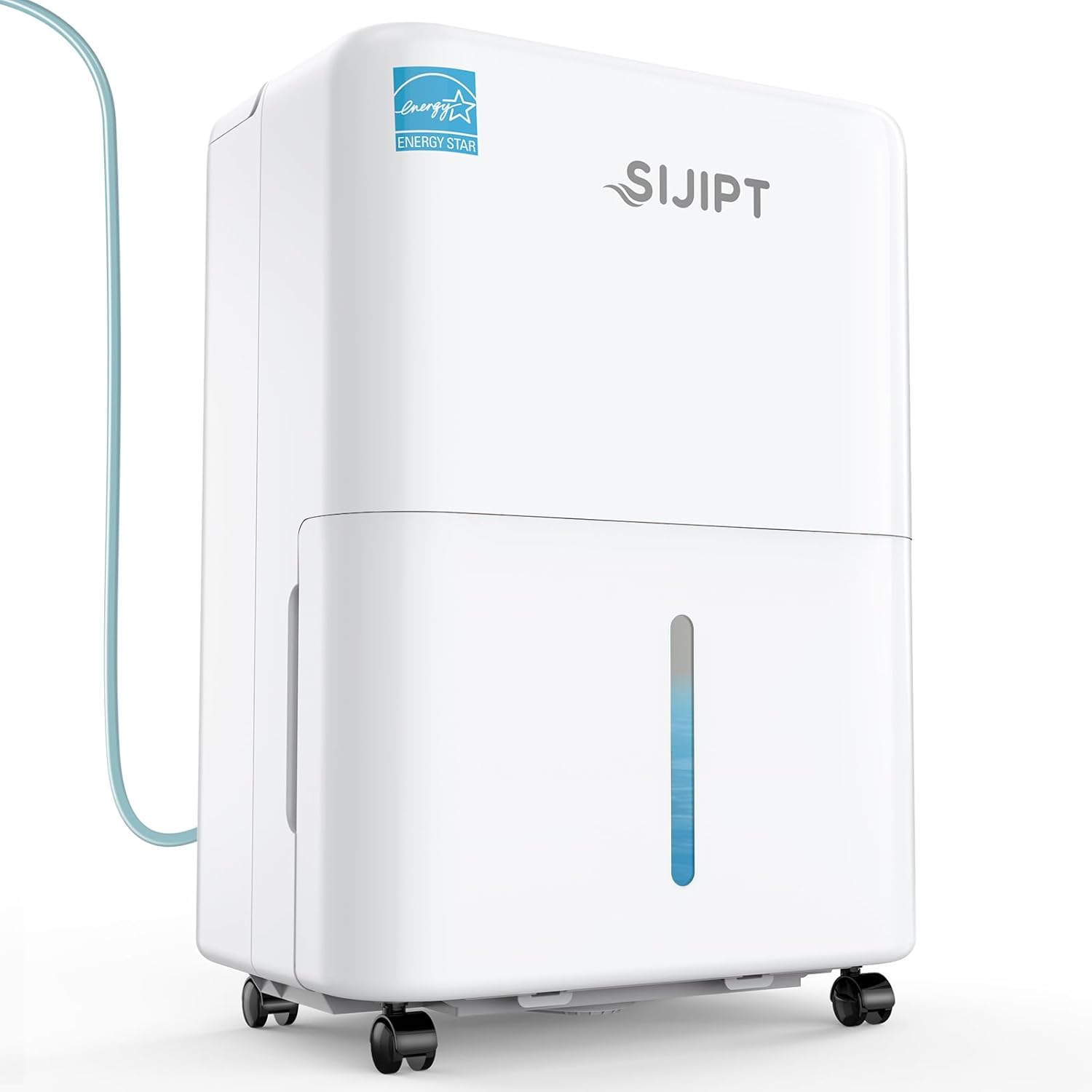
| Capacity | 80 pints |
|---|---|
| Dehumidification Capacity | 80 pints_per_day |
| Wattage | 440 watts |
| Air Flow Capacity | 230 cfm |
| Operation Mode | Dehu Dry Continuous |
The Sijipt Guardian SJ80P is a floor-standing dehumidifier designed for large, damp spaces and basements that need hands-free water removal. It removes up to 80 pints per day and offers both a built-in pump that can push condensate up to 16.4 feet and a gravity drain hose for continuous drainage, so you can set it and forget it in hard-to-reach crawl spaces or utility areas. Controls include an adjustable humidity setpoint (30 to 80 percent), a rotatable knob for quick changes, timer, auto-restart after power loss, and a washable filter for basic maintenance. Energy Star certification and a 440 W power draw help keep running costs reasonable compared with non-certified models, and a compressor delay and overload protection improve reliability. The unit runs around 45 dB reported which is fairly quiet for a large-capacity model, but its size and intended heavy-duty output make it less suitable where compact portability is essential. For crawl spaces specifically, the built-in pump and long hose options are the major conveniences, though you should confirm fit and clearance in very tight or low-height spaces.
Best for: Buyers who need a budget-minded, high-capacity dehumidifier that can drain automatically and run continuously in basements, crawl spaces, or large rooms without frequent emptying.
Less Ideal for: People needing a very compact, low-profile unit for extremely low-clearance crawl spaces or shoppers who prioritize ultra-quiet operation above raw capacity.
- Built-in pump can lift condensate up to 16.4 feet for hands-free vertical drainage
- High dehumidification capacity of 80 pints per day for large or very humid areas
- Energy Star certified for better energy efficiency compared to standard models
- Washable filter and auto-restart simplify maintenance and recovery after power loss
- Multiple drain options included: 16.5 ft pump hose plus a 6.56 ft gravity drain hose
- Large footprint and height may be difficult to fit in very low crawl spaces
- Reported noise level around 45 dB may still be noticeable in adjacent living areas
- Two-speed fan limits fine-grained airflow control compared with multi-speed models
Verdict: Choose this unit if you want a budget-friendly, Energy Star 80-pint dehumidifier with a built-in pump for reliable hands-free drainage in crawl spaces and basements.
avylo 90-Pint Dehumidifier ADC018

| Dehumidification Capacity | 90 pints_per_day |
|---|---|
| Tank Volume | 2.11 gallons |
| Number of Speeds | 3 |
| Wattage | 235 watts |
| Voltage | 115 volts |
The avylo 90-pint ADC018 is a high-capacity compressor dehumidifier built for large, damp spaces such as basements or crawl spaces where continuous drainage is needed. It removes up to 90 pints per day and can cover up to roughly 4,500–5,000 sq ft while operating on an energy-efficient compressor that meets ENERGY STAR Most Efficient 2025. The unit offers three fan speeds, an LED display with humidity and temperature readout, a top-mounted 2.11 gallon tank with full-tank auto shutoff, and a built-in pump that provides up to 15 feet of lift plus an included drain hose for unattended, long-run operation. Noise is kept relatively low with a rated minimum around 41 dB, and safety features include child lock and multiple overload and leak protections. Practical limitations are its bulky, heavy console-style footprint and the need to follow setup tips (empty the tank before activating pump drainage) to avoid initial leaks; also true continuous gravity drain hardware for some crawl space layouts may require separate fittings. For reliability-focused buyers this model emphasizes efficient, continuous operation and built-in protections.
Best for: Buyers who prioritize dependable, continuous moisture removal in large or hard-to-access damp spaces and want a unit built for long unattended runs with pump drainage and factory safety protections.
Less Ideal for: People with very tight, low-clearance crawl spaces where moving or placing a heavy unit is impractical or those who need a compact, portable dehumidifier for small rooms.
- Built-in pump with 15 ft lift and included drain hose enables continuous unattended drainage
- ENERGY STAR Most Efficient 2025 certification and high EER for lower operating cost
- Large 2.11 gallon top-mounted tank with full-tank reminder and auto shutoff
- Multiple protections including compressor overheat, overload, and leakage protection
- Relatively large and heavy, which can complicate placement in tight crawl spaces
- Requires initial tank emptying and correct setup to prevent leaks when switching drainage modes
Verdict: Choose this model when you need an energy-efficient, pump-equipped dehumidifier built for reliable continuous drainage and long unattended operation in large damp spaces.
Waykar 125-Pint Dehumidifier AFW2.0DPM

| Capacity | 125 pints |
|---|---|
| Air Flow Capacity | 176.47 cfm |
| Dehumidification Capacity | 15.63 gallons_per_day |
| Wattage | 530 watts |
| Voltage | 110 volts |
The Waykar AFW2.0DPM is a heavy-duty 125-pint dehumidifier built for crawl spaces, basements, and commercial areas where continuous moisture control is needed. It uses a rotary compressor and a high-brush motor to move air at about 176 CFM and can remove up to 125 pints per day under ideal conditions, while an adjustable humidity range (10%–90% RH) gives fine control over target moisture. Practical installation features include a built-in pump with a 16.4 ft pump hose for vertical drainage plus a 6.6 ft gravity hose for downhill runs, support for pipe-mounted exhaust, adjustable feet, and ergonomic handles for relocation. The metal casing and multi-layer condenser aim to improve durability and heat exchange efficiency for long-term use in tough environments. Expect a relatively powerful, continuously operating unit with service reminders and washable filter maintenance. Trade-offs are its industrial weight and size and the 530 W power draw, which may be heavier on electricity than smaller consumer units and less suited to casual home use.
Best for: Buyers who need a robust, serviceable dehumidifier for large, persistently damp crawl spaces or commercial basements and who prioritize proven performance and installation flexibility over minimal size.
Less Ideal for: Those looking for a lightweight, energy-minimizing home dehumidifier for small rooms or occasional use should consider smaller consumer models instead.
- Built-in pump with 16.4 ft vertical drainage for flexible placement
- High 125-pint capacity and 176 CFM airflow for large or very damp spaces
- Durable metal housing and multi-layer condenser for industrial resilience
- Adjustable humidity range and digital controls for precise setpoints
- Includes both pump and gravity drain hoses plus washable filter for easier upkeep
- Relatively high power consumption (530 watts) compared with residential models
- Heavy and bulky, making maneuvering or temporary moves more difficult
Verdict: Choose this model when you need a durable, high-capacity dehumidifier with a built-in pump for reliable, flexible drainage in crawl spaces and large basements.
AEOCKY LEO Dehumidifier

| Capacity | 80 pints |
|---|---|
| Tank Volume | 1.45 gallons |
| Floor Area | 4500 square_feet |
| Operation Mode | Automatic |
| Other Special Features of the Product | Timer |
The AEOCKY LEO is a heavy-duty compressor dehumidifier built around a built-in pump for automatic drainage and extended coverage. It is intended to run continuously in damp spaces: set the target humidity and the unit's pump pushes condensate up to 5 meters through the included hose so you do not need to empty a bucket. The LEO emphasizes energy efficiency with an ENERGY STAR Most Efficient 2025 rating and claims high-capacity performance (80 pints/day) that scales from basements to larger rooms and crawl spaces. Notable practical features include a 1.45 gallon tank as backup, timer and automatic operation modes, low-vibration pump design for quieter operation, and smart humidity sensing with power-off memory for reliability after outages. Trade-offs to consider are its physical footprint and noise compared with very small units, and compressor-based systems require frost protection if used in near-freezing environments; the LEO is best for consistently warm, damp areas rather than unheated spaces that dip below recommended temps.
Best for: Buyers who prioritize reliable, hands-off moisture control in damp, occupied crawl spaces or basements and who want an energy-efficient pump-equipped unit that can run continuously without frequent bucket emptying.
Less Ideal for: Those needing a compact, ultra-quiet unit for occasional use in cold, unheated crawl spaces or who require a model specifically rated for freezing temperatures should look elsewhere.
- Built-in pump with up to 5 m upward drainage for unattended continuous use
- ENERGY STAR Most Efficient 2025 rating for strong energy performance
- High dehumidification capacity (80 pints/day) suitable for large damp areas
- Automatic humidity control, timer and power-off memory for reliable set-and-forget operation
- Compressor dehumidifiers can be louder and heavier than small desiccant or thermoelectric units
- Less suitable for unheated spaces that regularly approach freezing temperatures
Verdict: If you need a pump-equipped, energy-efficient dehumidifier that can run unattended in large damp crawl spaces or basements, the AEOCKY LEO delivers high‑capacity, reliable automatic drainage.
Choosing the Right Dehumidifier with Pump for Crawl Space: Key Factors to Consider
Extraction Capacity and Performance at Low Temperatures
Extraction capacity determines how much water the unit removes over 24 hours and is the single most important spec for a crawl-space application. Crawl spaces can be cooler than conditioned living space, and many dehumidifiers lose efficiency as temperature drops. Choosing a unit with rated extraction at the expected operating temperature range ensures it can keep relative humidity low enough to prevent mold and wood decay.
Also consider how capacity is measured. Look for manufacturers that specify extraction at lower temperatures rather than only at warm-room conditions. Oversizing slightly for marginal or seasonally variable conditions gives headroom during humid spikes and reduces runtime, which improves longevity.
Integrated Pump Specs and Discharge Head
A built-in condensate pump eliminates the need for a gravity drain, which is useful when the nearest drain is above the crawl-space floor. Pay attention to pump head — the vertical lift the pump can sustain — and maximum discharge distance. If the pump cannot overcome the required lift, condensate will back up and trigger frequent shutdowns.
Pump reliability matters because pumps run often in continuously operating systems. Look for simple pump plumbing with minimal traps and accessible tubing to reduce clogging. Consider whether the design allows easy replacement of the pump module or access to the pump reservoir for cleaning.
Drainage Path Design and Clog Resistance
Crawl spaces are dusty and can carry fibers and debris that clog drainage pathways. Units with wide, straight condensate channels, removable strainers, and accessible hose connections reduce maintenance. Short, gradual hose runs with smooth interior walls are less likely to trap sediment than narrow, convoluted tubing.
Also consider how the unit handles condensate when the pump is overwhelmed or blocked. Reliable overflow protection and clear indicator lights or alerts prevent water damage if a drain becomes obstructed.
Durability, Material Selection, and Corrosion Protection
Components exposed to constant moisture benefit from corrosion-resistant materials such as stainless fasteners, coated coils, and plastic drain pans with smooth finishes. Metal parts with protective coatings and sealed electrical components reduce the risk of premature failure.
Evaluate the build quality of access panels and feet or mounting brackets. Crawl-space installations often require mounting on joists or concrete piers; robust mounting points and vibration isolation can prevent noise transfer and mechanical wear.
Controls, Humidistat Accuracy, and Energy Use
A reliable humidistat keeps relative humidity in the desired band without short-cycling the compressor. Look for models with adjustable setpoints and clear displays. Programmable features, automatic restart after power interruptions, and timers add convenience for long-term unattended operation.
Since many crawl-space units run for extended periods, energy efficiency affects operating cost and heat output. Models with energy-saving modes or efficient compressors lower electrical consumption while maintaining target humidity.
Serviceability and Installation Practicalities
Easier installation reduces initial labor cost and long-term headaches. Consider units with simple electrical connections, accessible filter panels, and removable covers for coil access. Low-profile designs fit under joists and around ductwork, and built-in casters or mounting brackets simplify placement.
Also factor in filter replacement and common part availability. Units designed for straightforward user maintenance reduce downtime and the need for professional service visits.
Where to Place a Crawl-Space Dehumidifier with Pump
Placement affects performance as much as capacity. Install the unit where air can circulate from the entire crawl-space, not tucked into a corner with very restricted airflow. Positioning near the center of the treated space or along a path of natural airflow yields more even dehumidification.
If the unit must be mounted off the ground to avoid standing water, ensure the pump head and discharge routing are compatible with the elevated installation. Maintain clearance for filter access and periodic cleaning, and avoid locations where insulation or debris will block the intake.
- Allow service clearance on at least one side for filter and coil access
- Keep the intake free of insulation and debris
- Mount above expected flood level and verify pump head for elevated discharge
Routing Condensate Lines and Venting Considerations
Plan condensate routing to minimize vertical lift and avoid long horizontal runs that trap water. Use smooth-walled tubing sized per the manufacturer's recommendations and secure it to joists to prevent sagging. Install a short, accessible cleanout loop if the path includes bends or areas prone to debris buildup.
Consider where the condensate will terminate. Discharging into a floor drain or remote drain field requires the pump to overcome the full lift and any backpressure. If a condensate outlet can be routed to a safe dispersed location outside the structure, check local codes for acceptable discharge practices.
- Use the shortest practical hose run and gradual bends
- Secure tubing to prevent kinks and sags
- Include an accessible trap or cleanout in the run
Managing Noise, Vibration, and Access
Crawl spaces magnify mechanical noise and vibration. Choose a unit with rubber mounts or vibration-isolating feet to reduce transmission to floor joists. If noise is a concern for occupants above, position the unit away from sensitive rooms or add isolation blocks to the mounting points.
Make sure the unit remains accessible for filter changes, pump checks, and occasional coil cleaning. If the installation is tight, plan periodic maintenance access in the schedule and consider extending service-friendly features like hinged access panels.
- Install vibration isolation between unit and joists
- Avoid mounting directly to large structural members without padding
- Keep a clear path for routine maintenance
Seasonal Operation and Preventing Freeze-Related Issues
Crawl-space temperatures can approach freezing in cold climates. Some dehumidifiers lose efficiency or risk coil freeze at low temperatures. Consider units rated for lower ambient temperatures or use supplemental heat to keep the space within the operating range recommended by the manufacturer.
If seasonal shutdown is expected, follow a controlled winterization procedure: drain and clean the condensate system, remove or insulate exposed hoses, and protect the unit from condensation that could refreeze and damage components during freeze-thaw cycles.
- Check low-temperature operating specifications
- Plan for winterization if you expect extended freeze conditions
- Use gentle supplemental heat rather than forcing the unit beyond its rated range
Maintenance Checklist for Long-Term Reliability
Regular maintenance keeps a crawl-space dehumidifier with pump functioning reliably. Establish a schedule that includes cleaning or replacing filters, inspecting pump tubing and connections, and checking the condensate reservoir or float switch for debris. Remove dust and insulation fibers from the intake area to preserve airflow.
Annually inspect the coil for scale or fouling and clean per manufacturer guidance. Test the pump under load to verify discharge head and listen for unusual noises that can indicate bearing wear or motor stress.
- Monthly filter inspection and cleaning
- Quarterly pump reservoir and tubing check
- Annual coil inspection and professional service if needed
How We Chose the Best Dehumidifier with Pump for Crawl Space
We focused on features that matter specifically for removing moisture in constrained, often damp crawl spaces. Selection began with units engineered for continuous drainage via an integrated condensate pump, then filtered for adequate extraction capacity at elevated humidity and cooler temperatures typical of crawl spaces. We prioritized units with robust filtration and components that resist corrosion and clogging, since crawl spaces are dusty and may contain insulation particles. Durability and serviceability were important: accessible panels, simple condensate-path designs, and readily available replacement parts reduce long-term downtime. Energy efficiency and automatic controls were evaluated because many crawl-space dehumidifiers run continuously; models with programmable humidistats and reasonable power draw are preferred. Finally, ease of installation — including mounting options, condensate hose routing, and low-profile footprints — helped narrow the list. We excluded consumer room dehumidifiers not rated for continuous pumped drainage or for the operating temperature/humidity range typical of crawl spaces. Units that required complex external modifications to add pumped drainage were not considered. The resulting list emphasizes dependable continuous operation, extraction performance in confined spaces, and build features that simplify maintenance.
Our full evaluation process is outlined in our review methodology.
FAQ
Do I need a dehumidifier with a pump for every crawl space?
It depends. If you can route a gravity drain to a lower point outside the crawl space, a pump may not be necessary. When the only feasible drain is above the unit or remote, a built-in pump simplifies continuous drainage and prevents frequent emptying.
What humidity level should I aim for in a crawl space?
Aim for a consistent relative humidity between about 45 and 55 percent to discourage mold while avoiding over-drying structural materials. Exact targets depend on climate and building materials, but staying below 60 percent is generally recommended to reduce biological growth risk.
How often should I service the condensate pump and drainage lines?
Inspect pump tubing and connections every few months and test pump operation under load at least twice a year. Clean strainers and accessible reservoirs quarterly in dusty crawl spaces to prevent clogs and maintain reliable drainage.
Can a dehumidifier in a crawl space cause freezing problems in winter?
It can if the unit runs in temperatures below its rated operating range, because coils may freeze and the system can shut down. Use a model rated for lower ambient temperatures or provide minimal supplemental heat to keep the crawl space within the unit's safe operating band.
What power and electrical considerations should I plan for?
Install the unit on a dedicated circuit sized to the manufacturer's electrical specifications and ensure the outlet location allows safe routing of the power cord without exposure to water. Consider GFCI protection if local codes require it for equipment in damp spaces.
Will a dehumidifier with a pump prevent mold by itself?
A dehumidifier significantly reduces moisture that fuels mold growth, but it is one part of an overall moisture-control approach. Address water intrusion sources, repair grading or drainage issues, and ensure adequate ventilation to achieve long-term mold prevention.
Final Verdict
When choosing a dehumidifier with pump for a crawl space, prioritize extraction capacity at the expected ambient temperature, pump head for your intended discharge route, and a drainage design that resists clogging. Balance energy-efficient controls and accurate humidistats with durable construction and easy access for maintenance. The right unit will run reliably with minimal intervention and protect structural materials and stored items by keeping humidity in a safe range. Focus on the installation details that affect real-world performance: placement for airflow, secure condensate routing, and vibration isolation. With those tradeoffs managed, a properly selected and maintained dehumidifier with a pump becomes an effective long-term solution for a damp crawl space.